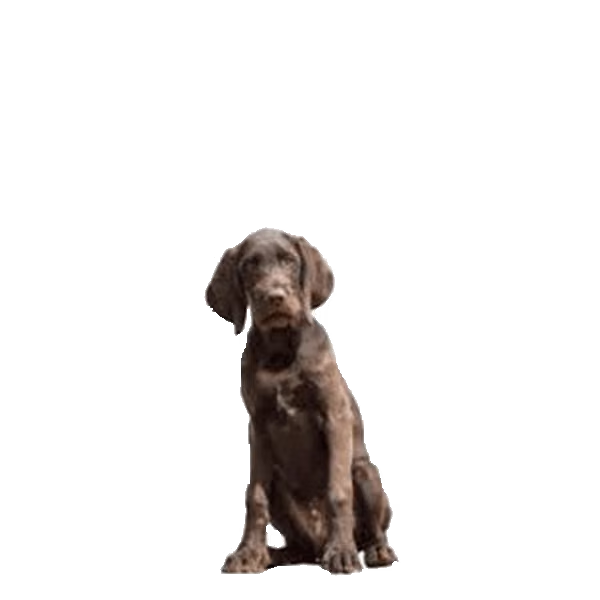
Pudelpointer on rauhallinen ja monipuolinen saksalainen kanakoira, joka yhdistää terävän työvietin tasaiseen, koulutettavaan luonteeseen.
Miten Pudelpointteri-rodun turkki rakentuu ja mitä se tarkoittaa turkinhoidossa.
Varoitus: Pudelpointteri-rodun turkki tulee trimmata käsin eikä ajaa koneella.
Karkea turkki on tarkoitettu vedettäväksi irti juuresta, kun karva on valmis irtoamaan. Kone katkaisee sen sen sijaan puolivälistä ja jättää pehmeän pohjavillan paikoilleen. Lopputulos on turkki, joka kasvaa veltoksi ja haalistuneeksi, ja säänkestävä rakenne palaa vasta, kun karva trimmataan uudelleen irti.
The Pudelpointer is a large German gundog that combines a strong working drive with a calm, even-tempered nature, making it a versatile hunting companion and an attentive family dog.
The Pudelpointer is a versatile hunting dog developed in Germany by crossing the Poodle with the English Pointer. The aim was a single dog that could point and retrieve game on land and in water, work in heavy cover, and live calmly in the home. The result is a medium-to-large gundog with a weather-resistant coat and a steady disposition.
The breed is best known among hunters who value an all-purpose dog rather than a specialist. A Pudelpointer is expected to track, point, retrieve from land and water, and follow blood trails. That breadth of work shapes the temperament: these dogs are biddable, focused, and willing to take direction from a handler.
Away from the field, the Pudelpointer is generally quiet and even-tempered. It forms close bonds with its people and tends to be calm indoors once its exercise needs are met. The breed remains uncommon, and breeding has historically prioritized working ability over show points.
| Attribute | Detail |
|---|---|
| Origin | Germany |
| Size | Large |
| Lifespan | 11 to 14 years |
| Group / role | Versatile gundog (pointing and retrieving) |
| Good with | Active families, experienced owners, working homes |
The Pudelpointer fits active owners who can provide daily physical exercise and mental work. It does best in homes with access to open space and, ideally, hunting or structured field activities such as tracking, dock work, or field trials. People who want a calm indoor companion that still needs a job to do will find the breed a good match. It is less suited to sedentary households or owners with no time for training and exercise.
The Pudelpointer was created in Germany in the late nineteenth century by crossing the Poodle with the English Pointer to produce a single versatile hunting dog.
The Pudelpointer originated in Germany in the late 1800s. The breeding program is credited to Baron von Zedlitz, who wrote under the name Hegewald and worked to develop a versatile gundog suited to the needs of German hunters of the period.
The foundation cross paired the Poodle with the English Pointer. The Poodle contributed a trainable mind, water aptitude, and a dense coat, while the Pointer brought pointing instinct, nose, and field drive. Early breeding drew on a small number of Pointers crossed with a larger base of Poodles, after which selection focused on fixing the working traits the two breeds offered.
From the start, the breed was bred for function rather than appearance. Dogs were selected for performance in the field and water, and breeding stock was tested for hunting ability. This emphasis on proven working dogs has continued and is a defining feature of how the breed is maintained.
The Pudelpointer remained largely a German hunting breed for much of the twentieth century. It was later brought to North America, where it is registered and supported by clubs that maintain testing requirements for breeding dogs. The breed stays relatively rare worldwide, with most dogs found in working and hunting homes.
The Pudelpointer is a large, athletic gundog with a harsh, weather-resistant coat, most often in shades of brown, and a balanced, working build.
The Pudelpointer is a well-proportioned, athletic dog built for endurance in the field. The body is slightly longer than tall, with a deep chest, strong legs, and a level topline. The overall impression is of a functional gundog rather than an exaggerated show type. A distinctive feature is the facial furnishings, including a beard and eyebrows that frame the eyes.
| Trait | Standard |
|---|---|
| Height | Approx. 53 to 68 cm (21 to 27 in) at the shoulder |
| Weight | Approx. 20 to 30 kg (44 to 66 lb) |
| Coat | Harsh, dense, wiry and weather-resistant, of medium length |
| Colors | Brown (liver), chestnut, and dead-leaf shades; some black |
| Eyes | Amber to brown, set under pronounced eyebrows |
The coat is the breed's most practical feature. It is harsh and wiry, lying close to the body, with a dense undercoat that protects the dog in cold water and rough cover. Coat texture can vary somewhat between individuals, from rougher to slightly softer, though the standard favors a harsh, water-shedding outer coat.
Color is most commonly brown, ranging from liver and chestnut to lighter dead-leaf tones. Black coats also occur. Small white markings on the chest or toes appear in some dogs. The face carries a beard and eyebrows that give the breed its characteristic expression.
The Pudelpointer is calm, even-tempered, and highly trainable, with a strong work ethic in the field and a quiet, affectionate manner at home.
The Pudelpointer has a steady, level temperament that sets it apart from some sharper gundog breeds. It is calm and quiet in the home, and it tends to settle well once its physical and mental needs are met. With its family the breed is affectionate and loyal, often staying close to its people.
With strangers the Pudelpointer is usually reserved rather than aggressive. Early socialization helps it become confident around new people and situations. The breed is generally good with children when raised with them, owing to its patient nature, though supervision is sensible with any large active dog.
With other dogs the breed is typically sociable. Its strong prey drive means it may chase small animals, and care is needed around cats, poultry, or other small pets unless the dog has been raised with them. In the field the same drive becomes focus and stamina. The Pudelpointer is hardworking, eager to cooperate, and responsive to its handler, which is why it is valued as a trainable, versatile gundog.
| Trait | Rating |
|---|---|
| Affection | 4 |
| Energy | 5 |
| Trainability | 5 |
| Vocalness | 2 |
| Shedding | 2 |
The Pudelpointer needs substantial daily exercise and mental work; its harsh coat is low-maintenance and requires only regular brushing and occasional hand-stripping.
Caring for a Pudelpointer centers on meeting its high exercise requirement. The coat itself is one of the easier aspects of the breed to manage.
The Pudelpointer suits a home with a securely fenced yard and access to open country or water. It can adapt to indoor living as a calm housemate, but it is not suited to apartment life without a serious commitment to daily outdoor work. The breed tolerates cold and wet conditions well thanks to its coat.
An active Pudelpointer needs a complete, high-quality diet matched to its working energy demands, fed in measured meals to avoid both underfeeding and overfeeding.
The Pudelpointer is a working breed with high energy output, so its diet should supply enough protein and fat to support sustained activity. A complete, balanced food formulated for active large dogs is appropriate. During hunting season or heavy training, calorie needs rise and portions may need to increase. In quieter periods, watch the dog's condition to avoid weight gain. Fresh water should always be available, especially around exercise and water work.
| Life stage | Amount per day | Meals |
|---|---|---|
| Puppy (2 to 6 months) | Per product guide for growth | 3 to 4 |
| Junior (6 to 12 months) | Per product guide, large-breed formula | 2 to 3 |
| Adult | Approx. 300 to 450 g of quality dry food | 2 |
| Working adult (active season) | Increased portion to match output | 2 to 3 |
| Senior | Reduced calories, maintain protein | 2 |
Keep treats to roughly ten percent of daily calories and use them as training rewards. A dog fed a complete commercial diet usually needs no supplements. Discuss joint support, fish oil, or any additions with a veterinarian, particularly for hardworking or aging dogs. Large breeds can be prone to bloat, so avoid heavy feeding immediately before or after strenuous exercise.
The Pudelpointer is generally a healthy, hardy breed with a lifespan of 11 to 14 years, though responsible owners should watch for hip dysplasia, ear infections, and bloat.
The Pudelpointer is considered a robust, healthy breed, helped by a breeding tradition that emphasizes working soundness. Typical lifespan is 11 to 14 years. As with any large, active dog, certain conditions deserve attention, and buying from breeders who health-test their stock reduces risk.
| Condition | Signs | Note |
|---|---|---|
| Hip dysplasia | Stiffness, limping, reluctance to rise or jump | Screen breeding dogs; manage weight and activity |
| Ear infections | Head shaking, odor, scratching at ears | More likely after swimming; keep ears dry and clean |
| Bloat (gastric torsion) | Swollen abdomen, retching without vomiting, distress | Emergency; deep-chested breeds are at higher risk |
| Skin and coat irritation | Itching, redness, hot spots | Often linked to allergies or trapped moisture |
| Eye conditions | Cloudiness, redness, vision changes | Periodic veterinary eye checks are advisable |
The Pudelpointer is one of the most trainable gundogs, combining intelligence with a strong desire to cooperate, and it responds best to consistent, reward-based methods.
The Pudelpointer is intelligent and biddable, with a strong wish to work with its handler. This makes it one of the more straightforward gundogs to train for those willing to put in regular, structured sessions. The breed picks up commands quickly and retains them well, and it thrives when training is paired with real work such as retrieving and field exercises. Harsh handling is counterproductive; the breed responds far better to fair, consistent guidance. Early socialization and exposure to gunfire, water, and different terrains help develop a confident working dog.
Pudelpointer breeding emphasizes proven working ability and health testing, with bitches producing average-sized litters that benefit from early socialization and exposure to field stimuli.
Breeding of the Pudelpointer has long centered on working performance. Many clubs that support the breed require dogs to pass hunting aptitude or field tests before being bred, alongside health screening. This selective approach helps keep the breed sound and true to its purpose.
Dogs typically reach sexual maturity between roughly 12 and 24 months, though responsible breeders usually wait until a dog is physically mature and has proven its working ability and health status before breeding. After a successful mating, gestation lasts about 63 days, in line with dogs generally.
Litters are of average size for a large breed. Puppies are weaned over several weeks and begin socialization early. Because the breed is bred to work, breeders often expose young dogs to water, birds, and varied environments during the early months to develop confidence and natural instincts. Choosing a puppy from health-tested, working-proven parents is the most reliable way to obtain a sound dog.
| Metric | Value |
|---|---|
| Sexual maturity | Approx. 12 to 24 months |
| Recommended breeding age | After physical maturity and health/working clearance |
| Gestation period | Approx. 63 days |
| Average litter size | Typically 6 to 9 puppies |
| Weaning age | Around 6 to 8 weeks |
| Breeding requirements | Health screening and field/aptitude testing (per club) |
Maksuton elinikäinen profiili Pudelpointteri-rotuiselle koirallesi United Pet Clubissa, mikrosirun rekisteröinti mukana ilman uusimismaksuja.
Vuoden 2023 alusta jokainen Suomessa asuva koira on pitänyt tunnistusmerkitä mikrosirulla ja ilmoittaa Ruokaviraston koirarekisteriin, Pudelpointteri-rotuinen koirasi mukaan lukien. Lakisääteinen osuus palvelee kuitenkin vain kotimaassa. United Pet Clubin maksuton profiili täydentää sitä: yhteystietosi kulkevat koiran mukana ja löytyvät mistä maasta tahansa. Rekisteröi koirasi muutamassa minuutissa.
Viisitoista numeroa Pudelpointteri-rotuisen koirasi niskassa osoittavat sinuun vasta, kun rekisteri niin sanoo. Anna United Pet Clubin sanoa se maksutta: rekisteröinti ei vanhene, kaikki sirumerkit kelpaavat ja jokainen muutos on ilmainen. Sirun rekisteröinti ensin, tili heti perään.
Luo maksuton tili United Pet Clubiin, täytä koiran tiedot kuvan kera ja tallenna profiili. Se on maksuton koko koiran eliniän, ja Ruokaviraston koirarekisteri-ilmoitus hoidetaan erikseen.
Syötä sirun 15-numeroinen koodi maksuttomalle tilillesi osoitteen ja puhelinnumeron kanssa. Elinikäinen suunnitelma hyväksyy kaikki sirumerkit eikä veloita päivityksistä koskaan.
On: vuodesta 2023 alkaen koirat on pitänyt tunnistusmerkitä ja ilmoittaa Ruokaviraston koirarekisteriin. United Pet Clubin merkintä täydentää sitä vastaamalla hakuihin myös Suomen ulkopuolella, maksutta.
Ei mitään. Maksuton elinikäinen suunnitelma kattaa profiilin, sirun rekisteröinnin ja kaikki tulevat päivitykset ilman uusimismaksuja.
Common questions about the Pudelpointer's size, temperament, care needs, lifespan, suitability as a family dog, and availability.
The Pudelpointer is a large dog, standing roughly 53 to 68 cm (21 to 27 in) at the shoulder and weighing about 20 to 30 kg (44 to 66 lb), with males generally larger than females.
The breed is calm, even-tempered, and highly trainable. It is quiet and affectionate at home, reserved with strangers, and focused and hardworking in the field.
Grooming is straightforward thanks to the low-shedding wiry coat, which needs only weekly brushing and occasional hand-stripping. The bigger commitment is exercise: the breed needs one to two hours of vigorous activity and mental work every day.
The typical lifespan is 11 to 14 years. Good nutrition, regular veterinary care, and weight management help a dog reach the upper end of that range.
Yes, for active families. It is patient and affectionate with its people and usually good with children when raised together. Its strong prey drive means care is needed around small pets, and it needs an owner who can meet its exercise needs.
No. The breed is relatively rare and bred mainly within hunting and working circles. Prospective owners often join a waiting list with a breeder who health-tests and field-tests their dogs.
Not strictly, but it needs an equivalent outlet. Without hunting, owners should provide structured activities such as retrieving, scent work, dock diving, or field sports to satisfy the breed's working drive.
