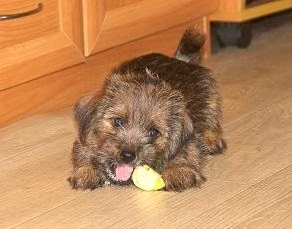
Norfolkinterrieri on eloisa mutta hellä pieni terrieri luppakorvineen, ja se tunnetaan yhtenä pienimmistä ja seurallisimmista työterriereistä.
Miten Norfolkinterrieri-rodun turkki rakentuu ja mitä se tarkoittaa turkinhoidossa.
Varoitus: Norfolkinterrieri-rodun turkki tulee trimmata käsin eikä ajaa koneella.
Karkea turkki on tarkoitettu vedettäväksi irti juuresta, kun karva on valmis irtoamaan. Kone katkaisee sen sen sijaan puolivälistä ja jättää pehmeän pohjavillan paikoilleen. Lopputulos on turkki, joka kasvaa veltoksi ja haalistuneeksi, ja säänkestävä rakenne palaa vasta, kun karva trimmataan uudelleen irti.
A few of the Norfolkinterrieri profiles members have added to United Pet Club.
The Norfolk Terrier is a small working terrier from England with drop ears, an affectionate nature, and one of the smallest frames among the working terrier breeds.
The Norfolk Terrier is a small, sturdy terrier that stands about 9 to 10 inches at the shoulder and weighs around 11 to 12 pounds. It is one of the smallest of the working terriers. Its most recognizable feature is the pair of small, neatly folded drop ears, which set it apart from its close relative the Norwich Terrier, whose ears stand erect.
The breed was developed in eastern England to bolt foxes and control vermin. That working background shows in its build and behavior: a compact body, a weatherproof coat, and a confident, busy temperament. Despite the working roots, the Norfolk is a companionable dog that tends to enjoy human company and does well as a household pet.
Norfolks are described as affectionate, spirited, sociable, alert, and fearless. They are generally less sharp-tempered than some terriers and often get along with other dogs, which reflects their history of being worked in packs.
| Attribute | Detail |
|---|---|
| Origin | England |
| Size | Small (about 9 to 10 in, 11 to 12 lb) |
| Lifespan | 12 to 16 years |
| Group / role | Terrier; originally fox-bolting and vermin control |
| Good with | Families, other dogs, active owners |
The Norfolk Terrier suits owners who want a small dog with a real terrier character rather than a lap dog. It fits households that can give it daily exercise and company. Its sociable streak makes it a reasonable choice for multi-dog homes and for families with children who handle dogs sensibly. Its prey drive means small pets such as rodents are not ideal companions.
The Norfolk Terrier developed in eastern England in the late 1800s as a small working ratter and fox-bolter, and was recognized as a breed separate from the Norwich Terrier in the 1960s.
The Norfolk Terrier comes from the East Anglia region of England, particularly the area around Norwich and Norfolk. During the late nineteenth century, small red terriers were kept by farmers and sportsmen there to kill rats and bolt foxes from their dens. These dogs were valued for being small enough to go to ground yet game enough to face vermin.
In the early twentieth century, students at Cambridge kept similar small terriers as companions and ratters, which helped spread the type. Breeders in the region worked with a mixed group of small terriers, and over time two ear forms appeared in the same stock: drop ears and prick ears.
For decades the drop-eared and prick-eared dogs were registered as a single breed under the Norwich Terrier name. Breeders found that crossing the two ear types was difficult to manage, and pressure grew to separate them. In 1964 the Kennel Club in England recognized the two as distinct breeds, with the drop-eared dog named the Norfolk Terrier and the prick-eared dog keeping the Norwich Terrier name.
The American Kennel Club followed and recognized the Norfolk Terrier as a separate breed in 1979. Since then the Norfolk has been bred and shown on its own, though it remains closely related to the Norwich in size, coat, and temperament.
The Norfolk Terrier is a small, compact terrier with a wiry weatherproof coat, folded drop ears, and a typically red, wheaten, or grizzle color.
The Norfolk Terrier is a low, compact dog with a strong, slightly rounded skull and a wedge-shaped muzzle. The body is short and level along the back, set on short, sturdy legs. The small drop ears fold neatly forward against the cheek. The overall impression is of a small dog built for work, not a delicate toy breed.
| Feature | Standard |
|---|---|
| Height | About 9 to 10 in (23 to 25 cm) at the shoulder |
| Weight | About 11 to 12 lb (5 to 5.5 kg) |
| Coat | Hard, wiry, straight; weatherproof, with a soft undercoat |
| Colors | Red, wheaten, black and tan, or grizzle |
| Eyes | Small, oval, dark, with an alert expression |
The coat is hard and wiry over a softer undercoat, with longer, rougher hair forming a slight ruff at the neck and around the face. This double coat protects the dog in cold and wet conditions. Accepted colors are red, wheaten, black and tan, and grizzle. The wiry texture is maintained by hand-stripping rather than clipping, which keeps the harsh outer coat and its color. Clipping is possible but tends to soften the coat and dull the color over time.
The Norfolk Terrier is affectionate and people-oriented while keeping a spirited, alert terrier character, and it is generally more sociable with other dogs than many terriers.
The Norfolk Terrier is an active, confident dog that stays close to its people. It is affectionate at home and enjoys being part of family life rather than left alone for long stretches. The breed has a spirited, busy nature and will investigate noises, scents, and movement around the house and yard.
With family, the Norfolk is loyal and friendly, and it usually does well with children who treat it with respect. With strangers it tends to be alert and will announce visitors, but it is not typically nervous or aggressive. Compared with many terriers, the Norfolk is notably sociable with other dogs, a trait that reflects its history of being worked in packs. Its prey drive remains strong, so small animals such as rodents and rabbits can trigger chasing.
Norfolks are alert and fearless for their size and can be vocal when something catches their attention. Early socialization and consistent boundaries help channel the terrier energy into good house manners.
| Trait | Rating |
|---|---|
| Affection | 5 |
| Energy | 4 |
| Trainability | 3 |
| Vocalness | 3 |
| Shedding | 2 |
The Norfolk Terrier needs regular brushing with periodic hand-stripping, daily exercise, and an environment where it has company and safe space to explore.
The Norfolk Terrier is a hardy breed that adapts to most homes, but its wiry coat and active mind both need regular attention.
The Norfolk does well in both houses and apartments as long as it gets daily exercise and company. It is people-oriented and can become bored or noisy if left alone for long periods. A safe yard is useful, but fencing must be solid and dug-in, because terriers dig and squeeze through gaps.
The Norfolk Terrier does well on a complete diet sized for a small, active dog, split into measured daily meals to prevent weight gain.
The Norfolk Terrier needs a complete and balanced diet formulated for small breeds and matched to its life stage and activity level. Because it is small and food-motivated, portions add up quickly, and excess weight strains the joints and back. Measure meals rather than free-feeding, and adjust amounts based on body condition rather than the bag alone.
| Life stage | Amount per day | Meals |
|---|---|---|
| Puppy (2 to 6 months) | About 1/2 to 1 cup | 3 to 4 |
| Puppy (6 to 12 months) | About 1/2 to 3/4 cup | 2 to 3 |
| Adult | About 1/2 to 3/4 cup | 2 |
| Senior | Slightly reduced; adjust to activity | 2 |
Keep treats to about 10 percent of daily calories and subtract them from meal portions. Most Norfolks on a complete commercial diet do not need supplements. Discuss any supplement, including joint or skin products, with a veterinarian before adding it. Fresh water should be available at all times.
The Norfolk Terrier is generally healthy with a lifespan of 12 to 16 years, though it can be affected by mitral valve disease, patellar luxation, and hip conditions.
The Norfolk Terrier is a generally robust small breed with a typical lifespan of 12 to 16 years. Responsible breeders screen breeding stock for heart and joint conditions, which lowers the risk of inherited problems. As with any breed, individual health depends on genetics, diet, weight, dental care, and routine veterinary attention.
| Condition | Signs | Note |
|---|---|---|
| Mitral valve disease | Heart murmur, coughing, reduced stamina | More common with age; detected on exam |
| Patellar luxation | Skipping gait, intermittent hind-leg lameness | Common in small breeds; ranges mild to surgical |
| Hip dysplasia | Stiffness, reluctance to jump, lameness | Screening of breeding dogs reduces risk |
| Dental disease | Tartar, bad breath, sore gums | Small jaws crowd teeth; routine care helps |
| Obesity | Weight gain, low energy | Manageable with measured feeding and exercise |
The Norfolk Terrier is intelligent and willing but has an independent terrier streak, so it responds best to short, reward-based sessions started early.
The Norfolk Terrier is clever and quick to learn, but it also has the independent, self-directed character common to terriers. It can lose interest in repetitive drilling and may decide its own agenda when a scent or small animal appears. Training works best when it is consistent, positive, and kept short enough to hold the dog's attention. A strong recall and reliable lead manners are priorities given the breed's prey drive.
Norfolk Terriers reach maturity by about one to two years, carry small litters, and are bred under health screening because of difficult whelping in some lines.
Norfolk Terriers reach sexual maturity in the first year, but responsible breeders wait until physical and behavioral maturity, usually around 18 to 24 months, before breeding. Breeding dogs should be screened for heart and joint conditions and assessed for sound temperament before any mating is planned.
Gestation lasts about 63 days. Litters are small, commonly two to four puppies, which is typical for a small terrier. Because of the breed's size, some bitches have difficulty whelping, so pregnancies are monitored closely and veterinary support is arranged in advance. Caesarean sections are sometimes needed.
Newborn puppies are raised with the dam in a warm, quiet whelping area. They begin weaning at around three to four weeks and are gradually introduced to solid food. Early handling and gentle socialization from the breeder shape confident adult dogs. Puppies usually go to new homes from about eight weeks, once weaned, vet-checked, and started on a vaccination and worming schedule.
| Metric | Value |
|---|---|
| Sexual maturity | Around 6 to 12 months |
| Recommended breeding age | About 18 to 24 months |
| Gestation | About 63 days |
| Typical litter size | 2 to 4 puppies |
| Weaning | About 6 to 8 weeks |
| Homing age | From about 8 weeks |
Maksuton elinikäinen profiili Norfolkinterrieri-rotuiselle koirallesi United Pet Clubissa, mikrosirun rekisteröinti mukana ilman uusimismaksuja.
Löytöeläintalon skanneri on juuri niin hyödyllinen kuin rekisteri, johon numero johtaa. Anna Norfolkinterrieri-rotuiselle koirallesi merkintä, joka vastaa aina: maksuton profiili säilyttää puhelinnumerosi, koiran kuvan ja tiedot koko koiran eliniän, ilman senttiäkään maksuja. Rekisteröinti tehdään kerran, ja se jää voimaan.
Viisitoista numeroa Norfolkinterrieri-rotuisen koirasi niskassa osoittavat sinuun vasta, kun rekisteri niin sanoo. Anna United Pet Clubin sanoa se maksutta: rekisteröinti ei vanhene, kaikki sirumerkit kelpaavat ja jokainen muutos on ilmainen. Sirun rekisteröinti ensin, tili heti perään.
Luo maksuton tili United Pet Clubiin, täytä koiran tiedot kuvan kera ja tallenna profiili. Se on maksuton koko koiran eliniän, ja Ruokaviraston koirarekisteri-ilmoitus hoidetaan erikseen.
Syötä sirun 15-numeroinen koodi maksuttomalle tilillesi osoitteen ja puhelinnumeron kanssa. Elinikäinen suunnitelma hyväksyy kaikki sirumerkit eikä veloita päivityksistä koskaan.
On: vuodesta 2023 alkaen koirat on pitänyt tunnistusmerkitä ja ilmoittaa Ruokaviraston koirarekisteriin. United Pet Clubin merkintä täydentää sitä vastaamalla hakuihin myös Suomen ulkopuolella, maksutta.
Ei mitään. Maksuton elinikäinen suunnitelma kattaa profiilin, sirun rekisteröinnin ja kaikki tulevat päivitykset ilman uusimismaksuja.
Common questions about the Norfolk Terrier cover its size, temperament, grooming demands, lifespan, suitability for families, and availability.
It is one of the smallest working terriers, standing about 9 to 10 inches at the shoulder and weighing around 11 to 12 pounds.
It is affectionate and people-oriented while keeping a spirited, alert terrier character. It tends to be more sociable with other dogs than many terriers, a result of its pack-working history.
Care is moderate. The wiry coat needs weekly brushing and hand-stripping a few times a year, and the dog needs daily exercise and company. It is otherwise a hardy, adaptable breed.
The typical lifespan is 12 to 16 years, with good care, a healthy weight, and routine veterinary attention supporting the upper end of that range.
Yes. It is loyal and friendly at home and generally does well with children who handle dogs respectfully. It also tends to get along with other dogs.
The main difference is the ears. The Norfolk has folded drop ears, while the Norwich has erect prick ears. They were recognized as separate breeds in 1964 in England.
They are relatively uncommon. Because litters are small and the breed is not numerous, finding a puppy from a health-testing breeder can involve a waiting list.