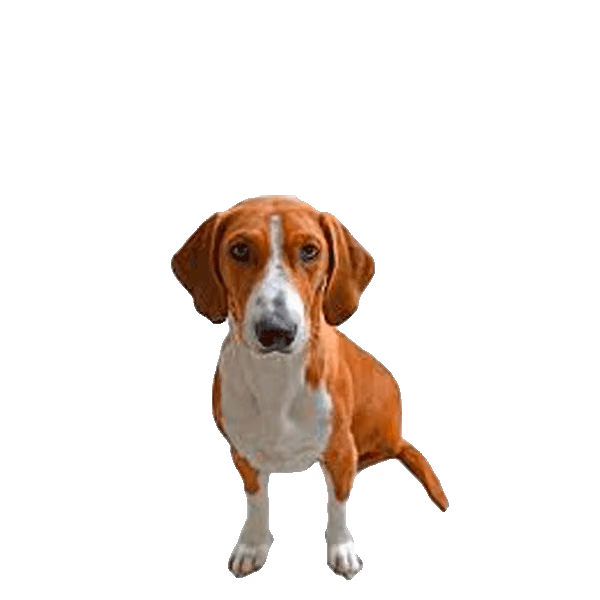
Drever on ystävällinen ja lyhytjalkainen ruotsalainen ajokoira, joka tunnetaan iloisesta luonteestaan ja vakaasta jäljestysvietistään.
Miten Drever-rodun turkki rakentuu ja mitä se tarkoittaa turkinhoidossa.
Kriittinen: Drever-rodun turkkia ei saa ajaa.
Pohjavilla pitää kuumuuden ulkona yhtä hyvin kuin kylmyyden, ja peitinkarva suojaa ihoa auringolta ja hyönteisten puremilta. Koko turkin ajaminen vie molemmat. Se kasvaa usein takaisin laikukkaana, pehmeänä tai eri värisenä, ja joillakin eläimillä peitinkarva ei palaa koskaan kunnolla. Harjaa pohjavilla pois sen sijaan että leikkaisit sen.
Tiedoksi: Drever pudottaa pohjavillansa voimakkaina jaksoina.
Pohjavilla irtoaa voimakkaina jaksoina muutaman viikon aikana. Pohjavillakampa tai kylvetys ja kunnollinen puhalluskuivaus poistaa sen paljon nopeammin kuin päivittäinen harjaus. Turkin lyhyeksi ajaminen ei ole tähän oikotie.
The Drever is a small, short-legged Swedish scenthound bred to track deer and hare on foot, valued for its friendly temperament and steady nose.
The Drever is a short-legged scenthound from Sweden, developed to drive deer and hare toward a waiting hunter at a slow, manageable pace. Its low build keeps it close to the ground scent, and its loud, musical voice tells the hunter where the chase is heading. Outside the field, the breed is calm, sociable, and easy to live with.
Adult Drevers stand low to the ground but have a sturdy, rectangular body built for stamina rather than speed. The breed is friendly with people of all ages and rarely shows aggression. It keeps a strong tracking instinct, so a scent on the ground can pull its attention away quickly.
The Drever is popular as a hunting companion in Sweden and neighboring countries and is far less common elsewhere. Households that can give it daily activity and outlets for its nose tend to see the breed at its best.
| Attribute | Detail |
|---|---|
| Origin | Sweden |
| Size | Small |
| Lifespan | 12 to 15 years |
| Group / role | Scenthound, deer and hare tracking |
| Good with | Families, children, and other dogs |
The Drever fits active owners who can offer long daily walks and a securely fenced yard. It does well in homes that hunt or take part in tracking sports, and it gets along with children and other dogs. Its carrying voice and strong scent drive make it less suited to apartments with close neighbors or to owners who cannot manage a determined nose on walks.
The Drever was developed in Sweden during the early twentieth century from imported short-legged hounds, and the name Drever was chosen by public competition in 1947.
The Drever traces back to short-legged scenthounds brought into Sweden from continental Europe in the early 1900s. Hunters wanted a hound low enough to work deer and hare at a slow pace, so the game would move toward the gun rather than be run down. Crosses between imported dachshund-type hounds and other local scenthounds produced the foundation stock.
For several decades these dogs were grouped together with other short-legged Swedish hounds under a broader label. As the type became distinct, Swedish breeders worked to fix its size, proportions, and working style into a recognizable breed.
The name Drever was selected through a public naming competition organized in Sweden in 1947. The word comes from the Swedish term for driving game, which describes the breed's central task in the field. Soon after, the breed gained formal recognition within Sweden.
The Drever remains widely used for hunting in Sweden and is found in smaller numbers in other Nordic countries and North America. It has never become a common companion breed outside hunting circles, which has kept its working character largely intact.
The Drever is a low, long-bodied scenthound with short legs, a short dense coat, and any color marked with clear white patches.
The Drever has a long, low body carried on short, strong legs. The build is rectangular rather than compact, giving it reach and stamina at a steady working pace. The head is fairly long with a clear stop, and the ears are set moderately high, of medium length, and hang flat against the cheeks. The tail is fairly long and may be carried level or slightly raised when the dog is working.
| Trait | Standard |
|---|---|
| Height | Around 30 to 38 cm (12 to 15 in) at the withers |
| Weight | Around 14 to 16 kg (31 to 35 lb) |
| Coat | Short, straight, dense, and close-lying |
| Colors | Any color, always with white markings |
| Eyes | Dark, clear, with a calm and alert expression |
The coat is short and dense, lying flat against the body, with slightly longer hair on the neck, the back of the thighs, and the underside of the tail. The breed standard allows any color, but white markings must always be present and clearly visible, which helps a hunter see the dog in cover. Common patterns include tricolor and red or fawn with white. The white usually appears on the muzzle, neck, chest, feet, and tail tip. The short coat needs little maintenance to stay neat.
The Drever is friendly, good-natured, and alert, sociable with people and other dogs while keeping a strong, vocal tracking drive.
The Drever is known for a cheerful, even temper. It is friendly toward family members and usually welcoming to strangers, with little tendency toward shyness or aggression. Around children it is patient and tolerant, and it generally accepts other dogs without trouble, a trait that reflects its history of working in packs.
The breed is alert and quick to announce visitors or unusual sounds, so it makes a capable watchdog without being aggressive. Its hunting heritage shows in a powerful scent drive: a fresh trail can hold its full attention, and it may follow a scent with single-minded focus. The Drever also has a loud, carrying voice that it uses readily on a trail and sometimes at home.
Because cats and small pets can trigger the chase instinct, early introductions and supervision help. With enough activity and company, the Drever settles into a calm, affectionate household companion.
| Trait | Rating |
|---|---|
| Affection | 4 |
| Energy | 4 |
| Trainability | 3 |
| Vocalness | 5 |
| Shedding | 3 |
The Drever needs daily exercise and scent outlets, while its short coat asks only for routine brushing and basic upkeep.
The Drever adapts to most homes with a yard, provided it gets daily exercise. A secure fence is important because the breed will follow a trail over distance. Its loud voice can carry, so it suits houses with some space between neighbors better than dense apartment settings. The short coat gives limited protection in very cold weather, so shelter and supervision matter during long winter outings.
The Drever does well on a complete, balanced diet sized to its small frame and activity level, with care taken to prevent weight gain on the long back.
The Drever does well on a complete, balanced dog food suited to its size, age, and activity level. Working and hunting dogs need more calories during active seasons, while a less active pet needs less to avoid weight gain. Because the breed has a long back and short legs, excess weight adds strain to the spine and joints, so portion control matters. Fresh water should always be available.
| Life stage | Amount per day | Meals |
|---|---|---|
| Puppy (2 to 6 months) | Per puppy food label, divided small | 3 to 4 |
| Junior (6 to 12 months) | Around 150 to 220 g dry food | 2 to 3 |
| Adult (1 to 7 years) | Around 150 to 200 g dry food | 2 |
| Senior (7+ years) | Around 130 to 180 g dry food | 2 |
Use treats in moderation and count them toward daily calories, since this breed gains weight easily. Most Drevers on a complete diet need no extra supplements. A vet may suggest joint support for older dogs given the long-backed build, but supplements should only be added on professional advice.
The Drever is generally healthy with a lifespan of 12 to 15 years, though its long back and hanging ears call for attention to spinal and ear problems.
The Drever is a generally healthy and hardy breed with a typical lifespan of 12 to 15 years. Its working background and modest popularity have helped keep the gene pool sound. The main concerns relate to its body shape and ears rather than to widespread inherited disease. Regular veterinary checks and sensible weight management support a long, active life.
| Condition | Signs | Note |
|---|---|---|
| Intervertebral disc problems | Back pain, reluctance to jump, weakness in the legs | Linked to the long back; keeping weight down and limiting hard jumps helps |
| Ear infections | Head shaking, scratching, odor, discharge | The hanging ears trap moisture; weekly checks reduce risk |
| Obesity | Weight gain, low energy, difficulty moving | Adds strain to the spine and joints; manage portions and exercise |
| Dental disease | Bad breath, tartar, sore gums | Routine brushing and checks help prevent it |
The Drever is intelligent and willing but independent on a scent, so it responds best to consistent, reward-based training and early socialization.
The Drever is intelligent and eager to please, but its scenthound independence means it can tune out commands when it catches an interesting trail. Training works best when it starts early and stays consistent. Short, varied sessions hold the dog's interest better than long, repetitive drills. A reliable recall is the hardest and most important lesson, since the breed will follow a scent over distance, so much off-lead work should happen in secure areas until recall is solid.
Female Drevers usually mature by their second season and produce litters of around four to six puppies after a gestation of roughly 63 days.
Drevers generally reach sexual maturity between six and twelve months, though responsible breeders wait until a bitch is physically and mentally mature, usually around two years, before breeding. Health screening before mating helps reduce the risk of passing on problems, with attention to back and joint soundness given the breed's long build.
Gestation lasts about 63 days from conception. Litters are typically four to six puppies, and most births proceed without complication, though a vet should be on call. The mother raises the puppies with normal weaning around four to seven weeks. Early handling and gentle exposure to household life help the puppies develop the steady, friendly temperament the breed is known for. Puppies usually go to new homes from about eight weeks of age.
| Metric | Value |
|---|---|
| Sexual maturity | 6 to 12 months |
| Recommended breeding age (female) | Around 2 years |
| Gestation | About 63 days |
| Average litter size | 4 to 6 puppies |
| Weaning | About 4 to 7 weeks |
| Homing age | From about 8 weeks |
Maksuton elinikäinen profiili Drever-rotuiselle koirallesi United Pet Clubissa, mikrosirun rekisteröinti mukana ilman uusimismaksuja.
Vuoden 2023 alusta jokainen Suomessa asuva koira on pitänyt tunnistusmerkitä mikrosirulla ja ilmoittaa Ruokaviraston koirarekisteriin, Drever-rotuinen koirasi mukaan lukien. Lakisääteinen osuus palvelee kuitenkin vain kotimaassa. United Pet Clubin maksuton profiili täydentää sitä: yhteystietosi kulkevat koiran mukana ja löytyvät mistä maasta tahansa. Rekisteröi koirasi muutamassa minuutissa.
Viisitoista numeroa Drever-rotuisen koirasi niskassa osoittavat sinuun vasta, kun rekisteri niin sanoo. Anna United Pet Clubin sanoa se maksutta: rekisteröinti ei vanhene, kaikki sirumerkit kelpaavat ja jokainen muutos on ilmainen. Sirun rekisteröinti ensin, tili heti perään.
Luo maksuton tili United Pet Clubiin, täytä koiran tiedot kuvan kera ja tallenna profiili. Se on maksuton koko koiran eliniän, ja Ruokaviraston koirarekisteri-ilmoitus hoidetaan erikseen.
Syötä sirun 15-numeroinen koodi maksuttomalle tilillesi osoitteen ja puhelinnumeron kanssa. Elinikäinen suunnitelma hyväksyy kaikki sirumerkit eikä veloita päivityksistä koskaan.
On: vuodesta 2023 alkaen koirat on pitänyt tunnistusmerkitä ja ilmoittaa Ruokaviraston koirarekisteriin. United Pet Clubin merkintä täydentää sitä vastaamalla hakuihin myös Suomen ulkopuolella, maksutta.
Ei mitään. Maksuton elinikäinen suunnitelma kattaa profiilin, sirun rekisteröinnin ja kaikki tulevat päivitykset ilman uusimismaksuja.
Common questions about the Drever cover its size, temperament, care needs, lifespan, suitability as a pet, and how easy it is to find.
The Drever is a small, low-set breed. It stands about 30 to 38 cm (12 to 15 in) at the shoulder and weighs around 14 to 16 kg (31 to 35 lb), with a long body on short legs.
Yes. The Drever is friendly, good-natured, and patient with children, and it usually gets along with other dogs. Its calm temperament suits family life, though small pets need careful introductions because of its hunting instinct.
Grooming is easy thanks to the short coat, but the breed needs daily exercise and scent outlets to stay content. The main challenges are managing its strong nose on walks and its loud, carrying voice.
A Drever typically lives 12 to 15 years. Keeping the dog at a healthy weight and caring for its back, ears, and teeth supports a long, active life.
It can. The Drever has a loud, musical voice that it uses on a trail and sometimes at home, which makes it a good watchdog but less ideal for close-set housing.
The breed is common in Sweden and other Nordic countries, where it is mainly kept for hunting. It is much rarer elsewhere, so finding a puppy outside that region may take patience and a wait list.
