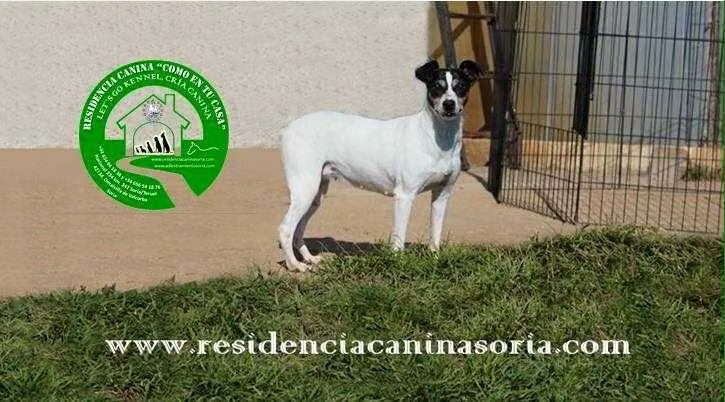
Bodeguero Andaluz on vilkas espanjalainen rotanpyyntiterrieri, valpas ja energinen, jolla on terävä mieli ja järkkymätön uskollisuus perhettään kohtaan.
Miten Bodeguero andaluz-rodun turkki rakentuu ja mitä se tarkoittaa turkinhoidossa.
A few of the Bodeguero andaluz profiles members have added to United Pet Club.
The Bodeguero Andaluz is a small Spanish ratting terrier, alert and energetic, with a sharp mind and steady loyalty to its family.
The Bodeguero Andaluz, also called the Ratonero Bodeguero Andaluz, is a small terrier from the wine cellars of southern Spain. It was developed to kill rats and mice in the sherry warehouses of Andalusia, and that working past still shapes the dog. It is quick, watchful, and built for movement in tight spaces.
Most dogs stand at the lower end of the size range and carry a smooth white coat marked on the head with black or tan. The breed is known for a friendly attitude toward people it knows, paired with a strong drive to chase small moving things. It bonds closely with its household and tends to keep an eye on what is happening around it.
This is an active companion that does best with people who can give it daily exercise and some mental work. It is not a dog that settles for long stretches of inactivity.
| Attribute | Detail |
|---|---|
| Origin | Spain (Andalusia) |
| Size | Small |
| Lifespan | 12 to 15 years |
| Group/role | Terrier, rat and vermin control |
| Good with | Families and people it knows; supervision needed with very small pets |
The Bodeguero Andaluz fits an active home that wants a small, alert companion rather than a lap dog. It works for owners who walk daily, enjoy training games, and can manage a strong prey drive around rodents and small animals. First-time owners can succeed with consistent routines. Homes with hamsters, rabbits, or other small caged pets should plan careful separation.
The Bodeguero Andaluz was developed in Andalusia, Spain, to control rats in sherry cellars, with roots in English ratting terriers brought through the wine trade.
The breed comes from Andalusia in southern Spain, where it earned its name from the bodegas, the wine and sherry cellars of the region. Its main job was to kill rats and mice that damaged stored grain and threatened the casks and supplies inside these warehouses.
The dog is widely traced to small English terriers that reached Andalusia through the busy sherry trade between Spain and Britain. Over generations, local breeders shaped these imports together with native ratting dogs into a distinct white terrier suited to cellar work. The smooth coat and compact frame helped it move through barrels and narrow gaps.
For most of its existence the breed was a working dog kept by cellar workers and farmers rather than a show or pet breed, so it developed for function first. Records of pedigrees were informal during this period, and the type was maintained by use rather than by formal standards.
Spanish breed authorities later recognized the Ratonero Bodeguero Andaluz as a national breed and set down a written standard to preserve it. It remains far more common in Spain than elsewhere, and outside its home country it is still uncommon.
The Bodeguero Andaluz is a small, lean white terrier with short smooth fur and dark or tan markings concentrated on the head.
The Bodeguero Andaluz is a small, light, well-muscled terrier built for speed and agility. The body is slightly longer than it is tall, with straight legs, a deep chest, and a generally lean outline. The head is wedge shaped with a flat skull, and the ears are set high and fold forward in a triangular shape. The overall impression is of a quick, alert dog with no heavy bulk.
| Trait | Standard |
|---|---|
| Height | About 35 to 43 cm at the withers |
| Weight | Roughly 5 to 8 kg |
| Coat | Short, smooth, fine, lying close to the body |
| Colors | Predominantly white with black or tan markings, mainly on the head |
| Eyes | Dark, round, lively expression |
The coat is short and smooth and needs little upkeep. The base color is white, which covers most of the body. Markings appear as black or tan, and they sit chiefly on the head and ears, sometimes with patches near the base of the tail. The pattern gives many dogs a white body with a marked face. Because the coat is thin, the breed has limited protection against cold and wet weather.
The Bodeguero Andaluz is loyal, intelligent, and energetic, affectionate with its family, watchful toward strangers, and strongly driven to chase small animals.
The Bodeguero Andaluz is an alert, busy dog that stays tuned to its surroundings. With its own family it is affectionate and loyal, and it often forms a close bond with the people it lives with. It tends to be friendly and playful at home, and it enjoys being part of household activity.
With strangers the breed is typically watchful and reserved at first. It notices change and will bark to announce visitors or unusual sounds, which makes it a capable small watchdog. It is not generally aggressive, but it can be vocal.
Around other dogs the breed is usually sociable, especially with early exposure. The main caution is its prey drive. As a ratting terrier it is wired to chase small, fast-moving animals, so cats, rodents, and small pets can trigger pursuit. Introductions should be careful, and small caged pets are best kept separate. With children the breed can do well when play is supervised and the dog gets enough exercise to settle.
| Trait | Rating |
|---|---|
| Affection | 4 |
| Energy | 5 |
| Trainability | 4 |
| Vocalness | 4 |
| Shedding | 2 |
The Bodeguero Andaluz needs minimal grooming but plenty of daily exercise and mental stimulation, and it benefits from protection in cold weather.
The breed adapts to houses and to apartments if exercise needs are met, though its alert barking suits homes where that is acceptable. A safe yard is helpful but is not a substitute for walks. Because the coat is thin, the dog feels cold quickly, so a coat or sweater helps in low temperatures and outdoor time should be limited in cold, wet conditions.
The Bodeguero Andaluz needs a complete, balanced diet portioned for a small active dog, split into measured daily meals to support its high energy.
The Bodeguero Andaluz does well on a complete and balanced diet formulated for small, active dogs. Because it is energetic, it uses food efficiently, but small breeds gain weight easily if portions are not measured. Feed by the dog's weight, age, and activity level rather than free feeding, and keep fresh water available at all times. Choose a food with quality protein to support muscle in a working-type build.
| Life stage | Amount per day | Meals |
|---|---|---|
| Puppy (2 to 6 months) | Per puppy formula instructions | 3 to 4 |
| Junior (6 to 12 months) | Per label for growth | 2 to 3 |
| Adult (1 to 7 years) | About 80 to 150 g dry food | 2 |
| Senior (8+ years) | Slightly reduced, adjust for activity | 2 |
Keep treats to about 10 percent of daily calories and subtract them from meals to prevent weight gain. Small, low-calorie treats work well as training rewards for this food-motivated breed. A healthy dog on a complete diet usually needs no extra supplements; ask a veterinarian before adding anything, especially for puppies or older dogs.
The Bodeguero Andaluz is generally a hardy small breed with a lifespan of 12 to 15 years, with routine preventive care being the main support for a long life.
The Bodeguero Andaluz is generally a robust working breed with few widely documented hereditary problems, helped by its function-first development. Typical lifespan is 12 to 15 years. As with most small and active dogs, attention to dental care, weight, and joints supports a long and comfortable life. Buying from breeders who screen their dogs reduces the chance of inherited issues.
| Condition | Signs | Note |
|---|---|---|
| Dental disease | Bad breath, tartar, sore gums | Common in small breeds; regular brushing helps |
| Patellar luxation | Skipping steps, intermittent hind-leg lameness | Kneecap slips out of place; varies in severity |
| Ear problems | Head shaking, odor, scratching | Folded ears can trap moisture and debris |
| Weight gain | Reduced waist, low energy | Easily prevented with measured feeding and exercise |
The Bodeguero Andaluz is intelligent and quick to learn, responding well to reward-based training, with prey drive and recall being the main areas to manage.
The Bodeguero Andaluz is intelligent and eager, which makes it a fast learner when training is consistent and positive. It enjoys having a job and responds to short, varied sessions that hold its attention. The main challenge is its strong prey drive, which can override commands when a small animal moves nearby, so recall and impulse control deserve extra work. Early socialization with people, dogs, and everyday situations helps it grow into a steady adult.
The Bodeguero Andaluz reaches breeding maturity in its first year, carries a litter for roughly nine weeks, and typically produces small to medium litters that need early socialization.
Bodeguero Andaluz dogs reach sexual maturity within the first year, though responsible breeders wait until a dog is physically and mentally mature, usually after the second year, before breeding. Mating follows the female's heat cycle, and a veterinary check beforehand helps confirm both dogs are healthy and free of conditions that should not be passed on.
Gestation lasts about 63 days. Litters are typically small to medium for the breed's size, often around three to six puppies, though numbers vary by individual. The mother usually manages whelping with little help, but a quiet, warm, supervised space supports a safe birth.
Puppies are born blind and deaf and depend fully on the mother in the first weeks. Early handling and gentle exposure to sounds, surfaces, and people from a few weeks of age build a confident adult. Given the breed's prey drive, calm early contact with other animals is useful where possible. Puppies are generally weaned and ready to leave for new homes at about eight weeks.
| Metric | Value |
|---|---|
| Sexual maturity | Within the first year |
| Recommended breeding age | After about 2 years |
| Gestation | About 63 days |
| Typical litter size | Around 3 to 6 puppies |
| Weaning age | About 7 to 8 weeks |
| Ready for new home | About 8 weeks |
Maksuton elinikäinen profiili Bodeguero andaluz-rotuiselle koirallesi United Pet Clubissa, mikrosirun rekisteröinti mukana ilman uusimismaksuja.
Täytä koiran nimi, syntymäaika ja terävä kuva, lisää puhelinnumerosi ja tallenna. Siinä koko homma, eikä se maksa koskaan mitään. Koiran rekisteröinti onnistuu sirulla tai ilman, joten eläinlääkäriaikaa ei tarvitse odottaa.
Viisitoista numeroa Bodeguero andaluz-rotuisen koirasi niskassa osoittavat sinuun vasta, kun rekisteri niin sanoo. Anna United Pet Clubin sanoa se maksutta: rekisteröinti ei vanhene, kaikki sirumerkit kelpaavat ja jokainen muutos on ilmainen. Sirun rekisteröinti ensin, tili heti perään.
Luo maksuton tili United Pet Clubiin, täytä koiran tiedot kuvan kera ja tallenna profiili. Se on maksuton koko koiran eliniän, ja Ruokaviraston koirarekisteri-ilmoitus hoidetaan erikseen.
Syötä sirun 15-numeroinen koodi maksuttomalle tilillesi osoitteen ja puhelinnumeron kanssa. Elinikäinen suunnitelma hyväksyy kaikki sirumerkit eikä veloita päivityksistä koskaan.
On: vuodesta 2023 alkaen koirat on pitänyt tunnistusmerkitä ja ilmoittaa Ruokaviraston koirarekisteriin. United Pet Clubin merkintä täydentää sitä vastaamalla hakuihin myös Suomen ulkopuolella, maksutta.
Ei mitään. Maksuton elinikäinen suunnitelma kattaa profiilin, sirun rekisteröinnin ja kaikki tulevat päivitykset ilman uusimismaksuja.
Common questions about the Bodeguero Andaluz cover its size, temperament, care needs, lifespan, suitability, and availability.
It is a small breed, standing about 35 to 43 cm at the withers and weighing roughly 5 to 8 kg.
It is loyal, intelligent, energetic, alert, and watchful. It is affectionate with its family, reserved with strangers, and strongly inclined to chase small animals.
Grooming is easy thanks to the short coat, but the breed needs at least an hour of exercise and some mental work each day, so the main demand is on time and activity rather than upkeep.
The typical lifespan is 12 to 15 years, and it is generally a hardy small breed.
Yes, in an active home. It bonds closely with its people and can do well with children when play is supervised. Households with small caged pets should plan careful separation because of its prey drive.
It is fairly vocal and tends to announce visitors and unusual sounds, which makes it a useful watchdog but worth managing in shared housing.
It is common in Spain but uncommon elsewhere, so finding one outside its home country can take time and research into reputable breeders.