
Cats in human society: from working hunters to house pets
How cats went from working rodent hunters in ancient Egypt to the pampered, sometimes internet famous house pets we know today.
United Pet Club@unitedpetclub4 min read
Cats have lived alongside humans for roughly four thousand years, first as working animals that controlled rodents around grain stores in ancient Egypt, and only much later, starting in earnest during the Victorian era, as pets kept purely for companionship. That shift from useful predator to household companion tracks closely with changes in how humans farmed, stored food, and eventually organized cities, and it explains a lot about why cats still act like independent hunters even in a home where they have never needed to catch a meal.
The relationship was never simple gratitude on either side. Cats were worshipped as gods in one era and hunted as suspected witches' familiars in another, sometimes within a few centuries of each other in different parts of the world. Looking at how that reputation swung back and forth says as much about human anxieties at the time as it does about the cats themselves.
Ancient Egypt: sacred protectors of the grain store
Egyptians began domesticating African wildcats around four thousand years ago, drawn initially by a practical benefit: cats hunted the rodents that threatened stored grain, the backbone of an agricultural economy. That practical value turned into genuine reverence. The goddess Bastet, usually shown with a cat's head, represented protection, home, and fertility, and killing a cat, even by accident, carried the death penalty in some periods.
Cats were mummified alongside their owners and buried in dedicated cat cemeteries, some containing hundreds of thousands of remains. Egyptian trade networks eventually carried domesticated cats out of the Nile valley and into the wider Mediterranean world, which is the likely path that brought cats into European households centuries later.
Medieval Europe: from vermin control to witch trials
Cats kept doing the same practical job in medieval Europe that they had in Egypt, keeping rodent populations down around food stores. But European folklore attached a much darker set of associations to them. Cats, especially black cats, became linked to witchcraft, and many people believed a witch could transform into a cat or that cats served as a witch's familiar.
That belief had a real, measurable cost. Mass killings of cats during the witch panics of the sixteenth and seventeenth centuries removed a natural check on rat populations, and some historians have pointed to the resulting rise in rodents as a contributing factor in how quickly plague spread through affected towns. Cats that survived this period, particularly around farms and grain stores, continued to earn their keep by controlling the very pests that carried the disease.
| Period | Primary role | Cultural view |
|---|---|---|
| Ancient Egypt (around 2000 BCE onward) | Rodent control around grain stores | Sacred, associated with the goddess Bastet |
| Medieval Europe | Rodent and pest control | Feared, linked to witchcraft |
| Victorian era (1800s) | Companion and status symbol | Fashionable, admired for elegance and independence |
| Modern era | Companion and internet phenomenon | Beloved pet, therapy animal, online celebrity |
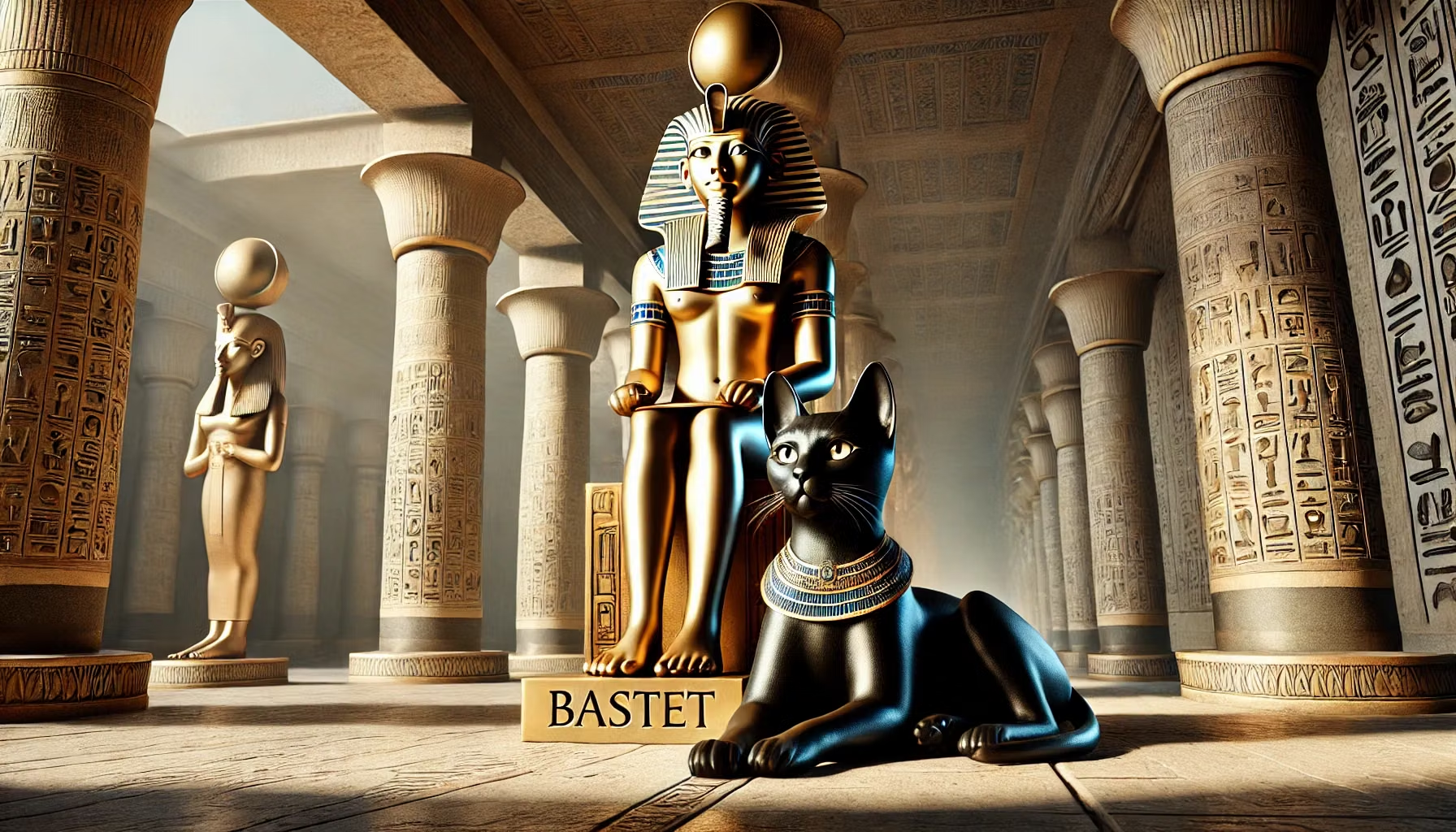
The Victorian era: cats become fashionable companions
The shift from working animal to pampered pet accelerated during the 1800s, as growing middle and upper classes in Europe and North America increasingly kept cats for their company rather than their hunting ability. Cats appealed to Victorian sensibilities: independent, elegant, and a little aloof, qualities that fit the era's taste for refinement.
This period also produced the beginnings of the modern cat breed as a formal category. Breeders began standardizing traits and keeping pedigrees, laying the groundwork for the cat shows and recognized breed standards that exist today. Writers and artists of the era, including some well known novelists, featured cats prominently in their work, reinforcing the image of the cat as a creature of both mystery and domestic comfort rather than a barn animal.
Cats today: companions, therapy animals, and internet celebrities
Modern cats occupy a role that would have been unrecognizable to an ancient Egyptian farmer: emotional support animal, therapy visitor in hospitals and care homes, and, for a significant number of them, an accidental internet celebrity. The basic hunting instincts have not changed much. Watch any house cat stalk a toy across the living room floor and you are looking at the same behavior that once made them valuable around a granary.
A lot of cat owners describe a real calming effect from having a cat around, which is part of why therapy cat programs have become common in hospitals and nursing homes. Online, cats built an entirely new kind of fame through viral videos and social media accounts, something no other domesticated animal has managed at quite the same scale. None of that fame required the cat to do anything except be itself on camera, which might be the most fitting outcome for an animal that has always done things on its own terms.
What the history actually tells new cat owners
If you are bringing a cat into your home for the first time, this history explains a few things that might otherwise seem strange. A cat's tendency to hunt toys, insects, or the occasional houseplant is not misbehavior, it is a working instinct with several thousand years of reinforcement behind it, and giving it an outlet through play works better than trying to train it away.
It also helps explain why cats often act more independent than dogs do around new people or situations: for most of their history with humans, cats were valued for skills that required autonomy, not obedience. If you are adopting for the first time, our guide for new pet owners covers the basics of settling any pet into your home, and if specific behavior problems come up along the way, from litter box issues to scratching, there is a dedicated approach for those too. Real accounts from other owners, including plenty of cat households, are worth reading as well: our collection of pet adoption stories covers what that adjustment period actually looks like in practice.
Why were cats worshipped in ancient Egypt?
Egyptians valued cats first for a practical reason: they controlled the rodents that threatened stored grain, the foundation of the agricultural economy. That practical value grew into genuine religious reverence, centered on the goddess Bastet, who represented home, fertility, and protection. Killing a cat, even accidentally, was a serious offense in some periods of ancient Egyptian history.
Why were cats associated with witches in medieval Europe?
European folklore during the medieval period linked cats, especially black cats, to witchcraft, with a common belief that witches could transform into cats or kept them as magical familiars. This belief led to widespread killing of cats during witch panics in the sixteenth and seventeenth centuries, which some historians connect to a rise in rodent populations and disease afterward.
When did cats become popular as house pets rather than working animals?
The shift accelerated during the Victorian era of the 1800s, as growing middle and upper classes began keeping cats for companionship rather than pest control. This period also produced the first standardized cat breeds and pedigrees, setting the foundation for the cat shows and breed categories that exist today.
Are black cats really adopted less often at shelters?
Yes, at many shelters black cats tend to wait longer for adoption than cats of other colors, a pattern most shelter workers trace back to old superstitions rather than anything about temperament. Coat color has no connection to a cat's personality, affection, or suitability as a pet, and black cats make loving companions like any other color.