
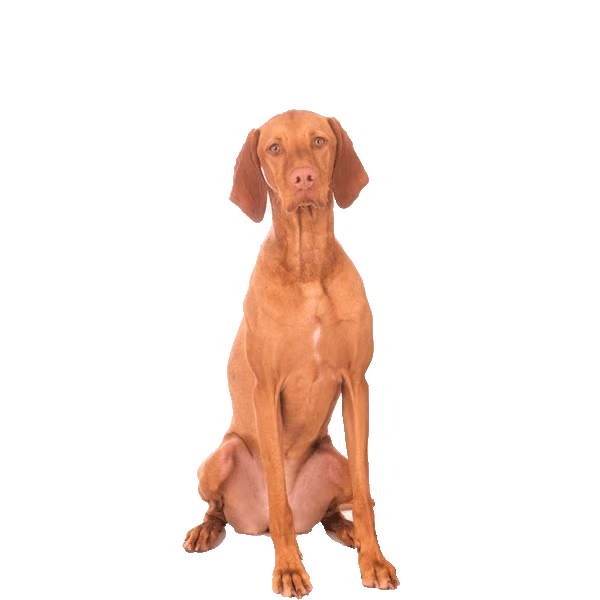
Vizsla
The Vizsla is an affectionate, energetic Hungarian pointer famous for its golden-rust coat and velcro-like devotion to its people.
- Size
- Medium
- Lifespan
- 12–14 years
- Origin
- Hungary
- Temperament
- Affectionate
- Standard colors
- Rust, Gold and Sandy
Characteristics
Coat and grooming
How the Vizsla coat is built, and what that means when you groom it.
- Coat layers
- Single coat
- Coat texture
- Smooth
- Coat length
- Short
- Shedding
- Moderate shedding
Vizsla colors and patterns
What each club's breed standard says about every Vizsla color and pattern. Point at a ruling to see the club's own wording.
Breed standards describe the Vizsla in Rust, Gold and Sandy. Standard patterns: Solid.
| Color or pattern | FCI | AKC | UKC | KC | KUSA |
|---|---|---|---|---|---|
| Rust | Standard (“Various shades of russet gold”) | Standard (“Golden Rust”) | Standard (“Solid golden rust in different shadings”) | Standard (“Russet gold”) | Standard (“Russet gold”) |
| Gold | Standard (“Various shades of russet gold”) | Standard (“Golden Rust”) | Standard (“Solid golden rust in different shadings”) | Standard (“Russet gold”) | Standard (“Russet gold”) |
| Sandy | Standard (“dark sandy gold (semmelgelb)”) | Not recognised | No ruling | Not recognised | Not recognised |
| Red | Fault (“Red, brownish or lightened colour is undesirable”) | Alternate (“Red”) | No ruling | Not recognised | Not recognised |
| Black | Not recognised | Not recognised | Fault (“Any noticeable area of black in the coat”) | Not recognised | Not recognised |
| Brown | Fault (“Red, brownish or lightened colour is undesirable”) | Not recognised | No ruling | Not recognised | Not recognised |
| Mahogany | Not recognised | Fault (“Solid dark mahogany and pale yellow are faulty”) | Fault (“Solid dark mahogany”) | Not recognised | Not recognised |
| Yellow | Disqualifying (“Dark brown or pale yellow colour”) | Fault (“Sandy Yellow”) | No ruling | Not recognised | Not recognised |
| Albino | Not recognised | Not recognised | Disqualifying (“Albinism”) | Not recognised | Not recognised |
| Patterns | |||||
| Solid | Standard (“uniform in colour”) | Standard (“The Vizsla is self-colored”) | Standard (“Solid golden rust”) | Standard | Standard |
| Parti-colour | Disqualifying (“Parti-coloured, not uniformly coloured”) | No ruling | No ruling | Not recognised | Not recognised |

%22%3E%3Cpath%20d%3D%22M0%200H19.5L19.5%2026.5L14%2027.5L0%2027.5Z%22%20fill%3D%22%23D9C3A0%22%2F%3E%3Cpath%20d%3D%22M1.5%2021.2L9%2018.6L12.6%2021L12.2%2026.2L3.5%2024.4Z%22%20fill%3D%22%23F5F5F0%22%2F%3E%3Cpath%20d%3D%22M8.6%2018L12%2015.8L5.8%2021.8L3.2%2021.4Z%22%20fill%3D%22%23F5F5F0%22%2F%3E%3Cpath%20d%3D%22M27.4%2030.8C25.6%2029.9%2025.2%2028.9%2025.3%2027.7C25.4%2026.4%2026.2%2024.3%2028.1%2023.1C29.9%2022%2034.2%2020.6%2036.5%2020.7C38.8%2020.8%2040.8%2022.8%2042%2023.9C43.2%2024.9%2043.9%2025.8%2043.6%2027.1C43.4%2028.5%2041.7%2031%2040.4%2032C39.1%2033%2038.1%2033.4%2035.9%2033.2C33.7%2033%2029.2%2031.7%2027.4%2030.8Z%22%20fill%3D%22%23D9C3A0%22%2F%3E%3Cpath%20d%3D%22M55.1%2031.3C54.9%2032.4%2054%2033.6%2053%2034.2C52%2034.8%2050.3%2034.9%2049.2%2034.7C48.1%2034.5%2047%2034.2%2046.3%2033.2C45.6%2032.2%2044.9%2029.9%2045.1%2028.7C45.3%2027.5%2046.4%2026.5%2047.4%2026C48.4%2025.5%2050.1%2025.5%2051.2%2025.7C52.4%2026%2053.5%2026.5%2054.1%2027.4C54.8%2028.3%2055.3%2030.2%2055.1%2031.3Z%22%20fill%3D%22%23D9C3A0%22%2F%3E%3C%2Fg%3E%3Cuse%20href%3D%22%23s%22%20fill%3D%22none%22%20stroke%3D%22%233B2A20%22%20stroke-opacity%3D%220.6%22%20stroke-width%3D%221%22%20stroke-linejoin%3D%22round%22%2F%3E%3Cellipse%20cx%3D%223.2%22%20cy%3D%2221.7%22%20rx%3D%221.3%22%20ry%3D%221.2%22%20fill%3D%22%231C1C1C%22%2F%3E%3Ccircle%20cx%3D%2210.8%22%20cy%3D%2219.3%22%20r%3D%221.1%22%20fill%3D%22%231C1C1C%22%2F%3E%3C%2Fsvg%3E)
| Color or pattern | FCI | AKC | UKC | KC | KUSA |
|---|---|---|---|---|---|
| Brown | Standard (“The brown eye harmonising with the coat colour”) | No ruling | No ruling | No ruling | No ruling |
| Dark brown | Standard (“as dark as possible preferred”) | No ruling | No ruling | No ruling | No ruling |
| Black | No ruling | No ruling | No ruling | Fault (“Yellow or black eye undesirable”) | Fault (“Yellow or black eye undesirable”) |
| Yellow | Disqualifying (“Light yellow eyes”) | Fault (“Yellow or any other color is faulty”) | Fault (“Light yellow or yellow-colored eyes”) | Fault (“Yellow or black eye undesirable”) | Fault (“Yellow or black eye undesirable”) |
| Color or pattern | FCI | AKC | UKC | KC | KUSA |
|---|---|---|---|---|---|
| Liver | Standard (“The colour of the nose harmonises in a dark shading with the coat colour”) | Standard (“Nose self-colored”) | Standard (“The nose is brown”) | Standard (“Nose brown”) | Standard (“Nose brown”) |
| Black | No ruling | Disqualifying (“A partially or completely black nose is a disqualification”) | Disqualifying (“with the exception of black, which is a disqualification”) | No ruling | No ruling |
| Patterns | |||||
| Butterfly nose | Disqualifying (“Spotted(butterfly) nose”) | No ruling | No ruling | No ruling | No ruling |
%22%3E%3Cpath%20d%3D%22M28.4%2019.1C29.9%2017.7%2032.2%2016.4%2034%2016C35.8%2015.6%2037.4%2016%2039.2%2016.6C41.1%2017.2%2044.4%2018.5%2045.1%2019.5C45.8%2020.6%2044.3%2021.9%2043.3%2023.1C42.2%2024.3%2040.9%2025.9%2039%2026.6C37.1%2027.2%2034.3%2027.3%2032%2026.9C29.6%2026.4%2025.6%2025.3%2025%2024C24.4%2022.7%2026.9%2020.4%2028.4%2019.1Z%22%20fill%3D%22%23E8A0B4%22%2F%3E%3Cpath%20d%3D%22M23.8%2037.7C24.6%2037.5%2026.2%2037.9%2027.4%2038.1C28.5%2038.2%2030.2%2037.9%2030.8%2038.4C31.4%2039%2031.2%2040.7%2030.9%2041.5C30.7%2042.3%2029.9%2042.9%2029.1%2043.3C28.4%2043.8%2027.4%2044.6%2026.4%2044.4C25.4%2044.2%2023.8%2042.9%2023.1%2042.1C22.4%2041.3%2022.2%2040.2%2022.3%2039.5C22.4%2038.8%2022.9%2038%2023.8%2037.7Z%22%20fill%3D%22%23E8A0B4%22%2F%3E%3Cpath%20d%3D%22M10.5%2027.2C10.4%2026.7%2010.4%2025.4%2011%2025C11.5%2024.6%2013%2024.6%2013.9%2024.6C14.8%2024.6%2015.6%2024.5%2016.1%2024.9C16.6%2025.3%2017%2026.2%2017%2026.9C17.1%2027.7%2016.8%2028.8%2016.4%2029.4C15.9%2029.9%2014.9%2030.4%2014.2%2030.3C13.4%2030.1%2012.3%2028.8%2011.7%2028.3C11.1%2027.8%2010.6%2027.8%2010.5%2027.2Z%22%20fill%3D%22%23E8A0B4%22%2F%3E%3C%2Fg%3E%3Cuse%20href%3D%22%23s%22%20fill%3D%22none%22%20stroke%3D%22%233B2A20%22%20stroke-opacity%3D%220.6%22%20stroke-width%3D%221%22%20stroke-linejoin%3D%22round%22%2F%3E%3Cpath%20d%3D%22M12.5%2037Q13%2032%2018.5%2032Q23.5%2032.5%2023.5%2036.5Q20.5%2035.5%2018.8%2037Q17.4%2038.6%2018%2041.5Q13.6%2040.4%2012.5%2037Z%22%20fill%3D%22%231C1C1C%22%20fill-opacity%3D%220.8%22%20stroke%3D%22%23F5F5F0%22%20stroke-opacity%3D%220.4%22%20stroke-width%3D%220.9%22%2F%3E%3Cpath%20d%3D%22M51.5%2037Q51%2032%2045.5%2032Q40.5%2032.5%2040.5%2036.5Q43.5%2035.5%2045.2%2037Q46.6%2038.6%2046%2041.5Q50.4%2040.4%2051.5%2037Z%22%20fill%3D%22%231C1C1C%22%20fill-opacity%3D%220.8%22%20stroke%3D%22%23F5F5F0%22%20stroke-opacity%3D%220.4%22%20stroke-width%3D%220.9%22%2F%3E%3Cpath%20d%3D%22M32%2040V50%22%20fill%3D%22none%22%20stroke%3D%22%231C1C1C%22%20stroke-width%3D%221.3%22%20stroke-opacity%3D%220.5%22%20stroke-linecap%3D%22round%22%20stroke-linejoin%3D%22round%22%2F%3E%3Cellipse%20cx%3D%2232%22%20cy%3D%2221%22%20rx%3D%2212%22%20ry%3D%223.5%22%20fill%3D%22%23F5F5F0%22%20fill-opacity%3D%220.18%22%2F%3E%3C%2Fsvg%3E)
What the rulings mean
- Standard
- Described by the club's breed standard.
- Alternate
- Registrable with the club but not described by its breed standard, such as an AKC alternate colour.
- Fault
- Named by the club's breed standard as a fault: the animal can be shown but is penalised.
- Disqualifying
- The club's breed standard disqualifies an animal of this colour or pattern.
- Not recognised
- The club does not accept this colour or pattern for the breed.
Color changes
How a Vizsla's colors can change over its life.
Blackchanges toRust
Coat · With body condition · can change back
Blackchanges toGrey
Coat · Progressive
Blackchanges toBrown
Coat · In the sun · can change back
Sources
Each ruling comes from the club's published breed standard or color list.
Meet some of our Vizsla
A few of the Vizsla profiles members have added to United Pet Club.


About the Vizsla
The Vizsla is a medium-sized Hungarian pointer with a golden-rust coat, known for its strong attachment to its owners and high energy for fieldwork.
The Vizsla is a medium-sized sporting dog from Hungary, where it was bred to point and retrieve game for hunters on foot and horseback. It has a short golden-rust coat, an athletic build, and a self-coloured nose that matches the coat. Adults typically stand 53 to 61 cm (21 to 24 in) at the shoulder and weigh 20 to 27 kg (44 to 60 lb).
The breed is widely described as a velcro dog for how closely it stays with its people. A Vizsla wants to be in the same room as its family and tends to follow members from task to task. This attachment makes it a poor fit for households where the dog would be left alone for long stretches.
Energy is the defining practical trait. A Vizsla needs a job and daily hard exercise. Without enough physical and mental work it can become restless and destructive. Given a committed, active owner, it is calm and gentle indoors and settles well at the end of an active day.
| Attribute | Detail |
|---|---|
| Origin | Hungary |
| Size | Medium (20 to 27 kg) |
| Lifespan | 12 to 14 years |
| Group / role | Sporting / pointer-retriever |
| Good with | Active families, older children, other dogs |
Who it suits
The Vizsla fits runners, hikers, hunters, and active families who can give it one to two hours of vigorous exercise a day and who are home often. It is a weak fit for flat dwellers with sedentary routines or owners who travel and leave the dog alone for full workdays.
History and origin
The Vizsla developed in Hungary as a versatile hunting dog and nearly disappeared after the world wars before being rebuilt from a small surviving population.
The Vizsla is one of the older European pointing breeds and is tied to Hungary and the Magyar people who settled the Carpathian Basin. Dogs resembling the modern Vizsla appear in Hungarian art and written records from earlier centuries, kept by landowners and hunters for finding and retrieving game birds and hares.
The breed was prized as a versatile gundog that could point, hold, and retrieve, working close to a hunter who often travelled on foot. Selection favoured a dog with stamina, a good nose, and a biddable temperament, along with the distinctive golden-rust colour that set it apart from other continental pointers.
The two world wars devastated the population. By the close of the Second World War the Vizsla was reduced to a small number of dogs, and surviving animals were carried out of Hungary by people fleeing the region. Breeders abroad rebuilt the breed from this narrow base.
The Vizsla reached the United States in the middle of the twentieth century and gained recognition from the American Kennel Club in 1960. It is now established in many countries as both a working gundog and a companion.
Appearance
The Vizsla is a lean, athletic dog with a short golden-rust coat, a matching self-coloured nose, and eyes that blend with the coat colour.
The Vizsla has a clean, muscular outline built for distance work without bulk. The body is slightly longer than tall, the chest is deep, and the legs are straight and well-boned. The head is lean with a moderate stop, and the ears are thin, rounded at the tips, and hang close to the cheeks. The overall impression is of a balanced running dog rather than a heavy hunter.
| Trait | Standard |
|---|---|
| Height | 53 to 61 cm (21 to 24 in); males 56 to 61, females 53 to 58 |
| Weight | 20 to 27 kg (44 to 60 lb) |
| Coat | Short, smooth, dense, single (no undercoat) |
| Colors | Golden rust, in shades from light to deep |
| Eyes | Medium, blending with coat colour |
Coat and colours
The coat is short, smooth, and lies close to the skin with no undercoat, which gives little protection against cold or wet weather. Colour ranges across shades of golden rust. Small white marks on the chest or toes are accepted in many standards, but solid coats are preferred. The nose, eye rims, lips, and nails are self-coloured, blending with the coat rather than contrasting black.
Temperament
The Vizsla is affectionate, loyal, and people-oriented, with high energy and sensitivity that reward gentle handling and constant company.
The Vizsla is gentle, affectionate, and deeply attached to its family. It thrives on close contact and is happiest when included in daily life. With children it is generally patient and playful, though its energy and size suit older children better than toddlers. With strangers it is usually friendly rather than guarded, so it makes a limited watchdog.
The breed is sensitive and responds poorly to harsh corrections, sulking or shutting down when handled roughly. It generally gets on with other dogs and can live with cats when raised together, although its pointing and chasing instincts mean small pets and birds are a risk.
Separation is the main behavioural challenge. A Vizsla left alone too long or under-exercised can bark, chew, dig, and pace. The same dog, given company and enough work, is calm, quiet, and easy to live with indoors.
| Trait | Rating |
|---|---|
| Affection | 5 |
| Energy | 5 |
| Trainability | 4 |
| Vocalness | 3 |
| Shedding | 2 |
Care and grooming
The Vizsla is low-maintenance to groom but demands heavy daily exercise and close human company to stay balanced.
Grooming
- Brush weekly with a rubber mitt or soft brush to remove loose hair
- Bathe only when needed, since the coat carries little odour
- Check and clean the hanging ears regularly to prevent infection
- Trim nails every few weeks and brush teeth several times a week
Exercise
- Provide one to two hours of vigorous activity each day
- Use running, hiking, swimming, fetch, and off-lead galloping in safe areas
- Add scent games, training drills, and puzzle feeders for mental work
- A short walk on its own is not enough for an adult in good health
Environment
The Vizsla suits a home with a secure, fenced garden and an owner who is present for much of the day. The thin single coat means it feels the cold on frosty Highveld winter mornings and should wear a coat then, while in the summer heat it needs shade, water, and exercise timed for the cooler hours. It should live indoors as a house dog, never kennelled outside, and can adapt to smaller homes only if its exercise needs are fully met elsewhere.
Nutrition and feeding
An active Vizsla needs a complete, protein-adequate diet measured to its workload, fed in two meals a day to support its high energy use.
The Vizsla burns a lot of energy, and a working or very active dog needs more food than a couch companion of the same weight. Feed a complete diet formulated for active or sporting dogs, with enough protein and fat to support muscle and stamina. Match the amount to body condition rather than the bag chart alone, keeping ribs easy to feel but not see.
| Life stage | Amount per day | Meals |
|---|---|---|
| Puppy (2 to 6 months) | Per puppy-food guide, growth formula | 3 to 4 |
| Puppy (6 to 12 months) | Per guide, growth formula | 2 to 3 |
| Adult (active) | About 2 to 3 cups | 2 |
| Senior / less active | Reduced to hold condition | 2 |
Treats and supplements
Keep treats to about ten percent of daily kilojoules and count them when measuring food. Most Vizslas on a complete diet need no supplements; add joint, skin, or other supplements only on veterinary advice. Provide constant fresh water, especially around hard exercise and in the heat, and avoid heavy meals immediately before or after intense activity to reduce bloat risk.
Health
The Vizsla is a generally healthy breed living 12 to 14 years, with a few inherited and active-dog conditions worth screening and watching for.
The Vizsla is a hardy, long-lived breed with a typical lifespan of 12 to 14 years. As an active, deep-chested dog it carries some risk of joint problems, eye conditions, and bloat, and the breed has a higher-than-average reported rate of certain immune and cancer conditions. Buying from breeders who health-test their stock reduces the chance of inherited disease.
| Condition | Signs | Note |
|---|---|---|
| Hip dysplasia | Stiffness, limping, trouble rising | Screen breeding dogs; keep lean |
| Epilepsy | Seizures | Manageable with veterinary care |
| Gastric dilatation-volvulus (bloat) | Swollen abdomen, retching, distress | Emergency; deep-chested dogs at risk |
| Eye disorders | Cloudiness, vision changes | Includes entropion and cataracts |
| Hypothyroidism | Weight gain, coat and skin changes | Diagnosed by blood test, treatable |
Preventive care
- Keep core and lifestyle vaccinations up to date
- Use year-round parasite control for fleas, ticks, and worms, including tick and biliary cover
- Maintain a lean body condition to protect joints
- Brush teeth regularly and schedule dental checks
- Attend annual veterinary exams, more often for senior dogs
Training
The Vizsla is intelligent and eager to please, learning quickly under patient, reward-based training but reacting badly to harsh handling.
The Vizsla is bright, biddable, and strongly motivated to work with its handler, which makes it one of the more trainable sporting breeds. It excels in obedience, field work, agility, and scent sports. The breed's sensitivity is the key thing to respect: it learns fast from praise, food, and play, and it loses confidence under shouting or rough corrections. Early, consistent socialisation and a clear daily routine prevent most problems.
Basics
- Start socialisation and gentle handling in the first weeks at home
- Teach name, recall, sit, and settle with short upbeat sessions
- Build a reliable recall early, since the breed ranges far and chases
- Add house manners and crate or alone-time training to ease separation
- Progress to longer focus tasks, field work, or dog sports as the dog matures
Breeding
Vizslas reach breeding maturity at one to two years, carry litters for about nine weeks, and produce medium-sized litters that need active early socialisation.
Responsible Vizsla breeding centres on health testing and temperament. Breeding stock should be screened for hip status, eyes, and known inherited conditions before mating, and pairs should be chosen for sound structure and stable, people-oriented character. Dogs reach physical maturity around one to two years, and many breeders wait until the second season or later for a bitch before breeding.
Gestation lasts roughly 63 days. Litters are commonly in the range of six to eight puppies, though they vary. The dam usually whelps and raises the litter with normal canine maternal behaviour, and most births are uncomplicated, but a veterinary check before and around whelping is advised because of the deep-chested build.
Puppies need rich early experience. Because the breed is so people-focused, handling, gentle exposure to sights and sounds, and contact with calm adults and children from the first weeks shape a confident adult. Puppies normally go to new homes from about eight weeks, with first vaccinations and worming under way.
| Metric | Value |
|---|---|
| Breeding maturity | About 1 to 2 years |
| Gestation | About 63 days |
| Typical litter size | 6 to 8 puppies |
| Weaning | About 6 to 8 weeks |
| Go-home age | From about 8 weeks |
Registering your Vizsla and its chip in South Africa
No national chip law protects a Vizsla here; a free United Pet Club record does, for life, at no cost.
Vizsla registration and microchips in South Africa
When a Vizsla lands at an SPCA branch, the scanner comes out first, and everything then rides on what the number returns. Make sure it returns you. Register your dog free with United Pet Club and the profile answers every scan with your name and number, from now until the end of his days.
The chip is a number; the registry entry is the story behind it. Capture your Vizsla's 15-digit number in a free United Pet Club account and the story reads: this dog has a home. Every brand is accepted, updates never cost a cent, and the record stays searchable here and abroad. Microchip registration plus a free account does it.
How do I register my Vizsla in South Africa?
Create a free United Pet Club account, load your Vizsla's details and a photo, and save. The lifetime plan keeps the profile active at no cost for as long as you have him, chip or no chip.
How do I register my Vizsla's microchip?
Load the 15-digit chip number into your free account together with your address and cell number. Registration and every later update are free, and chips from any brand a South African vet implants are accepted.
Must a Vizsla be microchipped in South Africa?
No national law says so, though the SPCA chips as standard practice and many breeders and welfare groups insist on it. The registration behind the chip is the part that finds you, and with United Pet Club it costs nothing.
What does it cost to register a Vizsla?
Nothing at all. The free lifetime plan covers the profile, the chip record, and unlimited updates, with no annual renewal in sight.
Frequently asked questions
Common questions about the Vizsla cover its size, temperament, care demands, lifespan, suitability, and availability.
How big does a Vizsla get?
It is a medium breed. Adults stand about 53 to 61 cm (21 to 24 in) at the shoulder and weigh roughly 20 to 27 kg (44 to 60 lb), with males larger than females.
What is the Vizsla's temperament like?
Affectionate, loyal, and people-oriented, often called a velcro dog for how closely it sticks to its family. It is gentle indoors but needs company and high activity to stay calm.
Is the Vizsla hard to care for?
Grooming is easy thanks to the short coat, but the exercise and companionship demands are high. It is not a low-maintenance breed for a busy or away-from-home household.
How long do Vizslas live?
Most Vizslas live 12 to 14 years. Health testing of parents, a lean weight, and regular veterinary care help support a long life.
Is a Vizsla a good family dog?
Yes, for active families. It is patient and playful with older children and usually friendly with other dogs, provided it gets daily hard exercise and is not left alone for long periods.
Does the Vizsla make a good guard dog?
Not really. It is typically friendly toward strangers and will alert by barking but is too sociable to act as a protection dog.
Are Vizslas easy to find?
The breed is established in many countries and available through breed clubs and registered breeders, though good litters can have waiting lists. Health-tested parents are worth seeking out.
From the community
Ask about the VizslaNo questions about the Vizsla yet. Be the first to ask.
Browse Dog breeds