
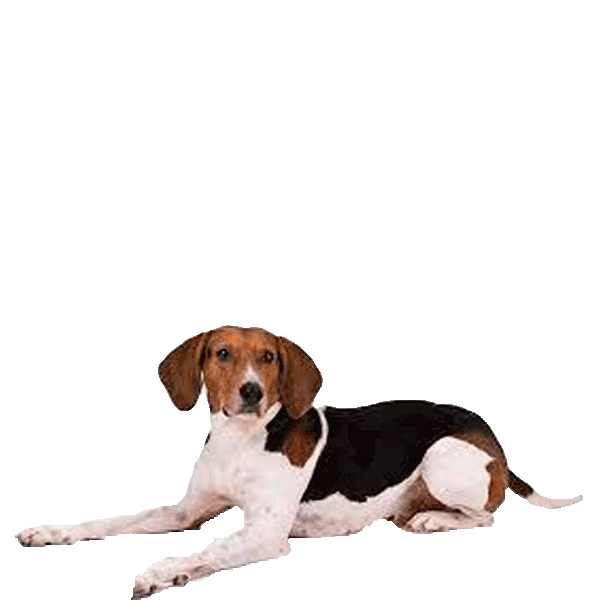
Treeing Walker Coonhound
The Treeing Walker Coonhound is a friendly, energetic scenthound known for its speed, melodious bark, and skill at treeing game.
- Size
- Large
- Lifespan
- 12–13 years
- Origin
- United States
- Temperament
- Friendly
- Standard colors
- Black, White and Tan
Characteristics
Coat and grooming
How the Treeing Walker Coonhound coat is built, and what that means when you groom it.
- Coat layers
- Single coat
- Coat texture
- Smooth
- Coat length
- Short
- Shedding
- Moderate shedding
Treeing Walker Coonhound colors and patterns
What each club's breed standard says about every Treeing Walker Coonhound color and pattern. Point at a ruling to see the club's own wording.
Breed standards describe the Treeing Walker Coonhound in Black, White and Tan. Standard patterns: Tricolour, Spotted and Tan point.
| Color or pattern | AKC | UKC |
|---|---|---|
| Black | Standard (“Black”) | Standard (“black may be the predominant color”) |
| White | Standard (“White”) | Standard (“Tri-colored (white-black-tan)”) |
| Tan | Standard (“Tri-Colored”) | Standard (“Tri-colored (white-black-tan)”) |
| Albino | Fault | Disqualifying (“Albinism”) |
| Patterns | ||
| Tricolour | Standard (“Tri-Colored”) | Standard (“Tri-colored (white-black-tan) is preferred”) |
| Spotted | Standard (“Black Spots”) | Standard (“White with tan spots, or white with black spots is acceptable”) |
| Tan point | Standard (“White Markings, Tan Trim”) | Standard (“tan trim”) |


| Color or pattern | AKC | UKC |
|---|---|---|
| Black | Standard (“dark in color, brown or black”) | Standard (“Color is dark, brown or black”) |
| Dark brown | Standard (“dark in color, brown or black”) | Standard (“Color is dark, brown or black”) |
| Light brown | Fault (“yellow or light eyes”) | No ruling |
| Yellow | Fault (“yellow or light eyes”) | No ruling |
| Color or pattern | AKC | UKC |
|---|---|---|
| Black | Standard (“Nostrils large and black”) | Standard (“black pigment preferred”) |
| Patterns | ||
| Butterfly nose | No ruling | Standard (“White or pink spots inside the nostril or on the outside of the nose are acceptable”) |

What the rulings mean
- Standard
- Described by the club's breed standard.
- Fault
- Named by the club's breed standard as a fault: the animal can be shown but is penalised.
- Disqualifying
- The club's breed standard disqualifies an animal of this colour or pattern.
Color changes
How a Treeing Walker Coonhound's colors can change over its life.
Blackchanges toRust
Coat · With body condition · can change back
Blackchanges toGrey
Coat · Progressive
Blackchanges toBrown
Coat · In the sun · can change back
Whitechanges toRoan
Coat · With age · from 2 weeks
Tan pointchanges toSaddle
Coat · With age · from 6 to 156 weeks
Blackchanges toSnow nose
Nose · With the season · can change back
Blackchanges toPink
Nose · With the season · can change back


Sources
Each ruling comes from the club's published breed standard or color list.
Meet some of our Treeing Walker Coonhound
A few of the Treeing Walker Coonhound profiles members have added to United Pet Club.

About the Treeing Walker Coonhound
A large American scenthound bred to trail and tree raccoon, known in hunting circles for its speed, stamina and deep, carrying bay.
The Treeing Walker Coonhound is a large, rangy scenthound developed in the United States to hunt raccoon and other game. It works by picking up a scent trail at a run, pushing the quarry up a tree, and then holding it there with a deep, carrying bay until the hunter catches up. Everything about the dog serves that job: the long legs built for distance, the deep chest for stamina, the sharp nose, and the voice that carries for kilometres across open country.
Away from hunting work, the breed is outgoing and easy in company. It gets on with people of most ages and, having been bred to work in packs, usually settles well with other dogs too. The same drive that makes it relentless on a trail also makes it a demanding companion that needs a proper job, a long run, or both most days. Owners who meet that need tend to describe a calm house dog; owners who do not tend to describe a restless, vocal one.
Among coonhound circles in the United States the breed carries the nickname "People's Choice". It shares bloodlines with the English and American Foxhound and looks much like them, but it was purpose bred and trained to tree game rather than run it to ground, which is why South African hunters and gundog enthusiasts who come across the breed usually meet it through imported bloodlines or online hunting communities rather than local kennels.
| Attribute | Detail |
|---|---|
| Origin | United States |
| Size | Large |
| Lifespan | 12 to 13 years |
| Group/role | Scenthound, treeing hunter |
| Good with | Families, children, other dogs (with training and exercise) |
Households it suits
This is a breed for an active household with room to run and time for scent work every day. It suits hunters, trail runners and families on a smallholding or a large erf with secure fencing. A block of flats or a small townhouse garden will not give it what it needs, and anyone sensitive to barking, or unable to manage a strong prey drive and a habit of following a scent for kilometres, should look elsewhere.
History and origins
The Treeing Walker Coonhound comes from English and American Foxhound stock developed in the United States, with roots in the Walker family of Kentucky.
The Treeing Walker Coonhound goes back to English Foxhounds shipped out to the American colonies. Colonial hunters crossed those imports with local stock to produce hounds suited to American game and ground, and that foundation stock later became the American Foxhound.
The breed takes its name from the Walker family of Kentucky, who shaped the Walker strain of hound through the 1800s. One dog did more than most to fix the line: a stolen or traded hound called Tennessee Lead, brought into the Walker breeding in the mid-1800s. Lead had a strong instinct for treeing game and a sharp nose, and his offspring carried both traits forward.
For a long stretch of its history the Treeing Walker was registered together with other hounds under the general "English" coonhound label. Breeders kept their treeing lines separate all the same, choosing dogs that would run game up a tree and mark it with a bay rather than fight or run it to ground. The treeing strain was eventually recognised as a breed in its own right.
The United Kennel Club in the United States recognised the Treeing Walker Coonhound as a distinct breed in 1945, and the American Kennel Club followed much later, in 2012, placing it in its Hound Group. The Kennel Union of Southern Africa places hounds under a similar Hound Group classification, though the Treeing Walker has never needed a separate KUSA register of its own: South African interest in the breed runs through hunting and gundog networks that deal directly with American breeders rather than through local kennel clubs. The dog remains first and foremost a working hunting hound, with a smaller following as a companion and show animal.
Appearance and breed standard
The Treeing Walker Coonhound is a lean, long-legged scenthound with a smooth tricolour coat and low-set drop ears, built for speed over distance.
The Treeing Walker is built to cover ground. It has a clean, muscular frame, a deep chest, well-sprung ribs and long legs that give it both speed and reach. The head is moderately broad with a long muzzle, and the large drop ears sit low and hang close to the head. Nothing about the breed is exaggerated: the whole dog is put together for a fast, balanced gait.
| Trait | Standard |
|---|---|
| Height | 51 to 69 cm (20 to 27 in) at the shoulder |
| Weight | 23 to 32 kg (50 to 70 lb) |
| Coat | Short, smooth, dense, lying close to the body |
| Colours | Tricolour (white, black and tan); also white and black, or white and tan |
| Eyes | Dark, round, with a soft expression |
Coat and colours
The coat is short and smooth and lies flat against the body, giving some protection against thorn and bramble without needing much upkeep. The most common pattern is tricolour: a mostly white body marked with black and tan. White and black, or white and tan, dogs also turn up. A predominantly white coat is easier to pick out at a distance in thick bush, which is one reason hunters favoured the pattern.
Temperament and personality
The Treeing Walker Coonhound is friendly, energetic and pack oriented, devoted to its family but driven by scent and quick to bay.
The Treeing Walker is a friendly, outgoing dog that generally likes people. It tends to be affectionate with its own family and patient with children, and it usually greets strangers rather than challenging them, which makes it a poor watchdog whatever its voice suggests. Bred to hunt in packs, it usually gets on with other dogs without much fuss.
Energy runs high in this breed, and it needs a proper outlet for both body and mind. Left without one, a Treeing Walker grows bored, restless and hard on furniture and fences alike. Its nose is exceptionally sharp and its prey drive strong, so a hot scent can override any command, and an unfenced dog will simply follow the trail. Cats, tortoises, chickens and other small animals common in South African gardens can set off the chase instinct, though some dogs raised alongside them learn to leave them be.
Voice is part of the breed's character. The bay is loud and carries a long way, and it comes naturally whenever the dog trees something or gets excited. Owners should expect regular barking and howling, which can cause friction in a townhouse complex or with neighbours close by.
| Trait | Rating |
|---|---|
| Affection | 5 |
| Energy | 5 |
| Trainability | 3 |
| Vocalness | 5 |
| Shedding | 3 |
Care and grooming
Grooming the Treeing Walker Coonhound takes little effort, but the breed needs serious daily exercise and genuinely secure fencing to stay settled.
Grooming
- Brush the short coat once a week to lift loose hair and cut down on shedding
- Bathe only when needed; the breed carries a houndy smell that frequent baths will not fully shift
- Check and clean the long drop ears often, since they trap moisture and infections take hold quickly
- Trim the nails every few weeks and brush the teeth several times a week
Exercise
- Give at least one to two hours of hard exercise a day
- Offer long runs, hikes or off-lead time on a securely fenced smallholding or open ground
- Add scent games and tracking work to keep the nose and the brain busy
- Keep the dog on lead or behind a fence in open country, because a fresh trail beats any recall
Environment
The Treeing Walker does best with space and an owner who is out and about. A property with a tall, solid fence suits it well, and containment has to be genuine, since this breed climbs and digs given the chance; electric perimeter fencing common on South African security estates will not stop a determined hound on a scent. Climate matters less than space: the breed copes with cold highveld winters and humid lowveld summers alike, provided it has shelter and water. It is a poor fit for flat or townhouse living unless exercise is intensive and consistent, and its voice carries far enough to reach the neighbours.
Nutrition and feeding
The Treeing Walker Coonhound needs a balanced diet matched to its large frame and high activity level, adjusted for working dogs versus companions.
The Treeing Walker is a large, active breed and does well on a complete diet formulated for large or active dogs. A working hound in hunting season burns far more energy than a dog kept purely as a companion and may need larger portions, while a less active pet needs careful portion control to avoid putting on weight. Feed two measured meals a day rather than leaving food out, and keep fresh water available at all times, particularly after exercise in the heat.
| Life stage | Amount per day | Meals |
|---|---|---|
| Puppy (2 to 6 months) | Per product guide for growth, divided | 3 to 4 |
| Puppy (6 to 12 months) | Per product guide for growth | 2 to 3 |
| Adult | Roughly 2.5 to 3.5 cups (about 300 to 420 g) of quality dry food | 2 |
| Working adult (in season) | Increased according to activity and condition | 2 to 3 |
| Senior | Reduced to hold a healthy weight | 2 |
Treats and supplements
Keep treats to a small part of the daily food intake, particularly since food works well as a training reward for a scent driven breed. A dog on a complete commercial diet generally needs no extra supplements. Discuss joint support or other additions with a veterinary surgeon, especially for dogs that work hard in the field or are getting on in years.
Health and common conditions
The Treeing Walker Coonhound is generally hardy with a 12 to 13 year lifespan; ear infections, hip dysplasia and tick-borne illness need watching.
The Treeing Walker Coonhound is a hardy, generally healthy breed, helped along by its working background and its lack of extreme physical features. Typical lifespan runs to 12 or 13 years. As with any large, active dog, joint and ear health need attention, and responsible breeders screen their breeding stock for inherited problems before pairing them.
| Condition | Signs | Note |
|---|---|---|
| Ear infections | Head shaking, odour, scratching, discharge | Long drop ears trap moisture; clean and check regularly |
| Hip dysplasia | Stiffness, limping, trouble rising | Inherited joint condition; screen breeding dogs |
| Eye conditions | Cloudiness, redness, vision changes | Includes issues such as cataracts; check during exams |
| Injuries and overheating | Cuts, soreness, heavy panting | Field work raises the risk of injury and heatstroke; watch dogs closely in hot lowveld or Karoo conditions |
Preventive care
- Keep vaccinations and parasite control up to date, including reliable tick control for dogs that work in bush or long grass
- Learn the signs of tick-borne biliary (canine babesiosis), a real risk in South Africa: lethargy, pale gums, dark urine and loss of appetite call for a same day vet visit
- Check ears, eyes, feet and skin often, especially after time out in the veld
- Keep the dog at a healthy weight to protect the joints
- Book a veterinary check up once a year, moving to twice a year for older dogs
Training the Treeing Walker Coonhound
The Treeing Walker Coonhound is clever and willing but works independently once it catches a scent, so early, consistent, reward based training pays off.
The Treeing Walker is a capable, intelligent dog, but it was bred to work a trail on its own judgement, so it can be single minded and slow to answer once a scent takes hold. Training calls for patience and consistency. Start young, keep sessions short and upbeat, and reward with food and praise, since a heavy hand tends to backfire with a sensitive, sociable hound. Recall is the hardest skill of all and may never be fully dependable off lead in open country, so a secure fence and a lead stay part of managing this breed for life.
Basics
- Start socialisation and handling as a puppy, introducing it to people, dogs and different places
- Teach name recognition and the basic cues (sit, down, stay) somewhere quiet before adding distractions
- Build recall gradually with high value rewards, then test it around distractions step by step
- Practise loose lead walking, since this breed pulls hard toward an interesting smell
- Give the nose an approved outlet, such as tracking or scent games
- Deal with barking early by rewarding quiet moments rather than answering demand barking
Breeding and raising young
The Treeing Walker Coonhound reaches breeding age at one to two years, with gestation of about 63 days and a typical litter of several puppies.
Breeding the Treeing Walker calls for a responsible approach, with proper attention to temperament, working ability and health screening in both parents. Females are usually bred once they are physically mature, generally from around 18 months to two years old, rather than at the first season. Gestation runs to about 63 days from conception. Litter size varies, though several puppies is typical for a hound of this size.
Newborn puppies are helpless and rely entirely on the dam for warmth and milk in the early weeks. Regular gentle handling, early exposure to household sounds and activity, and socialisation started before the puppies leave for new homes all help produce settled, sociable adults. Given how strong the breed's working drive is, placing energetic puppies with owners who can meet that need matters as much as the health side of responsible breeding.
| Metric | Value |
|---|---|
| Breeding maturity | About 18 months to 2 years |
| Gestation | Approximately 63 days |
| Litter size | Several puppies (typical hound range) |
| Weaning | Around 6 to 8 weeks |
| Recommended health checks | Hips, eyes, general soundness |
Registering your Treeing Walker Coonhound and its chip in South Africa
No national chip law protects a Treeing Walker Coonhound here; a free United Pet Club record does, for life, at no cost.
Treeing Walker Coonhound registration and microchips in South Africa
South Africa has no single national law forcing microchips on dogs, though the SPCA chips as standard and rabies vaccination is required by law. What actually reunites a lost Treeing Walker Coonhound with you is a record, and that part is free: a United Pet Club profile carries your details beside the dog's photo for as long as you have him. Registering your dog takes a few minutes, with no fee attached.
The chip is a number; the registry entry is the story behind it. Capture your Treeing Walker Coonhound's 15-digit number in a free United Pet Club account and the story reads: this dog has a home. Every brand is accepted, updates never cost a cent, and the record stays searchable here and abroad. Microchip registration plus a free account does it.
How do I register my Treeing Walker Coonhound in South Africa?
Create a free United Pet Club account, load your Treeing Walker Coonhound's details and a photo, and save. The lifetime plan keeps the profile active at no cost for as long as you have him, chip or no chip.
How do I register my Treeing Walker Coonhound's microchip?
Load the 15-digit chip number into your free account together with your address and cell number. Registration and every later update are free, and chips from any brand a South African vet implants are accepted.
Must a Treeing Walker Coonhound be microchipped in South Africa?
No national law says so, though the SPCA chips as standard practice and many breeders and welfare groups insist on it. The registration behind the chip is the part that finds you, and with United Pet Club it costs nothing.
What does it cost to register a Treeing Walker Coonhound?
Nothing at all. The free lifetime plan covers the profile, the chip record, and unlimited updates, with no annual renewal in sight.
Frequently asked questions
Common questions South African owners ask about the Treeing Walker Coonhound, covering size, temperament, care, lifespan, housing and where to find one.
How big does a Treeing Walker Coonhound get?
It is a large breed, standing roughly 51 to 69 cm at the shoulder and weighing 23 to 32 kg, with a lean, athletic build.
Is a Treeing Walker Coonhound good with children and other pets?
Yes, it is friendly and sociable and usually does well with children and other dogs. It needs plenty of exercise, and its loud voice and strong prey drive around cats or garden poultry are worth planning for.
Is the breed difficult to look after?
Grooming is simple thanks to the short coat, but exercise is another matter. It needs one to two hours of hard activity daily and genuinely secure fencing, so this is not a low effort dog.
How long does a Treeing Walker Coonhound live?
Typical lifespan is 12 to 13 years. Regular exercise, a healthy weight and routine veterinary care, including tick control, help support a full life.
Do Treeing Walker Coonhounds bark a lot?
Yes. The breed was developed to bay loudly when it trees game, so frequent, carrying barking and howling are normal and can cause problems in a complex or close to neighbours.
Can a Treeing Walker Coonhound live in a flat?
It is not a good match for flat life. Its energy, need for space and loud voice suit a house with a secure garden far better, unless exercise is intensive and consistent.
Where can I find a Treeing Walker Coonhound in South Africa?
The breed is uncommon locally, and most South African owners connect with breeders through hunting and coonhound communities abroad, or import from the United States. Check with the SPCA and breed specific rescue groups too, and choose a source that screens for health and temperament.
From the community
Ask about the Treeing Walker CoonhoundNo questions about the Treeing Walker Coonhound yet. Be the first to ask.
Browse Dog breeds