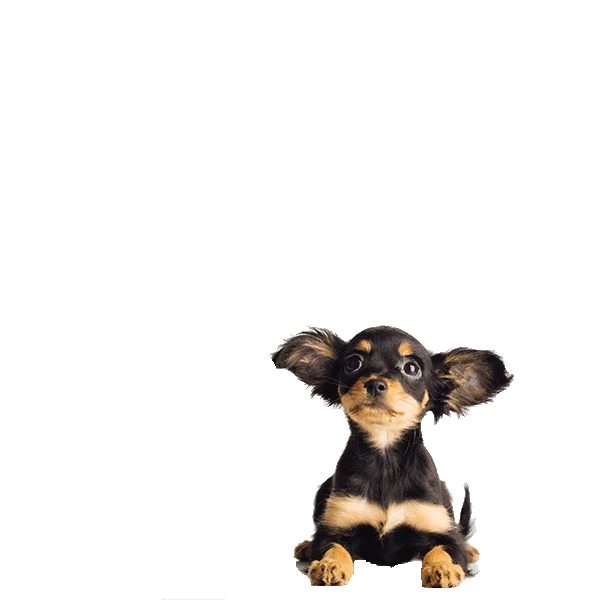
The Toy Fox Terrier is a spirited, clever companion that pairs terrier gameness with affectionate, lapdog devotion.
How the Toy Fox Terrier coat is built, and what that means when you groom it.
A few of the Toy Fox Terrier profiles members have added to United Pet Club.
The Toy Fox Terrier is a small American companion breed that packs full-sized terrier drive into a compact frame. It suits flats and gardens alike, given daily exercise.
The Toy Fox Terrier is a toy breed developed in the United States, bred down from the Smooth Fox Terrier together with a handful of small companion breeds. It stands roughly 22 to 29 cm at the shoulder and weighs between 1.6 and 3.2 kg. For its size, the dog carries the same bold, businesslike attitude as a full-sized working terrier.
It is athletic and quick to learn, and it stays alert to whatever is happening around it. The breed bonds tightly with its household and will often pick one person to shadow from room to room. It settles happily on a lap at rest, then switches to an energetic playmate once the lead comes out, which suits a wide range of South African households.
Most Toy Fox Terriers are confident and outgoing. Visitors are usually announced with a burst of barking before the dog warms to them, and it keeps a watchful eye on its patch. The small size works well in a flat or a townhouse, but the energy and intelligence behind it mean the dog needs daily exercise and mental stimulation to stay settled.
| Attribute | Detail |
|---|---|
| Origin | United States |
| Size | Toy (1.6 to 3.2 kg) |
| Lifespan | 13 to 15 years |
| Group/role | Toy companion, originally a small terrier used for ratting |
| Good with | Adults, older children, and similarly sized dogs once properly socialised |
The Toy Fox Terrier suits an owner who wants a small dog with an active mind and body. It works well for singles, couples, and retirees who can offer attention and short play sessions through the day. Households with very young children are less suitable, given how fragile the dog's small frame is. Owners who enjoy training, games, and dog sport get the most out of the breed's intelligence, and KUSA-affiliated clubs around the country run obedience and agility classes worth looking into.
The Toy Fox Terrier was bred in the United States in the early twentieth century from undersized Smooth Fox Terriers crossed with small companion breeds, and the United Kennel Club recognised it in 1936.
The breed goes back to the Smooth Fox Terrier, imported into the United States from England to work as a ratter and hunting dog. American breeders noticed that some Smooth Fox Terrier litters threw very small pups. Instead of setting these runts aside, breeders in the early 1900s began selecting for the smaller size on purpose.
To fix the toy size and soften the temperament, breeders crossed these small terriers with companion breeds such as the Chihuahua, the Manchester Terrier, and the Italian Greyhound. The Chihuahua brought compact size and a domed skull, the Manchester Terrier added refinement along with the black and tan markings still seen in the breed today, and the Italian Greyhound is credited with the graceful, smooth outline.
The result was a small dog that kept the nerve and ratting instinct of a terrier in a body built for the lap. The United Kennel Club recognised the Toy Fox Terrier in 1936, one of the earliest formal records of the breed. Farmers valued the dogs for vermin control, and circus and vaudeville performers valued them for how quickly they learned tricks.
The American Kennel Club admitted the Toy Fox Terrier to its Toy Group in 2003. The breed is still uncommon in South Africa, where it is not among KUSA's more frequently registered toy breeds, but a small, dedicated following keeps it going among owners who want an active companion in a compact package.
The Toy Fox Terrier is a small, square, athletic dog with a short smooth coat, mostly white with black and tan or other colour markings. It stands 22 to 29 cm tall and weighs 1.6 to 3.2 kg.
The Toy Fox Terrier has a balanced, square outline: its height at the shoulder is roughly the same as its body length. The build is fine but muscular, with clean lines that show both its sighthound and terrier ancestry. The head is slightly rounded with a moderate stop, and the ears are large, erect, and set high, which gives the dog a permanently alert expression. The tail is set high; historically it was docked, though tail docking for cosmetic reasons is restricted under South African veterinary regulations, and most Toy Fox Terriers bred locally keep a natural tail.
| Trait | Standard |
|---|---|
| Height | 22 to 29 cm at the shoulder |
| Weight | 1.6 to 3.2 kg |
| Coat | Short, fine, smooth, and glossy, lying close to the body |
| Colours | Tricolour, white and tan, white and black, white chocolate and tan |
| Eyes | Dark, round, and full, set well apart |
The coat is short and lies flat against the skin, which keeps upkeep simple. The body is mostly white, and the standard calls for a predominantly white head with colour markings on top. Accepted patterns include tricolour (black head markings with tan, on a white body), white and tan, white and black, and white chocolate and tan. The sharp colour breaks against the white give the breed its neat, marked look. The skin underneath can be thin, so the short coat offers little protection against the cold, especially on highveld winter mornings.
The Toy Fox Terrier is spirited, intelligent, and devoted to its family, with the alertness and prey drive typical of terriers. It is affectionate at home but watchful with strangers until introduced.
The Toy Fox Terrier combines two temperaments: the gameness of a terrier and the attachment of a lap dog. With its own family it is warm and physically affectionate, often claiming a lap and trailing its favourite person from room to room. It stays playful well into adulthood and remains curious about everything going on around it.
Around strangers the breed is alert and tends to announce arrivals before it settles down. Early socialisation helps it accept new people and new situations without fuss. With other dogs it can be sociable, though it may take on a much larger dog without registering the size difference, so supervision is worthwhile. Its prey drive means small pets such as hamsters or birds are usually not safe housemates.
The breed is sharp and reads its owner well, which makes it responsive to training but just as quick to pick up bad habits if the household is inconsistent. It can be vocal, barking at noises or movement outside. Firm, consistent boundaries and daily mental work keep that busy mind occupied.
| Trait | Rating |
|---|---|
| Affection | 5 |
| Energy | 4 |
| Trainability | 5 |
| Vocalness | 4 |
| Shedding | 2 |
The Toy Fox Terrier is low maintenance to groom but needs daily exercise and mental stimulation. Its thin coat means it needs protection from the cold.
Day-to-day care of a Toy Fox Terrier is straightforward thanks to the short coat, but the breed's energy and intelligence call for an active routine. The dog is suited to indoor living and should not be left outside for long, particularly during a highveld winter or a damp Cape one.
The Toy Fox Terrier adapts well to flats, townhouses, and sectional title complexes once its exercise needs are met. It feels the cold because of its thin coat and low body mass, so a jersey or coat helps through winter. A secure garden or a harness on walks is sensible, since the breed can bolt after small animals.
The Toy Fox Terrier needs a small amount of high quality food formulated for small or toy breeds, fed in two or more meals a day. Portion control prevents obesity and low blood sugar.
Because the Toy Fox Terrier is so small, its calorie needs are low and portions need careful measuring. A good quality small breed or toy breed food gives the concentrated nutrition and small kibble size the breed needs. Active dogs may need a little more, while older or less active dogs need less to avoid putting on weight. Toy puppies can be prone to low blood sugar, so they need frequent meals in their first few months.
| Life stage | Amount per day | Meals |
|---|---|---|
| Puppy (under 6 months) | About 30 to 60 g, divided | 3 to 4 |
| Adult | About 30 to 60 g | 2 |
| Senior or less active | About 25 to 50 g | 2 |
Keep treats to no more than 10 percent of daily calories, since a few extra bites add up quickly in such a small dog. Small, soft training treats work well for a breed that thrives on reward-based learning. Most dogs on a complete commercial diet need no supplements, but a vet may suggest a dental chew or joint support for an older dog. Fresh water should always be available.
The Toy Fox Terrier is generally healthy with a lifespan of 13 to 15 years, but like many toy breeds it can develop knee, dental, and eye problems. Routine veterinary care and weight control support a long life.
The Toy Fox Terrier is a hardy small breed, and many live to 13 to 15 years or beyond. Most health concerns are the ones common to toy dogs generally, including joint, dental, and eye issues. Buying from a breeder who screens breeding stock, and keeping the dog at a healthy weight, both lower the risk.
| Condition | Signs | Note |
|---|---|---|
| Patellar luxation | Skipping steps, occasional hind leg lameness | Common in toy breeds; ranges from mild to needing surgery |
| Legg-Calve-Perthes disease | Limping, hip pain, muscle loss in the leg | Hip joint disorder seen in some young small dogs |
| Dental disease | Bad breath, tartar, loose teeth, red gums | Common in small mouths; needs regular dental care |
| Hypoglycaemia | Weakness, trembling, lethargy, especially in puppies | Manage with frequent meals in young dogs |
| Eye conditions | Cloudiness, changes in vision, redness | Includes cataracts and lens problems in some lines |
The Toy Fox Terrier is highly trainable and eager to learn, which made it a favourite performing dog. Short, reward-based sessions and early socialisation bring out its best.
The Toy Fox Terrier ranks among the more trainable toy breeds. It is clever, attentive, and motivated by food and praise, which is exactly why these dogs once performed in circus acts. That same quick mind means it picks up bad habits fast if training is inconsistent. Keep sessions short and upbeat, since the breed loses interest with repetition. Start socialising early to soften its watchfulness around strangers and its tendency to bark.
The Toy Fox Terrier reaches maturity around one year, carries a pregnancy of about 63 days, and produces small litters that often need attentive care because of the breed's tiny size.
Breeding a Toy Fox Terrier calls for care because of the breed's small size. A female should reach full physical maturity, usually well past her first season, before breeding is even considered, and a veterinary check helps confirm she is fit for it. Pregnancy runs about 63 days, the same as in other dogs. Litters are small, typically two to four puppies, and the dam's small frame raises the risk of whelping difficulty, so close monitoring and veterinary support matter.
Newborn Toy Fox Terriers are tiny and vulnerable to chilling and low blood sugar. They need a warm, draught-free whelping area and frequent nursing. Puppies should stay with the dam and littermates until at least eight weeks old so they can wean properly and pick up early social skills. Responsible breeders screen the parents for patellar, hip, and eye problems before pairing them, and KUSA registration papers are worth asking for when buying a puppy in South Africa.
| Metric | Value |
|---|---|
| Sexual maturity | Around 6 to 12 months; breed only once fully mature |
| Gestation | About 63 days |
| Average litter size | 2 to 4 puppies |
| Weaning age | About 4 to 6 weeks, started gradually |
| Recommended go-home age | 8 weeks or later |
No national chip law protects a Toy Fox Terrier here; a free United Pet Club record does, for life, at no cost.
Load your Toy Fox Terrier's details once and be done with it: name, date of birth, photo, your cell number, save. The profile is free for his whole life, and it takes a chip number the day the vet supplies one. Dog registration is the start of the paper trail.
The chip is a number; the registry entry is the story behind it. Capture your Toy Fox Terrier's 15-digit number in a free United Pet Club account and the story reads: this dog has a home. Every brand is accepted, updates never cost a cent, and the record stays searchable here and abroad. Microchip registration plus a free account does it.
Create a free United Pet Club account, load your Toy Fox Terrier's details and a photo, and save. The lifetime plan keeps the profile active at no cost for as long as you have him, chip or no chip.
Load the 15-digit chip number into your free account together with your address and cell number. Registration and every later update are free, and chips from any brand a South African vet implants are accepted.
No national law says so, though the SPCA chips as standard practice and many breeders and welfare groups insist on it. The registration behind the chip is the part that finds you, and with United Pet Club it costs nothing.
Nothing at all. The free lifetime plan covers the profile, the chip record, and unlimited updates, with no annual renewal in sight.
Common questions about the Toy Fox Terrier cover its size, temperament, care needs, lifespan, suitability, and availability.
It is a toy breed that stands about 22 to 29 cm at the shoulder and weighs roughly 1.6 to 3.2 kg once fully grown.
It is spirited, intelligent, and affectionate with its family, while staying alert and watchful around strangers. It keeps the bold character and prey drive of a terrier.
Grooming is simple thanks to the short coat, but the breed needs daily exercise, mental stimulation, and protection from the cold. Its small size also means careful feeding and dental care.
The typical lifespan is 13 to 15 years, and many stay active well into their senior years with good care.
It suits adults and older children who can handle a small dog gently. Its fragile size makes it less suitable around very young children, and its prey drive means small caged pets are usually not safe around it.
The breed is less common here than many other toy breeds, so finding a puppy may take patience. Look for breeders registered with KUSA who screen their dogs for knee, hip, and eye conditions.

