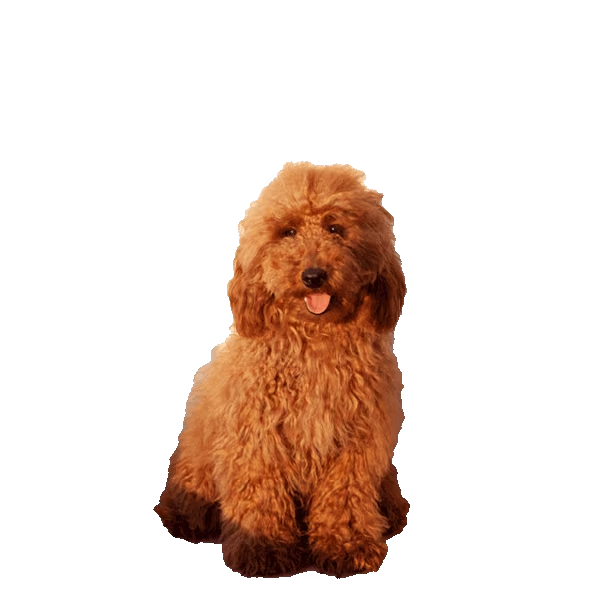
The Soft Coated Wheaten Terrier is a friendly, good-natured Irish breed with a silky wheaten coat and a famously joyful, exuberant greeting.
How the Soft Coated Wheaten Terrier coat is built, and what that means when you groom it.
Caution: A Soft Coated Wheaten Terrier coat mats easily.
Fine or long hair tangles at the base of the coat, out of sight, where the mats tighten and pull on the skin. Brushing has to reach right down to the roots in sections, not just skim the surface.
Information: A Soft Coated Wheaten Terrier needs clipping every few weeks.
This coat keeps growing rather than shedding out, so it has to be trimmed every few weeks. Left to grow it mats down against the skin and traps moisture, dirt and heat.
A few of the Soft Coated Wheaten Terrier profiles members have added to United Pet Club.
The Soft Coated Wheaten Terrier is a medium-sized Irish farm dog with a silky wheaten coat, known for its friendly nature and enthusiastic greeting.
The Soft Coated Wheaten Terrier is a medium-sized working terrier that originated in Ireland, bred on smallholdings to herd stock, guard the yard, and keep rats and other vermin down. That working background gave it stamina, a level head, and a temperament built for practical farm life rather than showy performance. A grown dog stands about 17 to 19 inches at the shoulder and weighs somewhere between 30 and 40 pounds.
Its name comes from the coat: a single, silky layer in shades of wheaten, the pale gold of ripening grain. Unlike the harsh, wiry coats common to most terrier breeds, the Wheaten's is soft to the hand and falls in loose waves. Puppies are usually born a good deal darker and only settle into the mature wheaten shade over their first two years.
Wheatens stay puppyish well into adulthood and are firmly people-oriented. New arrivals at the front door often get the full "Wheaten greetin'", an enthusiastic bounce-and-spin welcome that catches most visitors off guard the first time. The breed suits owners who want an affectionate, energetic companion and who can keep up with regular coat care and a daily walk.
| Attribute | Detail |
|---|---|
| Origin | Ireland |
| Size | Medium (about 30 to 40 lb) |
| Lifespan | 12 to 14 years |
| Group/role | Terrier; farm herder, guardian and vermin controller |
| Good with | Families, children and other dogs when socialised |
The Wheaten works best for active households where someone is around for much of the day. It needs regular grooming to stop the coat matting and does far better with company than with long hours alone. Given its terrier prey drive, homes with cats or other small pets should manage introductions carefully.
The Soft Coated Wheaten Terrier developed as an Irish farm dog over centuries and received formal breed recognition in Ireland in 1937.
The Soft Coated Wheaten Terrier is native to Ireland, where for generations it did general farm work rather than living as a show dog. It shares its roots with the country's other native terriers, the Kerry Blue and the Irish Terrier, and the three breeds are often spoken of as close cousins. On small Irish holdings the Wheaten herded livestock, watched over the property, and dealt with rats and other vermin.
Because it belonged to working farmers rather than fanciers for most of its history, the breed was shaped by usefulness rather than looks. That practical upbringing is why it has a sound, workmanlike build and a temperament that copes well with change.
The Irish Kennel Club recognised the breed formally in 1937, and Wheatens began appearing in the show ring in Ireland from that point. In South Africa the breed is registered through the Kennel Union of Southern Africa (KUSA), which is the body local owners work through to register a Wheaten or track down a reputable breeder. The breed also travelled to Britain and to North America, where the American Kennel Club recognised it in 1973 and placed it in the Terrier Group.
The Wheaten's farm origins still show in its modern role as a companion. The sociability, stamina, and closeness to people that once made it a useful all-rounder on an Irish smallholding are exactly what make it a good household dog today.
The Soft Coated Wheaten Terrier is a square, medium-sized dog with a single silky wheaten coat that falls in loose waves.
The Wheaten is a compact, square-built terrier of medium size and moderate bone, with an outline about as long as it is tall. The head is rectangular and well furnished with hair, and the dark eyes give it an alert, friendly look that matches its temperament. The tail was traditionally docked in some parts of the world, though it is left natural in many countries today.
| Trait | Standard |
|---|---|
| Height | 17 to 19 in (males); slightly less for females |
| Weight | About 30 to 40 lb |
| Coat | Single, soft, silky; loose waves or gentle curl |
| Colours | Shades of wheaten (pale to golden) |
| Eyes | Dark, medium size, alert expression |
The Wheaten's defining feature is its single coat: there is no harsh outer jacket and no thick undercoat beneath it. It feels soft and silky to the touch and falls in loose waves over the body, with a longer fall over the face and legs. The adult coat ranges across shades of wheaten, from pale cream through to a warmer gold. Puppies are usually born darker, often with red or brown shading and sometimes black tipping through the coat, and lighten to the mature wheaten shade by around two years old. Because the coat keeps growing instead of shedding out seasonally, it needs regular trimming and combing to keep its shape and stay free of tangles.
The Soft Coated Wheaten Terrier is friendly, playful and sociable: more outgoing than many terriers, and good-natured with people and other dogs.
The Wheaten is friendly, good-natured, and sociable by breed temperament. It is generally less scrappy than many other terriers and tends to treat strangers as friends it hasn't met yet. That makes it a poor watchdog, but an excellent companion. The breed is well known for its exuberant, jumping welcome, so early training pays off in keeping greetings under control.
At home the Wheaten is affectionate and wants to be part of whatever the family is doing. It is usually good with children and matches their energy during play, though its bounce can bowl over a very small toddler. It tends to get on well with other dogs. As a working terrier at heart, it keeps some prey drive, so cats and smaller pets need careful, supervised introductions.
Wheatens stay active and playful long past puppyhood and do not cope well with being left alone for hours on end. Without enough company and activity they can turn bored, noisy, or destructive around the house. Steady, positive handling keeps the breed cheerful and easy to live with.
| Trait | Rating |
|---|---|
| Affection | 5 |
| Energy | 4 |
| Trainability | 3 |
| Vocalness | 3 |
| Shedding | 2 |
The Soft Coated Wheaten Terrier needs frequent coat care to prevent matting, plus daily exercise and regular company from its owners.
The single, silky coat keeps growing and mats easily, so grooming is the main job that comes with owning this breed.
The Wheaten is an active dog and needs proper physical and mental work each day.
Wheatens settle happily into a house or a flat as long as they get daily exercise and company. They are people-oriented dogs and do not do well left alone for long stretches, so they suit a household where someone is around for most of the day. A securely fenced garden is a bonus but does not replace walks and time with the family. South Africa's climate varies widely by region and altitude, and owners in warmer, tick-prone areas should watch for biliary (tick-borne babesiosis), a well-known regional risk for dogs that spend time outdoors.
Feed the Soft Coated Wheaten Terrier a complete diet suited to its life stage, split into two daily meals, with portions adjusted to keep it lean.
A Wheaten does well on a complete, balanced diet formulated for its life stage and activity level. As an active medium-sized dog of roughly 30 to 40 pounds, it needs enough good-quality protein and fat to fuel its energy without tipping over into weight gain. Some Wheatens have sensitive digestion or skin, so sticking to a consistent food and changing diets gradually helps avoid upsets. Fresh water should be available at all times.
| Life stage | Amount per day | Meals |
|---|---|---|
| Puppy (2 to 6 months) | About 1 to 2 cups | 3 to 4 |
| Puppy (6 to 12 months) | About 1.5 to 2.5 cups | 2 to 3 |
| Adult | About 1.5 to 2.5 cups | 2 |
| Senior | About 1.25 to 2 cups | 2 |
Keep treats to around 10 percent of daily calories and trim meal portions on days with heavy training. Most Wheatens on a complete diet do not need extra supplements; check with a vet before adding anything, such as omega-3 oils for skin and coat.
The Soft Coated Wheaten Terrier usually lives 12 to 14 years and is prone to two inherited protein-losing diseases that warrant routine screening.
The Wheaten is generally a healthy breed, with a typical lifespan of 12 to 14 years. Its most significant health concerns are two protein-losing conditions: protein-losing nephropathy (PLN), which affects the kidneys, and protein-losing enteropathy (PLE), which affects the gut. Picking these up early through routine blood and urine testing improves the outlook, which is why many breeders and owners screen for them throughout the dog's life. Owners in South Africa should also keep tick control up to date, since tick-borne biliary (canine babesiosis) is a recognised regional risk in many parts of the country for dogs that spend time outdoors.
| Condition | Signs | Note |
|---|---|---|
| Protein-losing nephropathy (PLN) | Weight loss, increased thirst, fluid swelling | Kidney protein loss; monitor with urine and blood tests |
| Protein-losing enteropathy (PLE) | Diarrhoea, vomiting, weight loss, low appetite | Gut protein loss; often managed with diet and medication |
| Renal dysplasia | Poor growth, excess drinking and urination | Developmental kidney defect; usually appears young |
| Addison's disease | Lethargy, vomiting, weakness | Adrenal hormone deficiency; treatable once diagnosed |
The Soft Coated Wheaten Terrier is intelligent and eager to please but keeps an independent terrier streak, so short, positive sessions work best.
The Wheaten is bright and willing to work, but it holds onto an independent terrier streak and can dig its heels in if training gets repetitive or heavy-handed. It picks things up quickly when sessions are short, upbeat, and rewarding, and loses interest fast if drilled on the same exercise for too long. Early socialisation with people, other dogs, and everyday situations builds a confident, well-mannered adult. The breed's trademark jumping greeting is far easier to head off early than to correct once it has become a habit.
Soft Coated Wheaten Terriers reach breeding maturity at around two years, carry litters for about 63 days, and typically have five to six puppies.
Responsible Wheaten breeding starts with health-screened parents, given the breed's inherited protein-losing conditions. Most breeders wait until a dog is physically and mentally mature, at around two years old, which also allows time to screen the kidneys and gut before any mating goes ahead. Females are bred on selected seasons rather than on every cycle. In South Africa, breeders working through KUSA can draw on the club's health and registration standards when planning a litter.
Gestation runs about 63 days from conception. Litters average five to six puppies, though the number varies from litter to litter. Newborns are noticeably darker than the adult wheaten shade and lighten gradually over their first one to two years. Puppies should stay with the dam and their littermates until at least eight weeks old to pick up early social skills, and gentle handling and early exposure to normal household life help shape a steady, settled adult temperament.
| Metric | Value |
|---|---|
| Breeding maturity | About 2 years |
| Gestation | About 63 days |
| Average litter size | 5 to 6 puppies |
| Eyes open | About 10 to 14 days |
| Weaning | About 6 to 8 weeks |
| Earliest rehoming | 8 weeks or later |
No national chip law protects a Soft Coated Wheaten Terrier here; a free United Pet Club record does, for life, at no cost.
When a Soft Coated Wheaten Terrier lands at an SPCA branch, the scanner comes out first, and everything then rides on what the number returns. Make sure it returns you. Register your dog free with United Pet Club and the profile answers every scan with your name and number, from now until the end of his days.
A chipped Soft Coated Wheaten Terrier still needs the number loaded into a registry, because the vet's job ends with the implant. Register the microchip on the free lifetime plan: any brand a local vet uses qualifies, updates stay free when you relocate between provinces, and the record answers the lookups SPCA branches run daily. Create your free account and settle both records today.
Create a free United Pet Club account, load your Soft Coated Wheaten Terrier's details and a photo, and save. The lifetime plan keeps the profile active at no cost for as long as you have him, chip or no chip.
Load the 15-digit chip number into your free account together with your address and cell number. Registration and every later update are free, and chips from any brand a South African vet implants are accepted.
No national law says so, though the SPCA chips as standard practice and many breeders and welfare groups insist on it. The registration behind the chip is the part that finds you, and with United Pet Club it costs nothing.
Nothing at all. The free lifetime plan covers the profile, the chip record, and unlimited updates, with no annual renewal in sight.
Common questions about the Soft Coated Wheaten Terrier cover its size, temperament, grooming needs, lifespan, suitability for families, and availability.
It is a medium-sized dog, standing about 17 to 19 inches at the shoulder and weighing roughly 30 to 40 pounds, with males slightly bigger than females.
Wheatens are friendly, playful, and sociable. They are less scrappy than many terriers, greet people warmly, and stay good-natured around family, children, and other dogs.
The main commitment is grooming. The silky single coat mats easily and needs combing several times a week plus a trim every 6 to 8 weeks. They also need daily exercise and plenty of company.
Most live 12 to 14 years. Routine screening for the breed's protein-losing kidney and gut conditions helps support a long, healthy life.
Yes. They are affectionate and playful with children and generally sociable with other dogs. Their bounce can overwhelm a very small toddler, so greetings and play should be supervised.
They shed lightly compared with many breeds, since the coat keeps growing rather than dropping out in volume. That coat still needs frequent grooming, so low shedding does not mean low maintenance.
They are an established but fairly uncommon breed here. Buying through a KUSA-registered, health-testing breeder, or adopting through a breed rescue, may mean going on a waiting list.



