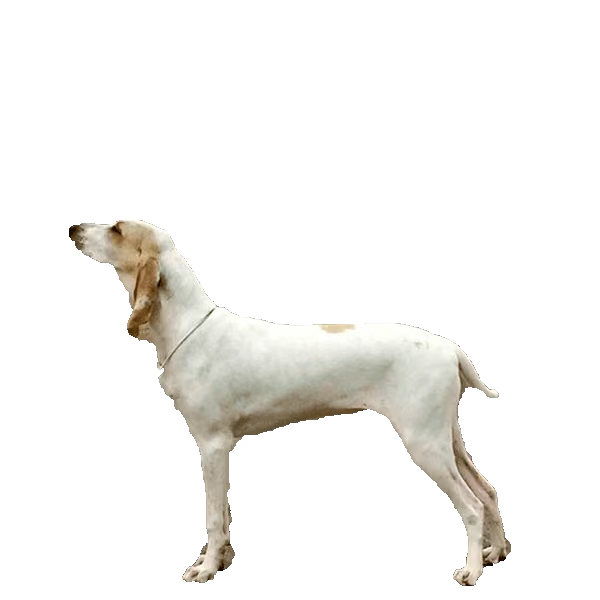
The Sloughi is a noble North African sighthound known for its reserved grace, deep loyalty, and elegant athletic build.
How the Sloughi coat is built, and what that means when you groom it.
A few of the Sloughi profiles members have added to United Pet Club.
The Sloughi is a medium-sized North African sighthound from Morocco, reserved by nature, deeply attached to its family, and built lean for speed.
The Sloughi is a smooth-coated sighthound that took shape across North Africa, with Morocco recognised as the breed's country of origin. It sits in the same broad family as the Saluki and the Azawakh, built for speed and stamina over open ground. Medium in height, the Sloughi has a fine, dry frame, long legs and a deep chest. The result is the same lean racing silhouette seen in coursing hounds everywhere, including on the working sighthounds some South African farmers still keep today.
In temperament the Sloughi is loyal and closely bonded to its own household. With strangers it tends to hold back, sometimes appearing aloof, and indoors it keeps a quiet, dignified manner. This is an independent dog that thinks for itself rather than working hand in glove with a handler, a trait most sighthounds share because they were bred to hunt well away from their owner.
The breed suits owners who appreciate a calm, sensitive companion and who can offer a securely fenced camp or run where it can stretch its legs properly. It is not a dog for harsh handling, nor for a household wanting an outgoing, eager to please companion. Early socialisation and a settled routine help a Sloughi settle in with confidence.
| Feature | Detail |
|---|---|
| Origin | Morocco (North Africa) |
| Size | Medium |
| Lifespan | 12 to 15 years |
| Group / role | Sighthound, coursing and hunting hound |
| Good with | Bonded family; reserved with strangers; needs careful introductions to small pets |
The Sloughi suits patient, active owners who like a quiet house dog that turns properly athletic once it's outside. A securely fenced camp for a proper gallop matters, because the breed's chase instinct runs deep. Anyone after a dog that bonds tightly with one household, and who respects a sensitive, independent nature, will get on well with a Sloughi.
The Sloughi is an ancient North African sighthound long associated with Morocco, once used across the Maghreb to hunt hare and gazelle over open desert country.
The Sloughi took shape in North Africa and is closely tied to Morocco, the country recognised as its place of origin. Lean, smooth-coated sighthounds of this type have existed in the region for centuries, used across the Maghreb to hunt game over open ground.
The breed earned its keep as a working hunting hound rather than as a pet. It coursed hare, gazelle and other desert game, relying on sharp sight, speed and stamina across rough terrain. Hounds lived close to the household and were looked after carefully. This closeness reflected the working partnership between hunter and dog, echoed today in the bond South African farmers still build with their own working sighthounds.
The Sloughi shares ancestry and a family resemblance with other African and Middle Eastern sighthounds, including the Saluki and the Azawakh, though it remains a distinct breed with its own regional story. Differences in coat, build and colour set it apart from these relatives.
More recently the Sloughi has been bred and shown outside North Africa, and it is registered with major kennel bodies, including the Kennel Union of Southern Africa (KUSA) here at home. It stays an uncommon breed, kept by enthusiasts who value its working heritage and its quiet, dignified temperament.
The Sloughi is a lean, smooth-coated sighthound with a deep chest, long legs and a fine head, giving the elegant racing outline typical of coursing hounds.
The Sloughi has a dry, athletic build with almost no spare flesh. The body shows clear bone structure, a deep chest, a tucked-up waistline and long, straight legs. The head is fine and refined, set on a long neck, with large, dark eyes that give the breed a gentle, watchful look. The tail is thin, carried low, curving upward at the tip when the dog is relaxed.
| Trait | Standard |
|---|---|
| Height | About 60 to 72 cm (24 to 28 in) at the shoulder, with females on the smaller side |
| Weight | About 18 to 28 kg (40 to 62 lb) |
| Coat | Short, fine and smooth, lying close to the body |
| Colours | Shades of sand and fawn through to red, with or without black markings or a dark mask; brindle also occurs |
| Eyes | Large, dark, set well into the skull |
The coat is short and smooth and needs no clipping. Colour runs across the sand spectrum, from pale cream through fawn to a deeper red. Many dogs carry a black mask, dark mantle or brindle striping. The skin is fine, and the overall look is of a sleek, low-maintenance hunting hound rather than a heavily coated breed. The coat is easy to manage whether the dog lives on the Highveld or down on the coast.
The Sloughi is loyal and devoted to its family, reserved or aloof with strangers, and independent by nature, with the strong chase instinct typical of sighthounds.
The Sloughi builds a close, lasting bond with its household and is gentle and affectionate with the people it trusts. With strangers it stays reserved and can come across as aloof, holding back rather than seeking attention. This reserve is entirely normal for the breed and should not be mistaken for aggression.
Around family the Sloughi is calm and quiet indoors, often happy simply to lie near its people. It can live with children when raised together and introduced with care, though its sensitive side means it does best in a settled home without rough handling. It generally gets along with other dogs, but its strong prey drive means small pets such as cats or rabbits may be chased unless the dog has grown up with them and is supervised. This is worth taking seriously, since chickens, rabbits and cats are common on a typical South African garden or smallholding.
The breed is independent and was bred to make its own decisions while hunting well away from its handler. It is intelligent but not eager to please in the way some working breeds are, so it responds to patient, respectful handling rather than pressure.
| Trait | Rating |
|---|---|
| Affection (with family) | 4 |
| Energy | 4 |
| Trainability | 3 |
| Vocalness | 2 |
| Shedding | 2 |
The Sloughi is low-maintenance to groom but needs regular hard exercise, a secure space to run, and protection from the cold, since its thin coat gives little insulation.
The Sloughi settles well into a calm home and is quiet indoors, but it needs access to space where it can gallop properly. The thin coat and low body fat mean the breed feels the cold keenly; a coat for winter and a warm, padded spot to sleep are sensible, particularly through a Highveld frost or a damp Cape winter. A secure garden, camp or run matters, since a Sloughi can cover ground fast once it sets off after something.
The Sloughi does well on a complete, good-quality diet matched to its lean frame and activity level, fed in measured amounts to keep its natural slim outline.
The Sloughi is naturally lean, and a slight outline of the last ribs is normal for the breed rather than a sign it isn't being fed enough. Feed a complete, balanced diet suited to a medium-sized active dog, and adjust the amount to the individual dog's weight, age and exercise level. Being deep-chested, the Sloughi may carry a higher risk of bloat, so splitting the daily ration into two meals and skipping hard exercise straight after eating is a sensible precaution.
| Life stage | Amount per day | Meals |
|---|---|---|
| Puppy (2 to 6 months) | Per product guidance for growth, spread across the day | 3 to 4 |
| Junior (6 to 12 months) | Growth ration tapering toward adult | 2 to 3 |
| Adult | About 250 to 400 g of quality dry food, by size and activity | 2 |
| Senior | Adult ration adjusted for lower activity | 2 |
Keep treats to a small share of the daily calories to protect the breed's lean condition. Most Sloughis on a complete diet need no extra supplements; check with a vet before adding anything, especially for puppies, pregnant dogs or seniors with existing health concerns.
The Sloughi is generally healthy and long-lived, at 12 to 15 years, though South African owners should watch for tick-borne biliary and other sighthound sensitivities.
The Sloughi is typically a robust breed with a lifespan of 12 to 15 years. As a sighthound it carries very little body fat and is sensitive to certain anaesthetics and drugs, so it matters that the treating vet understands sighthound physiology before any procedure. In South Africa, owners also need to stay alert to tick-borne biliary (canine babesiosis), which can affect any dog exposed to ticks in bushveld, lowveld or even a suburban garden. Responsible breeders screen for known concerns, and routine veterinary care supports a long, healthy life.
| Condition | Signs | Note |
|---|---|---|
| Anaesthetic sensitivity | Slow recovery, exaggerated response to drugs | Low body fat affects how drugs are processed; tell the vet the breed |
| Bloat / gastric torsion | Swollen abdomen, retching, restlessness | Risk in deep-chested dogs; treat as an emergency |
| Eye conditions (e.g. PRA) | Loss of night vision, cloudiness | Breeders may screen; regular veterinary eye checks advised |
| Heat or cold stress | Shivering in the cold, overheating in the heat | Thin coat and low body fat reduce tolerance to temperature extremes |
The Sloughi is intelligent but independent, and responds best to patient, reward-based training and early socialisation rather than repetition or pressure.
The Sloughi is a thinking, independent dog rather than a handler-focused worker, so training calls for patience and consistency. It learns well when it's motivated, but loses interest in drilling and reacts badly to harsh corrections, which can knock a sensitive breed's trust. Short, positive sessions work far better than long ones. Because the prey drive is strong, off-lead reliability around moving animals is hard to guarantee, so a secure camp or a long line stays the safer default, even for a dog that has been well trained.
Sloughi breeding follows the pattern of medium sighthounds, with health-screened parents, gestation of about nine weeks, and modest litter sizes.
Sloughis generally mature slowly, both physically and mentally, as many sighthounds do, and breeding is best left until the dog is fully grown and health-tested. Responsible breeders confirm temperament and screen for known concerns before mating. Gestation in dogs averages around 63 days, and Sloughi litters tend to be moderate in size.
Raising Sloughi puppies is largely about gentle, early socialisation, since the breed's reserved nature means confident exposure to people and situations in the first months shapes how the adult dog turns out. Puppies should be kept warm, fed well for steady growth, and introduced to handling, sounds and other animals at an unhurried pace. Reputable breeders place puppies only with owners who understand the breed's exercise needs and its sensitive character, and who can offer a secure camp for the dog to grow into.
| Metric | Value |
|---|---|
| Sexual maturity | Reached during the first year; only breed once fully mature |
| Gestation | About 63 days (roughly nine weeks) |
| Average litter size | Around 4 to 8 puppies |
| Weaning | About 6 to 8 weeks |
| Key focus | Health screening of the parents and early socialisation of the puppies |
No national chip law protects a Sloughi here; a free United Pet Club record does, for life, at no cost.
Load your Sloughi's details once and be done with it: name, date of birth, photo, your cell number, save. The profile is free for his whole life, and it takes a chip number the day the vet supplies one. Dog registration is the start of the paper trail.
A chipped Sloughi still needs the number loaded into a registry, because the vet's job ends with the implant. Register the microchip on the free lifetime plan: any brand a local vet uses qualifies, updates stay free when you relocate between provinces, and the record answers the lookups SPCA branches run daily. Create your free account and settle both records today.
Create a free United Pet Club account, load your Sloughi's details and a photo, and save. The lifetime plan keeps the profile active at no cost for as long as you have him, chip or no chip.
Load the 15-digit chip number into your free account together with your address and cell number. Registration and every later update are free, and chips from any brand a South African vet implants are accepted.
No national law says so, though the SPCA chips as standard practice and many breeders and welfare groups insist on it. The registration behind the chip is the part that finds you, and with United Pet Club it costs nothing.
Nothing at all. The free lifetime plan covers the profile, the chip record, and unlimited updates, with no annual renewal in sight.
Common questions about the Sloughi cover its size, temperament, care needs, lifespan, suitability as a pet, and availability in South Africa.
The Sloughi is a medium-sized sighthound. Most stand roughly 60 to 72 cm (24 to 28 in) at the shoulder and weigh about 18 to 28 kg (40 to 62 lb), with females usually smaller than males.
It is loyal and affectionate with its family, reserved or aloof with strangers, and independent by nature. Indoors it is quiet and calm, while outdoors it shows the athletic drive of a proper coursing hound.
Grooming is easy thanks to the short coat, but the breed needs regular hard exercise and a secure space to run. Its thin coat and low body fat mean it needs protection from the cold, and its chase instinct calls for a fenced camp or a long lead.
The typical lifespan is 12 to 15 years. Routine veterinary care, a lean, healthy weight and a sighthound-aware vet all help support a long life.
It can be, in a calm home suited to its sensitive nature. It bonds closely with its household and can live with respectful children, but needs careful introductions to small pets because of its prey drive.
No, the Sloughi is an uncommon breed here, kept mainly by dedicated enthusiasts. Finding a puppy usually means contacting breeders registered with KUSA, and waiting lists are common.

![Shami [Hon. Florence Amhert's], a Male Sloughi registered with United Pet Club](https://media.unitedpetclub.com/m/KY3ijpRN6B/shami-hon-florence-amhert-s-sloughi_orig.avif "Shami [Hon. Florence Amhert's] — Sloughi")