
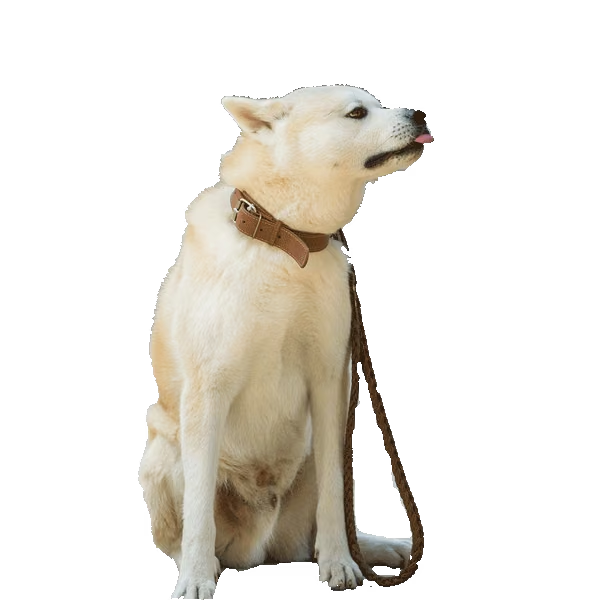
Shikoku
The Shikoku is a spirited Japanese mountain breed known for its independent, agile nature and devotion to its family.
- Size
- Medium
- Lifespan
- 10–12 years
- Origin
- Japan
- Temperament
- Independent
- Standard colors
- Black, Tan and Red
Characteristics
Coat and grooming
How the Shikoku coat is built, and what that means when you groom it.
- Coat layers
- Double coat
- Coat texture
- Plush
- Coat length
- Medium
- Shedding
- Seasonal shedding
Grooming guidance
Critical: A Shikoku should not be shaved.
The undercoat keeps heat out as well as in, and the outer coat shields the skin from sun and insect bites. Clipping the whole coat off removes both. It often grows back patchy, soft or a different colour, and in some animals the guard hairs never return properly. Brush the undercoat out instead of cutting it off.
Information: A Shikoku drops its undercoat in heavy bursts.
The undercoat comes out in heavy bursts over a few weeks. An undercoat rake, or a bath followed by a proper blow-dry, clears it far faster than daily brushing. Clipping the coat down is not a shortcut for this.
Shikoku colors and patterns
What each club's breed standard says about every Shikoku color and pattern. Point at a ruling to see the club's own wording.
Breed standards describe the Shikoku in Black, Tan and Red. Standard patterns: Sable and Tan point.
| Color or pattern | FCI | AKC | UKC |
|---|---|---|---|
| Black | Standard (“black and tan”) | Standard (“Black & Tan”) | Standard (“black sesame (more black than white hairs)”) |
| Tan | Standard (“black and tan”) | Standard (“Black & Tan”) | Not recognised |
| Red | Standard (“red”) | Standard (“Red”) | Standard (“red sesame (ground color of red mixed with black hairs)”) |
| Albino | Not recognised | Not recognised | Disqualifying (“Albinism”) |
| Patterns | |||
| Sable | Standard (“Sesame (well mixture of black, red and white hairs in whole.)”) | Standard (“Sesame”) | Standard (“Sesame (equal mix of black and white hairs), black sesame, and red sesame”) |
| Tan point | Standard (“black and tan”) | Standard (“Black & Tan”) | No ruling |
| Piebald | Fault (“Pinto colour”) | Fault (“Pinto colour”) | No ruling |
%22%3E%3Crect%20x%3D%220%22%20y%3D%220%22%20width%3D%2264%22%20height%3D%2264%22%20fill%3D%22url(%23g)%22%2F%3E%3Cg%20fill%3D%22none%22%20stroke%3D%22%231C1C1C%22%20stroke-width%3D%221%22%20stroke-linecap%3D%22round%22%20stroke-linejoin%3D%22round%22%3E%3Cpath%20d%3D%22M15.7%2014.8l1.9%203.6M26.4%2024.1l1.2%204.1M42.7%2029.5l0.1%203.3M35.9%2025l1.6%203.2M31.3%2028.1l0.7%203.7M15.5%2011.1l1.6%203.6M41.1%2023.8l0.6%203.2M12.1%2020.7l1.2%203M15.4%2011.2l0.8%203.8M42.9%2027.3l0.7%202.9M48.2%2033.2l0.5%204.1M23.1%2024.7l1.4%203.4M51.9%2036.1l0.3%204.3M18.7%2023.9l1.2%203.7M50.4%2027.4l0.5%204.1M18.4%2020.4l0.1%203.1M55.6%2021.4l1.1%203.9M18.6%2024.9l1.7%203.8M8.3%2023.2l1.7%202.9M18.7%2024.2l0.2%203.1M46.4%2022.7l0.6%202.6M14.3%207l0.9%203.5M50.5%2024.9l0.5%203.7M23.2%2024.7l1.2%204.3M10.5%2022.3l1.6%203.4M56.9%2018.2l1.1%202.5M20.8%2021.7l1.1%203.5M10.9%2020.2l0.2%203.9M6.6%2023.3l1%202.4M54.5%2021.7l0.9%203.8M13.3%2021l0.4%203M11.7%2019.5l0.3%204M39%2023.2l0.7%202.5M20.8%2016.7l0%202.6M18.4%2016l0.2%202.6M46.4%2038.2l1.4%203.2M12.9%2022.6l0.6%203.3M13%2020.9l0.3%204.3M35.3%2024.9l1.3%202.3M29.5%2022.1l0.5%202.8M36.6%2023.4l0.2%204.3M20.5%2017.6l0.7%204.1M18.3%2020.6l0.6%203M20.5%2025.8l0.5%203.8M23.5%2040.2l1.1%202.9M22.8%2024.9l1.5%203M25.5%2023.1l0.5%203.3M47.7%2024.7l1.5%203.7M12.9%2018.4l1.9%203.8M29.5%2023.7l0.5%204.1M37.7%2026.5l0%202.9M16.8%2016.4l0.1%203.3M49.8%2028l1.7%203.8M29.4%2025.5l0.5%203.6M9.3%2023l1.3%203.1M47.4%2025.6l0.5%203.5M48.1%2023.8l1.6%203.2M9.9%2018.3l1.3%202.5M12.2%2016.6l0.4%203.2M22%2022.1l1.4%202.7M43.9%2024.7l1.4%203.9M14.3%2020l1.8%203.2M46.3%2040.1l0.3%203.6M14.9%207l0.3%204M17.5%2016.7l1.2%202.4M54.6%2040l1%203.5M13.3%2013.9l1.6%204.2M15.3%2016.5l1.2%202.9M23.8%2038.5l0.2%203.8M18.2%2019l0.6%203M11.2%2023.6l0.7%204.1M33.1%2023.2l0.9%204.3M13.6%2019.9l0.4%204.5M19.7%2023.1l1.9%203.7M50.5%2027.1l0.3%204.1M28.2%2028.5l0.2%203.8M29%2028.4l0.1%204M47.7%2024.5l0.6%202.5M10.7%2017.2l1.4%202.7M25.5%2040.3l0.6%204.1M37.6%2022.8l0.7%204.4M57%2018.6l0.2%203.4M16.9%2022.2l1.7%203.8M43.5%2024.7l1.8%203.4M49.2%2026l1.5%203.6M47.7%2032.3l0.4%203.7M35.4%2030.8l0.5%202.7M47%2026.1l1%203.9M24.3%2028.1l1.5%204.2M50.5%2023.8l1.3%203.4M58.1%2014.1l0.3%202.6M13.9%2018.2l0.7%202.5M8.2%2021l0.7%202.9M41.4%2026.4l0.4%202.7M16.3%2020.4l0.5%204.3M43.4%2025.9l1.2%203.2M32.3%2022.4l0.3%203.9M43.6%2025.9l2.1%203.8M33.5%2026.3l1.5%203M48.3%2030.6l1.4%203.4M44.2%2024.7l0.9%203.2M12.3%2017.7l0.9%203.7M46.2%2032l1.9%203.4M51%2028.3l0.1%203.7M30.4%2023.1l1.1%203.2M52.6%2022.6l0.9%204.3M16.6%2015.4l0.9%203.1M58.4%2012.8l0.3%202.8M42.8%2032.5l1.8%203.2%22%2F%3E%3Cpath%20d%3D%22M16.4%2026.1l0.1%204.3M14%2017.1l1.3%202.8M36.9%2027.2l1.3%202.6M38.6%2025.8l0.4%203.6M57.6%2014.3l0.3%203.9M14.7%208.2l1%204.3M53.4%2023l1.9%203.4M51.5%2030.3l0.8%202.7M56.2%2020l1.9%203.5M15.9%2010l0.2%202.8M15.8%2022.6l1.8%203.9%22%2F%3E%3C%2Fg%3E%3C%2Fg%3E%3Cuse%20href%3D%22%23s%22%20fill%3D%22none%22%20stroke%3D%22%233B2A20%22%20stroke-opacity%3D%220.6%22%20stroke-width%3D%221%22%20stroke-linejoin%3D%22round%22%2F%3E%3Cellipse%20cx%3D%223.2%22%20cy%3D%2221.7%22%20rx%3D%221.3%22%20ry%3D%221.2%22%20fill%3D%22%231C1C1C%22%2F%3E%3Ccircle%20cx%3D%2210.8%22%20cy%3D%2219.3%22%20r%3D%221.1%22%20fill%3D%22%231C1C1C%22%2F%3E%3C%2Fsvg%3E)
%22%3E%3Ccircle%20cx%3D%2212%22%20cy%3D%2217.2%22%20r%3D%221.25%22%20fill%3D%22%23C4996A%22%2F%3E%3Cpath%20d%3D%22M1.5%2021.2L9%2018.6L12.6%2021L12.2%2026.2L3.5%2024.4Z%22%20fill%3D%22%23C4996A%22%2F%3E%3Cpath%20d%3D%22M10%2026L14.5%2026.4L18.2%2029.2L13.5%2029.8Z%22%20fill%3D%22%23C4996A%22%2F%3E%3Cellipse%20cx%3D%2221.2%22%20cy%3D%2230.6%22%20rx%3D%221.6%22%20ry%3D%222.3%22%20fill%3D%22%23C4996A%22%2F%3E%3Crect%20x%3D%220%22%20y%3D%2247%22%20width%3D%2264%22%20height%3D%2217%22%20fill%3D%22%23C4996A%22%2F%3E%3Cpath%20d%3D%22M51.5%2024.5L55%2027L54.2%2032L50.5%2028.5Z%22%20fill%3D%22%23C4996A%22%2F%3E%3Cpath%20d%3D%22M45%2038.5L48%2039L48.5%2047L45.5%2047Z%22%20fill%3D%22%23C4996A%22%2F%3E%3C%2Fg%3E%3Cuse%20href%3D%22%23s%22%20fill%3D%22none%22%20stroke%3D%22%233B2A20%22%20stroke-opacity%3D%220.6%22%20stroke-width%3D%221%22%20stroke-linejoin%3D%22round%22%2F%3E%3Cellipse%20cx%3D%223.2%22%20cy%3D%2221.7%22%20rx%3D%221.3%22%20ry%3D%221.2%22%20fill%3D%22%231C1C1C%22%2F%3E%3Ccircle%20cx%3D%2210.8%22%20cy%3D%2219.3%22%20r%3D%221.1%22%20fill%3D%22%231C1C1C%22%2F%3E%3C%2Fsvg%3E)
%22%3E%3Cpath%20d%3D%22M51.6%2021.2C53.1%2022.4%2056%2023.5%2055.8%2024.5C55.7%2025.6%2052.7%2027.1%2050.9%2027.5C49%2027.9%2047%2026.7%2044.9%2026.8C42.8%2026.9%2039.4%2028.4%2038.3%2028.1C37.2%2027.9%2038.5%2026.5%2038.3%2025.4C38.1%2024.3%2037%2022.9%2037.3%2021.6C37.5%2020.2%2038%2017.9%2039.6%2017.2C41.2%2016.6%2044.7%2016.9%2046.7%2017.6C48.7%2018.3%2050.1%2020.1%2051.6%2021.2ZM29.7%2021.1C30.8%2020.1%2032.3%2019.6%2033.6%2018.4C34.9%2017.2%2036%2014.1%2037.4%2013.7C38.8%2013.4%2040.9%2014.6%2041.9%2016.2C43%2017.9%2044.2%2022.1%2043.8%2023.8C43.5%2025.5%2041.2%2025.7%2039.9%2026.4C38.6%2027.1%2037.6%2027.9%2036.2%2028C34.8%2028.1%2033.1%2027.5%2031.6%2026.9C30.1%2026.2%2027.5%2025.2%2027.2%2024.2C26.9%2023.2%2028.7%2022%2029.7%2021.1ZM3.5%2014.9C5%2013.8%207.8%2012.9%209.1%2013.3C10.4%2013.8%2010.7%2016.2%2011.4%2017.6C12%2019%2012.5%2020.1%2013.1%2021.6C13.8%2023.1%2016.2%2025.1%2015.4%2026.5C14.7%2028%2010.8%2030.3%208.8%2030.5C6.9%2030.6%204.3%2028.5%203.6%2027.3C2.8%2026%204.7%2024.1%204.2%2022.9C3.8%2021.6%200.8%2021%200.6%2019.7C0.5%2018.3%202.1%2015.9%203.5%2014.9ZM53.9%2013.1C53.6%2012.7%2053.8%2012%2054.5%2011.7C55.3%2011.3%2057.2%2011.1%2058.1%2011.2C59.1%2011.3%2059.7%2011.8%2060.2%2012.3C60.6%2012.7%2060.7%2013.3%2060.7%2013.8C60.8%2014.2%2060.9%2014.6%2060.5%2014.9C60.1%2015.1%2059%2015.2%2058.3%2015.2C57.6%2015.3%2056.9%2015.4%2056.5%2015.3C56.1%2015.1%2056.4%2014.7%2055.9%2014.3C55.5%2014%2054.1%2013.6%2053.9%2013.1ZM52.2%2039.6C52.9%2039.5%2053.4%2039.7%2054.2%2040C54.9%2040.3%2056.2%2040.9%2056.5%2041.3C56.8%2041.8%2056.2%2042.3%2055.8%2042.7C55.4%2043.1%2054.8%2043.3%2054.1%2043.6C53.3%2043.8%2052.2%2044.3%2051.5%2044.2C50.8%2044.1%2050.3%2043.5%2049.8%2043.1C49.3%2042.7%2048.5%2042.3%2048.6%2041.9C48.7%2041.4%2049.8%2040.8%2050.4%2040.4C51.1%2040%2051.6%2039.7%2052.2%2039.6ZM21.4%2026C21.1%2025.6%2020.9%2025%2020.9%2024.6C21%2024.1%2021.4%2023.7%2021.7%2023.4C22.1%2023.1%2022.5%2022.7%2023%2022.7C23.5%2022.6%2024.2%2022.8%2024.6%2023C25%2023.2%2025.5%2023.5%2025.6%2024C25.7%2024.4%2025.3%2025.2%2025.1%2025.8C24.9%2026.3%2024.7%2027%2024.3%2027.2C23.9%2027.4%2023.3%2027.2%2022.8%2027C22.3%2026.8%2021.7%2026.4%2021.4%2026Z%22%20fill%3D%22%23D9C3A0%22%2F%3E%3Cpath%20d%3D%22M0%200H15L14%2022L0%2024Z%22%20fill%3D%22%23D9C3A0%22%2F%3E%3C%2Fg%3E%3Cuse%20href%3D%22%23s%22%20fill%3D%22none%22%20stroke%3D%22%233B2A20%22%20stroke-opacity%3D%220.6%22%20stroke-width%3D%221%22%20stroke-linejoin%3D%22round%22%2F%3E%3Cellipse%20cx%3D%223.2%22%20cy%3D%2221.7%22%20rx%3D%221.3%22%20ry%3D%221.2%22%20fill%3D%22%231C1C1C%22%2F%3E%3Ccircle%20cx%3D%2210.8%22%20cy%3D%2219.3%22%20r%3D%221.1%22%20fill%3D%22%231C1C1C%22%2F%3E%3C%2Fsvg%3E)
| Color or pattern | FCI | AKC | UKC |
|---|---|---|---|
| Dark brown | Standard (“dark brown in colour”) | Standard (“dark brown in colour”) | Standard (“dark brown in color”) |
| Color or pattern | FCI | AKC | UKC |
|---|---|---|---|
| Black | Standard (“Black”) | Standard (“Black”) | Standard (“Black”) |
What the rulings mean
- Standard
- Described by the club's breed standard.
- Fault
- Named by the club's breed standard as a fault: the animal can be shown but is penalised.
- Disqualifying
- The club's breed standard disqualifies an animal of this colour or pattern.
- Not recognised
- The club does not accept this colour or pattern for the breed.
Color changes
How a Shikoku's colors can change over its life.
Blackchanges toRust
Coat · With body condition · can change back
Blackchanges toGrey
Coat · Progressive
Blackchanges toBrown
Coat · In the sun · can change back
Tan pointchanges toSaddle
Coat · With age · from 6 to 156 weeks
Blackchanges toSnow nose
Nose · With the season · can change back
Blackchanges toPink
Nose · With the season · can change back
%22%3E%3Cpath%20d%3D%22M22.5%2018.5Q24%2021%2025%2021.5L47%2022.5Q50%2022.5%2051.5%2023.5L54%2026Q55%2032%2053%2034Q46%2031.5%2038%2033Q30%2034.5%2025.5%2032Q22.5%2026%2022.5%2018.5Z%22%20fill%3D%22%231C1C1C%22%2F%3E%3Cpath%20d%3D%22M51%2024L56%209L63%209L61%2019L54.5%2028Z%22%20fill%3D%22%231C1C1C%22%2F%3E%3Cpath%20d%3D%22M2%2021.2L7.5%2019.2L8.5%2023.6L3.5%2024.2Z%22%20fill%3D%22%231C1C1C%22%20fill-opacity%3D%220.85%22%2F%3E%3C%2Fg%3E%3Cuse%20href%3D%22%23s%22%20fill%3D%22none%22%20stroke%3D%22%233B2A20%22%20stroke-opacity%3D%220.6%22%20stroke-width%3D%221%22%20stroke-linejoin%3D%22round%22%2F%3E%3Cellipse%20cx%3D%223.2%22%20cy%3D%2221.7%22%20rx%3D%221.3%22%20ry%3D%221.2%22%20fill%3D%22%231C1C1C%22%2F%3E%3Ccircle%20cx%3D%2210.8%22%20cy%3D%2219.3%22%20r%3D%221.1%22%20fill%3D%22%231C1C1C%22%2F%3E%3C%2Fsvg%3E)
%22%3E%3Crect%20x%3D%2217%22%20y%3D%2210%22%20width%3D%2230%22%20height%3D%2242%22%20fill%3D%22url(%23g)%22%2F%3E%3C%2Fg%3E%3Cuse%20href%3D%22%23s%22%20fill%3D%22none%22%20stroke%3D%22%233B2A20%22%20stroke-opacity%3D%220.6%22%20stroke-width%3D%221%22%20stroke-linejoin%3D%22round%22%2F%3E%3Cpath%20d%3D%22M12.5%2037Q13%2032%2018.5%2032Q23.5%2032.5%2023.5%2036.5Q20.5%2035.5%2018.8%2037Q17.4%2038.6%2018%2041.5Q13.6%2040.4%2012.5%2037Z%22%20fill%3D%22%231C1C1C%22%20fill-opacity%3D%220.8%22%20stroke%3D%22%23F5F5F0%22%20stroke-opacity%3D%220.4%22%20stroke-width%3D%220.9%22%2F%3E%3Cpath%20d%3D%22M51.5%2037Q51%2032%2045.5%2032Q40.5%2032.5%2040.5%2036.5Q43.5%2035.5%2045.2%2037Q46.6%2038.6%2046%2041.5Q50.4%2040.4%2051.5%2037Z%22%20fill%3D%22%231C1C1C%22%20fill-opacity%3D%220.8%22%20stroke%3D%22%23F5F5F0%22%20stroke-opacity%3D%220.4%22%20stroke-width%3D%220.9%22%2F%3E%3Cpath%20d%3D%22M32%2040V50%22%20fill%3D%22none%22%20stroke%3D%22%231C1C1C%22%20stroke-width%3D%221.3%22%20stroke-opacity%3D%220.5%22%20stroke-linecap%3D%22round%22%20stroke-linejoin%3D%22round%22%2F%3E%3Cellipse%20cx%3D%2232%22%20cy%3D%2221%22%20rx%3D%2212%22%20ry%3D%223.5%22%20fill%3D%22%23F5F5F0%22%20fill-opacity%3D%220.18%22%2F%3E%3C%2Fsvg%3E)
Sources
Each ruling comes from the club's published breed standard or color list.
About the Shikoku
A sturdy Japanese mountain hunter, loyal to its own household, wary of outsiders, and built for steep, rough ground rather than gentle strolls.
The Shikoku is a medium-built spitz-type dog that comes from the mountains of Shikoku island in Japan, where it was bred to hunt wild boar across steep, forested slopes. It carries the wedge head, pricked ears and curled tail typical of the native Japanese breeds, and moves with the sure-footed economy of a dog built for broken ground rather than open plains.
At home the Shikoku is devoted to its own household and keeps a watchful distance from anyone it does not know. That reserve, paired with real independence, comes straight from its working history: a hunting dog expected to track boar far out of sight of its handler and make its own calls in thick bush. It carries high drive and needs proper outlets for its energy and its nose.
South African owners who take one on tend to already know a strong-willed working breed, whether that is a Jack Russell on a smallholding or a working-line German Shepherd. The Shikoku is still rare here, rarer even than the Shiba Inu or Akita, and most owners import from established breeders overseas or wait years for a litter.
| Attribute | Detail |
|---|---|
| Origin | Japan (Shikoku island) |
| Size | Medium |
| Lifespan | 10 to 12 years |
| Group/role | Spitz-type hunting dog |
| Good with | Family it knows; wary of strangers |
Is the Shikoku right for you?
The Shikoku suits an active owner who can put in daily exercise and consistent, confident handling. Its independent streak and strong prey drive make it a poor match for a first dog; it fits far better with someone who has already handled a determined breed before. It fixes hard on its own family and settles well as a one-dog household, or in a family that respects its stand-offishness with visitors and strangers.
Where the Shikoku comes from
Bred in Japan's remote Shikoku mountains to run boar to bay, the breed was declared a Living Natural Monument in 1937 and stayed rare outside Japan.
The Shikoku takes its name from the island of Shikoku, the smallest of Japan's four main islands, where the breed worked the mountainous interior for generations. Hunters used the dogs to track wild boar and deer through dense forest and steep terrain, holding the quarry until the hunter arrived. The valleys of the region sat cut off from one another, and that isolation kept the local dogs distinct from other Japanese breeds.
Because the population was split across separate valleys, several regional strains existed early on, each usually named after its home district. Breeders later folded these lines into the single Shikoku standard as the type was formalised.
The Japanese government named the Shikoku a Living Natural Monument in 1937, the same protection given to several other native breeds threatened by falling numbers and uncontrolled crossbreeding. The Nihon Ken Hozonkai, the organisation responsible for conserving Japan's native dogs, has kept the standard since.
Outside Japan the Shikoku is still a genuine rarity. South Africa has no established local population, and anyone wanting one typically deals directly with an overseas breeder, since numbers here run far behind the Shiba Inu or Akita, themselves not exactly common.
What the Shikoku looks like
A compact, muscular spitz with a wedge head, pricked ears and a tightly curled tail, coated for cold mountain winters more than a Highveld summer.
The Shikoku has the compact, balanced build typical of a working spitz breed. The body runs slightly longer than it stands tall, the chest is deep, and the legs are lean and well muscled. The head forms a broad wedge with a clear stop, the ears are small, triangular and pricked forward, and the dark, slightly triangular eyes give the face a permanently alert look. The tail sits thick and is carried curled over the back or held in a sickle shape.
| Trait | Standard |
|---|---|
| Height | Dogs around 52 cm, bitches around 46 cm at the withers |
| Weight | Roughly 16 to 25 kg |
| Coat | Harsh, straight top coat over a soft, dense undercoat |
| Colours | Sesame, red sesame, black sesame, red, and black-and-tan |
| Eyes | Dark brown, small and slightly triangular |
Coat and colour
The Shikoku carries a proper double coat: a coarse, weatherproof top layer over a soft undercoat that would keep the dog warm through a Japanese mountain winter, though it does the dog few favours in a Durban summer. Sesame, a blend of red, black and white hairs through the coat, is the colour most linked to the breed, and splits into red sesame, black sesame and standard sesame depending on how the tones balance. Solid red and black-and-tan turn up too. Most dogs show the pale cream markings called urajiro on the cheeks, chest, underside and inner legs, a feature common across the native Japanese breeds.
Temperament and behaviour
Fiercely loyal at home, standoffish with strangers, and quick to chase anything that runs, the Shikoku keeps its own counsel more than most breeds.
The Shikoku attaches itself deeply to its own family and is warm and attentive once inside its own front door. With people it doesn't know, it tends toward aloof rather than aggressive, watching and weighing up a stranger before it decides whether to accept them. That mix of devotion at home and wariness outside makes it a naturally watchful dog, quick to register anyone at the gate.
With children it has grown up around, a well-socialised Shikoku is usually patient and gentle, though its size and energy call for supervision around toddlers. It can be choosy about other dogs, and two Shikokus of the same sex under one roof sometimes clash. The hunting background behind the breed leaves it with a strong prey drive, so cats, rabbits, guinea pigs and other small pets are at real risk unless the dog was raised alongside them and is managed with care.
Independence runs through the breed. A dog once expected to hunt boar out of sight of its handler learns to think for itself, and that habit doesn't switch off at home. The Shikoku is intelligent and capable of learning fast, but it isn't obedient purely for its own sake, and it works best for an owner it has actually come to respect.
| Trait | Rating |
|---|---|
| Affection (with family) | 4 |
| Energy | 5 |
| Trainability | 3 |
| Vocalness | 2 |
| Shedding | 4 |
Care and grooming
Daily hard exercise, secure fencing against a strong prey drive, and a coat that needs real attention twice a year sum up Shikoku upkeep.
Grooming
- Brush the double coat once a week for most of the year to clear out loose hair.
- Brush daily during the two heavy seasonal blowouts, usually around spring and autumn, when the undercoat comes out in earnest.
- Bath only when truly necessary; the coat sheds dirt on its own, and over-bathing strips the natural oils out of it.
- Clip nails every few weeks and check the ears for wax build-up or a bad smell.
- Brush teeth several times a week.
Exercise
- Budget at least one to two hours of activity a day.
- Mix brisk walks or runs with off-lead time in a properly secured area.
- Add mental stimulation: scent games, training sessions, or puzzle toys.
- Keep the dog on lead or inside solid fencing in open spaces, since prey drive will override a recall in a heartbeat.
Environment
The Shikoku does better in a house with a secure garden than crammed into a small flat, though a flat can work if the exercise needs are properly met. Fencing has to be solid and high, since the breed climbs and jumps with ease. South Africa's climate swings a fair bit by region and altitude: the breed's coat handles a cold Free State or Highveld winter without trouble, but the dog needs shade and water on hand through a Lowveld or Karoo summer.
Nutrition and feeding
An athletic, lean-built dog, the Shikoku does well on a protein-rich complete diet split into two meals and adjusted to its workload.
The Shikoku is active and athletic, and it does well on a complete, balanced diet built around good-quality animal protein as the main ingredient. Match the portion to the dog's age, weight and workload, and adjust it as activity shifts through the year. The breed tends to run lean by nature, so feed to keep a visible waist and easily felt ribs rather than sticking rigidly to a cup measurement.
| Life stage | Amount per day | Meals |
|---|---|---|
| Puppy (2 to 6 months) | Per product guide for growth | 3 to 4 |
| Adolescent (6 to 12 months) | Adjust as growth slows | 2 to 3 |
| Adult | About 200 to 350 g of quality dry food | 2 |
| Senior | Slightly reduced calories | 2 |
Treats and supplements
Keep treats to around ten percent of the day's calories and put them to work in training, since this is a food-motivated breed that responds well to it. Most Shikokus on a complete diet need nothing extra; check with a vet before adding joint, skin or coat supplements, especially for a growing puppy or an older dog.
Health and lifespan
Generally hardy with a 10 to 12 year lifespan, though hip dysplasia, luxating patella, and tick-borne biliary deserve attention here.
The Shikoku is a robust, naturally bred dog and counts as healthy overall, helped by a gene pool that stayed small and closely managed within Japan's working stock. Typical lifespan runs 10 to 12 years. As with most breeds, a handful of inherited conditions show up, and responsible breeders screen their stock to cut the risk.
| Condition | Signs | Note |
|---|---|---|
| Hip dysplasia | Stiffness, limping, reluctance to jump | Screen breeding stock; keep lean |
| Luxating patella | Skipping gait, occasional hind-leg hop | Ranges from mild to surgical |
| Eye conditions | Cloudiness, vision changes | Periodic veterinary eye checks |
| Allergies/skin issues | Itching, redness, coat problems | Identify triggers with a vet |
Preventive care
- Keep vaccinations and parasite control up to date.
- Keep the dog at a lean weight to look after the joints.
- Book annual vet checks, moving to twice a year once the dog is a senior.
- Brush the teeth regularly and arrange a dental clean when advised.
- Use a reliable tick preventative and check for ticks after time in long grass; tick-borne biliary (canine babesiosis) is a real risk in South Africa and can turn serious within a day or two if missed.
- Choose a breeder who can show hip and eye screening results.
Training
Sharp and capable but wilful, the Shikoku trains best with early socialisation, firm consistency, and reward-based methods from a confident handler.
The Shikoku picks things up fast and reads its handler closely, but its independent streak means it decides whether an instruction is worth following rather than obeying purely on reflex. Harsh correction sets the relationship back and erodes trust, while clear, consistent rules paired with rewards move the dog forward. Early and ongoing socialisation matters, since it tempers the breed's natural wariness with strangers and its pickiness around other dogs. Recall is the hardest thing to lock in, because prey drive can pull the dog off any command in an instant, so off-lead time should be earned gradually and kept to safe, enclosed areas.
The basics
- Start socialisation as a puppy, exposing it to different people, dogs, places and sounds.
- Teach name recognition and focus before moving to harder commands.
- Build sit, down and stay in short sessions using food rewards.
- Lock in a strong recall early and keep reinforcing it for the dog's whole life.
- Practise loose-lead walking to manage the breed's pulling and drive outdoors.
- Add scent work or trick training to keep the mind busy.
Breeding
Shikoku breeding follows typical medium-dog timelines: maturity around one to two years, gestation near 63 days, and litters usually of three to six pups.
Breeding the Shikoku suits experienced, conservation-minded breeders rather than casual hobbyists, given how small the global population is and how much value sits in keeping the native type intact. Bitches generally reach physical maturity between one and two years old, and a responsible breeder waits until she is fully grown and health-screened before a first litter. Mating, pregnancy and whelping follow the usual pattern for a medium-sized dog. Gestation runs about 63 days, and most whelpings go smoothly, though the breeder should be ready to help and have a vet on standby.
Litters tend to be small, usually three to six puppies. The dam typically raises the litter with real attention. Puppies should stay with their mother and littermates until at least eight weeks old, and that period of early socialisation and gentle handling does most of the work in setting up the breed's sound temperament. Breeders working with native Japanese breeds usually register and conserve their stock through bodies such as the Nihon Ken Hozonkai; in South Africa, anyone importing a Shikoku would look to register it with the Kennel Union of Southern Africa (KUSA) under the relevant register for the breed.
| Metric | Value |
|---|---|
| Sexual maturity | About 1 to 2 years |
| Gestation | Approximately 63 days |
| Average litter size | 3 to 6 puppies |
| Weaning age | About 6 to 8 weeks |
| Recommended homing age | 8 weeks or older |
Registering your Shikoku and its chip in South Africa
No national chip law protects a Shikoku here; a free United Pet Club record does, for life, at no cost.
Shikoku registration and microchips in South Africa
Load your Shikoku's details once and be done with it: name, date of birth, photo, your cell number, save. The profile is free for his whole life, and it takes a chip number the day the vet supplies one. Dog registration is the start of the paper trail.
The chip is a number; the registry entry is the story behind it. Capture your Shikoku's 15-digit number in a free United Pet Club account and the story reads: this dog has a home. Every brand is accepted, updates never cost a cent, and the record stays searchable here and abroad. Microchip registration plus a free account does it.
How do I register my Shikoku in South Africa?
Create a free United Pet Club account, load your Shikoku's details and a photo, and save. The lifetime plan keeps the profile active at no cost for as long as you have him, chip or no chip.
How do I register my Shikoku's microchip?
Load the 15-digit chip number into your free account together with your address and cell number. Registration and every later update are free, and chips from any brand a South African vet implants are accepted.
Must a Shikoku be microchipped in South Africa?
No national law says so, though the SPCA chips as standard practice and many breeders and welfare groups insist on it. The registration behind the chip is the part that finds you, and with United Pet Club it costs nothing.
What does it cost to register a Shikoku?
Nothing at all. The free lifetime plan covers the profile, the chip record, and unlimited updates, with no annual renewal in sight.
Frequently asked questions
Common questions on the Shikoku's size, temperament, upkeep, lifespan, suitability, and how hard the breed is to track down.
How big does a Shikoku get?
The Shikoku is a medium-sized dog. Dogs stand around 52 cm and bitches around 46 cm at the withers, with most weighing roughly 16 to 25 kg.
What's the Shikoku's temperament like?
Loyal and devoted to its own family, alert, and independent. It tends to be standoffish with strangers rather than aggressive, and it carries a strong prey drive toward small animals.
Is the Shikoku hard work to look after?
It asks for a fair bit. The main demands are one to two hours of exercise daily, solid fencing, consistent training, and brushing that steps up hard during the seasonal coat blow.
How long do Shikokus live?
Typically 10 to 12 years. The breed is generally hardy, and good food, exercise and regular vet care support a full life.
Is the Shikoku a good family dog?
It can be, in an active household that understands the breed. It bonds tightly with its own family and gets on well with children it knows, but its energy, drive and wariness with strangers suit an owner with some dog experience behind them.
Are Shikokus easy to get hold of in South Africa?
No. The breed is rare outside Japan, rarer still than the Shiba Inu or Akita, and there is no established breeding population here. Expect to import from an overseas breeder, wait on a list, and register through KUSA once the dog arrives.
Can a Shikoku live with cats or other small pets?
It's risky. The hunting background behind the breed gives it a strong prey drive, so small animals can be in real danger unless the dog was raised with them from the start and is carefully managed.
From the community
Ask about the ShikokuNo questions about the Shikoku yet. Be the first to ask.
Browse Dog breeds