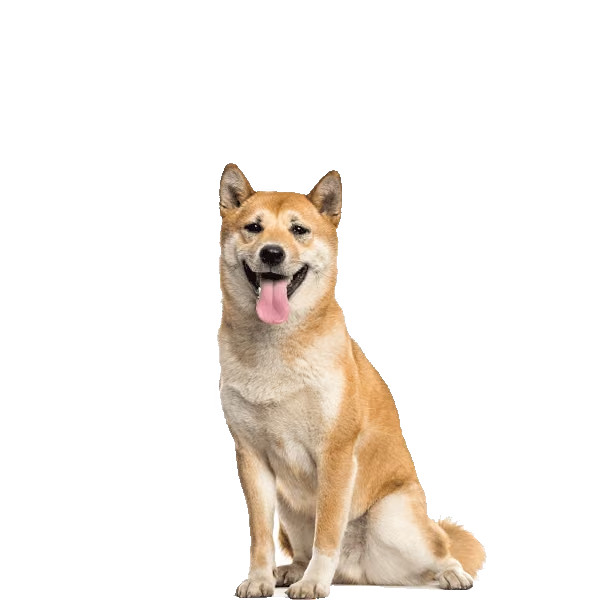
The Shiba Inu is a spirited, independent Japanese breed known for its bold confidence, fox-like good looks, and cat-like cleanliness.
How the Shiba Inu coat is built, and what that means when you groom it.
Critical: A Shiba Inu should not be shaved.
The undercoat keeps heat out as well as in, and the outer coat shields the skin from sun and insect bites. Clipping the whole coat off removes both. It often grows back patchy, soft or a different colour, and in some animals the guard hairs never return properly. Brush the undercoat out instead of cutting it off.
Information: A Shiba Inu drops its undercoat in heavy bursts.
The undercoat comes out in heavy bursts over a few weeks. An undercoat rake, or a bath followed by a proper blow-dry, clears it far faster than daily brushing. Clipping the coat down is not a shortcut for this.
A few of the Shiba Inu profiles members have added to United Pet Club.
The Shiba Inu is a small, independent Japanese breed known for its bold confidence, fox-like looks and unusually fastidious grooming habits.
The Shiba Inu is a small spitz-type dog from Japan, and it ranks among the country's oldest native breeds. A grown dog stands roughly 13.5 to 16.5 inches at the shoulder and weighs about 17 to 23 pounds, with a compact, well-muscled frame, a tightly curled tail and pricked ears. It carries itself with an alert, self-assured bearing that many owners describe as dignified.
Temperament is what people notice first about the Shiba. The breed is independent and confident, keeps a close eye on its surroundings, and is often reserved with people it does not know. Many Shibas keep themselves remarkably clean, licking and grooming in a manner owners often liken to a cat. Within their own family they bond closely, even while staying guarded around strangers.
This is a dog that thinks things through before it acts. A Shiba will weigh up whether a command is worth obeying, so early socialisation and consistent handling from puppyhood count for a great deal. Raised the right way, the Shiba becomes a loyal, tidy companion with a good few years ahead of it.
| Attribute | Detail |
|---|---|
| Origin | Japan |
| Size | Small (about 17 to 23 lb) |
| Lifespan | 13 to 16 years |
| Group / role | Companion and small-game hunting dog (spitz type) |
| Good with | Owners who can offer firm, patient training; better suited to households with older, respectful children |
The Shiba suits owners who like an independent dog and are not expecting constant obedience or affection on tap. People who appreciate a clean, low-odour housemate, and who are prepared to put in the work on early socialisation, tend to get on well with the breed. It is a poor match for first-time owners hoping for an eager-to-please dog, or for households that cannot supervise the Shiba around small pets, given its hunting background.
The Shiba Inu developed as a small hunting dog in Japan's mountains and was rebuilt from a handful of survivors after near-extinction in the 20th century.
The Shiba Inu is an ancient Japanese breed, used for centuries to hunt small game and birds across the brush-covered hills and mountains of central Japan. Its compact build, sharp senses and agility suited it to flushing and tracking quarry through dense terrain. Several regional types developed across the country, each shaped by local conditions.
By the early 1900s, imported Western breeds and widespread crossbreeding had thinned the number of pure native Shibas. Concern over the loss of Japan's indigenous dogs grew through the 1920s and 1930s, and in 1936 the Shiba Inu was declared a natural monument of Japan, part of a wider push to preserve the country's native breeds.
The Second World War nearly finished the breed off. Bombing, food shortages and a distemper epidemic after the war killed off most of the remaining dogs. The Shiba as it exists today was rebuilt from a small number of survivors drawn from the surviving regional lines, later combined into the single breed recognised now.
The Shiba reached the United States by the mid-20th century and became established there over the following decades. Registries elsewhere, including the Kennel Union of Southern Africa (KUSA), which recognises the breed, have since brought the Shiba to owners well beyond Japan. It is now kept widely as a companion both at home and abroad, while still carrying the alert, independent character shaped by its working past.
The Shiba Inu is a small, compact spitz with pricked ears, a curled tail, a dense double coat and a fox-like face.
The Shiba Inu is a small, sturdy dog with a balanced, slightly rectangular outline and a confident stance. The head is broad with a moderate stop, the muzzle tapers cleanly, and the small, triangular eyes sit deep-set, giving the breed its trademark fox-like expression. The ears are small, triangular and stand erect. A thick, well-furred tail curls or sickles over the back. Overall the dog looks agile, alert and well-muscled for its size.
| Trait | Description |
|---|---|
| Height | Males about 14.5 to 16.5 in; females about 13.5 to 15.5 in at the shoulder |
| Weight | Males about 23 lb; females about 17 lb |
| Coat | Double coat: stiff, straight outer coat over a soft, dense undercoat |
| Colours | Red, black and tan, sesame and cream, usually with urajiro (cream to white markings) |
| Eyes | Small, dark brown, deep-set, slightly triangular |
The Shiba carries a double coat. The outer coat is stiff and straight, while the undercoat is soft and thick, insulating the dog and giving the coat its plush, stand-off look. Most Shibas show urajiro, the cream to white shading found on the cheeks, throat, chest, underside and legs.
Red is the most common colour, followed by black and tan and sesame, a red coat with even black tipping through it. Cream also occurs, but it is generally not favoured in the show ring because the urajiro pattern is hard to make out against a pale coat. The breed sheds steadily throughout the year and blows its undercoat heavily once or twice a year.
The Shiba Inu is independent, confident and alert, devoted to its family but usually aloof with strangers and prone to a strong prey drive.
The Shiba Inu has a strong, self-contained personality. It is independent and dignified, and it will often decide for itself when, or whether, to engage rather than seeking out attention. With its own family the breed is loyal and affectionate on its own terms, while it tends to stay reserved or aloof around strangers until it has made up its mind that they are acceptable.
Its alertness makes the Shiba a capable watchdog. It picks up on changes in its surroundings and will announce visitors, though it is not a heavy barker in everyday life. Certain individuals are vocal at particular moments and can produce the high-pitched sound owners nickname the Shiba scream, usually when the dog is very upset or worked up.
The picture with other pets is mixed. Many Shibas live comfortably alongside another dog, but the breed's hunting background gives it a marked prey drive, so cats and small animals need careful, supervised introductions. Two dogs of the same sex sharing a household can sometimes clash. Early, ongoing socialisation and respectful handling, particularly around food and toys, help the Shiba settle in comfortably with children and other animals.
| Trait | Rating |
|---|---|
| Affection | 3 |
| Energy | 4 |
| Trainability | 2 |
| Vocalness | 3 |
| Shedding | 4 |
Shiba Inu care means managing heavy seasonal shedding, providing daily exercise and mental stimulation, and keeping the dog secure given its prey drive.
The Shiba is a fairly low-maintenance breed day to day, kept clean largely by its own grooming habits, but it has clear needs around coat care, exercise and containment.
The Shiba adapts to flat or house living as long as its exercise needs are met. The dense double coat copes well with cold, while hot weather calls for shade, water and lighter exercise around midday. South Africa's climate varies widely, from the Mediterranean conditions of the Western Cape to the semi-arid Highveld, so owners should judge exercise timing by local conditions rather than a single rule. A secure garden fence matters, because the breed will explore, climb or dig given the chance, and its prey drive can send it after anything that moves.
A Shiba Inu does well on a complete diet suited to its life stage, fed in measured portions, since the breed puts on weight easily if overfed.
The Shiba does well on a complete, balanced dog food suited to its life stage and activity level. Because it is a small breed that is easily satisfied and prone to weight gain when overfed, portion control matters more than any single ingredient. Feed measured meals rather than leaving food down all day, and adjust the amount to keep the dog lean, with a visible waist and ribs that are easy to feel. Fresh water should be available at all times.
| Life stage | Amount per day | Meals |
|---|---|---|
| Puppy (2 to 6 months) | About 1 to 1.5 cups, per food label | 3 to 4 |
| Puppy (6 to 12 months) | About 1 to 1.25 cups | 2 to 3 |
| Adult | About 0.75 to 1.5 cups | 2 |
| Senior / less active | Reduce to maintain healthy weight | 2 |
Keep treats to no more than about 10 percent of daily calories, and subtract them from meal portions to avoid weight gain. Small, low-calorie treats work well for training a food-motivated Shiba. A healthy dog on a complete diet usually needs no extra supplements; check with a vet before adding anything, including joint or skin and coat products.
The Shiba Inu is a generally hardy breed that lives about 13 to 16 years, with a few inherited eye, joint and allergy conditions worth watching for.
The Shiba Inu is a generally healthy, hardy breed, with a typical lifespan of 13 to 16 years. Most live long, active lives, though like any breed the Shiba has a handful of conditions that turn up more often than average. Buying from breeders who screen their breeding dogs, and keeping up with routine veterinary care, lowers the risk of inherited problems.
| Condition | Signs | Note |
|---|---|---|
| Patellar luxation | Skipping steps, intermittent hind-leg lameness | Kneecap slips out of place; ranges from mild to needing surgery |
| Hip dysplasia | Stiffness, reduced activity, trouble rising | Joint malformation; screening of breeding stock helps |
| Allergies / atopy | Itching, ear infections, skin irritation | Common in the breed; managed with diet and veterinary care |
| Eye disorders (glaucoma, PRA) | Cloudiness, vision loss, eye pain | Some are inherited; eye testing of parents is advised |
| Hypothyroidism | Weight gain, coat changes, low energy | Diagnosed by blood test, managed with daily medication |
Shiba Inu training calls for patience and consistency, since the breed is intelligent but independent and will not work simply to please its owner.
The Shiba is intelligent and quick on the uptake, but it is also independent, and it will decide for itself whether a command is worth obeying. This makes it a demanding breed to train and a poor fit for owners expecting instant obedience. Short, varied sessions hold a Shiba's attention far better than long, repetitive drills. Food motivates most individuals, so reward-based methods that make cooperation worth the dog's while tend to succeed where pressure or force does not.
Recall is the hardest skill to instil, since a Shiba off the lead may follow its nose or chase after prey and ignore being called entirely. For this reason many owners never trust recall completely and keep the dog on a lead or within a fenced area. Early, wide-ranging socialisation to people, places and other animals is essential, and it shapes how confident and manageable the adult dog turns out to be.
Shiba Inu breeding should follow health screening of both parents, with bitches usually producing small litters after a roughly two-month pregnancy.
Responsible Shiba breeding starts with health-tested parents. Dogs used for breeding should be screened for hip and patella problems and have up-to-date eye examinations, since several inherited conditions turn up in the breed. Breeders also weigh up temperament carefully, because the Shiba's independent character is shaped strongly by both genetics and early handling.
Females typically reach sexual maturity within their first year, but most reputable breeders hold off until a bitch is physically and mentally mature, at around two years, before her first litter. Pregnancy runs to roughly 63 days after mating. Litters tend to be small, commonly around three puppies, though numbers vary.
Raising the litter takes attention from birth. Puppies are nursed by the dam, weaned gradually from about three to four weeks, and given structured socialisation from the early weeks on. This early exposure to handling, sounds and gentle new experiences matters especially in a breed prone to aloofness, and it lays the groundwork for a confident, manageable adult. Puppies usually go to new homes at about eight weeks or older.
| Metric | Value |
|---|---|
| Sexual maturity | Within the first year (breeding usually delayed to about 2 years) |
| Gestation | About 63 days |
| Average litter size | About 3 puppies |
| Weaning age | About 3 to 4 weeks, completed by around 7 to 8 weeks |
| Age to new homes | About 8 weeks or older |
No national chip law protects a Shiba Inu here; a free United Pet Club record does, for life, at no cost.
Load your Shiba Inu's details once and be done with it: name, date of birth, photo, your cell number, save. The profile is free for his whole life, and it takes a chip number the day the vet supplies one. Dog registration is the start of the paper trail.
The chip is a number; the registry entry is the story behind it. Capture your Shiba Inu's 15-digit number in a free United Pet Club account and the story reads: this dog has a home. Every brand is accepted, updates never cost a cent, and the record stays searchable here and abroad. Microchip registration plus a free account does it.
Create a free United Pet Club account, load your Shiba Inu's details and a photo, and save. The lifetime plan keeps the profile active at no cost for as long as you have him, chip or no chip.
Load the 15-digit chip number into your free account together with your address and cell number. Registration and every later update are free, and chips from any brand a South African vet implants are accepted.
No national law says so, though the SPCA chips as standard practice and many breeders and welfare groups insist on it. The registration behind the chip is the part that finds you, and with United Pet Club it costs nothing.
Nothing at all. The free lifetime plan covers the profile, the chip record, and unlimited updates, with no annual renewal in sight.
Common questions about the Shiba Inu cover its size, temperament, care difficulty, lifespan, family suitability and availability.
The Shiba is a small breed. Adults stand roughly 13.5 to 16.5 inches at the shoulder and weigh about 17 to 23 pounds, with males larger than females.
Shibas are independent, confident and alert. They are loyal to their families but often aloof with strangers, and they carry a strong prey drive from their hunting background.
Day-to-day care is fairly easy, since the breed is clean and low-odour, but grooming during the twice-yearly coat blow is heavy, and training takes patience given the dog's independent streak.
Most Shiba Inus live about 13 to 16 years. Keeping the dog lean and up to date with veterinary care supports a long, healthy life.
They can suit families who offer firm, consistent training and early socialisation. They do better with respectful older children and need supervision around small pets.
Yes. The double coat sheds steadily throughout the year and blows heavily once or twice a year, when daily brushing is needed to manage the loose undercoat.
The breed is popular and available through breeders and breed-specific rescues, though demand for puppies from health-tested parents can mean waiting lists.



