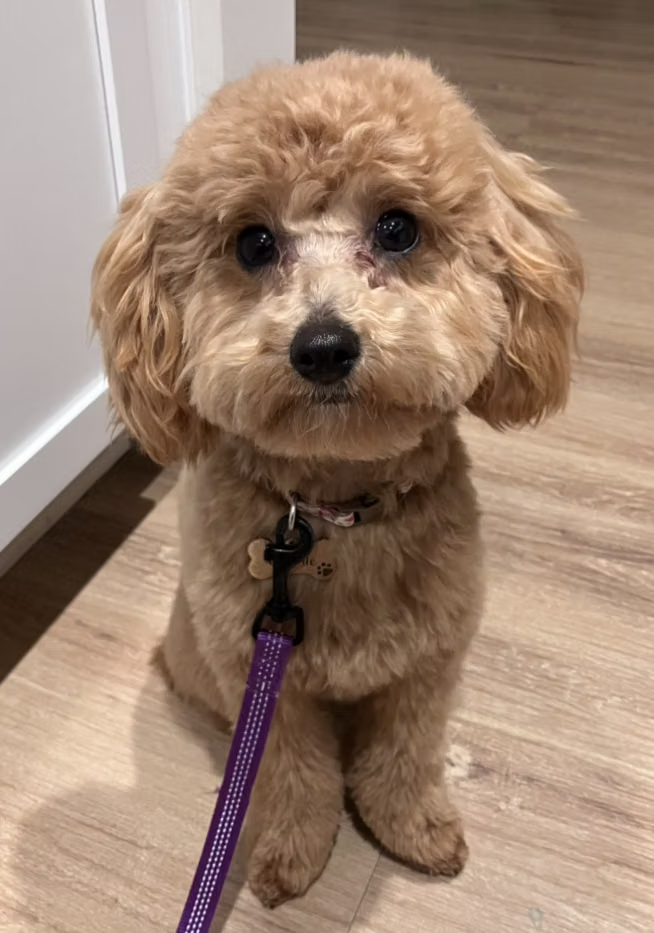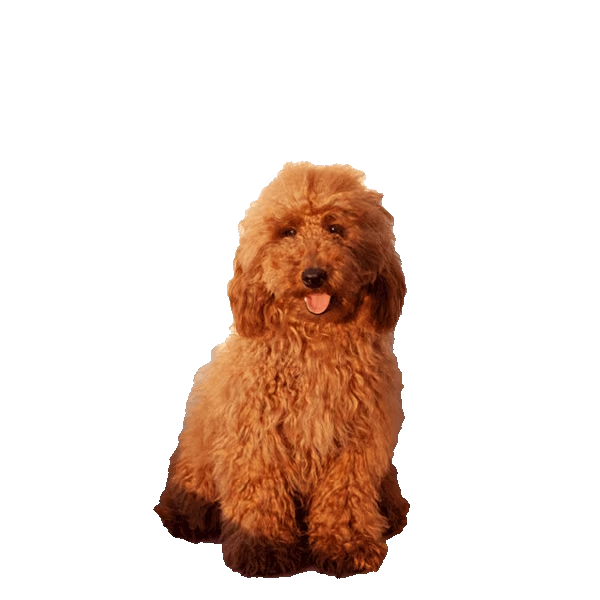
The Miniature Poodle is a brilliant, eager-to-please companion combining elegance with one of the keenest minds in the dog world.
How the Poodle (Miniature) coat is built, and what that means when you groom it.
Caution: A Poodle (Miniature) coat mats easily.
Fine or long hair tangles at the base of the coat, out of sight, where the mats tighten and pull on the skin. Brushing has to reach right down to the roots in sections, not just skim the surface.
Information: A Poodle (Miniature) needs clipping every few weeks.
This coat keeps growing rather than shedding out, so it has to be trimmed every few weeks. Left to grow it mats down against the skin and traps moisture, dirt and heat.
A few of the Poodle (Miniature) profiles members have added to United Pet Club.
The Miniature Poodle is a small, sharp companion breed from Germany, standing 28 to 38 cm at the shoulder and living 13 to 15 years.
The Miniature Poodle is a small dog with a quick mind and a settled, people-focused temperament. It is one of three Poodle sizes, falling between the Standard and the Toy. The formal show clip seen at KUSA conformation shows can be misleading: underneath it, the Miniature Poodle is a working retriever, bred down from larger water dogs and built to move.
This variety weighs roughly 4.5 to 7 kg and stands 28 to 38 cm at the shoulder. The coat is dense and curly, grows continuously, and drops very little loose hair, so grooming is a fixed part of ownership rather than an optional extra. Coat colours range across solid black, white, apricot, cream, silver, brown, and others.
Miniature Poodles attach closely to their households and want to be part of daily life. They pick things up fast, respond well to training, and stay playful well into adulthood. The mix of small size and high trainability makes the breed a common pick for first-time owners who can keep up with grooming and give the dog enough to think about.
| Attribute | Detail |
|---|---|
| Origin | Germany |
| Size | Small (4.5 to 7 kg, 28 to 38 cm) |
| Lifespan | 13 to 15 years |
| Group / role | Companion dog and former water retriever |
| Good with | Families, children, other dogs, attentive first-time owners |
The Miniature Poodle suits households that can offer daily interaction, short training sessions, and a grooming routine every few weeks. It settles into flats and freestanding houses alike, provided it gets exercise and company. It is not the right fit for people who are out for long stretches of the day, since the breed dislikes being left alone and can develop nuisance habits, such as barking or chewing, when bored.
The Poodle developed in Germany as a water retriever, and the Miniature variety was bred down from the Standard for companionship and smaller working roles.
The Poodle originated in Germany, where it worked as a retriever of waterfowl. The name comes from the German word pudeln, to splash about in water. The traditional clipped coat was practical rather than decorative: shaving sections of the body cut drag while swimming, while hair left over the joints and chest gave protection in cold water.
Germany is the country of origin, but France took to the breed with enthusiasm and shaped much of its later development. There the Poodle moved out of the field and into companion and performance work, including circus and street acts that made the most of how quickly it learned.
The Miniature Poodle was bred down from the larger Standard. Breeders selected smaller dogs to keep the intelligence and coat of the original while producing a size that suited town life and smaller households better. A still smaller Toy variety came after that. KUSA, like kennel clubs worldwide, treats the three sizes as one breed split by height rather than as separate breeds.
By the twentieth century the Poodle, in its various sizes, had become one of the most widely kept companion breeds across Europe, North America, and South Africa, valued for its trainability and low-shedding coat.
The Miniature Poodle is a square, compact dog, 28 to 38 cm tall, with a dense, curly, low-shedding coat in a range of solid colours.
The Miniature Poodle has a square, balanced outline, standing about as tall at the shoulder as it is long from chest to rump. It carries itself upright and alert. The head is long and refined, the muzzle straight, and the eyes dark and oval with a watchful expression. The ears hang close to the head and carry long hair.
| Trait | Standard |
|---|---|
| Height | 28 to 38 cm (11 to 15 in) at the shoulder |
| Weight | 4.5 to 7 kg (10 to 15 lb) |
| Coat | Dense, curly, continuously growing, low-shedding |
| Colours | Black, white, apricot, cream, silver, brown, blue, others (solid) |
| Eyes | Dark, oval, alert |
The coat is the breed's defining feature. It is curly and firm to the touch, grows without a seasonal shed, and mats quickly if it is not brushed and clipped on a set schedule. Because loose hair gets caught in the curls rather than falling out, the breed suits people who want a low-shedding dog around the house.
Accepted colours are solid right through the coat and include black, white, apricot, cream, silver, blue, grey, and shades of brown such as cafe au lait. Some coats lighten or shift shade as the dog grows up. The coat can be kept in anything from a practical short trim, sensible for Highveld sun and coastal humidity alike, to the elaborate clips seen in the show ring.
The Miniature Poodle is affectionate, playful, and exceptionally sharp, bonding closely with its family and generally getting on with children and other pets.
The Miniature Poodle is bright, responsive, and closely attached to its people. It sits near the top of most rankings of intelligent dog breeds and tends to pick up commands and routines faster than most. That intelligence needs an outlet: a Miniature Poodle with nothing to do will often invent its own entertainment, and not all of it welcome.
With family the breed is affectionate and playful, often following household members from room to room. It generally does well with children when interactions are supervised, and it usually settles peacefully alongside other dogs and pets it is raised with. The breed forms a strong attachment and prefers company over long stretches alone.
Toward strangers the Miniature Poodle tends to be reserved rather than aggressive, and many individuals are alert enough to bark at the gate, which makes them decent watchdogs. Early socialisation helps keep wariness or excessive barking in check. The breed is sensitive and reads its owner's mood closely, so heavy-handed correction tends to backfire.
| Trait | Rating |
|---|---|
| Affection | 5 |
| Energy | 4 |
| Trainability | 5 |
| Vocalness | 3 |
| Shedding | 1 |
The Miniature Poodle needs regular brushing, a professional clip every four to six weeks, daily exercise, and steady mental stimulation.
The Miniature Poodle adapts well to a flat or a house with a garden, as long as it gets daily exercise and company. It is an indoor dog that wants to be near its people and should not be left on its own for long stretches. A securely fenced garden is useful but does not replace time with the family.
Feed a complete diet matched to life stage in measured portions, splitting an adult Miniature Poodle's daily food into two meals.
A Miniature Poodle does well on a complete and balanced diet formulated for its life stage and size. Because the breed is small and prone to putting on weight when overfed, portions should be measured out rather than left down free-choice. Adjust amounts to the individual dog's age, activity level, and body condition; you should be able to feel the ribs without pressing hard.
| Life stage | Amount per day | Meals |
|---|---|---|
| Puppy (2 to 6 months) | Per product guide for weight | 3 to 4 |
| Puppy (6 to 12 months) | Per product guide for weight | 2 to 3 |
| Adult | About 125 to 250 ml dry food | 2 |
| Senior | Adjusted down for lower activity | 2 |
Treats should make up no more than about ten percent of daily calories, with the main diet adjusted to allow for them. Most Miniature Poodles on a complete commercial diet need no supplements; discuss anything extra, such as joint or skin support, with a vet before starting it. Provide fresh water at all times.
The Miniature Poodle is generally long-lived at 13 to 15 years but is predisposed to eye, joint, and certain endocrine conditions, plus regional risks such as biliary.
The Miniature Poodle is generally a healthy, long-lived breed, with a typical lifespan of 13 to 15 years. As with most purebred dogs, it carries some inherited predispositions. Buying from a breeder who screens breeding stock, ideally one registered with KUSA, and keeping up with routine vet care lowers the risk and severity of most of these conditions.
| Condition | Signs | Note |
|---|---|---|
| Progressive retinal atrophy | Night blindness, declining vision | Inherited; DNA tests available for breeders |
| Patellar luxation | Skipping gait, occasional hind-leg lifting | Kneecap slips out of position; severity varies |
| Hip dysplasia | Stiffness, reluctance to exercise | Less common in small Poodles but possible |
| Legg-Calve-Perthes disease | Limping, hind-leg pain in young dogs | Affects the hip joint in small breeds |
| Epilepsy | Seizures | Manageable with vet care in many cases |
| Cushing's disease | Increased thirst, appetite, coat changes | Endocrine disorder, more common in middle age |
The Miniature Poodle is one of the easiest breeds to train, learning quickly through reward-based methods and short, varied sessions.
The Miniature Poodle ranks among the most trainable of all dogs. It learns commands quickly, holds on to them well, and enjoys the mental work, which makes it a strong candidate for obedience, agility, and trick training, disciplines run locally under KUSA. The flip side of this intelligence is that the breed gets bored with repetition and picks up on inconsistency fast, so sessions should stay short, varied, and upbeat. The breed is sensitive and does not respond well to harsh correction.
Miniature Poodles typically have small to medium litters and should be bred only from health-screened parents that have reached full maturity.
Responsible breeding of Miniature Poodles starts with health-tested parents. Both dam and sire should be screened for the conditions known in the breed, including eye and patella checks, before mating. Bitches should be physically and behaviourally mature before a first litter, generally past about two years of age, rather than bred on a first season.
Gestation in dogs runs about 63 days from conception. Litter sizes in the Miniature variety are typically small to medium, often around three to six puppies, with individual variation. Whelping in small breeds can carry added risk, so a breeder should have veterinary support lined up in advance.
Puppies are born blind and deaf and depend entirely on the dam in the first weeks. Eyes open at around two weeks, and weaning starts at roughly three to four weeks. The period from about three to twelve weeks is critical for socialisation, so well-raised puppies are handled gently and exposed to ordinary household sights and sounds before going to new homes, usually at eight weeks or later. KUSA registration paperwork, including microchipping where required, should be sorted before puppies leave the breeder.
| Metric | Value |
|---|---|
| Female maturity for breeding | About 2 years |
| Gestation | About 63 days |
| Typical litter size | 3 to 6 puppies |
| Eyes open | About 14 days |
| Weaning begins | 3 to 4 weeks |
| Earliest rehoming | About 8 weeks |
No national chip law protects a Poodle (Miniature) here; a free United Pet Club record does, for life, at no cost.
Load your Poodle (Miniature)'s details once and be done with it: name, date of birth, photo, your cell number, save. The profile is free for his whole life, and it takes a chip number the day the vet supplies one. Dog registration is the start of the paper trail.
A chipped Poodle (Miniature) still needs the number loaded into a registry, because the vet's job ends with the implant. Register the microchip on the free lifetime plan: any brand a local vet uses qualifies, updates stay free when you relocate between provinces, and the record answers the lookups SPCA branches run daily. Create your free account and settle both records today.
Create a free United Pet Club account, load your Poodle (Miniature)'s details and a photo, and save. The lifetime plan keeps the profile active at no cost for as long as you have him, chip or no chip.
Load the 15-digit chip number into your free account together with your address and cell number. Registration and every later update are free, and chips from any brand a South African vet implants are accepted.
No national law says so, though the SPCA chips as standard practice and many breeders and welfare groups insist on it. The registration behind the chip is the part that finds you, and with United Pet Club it costs nothing.
Nothing at all. The free lifetime plan covers the profile, the chip record, and unlimited updates, with no annual renewal in sight.
Common questions about the Miniature Poodle's size, temperament, grooming demands, lifespan, and suitability for families and first-time owners.
A Miniature Poodle stands 28 to 38 cm at the shoulder and weighs about 4.5 to 7 kg, sitting between the larger Standard Poodle and the smaller Toy Poodle.
It is affectionate, playful, and highly intelligent. The breed bonds closely with its family, usually gets on well with children and other pets, and tends to be reserved but not aggressive with strangers.
The main demand is grooming. The coat grows continuously and needs brushing several times a week plus a professional clip every four to six weeks. Beyond that, the breed needs daily exercise and mental stimulation.
Most Miniature Poodles live 13 to 15 years, which is a long run for a dog and typical for a healthy small breed.
Yes, for owners who can commit to grooming and daily engagement. The breed's intelligence and eagerness to please make it one of the easier dogs to train.
Very little. The curly coat sheds minimally and traps loose hair, which is why the breed is often chosen by people who want a low-shedding dog, though it still needs regular grooming.
The Poodle, across its size varieties, is one of the more widely kept companion breeds, so Miniature Poodles are generally available through KUSA-registered breeders and breed-specific rescues. Look for breeders who health-test their dogs.