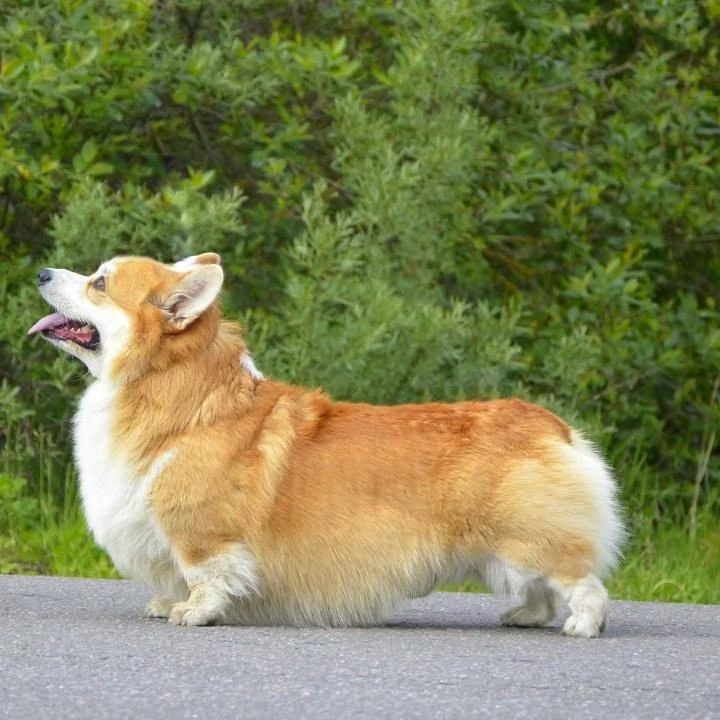
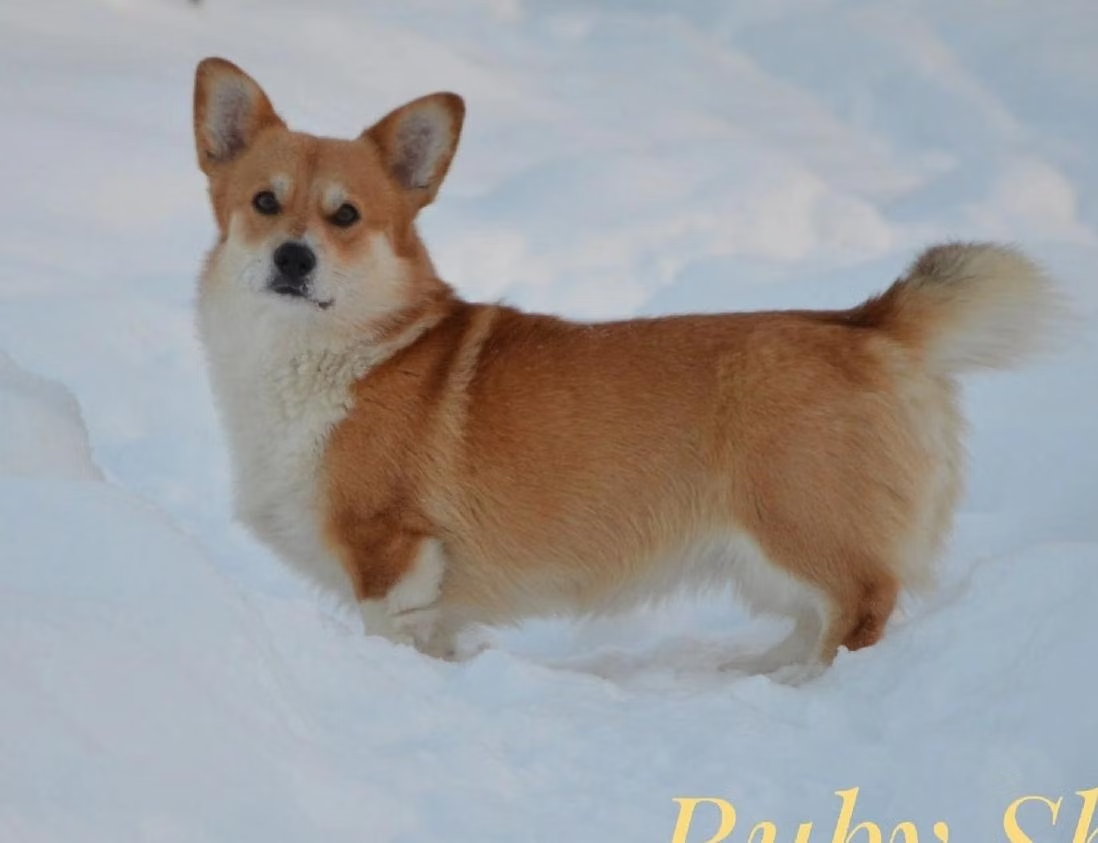
The Pembroke Welsh Corgi is a spirited, low-set herder beloved for its friendly personality and bright, eager intelligence.
How the Pembroke Welsh Corgi coat is built, and what that means when you groom it.
Critical: A Pembroke Welsh Corgi should not be shaved.
The undercoat keeps heat out as well as in, and the outer coat shields the skin from sun and insect bites. Clipping the whole coat off removes both. It often grows back patchy, soft or a different colour, and in some animals the guard hairs never return properly. Brush the undercoat out instead of cutting it off.
Information: A Pembroke Welsh Corgi drops its undercoat in heavy bursts.
The undercoat comes out in heavy bursts over a few weeks. An undercoat rake, or a bath followed by a proper blow-dry, clears it far faster than daily brushing. Clipping the coat down is not a shortcut for this.
A few of the Pembroke Welsh Corgi profiles members have added to United Pet Club.
The Pembroke Welsh Corgi is a small, low-set herding dog from Wales, popular across South Africa for its alertness, big personality, and trainable mind.
The Pembroke Welsh Corgi is a small dog with a long body, short legs, and large upright ears. It comes from Wales, where it worked as a cattle drover, nipping at the heels of livestock to move the herd along. That working history still shows in the breed today: a Corgi is active, watchful, and quick to bark when something new appears on the scene.
Despite the short legs, this is a sturdy, athletic dog with genuine stamina. Pembrokes form close bonds with their families and tend to stay near their people rather than wander off. They are friendly with familiar faces and alert towards strangers, which makes them effective watchdogs in a small package, a trait many South African households appreciate.
The breed's intelligence is one of its defining traits. Corgis pick up commands quickly and enjoy having a job to do, whether that is herding, agility, or simple games in the garden. Without enough mental work, that same cleverness can turn into mischief.
| Attribute | Detail |
|---|---|
| Origin | Wales |
| Size | Small |
| Lifespan | 12 to 13 years |
| Group/role | Herding dog (cattle drover) |
| Good with | Families, older children, active households |
The Pembroke Welsh Corgi suits owners who can offer daily activity and consistent training. It does well in homes with a secure garden, whether a freestanding house or a townhouse on a security estate, though it can adapt to flat living if it gets enough exercise. The breed suits people who want a small dog with a big personality and do not mind some barking and a fair amount of shedding.
The Pembroke Welsh Corgi comes from Pembrokeshire in Wales, where it worked for centuries as a low-set cattle herding dog before becoming popular worldwide.
The Pembroke Welsh Corgi takes its name from Pembrokeshire, a county in southwest Wales. The breed was developed as a herding dog for cattle. Its low build let it dart in, nip at the heels of livestock, and drop below the path of a kicking hoof. Welsh farmers valued a dog that could move stock to market and back without much fuss.
The Pembroke and the Cardigan Welsh Corgi are two separate breeds with separate histories, though both come from Wales and share the same general short-legged shape. For many years they were shown together, but they were later recognised as distinct breeds with their own standards.
The Pembroke gained wider public attention through its long association with the British royal family during the twentieth century, which helped raise its profile well beyond rural Wales and across the Commonwealth, South Africa included.
Today the Pembroke Welsh Corgi is kept mainly as a companion and show dog. In South Africa it is shown under Kennel Union of Southern Africa (KUSA) rules, while some individuals still take part in herding trials that reflect the breed's original work.
The Pembroke Welsh Corgi is a low-set, sturdy small dog with a foxy head, upright ears, and a weather-resistant double coat suited to South African climates.
The Pembroke Welsh Corgi has a long, low body set on short, straight legs. The head is fox-like, with a moderate muzzle, dark oval eyes, and erect ears that taper to a slightly rounded tip. The overall impression is of a small dog that is strong and quick rather than delicate. Most Pembrokes have a very short tail, which is one visible difference from the Cardigan.
| Trait | Standard |
|---|---|
| Height | 25 to 30 cm at the shoulder |
| Weight | Up to about 14 kg; females slightly less |
| Coat | Medium-length double coat, weather resistant |
| Colours | Red, sable, fawn, black and tan, often with white markings |
| Eyes | Dark, oval, set well apart |
The Pembroke carries a double coat. The outer coat is medium in length and slightly coarse, while the undercoat is soft and dense for insulation. Common colours are red, sable, fawn, and black and tan, usually with white on the legs, chest, neck, and parts of the face. The coat sheds steadily through the year and more heavily during seasonal changes.
Pembroke Welsh Corgis are friendly, playful, and alert, bonding closely with their families while staying watchful towards strangers and new visitors.
The Pembroke Welsh Corgi is friendly and outgoing with its own people. It tends to attach strongly to the household and likes to be involved in daily life. With family members the breed is playful and affectionate, often following people from room to room.
Towards strangers the Corgi is alert and a little reserved at first. It will usually announce visitors with sharp barking, a trait that comes from its watchdog instinct rather than aggression. Early socialisation helps a Corgi greet new people and situations with more ease.
With other pets the breed can do well, though its herding instinct may show up as chasing or heel-nipping, especially with children running about or other animals moving fast. Supervision and training reduce this behaviour. Corgis are intelligent and confident, which makes them rewarding but also means they need clear structure.
| Trait | Rating |
|---|---|
| Affection | 5 |
| Energy | 4 |
| Trainability | 5 |
| Vocalness | 4 |
| Shedding | 5 |
Corgis need regular brushing for their heavy double coat, daily exercise to match their energy, and careful weight management in South Africa's climate.
The Pembroke Welsh Corgi adapts to houses and flats as long as it gets daily exercise. A secure garden is useful but not required. Because of the long back and short legs, limit repeated jumping from heights and stair use, especially for puppies and older dogs. Highveld winters bring cold, dry air and frosty mornings, while summers on the coast and in the Lowveld can turn hot and humid, so plan exercise for the cooler parts of the day when needed.
Feed a complete diet measured to body condition, since Corgis gain weight easily and extra kilograms strain their long backs and joints over time.
The Pembroke Welsh Corgi does well on a complete, balanced diet suited to its age and activity level. The breed has a strong appetite and gains weight readily, so portions should be measured rather than left out all day. Keeping a Corgi at a healthy weight is one of the most important things an owner can do, because excess weight adds pressure to the spine and joints.
| Life stage | Amount per day | Meals |
|---|---|---|
| Puppy (2 to 6 months) | About 1 to 1.5 cups, split | 3 to 4 |
| Puppy (6 to 12 months) | About 1 to 1.5 cups | 2 to 3 |
| Adult | About 0.75 to 1.5 cups by size and activity | 2 |
| Senior | Adjust down to match lower activity | 2 |
Keep treats to roughly ten percent of daily calories and account for them when measuring meals. Most Corgis on a complete diet do not need supplements. Discuss joint or other supplements with your vet before adding them, since needs vary by individual dog.
Pembroke Welsh Corgis live about 12 to 13 years and are generally hardy, but the long back and a few inherited conditions need proper screening.
The Pembroke Welsh Corgi is generally a hardy breed with a typical lifespan of 12 to 13 years. Most health concerns relate to the long back, the tendency to gain weight, and a small number of inherited conditions. Buying from breeders who screen their dogs, ideally through KUSA-recognised health testing, and keeping a Corgi lean go a long way towards a healthy life. Specialist orthopaedic and neurology referral care, useful for back problems in particular, is most readily available in South Africa's major centres such as Johannesburg, Cape Town, Pretoria, and Durban.
| Condition | Signs | Note |
|---|---|---|
| Intervertebral disc disease | Back pain, weakness, reluctance to move | Linked to the long spine; weight control helps |
| Hip dysplasia | Stiffness, limping, trouble rising | Screening of breeding stock reduces risk |
| Degenerative myelopathy | Gradual hind-limb weakness in older dogs | A DNA test exists for at-risk lines |
| Obesity | Excess weight, low activity | Common and preventable with portion control |
Corgis are highly trainable and eager to learn, responding best to short, positive sessions that channel their herding drive and curb excess barking.
The Pembroke Welsh Corgi is one of the more trainable small breeds. It is intelligent, quick to pick up commands, and motivated by food and praise. That same sharpness means a bored Corgi will find its own entertainment, so regular training keeps the mind busy. Early work on barking and on heel-nipping is worthwhile, since both come naturally to the breed.
Pembroke Welsh Corgis reach maturity around one to two years, carry litters of about six to seven pups, and need health screening before breeding.
Pembroke Welsh Corgis usually reach physical and behavioural maturity between one and two years of age. Responsible breeding starts with health screening of both parents for hip status and degenerative myelopathy, along with a general veterinary assessment, to reduce the chance of passing on inherited problems. In South Africa, breeders who register litters with KUSA are expected to follow the union's health and welfare guidance for the breed.
Gestation in dogs lasts about 63 days. Corgi litters average around six to seven puppies, though the number varies by individual. Because of the breed's body shape, a vet should monitor the pregnancy and be ready to assist with whelping if needed.
Raising the young involves keeping the dam well fed during nursing, weaning the pups onto solid food at around three to four weeks, and starting gentle socialisation before they go to new homes. Puppies should stay with the litter until at least eight weeks of age to develop normally.
| Metric | Value |
|---|---|
| Maturity | 12 to 24 months |
| Gestation | About 63 days |
| Average litter size | 6 to 7 puppies |
| Weaning | Around 3 to 4 weeks |
| Go-home age | 8 weeks or older |
No national chip law protects a Pembroke Welsh Corgi here; a free United Pet Club record does, for life, at no cost.
Load your Pembroke Welsh Corgi's details once and be done with it: name, date of birth, photo, your cell number, save. The profile is free for his whole life, and it takes a chip number the day the vet supplies one. Dog registration is the start of the paper trail.
The chip is a number; the registry entry is the story behind it. Capture your Pembroke Welsh Corgi's 15-digit number in a free United Pet Club account and the story reads: this dog has a home. Every brand is accepted, updates never cost a cent, and the record stays searchable here and abroad. Microchip registration plus a free account does it.
Create a free United Pet Club account, load your Pembroke Welsh Corgi's details and a photo, and save. The lifetime plan keeps the profile active at no cost for as long as you have him, chip or no chip.
Load the 15-digit chip number into your free account together with your address and cell number. Registration and every later update are free, and chips from any brand a South African vet implants are accepted.
No national law says so, though the SPCA chips as standard practice and many breeders and welfare groups insist on it. The registration behind the chip is the part that finds you, and with United Pet Club it costs nothing.
Nothing at all. The free lifetime plan covers the profile, the chip record, and unlimited updates, with no annual renewal in sight.
Common questions about the Pembroke Welsh Corgi cover its size, temperament, care needs, lifespan, family fit, and where to find one in South Africa.
It's a small breed, standing about 25 to 30 cm at the shoulder and weighing up to roughly 14 kg, with females usually a little lighter.
Corgis are friendly and playful with family, alert and a little reserved towards strangers, and intelligent enough to learn quickly. They tend to bark and may try to herd by nipping at heels.
Care is moderate. They need daily exercise, regular brushing for heavy shedding, and careful weight control. The main extra task is protecting the long back from jumping and stairs.
The typical lifespan is 12 to 13 years. Keeping the dog lean and up to date on veterinary care supports a full, healthy life.
Yes, for active households. It bonds closely with its people and does well with older children. Supervise around very young children because of the herding and nipping instinct.
Yes. The double coat sheds steadily year round and heavily during seasonal changes, so expect regular brushing and some hair around the home.
The breed is available through KUSA-registered breeders who health-test their dogs, and Corgis do occasionally turn up in breed-specific and general rescue organisations. Ask for hip and degenerative myelopathy screening records when choosing a puppy, and expect a waiting list for a well-bred litter.