The Papillon is a friendly, butterfly-eared toy breed prized for its brightness, agility, and eager-to-learn charm.
How the Papillon coat is built, and what that means when you groom it.
Caution: A Papillon coat mats easily.
Fine or long hair tangles at the base of the coat, out of sight, where the mats tighten and pull on the skin. Brushing has to reach right down to the roots in sections, not just skim the surface.
A few of the Papillon profiles members have added to United Pet Club.
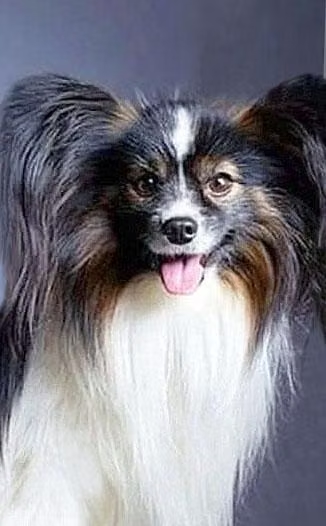
The Papillon is a small, alert companion breed from France, named for its butterfly-shaped ears and valued for its intelligence and eagerness to learn.
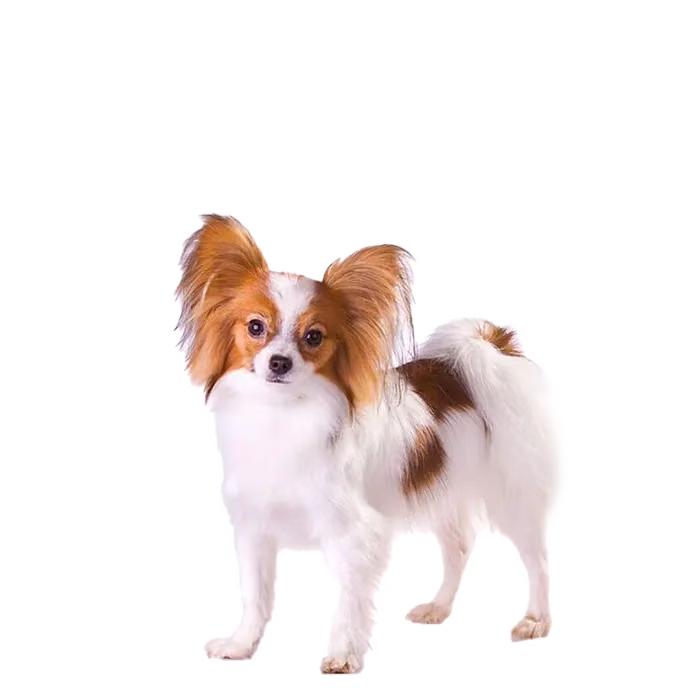
The Papillon is a toy dog weighing about 5 to 10 pounds and standing 8 to 11 inches at the shoulder. Its name comes from the French word for butterfly, a nod to the large, fringed ears that flare out from the sides of the head. A drop-eared version of the breed exists too, known as the Phalene (French for moth), where the ears hang down rather than stand erect.
Small as it is, the Papillon is no lapdog in the passive sense. It picks up new commands with ease and competes seriously in agility and obedience rings. The breed carries itself with a bright, watchful air and likes to stay involved in whatever its family is doing.
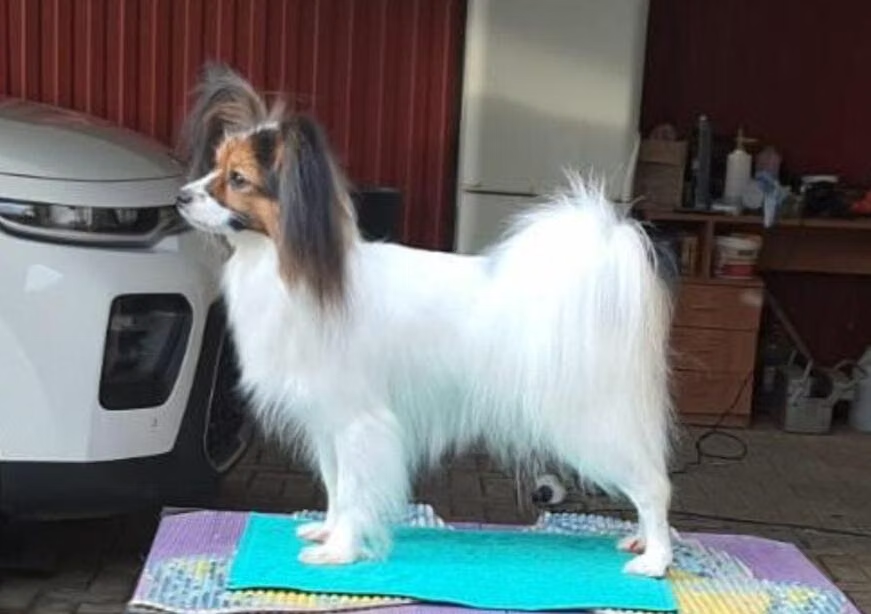
The coat is long, fine and single layered, with feathering on the ears, chest, legs and tail. Markings are always white with patches of a second colour. For a dog this size, the Papillon is remarkably long lived, commonly reaching 14 to 16 years.
| Attribute | Detail |
|---|---|
| Origin | France |
| Size | Toy (5 to 10 lb, 8 to 11 in) |
| Lifespan | 14 to 16 years |
| Group/role | Toy companion, agility and obedience competitor |
| Good with | Families, older children, other dogs, attentive owners |
The Papillon suits an owner who wants a small dog with an active mind, someone happy to fit in training games, agility, or daily mental work. It settles into flats and houses alike, provided it gets enough exercise and company. In households with very young children, supervise playtime closely, since the small frame can be hurt by rough handling.
The Papillon developed from the small spaniels depicted in European court portraits from the 1500s onward, with the erect butterfly ear appearing in later generations.
The Papillon comes from a line of small companion spaniels once known as dwarf spaniels or continental toy spaniels. Dogs of this build turn up in European paintings from the sixteenth century, often perched on the laps of noblewomen or tucked under the arms of court ladies. Italian, Spanish and French painters all recorded the little dogs across generations of portraiture.
The earliest type had drop ears, the form now called the Phalene. The erect, fringed ear that gave the modern Papillon its name emerged later, and for a long stretch both ear types turned up in the same litters. France and Belgium did most of the work refining the breed into its present form.
The dogs were fashionable among the French aristocracy, and popular accounts often link them to royal households of the 1600s and 1700s. Whatever the truth of those court stories, the small spaniels were well-established companions of wealthy European families long before any formal breed club existed.
Organised breeding and written standards followed the rise of kennel clubs from the late nineteenth century onward. Most registries, including the Kennel Union of Southern Africa (KUSA), recognise the Papillon and the drop-eared Phalene as a single breed, judged together with ear carriage treated as a variation rather than a separate breed.
The Papillon is a small, fine-boned toy dog with a long single coat, a plumed tail, and the large fringed ears that give the breed its butterfly name.
The Papillon is light and elegant in build, with fine bone and a level topline. The head is small, with a clear stop and a muzzle that tapers and sits shorter than the skull. The ears are the feature everyone notices first. In the erect form they are large, set toward the back of the head, and carried out at an angle with long fringing that suggests open butterfly wings. On a Phalene, the same ears simply hang down.
The tail sits high and arches over the back, trailing a long plume of hair. Movement is light and free, and the dog covers ground easily despite its size.
| Trait | Standard |
|---|---|
| Height | 8 to 11 inches at the shoulder |
| Weight | 5 to 10 pounds |
| Coat | Long, fine, single layered, with feathering on ears, chest, legs, and tail |
| Colours | White with patches of any colour; a coloured mask over the eyes and ears is typical |
| Eyes | Dark, round, medium sized, alert in expression |
The coat is always parti-coloured: white with patches of a second colour. Common combinations run to white with black, white with red or sable, and white with brown. Tricolour dogs show black and white with tan markings over the eyes and inside the ears. Breeders favour a symmetrical mask across the face and ears, often set off by a white blaze down the centre of the head. Because the single coat carries no woolly undercoat, grooming stays more manageable than the length suggests.
The Papillon is friendly, sharp-witted and energetic, forming close bonds with its family while staying alert and quick to learn.
The Papillon is an outgoing, curious dog that likes to stay in the middle of household life. It bonds closely with its people and does not do well left alone for long stretches. Around family it is affectionate and playful, and it usually greets familiar visitors with interest rather than nerves.
With strangers it tends toward alert rather than aggressive, and it will often bark to announce someone at the gate. Early socialisation helps it stay confident around new people and unfamiliar places. Around other dogs the Papillon is generally sociable, and many live comfortably alongside cats they were raised with. Given its small size, playtime with large dogs is worth supervising.
This is a thinking breed. It picks up commands fast, enjoys working through a problem, and can turn restless or noisy without enough to occupy it. Owners who build in training games and daily activity tend to see the calmer, steadier side of the dog. The Papillon reads its owner's mood closely and responds best to patient, consistent handling.
| Trait | Rating |
|---|---|
| Affection | 5 |
| Energy | 4 |
| Trainability | 5 |
| Vocalness | 3 |
| Shedding | 2 |
The Papillon needs regular brushing of its single coat, daily exercise and mental work, and a safe home suited to a small, agile dog.
The Papillon settles into flats or houses equally well. It copes less well with cold than larger dogs, thanks to the single coat, so a jersey in winter and a warm spot indoors help. Secure fencing and supervision outdoors matter too: a dog this small can slip through a gap in the fence, and in some parts of South Africa it also needs watching for birds of prey overhead.
The Papillon does well on a complete small-breed diet fed in measured portions across two to three meals a day, with care taken to avoid low blood sugar in puppies.
Feed a complete, balanced food formulated for small or toy breeds. Small kibble suits the small mouth and helps with dental health. Because the breed is so tiny, portions are small and easy to over-serve, so measure meals out rather than leaving food down all day. Keep an eye on body condition: you should be able to feel the ribs without a layer of fat over them.
Toy puppies can develop low blood sugar, known as hypoglycaemia, if meals are spaced too far apart. Young puppies do better on several small meals through the day to keep their energy steady. Fresh water should always be available.
| Life stage | Amount per day | Meals |
|---|---|---|
| Puppy (2 to 6 months) | About 1/4 to 1/2 cup | 3 to 4 |
| Puppy (6 to 12 months) | About 1/3 to 1/2 cup | 3 |
| Adult | About 1/4 to 1/2 cup | 2 |
| Senior | Adjust down for activity | 2 |
Keep treats to around 10 percent of daily calories, since it does not take much to tip a dog this small into weight gain. Small training treats or pieces of the regular kibble work well for reward-based sessions. A dog on a complete commercial diet usually needs no extra supplements; check with a vet before adding any, as toy breeds are sensitive to dosing.
The Papillon is generally healthy and long lived at 14 to 16 years, with patellar luxation, dental disease and certain eye conditions among the issues to watch.
The Papillon is one of the longer-lived dog breeds, commonly reaching 14 to 16 years, and it holds up well for its size. Even so, like most toy breeds it carries a handful of conditions worth keeping an eye on. Buying from breeders who screen their stock, and keeping up with routine vet visits, cuts the risk of both inherited and age-related problems.
| Condition | Signs | Note |
|---|---|---|
| Patellar luxation | Skipping, hind-leg lameness, sudden hop | Common in toy breeds; ranges from mild to surgical |
| Dental disease | Bad breath, tartar, loose teeth | Small jaws crowd the teeth; regular brushing helps |
| Progressive retinal atrophy | Night blindness, declining vision | Inherited; breeders can screen for it |
| Open fontanelle | Soft spot on the skull | Seen in some toy puppies; needs care to avoid head injury |
| Collapsing trachea | Honking cough, especially on a collar | Use a harness rather than a neck collar |
The Papillon is one of the most trainable toy breeds, learning fast and thriving on reward-based work, with consistent house-training the main early task.
The Papillon ranks among the sharpest of the toy breeds and picks up new commands with very little repetition. It enjoys the mental work of training and does well at obedience, agility, and trick work. The breed responds to gentle, consistent methods and can turn anxious or stubborn if handled harshly. Short, frequent sessions hold its attention far better than one long drill.
House-training takes the most patience of anything on this list. Like many small dogs, the Papillon has a small bladder and does best on a steady schedule with frequent trips outside. Early socialisation to people, sounds, and other animals helps head off the nervous barking that toy breeds can slide into.
Papillons reach maturity around one year, carry small litters averaging two to four puppies, and benefit from health screening of the parents before mating.
Papillons reach sexual maturity at around 6 to 12 months, though responsible breeders hold off until a bitch is fully mature, usually closer to two years, before her first litter. Testing both parents for knee, eye, and heart conditions before mating is standard practice among careful breeders.
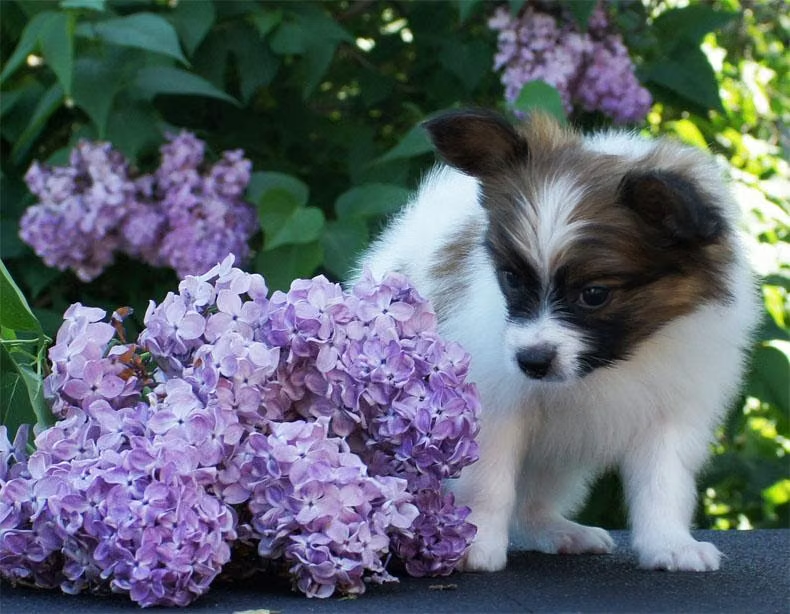
Gestation runs about 63 days. Litters stay small, often two to four puppies, in keeping with the breed's size. Because the puppies are tiny and toy bitches can struggle with whelping, breeders keep a close watch on the birth and have a vet on standby. A caesarean section is sometimes needed.
Newborn puppies are fragile and need a warm, quiet whelping area. Holding them at a steady temperature and watching for low blood sugar matter most in the first weeks. Puppies usually stay with the dam until at least 8 to 12 weeks, giving them time for early socialisation before they move to new homes.
| Metric | Value |
|---|---|
| Sexual maturity | 6 to 12 months |
| Recommended first breeding | Around 2 years |
| Gestation | About 63 days |
| Average litter size | 2 to 4 puppies |
| Weaning age | About 4 to 6 weeks |
| Leave for new home | 8 to 12 weeks |
No national chip law protects a Papillon here; a free United Pet Club record does, for life, at no cost.
When a Papillon lands at an SPCA branch, the scanner comes out first, and everything then rides on what the number returns. Make sure it returns you. Register your dog free with United Pet Club and the profile answers every scan with your name and number, from now until the end of his days.
The chip is a number; the registry entry is the story behind it. Capture your Papillon's 15-digit number in a free United Pet Club account and the story reads: this dog has a home. Every brand is accepted, updates never cost a cent, and the record stays searchable here and abroad. Microchip registration plus a free account does it.
Create a free United Pet Club account, load your Papillon's details and a photo, and save. The lifetime plan keeps the profile active at no cost for as long as you have him, chip or no chip.
Load the 15-digit chip number into your free account together with your address and cell number. Registration and every later update are free, and chips from any brand a South African vet implants are accepted.
No national law says so, though the SPCA chips as standard practice and many breeders and welfare groups insist on it. The registration behind the chip is the part that finds you, and with United Pet Club it costs nothing.
Nothing at all. The free lifetime plan covers the profile, the chip record, and unlimited updates, with no annual renewal in sight.
Common questions about Papillon size, temperament, care, lifespan, and suitability as a family or flat dog.
The Papillon is a toy breed. Most weigh 5 to 10 pounds and stand 8 to 11 inches at the shoulder.
Yes, it is friendly and affectionate with its family and usually good with older children and other dogs. Because it is small and delicate, supervise it closely around very young children who might handle it roughly.
Grooming is moderate. The single coat needs brushing two or three times a week and carries no heavy undercoat. The bigger commitment is daily exercise, mental work, and patient house-training.
They are long lived for dogs, commonly reaching 14 to 16 years with good care.
Yes. They settle well into flats as long as they get daily exercise and company. They may bark to announce visitors, so early training helps manage the noise.
No. They are among the most trainable toy breeds and learn quickly with reward-based methods. House-training takes the most patience, because of their small bladder.
They are the same breed with different ear carriage. The Papillon has erect, fringed butterfly ears, while the Phalene has drop ears. Both can turn up in the same litter.