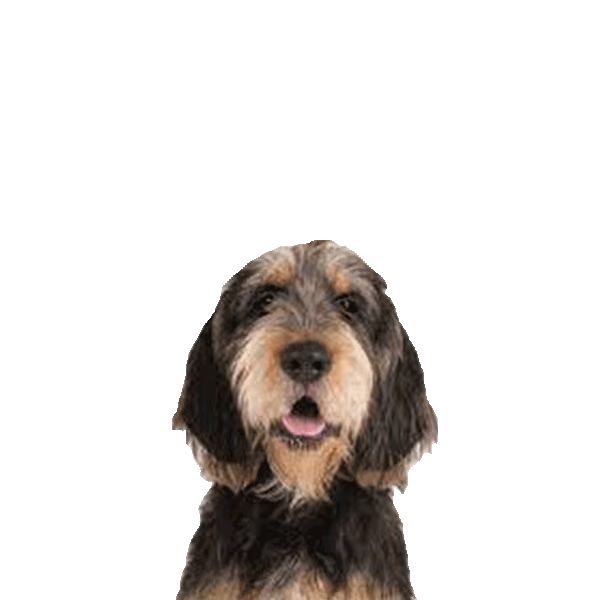
The Otterhound is a boisterous, good-natured scenthound known for its shaggy coat, webbed feet, and love of water.
How the Otterhound coat is built, and what that means when you groom it.
Caution: A Otterhound coat should be hand-stripped rather than clipped.
A wire coat is meant to be pulled out at the root once the hair is ready to release. Clippers cut it off part way instead, leaving the soft undercoat behind. The result is a coat that grows back limp and faded, and the weatherproof texture only returns after the hair is stripped out again.
A few of the Otterhound profiles members have added to United Pet Club.
The Otterhound is a big, shaggy English scenthound with webbed feet built for swimming, and one of the rarest breeds a South African owner will ever find registered with KUSA.
The Otterhound is a large scenthound that comes from England, developed to track and hunt otters along rivers and streams. That original job shaped two features that still define the breed: a rough, water-resistant double coat and big webbed feet that make it a genuinely strong swimmer, at home in anything from a farm dam to a mountain stream.
Adults are tall and solidly built. Males typically stand around 69 cm at the shoulder and weigh 36 to 52 kg, and the breed carries stamina, a deep voice and one of the keenest noses found among hounds. An Otterhound can hold a scent trail across water as readily as across dry veld.
Temperament runs friendly and easygoing. The breed gets on well with people and other dogs, though it keeps the independent streak typical of scenthounds, so it will not always come the first time it's called. It is also one of the rarer breeds worldwide, and South African litters, when they happen at all, are registered through the Kennel Union of Southern Africa (KUSA).
| Attribute | Detail |
|---|---|
| Origin | England |
| Size | Large (36 to 52 kg) |
| Lifespan | 10 to 13 years |
| Group / role | Hound; water scenthound |
| Good with | Families, children, other dogs; supervise around small pets |
The Otterhound fits an active household with room to move and time for daily exercise. It suits owners who enjoy hiking, or who have access to a dam or river for a swim, and who can handle a vocal, strong-willed dog. The shaggy coat needs regular brushing, and the deep bay carries a long way, so the breed is a poor match for a small flat or townhouse complex, or an owner expecting instant obedience.
Developed in medieval England to hunt otters preying on fish stocks, the Otterhound survives today as one of Britain's rarest native breeds, seen only occasionally in South Africa.
The Otterhound was developed in England, where packs of hounds hunted otters along the rivers. Otters competed with people for fish, and organised otter hunting with hounds is recorded from at least the medieval period, continuing in some form through the reigns of several English monarchs and for centuries afterwards.
South Africa has its own otters, the Cape clawless otter turns up in dams and rivers across the country, but the Otterhound's ancestry has nothing to do with Africa. The modern breed is thought to descend from a mix of rough-coated hounds and other working dogs, which passed on the dense coat, large frame and powerful scenting ability suited to wet ground and cold water. The exact crosses were never recorded with certainty, but the breed was clearly bred to swim and to work in packs over long days.
Otter hunting declined through the twentieth century as wild otter numbers fell. The United Kingdom gave the otter legal protection in the late 1970s, which ended the hunt in England and Wales and took away the breed's original purpose. Packs were disbanded or repurposed, and breeding numbers dropped sharply.
Today the Otterhound is kept mainly as a companion and is recognised by major kennel clubs, including the Kennel Union of Southern Africa. It remains very rare, with only a handful of puppies registered worldwide each year, and conservation breeding programmes work to keep the surviving lines going.
The Otterhound is a big, rough-coated hound with a shaggy double coat, a broad head, large webbed feet and a balanced build shaped for life in the water.
The Otterhound is a big, sturdy dog with a long, rough outer coat over an oily, water-resistant undercoat. The head is large and fairly narrow, with a long muzzle and low-set ears that hang in folds, covered in hair. The eyes are deep-set, and the overall expression is open and good-humoured.
The body is slightly longer than it is tall, with a deep chest, a strong back and a tail carried up when the dog is on the move. The feet are large, broad and webbed, an adaptation for swimming that shows the moment the dog hits open water.
| Trait | Standard |
|---|---|
| Height | Males about 69 cm; females about 61 cm at the shoulder |
| Weight | 36 to 52 kg |
| Coat | Rough, dense double coat; oily water-resistant undercoat |
| Colours | Any recognised hound colour; often grizzle, wheaten, black and tan, and liver shades |
| Eyes | Deep-set, dark, with an open expression |
The coat is the breed's most recognisable feature. It is hard and shaggy, typically 5 to 15 cm long over the body, with softer hair on the head and lower legs. The undercoat carries a slight oiliness that sheds water and keeps the dog warm when swimming, useful in a Cape winter or a cold Drakensberg stream alike. A wide range of colours is accepted. Grizzle and wheaten patterns are common, along with black and tan, blue and cream, and various liver and tan combinations. The coat needs regular grooming to stop it matting, especially around the ears and feet, and grass seeds from the veld work their way in easily if it's left unchecked.
The Otterhound is friendly, good-natured and sociable, but independent and vocal, with a scenting drive strong enough to override a recall.
The Otterhound is an even-tempered, affectionate dog that generally likes company. It's friendly with strangers and rarely shows aggression, so it makes a hopeless guard dog but a pleasant companion around the house. Bred to work in packs, it usually gets on well with other dogs.
With children the breed is typically patient and tolerant, though its size and exuberance mean play with small children needs supervision. Around cats, chickens and other small animals common on South African smallholdings, caution is warranted, because the hunting and scent drive can switch on a chase in seconds.
Independence is a defining trait. The Otterhound thinks for itself and can tune out a command the moment it picks up an interesting scent, whether that's a buck trail through the veld or a neighbour's braai. It is also notably vocal, with a deep, carrying bay it uses freely. Owners should expect a dog that is sociable and willing, not naturally obedient.
| Trait | Rating |
|---|---|
| Affection | 4 |
| Energy | 4 |
| Trainability | 2 |
| Vocalness | 5 |
| Shedding | 3 |
The Otterhound needs regular coat grooming, plenty of daily exercise that ideally includes a swim, and a home with secure space to roam.
The Otterhound is a high-maintenance breed for both coat care and exercise. It suits owners who can commit time outdoors and to regular grooming sessions, rather than someone hoping for a low-fuss pet.
The Otterhound does best in a house with a securely fenced yard rather than a flat or townhouse unit. The fence needs to be high and solid, because the breed is large, energetic and capable in water, and a low wall or open gate won't hold it back. The deep, frequent bay can carry to the neighbours, so a rural or semi-rural property suits the breed better than close, built-up housing.
The Otterhound needs a complete large-breed diet fed in measured meals, with portions matched to size and activity to avoid weight gain.
As a large, active hound, the Otterhound needs a complete and balanced diet formulated for big dogs. Feed a measured amount split across two meals a day rather than leaving food out, which helps manage weight and keeps energy steady through the day. Adjust portions to the individual dog's age, activity level and body condition, and keep fresh water down at all times, particularly through a hot Highveld summer.
| Life stage | Amount per day | Meals |
|---|---|---|
| Puppy (2 to 6 months) | 3 to 5 cups, large-breed puppy food | 3 to 4 |
| Junior (6 to 18 months) | 4 to 6 cups | 2 to 3 |
| Adult | 3.5 to 5 cups | 2 |
| Senior / less active | 3 to 4 cups | 2 |
Keep treats to roughly 10 percent of daily calories to guard against weight gain, which puts extra strain on a large dog's joints. As a deep-chested breed, the Otterhound can be at risk of bloat, so avoid hard exercise straight before or after meals. Discuss any joint or omega-3 supplements with a vet before adding them.
The Otterhound is generally hardy with a lifespan of 10 to 13 years, but is prone to hip dysplasia, bloat and an inherited bleeding disorder, and needs tick protection.
The Otterhound is a generally robust working breed with a typical lifespan of 10 to 13 years. Because the world population is so small, responsible breeders screen carefully to limit inherited problems. As a large, deep-chested dog it carries the size-related risks common to big breeds, and anyone buying a puppy should ask the breeder for health-screening results on both parents.
South African owners have one extra consideration: ticks. Biliary, or canine babesiosis, is spread by ticks and is a genuine risk anywhere in the country, and a dog that spends time swimming through reeds and long grass picks up ticks easily. Regular tick prevention and a quick check after every outing matter as much here as any of the inherited conditions below.
| Condition | Signs | Note |
|---|---|---|
| Hip dysplasia | Stiffness, limping, reluctance to rise | Screen breeding stock; keep weight controlled |
| Elbow dysplasia | Foreleg lameness, especially when young | Common in large breeds |
| Gastric dilatation-volvulus (bloat) | Swollen abdomen, retching, distress | Emergency; deep-chested dogs are at risk |
| Glanzmann thrombasthenia | Excessive bleeding, easy bruising | Inherited platelet disorder seen in the breed; DNA testing available |
| Ear infections | Head shaking, odour, scratching | Linked to long folded ears and water exposure |
The Otterhound is intelligent but independent, so training calls for patience, consistency and reward-based methods rather than repetition drills.
The Otterhound is clever but headstrong, a combination that makes training slower going than with an eager-to-please breed. It was bred to work at a distance and make its own decisions, so it will weigh up whether a command is worth its while. Short, varied and motivating sessions work better than long, repetitive drills. A reliable recall is hard to guarantee once the dog locks onto a scent, so a secure area and a long line matter through training, particularly near open water or a game farm boundary.
The Otterhound is one of the rarest breeds worldwide, so breeding is carefully managed to protect genetic diversity and screen for inherited disease.
Otterhound breeding is closely managed because the breed is critically low in numbers worldwide. With only a small global population and a limited gene pool, breeders coordinate matings to protect genetic diversity and avoid concentrating inherited conditions. Bitches reach physical maturity at around 18 to 24 months, and responsible breeders wait until then before a first litter, wherever in the world they are breeding.
Gestation runs about 63 days, typical for dogs. Litters are moderate to large for the breed, and the puppies are slow to mature physically and mentally, often not fully grown until two to three years old. Raising the litter means early socialising, careful nutrition for steady large-breed growth, and screening breeding stock for hip and elbow status and the inherited bleeding disorder. Anyone hoping for a puppy, in South Africa or anywhere else, should expect a waiting list and should work only with breeders who health-test their dogs and register litters with KUSA.
| Metric | Value |
|---|---|
| Sexual maturity | About 18 to 24 months (first breeding) |
| Gestation | Approximately 63 days |
| Average litter size | Moderate to large for the breed |
| Physical maturity | 2 to 3 years |
| Population status | Very rare; conservation breeding in place |
No national chip law protects an Otterhound here; a free United Pet Club record does, for life, at no cost.
Load your Otterhound's details once and be done with it: name, date of birth, photo, your cell number, save. The profile is free for his whole life, and it takes a chip number the day the vet supplies one. Dog registration is the start of the paper trail.
The chip is a number; the registry entry is the story behind it. Capture your Otterhound's 15-digit number in a free United Pet Club account and the story reads: this dog has a home. Every brand is accepted, updates never cost a cent, and the record stays searchable here and abroad. Microchip registration plus a free account does it.
Create a free United Pet Club account, load your Otterhound's details and a photo, and save. The lifetime plan keeps the profile active at no cost for as long as you have him, chip or no chip.
Load the 15-digit chip number into your free account together with your address and cell number. Registration and every later update are free, and chips from any brand a South African vet implants are accepted.
No national law says so, though the SPCA chips as standard practice and many breeders and welfare groups insist on it. The registration behind the chip is the part that finds you, and with United Pet Club it costs nothing.
Nothing at all. The free lifetime plan covers the profile, the chip record, and unlimited updates, with no annual renewal in sight.
Common questions about the Otterhound's size, temperament, care needs, lifespan, suitability and availability in South Africa.
It's a large breed. Males stand around 69 cm at the shoulder and females about 61 cm, with adults weighing 36 to 52 kg.
Friendly, good-natured and sociable with people and other dogs, but independent and very vocal, with a strong drive to follow a scent.
Fairly demanding. The shaggy coat needs brushing once or twice a week, the dog needs 60 to 90 minutes of exercise a day, and the loud bay and independent streak take patience to manage.
The typical lifespan is 10 to 13 years.
Yes. It's usually patient and affectionate with children, though its size and exuberance mean play with small children should be supervised, and it needs watching around cats and other small pets.
No. The Otterhound is one of the rarest breeds in the world, with only a handful of puppies registered anywhere each year, so expect a long wait from a KUSA-registered, health-testing breeder.
Yes. They were bred to hunt otters and have a water-resistant coat and webbed feet that make them strong, enthusiastic swimmers, equally happy in a farm dam or the sea.

![Safety [Dumfriesshire Otter Hunt], a Male Otterhound registered with United Pet Club](https://media.unitedpetclub.com/m/5CRtqqXGX7/safety-dumfriesshire-otter-hunt-otterhound_orig.avif "Safety [Dumfriesshire Otter Hunt] — Otterhound")
