

Maltese
The Maltese is an affectionate, gentle toy breed known for its silky white coat, playful charm, and devoted companionship.
- Size
- Toy
- Lifespan
- 12–15 years
- Origin
- Malta
- Temperament
- Affectionate
- Standard colors
- White, Lemon and Cream
Characteristics
Coat and grooming
How the Maltese coat is built, and what that means when you groom it.
- Coat layers
- Single coat
- Coat texture
- Silky
- Coat length
- Long
- Shedding
- Low shedding
Grooming guidance
Caution: A Maltese coat mats easily.
Fine or long hair tangles at the base of the coat, out of sight, where the mats tighten and pull on the skin. Brushing has to reach right down to the roots in sections, not just skim the surface.
Information: A Maltese needs clipping every few weeks.
This coat keeps growing rather than shedding out, so it has to be trimmed every few weeks. Left to grow it mats down against the skin and traps moisture, dirt and heat.
Maltese colors and patterns
What each club's breed standard says about every Maltese color and pattern. Point at a ruling to see the club's own wording.
Breed standards describe the Maltese in White, Lemon and Cream. Standard patterns: Solid.
| Color or pattern | FCI | AKC | UKC | KC | KUSA |
|---|---|---|---|---|---|
| White | Standard (“Pure white”) | Standard (“White”) | Standard (“Pure white”) | Standard (“Pure white”) | Standard (“Pure white”) |
| Lemon | Disqualifying | Fault (“White & Lemon”) | Not recognised | Standard (“slight lemon markings permissible”) | Standard (“Slight lemon markings permissible”) |
| Cream | Standard (“a pale ivory tinge is permitted”) | Not recognised | Fault (“An ivory tinge, or traces of orange, are permitted but they are considered an imperfection”) | Not recognised | Not recognised |
| Tan | Disqualifying | Fault (“White & Tan”) | Not recognised | Not recognised | Not recognised |
| Orange | Fault (“Traces of pale orange shades are tolerated but not desirable”) | Not recognised | Fault (“An ivory tinge, or traces of orange, are permitted but they are considered an imperfection”) | Not recognised | Not recognised |
| Patterns | |||||
| Solid | Standard (“Pure white”) | Standard (“pure white”) | Standard (“Pure white”) | Standard (“Pure white”) | Standard (“Pure white”) |

| Color or pattern | FCI | AKC | UKC | KC | KUSA |
|---|---|---|---|---|---|
| Dark brown | Standard (“they are of a dark ochre colour”) | Standard (“very dark”) | Standard (“dark brown”) | Standard (“dark brown”) | Standard (“dark brown”) |
| Blue | No ruling | No ruling | Fault (“Wall eyes”) | No ruling | No ruling |
| Color or pattern | FCI | AKC | UKC | KC | KUSA |
|---|---|---|---|---|---|
| Black | Standard (“absolutely black”) | Standard (“The nose is black”) | Standard (“black”) | Standard (“Nose black”) | Standard (“Nose black”) |
| Pink | Disqualifying (“Total depigmentation of the nose”) | No ruling | Fault | No ruling | No ruling |
| Dudley | Disqualifying | No ruling | Fault (“Dudley nose”) | No ruling | No ruling |
What the rulings mean
- Standard
- Described by the club's breed standard.
- Fault
- Named by the club's breed standard as a fault: the animal can be shown but is penalised.
- Disqualifying
- The club's breed standard disqualifies an animal of this colour or pattern.
- Not recognised
- The club does not accept this colour or pattern for the breed.
Color changes
How a Maltese's colors can change over its life.
Whitechanges toRoan
Coat · With age · from 2 weeks
Bluechanges toDark brown
Eyes · With age · from 2 weeks
Bluechanges toBrown
Eyes · With age · from 2 weeks
Bluechanges toLight brown
Eyes · With age · from 2 weeks
Bluechanges toAmber
Eyes · With age · from 2 weeks
Bluechanges toHazel
Eyes · With age · from 2 weeks
Bluechanges toYellow
Eyes · With age · from 2 weeks
Blackchanges toSnow nose
Nose · With the season · can change back
Blackchanges toPink
Nose · With the season · can change back
%22%3E%3Cg%20fill%3D%22none%22%20stroke%3D%22%23F5F5F0%22%20stroke-width%3D%221.15%22%20stroke-linecap%3D%22round%22%20stroke-linejoin%3D%22round%22%3E%3Cpath%20d%3D%22M28.6%2025h.1M51.3%2028.8h.1M34.7%2024.3h.1M34.2%2041.6h.1M51%2044.2h.1M55.9%2024.7h.1M27.5%2026.3h.1M18.5%2028.6h.1M25.2%2028.9h.1M24.2%2019.3h.1M20.6%2017.6h.1M34.1%2030.6h.1M57.3%2023.3h.1M23.5%2030.7h.1M26.5%2023.1h.1M40%2031.5h.1M51.7%2038.6h.1M20.2%2022.1h.1M40.4%2037.8h.1M35%2043.1h.1M20.6%2031.7h.1M27.8%2031.9h.1M17.2%2021.1h.1M38.1%2037.7h.1M25.3%2040.5h.1M32%2029.3h.1M41.6%2039.5h.1M23.6%2024h.1M26.4%2018.6h.1M30.3%2031.9h.1M31.2%2035.2h.1M36.5%2043.7h.1M35.2%2026.3h.1M55.6%2019.1h.1M22.4%2036.8h.1M39.2%2020h.1M49.5%2039.1h.1M33.6%2033.5h.1M36.4%2032.4h.1M56.3%2042.4h.1M54.8%2031.2h.1M36.9%2023.2h.1M52.7%2019.1h.1M21.5%2033.8h.1M48.6%2028h.1M36.6%2017.5h.1M45.6%2031.3h.1M37.9%2030.5h.1M17%2031.8h.1M21.1%2043.1h.1M55.7%2021.1h.1M30.8%2041.9h.1M57.4%2038.4h.1M54.8%2026.9h.1M29.1%2017.5h.1M24.3%2037.7h.1M26%2032h.1M39.3%2022.8h.1M53.5%2029h.1M53.3%2023.3h.1M20%2038.4h.1M28.3%2044.7h.1M28.6%2039.8h.1M51.9%2041.1h.1M52.3%2033.7h.1M19.6%2042.2h.1M19%2033h.1M47.8%2021.7h.1M45.7%2024.8h.1M24.6%2035.5h.1M29.8%2036.8h.1M50.7%2032h.1M29.5%2043.5h.1M28.2%2041.5h.1M47.4%2034.8h.1M25.4%2033.7h.1M50.2%2041.2h.1M27.7%2029.5h.1M21.5%2024.8h.1M55.5%2017.5h.1M41.2%2044.3h.1M39.2%2018.4h.1M41.1%2042.5h.1M54.7%2035.3h.1M42.8%2034.5h.1M30.1%2023h.1M42.6%2025.1h.1M32.9%2024.4h.1M42.4%2032.4h.1M49.7%2022.2h.1M49.1%2043.1h.1M38%2035.2h.1M47.7%2043.8h.1M43.1%2022.4h.1M22.4%2040.4h.1M44.4%2019.8h.1M53.3%2040.1h.1M20.7%2029.3h.1M55.6%2043.9h.1M17.6%2039.2h.1M41.7%2028.9h.1M44.1%2036.3h.1M24.3%2043.6h.1M26.4%2038.1h.1M30.3%2029.2h.1M31.5%2030.8h.1M32.1%2023h.1M18.3%2040.9h.1M48%2033.4h.1M36.4%2038.7h.1M31.9%2020.8h.1M32.6%2026.2h.1M22%2031.2h.1M53.4%2021.7h.1M41.9%2017.7h.1M53.3%2037.3h.1M47.7%2040.3h.1M54.4%2033.7h.1M33.6%2037.5h.1M25.3%2017.2h.1M37.6%2019.7h.1M31.6%2019h.1M29.2%2019.6h.1M50.7%2027.3h.1M22%2022.1h.1M31%2037.8h.1M56.5%2026.6h.1M34.7%2039.5h.1M56.5%2040.8h.1M47.6%2038h.1M48.6%2026.1h.1M49.7%2034.2h.1M45.4%2027.4h.1M22.6%2038.9h.1M56.5%2035.3h.1M35.1%2021h.1M41.9%2020.1h.1M37.6%2040h.1M32.6%2044.4h.1M37.9%2025.2h.1M26.6%2043h.1M18.9%2036.7h.1M47.2%2028.9h.1M30.5%2026.2h.1M17.4%2027.3h.1M47.1%2017.2h.1M22.3%2044.3h.1M32.5%2042.4h.1M23.6%2025.7h.1M31.4%2024.9h.1%22%2F%3E%3Cpath%20d%3D%22M26%2020.9h.1M41.2%2023.8h.1M39.9%2026.4h.1M28.5%2033.4h.1M42.8%2043.8h.1M17.6%2034.3h.1M34%2017.1h.1M31.2%2017.2h.1M46.5%2036.1h.1M25.1%2022.1h.1M50.3%2023.7h.1M20.2%2026.6h.1M20.8%2020.4h.1M50.9%2017.3h.1M49.5%2020.2h.1M52.9%2044.1h.1M23.9%2017.8h.1M43.2%2028.1h.1M57.6%2030h.1M52%2025.6h.1M19.2%2019.1h.1M19.5%2024.4h.1M32.8%2040.1h.1M36.1%2027.7h.1M39.6%2029.5h.1M38.4%2041.5h.1M47.9%2019.4h.1M49.1%2031.7h.1M55.9%2036.9h.1M29.2%2027.2h.1M46%2043.5h.1M44.6%2028.8h.1M47.5%2031.5h.1M22.8%2020h.1M27.6%2017.1h.1M43.1%2018.6h.1M54.3%2020h.1M57.2%2033.8h.1M44.5%2043.8h.1M27.1%2035.5h.1M45.3%2041.8h.1M56.7%2028.8h.1M36.7%2021.4h.1M43.3%2042.3h.1M17.3%2022.9h.1M32.7%2035.5h.1M30.5%2039.8h.1M29.1%2021.2h.1M34.5%2018.8h.1M25.8%2027h.1%22%2F%3E%3C%2Fg%3E%3Cpath%20d%3D%22M56.3%2038.4l0%201.2M40%2027.2l-0.3%201.3M32.6%2043.6l-0.4%201.5M29%2023.3l0.8%201.5M55.1%2044l0.4%201.1M47.5%2022.5l-0.2%201.6M42.9%2038.6l0.7%201.2M35.2%2041.8l-0.5%201.7M26.9%2040l-0.1%201.2M41%2042.8l-0.1%201.6M18.4%2021.2l0.7%201.3M49.4%2019.3l-0.5%201.4M50.1%2041.7l0%201.8M28.2%2041.8l-0.6%201.2M55.5%2027.1l0.2%201.2M44.7%2019.3l0.5%201.7M48.6%2020.5l-0.8%201.4M43.7%2039.6l0.3%201.1M22.1%2033.8l-0.6%201.6M50.1%2038.1l-0.5%201.3M51.8%2044.1l-0.1%201.8M39%2017.5l0%201.4M30.2%2026.7l0.2%201.4M25.8%2031.2l0.2%201.6M29.6%2043.5l0.1%201M43.7%2018.3l0.1%201.5M29.6%2018.2l0.3%201.6M24.4%2017.6l0.3%201.1M22%2028.2l-0.6%201.6M25.9%2043.3l-0.3%201.4M22.2%2024.3l0.3%201.3M47.3%2029.2l-0.2%201.4M21.8%2033.2l0.5%200.9M32.9%2037l0.4%201M40%2029.9l0.8%201.4M17.4%2038.3l0.2%201.3M31%2039.2l0%201.2M37.3%2033.7l0.3%201.5M48.1%2040.5l0%201.6M33.9%2031.2l0.1%201.2M29.8%2035.2l-0.4%201M25.1%2037.3l-0.2%201.5M30.2%2039.8l0.5%201M44.6%2034.8l0.4%200.9M55.3%2034.2l0%201.7M50.6%2017.9l0.4%201M30.2%2034.9l-0.4%201.4M19.5%2035.7l-0.5%201.7M40.7%2028.7l0.8%201.4M23.3%2029l-0.4%201.4M17%2040.5l-0.2%201M48.4%2023.2l-0.3%201M37.3%2025.1l-0.4%201.3M23%2021.4l-0.4%201.3M20.4%2017.2l-0.1%201.3M42.3%2020.4l0.6%201.4M41%2031.8l0.6%201.2M45.4%2034.3l-0.1%201.2M32.5%2018l0%201.3M46.2%2021.6l0.1%201.4M30.5%2022.3l0.5%201.1M58%2044.6l0.3%201.5M57.1%2033.9l0.8%201.4M18.3%2042.6l0.3%201M40.5%2035.1l-0.6%201.4M38.8%2044.3l-0.3%201.1%22%20fill%3D%22none%22%20stroke%3D%22%23F5F5F0%22%20stroke-width%3D%220.8%22%20stroke-linecap%3D%22round%22%20stroke-linejoin%3D%22round%22%2F%3E%3C%2Fg%3E%3Cuse%20href%3D%22%23s%22%20fill%3D%22none%22%20stroke%3D%22%233B2A20%22%20stroke-opacity%3D%220.6%22%20stroke-width%3D%221%22%20stroke-linejoin%3D%22round%22%2F%3E%3Crect%20x%3D%2220%22%20y%3D%2258%22%20width%3D%223.6%22%20height%3D%222%22%20fill%3D%22%234A4038%22%2F%3E%3Crect%20x%3D%2226%22%20y%3D%2258%22%20width%3D%223.6%22%20height%3D%222%22%20fill%3D%22%234A4038%22%2F%3E%3Crect%20x%3D%2244%22%20y%3D%2258%22%20width%3D%223.6%22%20height%3D%222%22%20fill%3D%22%234A4038%22%2F%3E%3Crect%20x%3D%2250%22%20y%3D%2258%22%20width%3D%223.6%22%20height%3D%222%22%20fill%3D%22%234A4038%22%2F%3E%3Ccircle%20cx%3D%229.5%22%20cy%3D%2211.5%22%20r%3D%221.1%22%20fill%3D%22%231C1C1C%22%2F%3E%3C%2Fsvg%3E)
%22%3E%3Crect%20x%3D%2217%22%20y%3D%2210%22%20width%3D%2230%22%20height%3D%2242%22%20fill%3D%22url(%23g)%22%2F%3E%3C%2Fg%3E%3Cuse%20href%3D%22%23s%22%20fill%3D%22none%22%20stroke%3D%22%233B2A20%22%20stroke-opacity%3D%220.6%22%20stroke-width%3D%221%22%20stroke-linejoin%3D%22round%22%2F%3E%3Cpath%20d%3D%22M12.5%2037Q13%2032%2018.5%2032Q23.5%2032.5%2023.5%2036.5Q20.5%2035.5%2018.8%2037Q17.4%2038.6%2018%2041.5Q13.6%2040.4%2012.5%2037Z%22%20fill%3D%22%231C1C1C%22%20fill-opacity%3D%220.8%22%20stroke%3D%22%23F5F5F0%22%20stroke-opacity%3D%220.4%22%20stroke-width%3D%220.9%22%2F%3E%3Cpath%20d%3D%22M51.5%2037Q51%2032%2045.5%2032Q40.5%2032.5%2040.5%2036.5Q43.5%2035.5%2045.2%2037Q46.6%2038.6%2046%2041.5Q50.4%2040.4%2051.5%2037Z%22%20fill%3D%22%231C1C1C%22%20fill-opacity%3D%220.8%22%20stroke%3D%22%23F5F5F0%22%20stroke-opacity%3D%220.4%22%20stroke-width%3D%220.9%22%2F%3E%3Cpath%20d%3D%22M32%2040V50%22%20fill%3D%22none%22%20stroke%3D%22%231C1C1C%22%20stroke-width%3D%221.3%22%20stroke-opacity%3D%220.5%22%20stroke-linecap%3D%22round%22%20stroke-linejoin%3D%22round%22%2F%3E%3Cellipse%20cx%3D%2232%22%20cy%3D%2221%22%20rx%3D%2212%22%20ry%3D%223.5%22%20fill%3D%22%23F5F5F0%22%20fill-opacity%3D%220.18%22%2F%3E%3C%2Fsvg%3E)
Sources
Each ruling comes from the club's published breed standard or color list.
Meet some of our Maltese
A few of the Maltese profiles members have added to United Pet Club.


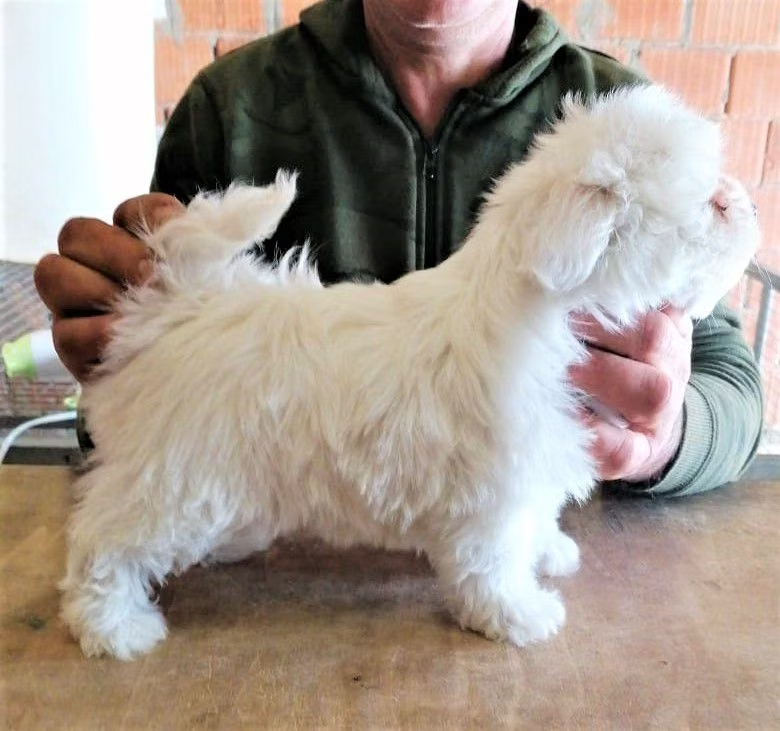
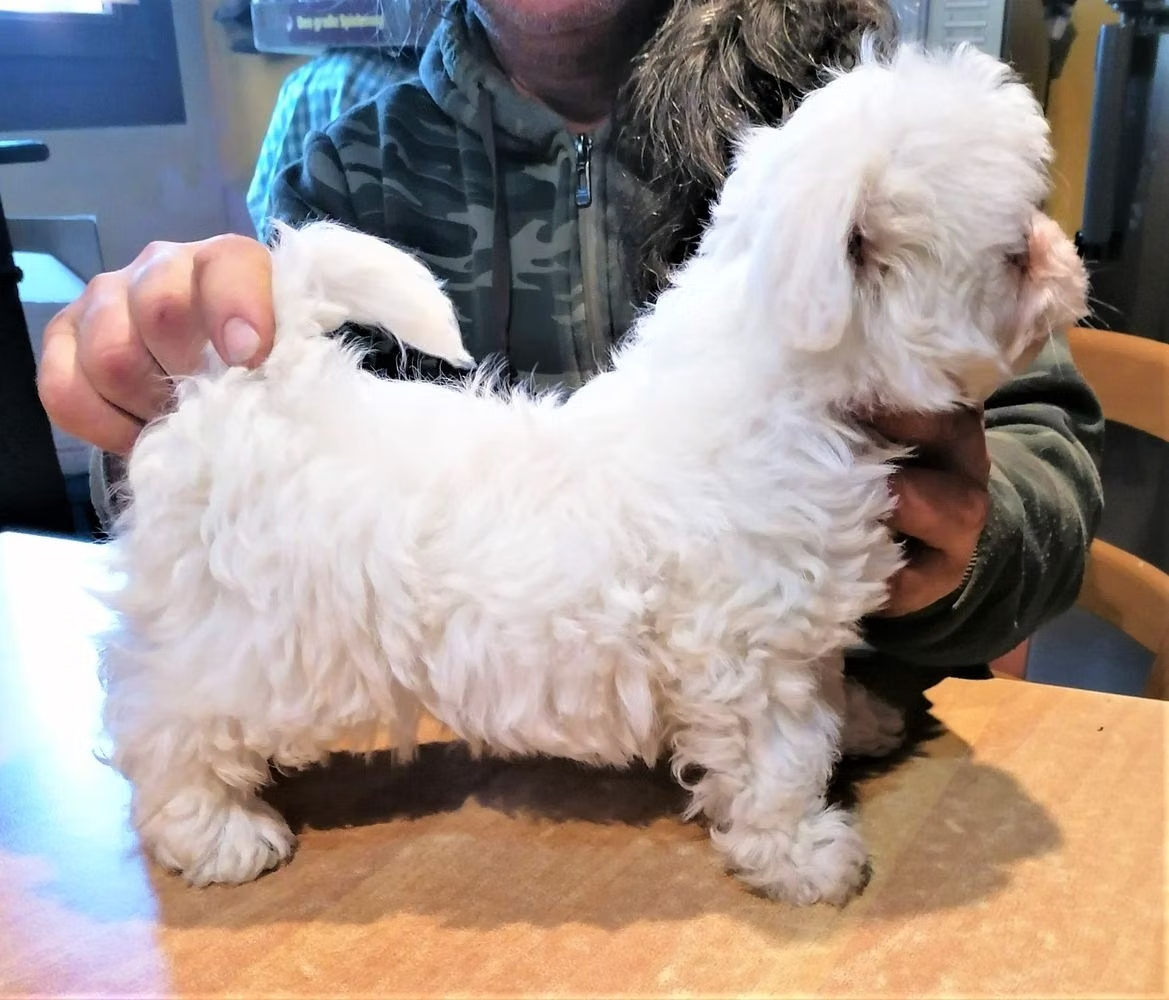
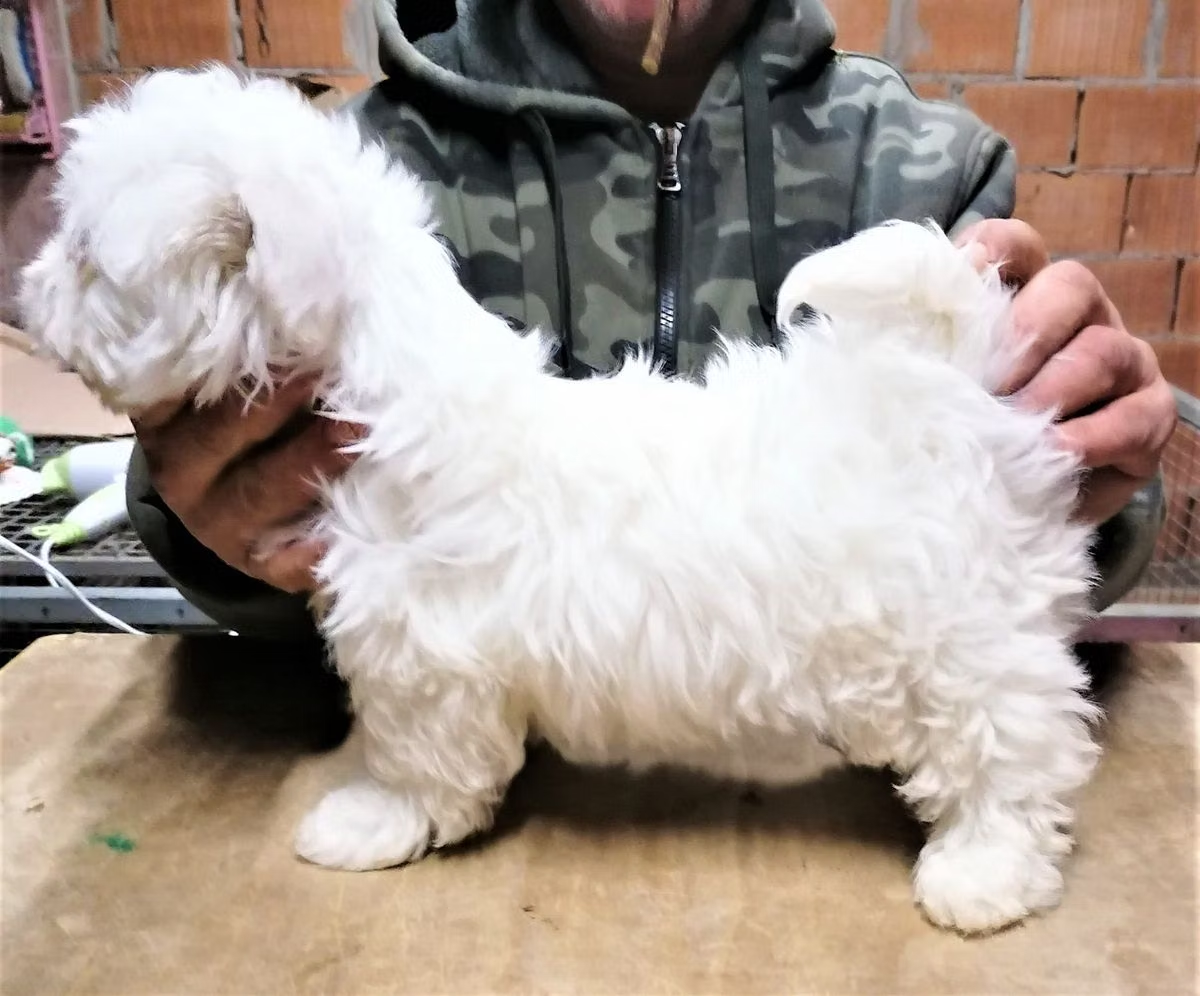


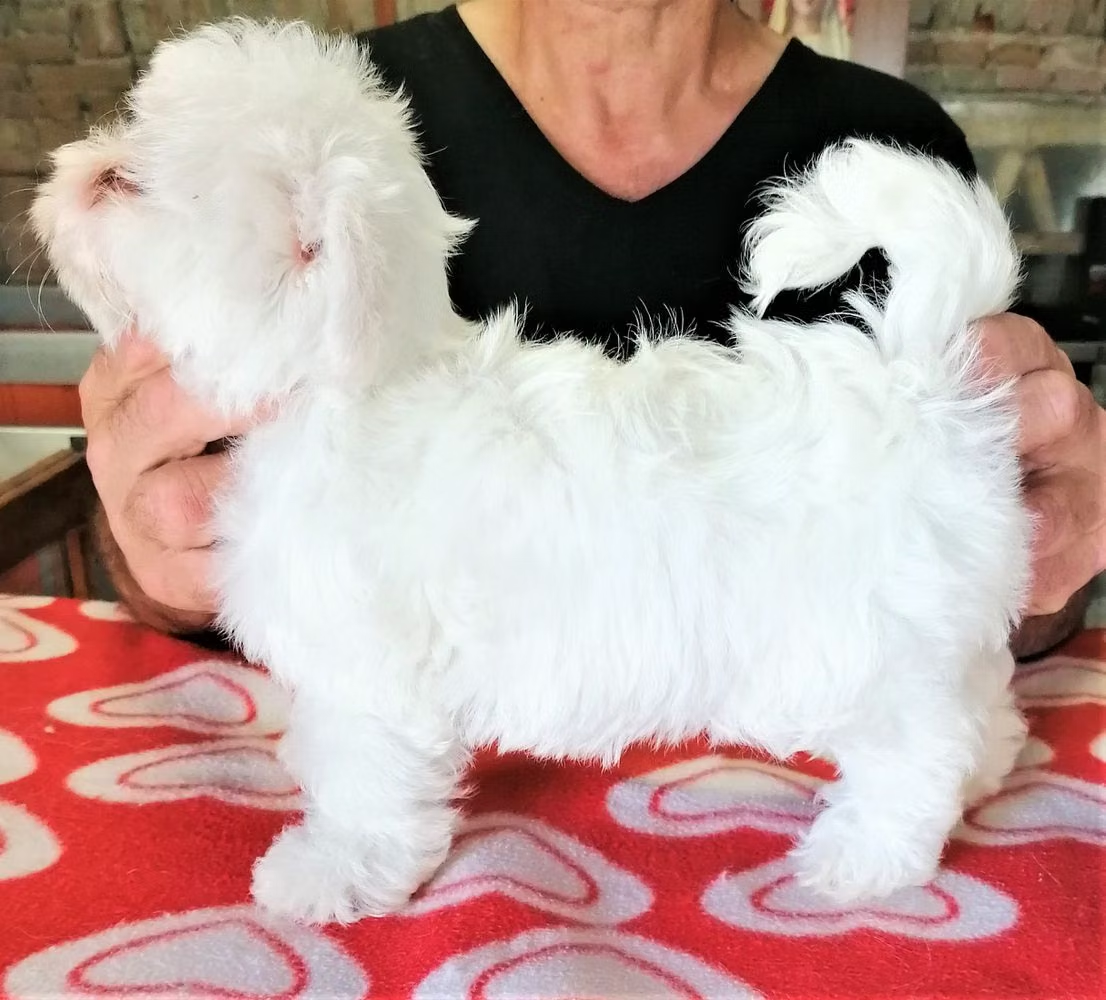
About the Maltese
The Maltese is a toy companion breed from the Mediterranean, weighing under 3.2 kg, with a long silky white coat and a devoted, affectionate nature.
The Maltese is a toy companion dog carrying a single coat of long, straight white hair that lies close to the body with no undercoat. Adults weigh under 3.2 kg (about 7 lb) and stand roughly 20 to 25 cm at the shoulder, making this one of the smallest breeds in the toy group. The build looks delicate, but a Maltese is sturdy on its feet and covers ground with a light, confident gait.
For centuries the breed has lived as a lap dog, and its temperament still shows that history. A Maltese is affectionate and gentle, keeps a playful streak well into old age, and tends to form a close bond with the people it lives with. It is also alert, and most will bark to announce a visitor at the gate even though they have no real guarding ability.
Because the coat grows continuously and the breed sheds very little, many South African owners choose a Maltese specifically to keep hair off the couch and carpets. That same coat demands upkeep, though, so the breed suits owners prepared to brush daily or book regular trims at the groomer.
| Attribute | Detail |
|---|---|
| Origin | Malta |
| Size | Toy (under 3.2 kg) |
| Lifespan | 12 to 15 years |
| Group / role | Toy group, companion |
| Good with | Families, older adults, flat living, gentle older children |
Who it suits
The Maltese suits owners who want a small indoor companion and who are around enough to give it regular attention. It settles well into a flat or a townhouse, since its exercise needs are modest, and it can be a good match for pensioners and first-time dog owners who are willing to keep up with coat care and dental hygiene. In households with very young children, supervise play closely: the dog's small frame bruises and injures easily if handled roughly.
History of the Maltese
The Maltese traces back to small companion dogs of the central Mediterranean, long linked with the island of Malta and prized as a lap dog since antiquity.
Few toy breeds carry a longer history than the Maltese, and its origins sit in the central Mediterranean rather than any single founding date. Small white companion dogs from that region turn up in Greek and Roman writing and art, and the island of Malta is the traditional source of the breed's name. What came before the classical period is not documented, so earlier claims belong to tradition rather than verified record.
Even in antiquity these dogs were kept purely as companions, never as working stock. Roman writers described a small Melitaean dog, and the type appears on pottery and in accounts of lap dogs kept by wealthy households. That role as an indoor companion has stayed constant right through the breed's history.
By the Renaissance the Maltese was a favourite among European nobility and turns up repeatedly in portraits of the period, usually settled on the lap of an aristocratic owner. That patronage helped keep the small white type going even as tastes in dogs shifted around it.
The breed reached England and then North America during the nineteenth century, where it was shown and bred to a written standard, and kennel clubs on both sides of the Atlantic recognised it by the early twentieth century. In South Africa, Maltese are registered with the Kennel Union of Southern Africa (KUSA), the body that oversees pedigree dogs and breed standards in the country. The modern Maltese remains close in size and purpose to its historical ancestors.
What does a Maltese look like?
The Maltese is a compact toy breed under 3.2 kg with a long, straight, single white coat, dark round eyes, and a balanced, level topline.
A Maltese carries a balanced, slightly square outline, a level topline, and a tail that curves up over the back. The head is in proportion to the body, with a moderate stop, a black nose, and dark round eyes that give the breed its alert, watchful expression. Ears sit low, drop close to the head, and are covered in long hair that blends straight into the coat. Overall the dog reads as refined rather than fragile, and it moves with more confidence than its size suggests.
| Trait | Standard |
|---|---|
| Height | 20 to 25 cm (8 to 10 in) at the shoulder |
| Weight | Under 3.2 kg (about 7 lb) |
| Coat | Single, long, straight, silky; no undercoat |
| Colours | White; light tan or lemon on the ears is permitted but not preferred |
| Eyes | Dark, round, with dark rims |
Coat and colours
The Maltese's signature feature is a single coat of long, straight hair with no undercoat, parted down the centre and, on a show dog, left to grow all the way to the ground. Pure white is the standard colour, and some breed standards allow a trace of lemon or light tan on the ears without favouring it. Because the coat is hair rather than dense fur, shedding is minimal, but left unbrushed it tangles and mats quickly. Many pet owners in South Africa keep their Maltese in a shorter, low-maintenance clip year round, trimmed close on the body while the face and feet keep their soft finish.
Maltese temperament
The Maltese is affectionate, gentle, and playful, bonds closely with its household, and stays alert enough to bark at visitors.
A Maltese wants to be near its people for most of the day and will happily trail an owner from room to room. Around family it is affectionate, easy-going, and gentle, and many keep a playful, almost puppyish streak well into their senior years, enjoying short games and a favourite toy.
Strangers usually win the dog over quickly once introduced, though a Maltese will bark first and ask questions later, sounding off at new arrivals, the gate buzzer, or an unfamiliar noise outside. That makes it a decent noise alarm, though its size rules out any real guarding role. Early, consistent socialisation goes a long way towards curbing nuisance barking and nervousness later on.
With other household pets a Maltese generally does fine, including cats and other small dogs, provided they're raised together. Take care around much larger dogs given the size gap. The breed can also struggle with being left alone for long stretches, so it suits a household where someone is usually around.
| Trait | Rating |
|---|---|
| Affection | 5 |
| Energy | 3 |
| Trainability | 3 |
| Vocalness | 4 |
| Shedding | 1 |
Caring for a Maltese
A Maltese needs daily brushing, modest daily exercise, and life indoors, with close attention to dental care and tear staining.
Grooming
- Brush the coat daily to prevent mats and tangles, especially behind the ears and under the legs.
- Bath the coat every one to three weeks with a gentle dog shampoo, and dry it fully so it stays straight.
- Wipe around the eyes daily to limit tear staining on the white coat.
- Trim or tie back the hair above the eyes to keep the dog's vision clear.
- Brush the teeth several times a week, since small breeds are prone to dental disease.
- Clip nails every few weeks and check the ears for wax and debris.
Exercise
- Aim for about 20 to 30 minutes of activity a day, split across short walks and play.
- Indoor games and a gentle round of fetch cover most of the dog's needs.
- Skip long or strenuous outings, since the breed tires fast and overheats quickly in the heat.
- Guard against cold and damp, since the single coat gives almost no insulation.
Environment
The Maltese is an indoor dog through and through, and it settles comfortably into a flat or a small home. It feels temperature extremes more than larger breeds, so it should live inside with the family rather than in the garden, whatever the season. South Africa's climate swings widely, from the Mediterranean-type summers of the Cape to the sharp, dry cold of highveld winters, and a Maltese needs a warm, draught-free bed either way. A few safe toys and a ramp or steps up onto the couch help keep the small frame safe from jumping injuries.
Feeding a Maltese
A Maltese needs a complete small-breed diet in measured portions across two or three meals, with care taken over dental health and puppy low blood sugar.
A Maltese does best on a complete and balanced diet formulated for small or toy breeds. Small kibble is easier for a tiny mouth to manage and helps keep teeth cleaner. Because the breed puts on weight easily, portions should be measured out rather than left down all day, and treats should stay a small slice of the daily total. Fresh water needs to be available at all times.
| Life stage | Amount per day | Meals |
|---|---|---|
| Puppy (2 to 6 months) | About 1/4 to 1/2 cup | 3 to 4 |
| Puppy (6 to 12 months) | About 1/4 to 1/2 cup | 2 to 3 |
| Adult | About 1/4 to 1/2 cup | 2 |
| Senior | Adjusted to maintain weight | 2 |
Treats and supplements
Keep training treats small and low in calories, and count them towards the day's total rather than adding them on top. Most Maltese on a good complete diet need no extra supplements, though a vet may recommend dental chews or a joint or coat supplement for individual dogs. Toy-breed puppies can develop hypoglycaemia (low blood sugar) if a meal is skipped, so feed puppies small meals on a strict, regular schedule.
Maltese health
The Maltese typically lives 12 to 15 years but is prone to dental disease, patellar luxation, and other small-breed conditions that respond well to preventive care.
The Maltese is a generally healthy breed with a typical lifespan of 12 to 15 years, and plenty of individuals go on well beyond that with good care. As with most toy breeds, most concerns trace back to small size: crowded teeth, fine bones, and joints that can slip out of place. Choosing a breeder who screens for known conditions, paired with regular vet check-ups, cuts the risk considerably.
| Condition | Signs | Note |
|---|---|---|
| Dental disease | Bad breath, tartar, loose teeth | Common in toy breeds; manage with brushing and regular scale-and-polish visits |
| Patellar luxation | Skipping gait, occasional hind-leg lameness | Kneecap slips out of its groove; severity varies |
| Hypoglycaemia (puppies) | Weakness, wobbliness, collapse | Low blood sugar; feed small, regular meals |
| Portosystemic (liver) shunt | Poor growth, disorientation after meals | A blood vessel bypasses the liver; some cases need surgery |
| Collapsing trachea | Honking cough, especially when excited | Walk on a harness rather than a neck collar |
| Tear staining | Reddish-brown marks below the eyes | Cosmetic; daily cleaning helps |
Preventive care
- Book annual check-ups with the vet, moving to twice yearly once the dog is a senior.
- Keep vaccinations and tick and flea prevention up to date, an ongoing need across most of South Africa's climate zones.
- Brush the teeth regularly and arrange professional scale-and-polish visits as your vet advises.
- Walk the dog on a harness to protect the windpipe.
- Keep the dog at a lean weight to ease strain on the knees and joints.
- Ask the breeder whether the parents have been screened for patella and, where relevant, liver problems.
Training a Maltese
The Maltese is intelligent and eager to please but can be slow to house-train, so short, consistent, reward-based sessions work best.
A Maltese is bright and pays attention well, and most enjoy training when sessions stay short and upbeat. The breed responds to praise, food rewards, and play far better than to any kind of harsh correction, which tends to make a sensitive dog anxious rather than obedient. House-training often takes patience: small dogs have small bladders and can be slow on the uptake, so a fixed schedule and, if needed, an indoor puppy pad in the early weeks both help. Early exposure to different people, sounds, and handling cuts down on shyness and the urge to bark at every new thing.
Basics
- Start with name recognition and a reliable recall in a quiet room.
- Teach sit, down, and stay using small treats and a calm voice.
- Set a fixed toilet schedule and reward the dog straight away for going in the right spot.
- Get the puppy used to gentle handling for grooming, including brushing, paws, and the face.
- Socialise the puppy to a range of people, surfaces, and noises during the first few months.
- Keep sessions short and frequent, just a few minutes at a time, rather than one long drill.
Breeding Maltese
Maltese females typically reach maturity around 12 months, carry small litters of one to four puppies for about 63 days, and need close monitoring at whelping.
Breeding a Maltese takes extra care given how small the breed is. Females generally shouldn't be bred until they are physically mature, usually around 18 to 24 months, even though a season can arrive earlier than that. Litters stay small, often just one to four puppies, and gestation runs about 63 days from conception. Because the puppies themselves are tiny at birth, whelping carries a higher risk of complications than in larger breeds, and some smaller bitches need veterinary support or a caesarean.
Newborn puppies chill easily and can drop into low blood sugar fast, so the whelping area needs to stay warm, and puppies should be watched for steady nursing and weight gain. Weaning usually starts around three to four weeks, and puppies are normally ready to go to new homes at eight to twelve weeks, once they're eating well and have had some early socialisation. Responsible breeders screen breeding stock for patellar and liver problems and avoid pairing two dogs that carry the same fault.
| Metric | Value |
|---|---|
| Sexual maturity | About 6 to 12 months |
| Recommended breeding age (female) | About 18 to 24 months |
| Gestation | About 63 days |
| Typical litter size | 1 to 4 puppies |
| Weaning | About 3 to 4 weeks |
| Ready for new homes | 8 to 12 weeks |
Registering your Maltese and its chip in South Africa
No national chip law protects a Maltese here; a free United Pet Club record does, for life, at no cost.
Maltese registration and microchips in South Africa
When a Maltese lands at an SPCA branch, the scanner comes out first, and everything then rides on what the number returns. Make sure it returns you. Register your dog free with United Pet Club and the profile answers every scan with your name and number, from now until the end of his days.
A chipped Maltese still needs the number loaded into a registry, because the vet's job ends with the implant. Register the microchip on the free lifetime plan: any brand a local vet uses qualifies, updates stay free when you relocate between provinces, and the record answers the lookups SPCA branches run daily. Create your free account and settle both records today.
How do I register my Maltese in South Africa?
Create a free United Pet Club account, load your Maltese's details and a photo, and save. The lifetime plan keeps the profile active at no cost for as long as you have him, chip or no chip.
How do I register my Maltese's microchip?
Load the 15-digit chip number into your free account together with your address and cell number. Registration and every later update are free, and chips from any brand a South African vet implants are accepted.
Must a Maltese be microchipped in South Africa?
No national law says so, though the SPCA chips as standard practice and many breeders and welfare groups insist on it. The registration behind the chip is the part that finds you, and with United Pet Club it costs nothing.
What does it cost to register a Maltese?
Nothing at all. The free lifetime plan covers the profile, the chip record, and unlimited updates, with no annual renewal in sight.
Maltese frequently asked questions
Common questions about Maltese size, temperament, grooming, lifespan, suitability, and where to find one in South Africa.
How big does a Maltese get?
The Maltese is a toy breed. Adults weigh under 3.2 kg and stand about 20 to 25 cm at the shoulder, making it one of the smallest companion breeds around.
What is the Maltese's temperament like?
It's affectionate, gentle, and playful, and it bonds closely with its household. It's also alert and tends to bark at visitors and unfamiliar sounds.
Is a Maltese hard to look after?
Exercise needs are modest, but the coat is high-maintenance. Plan on daily brushing or a shorter clip, regular baths, daily eye cleaning, and consistent dental care.
How long do Maltese live?
The typical lifespan is 12 to 15 years, and plenty live longer with good veterinary care, dental hygiene, and a healthy weight.
Is a Maltese a good flat dog?
Yes. Its small size and modest exercise needs suit a flat or a small home well. It does best when it isn't left alone for long stretches.
Does the Maltese shed much?
No. The single coat is hair rather than dense fur, so shedding is minimal. That same coat tangles easily, though, and needs regular brushing to stop mats forming.
Where can I find a Maltese in South Africa?
Maltese are available through breeders who health-screen their stock and through breed-specific rescue groups. Ask about the parents' patella and liver health, and meet the puppy before committing.
From the community
Ask about the MalteseNo questions about the Maltese yet. Be the first to ask.
Browse Dog breeds