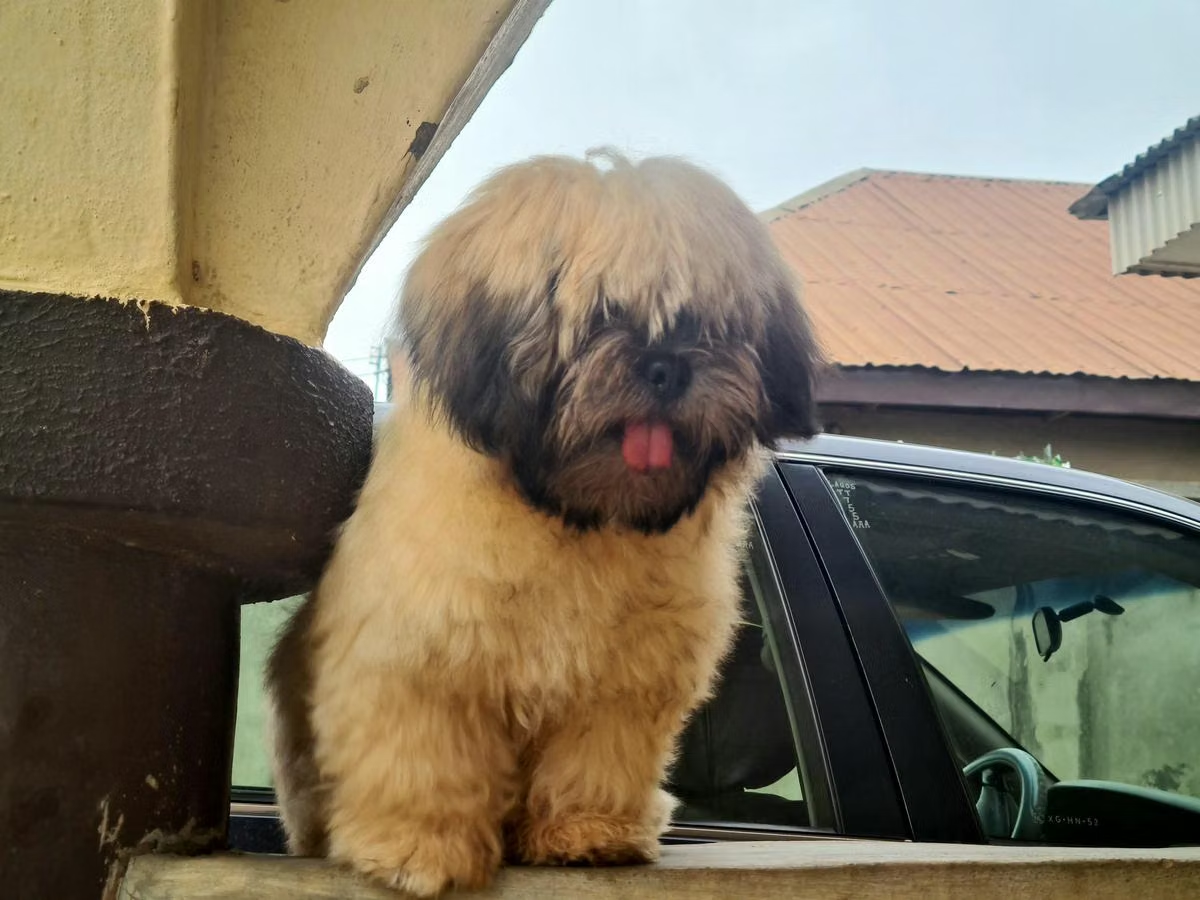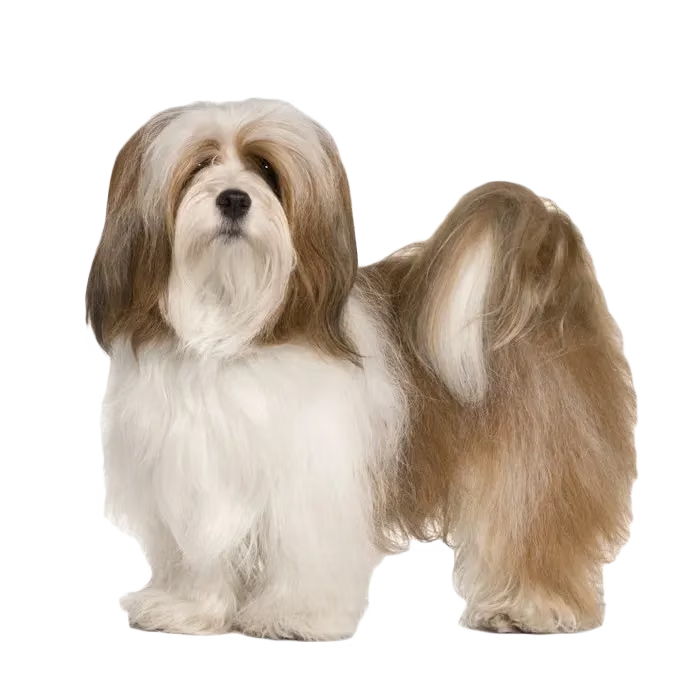
The Lhasa Apso is a confident, dignified companion from Tibet, devoted to its family yet famously watchful as a little sentinel.
How the Lhasa Apso coat is built, and what that means when you groom it.
Caution: A Lhasa Apso coat mats easily.
Fine or long hair tangles at the base of the coat, out of sight, where the mats tighten and pull on the skin. Brushing has to reach right down to the roots in sections, not just skim the surface.
Information: A Lhasa Apso needs clipping every few weeks.
This coat keeps growing rather than shedding out, so it has to be trimmed every few weeks. Left to grow it mats down against the skin and traps moisture, dirt and heat.
A few of the Lhasa Apso profiles members have added to United Pet Club.
The Lhasa Apso is a small, long-coated companion breed from Tibet, devoted to its family and properly reserved with people it does not know.
The Lhasa Apso is a small breed that began in Tibet, where it lived indoors in homes and monasteries as a watchdog rather than a working dog in the paddock sense South Africans might expect. It weighs less than 8 kg fully grown, yet carries itself with a serious, self assured manner and barks readily at anything it does not recognise. The breed attaches firmly to the people it knows and is often standoffish with everyone else.
Under that floor length coat sits a solid, slightly long bodied dog built to cope with a hard climate, which is part of why it settles so comfortably into South Africa's varied weather, from chilly Highveld winters to humid coastal summers. Lhasa Apsos are independent minded and can be properly stubborn, and they have a name for working things out on their own terms rather than waiting to be told. They notice change quickly, a trait that suited their original job as an indoor sentry.
The long double coat is the part that asks the most of an owner. Some commit to regular brushing to keep the coat at full length, while others have it clipped short for easier upkeep, useful given how fast a Highveld dust storm or a Cape winter downpour can undo a freshly groomed coat. With steady handling and early socialisation, the Lhasa Apso settles into a loyal, affectionate companion that suits flats, townhouses, and full sized homes alike.
| Attribute | Detail |
|---|---|
| Origin | Tibet |
| Size | Small (5.5 to 8 kg) |
| Lifespan | 12 to 15 years |
| Group / role | Companion and indoor watchdog |
| Good with | Family members and considerate older children |
The Lhasa Apso suits owners who want a small, alert companion and are ready for either daily coat care or regular visits to a professional groomer. It does well in a flat or a sectional title unit because its exercise needs are modest, and it copes with hot Lowveld summers and cold Highveld winters provided it has shelter from the extremes. The breed's independent streak and readiness to bark reward an owner who is patient and consistent rather than one expecting instant obedience. Homes with very young, boisterous children may find the breed happier with calmer company.
The Lhasa Apso took shape in Tibet over centuries as an indoor watchdog in homes and monasteries, reaching Britain and the United States only in the early twentieth century.
The Lhasa Apso originates in Tibet and ranks among the older companion breeds tied to the region. Its name comes from Lhasa, the Tibetan capital. For generations the breed lived inside homes and Buddhist monasteries, where its role was to alert the household to anyone approaching. Bigger dogs guarded the grounds outside, while the small Lhasa Apso kept watch from within, not unlike the way a security conscious South African household today pairs a boundary wall with an alert dog.
The breed held a respected position in Tibetan life and was kept by monks and nobility. Dogs were seldom sold and were instead given as gifts, which kept the breed from spreading widely for much of its history. That relative isolation is part of why the type stayed consistent for so long.
Lhasa Apsos only reached the West in the early twentieth century, arriving in Britain and later the United States through travellers and gifts sent from Tibet. The American Kennel Club recognised the breed in 1935, and the early imports formed the base of the lines bred in Europe and North America today. South African breeders working under the Kennel Union of Southern Africa (KUSA) draw on these same founding bloodlines.
The modern Lhasa Apso stays close to its working roots in temperament. The watchful, alert character that made it useful as a household sentry remains a defining part of the breed, even though most are now kept purely as companions.
The Lhasa Apso is a small, slightly long bodied dog with a heavy double coat that can reach the floor and comes in a wide range of colours.
The Lhasa Apso is a small dog, a touch longer than it is tall. The body is solid and well balanced under the coat, with a level topline and the tail carried over the back. The head carries a full fall of hair over the eyes, plus a beard and whiskers. The overall look is of a compact, hardy dog rather than a delicate one, built to handle a proper climate rather than being a lapdog for the sake of it.
| Feature | Standard |
|---|---|
| Height | About 25 to 28 cm at the shoulder |
| Weight | About 5.5 to 8 kg |
| Coat | Long, heavy, straight double coat |
| Colours | Many, including gold, cream, honey, grey, black, white, and parti-colour |
| Eyes | Dark, medium sized, oval |
The coat is the breed's standout feature. It is a dense double coat with a hard, straight outer layer over a softer undercoat. At full length the hair reaches the ground and parts down the back. Many South African owners keep the coat trimmed in a shorter "puppy clip", which suits coastal humidity and cuts down on the grass seeds and burrs a full coat picks up on a Highveld walk. Colours vary widely and include gold, cream, honey, smoke, slate grey, black, white, and parti-colour combinations. Coat colour can shift somewhat as a dog matures.
The Lhasa Apso is devoted to its family, independent by nature, and properly reserved and watchful with strangers.
The Lhasa Apso bonds tightly with the people it knows and tends to attach itself to the household as a whole. It is independent and carries itself with a dignity that belies its size. Plenty of owners will tell you this is a small dog that takes itself rather seriously.
With strangers the Lhasa Apso is typically aloof and slow to come round. That wariness, paired with sharp senses, makes the breed a dependable alarm dog that barks to announce visitors and unfamiliar sounds, a trait many security conscious South African households genuinely appreciate. Early and ongoing socialisation helps keep that caution from tipping into outright suspicion.
With other pets the Lhasa Apso can live peacefully if raised together, though its independent streak means it does not always go looking for canine company. It generally suits homes with adults or settled older children rather than households with very young, high energy kids, since it can lose patience with rough handling.
| Trait | Rating |
|---|---|
| Affection (with family) | 4 |
| Energy | 2 |
| Trainability | 2 |
| Vocalness | 4 |
| Shedding | 2 |
The Lhasa Apso needs regular coat care and modest daily exercise, and it settles well into flat or townhouse living.
The Lhasa Apso suits a flat or a home without a big garden. Its exercise needs are modest and it is content indoors as long as it gets company and attention. The breed copes with cold better than heat thanks to its dense coat, so a chilly Highveld winter troubles it far less than a scorching Lowveld summer, when shade and cool spaces matter.
The Lhasa Apso does best on a measured diet of quality small breed food split into two meals a day, with portion control key to avoiding excess weight.
The Lhasa Apso does well on a complete, balanced dog food formulated for small breeds. Because the breed is small and only moderately active, portion control matters to prevent weight gain, which puts extra strain on the joints and back. Adjust the amount to the individual dog's age, activity, and body condition rather than sticking to the generous estimate on the bag.
| Life stage | Amount per day | Meals |
|---|---|---|
| Puppy (2 to 6 months) | Per product guidance for weight | 3 to 4 |
| Junior (6 to 12 months) | About 60 to 90 g | 2 to 3 |
| Adult | About 60 to 120 g | 2 |
| Senior | Adjusted down for lower activity | 2 |
Keep treats to a small share of daily calories to guard against weight gain. Most Lhasa Apsos on a complete diet do not need supplements, though a vet may suggest joint or skin and coat support for individual dogs. Always keep fresh water available, especially through a hot Lowveld summer.
The Lhasa Apso is generally long lived at 12 to 15 years, with the main concerns affecting the eyes, kidneys, and joints, plus the usual tick borne risks common in South Africa.
The Lhasa Apso is generally a hardy, long lived breed with a typical lifespan of 12 to 15 years. Like many small breeds it carries a handful of inherited conditions worth knowing about, several of which affect the eyes. Responsible breeders screen their stock to cut the risk of passing these on. Routine veterinary care, reliable tick control, and weight management all support a long, comfortable life.
| Condition | Signs | Note |
|---|---|---|
| Progressive retinal atrophy | Night blindness, declining vision | Inherited; screening helps |
| Dry eye (keratoconjunctivitis sicca) | Redness, discharge, squinting | Manageable with treatment |
| Hereditary kidney disease | Increased thirst, poor growth | Screening of breeding lines advised |
| Patellar luxation | Skipping, intermittent lameness | Common in small breeds |
| Cherry eye | Red mass in inner corner of eye | Often corrected surgically |
The Lhasa Apso is intelligent but independent, so it trains best with patient, consistent, reward based methods and early socialisation.
The Lhasa Apso is intelligent and capable of learning, but its independent, somewhat stubborn nature means it will not simply do as it is told just because it was asked. The breed responds best to short, positive sessions that hold its interest, and it can lose patience with repetitive drilling. Owners who stay calm and consistent generally see steady progress. Early socialisation matters especially here, to soften the breed's natural wariness of strangers and to keep barking within reason.
The Lhasa Apso typically produces small litters and benefits from health screened breeding stock, with careful attention given to raising the puppies.
Breeding Lhasa Apsos responsibly starts with health screened parents, since the breed carries several inherited conditions affecting the eyes and kidneys. Females are generally bred only once they are physically mature. As with many small breeds, litters tend to be modest, and whelping should be supervised. Puppies need careful early socialisation to build the steady, confident temperament the breed is known for, and they stay with the dam and littermates until weaned and well started on solid food. Breeders registering litters with the Kennel Union of Southern Africa (KUSA) should keep this timeline in mind when planning a mating.
| Metric | Value |
|---|---|
| Sexual maturity | Around 8 to 12 months |
| Recommended breeding age (female) | After full maturity, about 2 years |
| Gestation | About 58 to 68 days |
| Average litter size | 4 to 6 puppies |
| Weaning age | About 6 to 8 weeks |
No national chip law protects a Lhasa Apso here; a free United Pet Club record does, for life, at no cost.
Load your Lhasa Apso's details once and be done with it: name, date of birth, photo, your cell number, save. The profile is free for his whole life, and it takes a chip number the day the vet supplies one. Dog registration is the start of the paper trail.
The chip is a number; the registry entry is the story behind it. Capture your Lhasa Apso's 15-digit number in a free United Pet Club account and the story reads: this dog has a home. Every brand is accepted, updates never cost a cent, and the record stays searchable here and abroad. Microchip registration plus a free account does it.
Create a free United Pet Club account, load your Lhasa Apso's details and a photo, and save. The lifetime plan keeps the profile active at no cost for as long as you have him, chip or no chip.
Load the 15-digit chip number into your free account together with your address and cell number. Registration and every later update are free, and chips from any brand a South African vet implants are accepted.
No national law says so, though the SPCA chips as standard practice and many breeders and welfare groups insist on it. The registration behind the chip is the part that finds you, and with United Pet Club it costs nothing.
Nothing at all. The free lifetime plan covers the profile, the chip record, and unlimited updates, with no annual renewal in sight.
Common questions about the Lhasa Apso cover its size, temperament, grooming demands, lifespan, and suitability for different homes.
The Lhasa Apso is a small breed. Adults stand about 25 to 28 cm at the shoulder and usually weigh between 5.5 and 8 kg.
It is devoted to its family, independent, and properly dignified. The breed is alert and reserved with strangers, which makes it a natural alarm dog that barks to announce visitors.
Care is moderate. Exercise needs are low, but the long double coat needs regular brushing or a shorter clip to prevent mats. Many owners keep the coat trimmed for easier upkeep, especially along the humid coast.
They are a long lived breed, with a typical lifespan of 12 to 15 years given good care and weight management.
Yes. The breed adapts well to flat living thanks to its modest exercise needs. It suits adults and settled older children better than homes with very young, boisterous kids.
They can. Their watchdog background makes them quick to bark at unfamiliar people and sounds. Early socialisation and quiet cues help keep the barking within reason.