The Labrador Retriever is a friendly, outgoing breed beloved as a family companion and devoted working dog.
How the Labrador Retriever coat is built, and what that means when you groom it.
Critical: A Labrador Retriever should not be shaved.
The undercoat keeps heat out as well as in, and the outer coat shields the skin from sun and insect bites. Clipping the whole coat off removes both. It often grows back patchy, soft or a different colour, and in some animals the guard hairs never return properly. Brush the undercoat out instead of cutting it off.
Information: A Labrador Retriever drops its undercoat in heavy bursts.
The undercoat comes out in heavy bursts over a few weeks. An undercoat rake, or a bath followed by a proper blow-dry, clears it far faster than daily brushing. Clipping the coat down is not a shortcut for this.
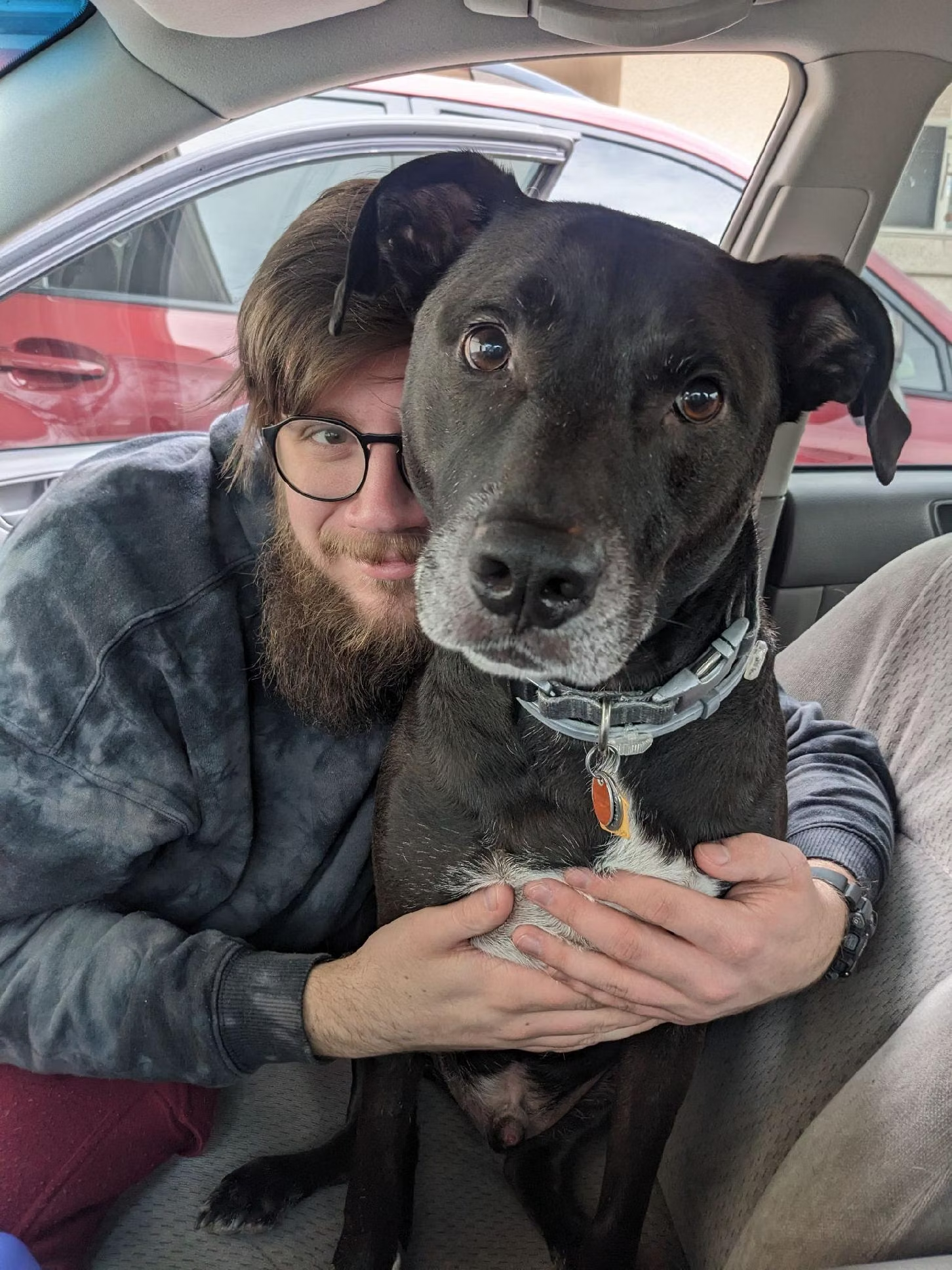
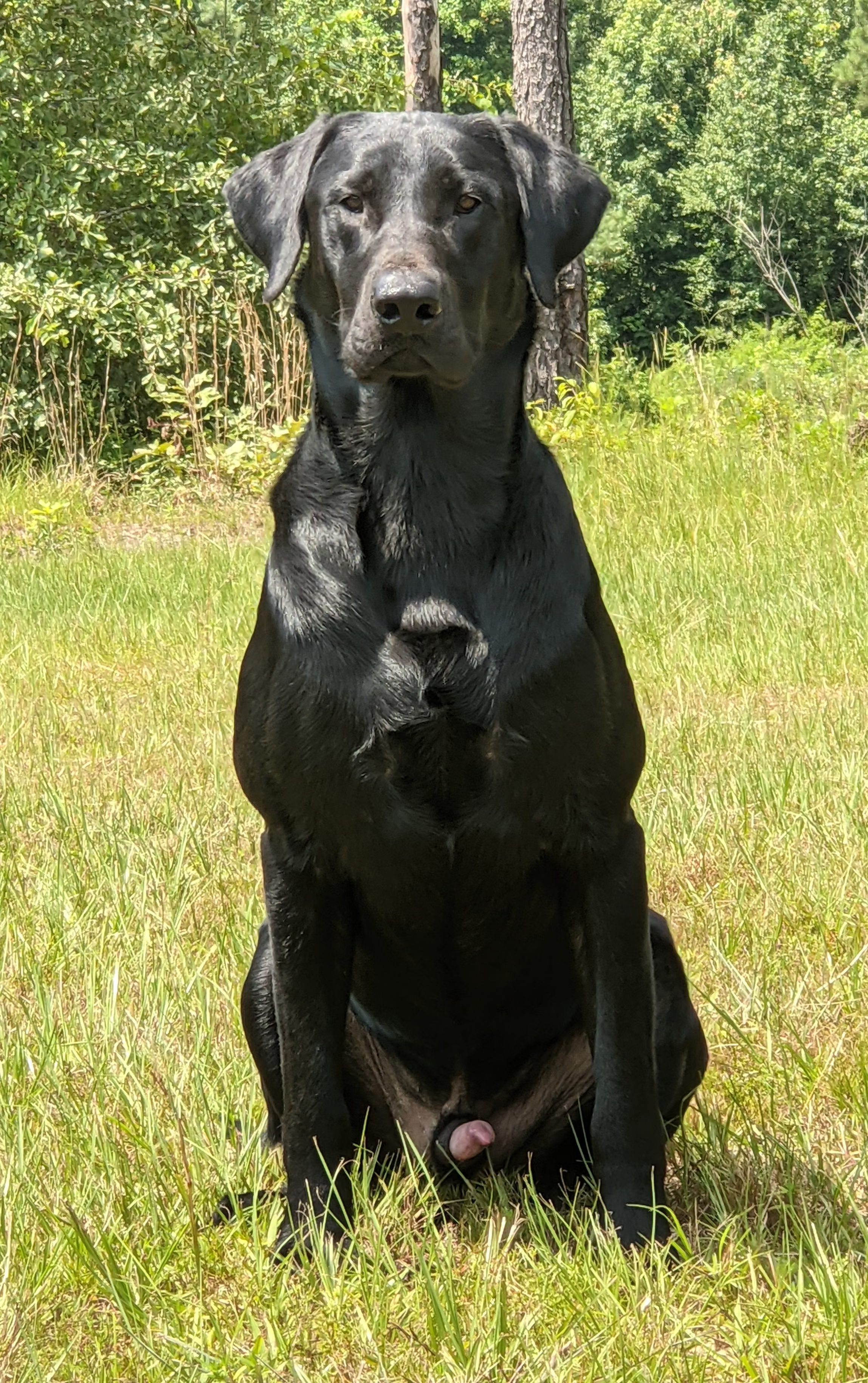
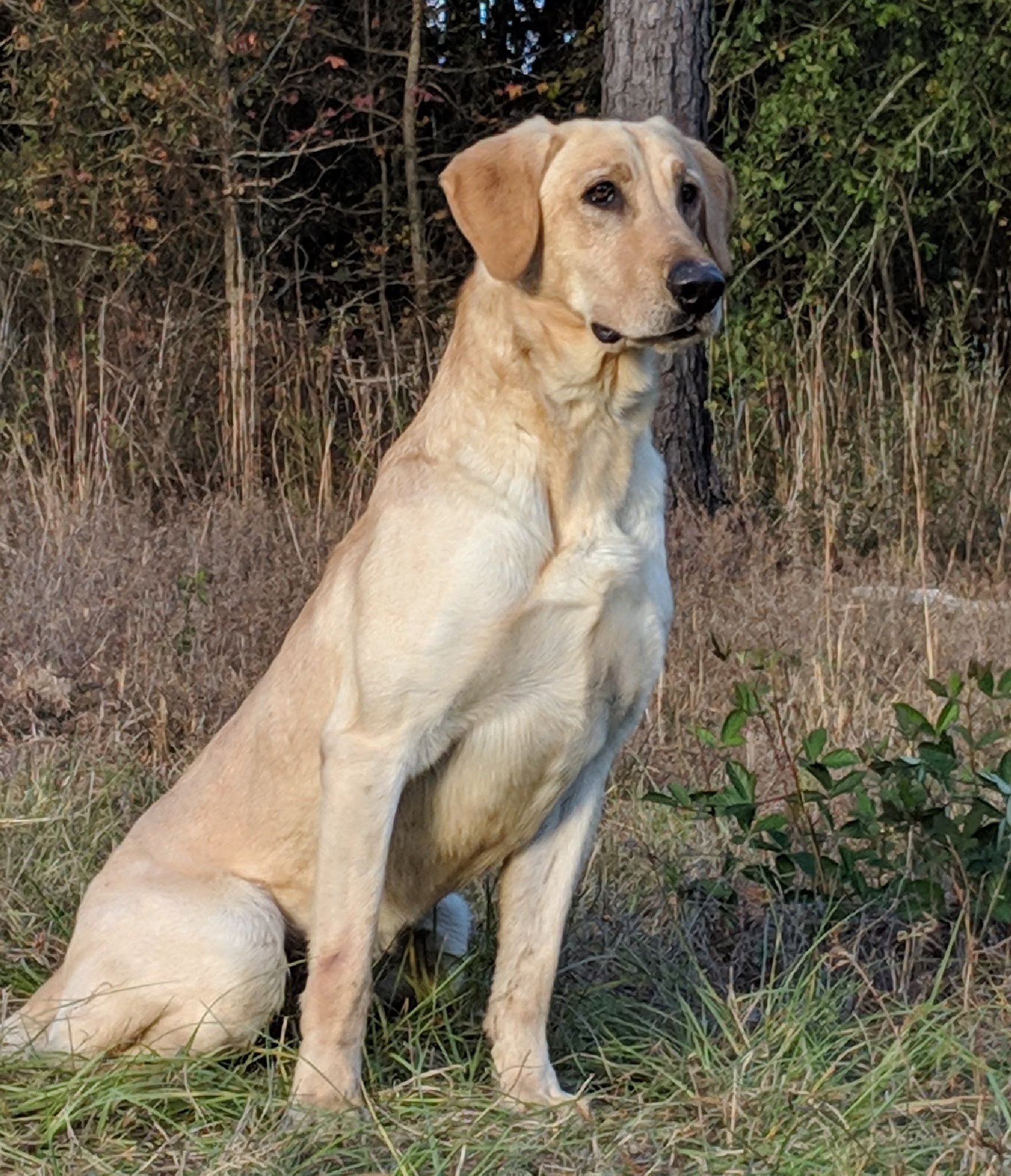
A few of the Labrador Retriever profiles members have added to United Pet Club.
The Labrador Retriever is a medium-to-large gundog originating in Newfoundland, recognised for its even temperament, high trainability, and short water-resistant coat. Adults stand 55 to 62 cm at the shoulder and live roughly 11 to 13 years.
The Labrador Retriever is one of the most consistently popular breeds registered with the Kennel Union of Southern Africa (KUSA). Bred originally to retrieve fish and game from cold water off the coast of Newfoundland, the breed now fills a wide range of roles in South Africa: family companion, guide dog, search-and-rescue dog, and narcotics detection dog.
Labradors are known for a steady, friendly temperament, a strong work drive, and a willingness to cooperate with people. These qualities have made them common across very different household types and environments, from Highveld suburbs to coastal homes in KwaZulu-Natal.
The coat is short, dense, and double-layered, providing some weather resistance but also producing steady year-round shedding and heavier seasonal sheds. Three colours are recognised in the breed standard: black, yellow, and chocolate.
| Attribute | Detail |
|---|---|
| Origin | Newfoundland (now part of Canada), developed further in the United Kingdom |
| Size | Medium to large; 25 to 36 kg |
| Lifespan | About 11 to 13 years |
| Group/role | Gundog group; retriever, guide and detection work |
| Good with | Children, families, other dogs; generally sociable with strangers |
The Labrador suits an active household that can commit to daily exercise and consistent training. It is a reasonable choice for first-time owners willing to put in the time, and it generally does well in families with children. It is less suited to anyone wanting a low-energy or low-shedding dog, or to owners who are regularly away from home for long stretches. Left to its own devices, a Labrador will find its own entertainment, which most owners would prefer it did not.
The Labrador Retriever descends from the St. John's water dog of Newfoundland, was refined on British shooting estates in the 1800s, and was formally recognised by The Kennel Club in 1903. The breed is registered with KUSA in South Africa.
Shooting estates in England were the immediate context in which the Labrador Retriever took its modern form. The Earl of Malmesbury and the Duke of Buccleuch, among others, kept and bred dogs imported from Newfoundland for retrieving game in the early to mid-1800s, and it was through these British breeding programmes that the type was standardised.
The dogs those estates imported descended from working animals in Newfoundland known as the St. John's dog or lesser Newfoundland. Fishermen there had used them through the 1700s and early 1800s to retrieve fish and lines from cold Atlantic water. "Labrador" became the accepted name for the developed English breed during this period, though the dogs had their origins in Newfoundland rather than the Labrador mainland itself.
Quarantine regulations in Britain and a Newfoundland tax on female dogs eventually cut off the flow of new imports, leaving British breeding lines as the foundation of the modern breed worldwide.
The Kennel Club recognised the Labrador Retriever in 1903, and it spread through British-connected registries from there. In South Africa, the breed is registered with KUSA and consistently appears among the most-registered breeds in the country.
Black was the most common colour in the earliest recorded stock; yellow and chocolate appeared alongside it in the breed's early formal history.
Labradors are muscular, balanced dogs with a broad head, a thick otter-like tail, and a short dense double coat in black, yellow, or chocolate. Males stand 57 to 62 cm and weigh 29 to 36 kg; females stand 55 to 60 cm and weigh 25 to 32 kg.
The Labrador is a balanced, muscular dog with a deep chest and level topline. The head is broad with a moderate stop, and the ears hang close to the head. The tail is the breed's most distinctive physical feature: thick at the base, tapering toward the tip, and covered with dense coat all around. This "otter tail" is a recognised breed characteristic. The coat is short, straight, and water-resistant, lying over a soft insulating undercoat.
| Trait | Detail |
|---|---|
| Height | Males 57 to 62 cm; females 55 to 60 cm |
| Weight | Males 29 to 36 kg; females 25 to 32 kg |
| Coat | Short, dense, straight double coat; water-resistant |
| Colours | Black, yellow, chocolate |
| Eyes | Brown or hazel; alert, kind expression |
Yellow ranges from pale cream to deep fox-red. Black is most common in working lines. A small white patch on the chest is permitted under most standards but not preferred. Double-coat shedding is heaviest twice a year, with steady shedding between those periods.
Some breeders advertise "silver" Labradors, which is a dilute form of chocolate. KUSA and the major international registries do not recognise silver as a separate colour.
Labradors are friendly, sociable, and people-oriented, but they are not a guarding breed and should not be relied on for property security. They are high-energy dogs that need regular activity and mental engagement to stay settled.
Many South African households keep dogs partly for property security, and it is worth stating clearly that the Labrador is not suited to that role. The breed tends to greet strangers with friendliness rather than suspicion, and most Labradors are unlikely to deter intruders. Owners who need a guarding function typically keep a Labrador alongside a purpose-bred guarding breed rather than relying on the Lab alone.
Within the household, Labradors are affectionate and people-oriented, attaching closely to their family members. They generally get along well with children, though their size and energy mean young children should not be left unsupervised with them during play. They are usually compatible with other dogs and, when introduced properly, with cats.
The breed carries a strong retrieving and chewing drive. Without enough daily exercise and mental work, a Labrador will channel that drive into chewing furniture, digging, or persistent barking. Clear routines and regular activity produce a settled, cooperative dog.
| Trait | Rating |
|---|---|
| Affection | 5 |
| Energy | 5 |
| Trainability | 5 |
| Vocalness | 3 |
| Shedding | 4 |
Labradors need at least 60 minutes of daily exercise, weekly grooming, and consistent tick prevention. South Africa's climate variation and load-shedding introduce practical considerations that owners should plan for.
South Africa's varied climate affects Labrador care in different ways depending on where you live. On the Highveld, hot summer afternoons call for shade, whether under a covered stoep or indoors, and access to fresh water throughout the day. Afternoon thunderstorms can be intense, and some Labradors are noise-sensitive, so a calm indoor space matters. In KwaZulu-Natal's subtropical conditions, skin and coat health need regular attention, and tick prevention is critical given the province's high biliary risk. The Cape's cooler, wetter winters are gentler on the breed but increase the importance of ear checks after wet outings.
Load-shedding introduces a practical risk for owners who rely on electric fencing for boundary security. During outages the fence may be inactive, and a Labrador's nose and wandering tendency mean a gap in the perimeter will be found. A solid physical fence is the more reliable primary boundary.
Labradors adapt to homes without a large yard as long as they receive adequate daily exercise. After outings in veld or bush, check the dog for ticks.
Labradors do well on a complete diet matched to their life stage and activity level, fed in measured portions to prevent obesity. Adults typically eat 2.5 to 3 cups of dry food per day divided into two meals.
Choose a complete and balanced food appropriate for the dog's age and activity level. Labradors overeat readily, so portions should be measured and adjusted to maintain a healthy body condition rather than offered from a full bowl without limit. On hot Highveld days or after active exercise, ensure fresh water is available at all times. The amount a dog needs varies with the calorie density of the product, so use the manufacturer's guidelines as a starting point and adjust based on how the dog's weight and condition respond.
| Life stage | Amount per day | Meals per day |
|---|---|---|
| Puppy (2 to 6 months) | About 2 to 3 cups | 3 to 4 |
| Puppy (6 to 12 months) | About 2.5 to 3.5 cups | 2 to 3 |
| Adult | About 2.5 to 3 cups | 2 |
| Senior/less active | About 2 to 2.5 cups | 2 |
Keep treats to no more than about 10 per cent of daily calories, and subtract them from the dog's measured meals. Many owners use a portion of the daily kibble as training rewards, which keeps calorie intake controlled. Supplements such as joint support or fish oil are used by some owners, but a quality complete food meets the nutritional needs of most healthy dogs. Consult a veterinarian before adding any supplement to the feeding routine.
Labradors typically live 11 to 13 years and are generally robust, but face breed-specific risks including hip and elbow dysplasia and obesity, as well as the South African-specific threat of biliary (tick-borne babesiosis), which requires year-round tick prevention.
A health concern specific to South African conditions that every Labrador owner should understand is biliary, also called tick-borne babesiosis. The disease is caused by Babesia parasites, most commonly Babesia rossi, transmitted by the yellow dog tick. It can be fatal within hours once severe symptoms appear, and the risk is present year-round across most of South Africa, with the highest exposure in KwaZulu-Natal, Limpopo, and Mpumalanga. Consistent tick prevention is not optional for dogs in this country.
Beyond biliary, Labradors are generally healthy dogs with a lifespan of about 11 to 13 years. Their tendency to gain weight is the most common practical health concern, because obesity accelerates joint degeneration and reduces quality of life. Responsible breeders screen parent dogs for inherited conditions before mating.
| Condition | Signs | Note |
|---|---|---|
| Biliary (tick-borne babesiosis) | Sudden lethargy, pale or yellow gums, dark urine, fever | High risk across SA year-round; tick prevention essential; emergency treatment required |
| Hip dysplasia | Limping, stiffness, difficulty rising | Screened by hip scoring in breeding dogs; recommended before mating |
| Elbow dysplasia | Front-leg lameness, reluctance to exercise | Inherited; elbow screening recommended |
| Obesity | Excess weight, reduced stamina | Largely preventable with measured feeding and daily exercise |
| Progressive retinal atrophy | Night blindness, declining vision | Inherited; DNA tests available |
| Exercise-induced collapse | Weakness or collapse after intense activity | Linked to a known gene; DNA test available |
| Ear infections | Head shaking, odour, scratching at ears | Drop ears trap moisture; routine cleaning reduces risk |
Labradors are intelligent and food-motivated, making them receptive to reward-based training. Loose-leash walking and redirecting the mouthing habit are the main practical priorities for owners in South Africa.
The main training challenges with a Labrador are its size at maturity and a pulling habit on the lead that develops quickly without early intervention. An adult Labrador that pulls is physically difficult to manage safely on a pavement or near a busy robot. Mouthing and carrying objects is a second common issue, manageable through early redirection onto appropriate chew toys.
Those challenges aside, the breed is straightforward to train. Labradors learn quickly, are strongly food-motivated, and work cooperatively with people. They are used in South Africa as guide dogs, search-and-rescue dogs, and narcotics detection dogs, partly because those traits make them reliable working partners. The same responsiveness that makes them useful in working roles makes them easy to train in a family setting, provided training starts early and stays consistent. Punishment-based methods are unnecessary and tend to undermine the cooperation that makes this breed work.
Labradors reach sexual maturity at 6 to 12 months but should be bred only after health testing is complete. Gestation lasts approximately 63 days and litters average 6 to 8 puppies.
Female Labradors have their first heat between 6 and 12 months of age, but responsible breeding is delayed until the bitch is physically mature and health screened. KUSA-registered dogs should be breed-standard assessed and, where applicable, hip and elbow scored before being used in a breeding programme. Females cycle approximately twice a year.
Gestation is approximately 63 days from conception. Litters average 6 to 8 puppies, though larger and smaller litters occur. Newborns are blind and deaf and depend entirely on the dam for warmth and feeding in the first two to three weeks.
Puppies begin weaning onto solid food at around three to four weeks old. Early handling and socialisation during the breeder's care have a lasting effect on temperament. Puppies are typically rehomed at eight weeks, once weaned and with an initial vaccination started.
| Metric | Value |
|---|---|
| Sexual maturity | About 6 to 12 months |
| Heat cycles | Roughly twice per year |
| Gestation | About 63 days |
| Average litter size | 6 to 8 puppies |
| Weaning age | About 6 to 8 weeks |
| Age to new home | About 8 weeks |
No national chip law protects a Labrador Retriever here; a free United Pet Club record does, for life, at no cost.
South Africa has no single national law forcing microchips on dogs, though the SPCA chips as standard and rabies vaccination is required by law. What actually reunites a lost Labrador Retriever with you is a record, and that part is free: a United Pet Club profile carries your details beside the dog's photo for as long as you have him. Registering your dog takes a few minutes, with no fee attached.
The chip is a number; the registry entry is the story behind it. Capture your Labrador Retriever's 15-digit number in a free United Pet Club account and the story reads: this dog has a home. Every brand is accepted, updates never cost a cent, and the record stays searchable here and abroad. Microchip registration plus a free account does it.
Create a free United Pet Club account, load your Labrador Retriever's details and a photo, and save. The lifetime plan keeps the profile active at no cost for as long as you have him, chip or no chip.
Load the 15-digit chip number into your free account together with your address and cell number. Registration and every later update are free, and chips from any brand a South African vet implants are accepted.
No national law says so, though the SPCA chips as standard practice and many breeders and welfare groups insist on it. The registration behind the chip is the part that finds you, and with United Pet Club it costs nothing.
Nothing at all. The free lifetime plan covers the profile, the chip record, and unlimited updates, with no annual renewal in sight.
Common questions about Labrador Retrievers in a South African context, covering size, shedding, children, lifespan, cost, care requirements, and suitability as a guard dog.
Adult Labradors stand 55 to 62 cm at the shoulder and weigh 25 to 36 kg, with males typically toward the larger end of those ranges.
Yes. The dense double coat sheds year-round, with heavier periods twice a year. Brushing weekly, and more often during heavy sheds, keeps loose hair under control.
Labradors are generally patient and tolerant with children, which contributes to their popularity as family dogs. Their size and energy at play mean that young children should not be left unsupervised with them.
The typical lifespan is 11 to 13 years. Keeping the dog lean, current on vaccinations, and on a consistent tick prevention programme for biliary all support a longer, healthier life.
Prices vary with the breeder, pedigree, and whether parent dogs have been health tested. Puppies from KUSA-registered, health-screened parents generally cost more than untested stock, and adopting through a rescue is a lower-cost option.
Grooming and training are straightforward, but the breed needs daily exercise and regular company. Managing food portions is also important because Labradors gain weight easily.
Not reliably. Labradors tend to be friendly toward strangers rather than suspicious, so they do not deter intruders effectively. Owners who need a guarding function usually keep a Labrador alongside a purpose-bred guarding breed.