
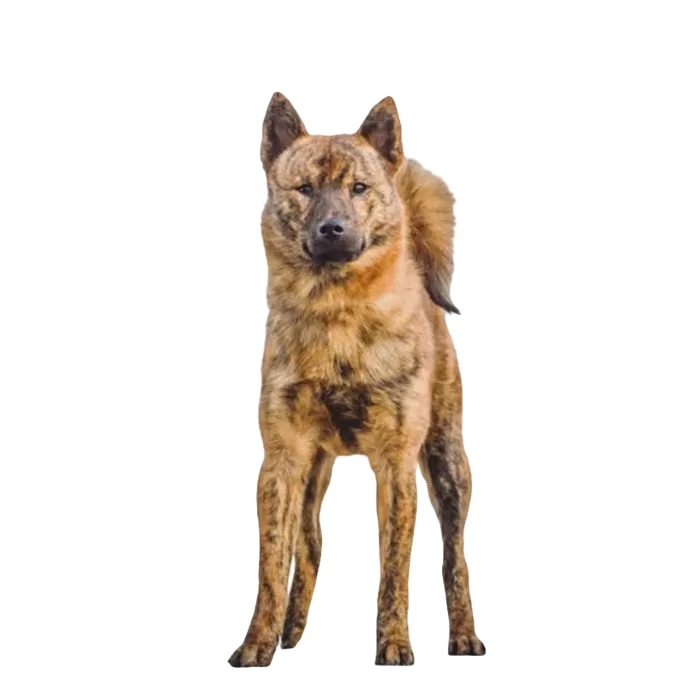
Kai Ken
The Kai Ken is a reserved, intelligent Japanese hunting breed deeply devoted to its owner and a skilled, agile climber.
- Size
- Medium
- Lifespan
- 12–15 years
- Origin
- Japan
- Temperament
- Reserved
- Standard colors
- Black, White and Red
Characteristics
Coat and grooming
How the Kai Ken coat is built, and what that means when you groom it.
- Coat layers
- Double coat
- Coat texture
- Rough
- Coat length
- Medium
- Shedding
- Seasonal shedding
Grooming guidance
Critical: A Kai Ken should not be shaved.
The undercoat keeps heat out as well as in, and the outer coat shields the skin from sun and insect bites. Clipping the whole coat off removes both. It often grows back patchy, soft or a different colour, and in some animals the guard hairs never return properly. Brush the undercoat out instead of cutting it off.
Information: A Kai Ken drops its undercoat in heavy bursts.
The undercoat comes out in heavy bursts over a few weeks. An undercoat rake, or a bath followed by a proper blow-dry, clears it far faster than daily brushing. Clipping the coat down is not a shortcut for this.
Kai Ken colors and patterns
What each club's breed standard says about every Kai Ken color and pattern. Point at a ruling to see the club's own wording.
Breed standards describe the Kai Ken in Black, White and Red. Standard patterns: Solid, Brindle and Reverse brindle.
| Color or pattern | FCI | AKC | UKC |
|---|---|---|---|
| Black | Standard (“Black brindle”) | Standard (“Black Brindle”) | Standard (“All brindle colors are equally acceptable”) |
| White | Disqualifying (“Coat with many white spots”) | Standard (“A small white blaze is allowed on the forechest, between the front legs and on the belly”) | Standard (“Some white is allowed on the legs ... on the forechest, between the front legs and on the belly”) |
| Red | Standard (“red brindle”) | Standard (“Red Brindle”) | Standard (“All brindle colors are equally acceptable”) |
| Albino | Not recognised | Not recognised | Disqualifying (“Albinism”) |
| Cream | Not recognised | Disqualifying (“cream”) | No ruling |
| Patterns | |||
| Solid | Standard (“solid colour in puppyhood may turn brindle as the dog grows”) | Disqualifying | No ruling |
| Brindle | Standard (“Black brindle, red brindle and brindle”) | Standard (“Brindle”) | Standard (“All brindle colors are equally acceptable”) |
| Reverse brindle | Standard (“Black brindle, red brindle and brindle”) | Standard (“Brindle”) | Standard (“All brindle colors are equally acceptable”) |
| Piebald | Disqualifying (“Pinto colour”) | Disqualifying (“Pinto”) | No ruling |


| Color or pattern | FCI | AKC | UKC |
|---|---|---|---|
| Dark brown | Standard (“dark brown in colour”) | Standard (“the iris dark brown”) | Standard (“dark brown”) |
| Light brown | Fault (“Light-coloured eyes”) | Fault (“light colored eyes”) | No ruling |
| Yellow | No ruling | No ruling | Fault (“Yellow or bird-of-prey eyes”) |
| Color or pattern | FCI | AKC | UKC |
|---|---|---|---|
| Black | Standard (“Black”) | Standard (“black”) | Standard (“solid black except in red brindles, where it may be brownish black”) |
| Color or pattern | AKC | UKC |
|---|---|---|
| Blue-black | No ruling | Standard (“may be ... blue black”) |
| Pink | No ruling | Standard (“may be pink”) |
| Patterns | ||
| Spotted | Standard (“The mouth and tongue is generally spotted”) | Standard (“The tongue is generally spotted”) |

What the rulings mean
- Standard
- Described by the club's breed standard.
- Fault
- Named by the club's breed standard as a fault: the animal can be shown but is penalised.
- Disqualifying
- The club's breed standard disqualifies an animal of this colour or pattern.
- Not recognised
- The club does not accept this colour or pattern for the breed.
Color changes
How a Kai Ken's colors can change over its life.
Blackchanges toRust
Coat · With body condition · can change back
Blackchanges toGrey
Coat · Progressive
Blackchanges toBrown
Coat · In the sun · can change back
Whitechanges toRoan
Coat · With age · from 2 weeks
Blackchanges toSnow nose
Nose · With the season · can change back
Blackchanges toPink
Nose · With the season · can change back


Sources
Each ruling comes from the club's published breed standard or color list.
About the Kai Ken
The Kai Ken is a medium Japanese hunting breed, watchful with strangers, fiercely loyal to its own people, and built to scramble up mountainsides after game.
The Kai Ken is a medium spitz-type dog from Japan, developed to hunt boar and deer in the steep, forested mountains of the Yamanashi region. It is one of six native Japanese breeds and among the rarest of the lot. Locals sometimes call it the Tora Inu, or tiger dog, for its brindle coat.
Kai Ken are sharp and watchful dogs. They attach themselves to one household and keep their distance from anyone outside it. They are not the type to growl or snap at strangers without cause, but their reserve and strong hunting drive shape how they settle into a home.
The breed is athletic and famously sure-footed, a trait KUSA judges and breeders both remark on. Kai Ken can scale rock faces and climb trees while chasing game, and that same instinct shows up at home when a pet Kai Ken clears a garden fence or hops onto the kitchen counter. Owners need to understand an independent working dog and give it real physical and mental work, not just a walk around the block.
| Attribute | Detail |
|---|---|
| Origin | Japan (Yamanashi region) |
| Size | Medium |
| Lifespan | 12 to 15 years |
| Group/role | Hunting and companion (spitz type) |
| Good with | Devoted to its own family; needs supervision around small pets because of its prey drive |
Who the Kai Ken suits
This breed suits an active owner who rates loyalty above friendliness to every visitor at the gate. Kai Ken do well with people who can offer secure fencing, daily exercise, and early socialising. Households with cats, rabbits, or other small pets should factor in the breed's hunting instincts before bringing one home. First-time dog owners often find the Kai Ken's independence and stand-offishness with strangers tough going without doing their homework first.
History and origin
The Kai Ken took shape in Japan's isolated Kai Province, now Yamanashi, as a mountain hunting dog, and Japan named it a natural monument in 1934.
The Kai Ken comes from Kai Province, the old name for what is now Yamanashi Prefecture in central Japan. Steep mountains and thick forest kept the local dog population cut off from the rest of the country for generations, and that isolation is part of why the breed stayed relatively pure compared with dogs from more accessible regions.
Hunters in the area used these dogs to track and hold boar and deer. The work happened on rough, broken ground, where the ability to climb and keep going mattered far more than raw speed across open terrain. That background is why the breed still carries a strong prey drive and a habit of making its own decisions rather than waiting for instructions.
Japan declared the Kai Ken a protected natural monument in 1934, around the same time several other native Japanese breeds were formally documented and preserved. A dedicated breed club, the Kai Ken Aigokai, was set up to keep the type consistent and to maintain records, much as KUSA does for registered breeds here.
The Kai Ken remains scarce even in Japan and rarer still outside it. A small number have made their way to other countries over the years, where committed breeders work to keep the population healthy without losing the original hunting temperament.
Appearance
The Kai Ken is a medium spitz-type dog with a wedge-shaped head, pricked ears, a curled tail, and a brindle coat running from black to red brindle.
The Kai Ken has a balanced, muscular build typical of spitz breeds. The head is wedge-shaped with a moderate stop, the ears stand up and tilt slightly forward, and the eyes are dark and set at a somewhat triangular angle. The tail curls or arches over the back. Overall the dog reads as a tough, agile mountain worker rather than anything heavy-boned or showy.
| Trait | Standard |
|---|---|
| Height | Around 47 to 53 cm at the shoulder (males larger than females) |
| Weight | About 11 to 18 kg |
| Coat | Double coat: a harsh, straight outer layer over a soft, dense undercoat |
| Colours | Black brindle, red brindle, and an in-between brindle shade |
| Eyes | Dark brown, set at a roughly triangular angle |
Coat and colours
The brindle pattern is what earns the breed its tiger-dog nickname. Three shades are recognised: black brindle (kuro-tora), red brindle (aka-tora), and an in-between brindle (chu-tora). Puppies often arrive looking almost solid-coloured and only develop their brindle striping as they grow, sometimes taking a year or more to show their final pattern. The double coat sheds with the seasons and keeps the dog warm through cold mountain winters, which suits a Highveld winter just as well.
Temperament
The Kai Ken is devoted and protective of its own family, reserved with strangers, sharp-witted, and driven by a strong hunting instinct.
Kai Ken attach themselves firmly to their owner and household. Around family they can be affectionate and playful, and many are surprisingly gentle with the people they trust completely. Around strangers they stay reserved and watchful rather than friendly, which makes them quick to notice anything out of place on the property.
The breed is sharp and observant, and it tends to weigh up a situation before it acts, a habit left over from its hunting past. During training this can look like stubbornness, but it is really a dog working things out for itself rather than following blindly.
Prey drive runs high. Kai Ken were bred to chase and hold large game, so cats, small dogs, chickens, and other small animals can set off a chase. Early and ongoing socialising helps, but keeping an eye on the dog around small pets stays sensible for life. With other dogs, individuals differ, and tension between two dogs of the same sex can crop up.
| Trait | Rating |
|---|---|
| Affection (with family) | 4 |
| Energy | 4 |
| Trainability | 3 |
| Vocalness | 2 |
| Shedding | 3 |
Care and grooming
The Kai Ken needs regular brushing for its double coat, hard daily exercise, fencing that can beat a climber, and steady mental stimulation.
Grooming
- Brush once or twice a week to clear loose hair and keep the double coat in good condition
- Step up brushing to several times a week during shedding season, when the undercoat comes out in earnest
- Bath only when necessary, since the coat mostly keeps itself clean
- Trim nails regularly and check ears for dirt or moisture after time outdoors
Exercise
- Give at least an hour of hard activity a day, such as hiking, running, or off-lead time in a properly fenced area
- Offer climbing and problem-solving outlets, because this breed genuinely enjoys scrambling over obstacles and exploring
- Stick to a long line or a secure camp for off-lead work, since the strong prey drive makes recall unreliable anywhere near wildlife
Environment
The Kai Ken settles into homes with active owners and does best with a securely fenced yard or camp to patrol. Fencing needs to be tall and difficult to climb, because these dogs can get over obstacles that would hold back most breeds without trouble. The double coat suits cooler climates well, so a Kai Ken copes fine with a Highveld winter; in the heat of a Lowveld summer, exercise early or late in the day and make sure shade and water are always on hand.
Nutrition and feeding
The Kai Ken thrives on a complete, balanced diet matched to its life stage and activity, fed in measured meals to keep its lean, athletic frame.
Feed a complete and balanced diet formulated for the dog's life stage. As an active, working-type breed, the Kai Ken does well on food with enough protein and fat to fuel muscle and stamina. Keep the dog lean, because extra weight puts strain on the joints and takes the edge off the agility the breed is known for. Adjust the amount to the dog's actual body condition rather than sticking rigidly to the guideline on the bag.
| Life stage | Amount per day | Meals |
|---|---|---|
| Puppy (2 to 6 months) | Per puppy formula on the label, split across meals | 3 to 4 |
| Puppy (6 to 12 months) | Per label, adjusted for growth | 2 to 3 |
| Adult | About 1.5 to 2.5 cups of quality dry food | 2 |
| Senior | Fewer calories to match lower activity | 2 |
Treats and supplements
Keep treats to around 10 percent of daily calories to protect the breed's lean build. Use small training treats during sessions and trim the main meal to balance it out. Most Kai Ken on a complete diet need no extra supplements; talk to a vet about joint or coat supplements only if the individual dog needs them. Keep fresh water available at all times, especially around exercise and on hot Highveld or humid Lowveld days.
Health
The Kai Ken is generally a hardy breed with a 12 to 15 year lifespan and few breed-specific problems, though routine preventive care, including tick control, still matters.
The Kai Ken counts as one of the sturdier, more robust dog breeds, partly thanks to its long isolation and the limited human interference in how it developed. Typical lifespan runs 12 to 15 years. As with any breed, individual dogs can still pick up common canine health problems, and responsible breeders screen their breeding stock before mating.
| Condition | Signs | Note |
|---|---|---|
| Hip dysplasia | Stiffness, limping, trouble getting up | Less common than in many breeds; screening still helps |
| Patellar luxation | Skipping gait, on-and-off hind-leg lameness | Turns up in some small to medium breeds |
| Eye conditions | Cloudiness, changes in vision | Routine eye checks are worthwhile |
| Allergies and skin issues | Itching, redness, hair loss | Manage with veterinary guidance |
Preventive care
- Keep vaccinations and parasite prevention current, including tick control; ticks in South Africa can transmit biliary (canine babesiosis), which is a genuine risk in many parts of the country
- Book annual vet check-ups, moving to twice a year once the dog is a senior
- Keep the dog at a healthy weight to protect the joints
- Brush teeth regularly and keep up with dental care
- Keep the dog active to maintain muscle tone and general condition
Training
The Kai Ken is clever and capable but independent-minded, so it responds best to early, consistent, reward-based training from an owner it has learned to trust.
Kai Ken pick things up fast when they are motivated, but their independent streak means they question a command that seems pointless to them. They cooperate far more readily for an owner they respect and trust than for one who simply barks orders. Harsh handling backfires and damages that trust. Short, varied sessions with real rewards hold their attention much better than long, repetitive drills. Recall is the hardest thing to make solid, because prey drive can override any amount of training the moment wildlife shows up.
Basics
- Start socialising early, exposing the puppy to different people, places, and sounds
- Build a rock-solid recall on a long line before trusting the dog off lead
- Teach the core cues (sit, down, stay, come) using food and praise as rewards
- Practise calm behaviour around small animals from a young age
- Keep sessions short and end on a win to keep the dog motivated
Breeding
Kai Ken reach maturity at around one to two years, produce modest litters, and puppies need careful socialising given the breed's rarity and reserved nature.
Breeding the Kai Ken calls for real attention to health screening and temperament, given how small the worldwide population is. Females generally reach physical and behavioural maturity before they should be bred, often around or after their second year, and any breeding decision should follow veterinary and breed-club guidance, whether that is KUSA locally or the breed's home club in Japan. Gestation in dogs runs about 63 days, and litters tend to stay on the modest side.
Early socialising of puppies matters more in this breed than in most. Because adult Kai Ken are naturally reserved with strangers, exposing pups to gentle handling and a range of experiences in their first weeks helps produce confident, stable adults. Reputable breeders focus on keeping the breed's hunting character and health intact while steering clear of excessive shyness.
| Metric | Value |
|---|---|
| Sexual maturity | Around 1 to 2 years |
| Gestation | About 63 days |
| Typical litter size | Roughly 3 to 6 puppies |
| Weaning | Around 6 to 8 weeks |
| Population status | Rare worldwide |
Registering your Kai Ken and its chip in South Africa
No national chip law protects a Kai Ken here; a free United Pet Club record does, for life, at no cost.
Kai Ken registration and microchips in South Africa
When a Kai Ken lands at an SPCA branch, the scanner comes out first, and everything then rides on what the number returns. Make sure it returns you. Register your dog free with United Pet Club and the profile answers every scan with your name and number, from now until the end of his days.
The chip is a number; the registry entry is the story behind it. Capture your Kai Ken's 15-digit number in a free United Pet Club account and the story reads: this dog has a home. Every brand is accepted, updates never cost a cent, and the record stays searchable here and abroad. Microchip registration plus a free account does it.
How do I register my Kai Ken in South Africa?
Create a free United Pet Club account, load your Kai Ken's details and a photo, and save. The lifetime plan keeps the profile active at no cost for as long as you have him, chip or no chip.
How do I register my Kai Ken's microchip?
Load the 15-digit chip number into your free account together with your address and cell number. Registration and every later update are free, and chips from any brand a South African vet implants are accepted.
Must a Kai Ken be microchipped in South Africa?
No national law says so, though the SPCA chips as standard practice and many breeders and welfare groups insist on it. The registration behind the chip is the part that finds you, and with United Pet Club it costs nothing.
What does it cost to register a Kai Ken?
Nothing at all. The free lifetime plan covers the profile, the chip record, and unlimited updates, with no annual renewal in sight.
Frequently asked questions
Common questions South African readers ask about the Kai Ken cover its size, temperament, care needs, lifespan, suitability as a pet, and how hard it is to find one locally.
How big does a Kai Ken get?
The Kai Ken is a medium breed, standing roughly 47 to 53 cm at the shoulder and weighing about 11 to 18 kg, with males bigger than females.
What is the Kai Ken's temperament like?
It is devoted and protective of its family, reserved and stand-offish with strangers, sharp-witted, and driven by a strong hunting instinct. Expect a watchful dog rather than one that greets every visitor like an old friend.
Is the Kai Ken difficult to look after?
Care sits at a moderate level. The double coat needs regular brushing, with much heavier shedding in season, and the dog needs hard daily exercise. The real challenge is managing its climbing skill, prey drive, and independent streak with fencing that actually holds and training that stays consistent.
How long do Kai Ken live?
Typical lifespan runs 12 to 15 years. The breed is generally hardy, with relatively few problems specific to the breed itself, though tick-borne disease such as biliary is worth guarding against in South African conditions.
Is the Kai Ken a good family dog?
It can make an excellent companion for an active, committed household. It bonds tightly with its family, though its reserve with strangers and strong prey drive mean it suits owners who can provide socialising, exercise, and supervision around small pets.
Are Kai Ken easy to get hold of in South Africa?
Not really. The Kai Ken is rare even in Japan and scarcer still outside it, including here. Finding a puppy usually means contacting an overseas breeder directly and joining a waiting list, since local litters are very uncommon.
Can a Kai Ken actually climb?
Yes. The breed is famously agile and can scramble up rocks, get over fences, and even climb trees while chasing game, which is exactly why climb-resistant fencing matters so much.
From the community
Ask about the Kai KenNo questions about the Kai Ken yet. Be the first to ask.
Browse Dog breeds