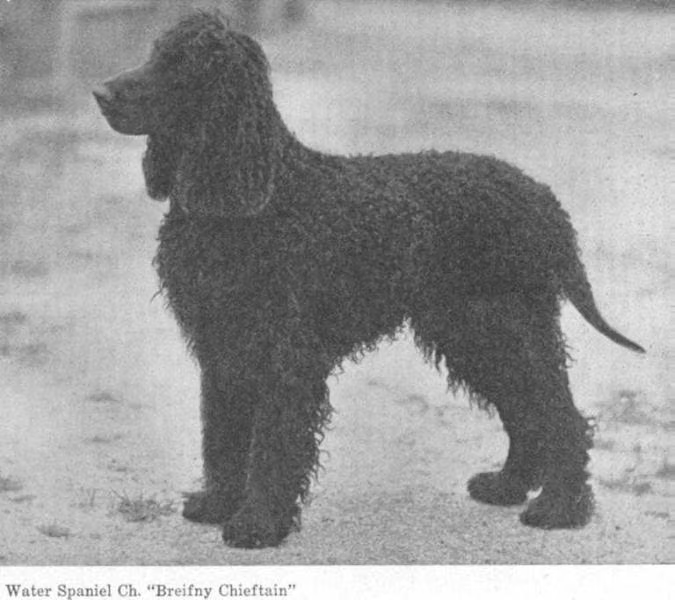
The Irish Water Spaniel is an intelligent, clownish retriever recognized by its curly coat and distinctive rat-like tail.
How the Irish Water Spaniel coat is built, and what that means when you groom it.
Caution: A Irish Water Spaniel coat mats easily.
Fine or long hair tangles at the base of the coat, out of sight, where the mats tighten and pull on the skin. Brushing has to reach right down to the roots in sections, not just skim the surface.
Information: A Irish Water Spaniel needs clipping every few weeks.
This coat keeps growing rather than shedding out, so it has to be trimmed every few weeks. Left to grow it mats down against the skin and traps moisture, dirt and heat.
A few of the Irish Water Spaniel profiles members have added to United Pet Club.
The Irish Water Spaniel is a large, liver-coloured retriever from Ireland, recognised by KUSA, with a distinctive coat of tight curls and a smooth rat tail. It typically lives 12 to 13 years.
Identifiable at a distance by its dense coat of liver-coloured curls and smooth, tapering rat tail, the Irish Water Spaniel is the tallest of the spaniels and one of the more striking gundogs you are likely to encounter. Recognised by the Kennel Union of Southern Africa (KUSA), it was developed in Ireland to retrieve waterfowl from rivers, bogs, and rough coastal ground. The spaniel name is slightly misleading: the breed functions as a retriever and is as capable in cold water as on land.
Those who keep Irish Water Spaniels often describe the breed in two registers. At work, it is focused, capable, and alert. At home, it frequently behaves in ways that look deliberately comic, inventing situations that amuse its household. Both qualities come from the same intelligent, observant mind. A bored Irish Water Spaniel, left without exercise or mental work, will apply that same intelligence to less welcome activities.
The breed suits active households that enjoy the outdoors, whether hiking over the koppies, heading to the coast, or training for dog sports. It is not a low-maintenance choice, either in exercise or in coat care.
| Attribute | Detail |
|---|---|
| Origin | Ireland |
| Size | Large |
| Lifespan | 12 to 13 years |
| Group / role | Sporting / gundog (water retriever) |
| Good with | Families, older children, active owners |
The Irish Water Spaniel fits people who want an active, involved companion and can provide daily exercise alongside consistent coat maintenance. It does well with families that spend time outdoors and with owners who enjoy swimming, hiking, or dog sports. Sedentary households or those who cannot meet the breed's exercise and grooming needs will find it a poor match.
The modern Irish Water Spaniel traces directly to a dog named Boatswain, bred in Dublin in the 1830s by Justin McCarthy, who fixed the curly coat, topknot, and rat tail that define the breed today.
The modern Irish Water Spaniel begins with a single dog. Justin McCarthy of Dublin bred a dog called Boatswain, whelped around 1834, who is regarded as the foundation sire of the breed. McCarthy's line established the three features that still define the type: the tight liver-coloured curls on the body, the loose topknot on the head, and the smooth, tapering rat tail. McCarthy kept no written record of the crosses behind Boatswain, so the precise ancestry has remained uncertain and debated ever since.
Before McCarthy fixed the type, curly-coated water dogs were already in use across Ireland for wildfowling, and separate southern and northern strains were recognised by breeders. The modern Irish Water Spaniel descends mainly from the southern line.
The breed appeared at dog shows in Britain and Ireland through the second half of the nineteenth century and established itself in several countries over the following decades. Population numbers have always remained modest compared with mainstream retrievers, and the breed continues to be valued more for working ability and temperament than for show volume. In South Africa, it remains uncommon, and prospective owners typically need to seek out KUSA-registered breeders and may face a wait for a suitable puppy.
The Irish Water Spaniel is the tallest of the spaniels, solidly built for water work, with a dense liver-coloured coat of tight curls, a distinctive loose topknot, and a smooth rat tail.
The breed is solidly built with a slightly rectangular frame designed for swimming and working in dense cover. The head carries a pronounced topknot of loose, longer curls that fall forward between the eyes, giving a peaked appearance. The muzzle is comparatively smooth. The overall impression is of a purposeful, athletic dog rather than a refined or delicate one.
| Trait | Standard |
|---|---|
| Height | Males 56 to 61 cm; females 53 to 58 cm |
| Weight | Males 25 to 31 kg; females 20 to 26 kg |
| Coat | Dense, tight liver-coloured curls with a smooth face and lower tail |
| Colours | Solid liver (a dark reddish brown), sometimes with a purplish cast |
| Eyes | Small, almond-shaped, hazel to dark amber |
Two distinct coat textures appear on the same dog. Tight, crisp ringlets cover the body, neck, and upper legs, while the face, throat, and tapered lower tail are short and smooth. The contrast between the curly body coat and the bare, tapering tail is where the rat-tail description comes from.
The only accepted colour is solid liver, a dark reddish brown that can show a slight purplish sheen in certain light. The double coat is naturally oily and water-resistant, which allows the dog to work in cold water without chilling quickly. That same oiliness means the coat forms mats readily without regular brushing.
The Irish Water Spaniel is devoted and playful with its own household, watchful and reserved with strangers, and generally sociable with other dogs when introduced carefully.
The Irish Water Spaniel carries two distinct modes. At home it is affectionate, closely bonded to its household, and prone to inventing comic, attention-seeking behaviour that owners tend to find entertaining. Put it to work and the same dog becomes focused and alert, applying real concentration to the task.
With strangers the breed is reserved rather than immediately friendly. It takes time to warm up and remains watchful at first, noticing unfamiliar people approaching a property. For South African households that value a dog with natural alertness alongside a companionable family temperament, that combination is useful. The breed is not typically aggressive, but its reserve is genuine and consistent.
With other dogs the Irish Water Spaniel is generally sociable when raised alongside them or introduced thoughtfully. It has a moderate prey drive as a retriever, so care is sensible around small pets. A well-socialised dog settles comfortably into family life, relaxed at gatherings and at a braai, provided it has had early exposure to varied people and settings. Without adequate exercise and mental engagement, the breed can become vocal or destructive.
| Trait | Rating |
|---|---|
| Affection | 5 |
| Energy | 4 |
| Trainability | 4 |
| Vocalness | 2 |
| Shedding | 1 |
The Irish Water Spaniel needs at least 60 minutes of daily exercise, regular brushing and periodic trimming of its curly coat, and thoughtful management in South Africa's varied climates.
South Africa's climate adds a practical dimension to coat care. In humid coastal conditions, particularly along the KwaZulu-Natal coast, the dense curls are slower to dry after swimming or bathing, and staying damp against the skin increases the risk of irritation. In dry Highveld heat, the coat picks up dust and debris that worsen matting. Regular brushing addresses both situations.
The Irish Water Spaniel adapts to South Africa's range of climates, but each setting has its demands. On the Highveld, summer afternoon thunderstorms and heat mean shade and fresh water must be available through the day. In KwaZulu-Natal's subtropical conditions, the humid heat requires the same, with careful monitoring of how hard the dog is working in the warmth. The Cape's winter rain causes no particular difficulty given the breed's water-resistant coat.
During load-shedding, when air conditioning and fans cut out, ensure the dog has access to a shaded, well-ventilated space. A dog confined indoors in a building that heats up without circulation can become distressed.
Yard security is worth considering carefully. Electric perimeter fencing loses function during load-shedding, so physical boundary fencing should form the main barrier for a dog with outdoor access. A stoep or covered outdoor area where the dog can rest out of direct sun is a practical addition in the warmer months.
Feed an Irish Water Spaniel a complete diet suited to a large, active dog, divided into two meals a day, with portions adjusted to body condition and activity level.
Choose a complete, balanced food formulated for active dogs of large size, matched to the dog's current life stage. Adequate protein supports muscle condition in a working-build dog, and fat content should be moderate for an energetic animal that is not always in full working mode. Daily amounts depend on age, body condition, and actual activity levels rather than a fixed formula. Use the dog's body shape as the ongoing guide and adjust portions when condition changes noticeably. Fresh water should always be available, especially after exercise or a swim.
| Life stage | Amount per day | Meals |
|---|---|---|
| Puppy (2 to 6 months) | Per product guide, by weight | 3 to 4 |
| Junior (6 to 12 months) | About 2.5 to 3.5 cups | 2 to 3 |
| Adult | About 2 to 3 cups | 2 |
| Senior | About 1.75 to 2.5 cups | 2 |
Keep treats to about 10 percent of daily calories to maintain a lean body condition. Excess weight puts additional strain on the joints of a large, active dog over time. Most dogs on a complete commercial diet do not need additional supplements, though a veterinarian may suggest joint or skin support in particular cases. Introduce any change to the diet gradually over about a week to reduce the risk of digestive upset.
The Irish Water Spaniel is a generally sound breed with a typical lifespan of 12 to 13 years. In South Africa, biliary (tick-borne babesiosis) is an important additional concern alongside hip dysplasia and ear infections.
The Irish Water Spaniel is a hardy, generally sound breed. A lifespan of 12 to 13 years is typical when the dog receives routine preventive care and is kept in good body condition. Responsible breeders screen for heritable conditions in their breeding stock, so it is worth asking about the health testing history of both parents when sourcing a puppy.
| Condition | Signs | Note |
|---|---|---|
| Hip dysplasia | Stiffness, limping, reluctance to jump | Common in large breeds; screening of breeding stock reduces prevalence |
| Ear infections | Head shaking, odour, scratching at ears | Long, curly ears trap moisture; regular cleaning lowers risk |
| Hypothyroidism | Weight gain, low energy, coat changes | Manageable with daily medication once diagnosed |
| Eye conditions | Cloudiness or reduced vision | Includes conditions such as cataracts; eye exams help detect problems early |
The Irish Water Spaniel is intelligent and quick to learn, but has an independent streak that makes varied, reward-based sessions more effective than repetitive drilling or harsh correction.
The Irish Water Spaniel picks up cues quickly and enjoys purposeful work, whether in formal obedience, retrieving, or dog sports. The independent streak is equally real. The breed tires of repetition and will begin to disengage from instructions it considers pointless. Short sessions with varied activities and genuine rewards hold its focus far better than long drills. The breed reads its handler's tone and mood closely. Calm, consistent guidance produces far better results than harsh correction, which tends to make the dog shut down rather than comply.
Early socialisation with different people, other dogs, and unfamiliar environments tempers the natural reserve the breed shows towards strangers. Without it, that reserve can develop into excessive suspicion or reactivity as an adult.
Irish Water Spaniels reach breeding maturity at around two years, carry litters of roughly four to seven puppies, and have a gestation period of approximately 63 days.
Breeding the Irish Water Spaniel responsibly requires planning, given the breed's modest population and the importance of maintaining sound working stock. Though physical maturity arrives earlier, the general practice among conscientious breeders is to wait until the dog is at least two years old before breeding, so that hip and eye health evaluations can be completed first. Health screening conducted before two years may not give a complete picture of the dog's long-term condition.
The female's heat cycle determines the timing of mating, and gestation runs roughly 63 days from conception. Litter size varies with the individual female but typically falls between four and seven puppies. Newborns are born blind and deaf and depend entirely on the mother for warmth and nutrition in the first weeks. Eyes and ears open during the first two to three weeks, and weaning begins around three to four weeks as the puppies are introduced to solid food.
The window from about three to twelve weeks is critical for socialisation. Handling, exposure to household sounds and routines, and contact with littermates during this period shape the temperament of the adult dog. Puppies are generally placed in new homes at eight weeks or older.
| Metric | Value |
|---|---|
| Breeding maturity | About 2 years |
| Gestation | About 63 days |
| Average litter size | 4 to 7 puppies |
| Eyes and ears open | 2 to 3 weeks |
| Weaning | 3 to 4 weeks |
| Ready for new homes | 8 weeks or older |
No national chip law protects an Irish Water Spaniel here; a free United Pet Club record does, for life, at no cost.
Load your Irish Water Spaniel's details once and be done with it: name, date of birth, photo, your cell number, save. The profile is free for his whole life, and it takes a chip number the day the vet supplies one. Dog registration is the start of the paper trail.
A chipped Irish Water Spaniel still needs the number loaded into a registry, because the vet's job ends with the implant. Register the microchip on the free lifetime plan: any brand a local vet uses qualifies, updates stay free when you relocate between provinces, and the record answers the lookups SPCA branches run daily. Create your free account and settle both records today.
Create a free United Pet Club account, load your Irish Water Spaniel's details and a photo, and save. The lifetime plan keeps the profile active at no cost for as long as you have him, chip or no chip.
Load the 15-digit chip number into your free account together with your address and cell number. Registration and every later update are free, and chips from any brand a South African vet implants are accepted.
No national law says so, though the SPCA chips as standard practice and many breeders and welfare groups insist on it. The registration behind the chip is the part that finds you, and with United Pet Club it costs nothing.
Nothing at all. The free lifetime plan covers the profile, the chip record, and unlimited updates, with no annual renewal in sight.
Common questions about the Irish Water Spaniel cover its height and weight, temperament, coat care requirements, lifespan, suitability for families, shedding, and how to find a puppy through KUSA-registered breeders in South Africa.
Males stand 56 to 61 cm at the shoulder and weigh 25 to 31 kg. Females are slightly smaller at 53 to 58 cm and 20 to 26 kg. It is the tallest of the spaniel breeds.
It is devoted and playful with its own family, often described as clownish at home. With strangers it tends to be watchful and reserved rather than immediately friendly. It bonds closely to its household and is alert without being typically aggressive.
It is a moderate to high-maintenance breed. The curly coat needs brushing every few days and trimming every six to eight weeks. The dog also needs at least 60 minutes of exercise daily and consistent mental engagement to stay settled.
The typical lifespan is 12 to 13 years. Good preventive care, a lean body condition, routine ear cleaning, and effective tick control (including protection against biliary) all contribute to a healthy, comfortable life.
Yes, for active families. They are affectionate and loyal and generally do well with older children who handle them calmly. They suit households that can provide regular exercise, training, and steady company.
They shed very little compared with most breeds. The dense, curly coat holds rather than releases loose hair, which reduces mess in the home. Regular brushing and trimming are still necessary to prevent matting.
The breed is uncommon here. The Kennel Union of Southern Africa (KUSA) is the best starting point for locating registered breeders. Prospective owners should expect to search and may need to wait for a suitable litter to become available.


![Harp [Colonel the Hon. W. Le Poer Trench], a Female Irish Water Spaniel registered with United Pet Club](https://media.unitedpetclub.com/m/5FFuhpTGq4/harp-colonel-the-hon-w-le-poer-trench-irish-water-spaniel_orig.avif "Harp [Colonel the Hon. W. Le Poer Trench] — Irish Water Spaniel")