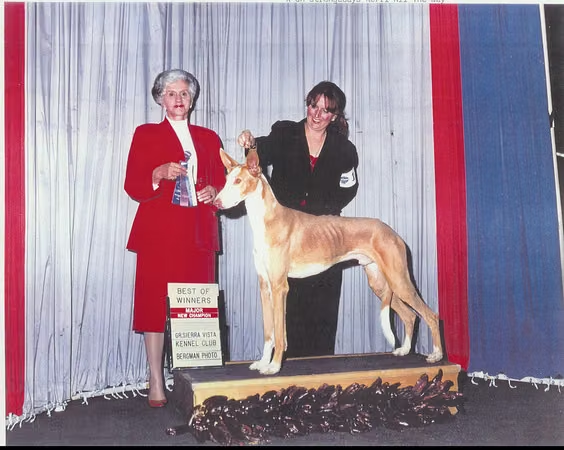
The Ibizan Hound is a graceful, agile sighthound known for its remarkable jumping ability and independent, dignified spirit.
How the Ibizan Hound coat is built, and what that means when you groom it.
A few of the Ibizan Hound profiles members have added to United Pet Club.
The Ibizan Hound is a medium-sized sighthound from Spain, prized for its agility, high jump, and an independent, dignified temperament.
The Ibizan Hound is a lean, leggy sighthound that hunts primarily by sight and movement, supported by sharp hearing and a capable nose. Its large, upright ears and amber eyes give the breed a distinctive look, and its body is built for speed across open and rocky ground. Dogs of the breed are deer-red, white, or a combination of the two, with a frame that stays slim even in maturity.
The breed comes from Spain and is most closely associated with the island of Ibiza and the wider Balearic Islands. There it was kept to course and flush rabbits over difficult terrain, a job that shaped its stamina, vertical leap, and quick reactions. The same instincts remain in companion dogs today, so a securely fenced space and steady exercise matter.
At home the Ibizan Hound is quiet, clean, and reserved with strangers while affectionate with its own people. It is independent and will make its own decisions, which suits owners who enjoy a thoughtful, sensitive dog rather than an eager-to-please one.
| Attribute | Detail |
|---|---|
| Origin | Spain (Balearic Islands) |
| Size | Medium |
| Lifespan | 12 to 14 years |
| Group / role | Sighthound, rabbit hunter |
| Good with | Older children and respectful families; supervise around small pets |
The Ibizan Hound fits active people who can give it daily running room behind a tall, secure fence and who appreciate an independent companion. It is sensitive to harsh handling and does best with patient, consistent owners. Households with small animals such as rabbits, cats, or pocket pets need to manage interactions carefully, since the breed's chase drive is strong.
The Ibizan Hound developed on Spain's Balearic Islands as a rabbit-hunting sighthound and was introduced to wider Western recognition in the twentieth century.
The Ibizan Hound takes its name from Ibiza, one of Spain's Balearic Islands in the western Mediterranean. The breed is part of a broad family of lean, prick-eared hunting dogs found around the Mediterranean basin, and it was kept on the islands as a working rabbit dog for generations.
On the islands the dogs hunted in packs, using sight, sound, and scent to locate and flush rabbits across rocky, broken ground. Their value lay in stamina and a high vertical jump, which let them clear walls and brush. Because they earned their keep through hunting, breeding emphasized function over uniform appearance, and both smooth and wire coats occur.
The breed was introduced to the United States in the 1950s, when imported dogs began a breeding population outside the Mediterranean. It later gained recognition from major kennel clubs, with American Kennel Club acceptance in the late twentieth century.
Today the Ibizan Hound is kept mainly as a companion and as a participant in lure coursing and other sighthound sports, while still being hunted in parts of its homeland.
The Ibizan Hound is a tall, slender sighthound with large upright ears, amber eyes, and a red, white, or red-and-white coat in smooth or wire varieties.
The Ibizan Hound has a finely built, athletic body with a deep chest, tucked abdomen, and long, clean legs. The head is long and narrow, and the breed's most recognizable feature is its set of large, erect ears that move expressively. The eyes are amber and the nose is flesh-colored, contributing to the breed's open, alert expression. The overall impression is one of elegance and speed rather than bulk.
| Trait | Standard |
|---|---|
| Height | Roughly 56 to 74 cm (22 to 29 in) at the shoulder |
| Weight | Roughly 20 to 29 kg (45 to 65 lb) |
| Coat | Two varieties: smooth (short) and wire (rough, longer) |
| Colors | Red, white, or red and white |
| Eyes | Amber, oval, conveying an alert expression |
The breed comes in two coat types. The smooth coat is short and hard, while the wire coat is rougher and longer, sometimes with a slight beard. Both are easy to maintain. Accepted colors are deer-red, solid white, or any combination of red and white, with no preference between the patterns. The flesh-colored nose, rims, and lips match the pale coloring around the muzzle and add to the breed's characteristic look.
The Ibizan Hound is independent, reserved with strangers, and affectionate with its family, combining athletic energy with a quiet, sensitive nature indoors.
The Ibizan Hound is independent and dignified, traits that come from generations of working at a distance from the hunter. With its own family it is gentle and affectionate, often forming close bonds and enjoying soft places to rest. With strangers it tends to be reserved rather than aggressive, taking time to warm up.
The breed is alert and quick to notice movement, and its strong chase instinct means small fast-moving animals can trigger pursuit. With dog-savvy children and other dogs it is generally good-natured, though early socialization helps. Indoors it is calm and clean, but it needs real outlets for its energy and athleticism.
This is a sensitive breed that responds poorly to harsh corrections. It can be reserved or shy if under-socialized, so steady, positive exposure to people and places during the first year pays off.
| Trait | Rating |
|---|---|
| Affection | 4 |
| Energy | 4 |
| Trainability | 3 |
| Vocalness | 2 |
| Shedding | 2 |
The Ibizan Hound needs daily vigorous exercise, secure fencing, and only light grooming, with attention paid to its lean frame and thin coat in cold weather.
The Ibizan Hound is a low-maintenance breed in the grooming department but a demanding one when it comes to exercise and containment. Its short or wire coat sheds little and stays fairly clean on its own.
The Ibizan Hound adapts to home life as long as its exercise needs are met, and it settles quietly indoors. It is sensitive to cold due to its lean body and thin coat, so a coat or sweater helps in low temperatures. A soft bed is appreciated by this slim, lightly padded breed.
The Ibizan Hound does well on a complete, high-quality diet measured to keep its naturally lean frame, fed in two meals a day for adults.
The Ibizan Hound is built to be slim, with ribs that are lightly covered and a clear waist. Feed a complete and balanced diet appropriate to the dog's age and activity level, and adjust portions to maintain that lean condition rather than to a fixed cup count. Active or coursing dogs may need more, while quieter pets need less. Because the breed has a deep chest, splitting the daily ration into two meals and avoiding heavy exercise right after eating are sensible precautions.
| Life stage | Amount per day | Meals |
|---|---|---|
| Puppy (2 to 6 months) | Per product guide for growth, divided | 3 to 4 |
| Junior (6 to 12 months) | Per product guide, tapering | 2 to 3 |
| Adult | Roughly 2 to 3 cups of quality dry food | 2 |
| Senior | Reduced to match lower activity | 2 |
Keep treats to a small share of daily calories so the dog stays lean. A complete commercial diet usually needs no added supplements; ask a veterinarian before adding anything, especially for growing puppies. Fresh water should always be available.
The Ibizan Hound is a generally healthy breed living 12 to 14 years, with a few conditions to watch including sensitivity to anesthesia and eye and joint issues.
The Ibizan Hound is considered a hardy, generally healthy breed, with a typical lifespan of 12 to 14 years. As with other sighthounds, its low body fat affects how it handles anesthesia, so veterinary teams familiar with the type take extra care. Responsible breeders screen for eye and joint conditions, and routine care keeps most dogs in good shape across their lives.
| Condition | Signs | Note |
|---|---|---|
| Anesthesia sensitivity | Slow recovery, unusual reaction during procedures | Common to lean sighthounds; inform the vet of the breed type |
| Eye disorders (including retinal disease and cataracts) | Cloudiness, night-vision loss, bumping into objects | Breeding stock should have eye screening |
| Hip dysplasia | Stiffness, reluctance to jump, altered gait | Less common than in heavy breeds but worth screening |
| Allergies and skin sensitivity | Itching, redness, recurrent ear issues | Manage with veterinary guidance |
The Ibizan Hound is intelligent but independent, so it learns best through short, positive sessions and reliable containment rather than off-leash recall in open areas.
The Ibizan Hound is smart and capable but thinks for itself, a legacy of working away from direct human control. It is not a natural people-pleaser, so training rewards patience and consistency. The breed is sensitive and shuts down under harsh methods, responding far better to food, play, and praise. Recall is the hardest skill to make reliable, because a moving rabbit, squirrel, or cat will usually win over a command. For that reason, off-leash freedom should be limited to fully enclosed areas.
Ibizan Hounds reach breeding maturity around two years, carry litters of roughly six to eight puppies after a typical nine-week pregnancy, and benefit from health-screened parents.
Responsible breeding of the Ibizan Hound starts with health-screened parents, including eye and hip evaluation, and waits until both dogs are physically and mentally mature, generally around two years of age. The standard canine pregnancy runs about 63 days from conception. Litters are commonly in the range of six to eight puppies, though smaller and larger litters occur.
Puppies are born helpless and rely fully on the dam in the first weeks. Early gentle handling and exposure to ordinary household sights and sounds are important for this sensitive breed, since temperament and confidence are shaped during the early socialization window. Puppies typically go to new homes after eight weeks, well socialized and started on vaccinations and parasite control. Breeders should match this active, independent breed to homes prepared for its exercise and containment needs.
| Metric | Value |
|---|---|
| Breeding maturity | Around 2 years |
| Gestation | Approximately 63 days |
| Average litter size | 6 to 8 puppies |
| Weaning | Around 6 to 8 weeks |
| Recommended health screening | Eyes and hips |
No national chip law protects an Ibizan Hound here; a free United Pet Club record does, for life, at no cost.
Load your Ibizan Hound's details once and be done with it: name, date of birth, photo, your cell number, save. The profile is free for his whole life, and it takes a chip number the day the vet supplies one. Dog registration is the start of the paper trail.
A chipped Ibizan Hound still needs the number loaded into a registry, because the vet's job ends with the implant. Register the microchip on the free lifetime plan: any brand a local vet uses qualifies, updates stay free when you relocate between provinces, and the record answers the lookups SPCA branches run daily. Create your free account and settle both records today.
Create a free United Pet Club account, load your Ibizan Hound's details and a photo, and save. The lifetime plan keeps the profile active at no cost for as long as you have him, chip or no chip.
Load the 15-digit chip number into your free account together with your address and cell number. Registration and every later update are free, and chips from any brand a South African vet implants are accepted.
No national law says so, though the SPCA chips as standard practice and many breeders and welfare groups insist on it. The registration behind the chip is the part that finds you, and with United Pet Club it costs nothing.
Nothing at all. The free lifetime plan covers the profile, the chip record, and unlimited updates, with no annual renewal in sight.
Common questions about the Ibizan Hound cover its size, temperament, care needs, lifespan, suitability, and availability.
It is a medium-sized sighthound, standing roughly 22 to 29 inches (56 to 74 cm) at the shoulder and weighing about 45 to 65 pounds (20 to 29 kg). The build is tall and slender rather than heavy.
It is independent, alert, and reserved with strangers, while affectionate and quiet with its own family. Indoors it is calm and clean, but outdoors it is energetic and driven to chase.
Grooming is easy, with minimal shedding from its short or wire coat. The challenge is meeting its exercise needs and providing tall, secure fencing, since the breed is a remarkable jumper with a strong chase instinct.
The typical lifespan is 12 to 14 years. It is a generally healthy breed, though it is sensitive to anesthesia and benefits from eye and joint screening in breeding stock.
It can be, for active families with older or dog-savvy children. It is gentle at home but needs patient, positive handling and careful management around small pets because of its prey drive.
Only in fully enclosed areas. Its recall is unreliable around moving animals, so open-area freedom is risky. Daily running in a secure space is the safe way to burn its energy.
They are an uncommon breed outside their Mediterranean homeland, so prospective owners often join a waiting list with a reputable breeder or look to breed-specific rescue.