
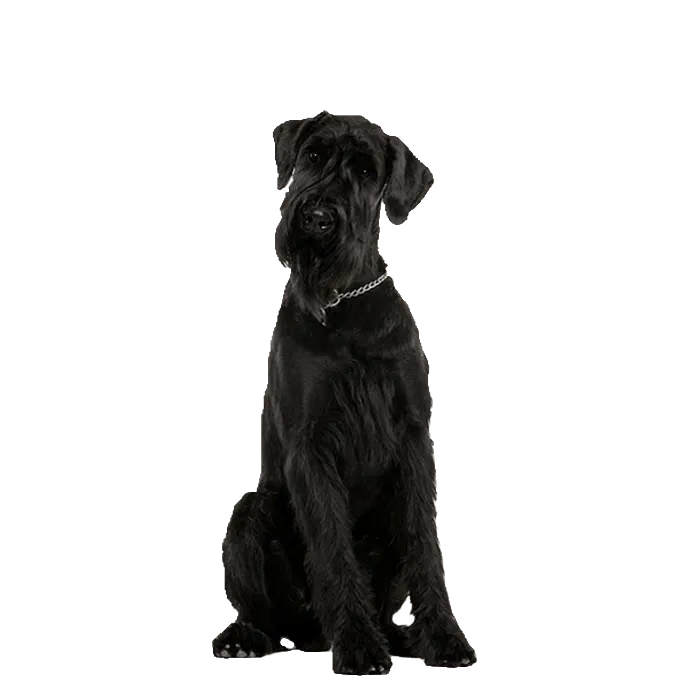
German Wirehaired Pointer
The German Wirehaired Pointer is a devoted, all-purpose hunting companion known for its rugged coat and tireless work ethic.
- Size
- Large
- Lifespan
- 12–14 years
- Origin
- Germany
- Temperament
- Devoted
- Standard colors
- Black, White and Liver
Characteristics
Coat and grooming
How the German Wirehaired Pointer coat is built, and what that means when you groom it.
- Coat layers
- Double coat
- Coat texture
- Wire
- Coat length
- Medium
- Shedding
- Moderate shedding
Grooming guidance
Critical: A German Wirehaired Pointer should not be shaved.
The undercoat keeps heat out as well as in, and the outer coat shields the skin from sun and insect bites. Clipping the whole coat off removes both. It often grows back patchy, soft or a different colour, and in some animals the guard hairs never return properly. Brush the undercoat out instead of cutting it off.
Caution: A German Wirehaired Pointer coat should be hand-stripped rather than clipped.
A wire coat is meant to be pulled out at the root once the hair is ready to release. Clippers cut it off part way instead, leaving the soft undercoat behind. The result is a coat that grows back limp and faded, and the weatherproof texture only returns after the hair is stripped out again.
German Wirehaired Pointer colors and patterns
What each club's breed standard says about every German Wirehaired Pointer color and pattern. Point at a ruling to see the club's own wording.
Breed standards describe the German Wirehaired Pointer in Black, White and Liver. Standard patterns: Solid, Bicolour, Roan and Spotted.
| Color or pattern | FCI | AKC | UKC | KC | KUSA |
|---|---|---|---|---|---|
| Black | Standard (“Black roan, with or without patches”) | Fault (“Black & White”) | Standard (“Solid black”) | Standard (“black and white”) | Standard (“Black roan, with or without patches”) |
| White | Standard (“Light roan”) | Standard (“Liver & White”) | Standard (“liver and white ticked”) | Standard (“Liver and white”) | Standard (“Light roan”) |
| Liver | Standard (“Brown with or without white chest patch”) | Standard (“Liver”) | Standard (“Solid liver”) | Standard (“solid liver”) | Standard (“Brown with or without white chest patch”) |
| Albino | Not recognised | No ruling | Disqualifying (“Albinism”) | Not recognised | Not recognised |
| Patterns | |||||
| Solid | Standard (“Brown with or without white chest patch”) | Standard (“solid liver”) | Standard (“Solid liver”) | Standard (“solid liver”) | Standard (“Brown with or without white chest patch”) |
| Bicolour | No ruling | Standard (“The coat is liver and white”) | Standard (“liver and white”) | Standard (“Liver and white”) | No ruling |
| Roan | Standard (“Brown roan with or without patches”) | Standard (“Roan”) | Standard (“liver and white ticked”) | Standard (“Liver & White Ticked”) | Standard (“Brown roan with or without patches”) |
| Spotted | Standard (“Brown roan with or without patches”) | Standard (“Spotted”) | Standard (“liver and white spotted”) | Not recognised | Standard (“Brown roan with or without patches”) |
| Tricolour | No ruling | No ruling | No ruling | Fault (“Solid black and tricoloured highly undesirable”) | No ruling |


| Color or pattern | FCI | AKC | UKC | KC | KUSA |
|---|---|---|---|---|---|
| Brown | No ruling | Standard (“Eyes are brown”) | No ruling | Standard (“hazel or darker”) | No ruling |
| Dark brown | Standard (“As dark as possible”) | No ruling | Standard (“as dark as possible”) | Standard (“hazel or darker”) | Standard (“As dark as possible”) |
| Hazel | No ruling | No ruling | No ruling | Standard (“hazel or darker”) | No ruling |
| Yellow | No ruling | Fault (“Yellow eyes are not desirable”) | No ruling | No ruling | No ruling |
| Patterns | |||||
| Odd-eyed | Disqualifying (“differently coloured eyes”) | No ruling | No ruling | No ruling | Disqualifying (“differently coloured eyes”) |

| Color or pattern | FCI | AKC | UKC | KC | KUSA |
|---|---|---|---|---|---|
| Black | Standard (“Strongly pigmented corresponding to the colour of the coat”) | No ruling | Standard (“black in black dogs”) | Standard (“Nose liver or black”) | Standard (“Strongly pigmented corresponding to the colour of the coat”) |
| Liver | Standard (“Strongly pigmented corresponding to the colour of the coat”) | Standard (“The nose is dark brown”) | Standard (“Dark brown in liver dogs”) | Standard (“Nose liver or black”) | Standard (“Strongly pigmented corresponding to the colour of the coat”) |
| Pink | No ruling | Fault (“A spotted or flesh colored nose is to be penalized”) | No ruling | No ruling | No ruling |
| Patterns | |||||
| Butterfly nose | No ruling | Fault (“A spotted or flesh colored nose is to be penalized”) | No ruling | No ruling | No ruling |

What the rulings mean
- Standard
- Described by the club's breed standard.
- Fault
- Named by the club's breed standard as a fault: the animal can be shown but is penalised.
- Disqualifying
- The club's breed standard disqualifies an animal of this colour or pattern.
- Not recognised
- The club does not accept this colour or pattern for the breed.
Color changes
How a German Wirehaired Pointer's colors can change over its life.
Blackchanges toRust
Coat · With body condition · can change back
Blackchanges toGrey
Coat · Progressive
Blackchanges toBrown
Coat · In the sun · can change back
Whitechanges toRoan
Coat · With age · from 2 weeks
Blackchanges toSnow nose
Nose · With the season · can change back
Blackchanges toPink
Nose · With the season · can change back

Sources
Each ruling comes from the club's published breed standard or color list.
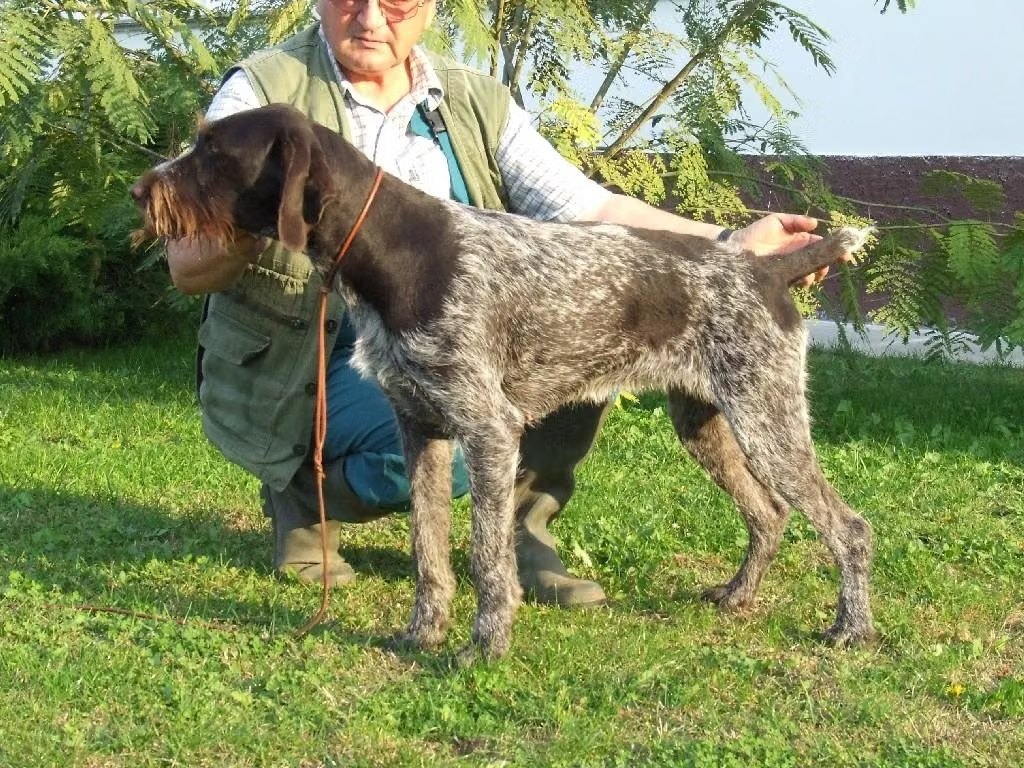
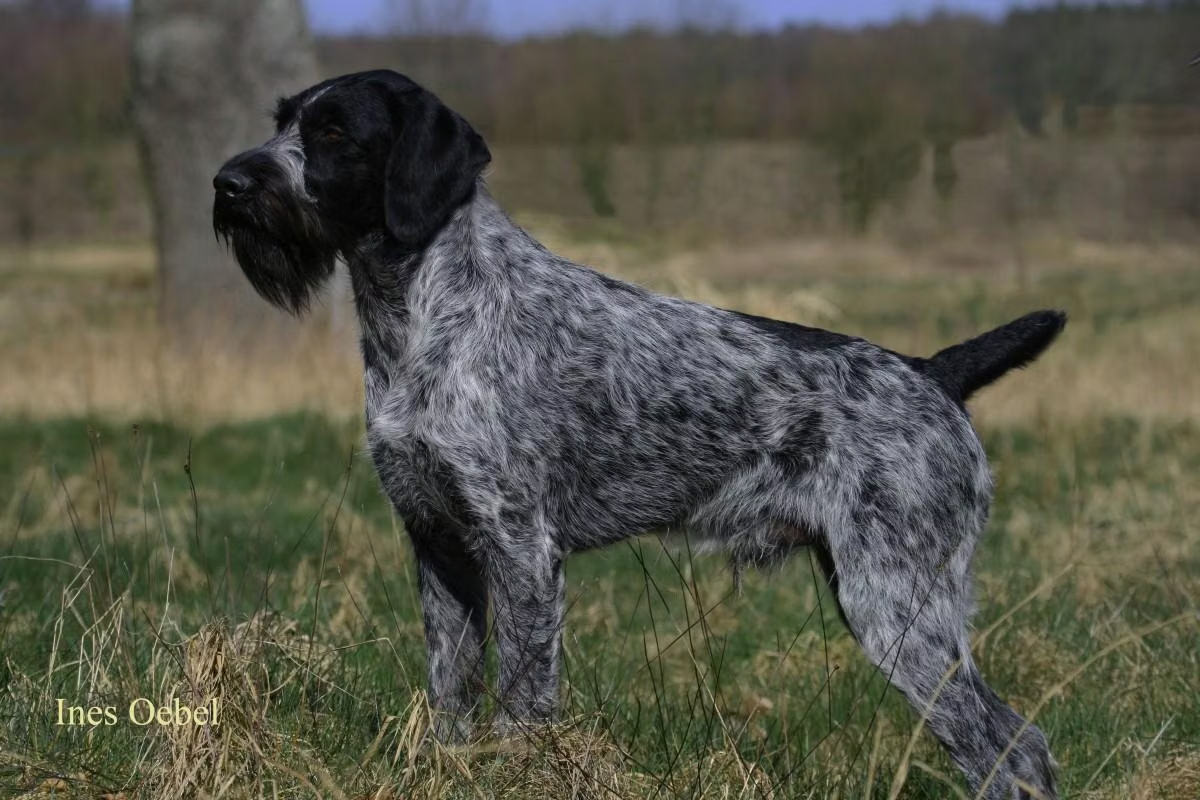
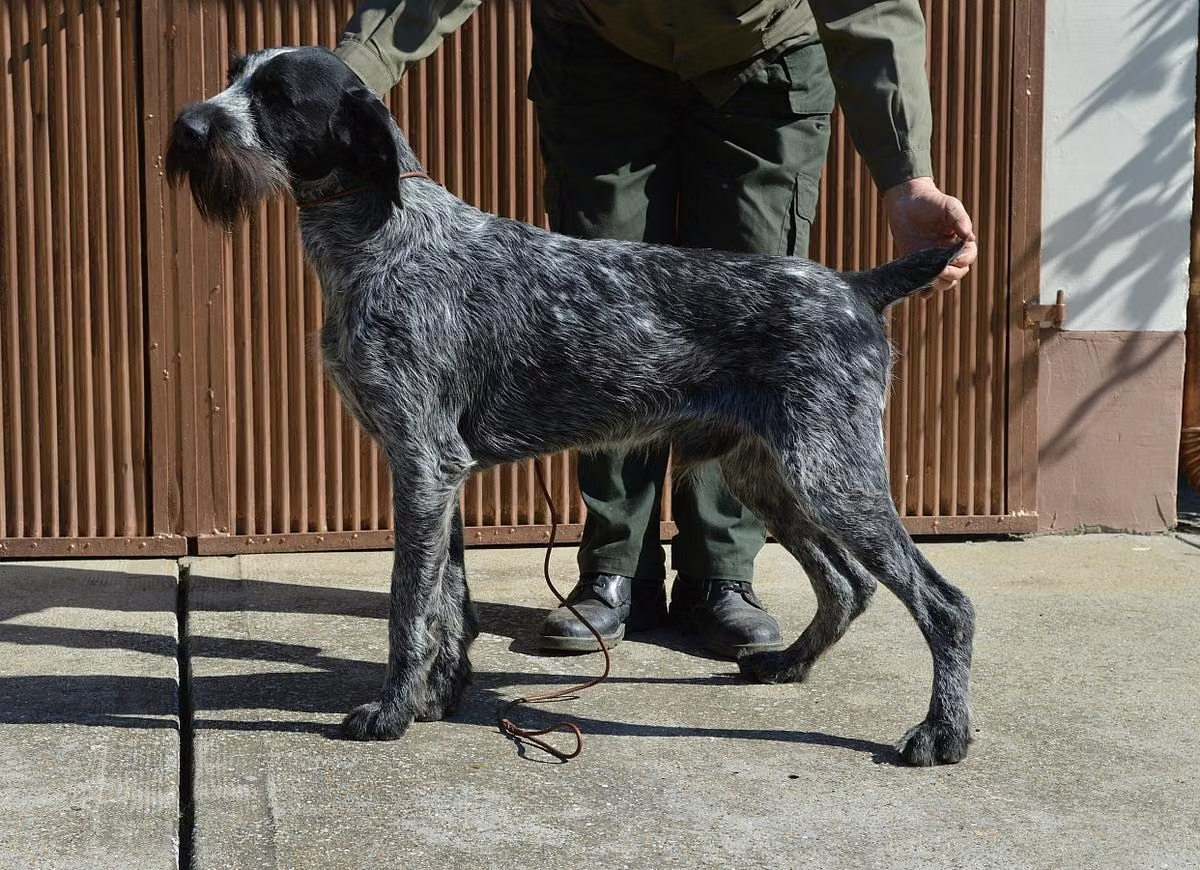
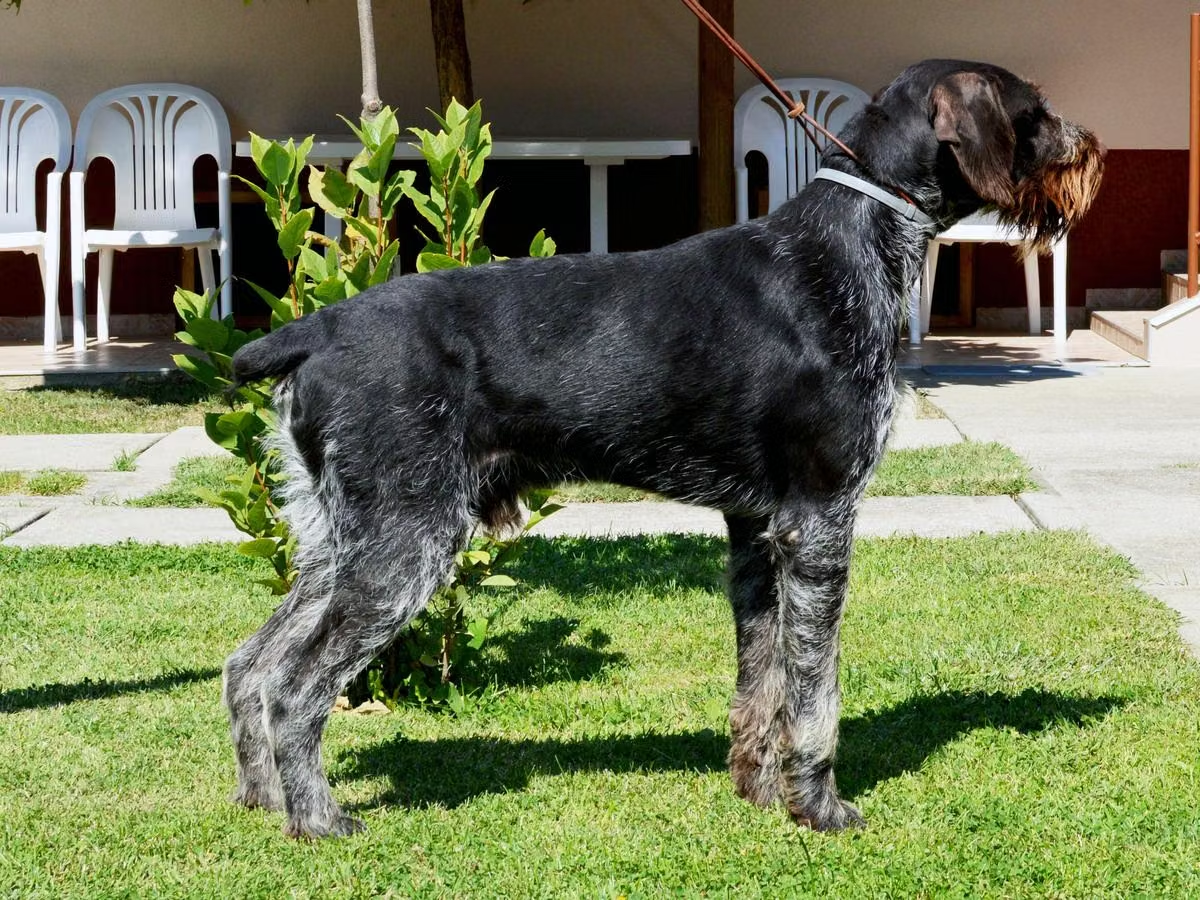
Meet some of our German Wirehaired Pointer
A few of the German Wirehaired Pointer profiles members have added to United Pet Club.
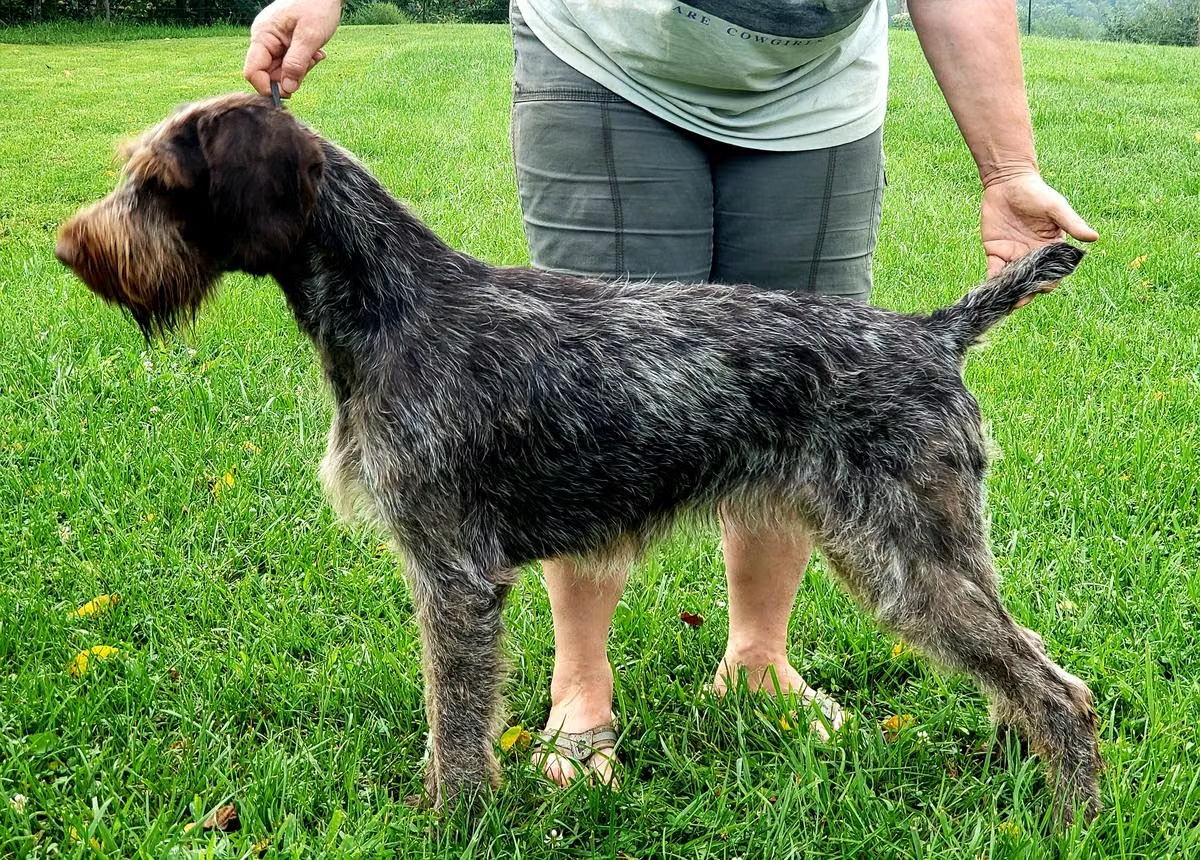
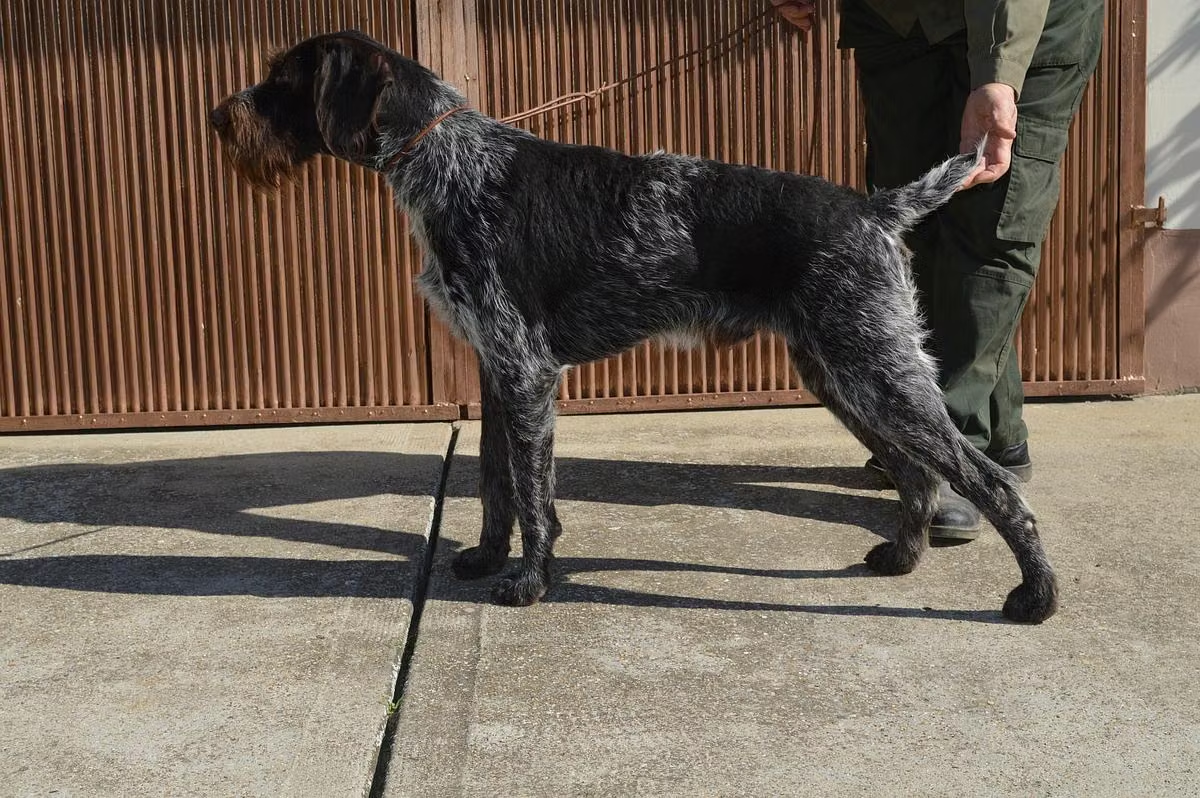

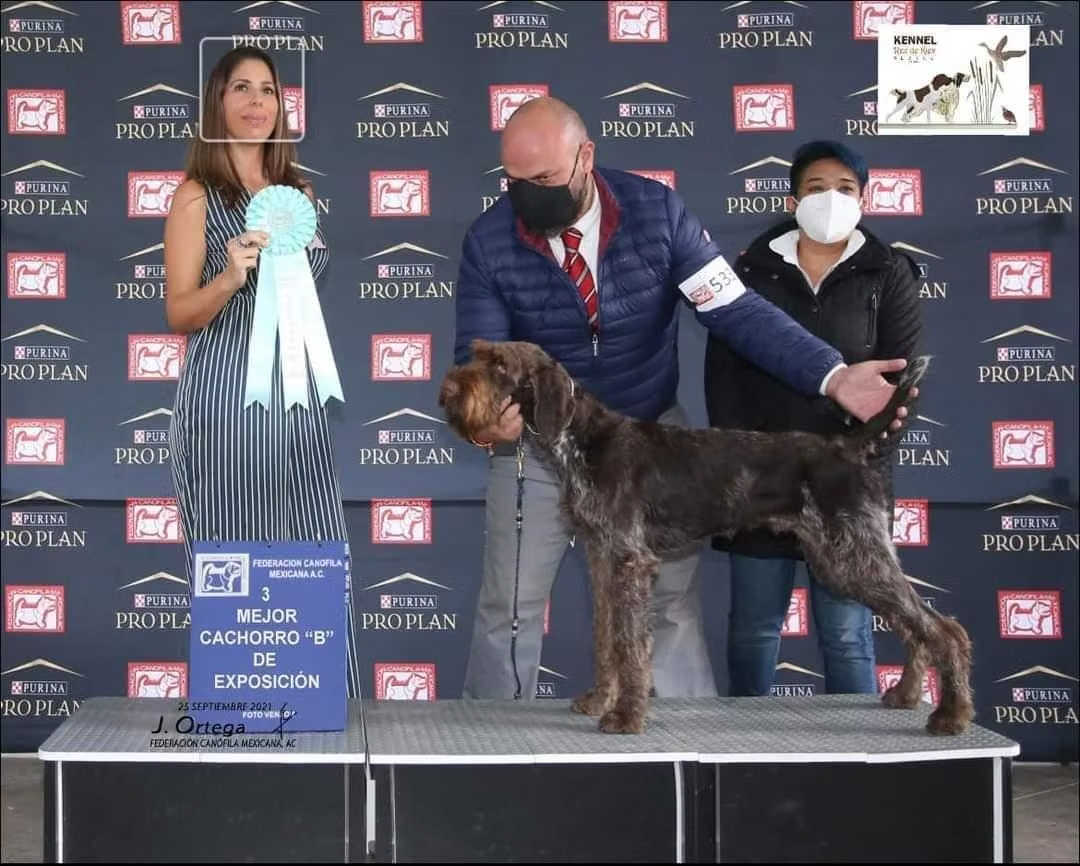
About the German Wirehaired Pointer
The German Wirehaired Pointer is a large versatile gun dog from Germany with a harsh weatherproof coat and a lifespan of 12 to 14 years, registered in South Africa through the Kennel Union of Southern Africa (KUSA).
Among the continental pointing breeds registered with the Kennel Union of Southern Africa (KUSA), the German Wirehaired Pointer is notable for the breadth of what it can do in the field. Called the Deutsch Drahthaar in its country of origin, it was developed to hunt, point, and retrieve across varied terrain and in cold water. The same coarse, water-repellent coat that earned it a following in Europe performs well in South Africa's diverse conditions, from the cold winter rains of the Cape to the summer heat of the Lowveld.
The dog bonds tightly with its own household and remains reserved and watchful around strangers. It is not designed to be aggressive, but that natural wariness is one reason the breed appeals to South African owners who want a dog that is alert to unusual activity around the property. Bred for full days in the field, it carries a high energy level and needs real daily exercise to stay settled at home.
Adults typically live 12 to 14 years. With consistent training and genuine daily activity, the breed suits active households, but without those things it becomes restless and finds its own, often destructive, ways to occupy itself.
| Item | Detail |
|---|---|
| Origin | Germany |
| Size | Large |
| Lifespan | 12 to 14 years |
| Group/role | Sporting and pointing gun dog (versatile hunting breed) |
| Good with | Family members it knows well; older, calm children; can live with other dogs when socialised early |
Who suits this breed
This dog fits owners who hunt, hike, run, or participate in working-dog sport and want a committed companion for those activities. It does best with people who are home frequently or who can take the dog along on outings. A committed first-time owner prepared for daily vigorous exercise and steady training can manage one successfully. It is a poor match for apartment living, for households where the dog will be alone for most of the day, or for anyone who wants a low-energy dog content to spend the afternoon on the stoep.
Origins and development
German hunters in the late 1800s set out to produce a single all-purpose gun dog capable of pointing, tracking, and retrieving in any terrain; the result was the German Wirehaired Pointer, formalised as a breed in the early twentieth century.
The Verein Deutsch Drahthaar, founded in 1902, remains one of the few breed clubs in the world that ties registration to working-performance testing rather than to conformation alone. That emphasis reflects the original problem the breed was created to solve.
In the second half of the nineteenth century, German hunters were keeping multiple specialist breeds to cover different tasks in the field. The ambition to combine all those functions into a single, practical dog drove the breeding programme that produced the German Wirehaired Pointer. Breeders drew on the Pudelpointer, the German Shorthaired Pointer, and rough-coated stock including the Griffon and the Stichelhaar. From these they selected for nose and drive, for the ability to retrieve from cold water, and above all for the harsh wire coat that protects the dog in dense cover and shields its skin in the field.
By the early twentieth century the breed's type was settled. The 1902 club codified the standard and kept working-test results as a condition of registration in Germany, a practice that still applies to the Deutsch Drahthaar name in the traditional German system. The breed spread internationally through the century that followed and is today registered with KUSA. South African hunters who work varied terrain from bushveld to mountain fynbos have found it well suited to local conditions.
Size and physical appearance
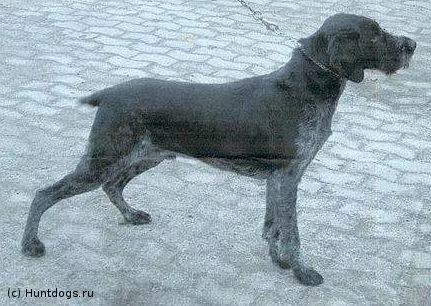
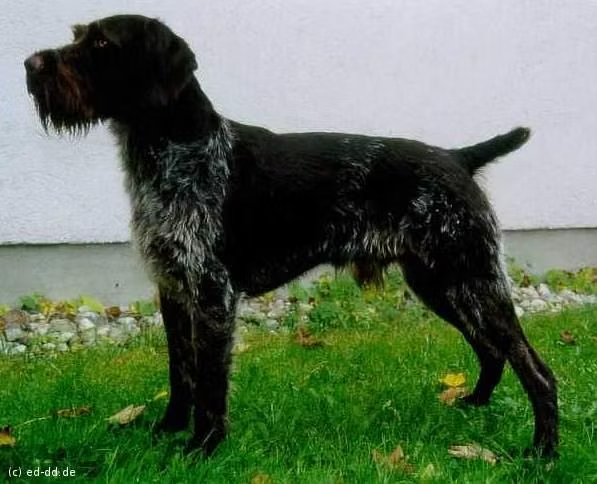
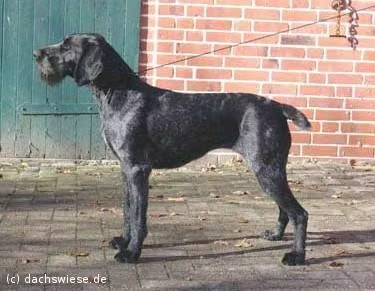
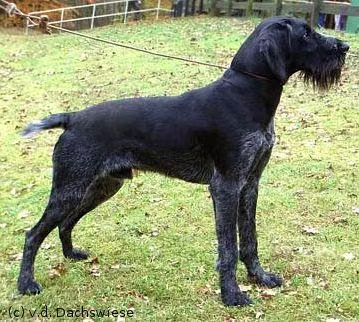
The German Wirehaired Pointer is a large, balanced gun dog standing roughly 56 to 67 cm at the shoulder, instantly recognisable by its harsh wiry coat, bushy eyebrows, and full beard.
The coat is what you see first: a flat, harsh outer layer and a dense undercoat, with heavy eyebrows and a full beard on the muzzle. These are not decorative. The outer coat sheds water and mud and protects the skin in heavy bush, while the undercoat provides insulation in cold conditions. The body itself is built for a long day rather than for impressive bulk. It is slightly longer than it is tall, with a deep chest, strong legs, and a frame designed for endurance. The tail is docked in countries where docking is still practised.
| Trait | Detail |
|---|---|
| Height | Males about 61 to 67 cm; females smaller, generally 56 cm and up at the shoulder |
| Weight | Roughly 23 to 32 kg, males heavier than females |
| Coat | Harsh, wiry, weather-resistant outer coat about 2.5 to 5 cm long over a dense undercoat; heavy eyebrows and beard on the face |
| Colours | Liver and white, often in spotted, ticked, or roan patterns; solid liver also occurs; the head is usually solid liver, sometimes with a white blaze |
| Eyes | Oval, brown, set under pronounced eyebrows, with an alert expression |
Coat and colours
The outer layer lies close to the skin and its harshness is the point: it resists water and mud where a soft coat would soak and drag. The undercoat thickens in cooler months and thins out in summer. Liver and white in ticked or roan patterns is the most common colouring, with the head typically solid liver and sometimes a white blaze on the face. Hand-stripping maintains the coat's texture and weather resistance. Clipping softens the outer coat over time and reduces how well it functions in the field. Black coats fall outside the breed standard.
Temperament and behaviour
The German Wirehaired Pointer is loyal and affectionate with its own household, naturally alert and reserved with strangers, and very high energy, with a working drive that requires daily outlets and early socialisation.
This dog's natural reserve around strangers is useful in a South African context. It is watchful and quick to notice when something is out of the ordinary, and it will raise the alarm. Sound socialisation ensures that wariness stays level-headed rather than tipping into fear or reactivity. The breed provides an alert, observant presence rather than physical deterrence, and its vocal nature makes it a reliable watchdog.
With its own family the dog is affectionate and steady, often forming a particularly close attachment to one person. With children it has grown up alongside, it tends to be patient, though its size and exuberance make it more suitable for older children than for toddlers. It can share a home with other dogs when socialised with them from an early age.
The bigger management challenge is energy. This dog was bred for sustained work and will find its own outlets if not adequately exercised: barking, digging, and chewing are common complaints from owners who underestimate the exercise requirement. It is intelligent and learns fast, but it can also be wilful, and inconsistent handling tends to produce a dog that does what it likes. The prey drive is strong; cats, birds, and small animals warrant careful introductions and ongoing supervision.
| Trait | Rating |
|---|---|
| Affection | 5 |
| Energy | 5 |
| Trainability | 4 |
| Vocalness | 3 |
| Shedding | 3 |
Grooming, exercise, and living needs
The German Wirehaired Pointer needs at least one to two hours of vigorous exercise daily, a securely fenced yard, and moderate coat maintenance including weekly brushing and periodic hand-stripping.
Exercise
This breed needs genuine physical output every day, not a short circuit of the block.
- Plan for at least one to two hours of vigorous activity: running, swimming, fetch in an open space, field work, or a long hike across the koppies.
- Add scent work, obedience training sessions, or working-dog sport to give the mind a workout alongside the body.
- Keep the dog on a lead or inside a secure enclosure whenever it is not in a controlled situation. The prey drive can override recall the moment something bolts.
- During Highveld and KwaZulu-Natal summer heat, schedule exercise early in the morning or in the late afternoon. Always have water available.
Grooming
The wire coat is less demanding than many long-coated breeds, but it does need regular attention.
- Brush once or twice a week to remove loose hair and dirt.
- Hand-strip or arrange professional stripping a couple of times a year to preserve the harsh texture; clipping softens the coat over time.
- Clean and dry the beard after meals and after water work to prevent matting and odour.
- Bathe only when necessary, since frequent bathing strips the natural oils that give the coat its water resistance.
- Trim nails monthly, brush teeth several times a week, and check ears after swimming or a day in the field.
Environment
A property with a large, securely fenced yard is the right setting for this breed. The coat handles cold and wet conditions well, so the Cape's winter rains are not a concern. Heat is more limiting: shade and fresh water are essential in summer, and this dog should not be confined in a space without ventilation during hot days.
One practical note for South African owners: load-shedding interrupts electric perimeter fencing, and this dog is athletic enough to scale a fence it is motivated to clear. During outages, keep an eye on the dog's access to the perimeter, or confine it indoors. Standard palisade or brick walls at adequate height are more reliable containment than electric fencing on its own.
The breed is not suited to long hours alone. It is a working companion and does best when it has people around and a job to do.
Feeding and nutrition
Feed the German Wirehaired Pointer a complete diet suited to a large, active dog, divided into two daily meals, and adjust quantities to the dog's workload and body condition.
Because of its deep chest, this breed has an elevated risk of bloat (gastric dilatation-volvulus). Splitting the daily ration into two meals and avoiding hard exercise immediately before or after feeding are standard precautions for deep-chested breeds. These steps reduce rather than eliminate the risk.
A complete, balanced food formulated for large, active dogs gives the German Wirehaired Pointer what it needs. Protein and fat support its working build and energy demands. Dogs in active hunting or sport seasons may need noticeably more calories than dogs in light work. Always match portions to the individual dog's age, body condition, and activity level, and keep fresh water available at all times, particularly after exercise.
| Life stage | Amount per day | Meals per day |
|---|---|---|
| Puppy (2 to 6 months) | Per product label for projected adult weight, spread across meals | 3 to 4 |
| Young dog (6 to 12 months) | Per label, reducing toward adult amount | 2 to 3 |
| Adult (1 to 7 years) | About 300 to 450 g of dry food; increase for hard-working dogs | 2 |
| Senior (7+ years) | Slightly reduced if activity drops; monitor body condition | 2 |
Treats and supplements
Treats should make up no more than about 10 percent of daily calories. Use small, low-calorie rewards during training to avoid adding unnecessary weight. Most dogs eating a complete commercial food do not need additional supplements. Speak to your vet before adding joint, skin, or omega-3 products, since requirements vary by individual and over-supplementing certain nutrients can cause harm.
Health and common conditions
The German Wirehaired Pointer is a generally robust breed with a 12 to 14 year lifespan, but South African owners must specifically guard against biliary (tick-borne babesiosis) and should also watch for hip dysplasia, ear infections, and bloat.
This is a hardy working breed and most dogs live 12 to 14 years with attentive care. Responsible breeders screen their stock for known inherited conditions, and asking for parent health clearances before buying a puppy lowers the risk of problems.
For South African owners, biliary is the most pressing day-to-day health concern. Biliary, caused by the parasite Babesia rossi and spread by the yellow dog tick (Haemaphysalis elliptica), can kill an unprotected dog within 24 to 48 hours of symptoms appearing. A dog that works in the veld, visits rural areas, or lives anywhere tick activity is high is at real risk. Year-round tick prevention using a vet-recommended product is not optional for this breed in South Africa. Owners should know the warning signs: sudden lethargy, pale or yellowish gums, dark-coloured urine, and loss of appetite. Any of those signs requires an emergency vet visit without delay.
| Condition | Signs | Note |
|---|---|---|
| Biliary (tick-borne babesiosis) | Sudden lethargy, pale or yellow gums, dark urine, loss of appetite | South Africa-specific risk; year-round tick prevention is essential; treat as a veterinary emergency |
| Hip dysplasia | Stiffness, limping, difficulty rising, reluctance to jump | Inherited joint condition; ask breeders for hip screening results on the parents |
| Elbow dysplasia | Front-leg lameness, particularly after exercise | Also screened in responsible breeding programmes |
| Eye conditions (cataracts, retinal disease) | Cloudiness, changes in vision, bumping into objects | Routine eye checks catch issues early |
| Ear infections | Head shaking, scratching at ears, discharge, odour | Pendulous ears combined with swimming and field work raise the risk; dry ears thoroughly after water |
| Bloat (gastric dilatation-volvulus) | Distended abdomen, repeated retching without result, restlessness, distress | Life-threatening emergency in deep-chested breeds; seek immediate veterinary care |
Preventive care
- Keep core vaccinations current and discuss lifestyle-specific vaccines with your vet.
- Use year-round tick prevention; adjust the product and frequency to your region. Tick pressure on the Highveld spikes sharply during summer thunderstorm season.
- Schedule annual vet check-ups, moving to twice-yearly visits for dogs aged seven and older.
- Keep the dog lean to protect joints and support a long active life.
- Brush teeth regularly and arrange professional dental scaling when needed to prevent periodontal disease.
- Clean and dry the ears after every swim or day in the field.
Trainability and training basics
The German Wirehaired Pointer learns quickly and works willingly with a consistent handler, but its independence and strong prey drive call for early socialisation and reward-based training from puppyhood.
This breed picks up new skills quickly and enjoys working alongside its person. The complication is its independence: a bored or inconsistently handled dog will make its own decisions, and a dog with a strong prey drive and unreliable recall is a frustrating thing to deal with in the field or on a walk. Harsh corrections tend to shut the dog down rather than produce improvement. Clear, consistent rules and reward-based training hold its attention and get better results over time.
Early socialisation matters particularly for this breed because of its natural reserve around strangers. A well-socialised dog stays alert and watchful without becoming reactive or fearful when meeting new people or encountering unfamiliar situations. Its prey drive is also something to address from puppyhood: without consistent work on recall and impulse control, the dog will follow its nose first and listen second.
Basics
- Begin socialisation in puppyhood: expose the pup to different people, dogs, vehicles, sounds, and surfaces.
- Teach core cues first: name response, sit, down, stay, and recall.
- Build a reliable recall early and practise it in varied locations with increasing distractions.
- Keep training sessions short (5 to 15 minutes) and end each one on a positive note.
- Work on impulse control from early on: "leave it" and "wait" are useful around livestock and small animals.
- As the dog matures, channel its drive into retrieving, scent work, tracking, or competitive dog sport.
- Proof each cue in several different settings before relying on it in a new or high-distraction environment.
Breeding and raising young
German Wirehaired Pointers reach sexual maturity in their first year but responsible breeding waits until around two years and after health screening; gestation is about 63 days and litters typically number 7 to 9 puppies.
Females reach sexual maturity between 6 and 12 months, but breeding at that age is not recommended. Responsible breeders wait until the dog is physically and mentally mature, generally around the second year, and has passed relevant health screenings for hips, elbows, and eyes. KUSA-affiliated breeders typically apply these standards, and buyers should ask for documented clearances before committing to a puppy.
Gestation lasts about 63 days from mating. Litters commonly run 7 to 9 puppies, though smaller and larger litters occur. Newborn pups are blind and deaf and depend entirely on the mother for warmth and milk. Eyes open at around 10 to 14 days. Weaning onto solid food begins near 3 to 4 weeks and is generally complete by 7 to 8 weeks. Gentle daily handling and steady exposure to household sights and sounds during the early weeks help pups develop into stable, confident adults. Puppies leave for new homes at 8 weeks or later.
The German Wirehaired Pointer is not a common breed in South Africa, so buyers should expect to research breeders carefully and may need to wait for a litter. Given the breed's working background, ethical breeders select on temperament, structure, and health results rather than colour or coat alone.
| Metric | Value |
|---|---|
| Sexual maturity | 6 to 12 months (breeding recommended from around 2 years) |
| Gestation | About 63 days |
| Average litter size | 7 to 9 puppies |
| Eyes open | About 10 to 14 days |
| Weaning | About 7 to 8 weeks |
| Go-home age | 8 weeks or later |
Registering your German Wirehaired Pointer and its chip in South Africa
No national chip law protects a German Wirehaired Pointer here; a free United Pet Club record does, for life, at no cost.
German Wirehaired Pointer registration and microchips in South Africa
South Africa has no single national law forcing microchips on dogs, though the SPCA chips as standard and rabies vaccination is required by law. What actually reunites a lost German Wirehaired Pointer with you is a record, and that part is free: a United Pet Club profile carries your details beside the dog's photo for as long as you have him. Registering your dog takes a few minutes, with no fee attached.
The chip is a number; the registry entry is the story behind it. Capture your German Wirehaired Pointer's 15-digit number in a free United Pet Club account and the story reads: this dog has a home. Every brand is accepted, updates never cost a cent, and the record stays searchable here and abroad. Microchip registration plus a free account does it.
How do I register my German Wirehaired Pointer in South Africa?
Create a free United Pet Club account, load your German Wirehaired Pointer's details and a photo, and save. The lifetime plan keeps the profile active at no cost for as long as you have him, chip or no chip.
How do I register my German Wirehaired Pointer's microchip?
Load the 15-digit chip number into your free account together with your address and cell number. Registration and every later update are free, and chips from any brand a South African vet implants are accepted.
Must a German Wirehaired Pointer be microchipped in South Africa?
No national law says so, though the SPCA chips as standard practice and many breeders and welfare groups insist on it. The registration behind the chip is the part that finds you, and with United Pet Club it costs nothing.
What does it cost to register a German Wirehaired Pointer?
Nothing at all. The free lifetime plan covers the profile, the chip record, and unlimited updates, with no annual renewal in sight.
Frequently asked questions
Common questions about the German Wirehaired Pointer in South Africa cover its size, biliary risk, temperament with families, coat care, lifespan, compatibility with other animals, and availability through KUSA breeders.
How big does a German Wirehaired Pointer get?
It is a large breed. Males stand about 61 to 67 cm at the shoulder; females are somewhat smaller. Most adults weigh between 23 and 32 kg.
Is biliary a serious risk for this breed in South Africa?
Yes, biliary is a serious and specific risk. Caused by Babesia rossi and spread by ticks, it can kill an unprotected dog within 24 to 48 hours. Any dog that works in the veld or lives where ticks are active needs year-round tick prevention. Know the signs: sudden lethargy, pale or yellow gums, and dark urine. Treat it as a veterinary emergency.
Is the German Wirehaired Pointer a good family dog?
It suits active families. The dog is devoted and patient with the people it knows, and generally does well with older children it has been raised alongside. Its size and energy make it less suitable for homes with toddlers. It needs daily vigorous exercise and people around for much of the day.
Is the coat difficult to maintain?
Not particularly. Weekly brushing and hand-stripping a couple of times a year are the main requirements. The beard needs wiping down after meals and water work to prevent matting and smell. Clipping instead of stripping softens the coat over time and reduces its weather resistance.
How long does the German Wirehaired Pointer live?
Most live 12 to 14 years with good nutrition, regular exercise, routine veterinary care, and consistent tick prevention.
Do they get along with other animals?
They can live with other dogs when socialised with them from puppyhood. The strong prey drive means cats, birds, and small animals are likely to be chased. Careful introductions and ongoing supervision are needed in mixed-pet households.
Is the German Wirehaired Pointer registered with KUSA, and is it easy to find?
Yes, the breed is registered with the Kennel Union of Southern Africa (KUSA). It is not a common breed locally, so expect to research breeders carefully and be prepared for a waiting period. Ask for KUSA registration papers and documented health clearances on both parents when you inquire.
From the community
Ask about the German Wirehaired PointerNo questions about the German Wirehaired Pointer yet. Be the first to ask.
Browse Dog breeds