
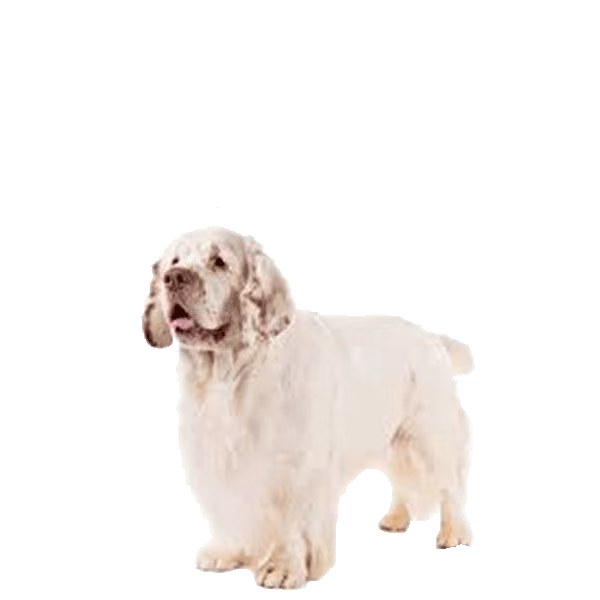
Clumber Spaniel
The Clumber Spaniel is a dignified, heavy-boned English gun dog, known for its mellow, gentle nature and devoted companionship.
- Size
- Medium
- Lifespan
- 10–12 years
- Origin
- England
- Temperament
- Gentle
- Standard colors
- White, Orange and Lemon
Characteristics
Coat and grooming
How the Clumber Spaniel coat is built, and what that means when you groom it.
- Coat layers
- Double coat
- Coat texture
- Silky
- Coat length
- Medium
- Shedding
- Heavy shedding
Grooming guidance
Critical: A Clumber Spaniel should not be shaved.
The undercoat keeps heat out as well as in, and the outer coat shields the skin from sun and insect bites. Clipping the whole coat off removes both. It often grows back patchy, soft or a different colour, and in some animals the guard hairs never return properly. Brush the undercoat out instead of cutting it off.
Caution: A Clumber Spaniel coat mats easily.
Fine or long hair tangles at the base of the coat, out of sight, where the mats tighten and pull on the skin. Brushing has to reach right down to the roots in sections, not just skim the surface.
Clumber Spaniel colors and patterns
What each club's breed standard says about every Clumber Spaniel color and pattern. Point at a ruling to see the club's own wording.
Breed standards describe the Clumber Spaniel in White, Orange and Lemon. Standard patterns: Solid and Bicolour.
| Color or pattern | FCI | AKC | UKC | KC | KUSA |
|---|---|---|---|---|---|
| White | Standard (“Plain white body preferred”) | Standard (“White”) | Standard (“The primary body color is white”) | Standard (“Plain white body”) | Standard (“Plain white body preferred”) |
| Orange | Standard (“orange permissible”) | Standard (“Orange Markings”) | Standard (“lemon or orange markings”) | Standard (“Orange markings permissible”) | Standard (“orange permissible”) |
| Lemon | Standard (“with lemon markings”) | Standard (“Lemon Markings”) | Standard (“lemon or orange markings”) | Standard (“with or without lemon markings”) | Standard (“with lemon markings”) |
| Patterns | |||||
| Solid | No ruling | Standard (“White”) | No ruling | Standard (“Plain white body with or without lemon markings”) | No ruling |
| Bicolour | Standard (“Plain white body preferred, with lemon markings”) | Standard (“primarily a white dog with lemon color or orange color markings”) | Standard (“The primary body color is white, accompanied by lemon or orange markings”) | Standard (“Lemon & White”) | Standard (“Plain white body preferred, with lemon markings”) |

%22%3E%3Cpath%20d%3D%22M0%2023L9.5%2020.4L14%2025.4L19%2029.6Q21%2035%2023.5%2035.5Q36%2033%2050%2036L56%2040V64H0Z%22%20fill%3D%22%23F5F5F0%22%2F%3E%3C%2Fg%3E%3Cuse%20href%3D%22%23s%22%20fill%3D%22none%22%20stroke%3D%22%233B2A20%22%20stroke-opacity%3D%220.6%22%20stroke-width%3D%221%22%20stroke-linejoin%3D%22round%22%2F%3E%3Cellipse%20cx%3D%223.2%22%20cy%3D%2221.7%22%20rx%3D%221.3%22%20ry%3D%221.2%22%20fill%3D%22%231C1C1C%22%2F%3E%3Ccircle%20cx%3D%2210.8%22%20cy%3D%2219.3%22%20r%3D%221.1%22%20fill%3D%22%231C1C1C%22%2F%3E%3C%2Fsvg%3E)
| Color or pattern | FCI | AKC | UKC | KC | KUSA |
|---|---|---|---|---|---|
| Amber | Standard (“dark amber”) | Standard (“dark amber in color”) | Standard (“dark amber in color”) | Standard (“Clean, dark, amber”) | Standard (“dark amber”) |
| Light brown | Fault (“Full light eyes highly undesirable”) | No ruling | No ruling | Fault (“Full light eyes highly undesirable”) | Fault (“Full light eyes highly undesirable”) |
| Color or pattern | AKC | UKC |
|---|---|---|
| Liver | Standard (“colored shades of brown, which include beige, rose and cherry”) | Standard (“Acceptable colors are shades of brown, to include beige, rose and cherry”) |
What the rulings mean
- Standard
- Described by the club's breed standard.
- Fault
- Named by the club's breed standard as a fault: the animal can be shown but is penalised.
Color changes
How a Clumber Spaniel's colors can change over its life.
Whitechanges toRoan
Coat · With age · from 2 weeks
%22%3E%3Cg%20fill%3D%22none%22%20stroke%3D%22%23F5F5F0%22%20stroke-width%3D%221.15%22%20stroke-linecap%3D%22round%22%20stroke-linejoin%3D%22round%22%3E%3Cpath%20d%3D%22M28.6%2025h.1M51.3%2028.8h.1M34.7%2024.3h.1M34.2%2041.6h.1M51%2044.2h.1M55.9%2024.7h.1M27.5%2026.3h.1M18.5%2028.6h.1M25.2%2028.9h.1M24.2%2019.3h.1M20.6%2017.6h.1M34.1%2030.6h.1M57.3%2023.3h.1M23.5%2030.7h.1M26.5%2023.1h.1M40%2031.5h.1M51.7%2038.6h.1M20.2%2022.1h.1M40.4%2037.8h.1M35%2043.1h.1M20.6%2031.7h.1M27.8%2031.9h.1M17.2%2021.1h.1M38.1%2037.7h.1M25.3%2040.5h.1M32%2029.3h.1M41.6%2039.5h.1M23.6%2024h.1M26.4%2018.6h.1M30.3%2031.9h.1M31.2%2035.2h.1M36.5%2043.7h.1M35.2%2026.3h.1M55.6%2019.1h.1M22.4%2036.8h.1M39.2%2020h.1M49.5%2039.1h.1M33.6%2033.5h.1M36.4%2032.4h.1M56.3%2042.4h.1M54.8%2031.2h.1M36.9%2023.2h.1M52.7%2019.1h.1M21.5%2033.8h.1M48.6%2028h.1M36.6%2017.5h.1M45.6%2031.3h.1M37.9%2030.5h.1M17%2031.8h.1M21.1%2043.1h.1M55.7%2021.1h.1M30.8%2041.9h.1M57.4%2038.4h.1M54.8%2026.9h.1M29.1%2017.5h.1M24.3%2037.7h.1M26%2032h.1M39.3%2022.8h.1M53.5%2029h.1M53.3%2023.3h.1M20%2038.4h.1M28.3%2044.7h.1M28.6%2039.8h.1M51.9%2041.1h.1M52.3%2033.7h.1M19.6%2042.2h.1M19%2033h.1M47.8%2021.7h.1M45.7%2024.8h.1M24.6%2035.5h.1M29.8%2036.8h.1M50.7%2032h.1M29.5%2043.5h.1M28.2%2041.5h.1M47.4%2034.8h.1M25.4%2033.7h.1M50.2%2041.2h.1M27.7%2029.5h.1M21.5%2024.8h.1M55.5%2017.5h.1M41.2%2044.3h.1M39.2%2018.4h.1M41.1%2042.5h.1M54.7%2035.3h.1M42.8%2034.5h.1M30.1%2023h.1M42.6%2025.1h.1M32.9%2024.4h.1M42.4%2032.4h.1M49.7%2022.2h.1M49.1%2043.1h.1M38%2035.2h.1M47.7%2043.8h.1M43.1%2022.4h.1M22.4%2040.4h.1M44.4%2019.8h.1M53.3%2040.1h.1M20.7%2029.3h.1M55.6%2043.9h.1M17.6%2039.2h.1M41.7%2028.9h.1M44.1%2036.3h.1M24.3%2043.6h.1M26.4%2038.1h.1M30.3%2029.2h.1M31.5%2030.8h.1M32.1%2023h.1M18.3%2040.9h.1M48%2033.4h.1M36.4%2038.7h.1M31.9%2020.8h.1M32.6%2026.2h.1M22%2031.2h.1M53.4%2021.7h.1M41.9%2017.7h.1M53.3%2037.3h.1M47.7%2040.3h.1M54.4%2033.7h.1M33.6%2037.5h.1M25.3%2017.2h.1M37.6%2019.7h.1M31.6%2019h.1M29.2%2019.6h.1M50.7%2027.3h.1M22%2022.1h.1M31%2037.8h.1M56.5%2026.6h.1M34.7%2039.5h.1M56.5%2040.8h.1M47.6%2038h.1M48.6%2026.1h.1M49.7%2034.2h.1M45.4%2027.4h.1M22.6%2038.9h.1M56.5%2035.3h.1M35.1%2021h.1M41.9%2020.1h.1M37.6%2040h.1M32.6%2044.4h.1M37.9%2025.2h.1M26.6%2043h.1M18.9%2036.7h.1M47.2%2028.9h.1M30.5%2026.2h.1M17.4%2027.3h.1M47.1%2017.2h.1M22.3%2044.3h.1M32.5%2042.4h.1M23.6%2025.7h.1M31.4%2024.9h.1%22%2F%3E%3Cpath%20d%3D%22M26%2020.9h.1M41.2%2023.8h.1M39.9%2026.4h.1M28.5%2033.4h.1M42.8%2043.8h.1M17.6%2034.3h.1M34%2017.1h.1M31.2%2017.2h.1M46.5%2036.1h.1M25.1%2022.1h.1M50.3%2023.7h.1M20.2%2026.6h.1M20.8%2020.4h.1M50.9%2017.3h.1M49.5%2020.2h.1M52.9%2044.1h.1M23.9%2017.8h.1M43.2%2028.1h.1M57.6%2030h.1M52%2025.6h.1M19.2%2019.1h.1M19.5%2024.4h.1M32.8%2040.1h.1M36.1%2027.7h.1M39.6%2029.5h.1M38.4%2041.5h.1M47.9%2019.4h.1M49.1%2031.7h.1M55.9%2036.9h.1M29.2%2027.2h.1M46%2043.5h.1M44.6%2028.8h.1M47.5%2031.5h.1M22.8%2020h.1M27.6%2017.1h.1M43.1%2018.6h.1M54.3%2020h.1M57.2%2033.8h.1M44.5%2043.8h.1M27.1%2035.5h.1M45.3%2041.8h.1M56.7%2028.8h.1M36.7%2021.4h.1M43.3%2042.3h.1M17.3%2022.9h.1M32.7%2035.5h.1M30.5%2039.8h.1M29.1%2021.2h.1M34.5%2018.8h.1M25.8%2027h.1%22%2F%3E%3C%2Fg%3E%3Cpath%20d%3D%22M56.3%2038.4l0%201.2M40%2027.2l-0.3%201.3M32.6%2043.6l-0.4%201.5M29%2023.3l0.8%201.5M55.1%2044l0.4%201.1M47.5%2022.5l-0.2%201.6M42.9%2038.6l0.7%201.2M35.2%2041.8l-0.5%201.7M26.9%2040l-0.1%201.2M41%2042.8l-0.1%201.6M18.4%2021.2l0.7%201.3M49.4%2019.3l-0.5%201.4M50.1%2041.7l0%201.8M28.2%2041.8l-0.6%201.2M55.5%2027.1l0.2%201.2M44.7%2019.3l0.5%201.7M48.6%2020.5l-0.8%201.4M43.7%2039.6l0.3%201.1M22.1%2033.8l-0.6%201.6M50.1%2038.1l-0.5%201.3M51.8%2044.1l-0.1%201.8M39%2017.5l0%201.4M30.2%2026.7l0.2%201.4M25.8%2031.2l0.2%201.6M29.6%2043.5l0.1%201M43.7%2018.3l0.1%201.5M29.6%2018.2l0.3%201.6M24.4%2017.6l0.3%201.1M22%2028.2l-0.6%201.6M25.9%2043.3l-0.3%201.4M22.2%2024.3l0.3%201.3M47.3%2029.2l-0.2%201.4M21.8%2033.2l0.5%200.9M32.9%2037l0.4%201M40%2029.9l0.8%201.4M17.4%2038.3l0.2%201.3M31%2039.2l0%201.2M37.3%2033.7l0.3%201.5M48.1%2040.5l0%201.6M33.9%2031.2l0.1%201.2M29.8%2035.2l-0.4%201M25.1%2037.3l-0.2%201.5M30.2%2039.8l0.5%201M44.6%2034.8l0.4%200.9M55.3%2034.2l0%201.7M50.6%2017.9l0.4%201M30.2%2034.9l-0.4%201.4M19.5%2035.7l-0.5%201.7M40.7%2028.7l0.8%201.4M23.3%2029l-0.4%201.4M17%2040.5l-0.2%201M48.4%2023.2l-0.3%201M37.3%2025.1l-0.4%201.3M23%2021.4l-0.4%201.3M20.4%2017.2l-0.1%201.3M42.3%2020.4l0.6%201.4M41%2031.8l0.6%201.2M45.4%2034.3l-0.1%201.2M32.5%2018l0%201.3M46.2%2021.6l0.1%201.4M30.5%2022.3l0.5%201.1M58%2044.6l0.3%201.5M57.1%2033.9l0.8%201.4M18.3%2042.6l0.3%201M40.5%2035.1l-0.6%201.4M38.8%2044.3l-0.3%201.1%22%20fill%3D%22none%22%20stroke%3D%22%23F5F5F0%22%20stroke-width%3D%220.8%22%20stroke-linecap%3D%22round%22%20stroke-linejoin%3D%22round%22%2F%3E%3C%2Fg%3E%3Cuse%20href%3D%22%23s%22%20fill%3D%22none%22%20stroke%3D%22%233B2A20%22%20stroke-opacity%3D%220.6%22%20stroke-width%3D%221%22%20stroke-linejoin%3D%22round%22%2F%3E%3Crect%20x%3D%2220%22%20y%3D%2258%22%20width%3D%223.6%22%20height%3D%222%22%20fill%3D%22%234A4038%22%2F%3E%3Crect%20x%3D%2226%22%20y%3D%2258%22%20width%3D%223.6%22%20height%3D%222%22%20fill%3D%22%234A4038%22%2F%3E%3Crect%20x%3D%2244%22%20y%3D%2258%22%20width%3D%223.6%22%20height%3D%222%22%20fill%3D%22%234A4038%22%2F%3E%3Crect%20x%3D%2250%22%20y%3D%2258%22%20width%3D%223.6%22%20height%3D%222%22%20fill%3D%22%234A4038%22%2F%3E%3Ccircle%20cx%3D%229.5%22%20cy%3D%2211.5%22%20r%3D%221.1%22%20fill%3D%22%231C1C1C%22%2F%3E%3C%2Fsvg%3E)
Sources
Each ruling comes from the club's published breed standard or color list.
Meet some of our Clumber Spaniel
A few of the Clumber Spaniel profiles members have added to United Pet Club.


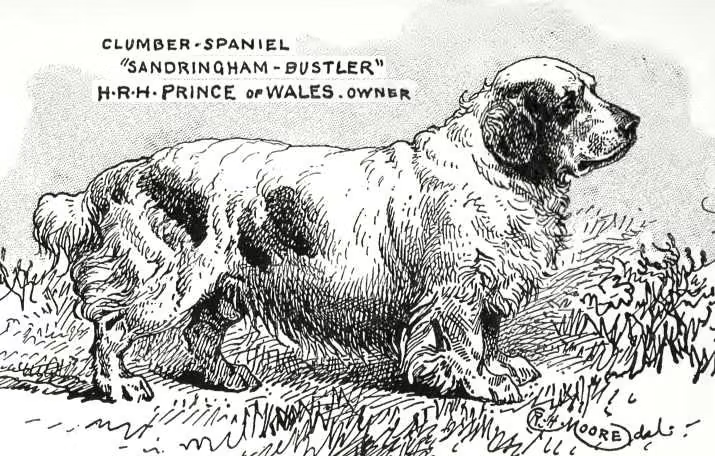

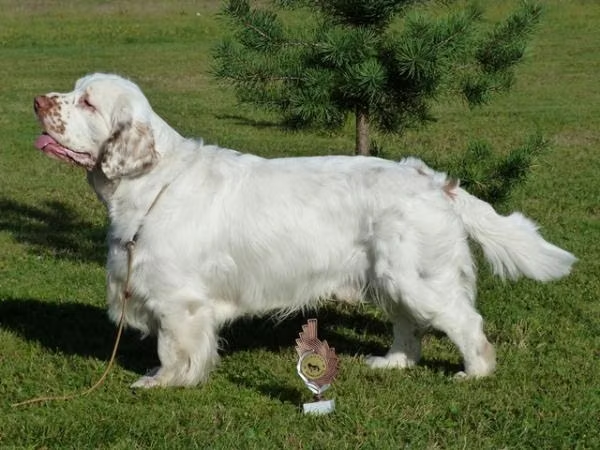

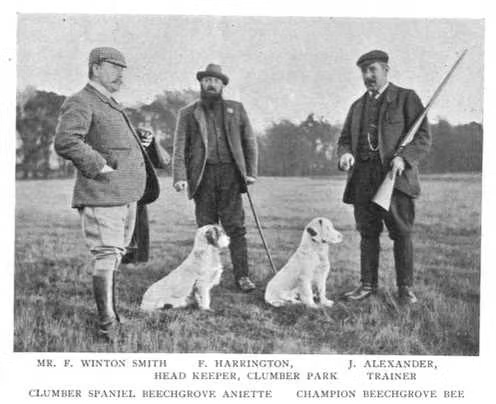

About the Clumber Spaniel
The Clumber Spaniel is a medium-sized, heavy-boned English gun dog with a calm, affectionate temperament and a lifespan of 10 to 12 years.
The Clumber Spaniel is a long, low, heavy-boned spaniel developed in England as a gun dog. It is the largest of the spaniel breeds by build, though it stands lower to the ground than the field and springer types. The breed is known for a steady, unhurried manner both in the field and at home.
Clumbers were bred to work close to the gun, pushing through dense cover at a slow, deliberate pace. That working style shapes the modern dog, which tends to be methodical rather than fast and is content with a moderate level of activity.
At home the Clumber is quiet and people-focused. It forms strong attachments to its household and is generally gentle with children and other animals. The breed sheds and drools, and the heavy coat needs routine care.
| Attribute | Detail |
|---|---|
| Origin | England |
| Size | Medium (heavy-boned, low to the ground) |
| Lifespan | 10 to 12 years |
| Group/role | Sporting group, gun dog (flushing spaniel) |
| Good with | Children, other dogs and household pets when socialised |
Who the breed suits
The Clumber Spaniel suits owners who want a calm, affectionate companion and can accept regular grooming, shedding and some drool. It fits households that offer steady daily walks rather than high-intensity exercise. People who want a quiet indoor companion and have time for coat care and weight management will find the breed a good match.
History and origin
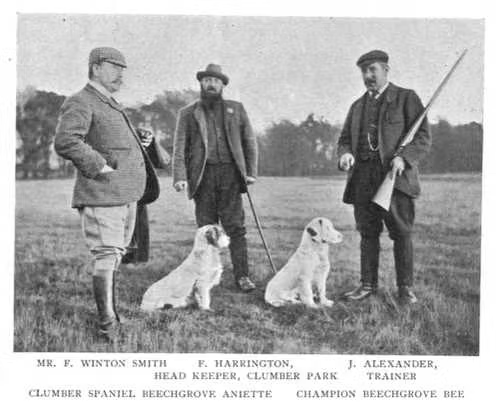
The Clumber Spaniel takes its name from Clumber Park in Nottinghamshire, England, and was developed as a gun dog on English aristocratic estates in the 18th and 19th centuries.
The breed is named after Clumber Park, the Nottinghamshire estate of the Dukes of Newcastle. The exact origins are not fully documented, but the breed took shape in England in the late 18th and early 19th centuries among large country estates that kept dogs for shooting game.
A common account credits the Duke of Newcastle's gamekeeper, William Mansell, with developing and refining the breed at Clumber Park. The dogs were used to flush game from heavy cover and to work close to the gun in a slow, quiet style suited to driven shoots and rough ground.
The Clumber was among the breeds associated with the founding of organised dog showing in Britain. It was recognised by The Kennel Club in England in the 19th century, and the breed was exhibited at early conformation shows. It was also one of the first breeds registered when formal records were established in North America.
The Clumber has remained an uncommon breed. Its numbers stayed low through the 20th century, and it is still considered rare compared with the more popular spaniels. Dedicated breed clubs in England and other countries maintain the standard and support breeding programmes today.
Appearance and breed standard
The Clumber Spaniel is a long, low, heavily built dog with a large head, a mostly white coat marked with lemon or orange, and a deliberate, rolling gait.
The Clumber Spaniel has a substantial, rectangular outline. The body is long and the legs are short and thick, giving the dog a low centre of gravity. The head is large and heavy with a broad muzzle, a pronounced brow and loose facial skin. The eyes are deep set and the ears are large and triangular, set low and hanging close to the head.
The overall impression is of strength and weight rather than speed. The breed moves with a steady, rolling stride that reflects its long body and short legs.
| Trait | Detail |
|---|---|
| Height | Roughly 17 to 20 inches (43 to 51 cm) at the shoulder |
| Weight | About 55 to 85 pounds (25 to 39 kg), males heavier than females |
| Coat | Dense, straight, flat coat with feathering on the legs, chest and ears |
| Colours | Predominantly white with lemon or orange markings |
| Eyes | Deep set, amber to dark, with some visible haw |
Coat and colours
The coat is mainly white, which made the dog easy to see when working in cover. Markings are limited to lemon (pale tan) or orange and usually appear on the head and around the base of the tail, with freckling sometimes present on the muzzle and legs. The coat is weather resistant and needs regular brushing to manage shedding and prevent matting in the feathered areas.
Temperament and personality
The Clumber Spaniel is affectionate, gentle and calm, devoted to its family, reserved with strangers, and generally easygoing with other pets.
The Clumber Spaniel is a quiet, good-natured dog that bonds closely with its household. It is affectionate and likes to stay near its people, often following family members around the home. The breed is calm indoors and is not prone to excessive activity or restlessness.
With strangers the Clumber tends to be reserved rather than nervous or aggressive. It often warms up slowly and may simply watch newcomers before approaching. The breed is not a strong watchdog and does not bark a great deal.
Clumbers are usually gentle with children and tolerant of other dogs and household pets, especially when raised with them. Their easygoing nature makes them well suited to a settled home. They can be stubborn at times and respond best to patient, consistent handling. Because they are so attached to their people, they do not cope well when left alone for long periods.
| Trait | Rating |
|---|---|
| Affection | 5 |
| Energy | 2 |
| Trainability | 3 |
| Vocalness | 2 |
| Shedding | 4 |
Care and grooming
The Clumber Spaniel needs regular brushing, moderate daily exercise and weight management, and is best kept as an indoor companion close to its family.
Grooming
- Brush the coat two or three times a week to remove loose hair and prevent mats in the feathering.
- Check and clean the long, low-set ears regularly to reduce the risk of ear infections.
- Wipe facial folds and around the mouth, as the breed tends to drool.
- Trim feathering on the legs and feet as needed and keep nails short.
- Bath occasionally when the coat is dirty; the white coat shows soiling readily.
Exercise
- Provide a moderate walk once or twice a day; the breed has lower energy than most spaniels.
- Allow time for sniffing and exploring, which suits the dog's working instincts.
- Avoid hard exercise in young puppies to protect developing joints.
- Limit strenuous activity in hot weather, since the heavy build makes the breed prone to overheating.
Environment
The Clumber Spaniel is an indoor dog that wants to be with its family. It adapts to houses and flats as long as it gets daily walks, but it should not be left alone for long stretches. The breed prefers cooler conditions and needs shade and water in warm weather. Its short legs and long body mean stairs and slippery floors should be managed to reduce strain on the back and joints.
Nutrition and feeding
Feed the Clumber Spaniel a complete, balanced dog food in measured meals, watch portions closely because the breed gains weight easily, and avoid foods toxic to dogs.
The Clumber Spaniel does well on a complete and balanced commercial dog food appropriate for its age and activity level. Because the breed is prone to weight gain, portions should be measured and meals kept to a schedule rather than left out for free feeding. Daily amounts depend on the dog's weight, age and how active it is, so the figures below are general guidance. Fresh water should always be available.
| Life stage | Amount per day | Meals per day |
|---|---|---|
| Puppy (2 to 6 months) | Per food label for growth, divided across meals | 3 to 4 |
| Adolescent (6 to 12 months) | About 2 to 3 cups, adjusted to growth | 2 to 3 |
| Adult | About 2 to 3 cups, based on weight and activity | 2 |
| Senior | Adjusted slightly lower to prevent weight gain | 2 |
Treats and supplements
Keep treats to no more than about 10 percent of daily calories and subtract them from meal portions to avoid overfeeding. A balanced complete diet usually meets a healthy dog's needs without extra supplements. Joint supplements or specific additions should be used only on the advice of a veterinarian, particularly given the breed's heavy build and joint sensitivity.
Health and common conditions
The Clumber Spaniel typically lives 10 to 12 years and is prone to hip and joint issues, eye and ear problems, and weight gain, so preventive care and a lean body weight matter.
The Clumber Spaniel generally lives 10 to 12 years. The breed's long body and heavy bone make it more prone to joint and back problems than lighter dogs, and its build also makes weight control important. Responsible breeders screen for inherited conditions, and buyers should ask to see health testing on the parents.
| Condition | Signs | Note |
|---|---|---|
| Hip dysplasia | Stiffness, limping, reluctance to rise or climb stairs | Joint malformation; managed with weight control and veterinary care |
| Elbow dysplasia | Front-leg lameness, especially after exercise | Screened by breeders through joint evaluation |
| Ear infections | Head shaking, odour, scratching at the ears | The long, low ears trap moisture; regular cleaning helps |
| Eye problems | Redness, discharge, cloudiness, rubbing at the eyes | Includes entropion and ectropion linked to loose lids |
| Obesity | Excess weight, low stamina, difficulty feeling the ribs | Adds strain to the back and joints; manage diet and exercise |
Preventive care
- Keep up with annual veterinary exams and recommended vaccinations.
- Maintain a lean body weight to protect the back and joints.
- Clean and check the ears regularly to prevent infections.
- Brush teeth and schedule dental care to limit gum disease.
- Stay current on parasite prevention for fleas, ticks and worms.
Training and socialisation
The Clumber Spaniel is intelligent but can be stubborn, so it trains best with patient, consistent, reward-based methods and early socialisation.
The Clumber Spaniel is a thinking dog that learns well but can be independent and slow to comply when it sees no reason to. It does not respond to harsh handling. Short, consistent sessions with clear rewards work better than repetition or pressure. The breed's strong food motivation can be used to keep training sessions productive, with care taken not to overfeed.
Basics
- Start socialisation early, introducing the puppy to people, other dogs and new places in a calm, positive way.
- Teach core cues such as sit, stay, come and walking on a loose lead.
- Keep sessions short, five to ten minutes, and end on a success.
- Reward correct behaviour immediately with a small treat or praise.
- Practise the same cues in different settings so the dog generalises them.
- Be patient with the breed's stubborn streak and stay consistent across the household.
Breeding and raising young
Clumber Spaniels reach sexual maturity around 12 months, carry litters for about 63 days, and produce litters that average roughly three to seven puppies.
Female Clumber Spaniels typically reach sexual maturity between about 6 and 12 months of age, but responsible breeders wait until the female is physically mature and has passed health screening before breeding, often around two years. Mating is timed to the female's heat cycle. Gestation lasts about 63 days from conception.
Litter size varies, with an average of roughly three to seven puppies. Puppies are born without sight or hearing and depend fully on the mother in the early weeks. Weaning usually begins around three to four weeks, and puppies stay with the mother and littermates until at least eight weeks to support healthy social development. Because the breed is uncommon, planned litters from health-tested parents may involve waiting lists.
Breeding should be left to experienced, responsible breeders who screen for hip, elbow and eye conditions and who follow the breed standard.
| Metric | Value |
|---|---|
| Sexual maturity | About 6 to 12 months |
| Recommended first breeding | Around 2 years, after health testing |
| Gestation | About 63 days |
| Average litter size | Roughly 3 to 7 puppies |
| Weaning age | About 3 to 4 weeks, begins gradually |
| Leave for new home | 8 weeks or later |
Registering your Clumber Spaniel and its chip in South Africa
No national chip law protects a Clumber Spaniel here; a free United Pet Club record does, for life, at no cost.
Clumber Spaniel registration and microchips in South Africa
South Africa has no single national law forcing microchips on dogs, though the SPCA chips as standard and rabies vaccination is required by law. What actually reunites a lost Clumber Spaniel with you is a record, and that part is free: a United Pet Club profile carries your details beside the dog's photo for as long as you have him. Registering your dog takes a few minutes, with no fee attached.
A chipped Clumber Spaniel still needs the number loaded into a registry, because the vet's job ends with the implant. Register the microchip on the free lifetime plan: any brand a local vet uses qualifies, updates stay free when you relocate between provinces, and the record answers the lookups SPCA branches run daily. Create your free account and settle both records today.
How do I register my Clumber Spaniel in South Africa?
Create a free United Pet Club account, load your Clumber Spaniel's details and a photo, and save. The lifetime plan keeps the profile active at no cost for as long as you have him, chip or no chip.
How do I register my Clumber Spaniel's microchip?
Load the 15-digit chip number into your free account together with your address and cell number. Registration and every later update are free, and chips from any brand a South African vet implants are accepted.
Must a Clumber Spaniel be microchipped in South Africa?
No national law says so, though the SPCA chips as standard practice and many breeders and welfare groups insist on it. The registration behind the chip is the part that finds you, and with United Pet Club it costs nothing.
What does it cost to register a Clumber Spaniel?
Nothing at all. The free lifetime plan covers the profile, the chip record, and unlimited updates, with no annual renewal in sight.
Frequently asked questions
Common questions about the Clumber Spaniel cover its size, temperament, grooming needs, lifespan, suitability for families, and how easy it is to find.
How big does a Clumber Spaniel get?
The Clumber is a medium-sized but heavy-boned breed. Most stand about 17 to 20 inches at the shoulder and weigh roughly 55 to 85 pounds, with males larger than females. The long body and short legs make the dog heavier than it looks for its height.
Are Clumber Spaniels good family dogs?
Yes. The breed is affectionate, gentle and calm, and it is generally good with children and other pets when socialised. It bonds closely with its family and prefers company, so it suits households where someone is home for much of the day.
Are Clumber Spaniels hard to care for?
They are not difficult, but they do need routine grooming. Expect to brush the coat several times a week, clean the long ears regularly, manage shedding and wipe drool. Keeping the dog lean is important because the breed gains weight easily.
How long do Clumber Spaniels live?
The typical lifespan is 10 to 12 years. Regular veterinary care, a healthy weight and attention to the breed's joint and ear health support a full life.
Do Clumber Spaniels shed and drool a lot?
Yes to both. The dense coat sheds year round, more heavily at times, and the breed drools, especially around meals. Owners who want a low-shedding, dry-mouthed dog may find this breed challenging.
How much exercise does a Clumber Spaniel need?
Moderate exercise suits the breed. One or two walks a day with time to sniff and explore is usually enough. The Clumber is calmer than most spaniels and is prone to overheating, so hard exercise in hot weather should be avoided.
Are Clumber Spaniels easy to find?
No. The Clumber is an uncommon breed, and litters from health-tested parents are limited. Buyers often join a waiting list through a breed club or registered breeder rather than finding puppies readily available.
From the community
Ask about the Clumber SpanielNo questions about the Clumber Spaniel yet. Be the first to ask.
Browse Dog breeds