

Chinese Crested
The Chinese Crested is an affectionate, playful toy breed known for its elegant looks, devotion, and deep bond with its family.
- Size
- Toy
- Lifespan
- 13–18 years
- Origin
- China
- Temperament
- Affectionate
- Standard colors
- Black, White and Blue and 10 more
Characteristics
Coat and grooming
How the Chinese Crested coat is built, and what that means when you groom it.
- Coat layers
- Hairless
- Coat length
- Short
- Shedding
- Low shedding
Grooming guidance
Caution: A Chinese Crested needs protection from the sun.
Bare skin burns quickly and offers no insulation against cold either. Time outdoors needs shade, a coat in cool weather, or a sunscreen a vet has approved for animals.
Chinese Crested colors and patterns
What each club's breed standard says about every Chinese Crested color and pattern. Point at a ruling to see the club's own wording.
Breed standards describe the Chinese Crested in Black, White, Blue, Silver, Chocolate, Tan, Mahogany, Red, Gold, Palomino, Cream, Fawn and Apricot. Standard patterns: Solid, Bicolour, Tricolour, Sable, Spotted and Tan point.
| Color or pattern | FCI | AKC | UKC | KC | KUSA |
|---|---|---|---|---|---|
| Black | Standard (“Any colour or combination of colours”) | Standard (“Black”) | Standard (“Any color, or combination of colors, is acceptable”) | Standard (“Black”) | Standard (“Any colour or combination of colours”) |
| White | Standard (“Any colour or combination of colours”) | Standard (“White”) | Standard (“Any color, or combination of colors, is acceptable”) | Standard (“White”) | Standard (“Any colour or combination of colours”) |
| Blue | Standard (“Any colour or combination of colours”) | Standard (“Blue”) | Standard (“Any color, or combination of colors, is acceptable”) | Standard (“Blue”) | Standard (“Any colour or combination of colours”) |
| Silver | Standard (“Any colour or combination of colours”) | Standard (“Silver”) | Standard (“Any color, or combination of colors, is acceptable”) | Standard (“Any colour or combination of colours”) | Standard (“Any colour or combination of colours”) |
| Chocolate | Standard (“Any colour or combination of colours”) | Standard (“Chocolate”) | Standard (“Any color, or combination of colors, is acceptable”) | Standard (“Brown”) | Standard (“Any colour or combination of colours”) |
| Tan | Standard (“Any colour or combination of colours”) | Standard (“Black White & Tan”) | Standard (“Any color, or combination of colors, is acceptable”) | Standard (“Tricolour”) | Standard (“Any colour or combination of colours”) |
| Mahogany | Standard (“Any colour or combination of colours”) | Standard (“Any color or combination of colors”) | Standard (“Any color, or combination of colors, is acceptable”) | Standard (“Mahogany”) | Standard (“Any colour or combination of colours”) |
| Red | Standard (“Any colour or combination of colours”) | Standard (“Red”) | Standard (“Any color, or combination of colors, is acceptable”) | Standard (“Red & White”) | Standard (“Any colour or combination of colours”) |
| Gold | Standard (“Any colour or combination of colours”) | Standard (“Any color or combination of colors”) | Standard (“Any color, or combination of colors, is acceptable”) | Standard (“Gold”) | Standard (“Any colour or combination of colours”) |
| Palomino | Standard (“Any colour or combination of colours”) | Standard (“Palomino”) | Standard (“Any color, or combination of colors, is acceptable”) | Standard (“Any colour or combination of colours”) | Standard (“Any colour or combination of colours”) |
| Cream | Standard (“Any colour or combination of colours”) | Standard (“Cream”) | Standard (“Any color, or combination of colors, is acceptable”) | Standard (“Cream”) | Standard (“Any colour or combination of colours”) |
| Fawn | Standard (“Any colour or combination of colours”) | Standard (“Any color or combination of colors”) | Standard (“Any color, or combination of colors, is acceptable”) | Standard (“Fawn & White”) | Standard (“Any colour or combination of colours”) |
| Apricot | Standard (“Any colour or combination of colours”) | Standard (“Apricot”) | Standard (“Any color, or combination of colors, is acceptable”) | Standard (“Any colour or combination of colours”) | Standard (“Any colour or combination of colours”) |
| Albino | No ruling | No ruling | Disqualifying (“Albinism”) | No ruling | No ruling |
| Patterns | |||||
| Solid | Standard (“Any colour or combination of colours”) | Standard (“Any color or combination of colors”) | Standard (“Any color, or combination of colors, is acceptable”) | Standard (“Any colour or combination of colours”) | Standard (“Any colour or combination of colours”) |
| Bicolour | Standard (“Any colour or combination of colours”) | Standard (“Black & White”) | Standard (“Any color, or combination of colors, is acceptable”) | Standard (“Black & White”) | Standard (“Any colour or combination of colours”) |
| Tricolour | Standard (“Any colour or combination of colours”) | Standard (“Black White & Tan”) | Standard (“Any color, or combination of colors, is acceptable”) | Standard (“Tricolour”) | Standard (“Any colour or combination of colours”) |
| Sable | Standard (“Any colour or combination of colours”) | Standard (“Sable”) | Standard (“Any color, or combination of colors, is acceptable”) | Standard (“Sable”) | Standard (“Any colour or combination of colours”) |
| Spotted | Standard (“Any colour or combination of colours”) | Standard (“Spotted”) | Standard (“Any color, or combination of colors, is acceptable”) | Standard (“Any colour or combination of colours”) | Standard (“Any colour or combination of colours”) |
| Tan point | Standard (“Any colour or combination of colours”) | Standard (“Black & Tan”) | Standard (“Any color, or combination of colors, is acceptable”) | Standard (“Any colour or combination of colours”) | Standard (“Any colour or combination of colours”) |
| Merle | No ruling | No ruling | No ruling | Not recognised (“except merle, which is unacceptable”) | Not recognised (“except merle, which is unacceptable”) |
| Double merle | No ruling | No ruling | No ruling | No ruling | No ruling |


| Color or pattern | FCI | AKC | UKC | KC | KUSA |
|---|---|---|---|---|---|
| Slate | Standard (“Any colour or combination of colours”) | Standard (“Slate”) | Standard (“Any color, or combination of colors, is acceptable”) | Standard (“Pink & Blue”) | Standard (“Any colour or combination of colours”) |
| Chocolate | Standard (“Any colour or combination of colours”) | Standard (“Pink & Chocolate”) | Standard (“Any color, or combination of colors, is acceptable”) | Standard (“Any colour or combination of colours”) | Standard (“Any colour or combination of colours”) |
| Pink | Standard (“Any colour or combination of colours”) | Standard (“Pink & Slate”) | Standard (“Any color, or combination of colors, is acceptable”) | Standard (“Pink & Blue”) | Standard (“Any colour or combination of colours”) |
| Patterns | |||||
| Spotted | Standard (“Any colour or combination of colours”) | Standard (“Spotted”) | Standard (“Any color, or combination of colors, is acceptable”) | Standard (“Any colour or combination of colours”) | Standard (“Any colour or combination of colours”) |
| Color or pattern | FCI | AKC | UKC | KC | KUSA |
|---|---|---|---|---|---|
| Dark brown | Standard (“So dark as to appear black”) | Standard (“Dark-colored dogs have dark-colored eyes”) | Standard (“very dark in dark colored dogs”) | Standard (“So dark as to appear black”) | Standard (“So dark as to appear black”) |
| Light brown | No ruling | Standard (“lighter-colored dogs may have lighter-colored eyes”) | Standard (“may be somewhat lighter in light colored dogs”) | No ruling | No ruling |
| Blue | No ruling | No ruling | Fault (“Blue or very light colored eyes”) | No ruling | No ruling |
| Patterns | |||||
| Odd-eyed | No ruling | No ruling | Fault (“Eyes of two different colors”) | No ruling | No ruling |

| Color or pattern | UKC |
|---|---|
| Butterfly nose | Fault (“Partially pigmented or butterfly nose”) |

Hairless
| Color or pattern | FCI | AKC | UKC | KC | KUSA |
|---|---|---|---|---|---|
| Slate | Standard (“Any colour or combination of colours”) | Standard (“Slate”) | Standard (“Any color, or combination of colors, is acceptable”) | Standard (“Pink & Blue”) | Standard (“Any colour or combination of colours”) |
| Chocolate | Standard (“Any colour or combination of colours”) | Standard (“Pink & Chocolate”) | Standard (“Any color, or combination of colors, is acceptable”) | Standard (“Any colour or combination of colours”) | Standard (“Any colour or combination of colours”) |
| Pink | Standard (“Any colour or combination of colours”) | Standard (“Pink & Slate”) | Standard (“Any color, or combination of colors, is acceptable”) | Standard (“Pink & Blue”) | Standard (“Any colour or combination of colours”) |
| Patterns | |||||
| Spotted | Standard (“Any colour or combination of colours”) | Standard (“Spotted”) | Standard (“Any color, or combination of colors, is acceptable”) | Standard (“Any colour or combination of colours”) | Standard (“Any colour or combination of colours”) |
What the rulings mean
- Standard
- Described by the club's breed standard.
- Fault
- Named by the club's breed standard as a fault: the animal can be shown but is penalised.
- Disqualifying
- The club's breed standard disqualifies an animal of this colour or pattern.
- Not recognised
- The club does not accept this colour or pattern for the breed.
Color changes
How a Chinese Crested's colors can change over its life.
Blackchanges toRust
Coat · With body condition · can change back
Blackchanges toGrey
Coat · Progressive
Blackchanges toBrown
Coat · In the sun · can change back
Whitechanges toRoan
Coat · With age · from 2 weeks
Tan pointchanges toSaddle
Coat · With age · from 6 to 156 weeks
Bluechanges toDark brown
Eyes · With age · from 2 weeks
Bluechanges toBrown
Eyes · With age · from 2 weeks
Bluechanges toLight brown
Eyes · With age · from 2 weeks
Bluechanges toAmber
Eyes · With age · from 2 weeks
Bluechanges toHazel
Eyes · With age · from 2 weeks
Bluechanges toYellow
Eyes · With age · from 2 weeks


Sources
Each ruling comes from the club's published breed standard or color list.
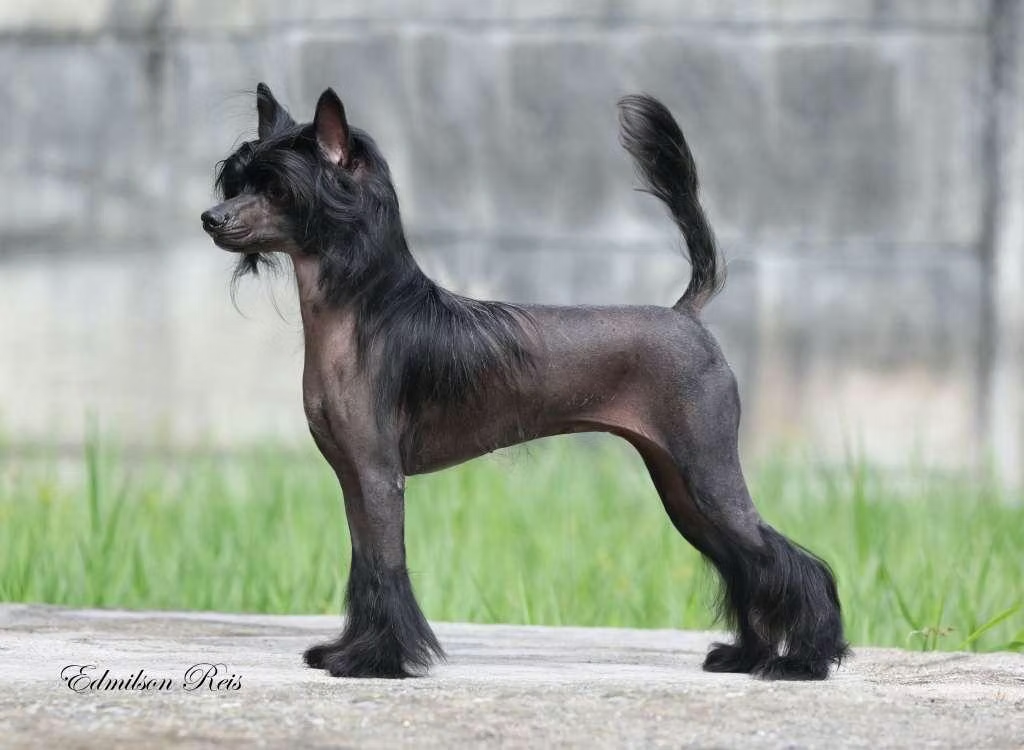
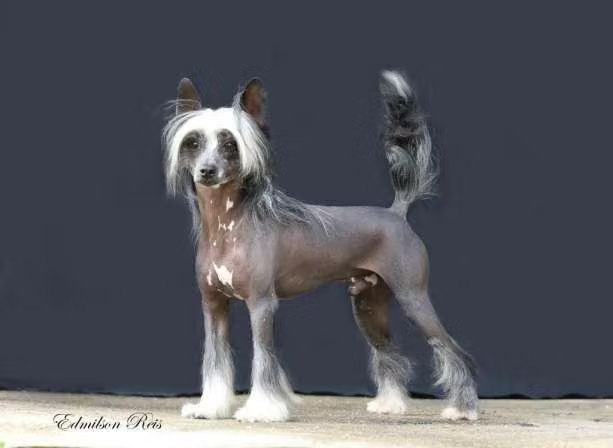
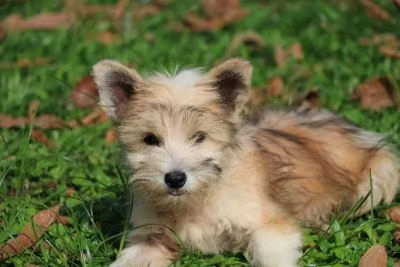
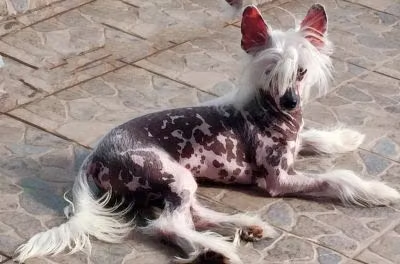
Meet some of our Chinese Crested
A few of the Chinese Crested profiles members have added to United Pet Club.

About the Chinese Crested
The Chinese Crested is a small, affectionate companion breed from China, recognised by KUSA, known for its Hairless and Powderpuff coat varieties within a single litter.
The Chinese Crested is a small companion dog from the toy group, typically weighing between 3.5 and 5.5 kg and standing around 28 to 33 cm at the shoulder. Two coat types occur within the breed, often within the same litter. The Hairless has smooth skin over most of the body, with hair limited to the head (called the crest), the feet (socks), and the tail (plume). The Powderpuff carries a full, soft double coat over the entire body.
The breed's name points to China, though its documented history is really tied to trading ports rather than one specific region. Small hairless dogs travelled aboard ships over long distances, picking up the Chinese association along major trade routes. Today the Chinese Crested is bred almost exclusively as a house companion, registered in South Africa through the Kennel Union of Southern Africa (KUSA).
The breed is affectionate, playful, and forms a tight bond with its household. It tends to fix on one family and can be standoffish around strangers at first. It stays alert to visitors and will let you know when someone's at the gate, but it has neither the size nor the temperament for guarding work.
| Attribute | Detail |
|---|---|
| Origin | China |
| Size | Toy (about 3.5 to 5.5 kg) |
| Lifespan | 13 to 18 years |
| Group/role | Toy group, companion dog |
| Good with | Families, older children, other pets when socialised |
Who it suits
The Chinese Crested does best in a home where someone is around for most of the day, since it wants close contact and can struggle with long stretches alone. Flat and townhouse living suit it well, given its modest exercise needs. The Hairless variety needs its skin looked after and protected from both the harsh African sun and the cold snap of a Highveld winter, so it suits owners prepared to manage sunscreen, bathing, and the odd dog jersey. A household with very young or boisterous children is a poorer match, as the breed is light-boned and sensitive to rough handling.
History and origin
Hairless dogs were linked to Chinese trading ports by the 1800s, and the modern Chinese Crested took shape through US and British breeders in the twentieth century.
Hairlessness is an old, naturally occurring trait that has turned up in dog populations across several parts of the world, not only in China. Exactly how it arrived at the breed we know today isn't fully documented, but small hairless dogs became associated with Chinese trading vessels and were recorded in port cities through the nineteenth century. Sailors kept them aboard as ratters and companions, which spread the dogs along shipping routes.
By the late 1800s, hairless dogs were appearing at exhibitions in Europe and North America, frequently shown under assorted names that lumped together hairless types from different parts of the world. Written records and illustrations from this period label some of these dogs as Chinese, though the naming of the day was inconsistent at best.
Much of the breed's present-day form was fixed during the twentieth century by breeders in the United States and the United Kingdom, who standardised the two coat varieties and settled the breed's proportions. Their work also involved managing the genetics behind the Hairless and Powderpuff coats, since the trait behaves in a particular way when passed on.
Formal recognition through national kennel clubs followed over the second half of the century. The Kennel Union of Southern Africa registers the breed today, and in South Africa, as elsewhere, it's kept purely as a companion rather than for any working role.
Appearance and breed standard
Standing around 28 to 33 cm, the Chinese Crested is a fine-boned toy breed shown in a Hairless variety with crest, socks, and plume, or a fully coated Powderpuff variety.
The Chinese Crested is small, fine-boned, and moves with a light, graceful outline that's slightly longer than it is tall. The head is wedge-shaped, the eyes range from dark to medium in tone, and the ears stand large and erect in the Hairless variety. The tail is long and carried up or out on the move, and the gait overall looks free and unforced.
Coat is what sets the two varieties apart, and both can turn up within a single litter. Beyond that, they share the same build and standard.
| Trait | Detail |
|---|---|
| Height | About 28 to 33 cm at the shoulder |
| Weight | About 3.5 to 5.5 kg |
| Coat | Hairless (crest, socks, plume) or Powderpuff (full soft double coat) |
| Colours | Any colour or combination, including dark, slate, and pink-toned skin in Hairless |
| Eyes | Dark to medium, set wide, almond-shaped |
Coat and colours
In the Hairless variety, most of the body is smooth, bare skin, with soft hair confined to the head, lower legs, and tail. Skin colour can be anything from pale to dark, and it's often spotted or mottled rather than one solid tone. The Powderpuff carries a long, soft double coat over the whole body and needs regular brushing to stay tidy. Both varieties come in a wide range of colours and patterns, and the standard doesn't favour any single one. Hairless dogs vary in how much body hair they carry, and breeders factor this into routine grooming.
Temperament and personality
The Chinese Crested is affectionate, playful, and devoted to its household, tends to be reserved with strangers, and generally gets along with other pets once properly socialised.
At heart, the Chinese Crested is a companion breed through and through. It seeks out close contact and often wants to sit on, or right next to, its favourite people. Indoors it's playful and lively, and it enjoys gentle games without needing much space to do so. It attaches firmly to its household and can pick up on changes in routine or mood faster than you'd expect.
Around family, the breed is warm and openly affectionate. With strangers, it tends to hang back and take its time warming up, though outright aggression isn't typical. Calm, early socialisation goes a long way toward keeping that natural reserve from tipping into shyness. It stays alert to visitors and unusual noises and will bark to flag them, though how vocal an individual dog is varies quite a bit.
With other pets, the Chinese Crested usually settles in fine, particularly with dogs of a similar size and cats it's grown up alongside. Given its small, light frame, keep an eye on things around larger, boisterous dogs. The breed doesn't take well to harsh handling or sharp correction, so a calm, gentle household suits it far better than a strict one.
| Trait | Rating |
|---|---|
| Affection | 5 |
| Energy | 3 |
| Trainability | 3 |
| Vocalness | 3 |
| Shedding | 1 |
Care and grooming
Care revolves around skin and coat upkeep, modest daily exercise, and indoor living; the Hairless variety needs sun protection and warmth, while the Powderpuff needs regular brushing.
Grooming needs differ sharply between the two coat varieties, but both call for routine attention. The Hairless variety needs its skin looked after; the Powderpuff needs its coat looked after.
Grooming
- Hairless: bathe on a regular schedule and moisturise the skin to stop it drying out; watch for blackheads and small breakouts, and clean the skin gently
- Hairless: apply pet-safe sunscreen before any time outdoors, and use a jersey or coat in cold weather
- Powderpuff: brush several times a week to stop the soft double coat from matting
- Both: trim nails every few weeks and check the crest, socks, and plume hair
- Both: brush teeth often, as the breed runs into dental problems fairly easily
Exercise
- One or two short walks a day, about 15 to 30 minutes in total
- Indoor play sessions to burn energy and keep the dog mentally occupied
- Avoid overexertion in extreme heat or cold, particularly for the Hairless variety
Environment
The Chinese Crested is an indoor dog, well suited to flats and smaller homes. It's sensitive to temperature: the Hairless variety chills quickly and burns just as quickly in strong sun, so it needs a warm, draft-free spot indoors and proper protection outdoors, especially through a Highveld winter. Keep a blanket or jersey on hand for load-shedding evenings when the heating's off. The breed wants company and doesn't do well left on its own for long stretches, whether that's a full workday or a long weekend away.
Nutrition and feeding
The Chinese Crested needs a complete small or toy-breed diet, measured out over two or three meals a day, with portions adjusted for age, weight, and activity level.
Feed a complete and balanced diet formulated for small or toy breeds. Because the dog itself is so small, portions are modest, and even small measuring errors can lead to weight gain. Split the daily amount across two or three meals to keep energy steady, since very small dogs, puppies especially, can be prone to low blood sugar if meals are spaced too far apart.
| Life stage | Amount per day | Meals |
|---|---|---|
| Puppy (2 to 6 months) | About 25 to 50 g, depending on product and weight | 3 to 4 |
| Adult (1 year and up) | About 25 to 75 g | 2 |
| Senior / less active | Adjusted down to maintain a healthy weight | 2 |
Treats and supplements
Keep treats to a small slice of the day's calories so the dog stays lean. A diet labelled complete and balanced generally covers everything a healthy dog needs, so routine supplements aren't necessary on top of that. Fresh water should be available at all times. Run any supplement past a vet before adding it, whether it's for joints or skin, particularly given the specific skin needs of the Hairless variety.
Health and common conditions
The Chinese Crested is generally healthy with a 13 to 18 year lifespan, though dental disease, eye conditions, patellar luxation, and skin issues (Hairless variety) are seen in the breed.
The Chinese Crested is a long-lived toy breed, typically reaching 13 to 18 years of age. Most live full, healthy lives given routine veterinary care, decent dental hygiene, and sensible weight control. A handful of conditions do show up more often in the breed and are worth keeping an eye on.
| Condition | Signs | Note |
|---|---|---|
| Dental disease | Tartar, bad breath, loose or missing teeth | Common in toy breeds; the Hairless variety often has incomplete dentition |
| Patellar luxation | Skipping or limping on a hind leg | Kneecap slips out of place; ranges from mild to needing surgery |
| Progressive retinal atrophy | Night blindness, declining vision | Inherited; testing breeding stock helps reduce it |
| Skin problems (Hairless) | Dryness, acne, sunburn, irritation | Managed with bathing, moisturising, and sun protection |
Preventive care
- Annual vet check-ups, more often for seniors
- Daily or near-daily tooth brushing, plus professional cleans as your vet advises
- Keep the dog lean to protect joints and heart
- Buy from breeders who test breeding stock for eye and knee conditions
- For the Hairless variety, a consistent skin and sun-care routine year-round
Training
The Chinese Crested is intelligent and eager but sensitive, so it responds best to short, gentle, reward-based sessions alongside early socialisation.
The Chinese Crested is sharp and keen to please, which makes it a trainable breed, but it's also sensitive and can shut down under harsh handling. Keep sessions short, calm, and upbeat. Food rewards, praise, and play all work well. House-training may take patience, much as it does with most small breeds, so a steady routine and consistency count for a lot. Early exposure to different people, places, and animals helps soften the breed's natural wariness of strangers.
Basics
- Start with the dog's name and simple attention cues in a quiet room
- Teach sit, down, and come using small treats and short repetitions
- Build house-training around a fixed schedule and frequent breaks outside
- Introduce calm handling for grooming, including skin and tooth care
- Add gradual exposure to new people and settings to build confidence
- Keep sessions to a few minutes and finish on a win
Breeding
The Chinese Crested reaches maturity at one to two years and has small litters; the Hairless coat gene means careful pairing, since both coat types can appear in one litter.
Breeding the Chinese Crested is best left to experienced, responsible breeders, given the breed's small size and the genetics involved in its coat. Dogs generally reach physical and behavioural maturity between one and two years old, and responsible breeding programmes hold off until a dog is mature and health-tested. Pre-breeding screening usually covers eyes and knees.
Gestation runs about 63 days, as with most dogs. Litters are small, often just two to four puppies, in line with the breed's toy size. The Hairless trait is carried on a single dominant gene that also affects the embryo, so planned pairings frequently include a Powderpuff parent, and both coat types can turn up in the same litter. Newborn puppies are tiny and need a warm, clean whelping area with close monitoring through the first weeks. Hairless puppies in particular need extra attention to warmth and skin care as they grow.
| Metric | Value |
|---|---|
| Sexual maturity | About 6 to 12 months (breeding deferred until mature) |
| Full maturity | 1 to 2 years |
| Gestation | About 63 days |
| Litter size | Typically 2 to 4 puppies |
| Weaning | About 6 to 8 weeks |
Registering your Chinese Crested and its chip in South Africa
No national chip law protects a Chinese Crested here; a free United Pet Club record does, for life, at no cost.
Chinese Crested registration and microchips in South Africa
Load your Chinese Crested's details once and be done with it: name, date of birth, photo, your cell number, save. The profile is free for his whole life, and it takes a chip number the day the vet supplies one. Dog registration is the start of the paper trail.
A chipped Chinese Crested still needs the number loaded into a registry, because the vet's job ends with the implant. Register the microchip on the free lifetime plan: any brand a local vet uses qualifies, updates stay free when you relocate between provinces, and the record answers the lookups SPCA branches run daily. Create your free account and settle both records today.
How do I register my Chinese Crested in South Africa?
Create a free United Pet Club account, load your Chinese Crested's details and a photo, and save. The lifetime plan keeps the profile active at no cost for as long as you have him, chip or no chip.
How do I register my Chinese Crested's microchip?
Load the 15-digit chip number into your free account together with your address and cell number. Registration and every later update are free, and chips from any brand a South African vet implants are accepted.
Must a Chinese Crested be microchipped in South Africa?
No national law says so, though the SPCA chips as standard practice and many breeders and welfare groups insist on it. The registration behind the chip is the part that finds you, and with United Pet Club it costs nothing.
What does it cost to register a Chinese Crested?
Nothing at all. The free lifetime plan covers the profile, the chip record, and unlimited updates, with no annual renewal in sight.
Frequently asked questions
Common questions about the Chinese Crested cover its size, temperament, how demanding its care is, lifespan, suitability for South African homes, and how easy it is to find a puppy.
How big does a Chinese Crested get?
It's a toy breed, standing about 28 to 33 cm at the shoulder and weighing roughly 3.5 to 5.5 kg.
What is the Chinese Crested's temperament like?
It's affectionate, playful, and devoted to its household. It bonds closely with its people, tends to be reserved with strangers, and stays alert without being any kind of guard dog.
Is the Chinese Crested hard to look after?
Care is moderate. The Hairless variety needs regular skin care plus protection from sun and cold, and the Powderpuff needs frequent brushing. Both need dental care and a modest amount of daily exercise.
How long do Chinese Cresteds live?
Typically 13 to 18 years with good care, which is a long innings even for a small breed.
Is the Chinese Crested good for families and flats?
Yes. It suits flats and homes where someone's around often. It gets on well with older, gentle children and other pets when properly socialised, but it's light-boned and not a match for rough handling.
Does the Chinese Crested shed a lot?
Shedding is minimal. The Hairless variety has very little hair to shed in the first place, and the Powderpuff sheds lightly but needs regular brushing to avoid matting.
Are Chinese Cresteds easy to find in South Africa?
They're an established, KUSA-registered breed available through dedicated breeders and breed-specific rescues, though numbers are smaller than mainstream breeds, so finding a puppy can take a bit of searching and patience.
From the community
Ask about the Chinese CrestedNo questions about the Chinese Crested yet. Be the first to ask.
Browse Dog breeds