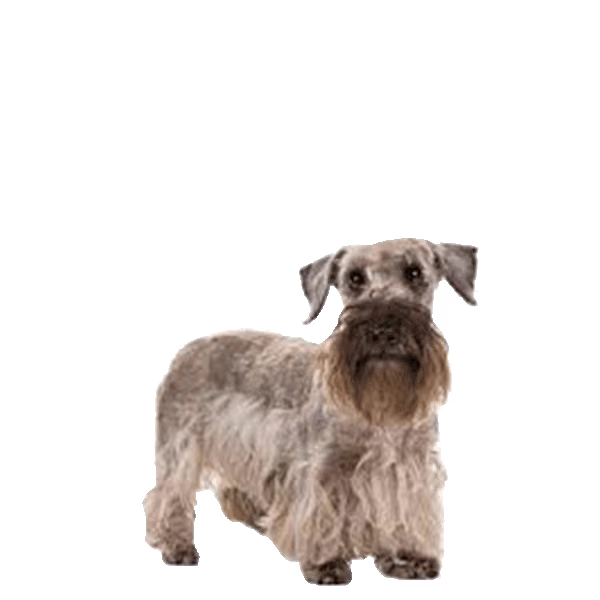
The Cesky Terrier is a calm, easygoing Czech terrier known for its silky coat and its gentler, more reserved temperament.
How the Cesky Terrier coat is built, and what that means when you groom it.
Caution: A Cesky Terrier coat mats easily.
Fine or long hair tangles at the base of the coat, out of sight, where the mats tighten and pull on the skin. Brushing has to reach right down to the roots in sections, not just skim the surface.
Information: A Cesky Terrier needs clipping every few weeks.
This coat keeps growing rather than shedding out, so it has to be trimmed every few weeks. Left to grow it mats down against the skin and traps moisture, dirt and heat.
A small, low-set terrier from the Czech Republic with a silky grey coat and a calmer nature than most terriers, well suited to steady South African households.
The Cesky Terrier (say 'chess-key') is a small hunting terrier that originated in the Czech Republic. It sits low to the ground on short legs, has a gently arched back, and carries a soft, wavy coat that is clipped rather than hand-stripped. Adults typically weigh between 6 and 11 kg (13 to 24 lb), putting the breed at the heavier end of the small-dog category.
Temperament is what sets the Cesky apart from most terriers. At home it is calm and easy-going, ready to play when invited, and devoted to its family. Rather than the pushy, scrappy manner typical of earth dogs, it tends to hold back around strangers, which suits households that find the usual terrier intensity a bit much. It stays alert, though, and will let you know when someone is at the gate.
The coat ranges through shades of grey, from a pale platinum to a dark charcoal slate. Puppies are born black and lighten gradually over the first two to three years. Because the coat is clipped to a uniform length, grooming is routine rather than complicated, though it does need to be kept to a schedule.
| Attribute | Detail |
|---|---|
| Origin | Czech Republic |
| Size | Small (6 to 11 kg / 13 to 24 lb) |
| Lifespan | 12 to 15 years |
| Group / role | Terrier, originally bred to hunt fox and vermin |
| Good with | Families, older children, calm households, other pets with a proper introduction |
The Cesky Terrier suits owners after a small, trainable terrier without the high drive and vocal edge of many earth dogs. It settles into flats or houses with a garden, manages on moderate daily exercise, and is more inclined to follow than to challenge. Owners who would rather avoid heavy shedding tend to like the clipped coat, though it does need a standing grooming appointment. Because the breed is naturally reserved, early and consistent socialisation helps it stay settled around new people and animals, whether that means neighbours over the wall or visitors at a braai.
Frantisek Horak developed the Cesky Terrier in what is now the Czech Republic during the 1940s and 1950s, crossing Sealyham and Scottish Terriers for a calmer hunting dog.
The Cesky Terrier is one of the newer terrier breeds, and unlike most, it has a single, well-recorded creator. Frantisek Horak, a Czech geneticist and dog breeder based in Klanovice near Prague, wanted a terrier narrow enough to follow game into a burrow yet calmer than the working terriers he already had.
He began crossing the Sealyham Terrier with the Scottish Terrier in 1949, aiming for a more biddable, even-tempered dog. The first litter to meet his standard arrived in the early 1950s, after which he kept selecting for temperament, conformation, and a coat that could be clipped instead of hand-stripped.
The Federation Cynologique Internationale (FCI) recognised the breed in 1963. Horak kept meticulous breeding records for the rest of his life, so the Cesky has an unusually complete pedigree history for a terrier. He named it after his home country, from the Czech word 'cesky'.
The breed is still uncommon outside Central Europe. It only reached wider international registries later in the twentieth century, and numbers remain low set against older, more established terriers. In South Africa it can be registered through the Kennel Union of Southern Africa (KUSA), which is affiliated to the FCI, though litters are rare and usually arranged well in advance through breed contacts in Europe.
The Cesky Terrier is a low, long-bodied dog with a soft wavy grey coat clipped to a set length, a bearded face, and a gently arched topline.
The Cesky Terrier is built long and low, with short legs and a body slightly longer than it stands tall. The chest is deep, the topline lifts gently over the loin, and the overall shape reads as rectangular rather than square. The head is wedge-shaped, framed by a soft beard, eyebrows, and a moustache. The ears fold forward against the cheeks, and the tail sits low at rest.
| Feature | Standard |
|---|---|
| Height | 25 to 33 cm (10 to 13 in) at the shoulder |
| Weight | 6 to 11 kg (13 to 24 lb) |
| Coat | Soft, fine, slightly wavy; clipped to a uniform length |
| Colours | Shades of grey, from pale platinum to dark charcoal slate; occasional tan, grey, or white markings |
| Eyes | Medium, slightly deep-set; brown to dark grey depending on coat shade |
The defining feature is the silky, wavy coat, always clipped rather than stripped. The standard clip keeps the back short while leaving the legs, belly, chest, and face longer, giving the breed its characteristic beard and furnishings. Puppies are born black or very dark and lighten over the first two to three years to the adult grey. A small number carry a coffee-brown coat. Limited white, grey, or tan markings on the head, neck, chest, legs, and tail are accepted under the standard.
Calm, loyal, and playful at home, reserved with strangers, and less scrappy than most terriers, the Cesky Terrier makes an even-tempered family dog.
The Cesky Terrier has a gentler disposition than most earth terriers. Indoors it is calm and settled, happy to lie near its people between short bursts of play. It forms close bonds and does not do well left alone for long stretches.
Around family it is affectionate and patient, and it generally gets on well with older children who understand how to handle a dog. With strangers it holds back rather than rushing up to greet or challenge; it tends to watch from a distance before deciding someone is alright. Early, ongoing socialisation keeps that natural caution from turning into shyness.
With other pets the breed is more tolerant than the typical terrier, though its hunting background means it may give chase to small animals in the garden or out on the veld. Introductions to cats and other dogs work best when they start young and stay supervised. The Cesky is alert and will bark to announce someone at the gate, but it is not a dog that barks for the sake of it.
| Trait | Rating |
|---|---|
| Affection | 4 |
| Energy | 3 |
| Trainability | 4 |
| Vocalness | 2 |
| Shedding | 2 |
The Cesky Terrier needs clipping every six to eight weeks, daily brushing of its furnishings, and moderate daily exercise, and settles into a flat or a house with equal ease.
The Cesky Terrier suits flats and houses alike. Its moderate energy and quiet indoor manner make it manageable in a smaller home, provided the daily exercise is met. A securely fenced garden helps, since the breed digs and follows scent given half a chance. It copes with the cooler Highveld winters as well as the humid summers of the KwaZulu-Natal coast, though a short-coated dog still feels the cold on a frosty Gauteng morning and may appreciate a coat for early walks. The breed wants to be with its family and does not manage well when left alone for long periods.
Feed the Cesky Terrier a complete diet portioned to its small frame, roughly half to one and a half cups a day split over two meals, and keep an eye on weight as the breed gains easily.
The Cesky Terrier does well on a complete, balanced dog food suited to its life stage and small size. Because the breed is long-bodied and prone to putting on weight, portion control matters more than the specific brand or format of food. Measure meals rather than leaving food down all day, and adjust the amount to keep the dog at a lean weight, where the ribs are easy to feel but not to see.
| Life stage | Amount per day | Meals |
|---|---|---|
| Puppy (2 to 6 months) | Half to one cup (approx 60 to 120 g) | 3 to 4 |
| Puppy (6 to 12 months) | 0.75 to 1.25 cups (approx 90 to 150 g) | 2 to 3 |
| Adult | 0.75 to 1.5 cups (approx 90 to 180 g) | 2 |
| Senior | Half to 1.25 cups (approx 60 to 150 g) | 2 |
Keep treats to no more than ten percent of daily calories, and subtract them from the meal portion to stop weight creeping up. Most Cesky Terriers on a complete diet need no supplements. Discuss joint support or omega-3 fatty acids with a vet if the dog shows stiffness or coat problems, and always check that a supplement is safe before adding it.
The Cesky Terrier is generally healthy with a lifespan of 12 to 15 years, though Scotty cramp, patellar luxation, and eye conditions occur and screening helps manage them.
The Cesky Terrier is a sturdy, generally healthy breed with a typical lifespan of 12 to 15 years. Its small founding population means responsible breeders test for the conditions known to occur and select against them. As with any long-backed dog, protecting the spine and keeping a lean weight go a long way toward a comfortable life. Owners in warmer, tick-prone parts of the country should also stay alert to canine babesiosis, or biliary, which is spread by ticks and can make a dog seriously ill within days.
| Condition | Signs | Note |
|---|---|---|
| Scotty cramp | Brief stiffness or difficulty walking after excitement or exercise | Inherited; usually mild and not painful, managed by limiting triggers |
| Patellar luxation | Skipping gait, intermittent hind-leg lameness | Common in small breeds; ranges from mild to surgical |
| Primary lens luxation | Cloudiness, redness, eye discomfort | Inherited eye condition; DNA testing is available |
| Cardiac issues | Reduced stamina, coughing, fainting | Older dogs benefit from periodic heart checks |
Intelligent and willing to please, the Cesky Terrier is more biddable than most terriers and responds best to short, consistent, reward-based training with early socialisation.
The Cesky Terrier trains more readily than many terriers, since it was bred for a cooperative temperament. It is clever and wants to work with its handler, though it keeps an independent streak and can switch off during repetitive drills. Short, varied sessions that end on a win hold its attention best. Harsh corrections tend to make the breed shut down, so patience and consistency work far better.
Socialisation should start early. Because the Cesky is naturally reserved with strangers, regular exposure to new people, places, dogs, and surfaces in the first few months builds a confident adult. The hunting background calls for steady recall training and good lead manners around small animals, especially in areas where wildlife or neighbourhood cats are common.
The Cesky Terrier reaches maturity around two years, carries litters of two to four puppies after roughly 63 days of gestation, and both parents benefit from health screening.
Breeding the Cesky Terrier calls for care, since the population is small and the gene pool limited. Responsible breeders prioritise temperament, conformation to the standard, and health clearances, and they avoid close matings to protect genetic diversity. Bitches are usually bred only once they reach full maturity, generally around two years old, when health and temperament can be properly judged.
Gestation runs about 63 days. Litters are typically small, often two to four puppies. Newborns are born black and begin lightening toward the adult grey over the following months. The dam usually manages whelping and early rearing herself, but a quiet, supervised space and a vet on standby are sensible given how small the litters tend to be.
Puppies stay with the dam and littermates until at least eight weeks, so they can learn bite inhibition and social skills. Gentle handling and exposure during this window shape the calm, confident adult the breed is known for. Prospective breeders should work within KUSA and breed-club guidance and confirm DNA and orthopaedic clearances on both parents before mating.
| Metric | Value |
|---|---|
| Sexual maturity | 6 to 12 months (breeding deferred to about 2 years) |
| Gestation | About 63 days |
| Average litter size | 2 to 4 puppies |
| Birth coat | Black, lightening to grey with age |
| Weaning age | 6 to 8 weeks |
| Recommended go-home age | 8 to 12 weeks |
No national chip law protects a Cesky Terrier here; a free United Pet Club record does, for life, at no cost.
When a Cesky Terrier lands at an SPCA branch, the scanner comes out first, and everything then rides on what the number returns. Make sure it returns you. Register your dog free with United Pet Club and the profile answers every scan with your name and number, from now until the end of his days.
A chipped Cesky Terrier still needs the number loaded into a registry, because the vet's job ends with the implant. Register the microchip on the free lifetime plan: any brand a local vet uses qualifies, updates stay free when you relocate between provinces, and the record answers the lookups SPCA branches run daily. Create your free account and settle both records today.
Create a free United Pet Club account, load your Cesky Terrier's details and a photo, and save. The lifetime plan keeps the profile active at no cost for as long as you have him, chip or no chip.
Load the 15-digit chip number into your free account together with your address and cell number. Registration and every later update are free, and chips from any brand a South African vet implants are accepted.
No national law says so, though the SPCA chips as standard practice and many breeders and welfare groups insist on it. The registration behind the chip is the part that finds you, and with United Pet Club it costs nothing.
Nothing at all. The free lifetime plan covers the profile, the chip record, and unlimited updates, with no annual renewal in sight.
Common questions about the Cesky Terrier cover its size, temperament, grooming, lifespan, family suitability, and how easy the breed is to find in South Africa.
It is a small breed, standing about 25 to 33 cm (10 to 13 in) at the shoulder and weighing roughly 6 to 11 kg (13 to 24 lb). The body is long and low rather than tall.
Yes. It is calm and affectionate at home, and usually patient with older, considerate children. It holds back with strangers, so early socialisation helps it stay relaxed around new people.
Grooming is regular but not complicated. The soft coat is clipped every six to eight weeks, and the beard, legs, and belly need brushing every day or two to stop matting. Shedding is light.
The typical lifespan is 12 to 15 years. Keeping the dog lean, screening for breed health conditions, and staying on top of tick control all support a long, comfortable life.
Not by nature. It is alert and will announce visitors at the gate, but it tends to be quieter than most terriers and is not a dog that barks just to hear itself.
No. The breed is uncommon outside Central Europe, and local numbers are very low, so prospective owners usually go onto a waiting list with a KUSA-registered breeder, and litters may need to be arranged through contacts overseas.
It is more tolerant than the average terrier and can live with other dogs and cats, especially if raised together. Its hunting instinct means it may chase small animals outdoors, so a secure garden and solid recall training matter.
