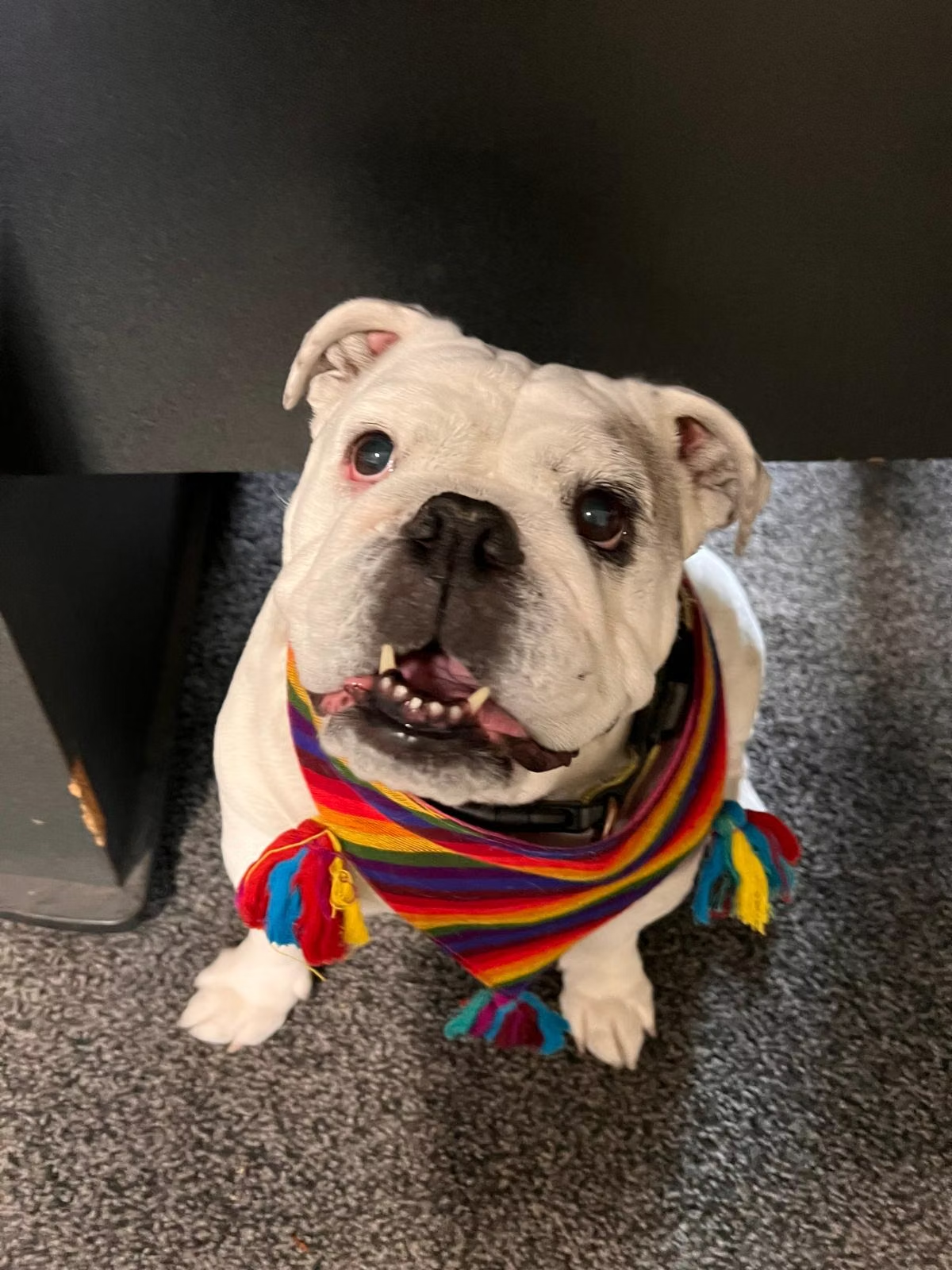
The Bulldog is a calm, courageous English breed with a wrinkled face and gentle, devoted temperament that makes it a steadfast family friend.
How the Bulldog coat is built, and what that means when you groom it.
A few of the Bulldog profiles members have added to United Pet Club.
The Bulldog is a stocky, medium-sized English breed known for its wrinkled face and calm, devoted temperament, popular with South African families.
England is the home of the Bulldog, a medium-sized companion breed built for stability rather than speed: a broad head, a short muzzle, loose skin that folds into wrinkles, and a wide, muscular frame carried low to the ground. Add the rolling walk and undershot jaw, and that's the recognised type. Adults generally weigh 18 to 23 kg and stand about 31 to 40 cm at the shoulder.
The stern look is deceptive. This is a calm, easygoing dog that settles indoors without fuss, bonds closely with its household, and is usually gentle with children. Aggression isn't typical in a normal home, and most Bulldogs are content with a short walk followed by a long rest in the shade.
Summer is what a South African owner needs to plan around, particularly inland on the Highveld and in the hotter northern provinces. The short muzzle limits how well the breed can cool down, so a shaded garden, good airflow, and ideally air conditioning through the hottest months all matter. Load shedding is worth factoring in too, since cooling can drop out with little warning, and it helps to have a backup plan ready, whether that's a fan running off an inverter or simply a cool tiled room to retreat to.
| Attribute | Detail |
|---|---|
| Origin | England |
| Size | Medium (18 to 23 kg) |
| Lifespan | 8 to 10 years |
| Group/role | Companion dog |
| Good with | Children, families, and other household pets |
The Bulldog suits an owner who wants an affectionate, low-energy companion and can keep up with its grooming and health needs. It settles well in a townhouse, a flat, or a house with a small garden, since it needs little space and only moderate exercise. It isn't the right choice for anyone after a running or hiking companion, and it struggles in a home that can't offer shade and cool air when the temperature climbs.
The Bulldog developed in England, originally bred for bull-baiting before being reshaped over generations into the gentle companion known in South Africa today.
Bull-baiting gave the Bulldog both its name and its original purpose, a blood sport that ran in England from medieval times into the early 1800s, pitting dogs against a bull tied in place. What mattered for that role was a low centre of gravity, a wide jaw, and enough tenacity to keep hold of the animal, and the short, pushed-back muzzle let the dog breathe without loosening its grip.
That came to an end when England passed the Cruelty to Animals Act of 1835, banning bull-baiting outright. Without a sport to serve, the Bulldog had no working role left, and the breed's numbers dropped for some years afterward.
What followed was a long rebuilding effort. English breeders spent the rest of the century steering the dog away from the aggression bull-baiting had required and toward the calm, affectionate character it's recognised for today, all while keeping the head and body shape largely intact. A formal breed standard followed in 1865.
From there the Bulldog settled into life as a family and show dog, a role it has held through the twentieth century and into the present, including in South Africa, where the Kennel Union of Southern Africa registers it and it remains a familiar pet in cities and smaller towns alike. Sports clubs and institutions have also adopted it as a mascot, drawn to its sturdy build and resolute look.
The Bulldog has a wide, low body, a large wrinkled head with a short muzzle, and a smooth short coat in a range of colours recognised by breed standards.
Width rather than height is what stands out about a Bulldog's shape: it's a thickset dog, wider than it is tall. Heavy cheeks and pronounced facial folds sit on a head that's large for the body, above a short, broad muzzle. Because the lower jaw projects beyond the upper one, the bite is undershot, part of the defined breed type rather than a flaw. Broad shoulders and a deep chest carry more weight than the lighter hindquarters, and that difference is what gives the breed its rolling walk.
Small, high-set ears are usually carried folded into a rose shape, and the tail is short, set low, and either straight or screwed.
| Feature | Standard |
|---|---|
| Height | 31 to 40 cm at the shoulder |
| Weight | 18 to 23 kg |
| Coat | Short, smooth, and close-lying |
| Colours | Brindle, white, red, fawn, fallow, and piebald combinations |
| Eyes | Round, dark, and set wide and low on the skull |
Short, fine, and smooth, the coat lies flat against the skin and needs very little trimming. Brindle, solid white, red, fawn, and fallow all count as recognised colours, alongside piebald patterns that pair white with another shade. Loose skin across the head, neck, and shoulders forms the folds, and keeping them clean matters even more once the summer heat sets in and sweat and moisture start to build up.
The Bulldog is calm, friendly, and devoted, generally gentle with children and tolerant of other pets, with a steady, courageous nature underneath.
Good nature is the hallmark of this breed's temperament. It stays close to its family, often trailing them around the house, and is typically gentle with children, one of the main reasons it's kept as a family dog, though supervising any dog around young kids is always sound practice.
Strangers usually get a friendly or mildly indifferent reaction rather than wariness, so this isn't a breed built for guarding, even though its solid frame alone can give an intruder pause. Cats and other household pets are generally accepted well once introductions happen early.
Stubbornness balances the courage. Once a Bulldog has decided against something, shifting its mind takes real patience, so consistency in handling counts for more than repetition. Barking stays low to moderate in most individuals, and given the choice, this breed picks a shaded corner over continued activity.
| Trait | Rating |
|---|---|
| Affection | 5 |
| Energy | 2 |
| Trainability | 2 |
| Vocalness | 2 |
| Shedding | 3 |
Bulldog care in South Africa centres on routine fold cleaning, light exercise timed around the heat, and a cool indoor space to protect its breathing.
Routine matters more than intensity for Bulldog care. Nothing else on the list counts for as much as keeping the facial wrinkles and tail pocket clean and properly dried, and that job only gets harder once summer humidity sets in on the coast or the Highveld heat builds.
The Bulldog is an indoor dog suited to flats and houses alike. Because of its short muzzle, it overheats easily and should stay in a cool, shaded, or air-conditioned space during hot weather, with a plan in place for keeping it cool if the power goes out. It's a poor swimmer due to its heavy front end and should be kept away from pools and unsupervised water, load shedding or not.
A Bulldog needs a measured, balanced diet matched to its life stage, since the breed gains weight easily and excess weight worsens its joint and breathing problems.
Portion size matters more than brand for this breed. A complete food suited to its age and activity level is the right starting point, but the Bulldog packs on weight fast, and each extra kilo presses harder on joints and an airway that already work hard enough. Split the day's food into two measured meals instead of leaving a bowl down, which helps digestion and cuts the risk of bloat.
| Life stage | Amount per day | Meals |
|---|---|---|
| Puppy (2 to 6 months) | Per product label for growth | 3 to 4 |
| Puppy (6 to 12 months) | Per product label for growth | 2 to 3 |
| Adult | About 250 to 400 g of dry food, adjusted to weight | 2 |
| Senior | Reduced calories, vet-guided | 2 |
Treats add up fast on a breed this prone to weight gain, so keep them to a small slice of the daily total. Glucosamine and chondroitin turn up often as joint support for Bulldogs, and some owners add omega-3s for the coat and skin. Run any of these past a vet before starting.
The Bulldog typically lives 8 to 10 years and is prone to breathing, joint, and skin conditions linked to its build, so preventive veterinary care matters.
Eight to ten years is roughly what a Bulldog owner should expect. The trade-off for that recognisable short-muzzled, heavy-set look is a raised risk of several inherited and structural conditions. Weight control, attentive daily care, and regular vet visits keep most of them in check, but factor in the cost of ongoing brachycephalic care and go into the breed with open eyes.
| Condition | Signs | Note |
|---|---|---|
| Brachycephalic airway syndrome | Noisy breathing, snoring, exercise and heat intolerance | Related to the short muzzle; severe cases may need surgery |
| Hip and elbow dysplasia | Stiffness, limping, reluctance to move | Joint malformation worsened by excess weight |
| Skin fold dermatitis | Redness, odour, irritation in the wrinkles | Prevented by routine fold cleaning and drying |
| Cherry eye | Visible red mass in the corner of the eye | Prolapse of the tear gland; usually corrected surgically |
The Bulldog is intelligent but stubborn, so it learns best with short, consistent, reward-based sessions started early in life.
Training a Bulldog tests patience more than it tests intelligence. The breed is perfectly capable of learning, but its stubborn streak means harsh correction backfires while calm repetition and rewards get results. Sessions need to stay short, since the dog both loses interest and overheats quickly. A puppy given early exposure to new people, animals, and everyday situations grows into a steadier, friendlier adult.
Bulldog breeding often needs veterinary help, since mating is commonly difficult and the breed frequently delivers by caesarean because of the puppies' large heads.
Bulldog breeding is not something to enter into casually. Veterinary support and thorough health screening of both parents come first, well before any mating is considered. Sexual maturity technically arrives by 12 to 18 months in both sexes, but responsible breeders wait for full physical maturity and clear health results before going ahead.
The breed's shape frequently gets in the way of natural mating, so veterinary assistance at conception is common. Pregnancy runs close to 63 days. Puppies carry heads that are large relative to the mother's pelvis, which makes natural whelping risky often enough that most breeders schedule a caesarean well before the due date rather than wait and see.
Litters stay small, usually three to four puppies. The newborns are vulnerable and need warmth, a clean space, and close attention, since the dam does not always cope alone. Puppies are generally weaned and cleared to leave for new homes by around eight weeks, once they have had their first health checks.
| Metric | Value |
|---|---|
| Sexual maturity | About 12 to 18 months |
| Gestation | Around 63 days |
| Average litter size | 3 to 4 puppies |
| Delivery | Often by caesarean section |
| Weaning age | About 8 weeks |
No national chip law protects a Bulldog here; a free United Pet Club record does, for life, at no cost.
South Africa has no single national law forcing microchips on dogs, though the SPCA chips as standard and rabies vaccination is required by law. What actually reunites a lost Bulldog with you is a record, and that part is free: a United Pet Club profile carries your details beside the dog's photo for as long as you have him. Registering your dog takes a few minutes, with no fee attached.
The chip is a number; the registry entry is the story behind it. Capture your Bulldog's 15-digit number in a free United Pet Club account and the story reads: this dog has a home. Every brand is accepted, updates never cost a cent, and the record stays searchable here and abroad. Microchip registration plus a free account does it.
Create a free United Pet Club account, load your Bulldog's details and a photo, and save. The lifetime plan keeps the profile active at no cost for as long as you have him, chip or no chip.
Load the 15-digit chip number into your free account together with your address and cell number. Registration and every later update are free, and chips from any brand a South African vet implants are accepted.
No national law says so, though the SPCA chips as standard practice and many breeders and welfare groups insist on it. The registration behind the chip is the part that finds you, and with United Pet Club it costs nothing.
Nothing at all. The free lifetime plan covers the profile, the chip record, and unlimited updates, with no annual renewal in sight.
Common questions South African owners ask about the Bulldog's size, temperament, care needs, lifespan, and suitability for local homes.
The Bulldog is a medium-sized breed. Adults usually weigh 18 to 23 kg and stand about 31 to 40 cm at the shoulder, with a wide, muscular, low-slung build.
Bulldogs are calm, friendly, and devoted. They bond closely with their families, are generally gentle with children, and tend to coexist well with other pets, though they can be stubborn.
They need moderate but specific care. The main tasks are cleaning the facial folds, controlling weight, limiting exercise in the heat, and keeping up with veterinary checks for breathing and joint issues.
The average lifespan is 8 to 10 years. Healthy weight, fold hygiene, and protection from heat can all support a comfortable life.
Yes. Their low energy and small space needs suit flats and townhouses, and their calm nature works for many first-time owners, provided the owner can manage the breed's grooming and health requirements.
Not well without help. Because of the short muzzle, Bulldogs overheat easily and should be kept in cool, well-ventilated spaces and exercised only during the cooler parts of the day, with a backup cooling plan for load shedding.