

Bichon Frise
The Bichon Frise is a playful, affectionate breed with a fluffy white coat and a cheerful, sociable disposition that charms everyone it meets.
- Size
- Small
- Lifespan
- 14–15 years
- Origin
- France
- Temperament
- Playful
- Standard colors
- White, Buff and Cream and 2 more
Characteristics
Coat and grooming
How the Bichon Frise coat is built, and what that means when you groom it.
- Coat layers
- Double coat
- Coat texture
- Curly
- Coat length
- Medium
- Shedding
- Low shedding
Grooming guidance
Caution: A Bichon Frise coat mats easily.
Fine or long hair tangles at the base of the coat, out of sight, where the mats tighten and pull on the skin. Brushing has to reach right down to the roots in sections, not just skim the surface.
Information: A Bichon Frise needs clipping every few weeks.
This coat keeps growing rather than shedding out, so it has to be trimmed every few weeks. Left to grow it mats down against the skin and traps moisture, dirt and heat.
Bichon Frise colors and patterns
What each club's breed standard says about every Bichon Frise color and pattern. Point at a ruling to see the club's own wording.
Breed standards describe the Bichon Frise in White, Buff, Cream, Apricot and Champagne. Standard patterns: Solid.
| Color or pattern | FCI | AKC | UKC | KC | KUSA |
|---|---|---|---|---|---|
| White | Standard (“Pure white”) | Standard (“White”) | Standard (“White is the acceptable color”) | Standard (“White”) | Standard (“White”) |
| Buff | Disqualifying | Standard (“White & Buff”) | Standard (“shadings of buff, cream or apricot around the ears or on the body”) | Not recognised | Not recognised |
| Cream | Disqualifying | Standard (“White & Cream”) | Standard (“shadings of buff, cream or apricot around the ears or on the body”) | Standard (“cream or apricot markings acceptable up to 18 months”) | Standard (“cream or apricot markings acceptable up to 18 months”) |
| Apricot | Disqualifying | Standard (“White & Apricot”) | Standard (“shadings of buff, cream or apricot around the ears or on the body”) | Standard (“cream or apricot markings acceptable up to 18 months”) | Standard (“cream or apricot markings acceptable up to 18 months”) |
| Champagne | Standard (“before 12 months of age ... slightly beige (champagne)”) | Fault | Fault | Not recognised | Not recognised |
| Albino | Disqualifying | Fault | Disqualifying (“Albinism”) | Not recognised | Not recognised |
| Patterns | |||||
| Solid | Standard (“Pure white”) | Standard (“Color is white”) | Standard (“White is the acceptable color”) | Standard (“White”) | Standard (“White”) |

| Color or pattern | FCI | AKC | UKC | KC | KUSA |
|---|---|---|---|---|---|
| Black | No ruling | Standard (“black or dark brown”) | Standard (“black or dark brown”) | No ruling | No ruling |
| Dark brown | Standard (“Very dark”) | Standard (“black or dark brown”) | Standard (“black or dark brown”) | Standard (“Dark”) | Standard (“Dark”) |
| Blue | Disqualifying (“wall eye”) | Fault | Fault | No ruling | No ruling |
| Light brown | Fault (“Eyes: Light-coloured”) | Fault | Fault | No ruling | No ruling |
| Color or pattern | FCI | AKC | UKC | KC | KUSA |
|---|---|---|---|---|---|
| Black | Standard (“black”) | Standard (“always black”) | Standard (“always black”) | Standard (“black”) | Standard (“black”) |
| Pink | Disqualifying (“Total depigmentation of the nose”) | No ruling | No ruling | No ruling | No ruling |
| Patterns | |||||
| Butterfly nose | Fault (“Nose: Loss of pigmentation”) | No ruling | No ruling | No ruling | No ruling |
%22%3E%3Cpath%20d%3D%22M28.4%2019.1C29.9%2017.7%2032.2%2016.4%2034%2016C35.8%2015.6%2037.4%2016%2039.2%2016.6C41.1%2017.2%2044.4%2018.5%2045.1%2019.5C45.8%2020.6%2044.3%2021.9%2043.3%2023.1C42.2%2024.3%2040.9%2025.9%2039%2026.6C37.1%2027.2%2034.3%2027.3%2032%2026.9C29.6%2026.4%2025.6%2025.3%2025%2024C24.4%2022.7%2026.9%2020.4%2028.4%2019.1Z%22%20fill%3D%22%23E8A0B4%22%2F%3E%3Cpath%20d%3D%22M23.8%2037.7C24.6%2037.5%2026.2%2037.9%2027.4%2038.1C28.5%2038.2%2030.2%2037.9%2030.8%2038.4C31.4%2039%2031.2%2040.7%2030.9%2041.5C30.7%2042.3%2029.9%2042.9%2029.1%2043.3C28.4%2043.8%2027.4%2044.6%2026.4%2044.4C25.4%2044.2%2023.8%2042.9%2023.1%2042.1C22.4%2041.3%2022.2%2040.2%2022.3%2039.5C22.4%2038.8%2022.9%2038%2023.8%2037.7Z%22%20fill%3D%22%23E8A0B4%22%2F%3E%3Cpath%20d%3D%22M10.5%2027.2C10.4%2026.7%2010.4%2025.4%2011%2025C11.5%2024.6%2013%2024.6%2013.9%2024.6C14.8%2024.6%2015.6%2024.5%2016.1%2024.9C16.6%2025.3%2017%2026.2%2017%2026.9C17.1%2027.7%2016.8%2028.8%2016.4%2029.4C15.9%2029.9%2014.9%2030.4%2014.2%2030.3C13.4%2030.1%2012.3%2028.8%2011.7%2028.3C11.1%2027.8%2010.6%2027.8%2010.5%2027.2Z%22%20fill%3D%22%23E8A0B4%22%2F%3E%3C%2Fg%3E%3Cuse%20href%3D%22%23s%22%20fill%3D%22none%22%20stroke%3D%22%233B2A20%22%20stroke-opacity%3D%220.6%22%20stroke-width%3D%221%22%20stroke-linejoin%3D%22round%22%2F%3E%3Cpath%20d%3D%22M12.5%2037Q13%2032%2018.5%2032Q23.5%2032.5%2023.5%2036.5Q20.5%2035.5%2018.8%2037Q17.4%2038.6%2018%2041.5Q13.6%2040.4%2012.5%2037Z%22%20fill%3D%22%231C1C1C%22%20fill-opacity%3D%220.8%22%20stroke%3D%22%23F5F5F0%22%20stroke-opacity%3D%220.4%22%20stroke-width%3D%220.9%22%2F%3E%3Cpath%20d%3D%22M51.5%2037Q51%2032%2045.5%2032Q40.5%2032.5%2040.5%2036.5Q43.5%2035.5%2045.2%2037Q46.6%2038.6%2046%2041.5Q50.4%2040.4%2051.5%2037Z%22%20fill%3D%22%231C1C1C%22%20fill-opacity%3D%220.8%22%20stroke%3D%22%23F5F5F0%22%20stroke-opacity%3D%220.4%22%20stroke-width%3D%220.9%22%2F%3E%3Cpath%20d%3D%22M32%2040V50%22%20fill%3D%22none%22%20stroke%3D%22%231C1C1C%22%20stroke-width%3D%221.3%22%20stroke-opacity%3D%220.5%22%20stroke-linecap%3D%22round%22%20stroke-linejoin%3D%22round%22%2F%3E%3Cellipse%20cx%3D%2232%22%20cy%3D%2221%22%20rx%3D%2212%22%20ry%3D%223.5%22%20fill%3D%22%23F5F5F0%22%20fill-opacity%3D%220.18%22%2F%3E%3C%2Fsvg%3E)
What the rulings mean
- Standard
- Described by the club's breed standard.
- Fault
- Named by the club's breed standard as a fault: the animal can be shown but is penalised.
- Disqualifying
- The club's breed standard disqualifies an animal of this colour or pattern.
- Not recognised
- The club does not accept this colour or pattern for the breed.
Color changes
How a Bichon Frise's colors can change over its life.
Whitechanges toRoan
Coat · With age · from 2 weeks
Bluechanges toDark brown
Eyes · With age · from 2 weeks
Bluechanges toBrown
Eyes · With age · from 2 weeks
Bluechanges toLight brown
Eyes · With age · from 2 weeks
Bluechanges toAmber
Eyes · With age · from 2 weeks
Bluechanges toHazel
Eyes · With age · from 2 weeks
Bluechanges toYellow
Eyes · With age · from 2 weeks
Blackchanges toSnow nose
Nose · With the season · can change back
Blackchanges toPink
Nose · With the season · can change back
%22%3E%3Cg%20fill%3D%22none%22%20stroke%3D%22%23F5F5F0%22%20stroke-width%3D%221.15%22%20stroke-linecap%3D%22round%22%20stroke-linejoin%3D%22round%22%3E%3Cpath%20d%3D%22M28.6%2025h.1M51.3%2028.8h.1M34.7%2024.3h.1M34.2%2041.6h.1M51%2044.2h.1M55.9%2024.7h.1M27.5%2026.3h.1M18.5%2028.6h.1M25.2%2028.9h.1M24.2%2019.3h.1M20.6%2017.6h.1M34.1%2030.6h.1M57.3%2023.3h.1M23.5%2030.7h.1M26.5%2023.1h.1M40%2031.5h.1M51.7%2038.6h.1M20.2%2022.1h.1M40.4%2037.8h.1M35%2043.1h.1M20.6%2031.7h.1M27.8%2031.9h.1M17.2%2021.1h.1M38.1%2037.7h.1M25.3%2040.5h.1M32%2029.3h.1M41.6%2039.5h.1M23.6%2024h.1M26.4%2018.6h.1M30.3%2031.9h.1M31.2%2035.2h.1M36.5%2043.7h.1M35.2%2026.3h.1M55.6%2019.1h.1M22.4%2036.8h.1M39.2%2020h.1M49.5%2039.1h.1M33.6%2033.5h.1M36.4%2032.4h.1M56.3%2042.4h.1M54.8%2031.2h.1M36.9%2023.2h.1M52.7%2019.1h.1M21.5%2033.8h.1M48.6%2028h.1M36.6%2017.5h.1M45.6%2031.3h.1M37.9%2030.5h.1M17%2031.8h.1M21.1%2043.1h.1M55.7%2021.1h.1M30.8%2041.9h.1M57.4%2038.4h.1M54.8%2026.9h.1M29.1%2017.5h.1M24.3%2037.7h.1M26%2032h.1M39.3%2022.8h.1M53.5%2029h.1M53.3%2023.3h.1M20%2038.4h.1M28.3%2044.7h.1M28.6%2039.8h.1M51.9%2041.1h.1M52.3%2033.7h.1M19.6%2042.2h.1M19%2033h.1M47.8%2021.7h.1M45.7%2024.8h.1M24.6%2035.5h.1M29.8%2036.8h.1M50.7%2032h.1M29.5%2043.5h.1M28.2%2041.5h.1M47.4%2034.8h.1M25.4%2033.7h.1M50.2%2041.2h.1M27.7%2029.5h.1M21.5%2024.8h.1M55.5%2017.5h.1M41.2%2044.3h.1M39.2%2018.4h.1M41.1%2042.5h.1M54.7%2035.3h.1M42.8%2034.5h.1M30.1%2023h.1M42.6%2025.1h.1M32.9%2024.4h.1M42.4%2032.4h.1M49.7%2022.2h.1M49.1%2043.1h.1M38%2035.2h.1M47.7%2043.8h.1M43.1%2022.4h.1M22.4%2040.4h.1M44.4%2019.8h.1M53.3%2040.1h.1M20.7%2029.3h.1M55.6%2043.9h.1M17.6%2039.2h.1M41.7%2028.9h.1M44.1%2036.3h.1M24.3%2043.6h.1M26.4%2038.1h.1M30.3%2029.2h.1M31.5%2030.8h.1M32.1%2023h.1M18.3%2040.9h.1M48%2033.4h.1M36.4%2038.7h.1M31.9%2020.8h.1M32.6%2026.2h.1M22%2031.2h.1M53.4%2021.7h.1M41.9%2017.7h.1M53.3%2037.3h.1M47.7%2040.3h.1M54.4%2033.7h.1M33.6%2037.5h.1M25.3%2017.2h.1M37.6%2019.7h.1M31.6%2019h.1M29.2%2019.6h.1M50.7%2027.3h.1M22%2022.1h.1M31%2037.8h.1M56.5%2026.6h.1M34.7%2039.5h.1M56.5%2040.8h.1M47.6%2038h.1M48.6%2026.1h.1M49.7%2034.2h.1M45.4%2027.4h.1M22.6%2038.9h.1M56.5%2035.3h.1M35.1%2021h.1M41.9%2020.1h.1M37.6%2040h.1M32.6%2044.4h.1M37.9%2025.2h.1M26.6%2043h.1M18.9%2036.7h.1M47.2%2028.9h.1M30.5%2026.2h.1M17.4%2027.3h.1M47.1%2017.2h.1M22.3%2044.3h.1M32.5%2042.4h.1M23.6%2025.7h.1M31.4%2024.9h.1%22%2F%3E%3Cpath%20d%3D%22M26%2020.9h.1M41.2%2023.8h.1M39.9%2026.4h.1M28.5%2033.4h.1M42.8%2043.8h.1M17.6%2034.3h.1M34%2017.1h.1M31.2%2017.2h.1M46.5%2036.1h.1M25.1%2022.1h.1M50.3%2023.7h.1M20.2%2026.6h.1M20.8%2020.4h.1M50.9%2017.3h.1M49.5%2020.2h.1M52.9%2044.1h.1M23.9%2017.8h.1M43.2%2028.1h.1M57.6%2030h.1M52%2025.6h.1M19.2%2019.1h.1M19.5%2024.4h.1M32.8%2040.1h.1M36.1%2027.7h.1M39.6%2029.5h.1M38.4%2041.5h.1M47.9%2019.4h.1M49.1%2031.7h.1M55.9%2036.9h.1M29.2%2027.2h.1M46%2043.5h.1M44.6%2028.8h.1M47.5%2031.5h.1M22.8%2020h.1M27.6%2017.1h.1M43.1%2018.6h.1M54.3%2020h.1M57.2%2033.8h.1M44.5%2043.8h.1M27.1%2035.5h.1M45.3%2041.8h.1M56.7%2028.8h.1M36.7%2021.4h.1M43.3%2042.3h.1M17.3%2022.9h.1M32.7%2035.5h.1M30.5%2039.8h.1M29.1%2021.2h.1M34.5%2018.8h.1M25.8%2027h.1%22%2F%3E%3C%2Fg%3E%3Cpath%20d%3D%22M56.3%2038.4l0%201.2M40%2027.2l-0.3%201.3M32.6%2043.6l-0.4%201.5M29%2023.3l0.8%201.5M55.1%2044l0.4%201.1M47.5%2022.5l-0.2%201.6M42.9%2038.6l0.7%201.2M35.2%2041.8l-0.5%201.7M26.9%2040l-0.1%201.2M41%2042.8l-0.1%201.6M18.4%2021.2l0.7%201.3M49.4%2019.3l-0.5%201.4M50.1%2041.7l0%201.8M28.2%2041.8l-0.6%201.2M55.5%2027.1l0.2%201.2M44.7%2019.3l0.5%201.7M48.6%2020.5l-0.8%201.4M43.7%2039.6l0.3%201.1M22.1%2033.8l-0.6%201.6M50.1%2038.1l-0.5%201.3M51.8%2044.1l-0.1%201.8M39%2017.5l0%201.4M30.2%2026.7l0.2%201.4M25.8%2031.2l0.2%201.6M29.6%2043.5l0.1%201M43.7%2018.3l0.1%201.5M29.6%2018.2l0.3%201.6M24.4%2017.6l0.3%201.1M22%2028.2l-0.6%201.6M25.9%2043.3l-0.3%201.4M22.2%2024.3l0.3%201.3M47.3%2029.2l-0.2%201.4M21.8%2033.2l0.5%200.9M32.9%2037l0.4%201M40%2029.9l0.8%201.4M17.4%2038.3l0.2%201.3M31%2039.2l0%201.2M37.3%2033.7l0.3%201.5M48.1%2040.5l0%201.6M33.9%2031.2l0.1%201.2M29.8%2035.2l-0.4%201M25.1%2037.3l-0.2%201.5M30.2%2039.8l0.5%201M44.6%2034.8l0.4%200.9M55.3%2034.2l0%201.7M50.6%2017.9l0.4%201M30.2%2034.9l-0.4%201.4M19.5%2035.7l-0.5%201.7M40.7%2028.7l0.8%201.4M23.3%2029l-0.4%201.4M17%2040.5l-0.2%201M48.4%2023.2l-0.3%201M37.3%2025.1l-0.4%201.3M23%2021.4l-0.4%201.3M20.4%2017.2l-0.1%201.3M42.3%2020.4l0.6%201.4M41%2031.8l0.6%201.2M45.4%2034.3l-0.1%201.2M32.5%2018l0%201.3M46.2%2021.6l0.1%201.4M30.5%2022.3l0.5%201.1M58%2044.6l0.3%201.5M57.1%2033.9l0.8%201.4M18.3%2042.6l0.3%201M40.5%2035.1l-0.6%201.4M38.8%2044.3l-0.3%201.1%22%20fill%3D%22none%22%20stroke%3D%22%23F5F5F0%22%20stroke-width%3D%220.8%22%20stroke-linecap%3D%22round%22%20stroke-linejoin%3D%22round%22%2F%3E%3C%2Fg%3E%3Cuse%20href%3D%22%23s%22%20fill%3D%22none%22%20stroke%3D%22%233B2A20%22%20stroke-opacity%3D%220.6%22%20stroke-width%3D%221%22%20stroke-linejoin%3D%22round%22%2F%3E%3Crect%20x%3D%2220%22%20y%3D%2258%22%20width%3D%223.6%22%20height%3D%222%22%20fill%3D%22%234A4038%22%2F%3E%3Crect%20x%3D%2226%22%20y%3D%2258%22%20width%3D%223.6%22%20height%3D%222%22%20fill%3D%22%234A4038%22%2F%3E%3Crect%20x%3D%2244%22%20y%3D%2258%22%20width%3D%223.6%22%20height%3D%222%22%20fill%3D%22%234A4038%22%2F%3E%3Crect%20x%3D%2250%22%20y%3D%2258%22%20width%3D%223.6%22%20height%3D%222%22%20fill%3D%22%234A4038%22%2F%3E%3Ccircle%20cx%3D%229.5%22%20cy%3D%2211.5%22%20r%3D%221.1%22%20fill%3D%22%231C1C1C%22%2F%3E%3C%2Fsvg%3E)
%22%3E%3Crect%20x%3D%2217%22%20y%3D%2210%22%20width%3D%2230%22%20height%3D%2242%22%20fill%3D%22url(%23g)%22%2F%3E%3C%2Fg%3E%3Cuse%20href%3D%22%23s%22%20fill%3D%22none%22%20stroke%3D%22%233B2A20%22%20stroke-opacity%3D%220.6%22%20stroke-width%3D%221%22%20stroke-linejoin%3D%22round%22%2F%3E%3Cpath%20d%3D%22M12.5%2037Q13%2032%2018.5%2032Q23.5%2032.5%2023.5%2036.5Q20.5%2035.5%2018.8%2037Q17.4%2038.6%2018%2041.5Q13.6%2040.4%2012.5%2037Z%22%20fill%3D%22%231C1C1C%22%20fill-opacity%3D%220.8%22%20stroke%3D%22%23F5F5F0%22%20stroke-opacity%3D%220.4%22%20stroke-width%3D%220.9%22%2F%3E%3Cpath%20d%3D%22M51.5%2037Q51%2032%2045.5%2032Q40.5%2032.5%2040.5%2036.5Q43.5%2035.5%2045.2%2037Q46.6%2038.6%2046%2041.5Q50.4%2040.4%2051.5%2037Z%22%20fill%3D%22%231C1C1C%22%20fill-opacity%3D%220.8%22%20stroke%3D%22%23F5F5F0%22%20stroke-opacity%3D%220.4%22%20stroke-width%3D%220.9%22%2F%3E%3Cpath%20d%3D%22M32%2040V50%22%20fill%3D%22none%22%20stroke%3D%22%231C1C1C%22%20stroke-width%3D%221.3%22%20stroke-opacity%3D%220.5%22%20stroke-linecap%3D%22round%22%20stroke-linejoin%3D%22round%22%2F%3E%3Cellipse%20cx%3D%2232%22%20cy%3D%2221%22%20rx%3D%2212%22%20ry%3D%223.5%22%20fill%3D%22%23F5F5F0%22%20fill-opacity%3D%220.18%22%2F%3E%3C%2Fsvg%3E)
Sources
Each ruling comes from the club's published breed standard or color list.
Meet some of our Bichon Frise
A few of the Bichon Frise profiles members have added to United Pet Club.


About the Bichon Frise
The Bichon Frise is a small, cheerful companion breed from France with a white, non-shedding coat, well suited to South African flats, gardens and families.
Adults reach only about 23 to 30 cm at the shoulder and weigh somewhere between 5 and 8 kg, so the Bichon Frise sits comfortably in the toy and small-companion bracket. The breed's name is French for a small dog with a curly coat, and for centuries the Bichon was bred purely as a lap dog and companion, never for work or hunting.
Temperament sets the breed apart. Bichons are outgoing, affectionate and quick to bond with the household they live in, and they keep a playful, almost puppyish streak well into old age. Most get on easily with children, visitors and other pets. South African families often pick a Bichon for exactly that easy sociability. Because the breed was never bred to cope with solitude, one left alone for long stretches, say while everyone is out at work, tends to struggle, so the home needs someone around for a fair part of the day.
The coat demands more effort than the dog's size suggests. It barely sheds, which many owners appreciate, but it mats quickly and needs brushing several times a week along with a professional groom every four to six weeks. With a life expectancy of 14 to 15 years, a Bichon is very much a long-haul commitment, best suited to an owner who enjoys a small, sociable dog and does not mind the grooming routine that comes with it.
| Attribute | Detail |
|---|---|
| Origin | France |
| Size | Small (about 5 to 8 kg) |
| Lifespan | 14 to 15 years |
| Group / role | Companion dog (Non-Sporting) |
| Good with | Children, visitors, other pets |
Who it suits
A Bichon Frise suits owners after a small, people-focused dog who can offer daily company. It settles happily into a flat or a house with a garden, and its modest size and low exercise needs make it manageable for older owners and those getting a dog for the first time. Grooming is the real test: anyone not prepared to brush regularly and pay for routine trims should look at a lower-maintenance breed instead. Households where everyone is out at the office for long hours are not the best fit, since the breed is prone to separation anxiety.
History and origin
The Bichon Frise traces back to small Mediterranean lap dogs favoured by French and Spanish nobility, later standardised in France in 1933 and now registered locally through KUSA.
The Bichon Frise belongs to an old line of small white companion dogs that originated around the Mediterranean. Breed historians generally point to the Barbet and other small water dogs as ancestors, with sailors and traders carrying the type between ports in Spain, Italy and France over several centuries.
By the Renaissance, the small bichon type had found its way into European courts. Nobility in France and Spain kept the dogs as fashionable companions, and paintings from the period show them as pampered lap dogs rather than working animals. Royal interest, including favour at the French court, cemented the breed's role as a companion rather than a hunter or guard dog.
Court patronage eventually faded, and by the nineteenth century many bichons had become street performers, travelling with circuses and fairs across Europe and valued for how easily they learned tricks. That stint as an entertainer's dog is what kept the breed going once aristocratic ownership dropped away.
French and Belgian breeders took up the task of preserving and standardising the dog after the First World War. France adopted an official breed standard in 1933, fixing the name Bichon a poil frise, meaning bichon with the curly coat. Major kennel organisations recognised the breed in the decades that followed, and it is registered in South Africa through bodies such as the Kennel Union of Southern Africa (KUSA), alongside its standing with international kennel clubs.
Appearance and breed standard
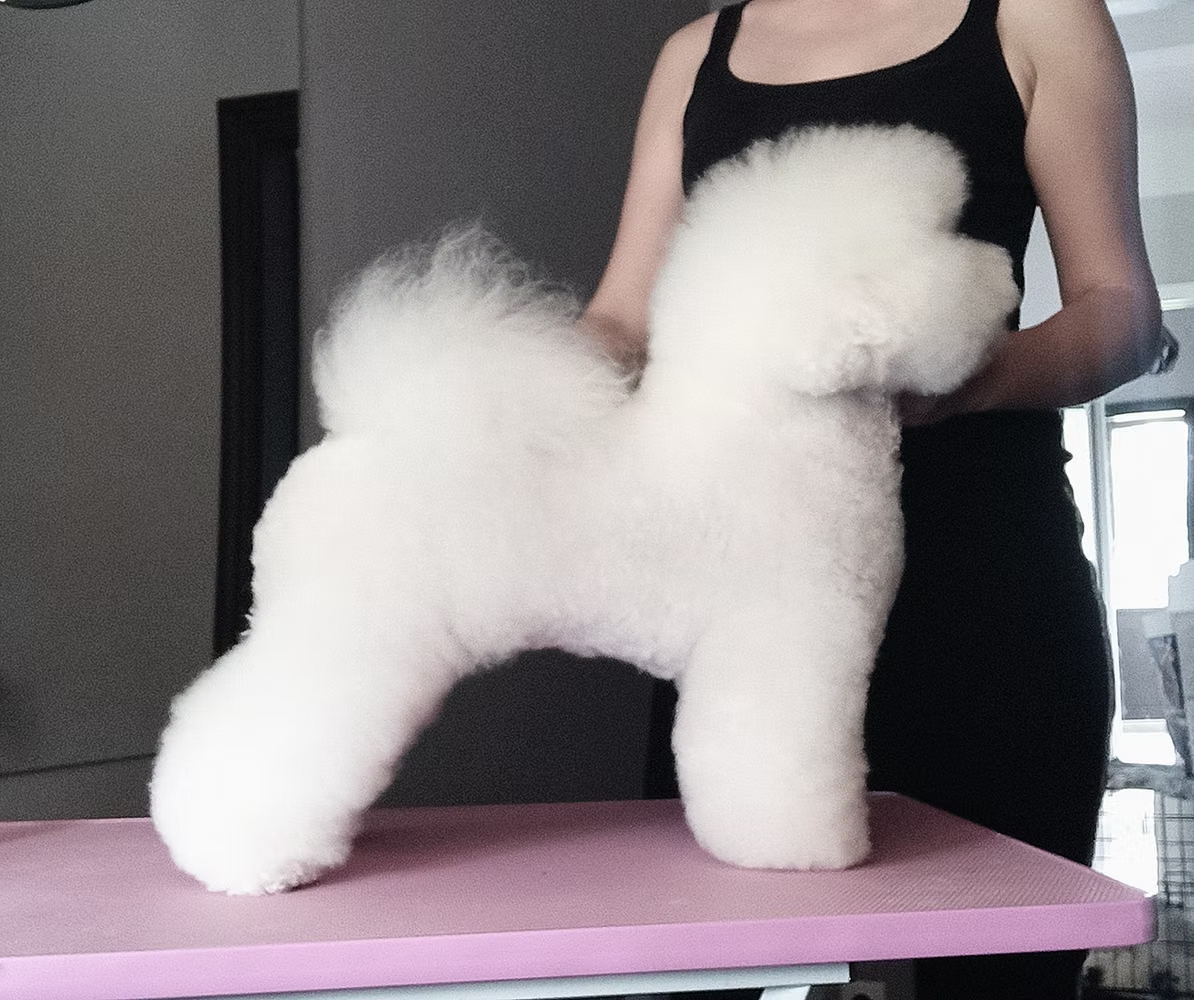
A compact frame under a plush white coat, dark round eyes and a plumed tail carried over the back give the Bichon Frise its familiar powder-puff look.
Under all that coat, the Bichon Frise has a compact, sturdy frame. Groomed in the traditional rounded style, the head and body take on the powder-puff shape the breed is known for. Dark, round eyes and a black nose set against the white coat give the face its alert, slightly quizzical expression, with dark eye rims and lips finishing off the look. The tail is well plumed and carried in a curve over the back. For all the fluff, the body beneath moves freely and is well balanced, not fragile.
| Trait | Standard |
|---|---|
| Height | About 23 to 30 cm (9 to 12 in) at the shoulder |
| Weight | About 5 to 8 kg (12 to 18 lb) |
| Coat | Double coat: soft dense undercoat with a coarser, curly outer coat |
| Colour | White; cream, apricot, or buff shading permitted, usually around the ears |
| Eyes | Dark, round, with black or dark brown rims |
Coat and colour
The coat is what people notice first. A soft undercoat paired with a springier, curlier outer coat gives the texture the standard describes as springing back under the hand rather than lying flat. White is the only accepted colour, though puppies and even some adults carry cream, apricot or buff tinting, most often on the ears. Judges allow this shading in limited amounts as long as the overall impression stays white. Because the coat grows continuously rather than shedding out in the usual way, it has to be clipped and shaped regularly to hold the rounded silhouette.
Temperament and personality
Friendly, affectionate and playful for life, the Bichon Frise gets on well with children, other pets and visitors, though it dislikes being left on its own.
Everything about the Bichon Frise's personality points back to its original job: keeping people company. The breed is warm, affectionate, good-natured and sociable, and it generally wants to be wherever its people are. Bichons hold onto a playful, clownish streak long into adulthood, which owners tend to find one of the most endearing things about them.
Around the family, a Bichon is gentle and attentive, and most cope well with children who know how to handle a small dog respectfully. Strangers get a warm welcome rather than suspicion, so the breed makes a poor watchdog but a genuinely pleasant one to have around visitors. Bichons also tend to accept other dogs and cats without much fuss, especially if they meet them young.
The flip side of all that closeness is a low tolerance for being alone. Left on their own for long periods, Bichons can develop separation anxiety, including barking and accidents indoors. Early socialisation and building up time alone in small steps go a long way toward preventing this. The breed is also naturally alert and will bark at goings-on outside, so consistent training helps keep the noise down.
| Trait | Rating |
|---|---|
| Affection | 5 |
| Energy | 3 |
| Trainability | 4 |
| Vocalness | 3 |
| Shedding | 1 |
Care and grooming
Grooming is the main task with a Bichon Frise: frequent brushing, regular trims, moderate daily exercise and an indoor home, since the coat mats fast and it hates being alone.
On the whole the Bichon Frise is not a demanding breed, but grooming is non-negotiable. The coat grows continuously and mats down close to the skin if it is neglected, so a proper routine matters here more than it would for most small breeds.
Grooming
- Brush and comb thoroughly several times a week, working right down to the skin to stop mats forming.
- Book a professional groom every four to six weeks for bathing, clipping and shaping the rounded outline.
- Wipe around the eyes regularly to manage tear staining, which shows up clearly against the white coat.
- Check and clean the ears, plucking or trimming hair as your groomer advises to cut the risk of infection.
- Trim nails every few weeks and brush teeth several times a week, since small breeds are prone to dental disease.
Exercise
- Give about 30 minutes of activity a day, split between a couple of walks on the lead and some play.
- Use indoor games and short training sessions to keep the dog mentally occupied.
- Go easy on young puppies and avoid exercising in the heat of the day; the dense coat holds warmth.
Environment
The Bichon Frise suits a flat just as well as a house with a garden, and it is very much an indoor dog. It is not built to live outside and struggles in extreme heat or cold, worth bearing in mind given how much South Africa's climate shifts between coastal, highveld and inland regions. Because the breed bonds so closely with its people, it does best where someone is home for a good part of the day, or where time alone is kept short.
Nutrition and feeding
Feed a Bichon Frise a complete small-breed diet in measured portions to prevent weight gain, and keep foods that are toxic to dogs well out of reach.
A complete, balanced dog food suited to the Bichon Frise's life stage covers its nutritional needs well. Small-breed formulas use kibble sized for a small mouth and an energy level matched to a small, moderately active dog. Because the breed is small, portions are correspondingly modest, and a slightly generous scoop adds up to real weight gain surprisingly fast. Weigh or measure food rather than guessing, and keep an eye on the dog's waistline to judge whether portions need adjusting.
| Life stage | Amount per day | Meals |
|---|---|---|
| Puppy (2 to 6 months) | About 0.5 to 1 cup, per label | 3 to 4 |
| Puppy (6 to 12 months) | About 0.5 to 1 cup | 2 to 3 |
| Adult | About 0.5 to 1 cup | 2 |
| Senior | Adjust down for lower activity | 2 |
Treats and supplements
Keep treats to around 10 percent of daily calories so the main diet does the heavy lifting, and deduct anything given as a treat from the day's meal portions. A good complete food generally needs no extra supplements; only add vitamins, joint products or anything similar on your vet's advice. Fresh water should be available at all times.
Health and common conditions
Generally healthy with a 14 to 15 year lifespan, the Bichon Frise can develop allergies, dental disease, bladder stones, luxating patella and some eye conditions.
The Bichon Frise is on the whole a healthy, long-lived breed, typically reaching 14 to 15 years. As with most small breeds, a handful of conditions crop up often enough that owners should know what to look out for. Responsible breeding, regular vet visits, dental care and keeping the dog at a healthy weight lower the risk and severity of most of them. South African owners should also stay alert to tick-borne biliary (canine babesiosis), a real risk for small dogs that spend time outdoors, particularly in warmer, tick-prone areas.
| Condition | Signs | Note |
|---|---|---|
| Allergies / skin issues | Itching, ear infections, paw licking | Common; often triggered by food or the environment |
| Dental disease | Bad breath, tartar, loose teeth | A small jaw crowds the teeth; brush regularly |
| Bladder stones | Straining, frequent or bloody urine | Diet and prompt vet care help manage it |
| Luxating patella | Skipping gait, intermittent hind-leg lameness | Kneecap slips out of place; ranges from mild to needing surgery |
| Cataracts / eye problems | Cloudy eyes, reduced vision | Screened for via eye exams in breeding stock |
Preventive care
- Annual check-ups with the vet, moving to twice a year once the dog is a senior.
- Routine dental care: brushing at home plus professional cleaning as your vet advises.
- Keep vaccinations and parasite control, including tick prevention, up to date.
- Keep the dog at a lean weight to protect the joints and lower disease risk.
- Buy from breeders who screen for eye and knee conditions.
Training
Intelligent and eager to please, the Bichon Frise trains well with short, reward-based sessions, with early focus on house-training and coping alone.
The Bichon Frise is bright and genuinely keen to please. Its history as a circus and performing dog reflects a real talent for tricks and learning routines. Short, upbeat sessions built around rewards work far better than corrections, since the breed can shut down if handled harshly. Two things deserve attention early on: house-training, which some small breeds pick up more slowly than larger dogs, and gradual practice with being left alone so the dog does not develop separation anxiety.
Basics
- Start socialising early, introducing the puppy to people, dogs, everyday sounds and being handled.
- Set a consistent house-training routine with frequent trips outside, and reward success on the spot.
- Teach the core cues: name, sit, come and settle.
- Build up alone time gradually so the dog learns that absences are normal, not something to fear.
- Add lead manners and get the dog used to being handled on a grooming table so trims go smoothly.
- Keep sessions short, just a few minutes at a time, and finish on a success.
Breeding
Bichon Frise litters are typically small, around four to six puppies after roughly nine weeks of pregnancy, and responsible breeding starts with health screening of both parents.
Breeding a Bichon Frise is not something to take on lightly, and it should be guided by health and temperament rather than looks alone. Dogs reach sexual maturity within their first year, but a responsible breeder waits until a bitch is physically mature, generally around two years old, before her first litter, and breeds only from screened, healthy adults. Given the conditions known in the breed, eye examinations and a patella (knee) evaluation are worth doing before any mating.
A bitch typically comes into season around twice a year. Pregnancy runs for about 63 days from conception, and litters tend to be small, usually four to six puppies, in keeping with the breed's size. Whelping in small breeds can carry extra risk, so having veterinary support lined up before and during the birth matters.
Puppies wean over several weeks and should stay with their dam and littermates until at least eight weeks old, which supports proper social development. Gentle, consistent handling and exposure to everyday sights and sounds during this stretch lay the groundwork for the friendly, sociable adult the breed is known for.
| Metric | Value |
|---|---|
| Sexual maturity | Within the first year; breed later once mature |
| Recommended first litter | Around 2 years old for the bitch |
| Heat cycle | About twice a year |
| Gestation | About 63 days |
| Litter size | About 4 to 6 puppies |
| Weaning / homing age | Weaned by around 6 to 8 weeks; home from 8 weeks |
Registering your Bichon Frise and its chip in South Africa
No national chip law protects a Bichon Frise here; a free United Pet Club record does, for life, at no cost.
Bichon Frise registration and microchips in South Africa
When a Bichon Frise lands at an SPCA branch, the scanner comes out first, and everything then rides on what the number returns. Make sure it returns you. Register your dog free with United Pet Club and the profile answers every scan with your name and number, from now until the end of his days.
A chipped Bichon Frise still needs the number loaded into a registry, because the vet's job ends with the implant. Register the microchip on the free lifetime plan: any brand a local vet uses qualifies, updates stay free when you relocate between provinces, and the record answers the lookups SPCA branches run daily. Create your free account and settle both records today.
How do I register my Bichon Frise in South Africa?
Create a free United Pet Club account, load your Bichon Frise's details and a photo, and save. The lifetime plan keeps the profile active at no cost for as long as you have him, chip or no chip.
How do I register my Bichon Frise's microchip?
Load the 15-digit chip number into your free account together with your address and cell number. Registration and every later update are free, and chips from any brand a South African vet implants are accepted.
Must a Bichon Frise be microchipped in South Africa?
No national law says so, though the SPCA chips as standard practice and many breeders and welfare groups insist on it. The registration behind the chip is the part that finds you, and with United Pet Club it costs nothing.
What does it cost to register a Bichon Frise?
Nothing at all. The free lifetime plan covers the profile, the chip record, and unlimited updates, with no annual renewal in sight.
Frequently asked questions
Quick answers on the Bichon Frise's size, temperament, grooming needs, lifespan, and how well it suits South African families, flats and first-time owners.
How big does a Bichon Frise get?
It is a small breed, standing about 23 to 30 cm at the shoulder and weighing roughly 5 to 8 kg once fully grown.
What is the Bichon Frise's temperament like?
Friendly, affectionate, playful, good-natured and sociable. It bonds closely with its people and usually gets on well with children, visitors and other pets.
Is a Bichon Frise hard work to look after?
Its needs are moderate apart from grooming. The non-shedding coat mats easily and needs brushing several times a week plus a professional trim every four to six weeks, which is the real commitment.
How long do Bichon Frises live?
Typically 14 to 15 years with good care, regular vet check-ups, dental hygiene and a healthy weight.
Are Bichon Frises good for flats and first-time owners?
Yes. Their small size and modest exercise needs suit flat living, and their trainable, easygoing nature makes them a sensible choice for first-time owners prepared to keep up with the grooming.
Can a Bichon Frise be left home alone all day?
It is not ideal. The breed was bred for companionship and can develop separation anxiety and barking when left alone for long stretches, so it does best with company for a good part of the day.
Are Bichon Frises easy to find in South Africa?
The breed is well established and widely kept, so puppies are available from reputable breeders, with adults sometimes found through breed rescue groups. Look for breeders who screen parents for eye and knee conditions, and check registration with KUSA.
From the community
Ask about the Bichon FriseNo questions about the Bichon Frise yet. Be the first to ask.
Browse Dog breeds