

Akbash
The Akbash is a stately Turkish livestock guardian known for its protective instincts, independence, and calm vigilance.
- Size
- Giant
- Lifespan
- 10–12 years
- Origin
- Turkey
- Temperament
- Protective
- Standard colors
- White
Characteristics
Coat and grooming
How the Akbash coat is built, and what that means when you groom it.
- Coat layers
- Double coat
- Coat texture
- Rough
- Coat length
- Medium
- Shedding
- Seasonal shedding
Grooming guidance
Critical: A Akbash should not be shaved.
The undercoat keeps heat out as well as in, and the outer coat shields the skin from sun and insect bites. Clipping the whole coat off removes both. It often grows back patchy, soft or a different colour, and in some animals the guard hairs never return properly. Brush the undercoat out instead of cutting it off.
Information: A Akbash drops its undercoat in heavy bursts.
The undercoat comes out in heavy bursts over a few weeks. An undercoat rake, or a bath followed by a proper blow-dry, clears it far faster than daily brushing. Clipping the coat down is not a shortcut for this.
Akbash colors and patterns
What each club's breed standard says about every Akbash color and pattern. Point at a ruling to see the club's own wording.
Breed standards describe the Akbash in White. Standard patterns: Solid.
| Color or pattern | UKC |
|---|---|
| White | Standard (“The Akbash Dog is always white”) |
| Albino | Disqualifying (“albinism”) |
| Patterns | |
| Solid | Standard (“always white”) |
| Spotted | Disqualifying (“defined spots on the outer coat”) |

%22%3E%3Cpath%20d%3D%22M51.6%2041h.1M30.7%2035.3h.1M34.9%2031.1h.1M20.4%2027h.1M24.3%2023.8h.1M13.7%2024.5h.1M48.1%2027.8h.1M22.6%2055.1h.1M26.3%2044.6h.1M46.2%2044.7h.1M32.1%2051.9h.1M40.9%2027.7h.1M52.9%2034.5h.1M57.9%2012.4h.1M49.9%2048.7h.1M44.5%2024.7h.1M45.7%2033.8h.1M31.4%2025h.1M15.2%2015.8h.1M52.2%2055.6h.1M37%2023.9h.1M54.6%2045.7h.1M22.9%2041.7h.1M25.2%2028.6h.1%22%20fill%3D%22none%22%20stroke%3D%22%231C1C1C%22%20stroke-width%3D%223.6%22%20stroke-linecap%3D%22round%22%20stroke-linejoin%3D%22round%22%2F%3E%3Cpath%20d%3D%22M20.5%2032.5h.1M17.8%2021.7h.1M39.4%2032.8h.1M50.4%2023h.1M5.4%2023.9h.1M24.5%2034.2h.1M55.2%2023.5h.1M47.5%2039.1h.1M41.7%2037.8h.1M27.2%2038.4h.1M31.9%2040.9h.1M14.6%207.5h.1M20.7%2018.3h.1M29.1%2055.7h.1M45.2%2051.3h.1M57.6%2017.4h.1M24%2048.9h.1M31.5%2047.4h.1M30.3%2030.9h.1M54%2050.8h.1M11.2%2017.8h.1M52.6%2028.7h.1M36.7%2036.9h.1%22%20fill%3D%22none%22%20stroke%3D%22%231C1C1C%22%20stroke-width%3D%222.4%22%20stroke-linecap%3D%22round%22%20stroke-linejoin%3D%22round%22%2F%3E%3C%2Fg%3E%3Cuse%20href%3D%22%23s%22%20fill%3D%22none%22%20stroke%3D%22%233B2A20%22%20stroke-opacity%3D%220.6%22%20stroke-width%3D%221%22%20stroke-linejoin%3D%22round%22%2F%3E%3Cellipse%20cx%3D%223.2%22%20cy%3D%2221.7%22%20rx%3D%221.3%22%20ry%3D%221.2%22%20fill%3D%22%231C1C1C%22%2F%3E%3Ccircle%20cx%3D%2210.8%22%20cy%3D%2219.3%22%20r%3D%221.1%22%20fill%3D%22%231C1C1C%22%2F%3E%3C%2Fsvg%3E)
| Color or pattern | UKC |
|---|---|
| Dark brown | Standard (“golden brown to dark brown, with darker color preferred”) |
| Amber | Standard (“golden brown”) |
| Yellow | Fault (“Very pale yellow eyes”) |
| Blue | Disqualifying (“Blue eyes”) |
| Color or pattern | UKC |
|---|---|
| Black | Standard (“solid black”) |
| Liver | Standard (“solid dark brown”) |
| Pink | Disqualifying (“Complete lack of pigmentation on nose”) |
| Patterns | |
| Snow nose | Standard (“a slight seasonal fading of nose pigment should not be penalized”) |
| Butterfly nose | Fault (“Butterfly nose”) |
%22%3E%3Crect%20x%3D%2217%22%20y%3D%2210%22%20width%3D%2230%22%20height%3D%2242%22%20fill%3D%22url(%23g)%22%2F%3E%3C%2Fg%3E%3Cuse%20href%3D%22%23s%22%20fill%3D%22none%22%20stroke%3D%22%233B2A20%22%20stroke-opacity%3D%220.6%22%20stroke-width%3D%221%22%20stroke-linejoin%3D%22round%22%2F%3E%3Cpath%20d%3D%22M12.5%2037Q13%2032%2018.5%2032Q23.5%2032.5%2023.5%2036.5Q20.5%2035.5%2018.8%2037Q17.4%2038.6%2018%2041.5Q13.6%2040.4%2012.5%2037Z%22%20fill%3D%22%231C1C1C%22%20fill-opacity%3D%220.8%22%20stroke%3D%22%23F5F5F0%22%20stroke-opacity%3D%220.4%22%20stroke-width%3D%220.9%22%2F%3E%3Cpath%20d%3D%22M51.5%2037Q51%2032%2045.5%2032Q40.5%2032.5%2040.5%2036.5Q43.5%2035.5%2045.2%2037Q46.6%2038.6%2046%2041.5Q50.4%2040.4%2051.5%2037Z%22%20fill%3D%22%231C1C1C%22%20fill-opacity%3D%220.8%22%20stroke%3D%22%23F5F5F0%22%20stroke-opacity%3D%220.4%22%20stroke-width%3D%220.9%22%2F%3E%3Cpath%20d%3D%22M32%2040V50%22%20fill%3D%22none%22%20stroke%3D%22%231C1C1C%22%20stroke-width%3D%221.3%22%20stroke-opacity%3D%220.5%22%20stroke-linecap%3D%22round%22%20stroke-linejoin%3D%22round%22%2F%3E%3Cellipse%20cx%3D%2232%22%20cy%3D%2221%22%20rx%3D%2212%22%20ry%3D%223.5%22%20fill%3D%22%23F5F5F0%22%20fill-opacity%3D%220.18%22%2F%3E%3C%2Fsvg%3E)
%22%3E%3Cpath%20d%3D%22M28.4%2019.1C29.9%2017.7%2032.2%2016.4%2034%2016C35.8%2015.6%2037.4%2016%2039.2%2016.6C41.1%2017.2%2044.4%2018.5%2045.1%2019.5C45.8%2020.6%2044.3%2021.9%2043.3%2023.1C42.2%2024.3%2040.9%2025.9%2039%2026.6C37.1%2027.2%2034.3%2027.3%2032%2026.9C29.6%2026.4%2025.6%2025.3%2025%2024C24.4%2022.7%2026.9%2020.4%2028.4%2019.1Z%22%20fill%3D%22%23E8A0B4%22%2F%3E%3Cpath%20d%3D%22M23.8%2037.7C24.6%2037.5%2026.2%2037.9%2027.4%2038.1C28.5%2038.2%2030.2%2037.9%2030.8%2038.4C31.4%2039%2031.2%2040.7%2030.9%2041.5C30.7%2042.3%2029.9%2042.9%2029.1%2043.3C28.4%2043.8%2027.4%2044.6%2026.4%2044.4C25.4%2044.2%2023.8%2042.9%2023.1%2042.1C22.4%2041.3%2022.2%2040.2%2022.3%2039.5C22.4%2038.8%2022.9%2038%2023.8%2037.7Z%22%20fill%3D%22%23E8A0B4%22%2F%3E%3Cpath%20d%3D%22M10.5%2027.2C10.4%2026.7%2010.4%2025.4%2011%2025C11.5%2024.6%2013%2024.6%2013.9%2024.6C14.8%2024.6%2015.6%2024.5%2016.1%2024.9C16.6%2025.3%2017%2026.2%2017%2026.9C17.1%2027.7%2016.8%2028.8%2016.4%2029.4C15.9%2029.9%2014.9%2030.4%2014.2%2030.3C13.4%2030.1%2012.3%2028.8%2011.7%2028.3C11.1%2027.8%2010.6%2027.8%2010.5%2027.2Z%22%20fill%3D%22%23E8A0B4%22%2F%3E%3C%2Fg%3E%3Cuse%20href%3D%22%23s%22%20fill%3D%22none%22%20stroke%3D%22%233B2A20%22%20stroke-opacity%3D%220.6%22%20stroke-width%3D%221%22%20stroke-linejoin%3D%22round%22%2F%3E%3Cpath%20d%3D%22M12.5%2037Q13%2032%2018.5%2032Q23.5%2032.5%2023.5%2036.5Q20.5%2035.5%2018.8%2037Q17.4%2038.6%2018%2041.5Q13.6%2040.4%2012.5%2037Z%22%20fill%3D%22%231C1C1C%22%20fill-opacity%3D%220.8%22%20stroke%3D%22%23F5F5F0%22%20stroke-opacity%3D%220.4%22%20stroke-width%3D%220.9%22%2F%3E%3Cpath%20d%3D%22M51.5%2037Q51%2032%2045.5%2032Q40.5%2032.5%2040.5%2036.5Q43.5%2035.5%2045.2%2037Q46.6%2038.6%2046%2041.5Q50.4%2040.4%2051.5%2037Z%22%20fill%3D%22%231C1C1C%22%20fill-opacity%3D%220.8%22%20stroke%3D%22%23F5F5F0%22%20stroke-opacity%3D%220.4%22%20stroke-width%3D%220.9%22%2F%3E%3Cpath%20d%3D%22M32%2040V50%22%20fill%3D%22none%22%20stroke%3D%22%231C1C1C%22%20stroke-width%3D%221.3%22%20stroke-opacity%3D%220.5%22%20stroke-linecap%3D%22round%22%20stroke-linejoin%3D%22round%22%2F%3E%3Cellipse%20cx%3D%2232%22%20cy%3D%2221%22%20rx%3D%2212%22%20ry%3D%223.5%22%20fill%3D%22%23F5F5F0%22%20fill-opacity%3D%220.18%22%2F%3E%3C%2Fsvg%3E)
What the rulings mean
- Standard
- Described by the club's breed standard.
- Fault
- Named by the club's breed standard as a fault: the animal can be shown but is penalised.
- Disqualifying
- The club's breed standard disqualifies an animal of this colour or pattern.
Color changes
How a Akbash's colors can change over its life.
Whitechanges toRoan
Coat · With age · from 2 weeks
Blackchanges toSnow nose
Nose · With the season · can change back
Blackchanges toPink
Nose · With the season · can change back
%22%3E%3Cg%20fill%3D%22none%22%20stroke%3D%22%23F5F5F0%22%20stroke-width%3D%221.15%22%20stroke-linecap%3D%22round%22%20stroke-linejoin%3D%22round%22%3E%3Cpath%20d%3D%22M28.6%2025h.1M51.3%2028.8h.1M34.7%2024.3h.1M34.2%2041.6h.1M51%2044.2h.1M55.9%2024.7h.1M27.5%2026.3h.1M18.5%2028.6h.1M25.2%2028.9h.1M24.2%2019.3h.1M20.6%2017.6h.1M34.1%2030.6h.1M57.3%2023.3h.1M23.5%2030.7h.1M26.5%2023.1h.1M40%2031.5h.1M51.7%2038.6h.1M20.2%2022.1h.1M40.4%2037.8h.1M35%2043.1h.1M20.6%2031.7h.1M27.8%2031.9h.1M17.2%2021.1h.1M38.1%2037.7h.1M25.3%2040.5h.1M32%2029.3h.1M41.6%2039.5h.1M23.6%2024h.1M26.4%2018.6h.1M30.3%2031.9h.1M31.2%2035.2h.1M36.5%2043.7h.1M35.2%2026.3h.1M55.6%2019.1h.1M22.4%2036.8h.1M39.2%2020h.1M49.5%2039.1h.1M33.6%2033.5h.1M36.4%2032.4h.1M56.3%2042.4h.1M54.8%2031.2h.1M36.9%2023.2h.1M52.7%2019.1h.1M21.5%2033.8h.1M48.6%2028h.1M36.6%2017.5h.1M45.6%2031.3h.1M37.9%2030.5h.1M17%2031.8h.1M21.1%2043.1h.1M55.7%2021.1h.1M30.8%2041.9h.1M57.4%2038.4h.1M54.8%2026.9h.1M29.1%2017.5h.1M24.3%2037.7h.1M26%2032h.1M39.3%2022.8h.1M53.5%2029h.1M53.3%2023.3h.1M20%2038.4h.1M28.3%2044.7h.1M28.6%2039.8h.1M51.9%2041.1h.1M52.3%2033.7h.1M19.6%2042.2h.1M19%2033h.1M47.8%2021.7h.1M45.7%2024.8h.1M24.6%2035.5h.1M29.8%2036.8h.1M50.7%2032h.1M29.5%2043.5h.1M28.2%2041.5h.1M47.4%2034.8h.1M25.4%2033.7h.1M50.2%2041.2h.1M27.7%2029.5h.1M21.5%2024.8h.1M55.5%2017.5h.1M41.2%2044.3h.1M39.2%2018.4h.1M41.1%2042.5h.1M54.7%2035.3h.1M42.8%2034.5h.1M30.1%2023h.1M42.6%2025.1h.1M32.9%2024.4h.1M42.4%2032.4h.1M49.7%2022.2h.1M49.1%2043.1h.1M38%2035.2h.1M47.7%2043.8h.1M43.1%2022.4h.1M22.4%2040.4h.1M44.4%2019.8h.1M53.3%2040.1h.1M20.7%2029.3h.1M55.6%2043.9h.1M17.6%2039.2h.1M41.7%2028.9h.1M44.1%2036.3h.1M24.3%2043.6h.1M26.4%2038.1h.1M30.3%2029.2h.1M31.5%2030.8h.1M32.1%2023h.1M18.3%2040.9h.1M48%2033.4h.1M36.4%2038.7h.1M31.9%2020.8h.1M32.6%2026.2h.1M22%2031.2h.1M53.4%2021.7h.1M41.9%2017.7h.1M53.3%2037.3h.1M47.7%2040.3h.1M54.4%2033.7h.1M33.6%2037.5h.1M25.3%2017.2h.1M37.6%2019.7h.1M31.6%2019h.1M29.2%2019.6h.1M50.7%2027.3h.1M22%2022.1h.1M31%2037.8h.1M56.5%2026.6h.1M34.7%2039.5h.1M56.5%2040.8h.1M47.6%2038h.1M48.6%2026.1h.1M49.7%2034.2h.1M45.4%2027.4h.1M22.6%2038.9h.1M56.5%2035.3h.1M35.1%2021h.1M41.9%2020.1h.1M37.6%2040h.1M32.6%2044.4h.1M37.9%2025.2h.1M26.6%2043h.1M18.9%2036.7h.1M47.2%2028.9h.1M30.5%2026.2h.1M17.4%2027.3h.1M47.1%2017.2h.1M22.3%2044.3h.1M32.5%2042.4h.1M23.6%2025.7h.1M31.4%2024.9h.1%22%2F%3E%3Cpath%20d%3D%22M26%2020.9h.1M41.2%2023.8h.1M39.9%2026.4h.1M28.5%2033.4h.1M42.8%2043.8h.1M17.6%2034.3h.1M34%2017.1h.1M31.2%2017.2h.1M46.5%2036.1h.1M25.1%2022.1h.1M50.3%2023.7h.1M20.2%2026.6h.1M20.8%2020.4h.1M50.9%2017.3h.1M49.5%2020.2h.1M52.9%2044.1h.1M23.9%2017.8h.1M43.2%2028.1h.1M57.6%2030h.1M52%2025.6h.1M19.2%2019.1h.1M19.5%2024.4h.1M32.8%2040.1h.1M36.1%2027.7h.1M39.6%2029.5h.1M38.4%2041.5h.1M47.9%2019.4h.1M49.1%2031.7h.1M55.9%2036.9h.1M29.2%2027.2h.1M46%2043.5h.1M44.6%2028.8h.1M47.5%2031.5h.1M22.8%2020h.1M27.6%2017.1h.1M43.1%2018.6h.1M54.3%2020h.1M57.2%2033.8h.1M44.5%2043.8h.1M27.1%2035.5h.1M45.3%2041.8h.1M56.7%2028.8h.1M36.7%2021.4h.1M43.3%2042.3h.1M17.3%2022.9h.1M32.7%2035.5h.1M30.5%2039.8h.1M29.1%2021.2h.1M34.5%2018.8h.1M25.8%2027h.1%22%2F%3E%3C%2Fg%3E%3Cpath%20d%3D%22M56.3%2038.4l0%201.2M40%2027.2l-0.3%201.3M32.6%2043.6l-0.4%201.5M29%2023.3l0.8%201.5M55.1%2044l0.4%201.1M47.5%2022.5l-0.2%201.6M42.9%2038.6l0.7%201.2M35.2%2041.8l-0.5%201.7M26.9%2040l-0.1%201.2M41%2042.8l-0.1%201.6M18.4%2021.2l0.7%201.3M49.4%2019.3l-0.5%201.4M50.1%2041.7l0%201.8M28.2%2041.8l-0.6%201.2M55.5%2027.1l0.2%201.2M44.7%2019.3l0.5%201.7M48.6%2020.5l-0.8%201.4M43.7%2039.6l0.3%201.1M22.1%2033.8l-0.6%201.6M50.1%2038.1l-0.5%201.3M51.8%2044.1l-0.1%201.8M39%2017.5l0%201.4M30.2%2026.7l0.2%201.4M25.8%2031.2l0.2%201.6M29.6%2043.5l0.1%201M43.7%2018.3l0.1%201.5M29.6%2018.2l0.3%201.6M24.4%2017.6l0.3%201.1M22%2028.2l-0.6%201.6M25.9%2043.3l-0.3%201.4M22.2%2024.3l0.3%201.3M47.3%2029.2l-0.2%201.4M21.8%2033.2l0.5%200.9M32.9%2037l0.4%201M40%2029.9l0.8%201.4M17.4%2038.3l0.2%201.3M31%2039.2l0%201.2M37.3%2033.7l0.3%201.5M48.1%2040.5l0%201.6M33.9%2031.2l0.1%201.2M29.8%2035.2l-0.4%201M25.1%2037.3l-0.2%201.5M30.2%2039.8l0.5%201M44.6%2034.8l0.4%200.9M55.3%2034.2l0%201.7M50.6%2017.9l0.4%201M30.2%2034.9l-0.4%201.4M19.5%2035.7l-0.5%201.7M40.7%2028.7l0.8%201.4M23.3%2029l-0.4%201.4M17%2040.5l-0.2%201M48.4%2023.2l-0.3%201M37.3%2025.1l-0.4%201.3M23%2021.4l-0.4%201.3M20.4%2017.2l-0.1%201.3M42.3%2020.4l0.6%201.4M41%2031.8l0.6%201.2M45.4%2034.3l-0.1%201.2M32.5%2018l0%201.3M46.2%2021.6l0.1%201.4M30.5%2022.3l0.5%201.1M58%2044.6l0.3%201.5M57.1%2033.9l0.8%201.4M18.3%2042.6l0.3%201M40.5%2035.1l-0.6%201.4M38.8%2044.3l-0.3%201.1%22%20fill%3D%22none%22%20stroke%3D%22%23F5F5F0%22%20stroke-width%3D%220.8%22%20stroke-linecap%3D%22round%22%20stroke-linejoin%3D%22round%22%2F%3E%3C%2Fg%3E%3Cuse%20href%3D%22%23s%22%20fill%3D%22none%22%20stroke%3D%22%233B2A20%22%20stroke-opacity%3D%220.6%22%20stroke-width%3D%221%22%20stroke-linejoin%3D%22round%22%2F%3E%3Crect%20x%3D%2220%22%20y%3D%2258%22%20width%3D%223.6%22%20height%3D%222%22%20fill%3D%22%234A4038%22%2F%3E%3Crect%20x%3D%2226%22%20y%3D%2258%22%20width%3D%223.6%22%20height%3D%222%22%20fill%3D%22%234A4038%22%2F%3E%3Crect%20x%3D%2244%22%20y%3D%2258%22%20width%3D%223.6%22%20height%3D%222%22%20fill%3D%22%234A4038%22%2F%3E%3Crect%20x%3D%2250%22%20y%3D%2258%22%20width%3D%223.6%22%20height%3D%222%22%20fill%3D%22%234A4038%22%2F%3E%3Ccircle%20cx%3D%229.5%22%20cy%3D%2211.5%22%20r%3D%221.1%22%20fill%3D%22%231C1C1C%22%2F%3E%3C%2Fsvg%3E)
Meet some of our Akbash
A few of the Akbash profiles members have added to United Pet Club.
About the Akbash
The Akbash is a giant Turkish livestock guardian breed valued on southern African farms and smallholdings for its calm vigilance and strong protective instinct.
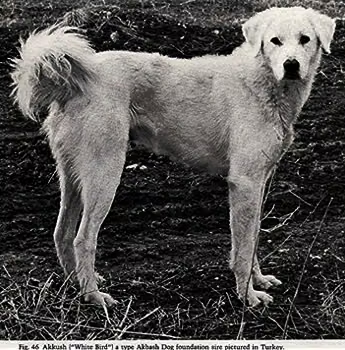
The Akbash is a giant white livestock guardian breed that started its working life in the pastures of western Turkey, protecting sheep and goats from wolves and other predators. Its name is Turkish for white head, a reference to the pale coat that let a shepherd tell the dog apart from a predator across a paddock, even in poor light. The same logic holds on a South African farm: a big pale dog moving through a flock is unmistakable next to a dark jackal or caracal.
An Akbash works on patience rather than speed. It settles in among its flock, reads the camp, and only escalates when something genuinely threatens its charges. Around its own household it is usually quiet and undemanding, though it never fully switches off its watch. That combination of calm and readiness is what farmers rate most highly in the breed.
This is not a dog for a townhouse or a small suburban garden. The Akbash suits owners who run livestock or hold a large, securely fenced property, whether that is a Karoo sheep farm, a Bushveld game operation, or a Highveld smallholding. Without a flock or territory to watch over, its guarding drive has nowhere useful to go.
| Attribute | Detail |
|---|---|
| Origin | Turkey |
| Size | Giant |
| Lifespan | 10 to 12 years |
| Group or role | Livestock guardian dog |
| Good with | Family and the stock it is raised with; wary of strangers |
Who this breed suits
The Akbash fits farmers, smallholders, and game-farm owners who need a serious stock guardian and have the ground and fencing to back it up. It suits experienced handlers far better than first-time owners, and a working property far better than a flat or a small town garden.
History and origin
The Akbash took shape over centuries among shepherds in western Turkey, one of several white guardian types from the Anatolian plateau, and reached wider notice once researchers exported and recorded it in the twentieth century.
The Akbash comes from the western part of Turkey, where shepherds kept large white dogs to guard sheep and goats across open grazing country. It belongs to a wider family of Anatolian guardian dogs that worked the Turkish plateau for generations. These working lines were shaped by pastoral practice rather than a formal stud book, so much of the breed's early story survives through use on the land rather than written pedigree.
Shepherds favoured the white coat for a practical reason. A pale dog stood out from a wolf at a distance, which mattered when a herder had to act fast in low light. Selection focused on guarding sense, hardiness, and a level head, not on looks for the show ring.
Interest from outside Turkey grew from the mid-twentieth century onward, as researchers and breeders studied the country's guardian dogs and exported some to North America and Europe. The Akbash was among the types brought over and documented during this period, and overseas breeding programmes worked to keep its guarding instinct intact rather than soften it for companion life.
The Akbash still guards livestock in parts of Turkey today, and farmers elsewhere, South Africa included, have taken to similar Anatolian-type guardians as an alternative to lethal predator control for jackal and caracal. Its core job has barely shifted from the one it did on the Anatolian pastures generations ago.
Appearance and breed standard
The Akbash is a tall, powerful white dog with a lean, athletic build, a wedge-shaped head, and a weather-resistant double coat suited to everything from Karoo heat to Drakensberg cold.
The Akbash is a giant dog with a frame built for work rather than bulk. It has long legs, a deep chest, and a slightly rectangular outline that gives it easy, ground-covering movement across a paddock or camp. The head is wedge-shaped with a strong muzzle, and the ears drop close to the head. The tail is long and carried low at rest, curling upward once the dog is alert to something.
| Trait | Description |
|---|---|
| Height | Roughly 71 to 86 cm (28 to 34 in) at the shoulder, males larger |
| Weight | About 41 to 64 kg (90 to 140 lb) |
| Coat | Double coat; short to medium length, weather resistant |
| Colours | White, sometimes with light biscuit or grey shading on the ears |
| Eyes | Almond shaped, ranging from light gold to dark brown |
Coat and colours
The Akbash carries a double coat, a coarser outer layer over a softer undercoat beneath. Some dogs have a shorter, smoother coat, while others grow longer with feathering on the legs and tail. The standard colour is white. Faint biscuit or grey shading sometimes shows on the ears or along the back, but the overall impression stays pale and solid. Shedding is heavy at the change of seasons, with the undercoat blowing out as winter turns to spring and again heading into autumn.
Temperament and personality
The Akbash is calm, independent, and deeply protective, devoted to its family and flock while staying reserved and watchful around strangers and unfamiliar animals.
The Akbash carries the steady, self-directed nature of a working guardian. At home it tends to be quiet and settled, lying near its family or flock and watching rather than demanding attention. That calm sits over a strong protective streak, and the dog can move from resting to acting in moments once it senses a genuine threat.
With its own family the Akbash is loyal and gentle, and it usually forms a close bond with whichever people or animals it is raised to protect. Toward strangers it stays reserved and cautious, slow to warm to anyone new, and it may challenge a person it does not trust on its own ground. Early and ongoing socialisation matters here, so the dog learns to read an ordinary visitor correctly instead of treating every stranger as a threat.
How it behaves with other animals depends on how it was raised. An Akbash brought up with sheep or goats generally treats them as charges under its protection. It can be territorial with strange dogs, and its independence means it often decides for itself rather than waiting on a command. This is a thinking dog bred to work alone on open ground, so an owner should expect a partner in the job, not a dog that simply follows orders.
| Trait | Rating |
|---|---|
| Affection | 3 |
| Energy | 3 |
| Trainability | 2 |
| Vocalness | 3 |
| Shedding | 4 |
Care and grooming
The Akbash needs regular brushing for its double coat, daily room to patrol, a secure property with a clear guarding job, and routine tick control given the biliary risk across much of South Africa.
Grooming
- Brush once or twice a week, stepping up to most days during the seasonal coat blow
- Expect a heavy shed in spring and again in autumn as the undercoat turns over
- Bath only when needed, since the coat sheds dirt reasonably well on its own
- Check and trim nails regularly, and clean the drop ears, which trap moisture more than a prick ear would
- Check the coat after time outdoors for burrs, grass seeds, and ticks, particularly behind the ears and between the legs, since tick-borne biliary (canine babesiosis) is a real risk across much of South Africa
Exercise
- Give the dog daily activity, such as patrolling a large secured camp, paddock, or pasture
- Let it move at its own pace rather than relying only on short leash walks around the block
- Give it an actual job where possible, whether that is guarding livestock, poultry, or a boundary
- Hold off on forced high-intensity exercise in a young giant dog, to protect joints that are still developing
Environment
The Akbash needs land. A securely fenced farm, smallholding, or game property suits it far better than a townhouse or a small suburban garden. Fencing has to be tall and solid, since the breed patrols its boundary and will look for a gap if the perimeter is weak. The coat copes well with a Highveld winter or a hot Karoo summer, but the dog still needs shade, shelter from Highveld storms, and fresh water when it is outside for long stretches.
Nutrition and feeding
The Akbash needs a balanced diet suited to a giant breed, fed in measured meals to support steady growth in puppies and a healthy weight in grown dogs.
The Akbash should eat a complete, balanced diet formulated for large or giant breeds. It is a big dog with a fairly measured working pace, so its calorie needs are real without being extreme, and an inactive adult puts on weight easily if fed too much. Match the amount to the individual dog's age, weight, and activity, and adjust by body condition rather than sticking to one fixed amount for life.
Giant-breed puppies grow over a long stretch, and controlled growth matters for joint health later on. A diet formulated for large-breed growth, fed in measured portions, helps stop a pup packing on size too fast. Keep fresh water available at all times, especially for a dog that works or rests outdoors in the heat.
| Life stage | Amount per day | Meals |
|---|---|---|
| Puppy (2 to 6 months) | Per large-breed growth formula, divided | 3 to 4 |
| Junior (6 to 18 months) | Adjust as growth slows | 2 to 3 |
| Adult | Roughly 4 to 6 cups of quality dry food, by weight and activity | 2 |
| Senior | Reduced calories to hold healthy weight | 2 |
Treats and supplements
Keep treats to a small share of the day's calories, so they do not throw the diet out of balance or add unwanted weight. Most dogs on a complete commercial food need nothing extra. Discuss joint support or any other supplement with a vet first, since giant breeds can react badly to over-supplementation while they are still growing.
Health and common conditions
The Akbash is generally a hardy working breed with a lifespan of 10 to 12 years, though like most giant dogs it can face joint problems, bloat, and, in South Africa, tick-borne biliary.
The Akbash is a robust breed, shaped by generations of demanding farm work, and many individuals stay sound well into old age. Its typical lifespan runs 10 to 12 years, in line with other giant breeds. Good health rests on sensible feeding, controlled growth as a puppy, regular veterinary care, and screening from a responsible breeder.
As with most large and giant breeds, joint and orthopaedic problems are the main long-term concern, and bloat is a serious emergency risk every owner should learn to recognise. In South Africa, ticks add another factor: the Akbash's coat and outdoor working life put it at real risk of tick-borne biliary (canine babesiosis), which is common across much of the country and needs prompt veterinary treatment when it occurs.
| Condition | Signs | Note |
|---|---|---|
| Hip dysplasia | Stiffness, limping, trouble rising | Common in large breeds; screening helps |
| Elbow dysplasia | Front-leg lameness, reluctance to exercise | Linked to growth and genetics |
| Gastric dilatation-volvulus (bloat) | Swollen belly, retching without vomit, restlessness | Emergency; seek immediate veterinary care |
| Hypothyroidism | Weight gain, low energy, coat changes | Manageable with diagnosis and treatment |
Preventive care
- Keep up with routine vet check-ups, vaccinations, and parasite control, including regular tick treatment to guard against biliary
- Feed for lean body condition and controlled growth in puppies
- Choose a pup from a breeder who screens their breeding dogs for hip and elbow problems
- Split daily food into measured meals and avoid strenuous activity straight after eating, to lower bloat risk
- Keep nails trimmed and check the coat and ears often, especially after the dog has been out in long grass or bush
Training and socialisation
The Akbash is intelligent but independent, so training goes best with early socialisation, consistency, and respect for the breed's habit of thinking things through for itself.
The Akbash is sharp and capable, but it was bred to make its own calls out in the field, so it does not train like a breed built to watch its handler for the next cue. It can learn what is asked of it, yet it weighs up whether to comply, especially once its guarding instinct kicks in. Aim training at a reliable, well-mannered adult rather than fast obedience, and start young, keeping it up over the years.
Socialisation matters most. A guardian pup that meets plenty of people, animals, and situations early on reads an ordinary event correctly as an adult, instead of treating it as a threat. Short, consistent sessions with calm, fair handling get further with an Akbash than pressure or endless repetition ever will.
Basics
- Start socialisation early, exposing the pup to a range of people, animals, and settings
- Teach a reliable recall and basic manners while the dog is still young and impressionable
- Keep sessions short and consistent, and reward calm, correct behaviour
- Set clear, fair boundaries that the whole household sticks to
- Build a secure property so the dog is set up to succeed, rather than corrected constantly for roaming or over-guarding
Breeding and raising young
The Akbash matures slowly like other giant breeds, with a normal canine gestation of about 63 days, and litters need careful early socialisation to grow into sound, reliable guardians.
Breeding an Akbash is a serious undertaking, best left to experienced people who health-test their dogs and understand the breed's working role. Like other giant breeds, the Akbash matures slowly and may not reach full physical and mental maturity until it is two years old or more. Responsible breeders wait until a dog is mature and has been screened for hip and elbow problems before pairing it.
Gestation in dogs runs about 63 days from conception. Litter sizes vary, and whelping in a giant breed can carry added risk, so veterinary support through pregnancy and birth is worth arranging. The early weeks count for a great deal in this breed: pups headed for a working life as livestock guardians are usually raised alongside the stock they will protect, while pups going to companion or property homes need wide exposure to people and everyday life. Careful handling in those first weeks shapes whether the adult dog reads a situation calmly or reacts with excess suspicion later on. Buyers should look for breeders who register litters with the Kennel Union of Southern Africa (KUSA) and are open about the health screening behind a litter.
| Metric | Value |
|---|---|
| Sexual maturity | Around 1 to 2 years; full maturity later |
| Gestation | About 63 days |
| Litter size | Varies; several puppies typical |
| Weaning | Around 6 to 8 weeks |
| Recommended health screening | Hip and elbow evaluation of breeding dogs |
Registering your Akbash and its chip in South Africa
No national chip law protects an Akbash here; a free United Pet Club record does, for life, at no cost.
Akbash registration and microchips in South Africa
South Africa has no single national law forcing microchips on dogs, though the SPCA chips as standard and rabies vaccination is required by law. What actually reunites a lost Akbash with you is a record, and that part is free: a United Pet Club profile carries your details beside the dog's photo for as long as you have him. Registering your dog takes a few minutes, with no fee attached.
A chipped Akbash still needs the number loaded into a registry, because the vet's job ends with the implant. Register the microchip on the free lifetime plan: any brand a local vet uses qualifies, updates stay free when you relocate between provinces, and the record answers the lookups SPCA branches run daily. Create your free account and settle both records today.
How do I register my Akbash in South Africa?
Create a free United Pet Club account, load your Akbash's details and a photo, and save. The lifetime plan keeps the profile active at no cost for as long as you have him, chip or no chip.
How do I register my Akbash's microchip?
Load the 15-digit chip number into your free account together with your address and cell number. Registration and every later update are free, and chips from any brand a South African vet implants are accepted.
Must an Akbash be microchipped in South Africa?
No national law says so, though the SPCA chips as standard practice and many breeders and welfare groups insist on it. The registration behind the chip is the part that finds you, and with United Pet Club it costs nothing.
What does it cost to register an Akbash?
Nothing at all. The free lifetime plan covers the profile, the chip record, and unlimited updates, with no annual renewal in sight.
Frequently asked questions
Common questions about the Akbash cover its size, temperament, care needs, lifespan, suitability as a family dog, and where to find one in South Africa.
How big does an Akbash get?
The Akbash is a giant breed. Adults typically stand about 71 to 86 cm (28 to 34 in) at the shoulder and weigh roughly 41 to 64 kg (90 to 140 lb), with males running larger than females.
What is an Akbash's temperament like?
Calm, independent, watchful, and strongly protective. The breed is loyal and gentle with its own family and flock but reserved and cautious around strangers.
Is the Akbash a lot of work to look after?
For the wrong home, yes. The dog needs secure space, a guarding job, weekly brushing that steps up in spring and autumn, and an owner comfortable handling an independent working breed. It does not suit a flat or a first-time owner.
How long do Akbash dogs live?
Around 10 to 12 years, which is typical for a giant breed.
Does the Akbash make a good family dog?
It can be devoted to a family that gives it room, a job, and early socialisation, usually on a farm or securely fenced property. It suits that setup far better than a household after an easygoing, highly obedient dog in a small space.
Is the Akbash a good guard dog on a farm?
Yes. It was bred specifically to guard livestock and is naturally protective of its territory and its charges, responding to a threat with a measured but firm reaction rather than needless noise.
Where can you find an Akbash in South Africa?
They are uncommon outside their working role locally. Finding one usually means going through breeders who focus on livestock guardian breeds, or guardian-breed rescue networks, rather than expecting to see them widely advertised.
From the community
Ask about the AkbashNo questions about the Akbash yet. Be the first to ask.
Browse Dog breeds