
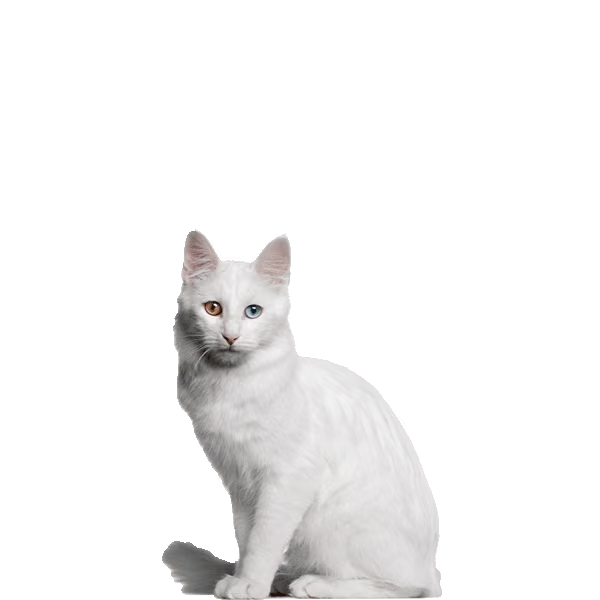
Turkish Vankedisi
The Turkish Vankedisi is the pure-white Van variety, prized for its active, affectionate temperament and loyal bond with its people.
- Size
- Large
- Lifespan
- 12–17 years
- Origin
- Turkey
- Temperament
- Active
- Standard colors
- White
Characteristics
Coat and grooming
How the Turkish Vankedisi coat is built, and what that means when you groom it.
- Coat layers
- Single coat
- Coat texture
- Silky
- Coat length
- Medium
- Shedding
- Seasonal shedding
Grooming guidance
Caution: A Turkish Vankedisi coat mats easily.
Fine or long hair tangles at the base of the coat, out of sight, where the mats tighten and pull on the skin. Brushing has to reach right down to the roots in sections, not just skim the surface.
Information: A Turkish Vankedisi drops its undercoat in heavy bursts.
The undercoat comes out in heavy bursts over a few weeks. An undercoat rake, or a bath followed by a proper blow-dry, clears it far faster than daily brushing. Clipping the coat down is not a shortcut for this.
Turkish Vankedisi colors and patterns
What each club's breed standard says about every Turkish Vankedisi color and pattern. Point at a ruling to see the club's own wording.
Breed standards describe the Turkish Vankedisi in White. Standard patterns: Solid.
| Color or pattern | TICA | GCCF |
|---|---|---|
| White | Standard (“Solid white”) | Standard (“Chalk white”) |
| Patterns | ||
| Solid | Standard (“Solid”) | No ruling |

| Color or pattern | TICA | GCCF |
|---|---|---|
| Blue | Standard (“blue”) | Standard (“Blue-eyed”) |
| Amber | Standard (“amber”) | Standard (“Light to medium amber”) |
| Orange | No ruling | Disqualifying (“Orange”) |
| Copper | No ruling | Disqualifying (“copper”) |
| Patterns | ||
| Odd-eyed | Standard (“odd eyed”) | Standard (“Odd-eyed”) |
%22%3E%3Ccircle%20cx%3D%2216%22%20cy%3D%2232%22%20r%3D%228%22%20fill%3D%22%23D9C3A0%22%2F%3E%3Ccircle%20cx%3D%2216%22%20cy%3D%2232%22%20r%3D%223.4%22%20fill%3D%22%231C1C1C%22%2F%3E%3Ccircle%20cx%3D%2213.6%22%20cy%3D%2229.6%22%20r%3D%221.3%22%20fill%3D%22%23F5F5F0%22%2F%3E%3C%2Fg%3E%3Cpath%20d%3D%22M3%2032Q16%2017%2029%2032Q16%2047%203%2032Z%22%20fill%3D%22none%22%20stroke%3D%22%233B2A20%22%20stroke-opacity%3D%220.75%22%20stroke-width%3D%221.4%22%20stroke-linejoin%3D%22round%22%2F%3E%3Cpath%20d%3D%22M35%2032Q48%2017%2061%2032Q48%2047%2035%2032Z%22%20fill%3D%22%23F5F5F0%22%2F%3E%3Cg%20clip-path%3D%22url(%23e1)%22%3E%3Ccircle%20cx%3D%2248%22%20cy%3D%2232%22%20r%3D%228%22%20fill%3D%22%23847865%22%2F%3E%3Ccircle%20cx%3D%2248%22%20cy%3D%2232%22%20r%3D%223.4%22%20fill%3D%22%231C1C1C%22%2F%3E%3Ccircle%20cx%3D%2245.6%22%20cy%3D%2229.6%22%20r%3D%221.3%22%20fill%3D%22%23F5F5F0%22%2F%3E%3C%2Fg%3E%3Cpath%20d%3D%22M35%2032Q48%2017%2061%2032Q48%2047%2035%2032Z%22%20fill%3D%22none%22%20stroke%3D%22%233B2A20%22%20stroke-opacity%3D%220.75%22%20stroke-width%3D%221.4%22%20stroke-linejoin%3D%22round%22%2F%3E%3C%2Fsvg%3E)
| Color or pattern | TICA | GCCF |
|---|---|---|
| Pink | Standard (“pink”) | Standard (“pink”) |
| Color or pattern | TICA | GCCF |
|---|---|---|
| Pink | Standard (“pink”) | Standard (“pink”) |
What the rulings mean
- Standard
- Described by the club's breed standard.
- Disqualifying
- The club's breed standard disqualifies an animal of this colour or pattern.
Color changes
How a Turkish Vankedisi's colors can change over its life.
Whitechanges toShaded
Coat · With age
Whitechanges toChinchilla
Coat · With age
Whitechanges toPointed
Coat · With age · from 1 to 52 weeks
Solidchanges toSmoke
Coat · With age · from 3 to 104 weeks
Bluechanges toGreen
Eyes · With age · from 4 to 17 weeks
Bluechanges toYellow
Eyes · With age · from 4 to 17 weeks
Bluechanges toGold
Eyes · With age · from 4 to 17 weeks
Bluechanges toCopper
Eyes · With age · from 4 to 17 weeks
Bluechanges toOrange
Eyes · With age · from 4 to 17 weeks
Bluechanges toHazel
Eyes · With age · from 4 to 17 weeks
Bluechanges toAmber
Eyes · With age · from 4 to 17 weeks
Pinkchanges toSeal
Nose · With age · from 1 to 52 weeks
Pinkchanges toBlue
Nose · With age · from 1 to 52 weeks
Pinkchanges toChocolate
Nose · With age · from 1 to 52 weeks
Pinkchanges toLilac
Nose · With age · from 1 to 52 weeks
Pinkchanges toSeal
Paw pads · With age · from 1 to 52 weeks
Pinkchanges toBlue
Paw pads · With age · from 1 to 52 weeks
Pinkchanges toChocolate
Paw pads · With age · from 1 to 52 weeks
Pinkchanges toLilac
Paw pads · With age · from 1 to 52 weeks
%22%3E%3Crect%20x%3D%220%22%20y%3D%220%22%20width%3D%2264%22%20height%3D%2264%22%20fill%3D%22url(%23g)%22%2F%3E%3Cg%20fill%3D%22none%22%20stroke%3D%22%231C1C1C%22%20stroke-width%3D%221%22%20stroke-opacity%3D%220.85%22%20stroke-linecap%3D%22round%22%20stroke-linejoin%3D%22round%22%3E%3Cpath%20d%3D%22M18.9%2025.7l0.2%202.1M42.7%2033.1l1%202.1M12.6%2020.7l0.9%201.7M17.3%2012.7l1%201.7M25.9%2022.4l0.4%201.6M50.2%2029l0.1%201.6M29.2%2028l0.5%202.1M43.2%2022.9l1%202.2M42.4%2029.9l0.2%202.2M8.4%2023.4l1%202.1M7.8%2018.4l0.4%202M35%2027.9l0.5%202.2M35.9%2038.5l0.6%201.6M29.3%2032.6l0.5%201.4M34.8%2022l0.7%202.2M37.6%2020.6l0.7%202.2M18.2%2037.7l0.4%202.1M9.9%2029l0%201.5M9.9%2014l0.1%202M37%2030.4l0.5%202.3M13%2028.5l0.6%202M38.3%2049.6l0.6%201.9M18.4%2047.4l0.7%201.4M40%2026.9l0.2%201.6M57.5%2010.7l0.4%201.4M39.6%2030.3l0.3%202.1M54.9%2018.7l0.7%201.5M48%2028.3l0.4%202M23%2050.3l0.1%202.3M28.2%2036.1l0.5%202.1M57.9%2014.4l0.6%201.4M10.6%2023.3l1%202.1M17.5%2042.7l0.8%201.4M52.1%2026l0.1%201.6M38.6%2032.2l0.1%202.2M30.9%2037.8l0.7%201.7M56.6%2017l0.9%201.9M42.5%2028.7l1%201.8M24.4%2048.9l0%201.7M8.7%2022.3l0.4%201.4M16.6%2039.9l0.5%201.4M7.1%2021.8l0.8%202.2M34.1%2034.2l0.3%201.7M9.9%2025.5l0%201.6M43.1%2035.1l0%202M37.7%2051.3l0.3%201.7M31.7%2031.3l0.3%202.3M23.8%2036.6l0.9%201.8M16.6%2053.5l0.4%202.3M24.4%2041.2l0.6%201.8M39.9%2046.6l0.4%201.8M10.4%2021.8l0.1%202.1M47.2%2051l0.7%202.3M42.9%2027.4l0.1%202M20.5%2022.8l0.4%202.1M49.2%2032.2l0.6%201.3M15.8%2030.1l0.4%202.1M46.2%2053.6l0.6%201.4M15.1%2020.1l0.7%202M23.4%2043.9l0.4%201.6M38.8%2029.4l0.4%202.1M36.8%2034.7l0.4%201.9M48.3%2028.4l0.6%202M26.9%2029.6l0.4%201.6M28.4%2036.5l0.4%201.4M19.2%2034.3l0.5%202.1M7.2%2028.1l0.1%201.6M15.9%2019.7l0.6%201.3M23.4%2022.8l0.9%201.8M16.3%2019.8l0.2%202.1M21.9%2053l0.4%202M48.5%2028.5l0.7%201.8M16.9%2012.9l0.6%202.3M26.8%2033.1l0%201.7M46.2%2044.1l0.2%202.1M30.5%2025.1l0.1%201.7M42.1%2032.2l0.1%201.6M8.7%2021.9l0.6%202.2M29.2%2024.5l0.6%202M22.1%2040.7l1.1%201.9M24.3%2033.3l0.7%201.8M53.9%2026.4l0.1%202.4M21.4%2026.6l0.9%202M39.2%2025.3l0.1%201.9M32.4%2035.3l1%202M48.9%2031.4l0%201.6M24.8%2022.1l0.4%202.2M46.4%2054.6l0.7%201.8M25.1%2031.7l0.5%202.1M24.7%2043.5l0%201.4M23.1%2033.3l0.9%201.6M37.9%2039.5l0.5%201.3M45.7%2041.2l0.9%201.8M50.1%2029.5l0.4%201.8M46.6%2049.6l0.5%202.2M54%2024.3l0.5%202.3M5.9%2025.6l0.1%201.5M15.5%2022.8l0.9%202M26.3%2027.8l0%202.1M30.1%2020.3l0.1%202.3M18.1%2016.7l0.5%201.8M19.1%2024.1l0.9%201.8M12.7%2018.8l0.7%201.4M20.8%2031.1l0.6%201.5M16.9%2025.9l0.1%201.5M11.6%2014.8l0.1%202.3M10.8%2018.5l0.8%201.8M33.5%2038l0.6%201.4M30.6%2028.8l0.3%202.1M39.1%2031.7l0.9%201.9M34.6%2021.3l0.3%202%22%2F%3E%3Cpath%20d%3D%22M17.6%2040.5l0.7%202.1M46.2%2038.1l0.4%201.7M5.1%2020.5l0.2%201.6M21.8%2022.3l0.3%201.4M26.3%2021l0.9%201.6M32.6%2037.5l0.5%201.4M33.5%2031.6l0.6%201.6M39.2%2039l0.9%201.6M11.4%2022.8l0.7%201.8%22%2F%3E%3C%2Fg%3E%3C%2Fg%3E%3Cuse%20href%3D%22%23s%22%20fill%3D%22none%22%20stroke%3D%22%233B2A20%22%20stroke-opacity%3D%220.6%22%20stroke-width%3D%221%22%20stroke-linejoin%3D%22round%22%2F%3E%3Cpath%20d%3D%22M3.4%2022.3L5.4%2022.5L4.3%2024Z%22%20fill%3D%22%23E8A0B4%22%2F%3E%3Ccircle%20cx%3D%229.6%22%20cy%3D%2221.2%22%20r%3D%221.1%22%20fill%3D%22%231C1C1C%22%2F%3E%3C%2Fsvg%3E)
%22%3E%3Cg%20fill%3D%22none%22%20stroke%3D%22%231C1C1C%22%20stroke-width%3D%221.1%22%20stroke-opacity%3D%220.9%22%20stroke-linecap%3D%22round%22%20stroke-linejoin%3D%22round%22%3E%3Cpath%20d%3D%22M37.4%2030.7l0.7%201.3M18.9%2028.6l0.1%201.1M46.5%2033.6l0.3%201.3M35.8%2023.2l0.1%201.4M19.6%2045.1l0%201.2M34.4%2037.4l0%200.9M48.4%2037.9l0.2%201.2M29.8%2023.5l0.4%201.4M9.3%2013.8l0.2%201.1M45.6%2044.2l0.3%200.8M24.4%2028.2l0.1%200.8M41.2%2035l0.1%200.9M41%2030.9l0.1%201.2M40.9%2025.1l0.3%201.4M28.4%2034.5l0.6%201.1M26.7%2024.1l0.1%200.8M47.3%2050.1l0.3%201.4M17.7%2049.5l0.5%201.3M29%2024.1l0.4%201.1M38.6%2038.1l0%201M33.4%2026.9l0.6%201M25.7%2028.1l0.1%200.9M18.3%2038.1l0.6%201.2M47.5%2028.1l0.4%201.1M25.6%2022l0.1%200.9M29.5%2027l0.5%201.1M39.5%2021.4l0.1%201.2M40.9%2048.2l0.2%201.1M17.8%2013.2l0.5%201.2M27.3%2031.6l0%201M21.3%2023.5l0.2%200.9M40.9%2054.1l0.3%200.9M20.9%2028.2l0.7%201.2M26.2%2022.2l0.1%200.8M40.9%2050.9l0.3%201.4M35.2%2030.2l0.2%200.8M50.4%2031.3l0.1%201.3M43.6%2036l0.3%200.9M33.7%2039.1l0.3%200.9M48.6%2049.9l0.3%201.1M44.4%2021.9l0.2%200.9M40.3%2040.9l0.4%201M51.8%2031.5l0.1%201.4M42%2038l0.3%201M41.3%2027.1l0.6%201.1M27.2%2032.2l0.3%201.3M28%2024.6l0%201.2M29%2038.5l0.1%201.1M56%2014.4l0.6%201.3M51%2031.2l0.3%200.8M49%2024.2l0.6%201.1M39.1%2029l0.5%201.2M38.7%2037.6l0.2%201.4M24.3%2046.6l0.4%200.8M23.1%2037.4l0.2%200.8M43%2035.9l0%201M35.4%2027l0.5%201M29.7%2039.1l0.2%201.4M32.8%2037.2l0%201M7.4%2022.7l0.1%201.1M31.3%2020.3l0.6%201.1M21.7%2033.3l0.5%201.1M16.5%2043.9l0.2%201.1M22.7%2024l0%201.4M41.6%2034.2l0.7%201.3M27.1%2036.9l0.2%201.1M49.4%2029.1l0.4%200.9M34.4%2020.6l0.3%201.1M21.6%2037.3l0%201.4M47.1%2029.2l0.7%201.3M50.6%2024.8l0.3%201M49.7%2029.2l0.7%201.2M19.4%2045.4l0.2%201.5M48.6%2026.5l0.6%201.2M23%2022.5l0.4%201M39.9%2051.5l0.2%201.1M6.7%2020.5l0.2%200.9M44.8%2033l0.2%201.4M37.7%2045.6l0.4%201.2M29.9%2037.9l0.2%200.9M24%2020.8l0.4%201M42.7%2021l0.4%201M42%2030.3l0.4%201.1M21.6%2045l0.4%201.1M18.5%2017l0.1%201M9.6%2016.4l0.1%201.3M19.5%2045.9l0.1%201M46.9%2049.9l0.4%201.3M18.6%2020.1l0.1%200.9M38.5%2038.8l0.1%201.4M46.9%2032.3l0.5%201.1M49.4%2031.7l0.3%200.9M48.5%2040.7l0.2%201.4M30.5%2033.5l0.4%201.3M46.3%2041.6l0.3%200.9M23.1%2044.7l0.2%201.1M16.7%2027.5l0%201M37.8%2029.3l0.1%201.2M42.9%2036.9l0.2%201.1M31%2025.3l0.2%201.1M17.5%2052.8l0.6%201.1M11%2021.5l0.4%201M22.5%2029.1l0.5%201.1M27.5%2032.1l0.4%200.9M39.6%2023.3l0.1%201.2M52.1%2027l0.6%201.3M28.8%2029.6l0%201.5M37.9%2025.5l0.5%200.8M33.2%2022.6l0.1%201.2M15.7%2015.4l0.3%200.8M47.7%2053.4l0.1%200.9%22%2F%3E%3Cpath%20d%3D%22M20.7%2023.3l0.6%201.1M6.7%2027.8l0.5%201.3M17%2012.8l0.2%201.2M21.7%2036.2l0%201.3M12.3%2019.9l0.2%200.8M17.2%2025.6l0.4%201.2M42.3%2022.6l0%201.2M24.7%2028.4l0.3%201.4M44.5%2038.7l0%201.4%22%2F%3E%3C%2Fg%3E%3Cpath%20d%3D%22M3.5%2022.6L5.4%2022.6%22%20fill%3D%22none%22%20stroke%3D%22%231C1C1C%22%20stroke-width%3D%221%22%20stroke-linecap%3D%22round%22%20stroke-linejoin%3D%22round%22%2F%3E%3C%2Fg%3E%3Cuse%20href%3D%22%23s%22%20fill%3D%22none%22%20stroke%3D%22%233B2A20%22%20stroke-opacity%3D%220.6%22%20stroke-width%3D%221%22%20stroke-linejoin%3D%22round%22%2F%3E%3Cpath%20d%3D%22M3.4%2022.3L5.4%2022.5L4.3%2024Z%22%20fill%3D%22%23E8A0B4%22%2F%3E%3Ccircle%20cx%3D%229.6%22%20cy%3D%2221.2%22%20r%3D%221.1%22%20fill%3D%22%231C1C1C%22%2F%3E%3C%2Fsvg%3E)
%22%3E%3Cpath%20d%3D%22M5.5%2017L7.5%207L12%2015ZM14%2015L17.5%207L20%2018.5Z%22%20fill%3D%22%23847865%22%2F%3E%3Cellipse%20cx%3D%227.6%22%20cy%3D%2223.6%22%20rx%3D%225%22%20ry%3D%225.2%22%20fill%3D%22%23847865%22%2F%3E%3Crect%20x%3D%220%22%20y%3D%2244%22%20width%3D%2264%22%20height%3D%2220%22%20fill%3D%22%23847865%22%2F%3E%3Cpath%20d%3D%22M50%2027L53.5%205L64%203L64%2013L59%2024L53%2033Z%22%20fill%3D%22%23847865%22%2F%3E%3C%2Fg%3E%3Cuse%20href%3D%22%23s%22%20fill%3D%22none%22%20stroke%3D%22%233B2A20%22%20stroke-opacity%3D%220.6%22%20stroke-width%3D%221%22%20stroke-linejoin%3D%22round%22%2F%3E%3Cpath%20d%3D%22M3.4%2022.3L5.4%2022.5L4.3%2024Z%22%20fill%3D%22%23E8A0B4%22%2F%3E%3Ccircle%20cx%3D%229.6%22%20cy%3D%2221.2%22%20r%3D%221.1%22%20fill%3D%22%231C1C1C%22%2F%3E%3C%2Fsvg%3E)
%22%3E%3Crect%20x%3D%220%22%20y%3D%220%22%20width%3D%2264%22%20height%3D%2264%22%20fill%3D%22%231C1C1C%22%2F%3E%3Crect%20x%3D%220%22%20y%3D%220%22%20width%3D%2264%22%20height%3D%2264%22%20fill%3D%22url(%23g)%22%2F%3E%3Cpath%20d%3D%22M17.5%2030.4l0.2%203.7M48.5%2036.2l-0.3%203.1M40.1%2038.4l0.7%202.8M21.3%2029.4l0.3%202.9M38.5%2024l-0.7%202.7M19.4%2041l0.9%203.8M47.2%2026.3l0.3%203M28.1%2031.1l-0.4%202.6M21%2027l-0.7%203.4M20.1%2035l0.7%202.8M27.4%2035.9l1.2%203.6M31.5%2032.2l0.5%202.5M43.7%2038.4l0.2%202.9M15.5%2027.6l0.2%203M33.5%2029.7l0%203.8M50%2028l0.5%203.8M50.1%2029.5l-0.2%203.3M39.4%2037.1l0.8%203M31.1%2025l1%203.1M19.5%2028.3l0.3%203.1M29.5%2034.2l-0.3%203.8M50.4%2033.8l-0.5%202.6M39.3%2028.8l1.2%203.8M36.6%2037.2l-0.3%202.8M41.6%2026.3l-0.7%202.7M24.2%2038.3l-0.2%203.3M20.5%2033.1l0.7%203M24%2032.2l-0.7%203.3M42.7%2038.5l-0.6%203.8M20.4%2038.2l0.2%203.3M37.5%2036.9l-0.8%202.4M36%2035.3l-0.7%202.9M46.2%2033.2l-0.8%203.8M38.1%2030.5l-0.6%203.6M29%2038.9l-0.7%203.7M42.8%2031.3l0.1%203.1M22.5%2025.1l0.4%202.9M47.4%2025l0.2%203M24.7%2032l-0.8%203.2M14.8%2024.5l1.1%203.3%22%20fill%3D%22none%22%20stroke%3D%22%23F5F5F0%22%20stroke-width%3D%221%22%20stroke-opacity%3D%220.85%22%20stroke-linecap%3D%22round%22%20stroke-linejoin%3D%22round%22%2F%3E%3C%2Fg%3E%3Cuse%20href%3D%22%23s%22%20fill%3D%22none%22%20stroke%3D%22%233B2A20%22%20stroke-opacity%3D%220.6%22%20stroke-width%3D%221%22%20stroke-linejoin%3D%22round%22%2F%3E%3Cpath%20d%3D%22M3.4%2022.3L5.4%2022.5L4.3%2024Z%22%20fill%3D%22%23E8A0B4%22%2F%3E%3Ccircle%20cx%3D%229.6%22%20cy%3D%2221.2%22%20r%3D%221.1%22%20fill%3D%22%231C1C1C%22%2F%3E%3C%2Fsvg%3E)
Sources
Each ruling comes from the club's published breed standard or color list.
About the Turkish Vankedisi
The Turkish Vankedisi is a rare all-white cat from the Van region of eastern Turkey, recognised as a national treasure by the Turkish government and preserved by two Turkish universities. In South Africa it is essentially unavailable through SACC-registered breeders, making it one of the most unusual breeds a South African owner could acquire.
South African cat fanciers browsing SACC-registered breeder lists will search in vain for the Turkish Vankedisi. The breed does not exist in any meaningful numbers here. Unlike the Turkish Van, which has at least occasional representation through European imports, the Vankedisi is genuinely absent from South African catteries. Prospective owners who want one are looking at a direct international import from Turkey or from the handful of European breeders who work with this line.
The Vankedisi is not a variant of the Turkish Van. Both breeds come from the Van region of eastern Turkey, but they are distinct. The Turkish Van carries coloured markings on its head and tail on an otherwise white body. The Vankedisi carries no markings at all. The entire coat, from nose to tail tip, is white. Any coloured patch, however small, removes a cat from the Vankedisi standard entirely.
This distinction matters practically, because it means prospective South African owners cannot substitute a Turkish Van kitten and call it close enough. The Vankedisi's breed identity is defined by its complete whiteness, its conservation history at Van University and Ankara University, and its genetic separation from the commercially distributed Turkish Van lines that reached European breeders decades ago.
| Characteristic | Detail |
|---|---|
| Origin | Van province, eastern Turkey |
| Coat | Pure white, semi-long, no markings permitted |
| Eye colour | Odd eyes (one blue, one amber) very common; also both blue or both amber |
| Weight | 4–9 kg |
| Lifespan | 12–17 years |
For South African cat enthusiasts serious about acquiring a Vankedisi, the path involves understanding Turkish export protocols, EU transit requirements, South African DAFF import regulations, and the cost realities of bringing a rare cat across two continents. This is not a casual purchase, and that is exactly the point: the breed's rarity is inseparable from its identity.
History of the Turkish Vankedisi
The Vankedisi has existed in the Van region of Turkey for centuries, emerging from one of the world's oldest continuously inhabited cultural landscapes and later becoming the subject of formal conservation by Turkish academic institutions.
The Van region of eastern Turkey sits around Lake Van, a high-altitude saline lake surrounded by volcanic mountains. The area has been continuously inhabited for thousands of years and carries UNESCO recognition for its exceptional cultural heritage. The Armenian, Kurdish, and Ottoman histories layered across this landscape produced, among other things, a cat the local population considered blessed.
The Vankedisi, whose name translates roughly as 'Van cat' in Turkish, was historically distinguished from the patterned Van cats that traders and travellers carried westward into Europe. The all-white variety remained more tightly associated with the city of Van itself, where local families kept them as household companions. Their odd eyes, one blue and one amber, were seen as a mark of divine favour rather than a genetic curiosity.
Modern Turkish felinology took the breed seriously from the 1960s onward. Van University established a dedicated breeding and conservation centre for the Vankedisi with the explicit goal of documenting and protecting a genetically distinct population at a time when crossbreeding with imported cats threatened to dilute the original type. Ankara University joined this effort later, and the two institutions together maintain studbooks and research programmes that give the Vankedisi a more rigorous scientific foundation than most naturally occurring landrace breeds receive.
The breed reached Europe through diplomatic and academic channels in very small numbers, and never reached commercial scale. It has not reached South Africa through any organised import effort. The result is a breed that remains almost entirely within its homeland, with a small diaspora in parts of Europe, and essentially zero presence in the southern hemisphere.
Appearance of the Turkish Vankedisi
The Vankedisi is a medium-to-large, muscular cat with a pure white semi-long coat, a broad chest, and the distinctive odd-eyed look that defines the breed's visual identity.
The Vankedisi's eyes are the first feature most people comment on. Odd-eyed cats carrying one blue iris and one amber or gold iris appear in many breeds, but in the Vankedisi, heterochromia is so closely associated with breed identity that Turkish breeders and universities select for it specifically. A Vankedisi with matched eyes is perfectly valid, but the odd-eyed expression is the one most strongly identified with the breed.
The body is substantial without being heavy. Males develop considerable breadth across the chest and shoulders, and the breed overall carries a quiet solidity that reflects centuries of life in a mountainous region. The coat is semi-long, fine in texture, and carries almost no undercoat compared to cold-climate breeds. This gives it a silky fall rather than a puffed appearance and reduces matting significantly.
The coat must be pure white. Any coloured patch, however small, disqualifies the cat from the Vankedisi standard and places it in the Turkish Van category. This is the defining physical distinction between the two breeds and the most important point for South African buyers to confirm before completing any import purchase.
| Feature | Description |
|---|---|
| Body | Medium-large, muscular, broad chest |
| Coat length | Semi-long, minimal undercoat, silky texture |
| Coat colour | Pure white only, no markings permitted |
| Eyes | Odd eyes (blue + amber) most prized; solid blue or solid amber also accepted |
| Tail | Full and plumed, white throughout |
White cats with blue eyes carry a genetic predisposition to congenital deafness, particularly on the side of the blue eye. This applies to the Vankedisi as to any white cat. Reputable Turkish university breeders test hearing as part of their conservation protocols, and any Vankedisi imported to South Africa should arrive with BAER hearing test documentation as part of its health record.
Temperament of the Turkish Vankedisi
The Turkish Vankedisi is an intelligent, affectionate, and moderately active cat that bonds closely with its household. It is calmer and more measured than the Turkish Van, which suits most South African home environments.
Owners familiar with both the Turkish Van and the Vankedisi often describe the Vankedisi as somewhat less frenetic and more measured in its affections. Both breeds are sociable and interactive, but the Vankedisi tends to express itself with a degree of calm self-possession that works well in a home where high-energy behaviour would be disruptive.
The breed is curious and tracks household activity with quiet interest. It bonds across the whole family rather than fixating on one person, and it adapts reasonably well to households with older children. It can be territorial with other cats, particularly in smaller spaces, and early socialisation is advisable if another cat is already in the home.
The Vankedisi is vocal in a communicative rather than demanding way. It responds to conversation and checks in with household members regularly. Its play drive remains active well into adulthood, which means owners should plan for ongoing interactive engagement rather than expecting the cat to become self-sufficient with age.
| Trait | Assessment |
|---|---|
| Affection level | High, directed across the whole household |
| Activity level | Moderate to high, enjoys interactive play |
| Vocalisation | Moderate, communicative but not demanding |
| Sociability with children | Good with older, calm children |
| Independence | Moderate, comfortable when owners are out during the day |
Caring for a Turkish Vankedisi in South Africa
The Vankedisi's semi-long white coat requires consistent attention in South Africa's warm, sunny climate, where UV exposure and heat present specific challenges that Irish or European care guides do not address.
Grooming the Turkish Vankedisi
Despite its semi-long coat, the Vankedisi is considerably easier to groom than most longhaired breeds. The near-absence of undercoat means tangles and mats form infrequently, and the silky texture sheds dirt more readily than a dense double coat would.
Grooming routine:
- Brush twice weekly with a wide-tooth comb or soft slicker brush
- Check behind the ears and under the armpits, where fine fur can occasionally clump
- Bathe every four to six weeks to keep the white coat bright in a dusty South African environment
- Trim nails every two to three weeks
- Check ears weekly and wipe gently with a damp cotton pad if wax is visible
- Begin grooming handling as a kitten to establish tolerance early
Exercise and activity for the Vankedisi
The Vankedisi is a moderately active cat that needs daily mental and physical engagement. Without sufficient stimulation it tends toward restlessness rather than destructive behaviour, but a bored Vankedisi will find its own entertainment, which rarely aligns with the owner's preferences.
Exercise recommendations:
- Two dedicated play sessions per day, fifteen to twenty minutes each
- Wand toys and feather lures trigger prey-chase behaviour effectively
- Puzzle feeders at mealtimes extend mental engagement beyond the food bowl
- A tall cat tree near a window satisfies observation instincts
- Rotate toy sets every two weeks to prevent habituation
- A second cat as a companion reduces reliance on owner-led play
Living with a Vankedisi in South Africa
South Africa's climate creates a specific set of challenges for a pure white cat. The high UV intensity across most of the country means that outdoor-access white cats face a genuine risk of sunburn, particularly on the ear tips, nose, and any thinly furred skin. Squamous cell carcinoma linked to sun exposure is a documented risk in white cats, and South African veterinary oncologists see these cases regularly.
For Vankedisi owners in South Africa, the practical answer is to keep the cat primarily indoors with access to outdoor areas during cooler parts of the day only, and to ensure shaded outdoor spaces if a catio or enclosed garden is used. During summer heat, ensure the indoor environment stays cool and well-ventilated. This breed does not carry a dense undercoat, which limits its natural insulation in both cold and heat, so air-conditioned resting areas during the hottest months are worthwhile.
Nutrition for the Turkish Vankedisi
The Vankedisi thrives on a high-protein diet appropriate to its size and activity level. Weight management becomes important in middle age, particularly for neutered males, and heat-related hydration needs should be factored into the feeding approach in warmer South African climates.
The Vankedisi is a naturally moderate eater. Males, which can reach 8–9 kg, need careful monitoring once neutered, as reduced hormonal drive combined with lower activity levels can produce gradual weight gain that is easy to miss under a full white coat.
In South Africa's warmer regions, wet food as the primary diet carries a hydration benefit that becomes meaningful during hot months. Dry food can supplement or be used in puzzle feeders, but should not be the majority of caloric intake, particularly for cats kept indoors during summer heat. Fresh water must always be available. A cat fountain encourages consistent drinking and is worth the investment for a breed with a natural interest in moving water.
| Category | Recommendation | Notes |
|---|---|---|
| Primary diet | High-protein wet food | At least 40% crude protein on dry matter basis; supports hydration in warm climates |
| Supplemental dry food | Optional, up to 20% of daily calories | Use in puzzle feeders for enrichment |
| Feeding frequency | Two meals per day | Consistent timing supports digestion |
Kittens should be fed a kitten-formulated diet until twelve months of age to support skeletal development. The Vankedisi matures more slowly than smaller breeds, and some males continue to fill out until age three. Senior dietary adjustments from age ten onward, particularly a shift toward lower phosphorus content, support kidney function in the ageing cat.
Health of the Turkish Vankedisi
The Vankedisi is a robust landrace breed with few hereditary conditions. In South Africa, the primary concerns beyond congenital deafness are UV-related skin risks and ensuring imported cats arrive with complete health documentation.
As a naturally evolved landrace breed rather than a product of selective feature-breeding, the Vankedisi carries fewer inherited structural health problems than many pedigree cats. The gene pool maintained by Turkish university programmes has prioritised health alongside type, and this contributes to the breed's general longevity and robust constitution.
The primary hereditary concern is the W gene responsible for the white coat. When combined with blue eye pigmentation, this gene carries a significant correlation with congenital deafness. In odd-eyed white cats, deafness most commonly affects the ear on the blue-eye side. Cats deaf in one ear live full lives with appropriate indoor management, but South African buyers importing from overseas must insist on BAER test documentation before the cat is shipped.
| Condition | Risk level | Notes |
|---|---|---|
| Congenital deafness (BAER-linked) | Moderate, especially in blue-eyed individuals | Insist on BAER hearing test results before import |
| Squamous cell carcinoma (UV-linked) | Moderate for outdoor cats in South Africa | Ears and nose most vulnerable; annual skin checks advised |
| Obesity (neutered males) | Low to moderate | Monitor weight annually from age three |
| Hypertrophic cardiomyopathy (HCM) | Low, no breed-specific elevation documented | Routine cardiac screening at annual vet visit |
Routine veterinary care follows standard feline schedules. Annual health checks are sufficient for a young adult Vankedisi without known issues. From age eight, twice-yearly checks allow earlier detection of kidney and thyroid changes common in ageing cats. SACC-affiliated vets familiar with rare imported breeds are the best resource for ongoing health management, as local breed-specific data for the Vankedisi does not yet exist in South Africa.
Training the Turkish Vankedisi
The Vankedisi is an intelligent breed that responds well to short, reward-dense training sessions. In a South African context, harness training and heat-period enrichment planning are especially worthwhile.
The Vankedisi trains on its own terms. It is not motivated by a desire to please in the manner of a dog, but by the quality of the reward and the interest of the activity. Sessions that run too long or become repetitive will end when the cat decides they end. Short, varied sessions with high-value treats produce the best results.
Clicker training works well once the cat understands the sound means a reward is imminent, which typically takes two or three short sessions. Some individuals also respond to play as a reward, which extends the training toolkit considerably.
Training priorities for South African Vankedisi owners:
- Grooming acceptance from kittenhood, including bathing, which reduces accumulated dust and environmental residue on the white coat
- Harness training for safe supervised outdoor access during cooler hours, limiting UV exposure compared to free roaming
- Carrier habituation, important for a cat that travelled internationally and will face ongoing veterinary transport
- Name recall and coming when called
- Scratching post preference over furniture
- Puzzle feeder use during hot midday periods when the cat should be resting indoors rather than roaming
Breeding the Turkish Vankedisi in South Africa
Establishing a Vankedisi breeding programme in South Africa would be a significant undertaking requiring international coordination, SACC engagement, and careful genetic management of an extremely limited founding population.
No Vankedisi breeding programme exists in South Africa. Any breeder wishing to establish one would be starting from scratch with imported foundation stock, no local breeding history to draw on, and a very small global pool of registered individuals to work with.
The W gene that defines the white coat creates specific breeding challenges. Pairing two odd-eyed or blue-eyed white cats elevates the risk of deafness in offspring. Turkish university protocols generally pair odd-eyed individuals with amber-eyed ones to manage this risk across generations. South African breeders attempting to work with this breed would need access to Turkish university studbook data or to the breeding records of established European Vankedisi breeders to make informed pairing decisions.
The SACC does not currently recognise the Vankedisi as a registered breed in South Africa. Kittens produced locally would need to be registered through an international body such as TICA or WCF, which both recognise the breed. Any South African breeder interested in building toward SACC recognition should begin by contacting SACC about the process and timeline, as formal recognition of a new breed typically involves a multi-year pathway of documentation and club support.
The import cost to bring foundation breeding stock from Europe or Turkey involves significant Rand exposure given currency differentials. Two quality breeding cats from established European lines, with all associated health testing, transport, and import compliance costs, could represent a ZAR investment of R60,000 to R120,000 or more at current exchange rates, before any local veterinary or registration costs.
| Factor | Detail |
|---|---|
| Genetic pool | Extremely limited; coordinate with European and Turkish university records |
| Deafness risk | Elevated when pairing two blue-eyed or odd-eyed individuals; BAER test all breeding stock |
| Coat standard | Offspring showing any coloured patch are Turkish Van type, not Vankedisi |
| SACC status | Not currently SACC-recognised; register through TICA or WCF internationally |
| Litter size | Typically 3–5 kittens; similar to other semi-longhair Turkish breeds |
A registered Turkish Vankedisi: the record behind the chip
Free lifetime registration for your Turkish Vankedisi with United Pet Club, searchable by every SPCA branch, at home and abroad.
Registering a Turkish Vankedisi in South Africa
Start with the basics: her name, her colouring, a photo, your cell number. Saved, that is a lifetime record with United Pet Club, and it costs nothing at any point. Cat registration works with or without a microchip in the picture.
A scanner reads your Turkish Vankedisi's chip in seconds; the registry decides whether the reading goes anywhere. Capture the 15-digit number in your free United Pet Club account and it goes straight to your phone. Free for life, every brand accepted, every update free. Microchip registration closes the loop.
How do I register my Turkish Vankedisi in South Africa?
Sign up for a free United Pet Club account, add her name, colouring, and a photo, and save. The lifetime plan holds the profile at no cost for her whole life, indoors or out.
How do I register my Turkish Vankedisi's microchip?
Capture the 15-digit number from your vet's paperwork in your free account with your current contact details. The plan accepts every chip brand and never charges for the record or its updates.
Do cats have to be microchipped in South Africa?
No law requires it, but the SPCA recommends it and shelters chip on adoption as a matter of course. A chip only speaks for a Turkish Vankedisi once the number is registered, and that registration is free here.
What does registering a Turkish Vankedisi cost?
Not a rand. Profile, microchip record, and every update are covered by the free lifetime plan, with nothing to renew.
Turkish Vankedisi: frequently asked questions from South African cat owners
Answers to the questions most commonly raised by South African prospective owners, including SACC registration, import process and costs in Rands, DAFF requirements, and the Turkish Van versus Vankedisi distinction.
Is the Turkish Vankedisi the same as the Turkish Van?
No. The Turkish Van has coloured markings on its head and tail on an otherwise white body. The Vankedisi is entirely white with no markings whatsoever. They share a geographic origin in the Van region of Turkey but are distinct breeds maintained under separate university conservation programmes. If you import a cat described as a Vankedisi, confirm in writing that the coat carries zero coloured patches before the purchase is finalised.
Can I register a Turkish Vankedisi with the SACC?
The SACC does not currently recognise the Turkish Vankedisi as a breed, so direct SACC registration is not available. International registries that accept the breed include TICA (The International Cat Association) and WCF (World Cat Federation). If you import a Vankedisi to South Africa, continue registration with whichever international body the exporting breeder used. SACC recognition, if pursued, would require a formal multi-year application process.
How much does it cost to import a Turkish Vankedisi to South Africa in Rands?
Costs vary considerably by source country and current exchange rates. A kitten from a European breeder might be priced at EUR 1,200 to EUR 2,500. At current EUR/ZAR rates, that represents approximately R24,000 to R50,000 before transport, which adds R8,000 to R20,000 depending on route and handling. Turkish-sourced cats may be cheaper in origin price but involve more complex export documentation. Total all-in costs of R35,000 to R70,000 are a reasonable planning range, though currency movement can shift this materially.
What does the South African DAFF import process for cats involve?
DAFF (Department of Agriculture, Forestry and Fisheries) requires imported cats to have an ISO-standard microchip, a valid rabies vaccination certificate, a veterinary health certificate issued within 10 days of travel by an accredited vet in the country of export, and an import permit obtained from DAFF in advance of travel. Cats arriving without a valid import permit may be quarantined or returned. The permit application process takes two to four weeks. Your South African vet or a registered animal import agent can assist with the paperwork and ensure the exporting country's documentation meets current DAFF requirements.
What does heterochromia mean for a Vankedisi, and does it cause problems?
Heterochromia means one iris is blue and the other is amber or gold. In the Vankedisi it is a prized breed characteristic, not a defect. The associated concern is not the different eye colours themselves but the genetic link between blue eye pigmentation and congenital deafness. A Vankedisi with one blue eye may be deaf on that side. BAER testing determines hearing status definitively. A cat deaf in one ear can live a full, normal life indoors, but owners should know before purchase.
Does the South African climate cause any special problems for a white cat?
Yes. High UV intensity across most of South Africa creates a genuine risk of sunburn on white cats, particularly on the ear tips and nose. Repeated sun damage in these areas is linked to squamous cell carcinoma, which South African veterinary oncologists see regularly in white outdoor cats. Most Vankedisi owners in South Africa should plan to keep their cats primarily indoors or restrict outdoor access to early morning and late afternoon. Annual skin checks by a vet familiar with UV-related feline conditions are advisable.
Where can I find a Turkish Vankedisi breeder in South Africa?
There are no established Vankedisi breeders in South Africa at present. Anyone wishing to acquire one must import directly from Turkey or from European breeders, primarily in Germany, the Netherlands, or Italy. SACC does not hold a breeder list for this breed. Searching TICA or WCF international breeder directories is the most practical starting point, followed by direct contact with the breeder to confirm the cat meets Vankedisi coat standards and carries BAER hearing test documentation.