
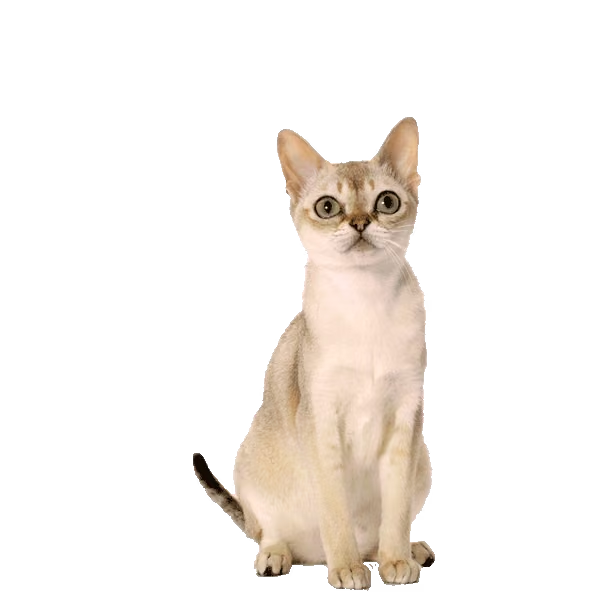
Singapura
The Singapura is one of the smallest cat breeds, prized for its curious, affectionate personality and big-eyed, pixie-like charm.
- Size
- Small
- Lifespan
- 11–15 years
- Origin
- Unknown
- Temperament
- Curious
- Standard colors
- Sable
Characteristics
Coat and grooming
How the Singapura coat is built, and what that means when you groom it.
- Coat layers
- Single coat
- Coat texture
- Smooth
- Coat length
- Short
- Shedding
- Low shedding
Singapura colors and patterns
What each club's breed standard says about every Singapura color and pattern. Point at a ruling to see the club's own wording.
Breed standards describe the Singapura in Sable. Standard patterns: Ticked tabby and Sepia.
| Color or pattern | TICA | CFA | FIFE | GCCF |
|---|---|---|---|---|
| Sable | Standard (“Sable Ticked”) | Standard (“Sepia agouti”) | Standard (“Seal sepia”) | Standard (“sepia brown”) |
| Patterns | ||||
| Ticked tabby | Standard (“Ticked tabby”) | Standard (“agouti”) | Standard (“ticked”) | Standard (“ticked”) |
| Sepia | Standard (“Sepia”) | Standard (“Sepia”) | Standard (“sepia”) | Standard (“sepia”) |
%22%3E%3Cg%20fill%3D%22none%22%20stroke%3D%22%231C1C1C%22%20stroke-width%3D%221.25%22%20stroke-linecap%3D%22round%22%20stroke-linejoin%3D%22round%22%3E%3Cpath%20d%3D%22M55.8%2023.1l-0.3%201.9M7.5%2020.6l0.6%201.7M43.9%2028.2l-0.3%201.7M39.2%2031.8l0.6%201.1M9.8%2028l-0.3%201.8M20.7%2029.6l0.1%202M39.9%2031.8l0.2%201.3M17.1%2022.1l0.7%201.1M38.7%2052.5l0.9%201.4M45.2%2051l0.6%201.2M50.4%2024.5l0.1%201.9M18.8%2054.3l0%202.1M17.3%2036l0.3%201.2M25.9%2029.2l0.2%201.6M49.4%2036.5l0.7%201.3M40.1%2025l-0.6%202.1M27.5%2025.6l0.4%201.2M8.8%2024.9l0.1%201.8M47.9%2022.8l0.5%201.3M32.8%2031.8l0.8%201.9M23.4%2050.6l-0.2%202.2M28.4%2023.9l-0.5%201.6M24.9%2040.6l0.4%201.7M58.1%2015.3l-0.5%201.7M29.6%2021.6l1.1%201.9M49.8%2029.3l0.4%202M5.8%2019.1l0%201.3M13.1%2025.3l0.6%201.5M52%2027l0.6%201.7M8%2022.4l0.5%201.1M18.4%2031.3l-0.1%201.6M24.8%2021.5l-0.6%202.1M53.6%2021.9l0.2%201.5M53.2%2022.7l0.3%201.6M33.5%2028.3l-0.6%201.7M22.9%2020.9l-0.4%201.3M57.4%2010.8l-0.2%202M48%2053.3l-0.6%201.8M17%2015.6l0.6%201.1M25.7%2031.6l0.9%201.1M22.6%2053.7l0.1%201.6M17.5%2017.5l-0.4%201.7M19.4%2046.5l0.1%201.8M27.3%2037.2l-0.6%202M12.9%2024.8l0.5%201.8M28.5%2030.1l0.3%201.5M17.7%2021.4l-0.4%201.2M18%2052.8l-0.3%201.8M9.1%2021.6l1.3%201.8M38.4%2043.5l0.1%201.9M32.1%2021.8l1.1%201.6M32%2034.5l0%201.9M53.8%2022.7l0.1%202M18.2%2028.8l0.4%201.8M19.3%2019.5l-0.2%201.3M40.4%2028.1l0.8%201.1M46.7%2037.8l-0.2%201.3M51.2%2029.1l-0.6%201.8M20.7%2031l0.1%201.9M30.6%2035.4l0.9%201.9M36.3%2021.9l-0.5%201.9M45.9%2039.6l0.1%201.8M35.5%2035.5l-0.3%201.3M43.2%2024.8l-0.2%201.9M42.8%2023.2l0.8%201.8M15.8%2026l0.8%201.5M38.2%2048.8l-0.4%201.3M35.2%2029.3l-0.6%202M42.9%2029.6l-0.1%201.2M30%2034.8l1%201.4M30.1%2027l0.6%202M45.5%2033.7l0.7%201.1M49.1%2028.9l0.5%201.4M52%2029.1l-0.6%202M29.5%2027.2l-0.6%202M55.9%2016.3l-0.5%201.7M29%2022.9l0.6%201.7M34.3%2029.2l0.4%202.1M29.4%2024.1l0.1%201.5M21.6%2040.3l-0.1%201.6M43.5%2034l0.8%201.8M46.1%2048.7l0.4%201.9M40.8%2052.9l0.4%201.5M45.9%2039.5l-0.1%202.1M7.6%2028.3l0.2%201.7M16.7%2054.8l0.7%201.2M24.8%2033.3l-0.3%201.2M25.6%2038.4l-0.1%201.9M24.4%2052.5l0.6%201.4M40.7%2047.1l0.2%202.1M37.8%2047.4l0.6%201.3M10.2%2022l0.2%202.1M7.3%2017.6l0.8%201.9M44.8%2042.9l0.4%201.1M38.2%2029l-0.1%201.9M56.6%2015.8l-0.2%201.5M38.1%2033.9l1.1%201.6M42.9%2027.2l-0.3%201.2M6%2020.9l0.7%201.1M55.5%2013.2l-0.2%201.3M19.6%2028.9l0.3%202M35.9%2034l-0.2%202.1M12.8%2016l0.2%202.1M45.9%2038.9l-0.2%201.2M46.5%2029.8l-0.3%201.7M31.1%2037l0.7%201.6M37.7%2030.8l0.8%201.6M20.5%2024.7l1.2%201.5%22%2F%3E%3Cpath%20d%3D%22M21.8%2031.8l0.7%202M12.1%2027.4l0.1%202.1M6.5%2020.9l-0.3%201.3M37.6%2048l1%201.6M47.8%2039.2l0.7%201.3M47.3%2050l-0.5%201.5M43.9%2033.6l-0.4%202.1M39.8%2032.3l-0.1%201.3M18.2%2018.3l0.1%201.5M25.1%2038.2l0.7%201.4M42.9%2028.2l0.9%201.9M17.3%2029.8l0.9%201.9M50.6%2028.2l0.5%201.9M40.1%2025.6l0%201.2M29.6%2023.7l0%201.8M57.7%2013.6l0.5%201.5M22.7%2030.1l-0.1%202.2M46.8%2049.4l0.6%201.1M47.8%2052.5l-0.4%201.6M31.5%2020.6l0.6%202M20.5%2030.6l0.6%201.6M37.3%2027.1l-0.2%201.8M36.4%2037.5l0.9%201.1M21.7%2042.2l-0.2%201.2M42.8%2022.6l0.4%201.8M37.9%2040.4l0.5%201.5M52.6%2023.4l0.4%202M34.2%2027.8l0.8%201.4M16.1%2023l1.1%201.5M55.6%2021.9l0.4%201.6M17.6%2053.4l0.9%201.5M41.9%2030l1%201.7M16.8%2054.6l0.4%202.2M40.3%2030.9l0.6%201.4M18.9%2034.3l1.3%201.6M34.5%2021.7l0.5%201.8M42.4%2036.5l1%201.8M23.3%2040.2l-0.3%201.7M21.1%2029.8l0.5%201.4M58%2010.8l0%202M41.7%2035.4l0.8%202M10.3%2021.9l-0.2%201.7%22%2F%3E%3C%2Fg%3E%3Cpath%20d%3D%22M15%2047H50M15%2051H50%22%20fill%3D%22none%22%20stroke%3D%22%231C1C1C%22%20stroke-width%3D%221.6%22%20stroke-linecap%3D%22round%22%20stroke-linejoin%3D%22round%22%2F%3E%3Ccircle%20cx%3D%2259.8%22%20cy%3D%227.8%22%20r%3D%222%22%20fill%3D%22%231C1C1C%22%2F%3E%3Cpath%20d%3D%22M12.6%2015.5l.6%204.2M15%2015.5l-.2%204.2%22%20fill%3D%22none%22%20stroke%3D%22%231C1C1C%22%20stroke-width%3D%221%22%20stroke-linecap%3D%22round%22%20stroke-linejoin%3D%22round%22%2F%3E%3C%2Fg%3E%3Cuse%20href%3D%22%23s%22%20fill%3D%22none%22%20stroke%3D%22%233B2A20%22%20stroke-opacity%3D%220.6%22%20stroke-width%3D%221%22%20stroke-linejoin%3D%22round%22%2F%3E%3Cpath%20d%3D%22M3.4%2022.3L5.4%2022.5L4.3%2024Z%22%20fill%3D%22%23E8A0B4%22%2F%3E%3Ccircle%20cx%3D%229.6%22%20cy%3D%2221.2%22%20r%3D%221.1%22%20fill%3D%22%231C1C1C%22%2F%3E%3C%2Fsvg%3E)
%22%3E%3Crect%20x%3D%220%22%20y%3D%220%22%20width%3D%2264%22%20height%3D%2264%22%20fill%3D%22%23847865%22%20fill-opacity%3D%220.7%22%2F%3E%3Cpath%20d%3D%22M5.5%2017L7.5%207L12%2015ZM14%2015L17.5%207L20%2018.5Z%22%20fill%3D%22%23847865%22%2F%3E%3Cellipse%20cx%3D%227.6%22%20cy%3D%2223.6%22%20rx%3D%225%22%20ry%3D%225.2%22%20fill%3D%22%23847865%22%2F%3E%3Crect%20x%3D%220%22%20y%3D%2244%22%20width%3D%2264%22%20height%3D%2220%22%20fill%3D%22%23847865%22%2F%3E%3Cpath%20d%3D%22M50%2027L53.5%205L64%203L64%2013L59%2024L53%2033Z%22%20fill%3D%22%23847865%22%2F%3E%3C%2Fg%3E%3Cuse%20href%3D%22%23s%22%20fill%3D%22none%22%20stroke%3D%22%233B2A20%22%20stroke-opacity%3D%220.6%22%20stroke-width%3D%221%22%20stroke-linejoin%3D%22round%22%2F%3E%3Cpath%20d%3D%22M3.4%2022.3L5.4%2022.5L4.3%2024Z%22%20fill%3D%22%23E8A0B4%22%2F%3E%3Ccircle%20cx%3D%229.6%22%20cy%3D%2221.2%22%20r%3D%221.1%22%20fill%3D%22%231C1C1C%22%2F%3E%3C%2Fsvg%3E)
| Color or pattern | TICA | CFA | FIFE | GCCF |
|---|---|---|---|---|
| Hazel | Standard (“hazel”) | Standard (“hazel”) | Standard (“hazel”) | Standard (“hazel”) |
| Copper | Standard (“copper”) | No ruling | No ruling | No ruling |
| Yellow | No ruling | Standard (“yellow”) | No ruling | Standard (“yellow”) |
| Gold | Standard (“gold”) | No ruling | No ruling | No ruling |
| Green | Standard (“Celadon green, green”) | Standard (“green”) | Standard (“brilliant green”) | Standard (“green”) |
| Blue | Disqualifying (“definite blue”) | Disqualifying (“blue”) | No ruling | No ruling |
| Aqua | Disqualifying (“aqua”) | No ruling | No ruling | No ruling |
| Color or pattern | TICA | CFA | FIFE |
|---|---|---|---|
| Pink | Standard (“pale to dark salmon”) | Standard (“pale to dark salmon”) | Standard (“pale to dark salmon”) |
What the rulings mean
- Standard
- Described by the club's breed standard.
- Disqualifying
- The club's breed standard disqualifies an animal of this colour or pattern.
Color changes
How a Singapura's colors can change over its life.
Pinkchanges toSeal
Nose · With age · from 1 to 52 weeks
Pinkchanges toBlue
Nose · With age · from 1 to 52 weeks
Pinkchanges toChocolate
Nose · With age · from 1 to 52 weeks
Pinkchanges toLilac
Nose · With age · from 1 to 52 weeks
Sources
Each ruling comes from the club's published breed standard or color list.
About the Singapura
South Africa's growing pedigree cat community has discovered the Singapura, a compact, low-maintenance breed whose indoor temperament suits the country's diverse climates and the practical realities of load-shedding households.
The South African pedigree cat scene has grown steadily over the past decade, with SAFF (South African Feline Federation) shows in Johannesburg, Cape Town, and Durban attracting more participants and spectators each year. Among the breeds that have quietly built a following is the Singapura, a small shorthaired cat from outside the usual South African choices, valued for its temperament as much as its looks.
Adults weigh 4 to 8 pounds, making this one of the smallest pedigreed breeds available to South African owners. The body is firm and well-muscled for its size, and the cat carries itself with a quick, purposeful energy. Large almond-shaped eyes and wide ears give the face a permanently alert expression. The coat is short, ticked, and minimal in its maintenance demands: an ivory base with dark brown banding on each hair, producing a warm, sleek coat that lies close to the body.
Practical considerations matter to South African pet owners in a way that is specific to this country. Load-shedding, security concerns, and extreme climate variation between the KwaZulu-Natal coast, the Western Cape, and the Gauteng highveld all shape how people care for animals. The Singapura's indoor preference, low-maintenance coat, and adaptable temperament happen to suit these conditions well.
| Attribute | Detail |
|---|---|
| Origin | Unknown (Singapore connection disputed) |
| Size | Small (4 to 8 pounds) |
| Lifespan | 11 to 15 years |
| Group / role | Shorthaired companion cat |
| Good with | Families, individuals, other cats and calm dogs |
Who it suits
The Singapura suits South African households where someone is home for a reasonable portion of each day or where a second cat provides company. It adapts to townhouses, security complexes, and freestanding homes equally well. It is not a cat for large outdoor gardens; its preference is firmly for indoor space with good perching options. Homes that are completely empty from early morning until late evening, without any companion animal, are less suitable for a breed that values social connection as strongly as this one does.
History and origin
Named after Singapore's Malay identity, the Singapura was developed from cats reportedly brought from Singapore to the United States in the 1970s, though the founding story is contested.
Small ticked cats have been part of Singapore's street cat population for generations. In the 1970s, American breeders brought cats said to originate from Singapore to the United States and began a formal breeding programme around them, naming the resulting breed Singapura after the city's Malay name.
The founding history was later disputed. Documentation of the imported cats was challenged, and accounts emerged suggesting some founding animals may have been in North America before the Singapore connection was established. International registries including SAFF-affiliated bodies settled on listing the verified origin as unknown, a position that reflects the unresolved evidence honestly.
The breed reached South Africa through importation from established international programmes. SAFF-registered breeders in Gauteng and the Western Cape have maintained the breed in South Africa, and the Singapura appears at SAFF shows in Johannesburg, Cape Town, and Durban, though entries are typically small given the limited number of breeding pairs operating here. Prospective South African owners should expect waiting lists and may need to enquire with breeders well in advance.
Appearance
The Singapura is small but solidly built, with one recognised coat colour, large almond-shaped eyes, and ears that appear generous on the rounded head.
The Singapura creates an impression of delicacy that is immediately corrected when you pick one up. The body is compact and surprisingly dense and firm. The head is rounded, the muzzle short, and the ears noticeably wide. The eyes are the breed's most striking feature: very large, almond-shaped, and richly expressive, they dominate the face and give the cat its characteristic look of alert engagement. The tail tapers to a blunt, rounded tip.
| Feature | Standard |
|---|---|
| Height | About 6 to 8 inches at the shoulder |
| Weight | 4 to 8 pounds |
| Coat | Short, fine, close-lying, ticked |
| Colour | Sepia agouti (warm ivory ground with dark brown ticking) |
| Eyes | Large, almond-shaped; hazel, green, or yellow |
Coat and colour
The Singapura has one recognised pattern: sepia agouti ticking. Each hair carries alternating bands of ivory and brown, resulting in a coat that appears warm and earthy in tone, with slight variation depending on the light. Faint tabby lines cross the forehead, and the underside is lighter than the back. The coat lies very close to the body, sheds minimally, and needs only a weekly brush. For South African owners dealing with dust from dry highveld winters or humid coastal summers, a minimal-shedding coat is a real practical advantage.
Temperament
Affectionate, sociable, and quietly curious, the Singapura builds strong bonds with its household and remains playful and engaged well into adulthood.
The Singapura is the kind of cat that South African owners often describe as 'always underfoot,' and they say it fondly. This breed positions itself near people. It involves itself in household activity, follows family members between rooms, and settles close rather than at a distance. Its communication is soft and unobtrusive: quiet trills and murmurs rather than demanding meows, which is a consideration in the security-complex living common in South African cities.
With other cats the Singapura is generally easy-going. Keeping two cats together is a common approach among South African owners who work long days, and the Singapura adapts well to a companion animal. With calm dogs it tends toward curiosity rather than alarm. With children who handle it gently, it is warm and tolerant.
The breed maintains its playful energy well into maturity. A Singapura at seven or eight years old is still interested in a thrown toy or a wand session, which keeps daily interaction meaningful for both cat and owner across a long ownership relationship.
| Trait | Rating |
|---|---|
| Affection | 5 |
| Energy | 4 |
| Trainability | 4 |
| Vocalness | 2 |
| Shedding | 2 |
Care and grooming
The Singapura is low-maintenance to groom and adapts well to South African conditions, including the challenges of load-shedding and climate variation across the country.
Grooming
- Brush the short coat once a week with a soft bristle brush or rubber grooming mitt.
- Trim claws every two to three weeks.
- Check ears weekly and clean gently with a dry or slightly damp cotton pad as needed.
- Begin tooth brushing early in the cat's life and arrange professional dental scaling as your vet recommends.
- Bathing is rarely necessary given the self-maintaining nature of the short coat.
Exercise
- Schedule at least two interactive play sessions daily using a wand toy or a thrown ball.
- Install a cat tree or wall-mounted shelving to give the cat climbing and elevation options.
- Rotate the toy selection every couple of weeks to prevent boredom in an active, alert cat.
- During load-shedding when power is unavailable, keep a supply of manually operated toys: feather wands, crinkle balls, and cardboard tunnels need no electricity.
Environment
The Singapura adapts to South Africa's range of climates. On the KwaZulu-Natal coast, humidity is the variable to manage: ensure ventilation and weekly ear checks. In Gauteng's highveld, winter nights drop sharply, and this short-coated, small-bodied cat needs a warm sleeping area away from cold floors and exterior walls. In Cape Town's Mediterranean climate, the mild winters and dry summers are comfortable for the breed year-round.
Load-shedding deserves specific thought. When power is off, electronic cat toys, electric heating pads, and fans are unavailable. Battery-operated fans, warm blankets, and manual toys cover the main needs. In extended summer load-shedding without air conditioning, ensure the cat has access to the coolest room in the house and fresh water at all times.
Nutrition and feeding
Accurate portioning of a quality protein-rich diet is essential for this small breed, with wet food a sound choice for hydration in South Africa's warmer regions.
The Singapura's small frame makes overfeeding easy and consequences visible quickly. Weigh portions consistently rather than estimating by eye. Choose a complete commercial cat food, South African or imported, with a named animal protein listed first. Good quality options are available through major pet retailers and specialist stores in Johannesburg, Cape Town, and Durban.
In KwaZulu-Natal's heat or during a Gauteng summer, wet food is worth prioritising: it contributes directly to daily water intake and supports kidney health over the long term. A water fountain placed away from the food bowl tends to increase how much a cat drinks. In winter on the highveld, warm wet food served at room temperature is often more appealing to the cat than food served cold.
| Life stage | Amount per day | Meals |
|---|---|---|
| Kitten (to 12 months) | Per label, fed to appetite | 3 to 4 |
| Adult (1 to 7 years) | About 100 to 140 g wet, or label amount dry | 2 |
| Senior (7 years and older) | Adjust to body condition and activity level | 2 |
Treats and supplements
Limit treats to a small proportion of daily calories to avoid unbalancing the diet. A cat eating a complete commercial food does not normally benefit from additional supplementation. Before adding fish oil, joint support, or any other product, discuss it with a South African veterinarian familiar with feline nutrition, particularly given the breed's small body weight.
Health and lifespan
The Singapura is generally healthy with an 11-to-15-year lifespan, and benefits from SAFF breeder health screening and South Africa's improving veterinary infrastructure.
The Singapura is a robust breed in responsible hands. The small founding gene pool means inherited conditions are present in the breed, and health screening by breeders is expected practice. SAFF-registered breeders follow guidelines that include health testing as a condition of registration.
South Africa's veterinary sector has developed significantly, with specialist and referral practices now operating in all major cities. Pet insurance is available through several South African providers, which is worth considering for a pedigreed cat given the potential cost of specialist care for conditions like pyruvate kinase deficiency.
| Condition | Signs | Note |
|---|---|---|
| Pyruvate kinase deficiency (PKDef) | Lethargy, pale gums, weakness from anaemia | Inherited; DNA test available; both breeding parents must be tested |
| Uterine inertia | Labour stalls in queens; kittens cannot be delivered | Associated with small body size; requires on-call veterinary support |
| Dental disease | Odour, drooling, reluctance to eat | Managed with consistent brushing and professional dental scaling |
Preventive care
- Follow the vaccination schedule recommended by your South African vet, covering feline panleukopenia, herpesvirus, calicivirus, and rabies.
- Maintain flea, tick, and intestinal parasite prevention appropriate to your region: tick burden is higher in KwaZulu-Natal and bushveld areas.
- Schedule annual health checks; from around age seven, twice-yearly visits are advisable.
- Build dental care into the weekly routine and arrange professional cleanings as needed.
- Request PKDef DNA test results for both parents from any SAFF-registered breeder before acquiring a kitten.
Training
Alert and people-motivated, the Singapura responds well to consistent positive training and is among the more trainable breeds available to South African owners.
The Singapura is not an average cat when it comes to trainability. It pays attention, links actions to outcomes reliably, and is motivated by both food rewards and social interaction. This makes practical training goals, such as reliable recall, scratching post use, and carrier acceptance, achievable within a few weeks of a kitten settling in.
For South African owners who take their cats to SAFF shows in Johannesburg or Cape Town, a well-handled, carrier-accustomed Singapura is a better show cat and a less stressed one. Starting handling and carrier conditioning from the first week at home is the most efficient approach.
Basics
- Set up a clean litter tray in a quiet corner before the kitten's first evening in the house.
- Direct every scratch to an appropriate post and reward the cat immediately each time it uses the post.
- Say the cat's name before every positive interaction until the name produces a reliable, consistent response.
- Work on one new behaviour at a time in sessions of five to ten minutes.
- Leave the carrier accessible between journeys, with familiar bedding inside, to build a neutral or positive association with it.
Breeding
Small litters, a compact queen prone to whelping difficulty, and a limited gene pool make Singapura breeding in South Africa a carefully managed undertaking with strong veterinary support.
Singapuras reach sexual maturity at 7 to 12 months, but SAFF-registered South African breeders wait until a female is fully physically mature before her first mating. Gestation runs 63 to 67 days. Average litters of two to three kittens mean that the number of Singapura kittens available in South Africa at any given time is very small.
Some South African breeders have supplemented their local breeding programmes by importing cats from Britain, Europe, or Australia to broaden the gene pool. Import regulations and the cost of long-distance transport make this a significant logistical and financial undertaking, but it is sometimes the only way to introduce meaningful genetic diversity.
The queen's compact frame creates a genuine risk of uterine inertia during labour. Breeders should have a relationship with a South African veterinary practice with feline obstetric experience before any whelping is planned, and a plan for emergency caesarean surgery should be in place. DNA testing for pyruvate kinase deficiency is required for both cats in any breeding pair. Kittens stay with their mother for at least 12 weeks.
| Metric | Value |
|---|---|
| Sexual maturity | About 7 to 12 months |
| Gestation | 63 to 67 days |
| Average litter size | 2 to 3 kittens |
| Weaning age | About 8 weeks |
| Recommended rehoming age | 12 weeks or older |
A registered Singapura: the record behind the chip
Free lifetime registration for your Singapura with United Pet Club, searchable by every SPCA branch, at home and abroad.
Registering a Singapura in South Africa
Start with the basics: her name, her colouring, a photo, your cell number. Saved, that is a lifetime record with United Pet Club, and it costs nothing at any point. Cat registration works with or without a microchip in the picture.
A scanner reads your Singapura's chip in seconds; the registry decides whether the reading goes anywhere. Capture the 15-digit number in your free United Pet Club account and it goes straight to your phone. Free for life, every brand accepted, every update free. Microchip registration closes the loop.
How do I register my Singapura in South Africa?
Sign up for a free United Pet Club account, add her name, colouring, and a photo, and save. The lifetime plan holds the profile at no cost for her whole life, indoors or out.
How do I register my Singapura's microchip?
Capture the 15-digit number from your vet's paperwork in your free account with your current contact details. The plan accepts every chip brand and never charges for the record or its updates.
Do cats have to be microchipped in South Africa?
No law requires it, but the SPCA recommends it and shelters chip on adoption as a matter of course. A chip only speaks for a Singapura once the number is registered, and that registration is free here.
What does registering a Singapura cost?
Not a rand. Profile, microchip record, and every update are covered by the free lifetime plan, with nothing to renew.
Frequently asked questions
Questions from South African owners about the Singapura's adaptability to South African conditions, load-shedding, availability, and where to find a SAFF-registered breeder.
How big does a Singapura get?
Adults weigh 4 to 8 pounds and stand about 6 to 8 inches at the shoulder. The body is compact but distinctly muscular and feels denser than the small frame suggests.
How does the Singapura cope with load-shedding?
Reasonably well with preparation. Battery-operated fans cover cooling needs in summer, and self-warming pet beds or an extra blanket cover warmth needs in winter when heating is unavailable. Keep manual toys available so interactive play is possible when electronic toys cannot run.
Which South African climate suits the Singapura best?
The breed is adaptable across South Africa's climates. The KwaZulu-Natal coast is warmest and closest to its origins; Gauteng requires attention to cold winter nights; and Cape Town's mild Mediterranean conditions are comfortable year-round. Indoor living with appropriate seasonal adjustments works in all three.
How do I find a SAFF-registered Singapura breeder?
Contact the South African Feline Federation (SAFF) directly for a current list of registered breeders. Attending cat shows in Johannesburg or Cape Town is another way to meet breeders in person. Expect waiting lists and potentially long advance notice required.
Is the Singapura a good indoor-only cat for a Johannesburg townhouse or security complex?
Yes, well suited. This breed does not push for outdoor access, is quiet enough for close-proximity housing, and bonds strongly with its household. A cat tree and daily play sessions address its activity needs within the indoor space.
Are Singapuras difficult to find in South Africa?
They are uncommon. Small litters, a limited number of active SAFF-registered breeders, and the logistical complexity of international imports all contribute. Prospective South African owners should begin enquiries well ahead of when they want a kitten.