
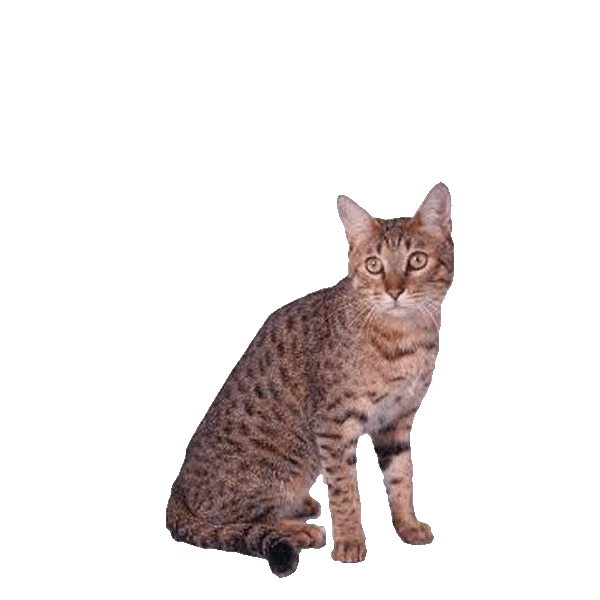
California Spangled
The California Spangled is a rare, affectionate cat bred to resemble a wild spotted feline while loving human company.
- Size
- Medium
- Lifespan
- 12–15 years
- Origin
- United States
- Temperament
- Affectionate
Characteristics
Coat and grooming
How the California Spangled coat is built, and what that means when you groom it.
- Coat layers
- Single coat
- Coat texture
- Smooth
- Coat length
- Short
- Shedding
- Moderate shedding
California Spangled colors and patterns
What each club's breed standard says about every California Spangled color and pattern. Point at a ruling to see the club's own wording.
%22%3E%3Cpath%20d%3D%22M5.5%2017L7.5%207L12%2015ZM14%2015L17.5%207L20%2018.5Z%22%20fill%3D%22%23847865%22%2F%3E%3Cellipse%20cx%3D%227.6%22%20cy%3D%2223.6%22%20rx%3D%225%22%20ry%3D%225.2%22%20fill%3D%22%23847865%22%2F%3E%3Crect%20x%3D%220%22%20y%3D%2244%22%20width%3D%2264%22%20height%3D%2220%22%20fill%3D%22%23847865%22%2F%3E%3Cpath%20d%3D%22M50%2027L53.5%205L64%203L64%2013L59%2024L53%2033Z%22%20fill%3D%22%23847865%22%2F%3E%3C%2Fg%3E%3Cuse%20href%3D%22%23s%22%20fill%3D%22none%22%20stroke%3D%22%233B2A20%22%20stroke-opacity%3D%220.6%22%20stroke-width%3D%221%22%20stroke-linejoin%3D%22round%22%2F%3E%3Cpath%20d%3D%22M3.4%2022.3L5.4%2022.5L4.3%2024Z%22%20fill%3D%22%23E8A0B4%22%2F%3E%3Ccircle%20cx%3D%229.6%22%20cy%3D%2221.2%22%20r%3D%221.1%22%20fill%3D%22%231C1C1C%22%2F%3E%3C%2Fsvg%3E)
%22%3E%3Cpath%20d%3D%22M20%2021Q34%2018.8%2048%2022%22%20fill%3D%22none%22%20stroke%3D%22%231C1C1C%22%20stroke-width%3D%222.2%22%20stroke-linecap%3D%22round%22%20stroke-linejoin%3D%22round%22%2F%3E%3Cellipse%20cx%3D%2223.8%22%20cy%3D%2226%22%20rx%3D%221.8%22%20ry%3D%221.2%22%20fill%3D%22%231C1C1C%22%2F%3E%3Cellipse%20cx%3D%2229%22%20cy%3D%2226%22%20rx%3D%221.8%22%20ry%3D%221.2%22%20fill%3D%22%231C1C1C%22%2F%3E%3Cellipse%20cx%3D%2233.8%22%20cy%3D%2226%22%20rx%3D%221.8%22%20ry%3D%221.2%22%20fill%3D%22%231C1C1C%22%2F%3E%3Cellipse%20cx%3D%2239%22%20cy%3D%2226%22%20rx%3D%221.8%22%20ry%3D%221.2%22%20fill%3D%22%231C1C1C%22%2F%3E%3Cellipse%20cx%3D%2243.6%22%20cy%3D%2226%22%20rx%3D%221.8%22%20ry%3D%221.2%22%20fill%3D%22%231C1C1C%22%2F%3E%3Cellipse%20cx%3D%2225.8%22%20cy%3D%2231.5%22%20rx%3D%221.8%22%20ry%3D%221.2%22%20fill%3D%22%231C1C1C%22%2F%3E%3Cellipse%20cx%3D%2231%22%20cy%3D%2231.5%22%20rx%3D%221.8%22%20ry%3D%221.2%22%20fill%3D%22%231C1C1C%22%2F%3E%3Cellipse%20cx%3D%2235.6%22%20cy%3D%2231.5%22%20rx%3D%221.8%22%20ry%3D%221.2%22%20fill%3D%22%231C1C1C%22%2F%3E%3Cellipse%20cx%3D%2240.7%22%20cy%3D%2231.5%22%20rx%3D%221.8%22%20ry%3D%221.2%22%20fill%3D%22%231C1C1C%22%2F%3E%3Cellipse%20cx%3D%2246.3%22%20cy%3D%2231.5%22%20rx%3D%221.8%22%20ry%3D%221.2%22%20fill%3D%22%231C1C1C%22%2F%3E%3Cellipse%20cx%3D%2222.1%22%20cy%3D%2236%22%20rx%3D%221.8%22%20ry%3D%221.2%22%20fill%3D%22%231C1C1C%22%2F%3E%3Cellipse%20cx%3D%2228.6%22%20cy%3D%2236%22%20rx%3D%221.8%22%20ry%3D%221.2%22%20fill%3D%22%231C1C1C%22%2F%3E%3Cellipse%20cx%3D%2233.7%22%20cy%3D%2236%22%20rx%3D%221.8%22%20ry%3D%221.2%22%20fill%3D%22%231C1C1C%22%2F%3E%3Cellipse%20cx%3D%2239.5%22%20cy%3D%2236%22%20rx%3D%221.8%22%20ry%3D%221.2%22%20fill%3D%22%231C1C1C%22%2F%3E%3Cpath%20d%3D%22M15%2044H50M15%2048H50%22%20fill%3D%22none%22%20stroke%3D%22%231C1C1C%22%20stroke-width%3D%221.8%22%20stroke-linecap%3D%22round%22%20stroke-linejoin%3D%22round%22%2F%3E%3Cpath%20d%3D%22M50%2022H62M51%2017H62M52%2012H63%22%20fill%3D%22none%22%20stroke%3D%22%231C1C1C%22%20stroke-width%3D%221.8%22%20stroke-linecap%3D%22round%22%20stroke-linejoin%3D%22round%22%2F%3E%3Ccircle%20cx%3D%2259.8%22%20cy%3D%227.8%22%20r%3D%222%22%20fill%3D%22%231C1C1C%22%2F%3E%3Cpath%20d%3D%22M12.6%2015.5l.6%204.2M15%2015.5l-.2%204.2M9%2025.2l4.6%201M9.6%2027.4l4%20.2%22%20fill%3D%22none%22%20stroke%3D%22%231C1C1C%22%20stroke-width%3D%221.1%22%20stroke-linecap%3D%22round%22%20stroke-linejoin%3D%22round%22%2F%3E%3C%2Fg%3E%3Cuse%20href%3D%22%23s%22%20fill%3D%22none%22%20stroke%3D%22%233B2A20%22%20stroke-opacity%3D%220.6%22%20stroke-width%3D%221%22%20stroke-linejoin%3D%22round%22%2F%3E%3Cpath%20d%3D%22M3.4%2022.3L5.4%2022.5L4.3%2024Z%22%20fill%3D%22%23E8A0B4%22%2F%3E%3Ccircle%20cx%3D%229.6%22%20cy%3D%2221.2%22%20r%3D%221.1%22%20fill%3D%22%231C1C1C%22%2F%3E%3C%2Fsvg%3E)
%22%3E%3Crect%20x%3D%220%22%20y%3D%220%22%20width%3D%2264%22%20height%3D%2264%22%20fill%3D%22%231C1C1C%22%2F%3E%3Crect%20x%3D%220%22%20y%3D%220%22%20width%3D%2264%22%20height%3D%2264%22%20fill%3D%22url(%23g)%22%2F%3E%3Cpath%20d%3D%22M17.5%2030.4l0.2%203.7M48.5%2036.2l-0.3%203.1M40.1%2038.4l0.7%202.8M21.3%2029.4l0.3%202.9M38.5%2024l-0.7%202.7M19.4%2041l0.9%203.8M47.2%2026.3l0.3%203M28.1%2031.1l-0.4%202.6M21%2027l-0.7%203.4M20.1%2035l0.7%202.8M27.4%2035.9l1.2%203.6M31.5%2032.2l0.5%202.5M43.7%2038.4l0.2%202.9M15.5%2027.6l0.2%203M33.5%2029.7l0%203.8M50%2028l0.5%203.8M50.1%2029.5l-0.2%203.3M39.4%2037.1l0.8%203M31.1%2025l1%203.1M19.5%2028.3l0.3%203.1M29.5%2034.2l-0.3%203.8M50.4%2033.8l-0.5%202.6M39.3%2028.8l1.2%203.8M36.6%2037.2l-0.3%202.8M41.6%2026.3l-0.7%202.7M24.2%2038.3l-0.2%203.3M20.5%2033.1l0.7%203M24%2032.2l-0.7%203.3M42.7%2038.5l-0.6%203.8M20.4%2038.2l0.2%203.3M37.5%2036.9l-0.8%202.4M36%2035.3l-0.7%202.9M46.2%2033.2l-0.8%203.8M38.1%2030.5l-0.6%203.6M29%2038.9l-0.7%203.7M42.8%2031.3l0.1%203.1M22.5%2025.1l0.4%202.9M47.4%2025l0.2%203M24.7%2032l-0.8%203.2M14.8%2024.5l1.1%203.3%22%20fill%3D%22none%22%20stroke%3D%22%23F5F5F0%22%20stroke-width%3D%221%22%20stroke-opacity%3D%220.85%22%20stroke-linecap%3D%22round%22%20stroke-linejoin%3D%22round%22%2F%3E%3C%2Fg%3E%3Cuse%20href%3D%22%23s%22%20fill%3D%22none%22%20stroke%3D%22%233B2A20%22%20stroke-opacity%3D%220.6%22%20stroke-width%3D%221%22%20stroke-linejoin%3D%22round%22%2F%3E%3Cpath%20d%3D%22M3.4%2022.3L5.4%2022.5L4.3%2024Z%22%20fill%3D%22%23E8A0B4%22%2F%3E%3Ccircle%20cx%3D%229.6%22%20cy%3D%2221.2%22%20r%3D%221.1%22%20fill%3D%22%231C1C1C%22%2F%3E%3C%2Fsvg%3E)
%22%3E%3Cellipse%20cx%3D%2247%22%20cy%3D%2225.7%22%20rx%3D%222.9%22%20ry%3D%222.3%22%20fill%3D%22%231C1C1C%22%20fill-opacity%3D%220.35%22%20stroke%3D%22%231C1C1C%22%20stroke-width%3D%221.5%22%20stroke-dasharray%3D%223.5%201.4%22%2F%3E%3Cellipse%20cx%3D%2235.8%22%20cy%3D%2238.8%22%20rx%3D%223%22%20ry%3D%222.5%22%20fill%3D%22%231C1C1C%22%20fill-opacity%3D%220.35%22%20stroke%3D%22%231C1C1C%22%20stroke-width%3D%221.5%22%20stroke-dasharray%3D%223.5%201.4%22%2F%3E%3Cellipse%20cx%3D%2258.3%22%20cy%3D%228.2%22%20rx%3D%223.3%22%20ry%3D%222.2%22%20fill%3D%22%231C1C1C%22%20fill-opacity%3D%220.35%22%20stroke%3D%22%231C1C1C%22%20stroke-width%3D%221.5%22%20stroke-dasharray%3D%223.5%201.4%22%2F%3E%3Cellipse%20cx%3D%2219.9%22%20cy%3D%2233.6%22%20rx%3D%223.3%22%20ry%3D%222.4%22%20fill%3D%22%231C1C1C%22%20fill-opacity%3D%220.35%22%20stroke%3D%22%231C1C1C%22%20stroke-width%3D%221.5%22%20stroke-dasharray%3D%223.5%201.4%22%2F%3E%3Cellipse%20cx%3D%2216.5%22%20cy%3D%2217.8%22%20rx%3D%223.4%22%20ry%3D%222.2%22%20fill%3D%22%231C1C1C%22%20fill-opacity%3D%220.35%22%20stroke%3D%22%231C1C1C%22%20stroke-width%3D%221.5%22%20stroke-dasharray%3D%223.5%201.4%22%2F%3E%3Cellipse%20cx%3D%226.3%22%20cy%3D%2220.2%22%20rx%3D%223.3%22%20ry%3D%222.4%22%20fill%3D%22%231C1C1C%22%20fill-opacity%3D%220.35%22%20stroke%3D%22%231C1C1C%22%20stroke-width%3D%221.5%22%20stroke-dasharray%3D%223.5%201.4%22%2F%3E%3Cellipse%20cx%3D%2232.3%22%20cy%3D%2221.3%22%20rx%3D%223.1%22%20ry%3D%222.4%22%20fill%3D%22%231C1C1C%22%20fill-opacity%3D%220.35%22%20stroke%3D%22%231C1C1C%22%20stroke-width%3D%221.5%22%20stroke-dasharray%3D%223.5%201.4%22%2F%3E%3Cellipse%20cx%3D%2256%22%20cy%3D%2220.7%22%20rx%3D%223.2%22%20ry%3D%222.4%22%20fill%3D%22%231C1C1C%22%20fill-opacity%3D%220.35%22%20stroke%3D%22%231C1C1C%22%20stroke-width%3D%221.5%22%20stroke-dasharray%3D%223.5%201.4%22%2F%3E%3Cellipse%20cx%3D%2217.6%22%20cy%3D%2252.3%22%20rx%3D%222.9%22%20ry%3D%222.4%22%20fill%3D%22%231C1C1C%22%20fill-opacity%3D%220.35%22%20stroke%3D%22%231C1C1C%22%20stroke-width%3D%221.5%22%20stroke-dasharray%3D%223.5%201.4%22%2F%3E%3Cellipse%20cx%3D%2211.2%22%20cy%3D%2227.1%22%20rx%3D%223.3%22%20ry%3D%222.3%22%20fill%3D%22%231C1C1C%22%20fill-opacity%3D%220.35%22%20stroke%3D%22%231C1C1C%22%20stroke-width%3D%221.5%22%20stroke-dasharray%3D%223.5%201.4%22%2F%3E%3Cellipse%20cx%3D%2219.5%22%20cy%3D%2243%22%20rx%3D%223%22%20ry%3D%222.4%22%20fill%3D%22%231C1C1C%22%20fill-opacity%3D%220.35%22%20stroke%3D%22%231C1C1C%22%20stroke-width%3D%221.5%22%20stroke-dasharray%3D%223.5%201.4%22%2F%3E%3Cellipse%20cx%3D%2247.4%22%20cy%3D%2235.3%22%20rx%3D%223.4%22%20ry%3D%222.1%22%20fill%3D%22%231C1C1C%22%20fill-opacity%3D%220.35%22%20stroke%3D%22%231C1C1C%22%20stroke-width%3D%221.5%22%20stroke-dasharray%3D%223.5%201.4%22%2F%3E%3Cellipse%20cx%3D%2228.2%22%20cy%3D%2232.4%22%20rx%3D%223.4%22%20ry%3D%222.3%22%20fill%3D%22%231C1C1C%22%20fill-opacity%3D%220.35%22%20stroke%3D%22%231C1C1C%22%20stroke-width%3D%221.5%22%20stroke-dasharray%3D%223.5%201.4%22%2F%3E%3Cellipse%20cx%3D%2224.3%22%20cy%3D%2223.3%22%20rx%3D%222.8%22%20ry%3D%222.4%22%20fill%3D%22%231C1C1C%22%20fill-opacity%3D%220.35%22%20stroke%3D%22%231C1C1C%22%20stroke-width%3D%221.5%22%20stroke-dasharray%3D%223.5%201.4%22%2F%3E%3C%2Fg%3E%3Cuse%20href%3D%22%23s%22%20fill%3D%22none%22%20stroke%3D%22%233B2A20%22%20stroke-opacity%3D%220.6%22%20stroke-width%3D%221%22%20stroke-linejoin%3D%22round%22%2F%3E%3Cpath%20d%3D%22M3.4%2022.3L5.4%2022.5L4.3%2024Z%22%20fill%3D%22%23E8A0B4%22%2F%3E%3Ccircle%20cx%3D%229.6%22%20cy%3D%2221.2%22%20r%3D%221.1%22%20fill%3D%22%231C1C1C%22%2F%3E%3C%2Fsvg%3E)
About the California Spangled cat
The California Spangled is a rare medium-sized domestic cat bred to resemble a small wild spotted feline while staying affectionate and people-oriented. Lifespan is about 12 to 15 years.
The leopard is one of the most culturally resonant animals in South Africa: a Big Five member, a creature of the Kruger and the Drakensberg foothills, a symbol that appears on the Springbok jerseys and in the names of countless towns across the country. South Africans who grow up close to that spotted wild beauty carry an instinct for it that is hard to find elsewhere. The California Spangled was designed to honour exactly that: a cat created in 1980s California to carry the spotted coat of a wild feline in the home, as a domestic companion with no wild ancestry at all. Every California Spangled is bred from ordinary domestic cats. The spots are a tribute to the wild, not a piece of it.
For households in Johannesburg's northern suburbs, Cape Town's bowl, or Durban's coastal neighbourhoods, this is a medium-sized cat that is lean, muscular, and marked by clear distinct spots across a short coat. It moves in a low, deliberate way that calls to mind a stalking leopard, and it seeks high perches from which to watch a room. Owners describe it as athletic and engaged rather than nervous: a confident cat that follows people around and takes an active interest in household life.
The California Spangled is also one of the rarest cat breeds on earth. The Southern African Cat Council (SACC) has no registered examples, and the global population numbers only in the hundreds. Anyone in South Africa interested in the breed would need to source a cat internationally and arrange an import from the United States.
| Attribute | Detail |
|---|---|
| Origin | United States |
| Size | Medium |
| Lifespan | 12 to 15 years |
| Role | Companion cat |
| Good with | Families, considerate children, other cats, calm dogs |
Who it suits
The California Spangled fits a household that wants an active, interactive cat and can give it daily attention. It settles well with people who are home often, enjoy play sessions, and can provide vertical space for climbing. It is less suited to a home that wants a quiet, independent cat or that is empty for long stretches each day.
History and origin of the California Spangled
The California Spangled was created in the United States during the 1980s to resemble a spotted wild cat using only domestic breeds, and it was introduced to the public in 1986.
The breed was conceived in California in the United States. The stated aim was to produce a house cat that looked like a small spotted wild feline, partly to draw attention to the hunting of wild spotted cats for their fur. The design goal was a wild appearance paired with a gentle, domestic temperament.
Development ran through the 1980s using a planned programme of domestic crosses. Several common breeds and domestic shorthairs contributed to the lines, with selection focused on a clearly spotted coat, a lean body, and a steady disposition. No wild cat species were used, which sets the California Spangled apart from hybrid breeds.
The cat was brought to public notice in 1986, when it appeared as a holiday catalogue offering. That unusual launch drew press coverage and curiosity. Interest in the look ran high, but the number of cats actually produced stayed small.
The breed never reached large registration numbers and remained scarce. As newer spotted breeds became available, breeding activity dropped further. The California Spangled is now regarded as very rare, with only a limited number of cats and breeders tied to the name. In South Africa a cat of this type would fall under SACC or TICA registration, though examples on the SA register are effectively unknown.
Appearance and coat of the California Spangled
The California Spangled is a medium, muscular cat with a short spotted coat over a lean frame, built to resemble a small wild hunting cat.
The California Spangled has a long, lean body with well-developed muscle and a level back. The legs are of moderate length and the cat carries its weight low as it walks, which adds to the impression of a stalking wild cat. The head is rounded with a defined muzzle and medium to large ears set high.
The defining feature is the coat pattern. Spots cover the back and sides and stand out clearly against the background colour. They can be round, oval, or block-shaped, and they stay separated rather than running together into stripes along the body.
| Feature | Description |
|---|---|
| Height | About 23 to 28 cm at the shoulder |
| Weight | 4 to 7 kg, males larger than females |
| Coat | Short, close-lying, with a fine texture |
| Colours | Spotted patterns in shades such as silver, bronze, gold, brown, charcoal, and black |
| Eyes | Rounded, in shades of brown to amber, set well apart |
Coat and colours
The coat is short and lies flat against the body, which keeps the spotted pattern crisp and easy to read. Background colours range from pale silver to warm bronze and gold tones, with the spots darker than the ground colour. The legs and tail often carry barring or banding, and the tail usually ends in a dark tip. Because the coat is short and single-layered, the pattern is the main visual point rather than coat volume.
Temperament and personality of the California Spangled
The California Spangled is affectionate, sociable, and confident, with high energy and a strong interest in play and human company despite its wild appearance.
Despite the wild look, the California Spangled is a friendly, people-focused cat. It forms close bonds with its household and often follows family members from room to room. Many enjoy being held and will settle on a lap once they have burned off energy in play.
With family the cat is affectionate and interactive. With strangers it is usually confident rather than shy, and it tends to investigate visitors instead of hiding. With other pets it is generally sociable and can live with other cats and calm dogs when introductions are gradual. Around small children it does well when handling is gentle and supervised.
This is an active and athletic cat. It likes to climb, jump to high spots, and play games that involve chasing and pouncing. Without enough activity it can grow restless, so daily interaction matters. It is moderately vocal and will use chirps and meows to get attention, though it is not a constantly noisy breed.
| Trait | Rating |
|---|---|
| Affection | 5 |
| Energy | 5 |
| Trainability | 4 |
| Vocalness | 3 |
| Shedding | 2 |
Care and grooming of the California Spangled
The California Spangled has low grooming needs thanks to its short coat but high activity needs, so daily play and climbing space are the main care priorities.
Grooming
- Brush once a week to lift loose hair and keep the short coat clean
- Wipe the coat with a damp cloth between brushings if you want extra shine
- Check and clean the ears regularly, and trim the nails every few weeks
- Brush the teeth several times a week to support dental health
- Bath only occasionally, since the coat rarely needs it
Exercise
- Set aside two or more active play sessions each day with wand or chase toys
- Provide climbing trees and high perches so the cat can jump and survey the room
- Rotate puzzle feeders and toys to keep the mind engaged
- Allow safe space to run, since this is a fast, athletic cat
Environment
The California Spangled adapts to a range of South African living situations: a suburban house in Johannesburg with a garden, a flat in the Cape Town city bowl, or a secure estate in Pretoria. This is an active, athletic breed, so an indoor or semi-indoor setup with plenty of enrichment works best. South Africa's climate varies considerably by region, but in most households this short-coated breed is comfortable year-round indoors. Where the home has a securely walled garden or an enclosed outdoor run, the cat can enjoy supervised time outside. Window perches, scratching posts, and tall climbing structures meet its need for height and activity. A predictable routine suits its confident, engaged nature, and it does best in homes where someone is present for most of the day.
Nutrition and feeding for the California Spangled
The California Spangled is an active cat that needs a complete, protein-forward diet measured to its body weight, with fresh water always available.
As an active cat, the California Spangled does well on a complete and balanced diet with animal protein as the main ingredient. Choose a food formulated for the cat's life stage, since kittens, adults, and seniors have different needs. Feed measured portions rather than leaving food out all day, because free feeding can lead to weight gain in less active cats.
Wet food, dry food, or a combination can all work. Wet food adds moisture, which supports urinary health, while dry food is convenient and helps with dental wear. Fresh water should be available at all times.
| Life stage | Amount per day | Meals |
|---|---|---|
| Kitten (2 to 6 months) | Follow package guidance, fed to appetite | 3 to 4 |
| Junior (6 to 12 months) | Adjust portions as growth slows | 2 to 3 |
| Adult | About 50 to 70 g dry, or equivalent wet, by weight | 2 |
| Senior | Reduced calories if activity drops | 2 |
Treats and supplements
Keep treats to a small share of daily calories so they do not unbalance the diet. A food that is complete and balanced does not usually need added supplements. Speak to a veterinarian before adding any supplement, especially for joint or coat support, so amounts are correct for the cat's weight and age.
Health and lifespan of the California Spangled
The California Spangled is generally a healthy cat with a lifespan of about 12 to 15 years, and routine veterinary care addresses most common concerns.
The California Spangled is generally regarded as a robust cat, partly because it was built from a broad mix of domestic breeds rather than a narrow founder pool. Typical lifespan is about 12 to 15 years with good care. Because the breed is rare, large health surveys are limited, so most guidance follows common domestic cat concerns.
Routine preventive care is the best way to keep the cat well. The conditions below are ones to watch for in cats generally and to discuss with a veterinarian.
| Condition | Signs | Note |
|---|---|---|
| Dental disease | Bad breath, drooling, trouble eating | Common in cats, reduced by regular brushing and cleanings |
| Obesity | Weight gain, low activity | Manage with measured feeding and daily play |
| Heart disease | Lethargy, fast breathing, weakness | Vet checks can detect murmurs early |
| Urinary issues | Straining, frequent or bloody urination | Wet food and water access help; seek care promptly |
Preventive care
- Annual veterinary checkups, with twice-yearly visits for senior cats
- Keep core vaccinations and parasite control up to date
- Maintain dental hygiene with brushing and professional cleanings
- Monitor weight and adjust food and activity as needed
- Spay or neuter unless the cat is part of a planned breeding programme
Training and enrichment for the California Spangled
The California Spangled is intelligent and motivated, so it responds well to reward-based training for tricks, recall, and harness walking.
The California Spangled is clever and willing to engage, which makes it more trainable than many cats. Its play drive and food motivation can be channelled into learning simple tricks, coming when called, and using a harness. Short, frequent sessions work better than long ones, and consistency helps the cat understand what earns a reward.
Use this interest to head off boredom. A cat that learns games and cues stays mentally active and is less likely to act out from frustration.
Basics
- Start with litter training, which is usually quick when a clean tray is easy to reach
- Introduce a clicker or a consistent marker word paired with a treat
- Teach name recognition and recall with rewards for coming to you
- Add simple tricks such as sit, target a hand, or high five
- Build towards harness and lead work in gradual, calm steps
Breeding the California Spangled
The California Spangled is very rare, so responsible breeding is limited and focuses on health, the spotted standard, and the friendly temperament.
The California Spangled reaches sexual maturity in line with domestic cats, usually around the first year, though breeders generally wait until a cat is fully mature before any mating. Because the breed is one of the rarest, breeding is uncommon and carried out by a small number of dedicated breeders.
Female cats carry a litter for roughly two months. Litters are similar in size to other domestic cats. Selection focuses on the clear spotted coat, the lean body type, and the affectionate, confident temperament that defines the breed.
Raising young follows standard kitten care. Kittens stay with the mother through weaning and early socialisation, and early handling helps preserve the people-friendly nature. Anyone seeking a breeding cat should work with established breeders and prioritise health screening, since the small population makes careful pairing important.
| Metric | Value |
|---|---|
| Sexual maturity | Around 5 to 12 months |
| Recommended breeding age | After full maturity, about 12 months or older |
| Gestation | Approximately 63 to 67 days |
| Typical litter size | 3 to 5 kittens |
| Weaning age | About 8 to 12 weeks |
A registered California Spangled: the record behind the chip
Free lifetime registration for your California Spangled with United Pet Club, searchable by every SPCA branch, at home and abroad.
Registering a California Spangled in South Africa
Start with the basics: her name, her colouring, a photo, your cell number. Saved, that is a lifetime record with United Pet Club, and it costs nothing at any point. Cat registration works with or without a microchip in the picture.
A scanner reads your California Spangled's chip in seconds; the registry decides whether the reading goes anywhere. Capture the 15-digit number in your free United Pet Club account and it goes straight to your phone. Free for life, every brand accepted, every update free. Microchip registration closes the loop.
How do I register my California Spangled in South Africa?
Sign up for a free United Pet Club account, add her name, colouring, and a photo, and save. The lifetime plan holds the profile at no cost for her whole life, indoors or out.
How do I register my California Spangled's microchip?
Capture the 15-digit number from your vet's paperwork in your free account with your current contact details. The plan accepts every chip brand and never charges for the record or its updates.
Do cats have to be microchipped in South Africa?
No law requires it, but the SPCA recommends it and shelters chip on adoption as a matter of course. A chip only speaks for a California Spangled once the number is registered, and that registration is free here.
What does registering a California Spangled cost?
Not a rand. Profile, microchip record, and every update are covered by the free lifetime plan, with nothing to renew.
Frequently asked questions about the California Spangled
Common questions about the California Spangled cover its size, temperament, care needs, lifespan, suitability, and availability.
How big is a California Spangled cat?
It is a medium-sized cat. Adults typically weigh 4 to 7 kg, with males larger than females, and stand about 23 to 28 cm at the shoulder, built lean and muscular.
Is the California Spangled affectionate?
Yes. Despite the wild look, it is affectionate, sociable, and confident. It bonds closely with its family, seeks out company, and often enjoys being held after active play.
Is the California Spangled hard to care for?
Care is moderate. The short coat needs only weekly brushing, but the cat is very active and needs daily play and climbing space to stay content.
How long does a California Spangled live?
Typical lifespan is about 12 to 15 years with good nutrition, routine veterinary care, and an indoor or supervised lifestyle.
Is the California Spangled good with children and other pets?
Generally yes. It does well with considerate children, other cats, and calm dogs when introductions are gradual and handling is gentle and supervised.
Is the California Spangled available in South Africa?
Not through any local breeder. The California Spangled is one of the rarest domestic cat breeds in the world, with a global population estimated at only a few hundred individuals. The Southern African Cat Council (SACC) has no registered examples on record. Anyone in South Africa who wishes to own one would need to contact specialist breeders in the United States and arrange an international import, covering veterinary health certification, USDA endorsement, and compliance with South Africa's Department of Agriculture import requirements for live animals.
Does the California Spangled have any wild cat ancestry?
No. The spotted look was bred entirely from domestic cats. There is no wild cat in its background, so the appearance is cosmetic rather than hybrid.