
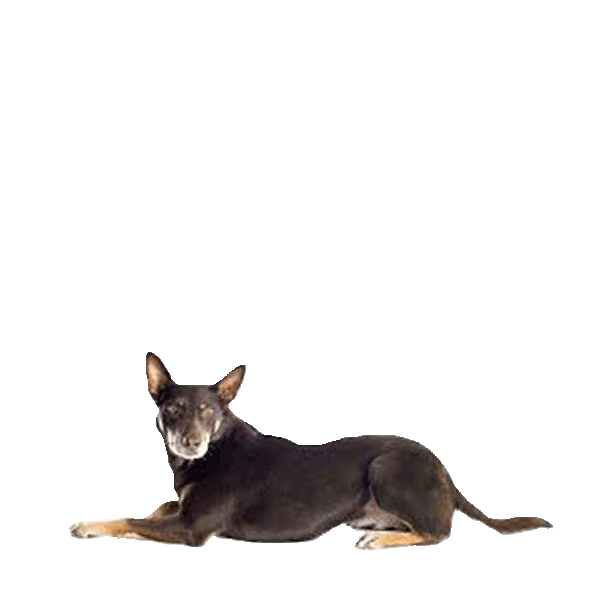
Working Kelpie
The Working Kelpie is a tireless, intelligent Australian herding dog renowned for its drive and stamina with livestock.
- Size
- Medium
- Lifespan
- 12–15 years
- Origin
- Australia
- Temperament
- Intelligent
- Standard colors
- Black, Blue and Tan and 2 more
Characteristics
Coat and grooming
How the Working Kelpie coat is built, and what that means when you groom it.
- Coat layers
- Double coat
- Coat texture
- Smooth
- Coat length
- Short
- Shedding
- Seasonal shedding
Grooming guidance
Critical: A Working Kelpie should not be shaved.
The undercoat keeps heat out as well as in, and the outer coat shields the skin from sun and insect bites. Clipping the whole coat off removes both. It often grows back patchy, soft or a different colour, and in some animals the guard hairs never return properly. Brush the undercoat out instead of cutting it off.
Information: A Working Kelpie drops its undercoat in heavy bursts.
The undercoat comes out in heavy bursts over a few weeks. An undercoat rake, or a bath followed by a proper blow-dry, clears it far faster than daily brushing. Clipping the coat down is not a shortcut for this.
Working Kelpie colors and patterns
What each club's breed standard says about every Working Kelpie color and pattern. Point at a ruling to see the club's own wording.
Breed standards describe the Working Kelpie in Black, Blue, Tan, Red and Fawn. Standard patterns: Solid and Tan point.

%22%3E%3Ccircle%20cx%3D%2212%22%20cy%3D%2217.2%22%20r%3D%221.25%22%20fill%3D%22%23C4996A%22%2F%3E%3Cpath%20d%3D%22M1.5%2021.2L9%2018.6L12.6%2021L12.2%2026.2L3.5%2024.4Z%22%20fill%3D%22%23C4996A%22%2F%3E%3Cpath%20d%3D%22M10%2026L14.5%2026.4L18.2%2029.2L13.5%2029.8Z%22%20fill%3D%22%23C4996A%22%2F%3E%3Cellipse%20cx%3D%2221.2%22%20cy%3D%2230.6%22%20rx%3D%221.6%22%20ry%3D%222.3%22%20fill%3D%22%23C4996A%22%2F%3E%3Crect%20x%3D%220%22%20y%3D%2247%22%20width%3D%2264%22%20height%3D%2217%22%20fill%3D%22%23C4996A%22%2F%3E%3Cpath%20d%3D%22M51.5%2024.5L55%2027L54.2%2032L50.5%2028.5Z%22%20fill%3D%22%23C4996A%22%2F%3E%3Cpath%20d%3D%22M45%2038.5L48%2039L48.5%2047L45.5%2047Z%22%20fill%3D%22%23C4996A%22%2F%3E%3C%2Fg%3E%3Cuse%20href%3D%22%23s%22%20fill%3D%22none%22%20stroke%3D%22%233B2A20%22%20stroke-opacity%3D%220.6%22%20stroke-width%3D%221%22%20stroke-linejoin%3D%22round%22%2F%3E%3Cellipse%20cx%3D%223.2%22%20cy%3D%2221.7%22%20rx%3D%221.3%22%20ry%3D%221.2%22%20fill%3D%22%231C1C1C%22%2F%3E%3Ccircle%20cx%3D%2210.8%22%20cy%3D%2219.3%22%20r%3D%221.1%22%20fill%3D%22%231C1C1C%22%2F%3E%3C%2Fsvg%3E)
What the rulings mean
- Standard
- Described by the club's breed standard.
Color changes
How a Working Kelpie's colors can change over its life.
Blackchanges toRust
Coat · With body condition · can change back
Blackchanges toGrey
Coat · Progressive
Blackchanges toBrown
Coat · In the sun · can change back
Tan pointchanges toSaddle
Coat · With age · from 6 to 156 weeks
%22%3E%3Cpath%20d%3D%22M22.5%2018.5Q24%2021%2025%2021.5L47%2022.5Q50%2022.5%2051.5%2023.5L54%2026Q55%2032%2053%2034Q46%2031.5%2038%2033Q30%2034.5%2025.5%2032Q22.5%2026%2022.5%2018.5Z%22%20fill%3D%22%231C1C1C%22%2F%3E%3Cpath%20d%3D%22M51%2024L56%209L63%209L61%2019L54.5%2028Z%22%20fill%3D%22%231C1C1C%22%2F%3E%3Cpath%20d%3D%22M2%2021.2L7.5%2019.2L8.5%2023.6L3.5%2024.2Z%22%20fill%3D%22%231C1C1C%22%20fill-opacity%3D%220.85%22%2F%3E%3C%2Fg%3E%3Cuse%20href%3D%22%23s%22%20fill%3D%22none%22%20stroke%3D%22%233B2A20%22%20stroke-opacity%3D%220.6%22%20stroke-width%3D%221%22%20stroke-linejoin%3D%22round%22%2F%3E%3Cellipse%20cx%3D%223.2%22%20cy%3D%2221.7%22%20rx%3D%221.3%22%20ry%3D%221.2%22%20fill%3D%22%231C1C1C%22%2F%3E%3Ccircle%20cx%3D%2210.8%22%20cy%3D%2219.3%22%20r%3D%221.1%22%20fill%3D%22%231C1C1C%22%2F%3E%3C%2Fsvg%3E)
Sources
Each ruling comes from the club's published breed standard or color list.
About the Working Kelpie
The Working Kelpie is a lean, driven herding dog used on New Zealand sheep and beef farms, prized for stamina but demanding daily work to stay content.
The Working Kelpie is a medium-sized herding dog that turns up on sheep and beef farms right across New Zealand, from Waikato dairy support blocks to high country stations in Otago and Canterbury. Bred originally in Australia, the breed has settled into New Zealand farming life alongside home-grown workers such as the Huntaway and the Heading Dog, taking on jobs that suit its close-eye, biddable style of herding. A Kelpie is judged by how it handles stock, not by how it looks in the ring.
Farmers value the breed for its stamina and its willingness to keep working a full day on hill country that would tire most dogs by lunchtime. It reads a handler's whistle or word and holds a mob of sheep together with very little fuss. On a run with steep faces and long distances between yards, a good Kelpie can save a musterer hours in the saddle or on the quad.
This is not a dog for a lifestyle block bought on a whim. Without daily work and something to think about, a Working Kelpie gets bored fast, and boredom in a farm dog usually means fence-jumping, digging, or a dog that starts making its own decisions about the stock.
| Attribute | Detail |
|---|---|
| Origin | Australia |
| Size | Medium |
| Lifespan | 12 to 15 years |
| Group / role | Herding and mustering dog |
| Good with | Active farm owners, stock work, and homes that can provide daily work |
Who it suits
The Working Kelpie suits people who can give it genuine stock work or several hours of hard exercise a day. It fits well on sheep and beef farms, dairy support blocks, and with handlers in dog sports and farm dog trials. It is a poor match for a townhouse, an apartment, or an owner often away from home, since a bored Kelpie turns to barking, digging, and finding gaps in the fence.
History and origin
The Working Kelpie was bred in Australia in the late 1800s from imported British collie-type dogs, later finding steady work on New Zealand farms and high country stations.
The Working Kelpie began in Australia in the second half of the 19th century. As wool growing spread across large, dry inland properties, station owners needed a dog that could shift sheep over long distances in tough conditions. Collie-type herding dogs brought out from Britain formed the base stock.
The breed's name comes from a bitch called Kelpie, bred in the early 1870s from imported collie-type parents. Her offspring proved capable stock dogs, and breeders started using her name for the type. Selection favoured working ability above all else, so early Kelpies varied in coat and colour while sharing drive and endurance.
Through the late 1800s and into the 1900s, breeders kept choosing for traits that mattered on the job: a strong eye on stock, willingness to take a command, the toughness for a full day's work, and a feel for how sheep move. Some lines developed the trick of running across the backs of penned sheep in the yards, a skill still seen today.
Two types eventually split off. One was bred toward a set look for showing and pet homes. The other, the Working Kelpie, kept being bred chiefly for ability on livestock. New Zealand farmers imported working Kelpies to run alongside home-bred Huntaways and Heading Dogs, and the breed remains a familiar sight on hill country and high country stations. Anyone bringing a Kelpie into New Zealand from overseas today has to clear the Ministry for Primary Industries import health standards and quarantine requirements that keep the country free of diseases such as rabies.
Appearance
The Working Kelpie is a lean, athletic dog with a weatherproof double coat and pricked ears, built for long days moving stock on New Zealand farms.
The Working Kelpie has a lean, balanced build made for speed and endurance rather than bulk. The head is slightly rounded with a clear stop, the muzzle tapers towards the nose, and the ears usually stand up and alert. The overall look is of a fit dog that can sprint, turn, and pull up sharply on rough ground. Because working lines are bred for the job rather than the show ring, appearance varies more than it does in companion Kelpies.
| Trait | Typical range |
|---|---|
| Height | 43 to 51 cm (17 to 20 in) at the shoulder |
| Weight | 11 to 20 kg (24 to 45 lb) |
| Coat | Short to medium double coat, weather resistant |
| Colours | Black, red, chocolate, fawn, blue, cream, often with tan points |
| Eyes | Almond shaped, brown, alert expression |
Coat and colours
The coat is a double coat, with a short, dense undercoat under a flatter, harder top coat that turns rain and mud. Length runs from short to medium, with a touch more feathering possible on the legs and tail. Colours include black, red, chocolate, fawn, blue (grey), and cream, and many dogs carry tan points on the face, legs, and chest. Because the breed is chosen for its work, colour is purely cosmetic and does not affect a dog's value on the farm.
Temperament
The Working Kelpie is sharp, driven, and deeply attached to its handler, needing a clear job and firm, consistent handling to stay settled.
The Working Kelpie is intelligent, full of energy, and strongly driven to work stock. It bonds tightly with its handler and watches closely for direction, which makes it quick to learn and just as quick to invent its own entertainment when left with nothing to do. Most Kelpies stay alert to what is going on around them, so they double as useful watchdogs, though they were never bred to guard.
At home, a well-socialised Kelpie is affectionate and loyal to its family. With people it does not know, it is often reserved and can take a while to come round. The herding instinct runs deep, so some Kelpies try to gather or nip at running kids, other pets, or anything that moves quickly. Early training and clear rules help steer this instinct somewhere useful. Around other dogs and stock the breed is usually sound when raised with them, though its drive means young animals and small pets need supervision until the dog proves reliable.
This is a dog that thinks for itself. Without enough exercise and mental work, a Kelpie can turn anxious, noisy, or destructive. Give it a job and steady handling, and it settles well both in the house and out on the farm.
| Trait | Rating |
|---|---|
| Affection | 4 |
| Energy | 5 |
| Trainability | 5 |
| Vocalness | 3 |
| Shedding | 3 |
Care and grooming
The Working Kelpie needs little grooming but a large daily dose of exercise and mental work to stay balanced on a New Zealand farm or lifestyle block.
The Working Kelpie is easy to keep tidy but hard to tire out. Its short to medium double coat asks for little upkeep, while its energy and sharp mind need a solid daily outlet.
Grooming
- Brush weekly to clear loose hair and dirt, more often when the coat blows out each season.
- Bathe only when needed, since washing too often strips the weatherproof coat.
- Check ears for dirt and moisture after work in long grass or wet paddocks.
- Trim nails every few weeks if they are not wearing down on their own.
- Brush teeth several times a week to keep gums and teeth healthy.
Exercise
- Plan on at least one to two hours of solid exercise every day.
- Mix physical work (running, herding, fetch) with thinking tasks (training, scent games, puzzle feeders).
- Try dog sports such as farm dog trials, agility, flyball, or canicross when there is no stock work on hand.
- Do not leave the dog alone for long stretches with no way to burn off energy.
Environment
The Working Kelpie suits a farm, a lifestyle block, or an active household with a secure yard. It can cope with town life only if the owner commits to daily structured exercise and training. Fencing needs to be high and tight, because a bored Kelpie will climb, dig, or jump to get out.
Nutrition and feeding
The Working Kelpie needs a complete, protein-rich diet matched to its workload, since a farm dog burns far more energy than a dog that exercises lightly.
The Working Kelpie does best on a complete, balanced diet built for an active dog. A dog working full days on the farm needs more fuel than a pet that gets a short walk, so feeding amounts should follow the dog's actual workload, body condition, and age. Choose a quality food with enough protein and fat to support sustained work, and adjust portions to keep the dog lean rather than carrying extra weight.
| Life stage | Amount per day | Meals |
|---|---|---|
| Puppy (2 to 6 months) | As per the pack guide for age and weight | 3 to 4 |
| Adolescent (6 to 12 months) | Slightly above adult maintenance | 2 to 3 |
| Adult, active working | Roughly 250 to 400 g dry food, adjusted to workload | 2 |
| Adult, light activity | Roughly 180 to 280 g dry food | 2 |
| Senior (8+ years) | Cut back to match lower activity | 2 |
Treats and supplements
Keep treats to a small share of the daily food and use them for training rewards. Make sure fresh water is always on hand, especially when the dog is working in warm weather. Most healthy dogs on a complete diet do not need extra supplements. Check with a vet before adding any, including joint support for older dogs or those doing heavy farm work.
Health and lifespan
The Working Kelpie is generally hardy and lives 12 to 15 years, though inherited eye conditions, hip dysplasia, and some nerve disorders occur in the breed.
The Working Kelpie is a generally hardy, robust breed, helped along by decades of breeding for fitness and function. Typical lifespan runs from 12 to 15 years. As with any breed, some inherited conditions turn up, and responsible breeders screen their breeding stock to cut the risk of passing them on. Because working lines are bred hard for soundness, many are in good health, but buyers should still ask to see health testing results.
| Condition | Signs | Note |
|---|---|---|
| Progressive retinal atrophy | Night blindness, declining vision | Inherited eye disease; DNA testing available in some lines |
| Hip dysplasia | Stiffness, limping, difficulty getting up | Reduced by hip scoring of breeding stock |
| Cerebellar abiotrophy | Loss of coordination, tremors in young dogs | Inherited nerve disorder; check pedigrees |
| Collie eye anomaly | Often no visible signs; found on eye exam | Inherited; picked up by veterinary eye screening |
Preventive care
- Keep vaccinations and parasite control (fleas, ticks, worms) current.
- Book annual vet checks, with more frequent visits once the dog reaches its senior years.
- Keep the dog lean to protect its joints.
- Arrange eye and hip screening before using a dog for breeding.
- Look after teeth with regular brushing and dental checks.
Training
The Working Kelpie ranks among the most trainable herding breeds, learning fast and working well at a distance, but needs early, steady training to channel its drive.
The Working Kelpie is highly trainable and picks things up fast. It watches its handler closely and takes direction well over distance, which is why it can hold a mob with a whistle or a single word. That same sharp mind gets bored with repetition and will test the rules if training is patchy. Start early, keep sessions varied and purposeful, and set clear, fair boundaries. Socialise puppies widely so natural wariness towards strangers does not harden into nervousness.
Basics
- Socialise the puppy to people, places, sounds, and other animals from a young age.
- Teach core obedience: name response, sit, down, recall, and a solid stay.
- Build a reliable recall and a stop command, both essential for safe stock work.
- Channel the herding instinct into approved games and discourage chasing or nipping people.
- Add distance work, directional commands, and dog sports once the basics are solid.
Breeding
Working Kelpies are bred mainly for proven stock ability, with litters of around four to seven pups arriving after a gestation of roughly 63 days.
Working Kelpies are bred chiefly for working ability, so reputable breeders choose parents with sound temperament, stamina, and a proven record on stock. Bitches reach full physical maturity at around 18 to 24 months, and responsible breeders usually wait until then for a first litter so the dam is fully grown and health tested. Mating follows the female's heat cycle, which usually comes around twice a year.
Gestation runs close to 63 days. Litter size is commonly four to seven pups, though it can run smaller or larger. The dam raises the litter through the early weeks, and breeders start gentle handling and socialisation from a few weeks of age. Puppies stay with the litter until at least eight weeks, during which time exposure to handling, noise, and farm life helps shape steady working dogs. Registering a litter with Dogs New Zealand, and screening breeding stock for eye and hip conditions, cuts the risk of passing on inherited problems. Anyone importing breeding stock from overseas also needs to meet Ministry for Primary Industries biosecurity requirements before the dogs can clear quarantine.
| Metric | Value |
|---|---|
| Female maturity for breeding | About 18 to 24 months |
| Heat cycle frequency | Roughly twice a year |
| Gestation | Around 63 days |
| Typical litter size | 4 to 7 puppies |
| Weaning age | About 6 to 8 weeks |
| Earliest rehoming | 8 weeks or later |
Registering a Working Kelpie in New Zealand, microchip and all
Alongside council registration, a free United Pet Club record keeps a live phone number behind your Working Kelpie and its chip.
Working Kelpie registration and microchip registration in New Zealand
Keeping a Working Kelpie findable is mostly paperwork: a profile carrying your phone number, a photo, and the dog's details, sitting where a scan can reach it. Registering your dog with United Pet Club sets that up free, and the record never lapses or bills you.
Getting the chip implanted was the vet's job; giving the number somewhere to point is yours. Registering the microchip with United Pet Club costs nothing on the lifetime plan, suits any brand a Kiwi vet reaches for, and keeps the record searchable at any hour from anywhere. Creating a free account ties the profile and the chip together.
How do I register my Working Kelpie in New Zealand?
Setting up a free United Pet Club account, adding your Working Kelpie's details and a photo, and saving is all it takes. The record stays free for the dog's whole life, chip or no chip.
How do I register my Working Kelpie's microchip?
Just add the fifteen digit number to your free account along with your current address and phone. Under the lifetime plan there is nothing to pay for the registration or any later update.
Does my Working Kelpie need a microchip in New Zealand?
Dogs registered for the first time since 2006 need one under the National Dog Database rules, working farm dogs aside. The council record and your United Pet Club profile do different jobs, and the second one is free.
What does registering a Working Kelpie cost?
Nothing. The free lifetime plan carries the profile, the chip record, and every update, and no renewal notice ever arrives.
Frequently asked questions
Common questions about the Working Kelpie cover its size, temperament, exercise needs, lifespan, suitability as a pet, and availability in New Zealand.
How big do Working Kelpies get?
It is a medium-sized dog, usually 43 to 51 cm at the shoulder and about 11 to 20 kg, with a lean, athletic build.
What is a Working Kelpie's temperament like?
It is sharp, focused, and strongly driven to work. It bonds closely with its handler, is often reserved around strangers, and needs a job to stay settled and content.
Are Working Kelpies hard to look after?
Grooming is simple, but the breed is demanding to exercise and needs plenty of mental stimulation. It needs one to two hours of solid activity a day and does not suit a low-activity home.
How long do Working Kelpies live?
Most live 12 to 15 years. They are generally hardy, though some lines carry inherited eye, hip, or nerve conditions, so health-tested parents matter.
Do Working Kelpies make good family dogs?
They can suit an active family that provides daily exercise and training. The strong herding instinct means a Kelpie may try to gather or nip at running kids, so early training and supervision matter.
Can a Working Kelpie live in an apartment?
They are a poor fit for an apartment unless the owner commits to several hours of daily activity. They do best on a farm or in an active home with a secure yard.
Where can I get a Working Kelpie in New Zealand?
Working Kelpies are bred and worked right across New Zealand's sheep and beef farms, and imported stock must clear Ministry for Primary Industries biosecurity and quarantine rules. Look for breeders who can prove working ability and health test their dogs, and check registration with Dogs New Zealand.
From the community
Ask about the Working KelpieNo questions about the Working Kelpie yet. Be the first to ask.
Browse Dog breeds