
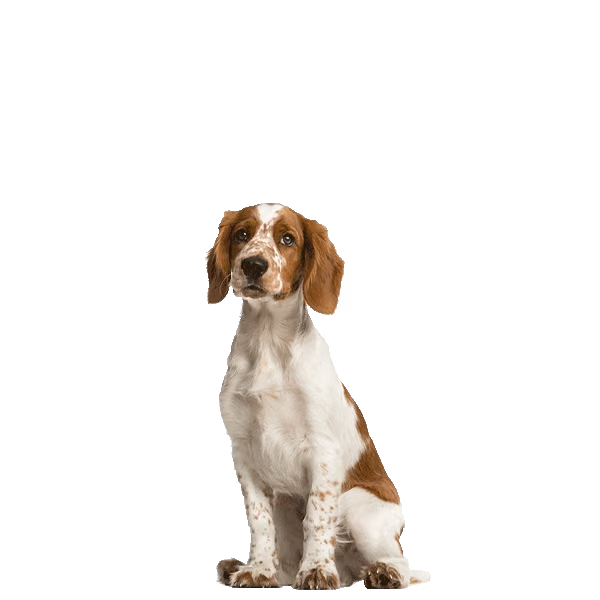
Welsh Springer Spaniel
The Welsh Springer Spaniel is an affectionate, loyal flushing spaniel with a striking red-and-white coat and a tireless work ethic.
- Size
- Medium
- Lifespan
- 12–15 years
- Origin
- Wales
- Temperament
- Affectionate
- Standard colors
- White and Red
Characteristics
Coat and grooming
How the Welsh Springer Spaniel coat is built, and what that means when you groom it.
- Coat layers
- Double coat
- Coat texture
- Silky
- Coat length
- Medium
- Shedding
- Moderate shedding
Grooming guidance
Critical: A Welsh Springer Spaniel should not be shaved.
The undercoat keeps heat out as well as in, and the outer coat shields the skin from sun and insect bites. Clipping the whole coat off removes both. It often grows back patchy, soft or a different colour, and in some animals the guard hairs never return properly. Brush the undercoat out instead of cutting it off.
Caution: A Welsh Springer Spaniel coat mats easily.
Fine or long hair tangles at the base of the coat, out of sight, where the mats tighten and pull on the skin. Brushing has to reach right down to the roots in sections, not just skim the surface.
Welsh Springer Spaniel colors and patterns
What each club's breed standard says about every Welsh Springer Spaniel color and pattern. Point at a ruling to see the club's own wording.
Breed standards describe the Welsh Springer Spaniel in White and Red. Standard patterns: Bicolour and Roan.
| Color or pattern | FCI | AKC | UKC | KC | KUSA |
|---|---|---|---|---|---|
| White | Standard (“Rich red and white only”) | Standard (“Red & White”) | Standard (“rich red and white”) | Standard (“Rich red and white only”) | Standard (“Rich red and white only”) |
| Red | Standard (“Rich red and white only”) | Standard (“Red & White”) | Standard (“rich red and white”) | Standard (“Rich red and white only”) | Standard (“Rich red and white only”) |
| Patterns | |||||
| Bicolour | Standard (“Rich red and white only”) | Standard (“Red & White”) | Standard (“Any color pattern is permitted”) | Standard (“Rich red and white only”) | Standard (“Rich red and white only”) |
| Roan | No ruling | Standard (“any white area may be flecked with red ticking”) | Standard (“Red ticking in any of the white areas is acceptable”) | No ruling | No ruling |
%22%3E%3Cpath%20d%3D%22M0%2023L9.5%2020.4L14%2025.4L19%2029.6Q21%2035%2023.5%2035.5Q36%2033%2050%2036L56%2040V64H0Z%22%20fill%3D%22%23F5F5F0%22%2F%3E%3C%2Fg%3E%3Cuse%20href%3D%22%23s%22%20fill%3D%22none%22%20stroke%3D%22%233B2A20%22%20stroke-opacity%3D%220.6%22%20stroke-width%3D%221%22%20stroke-linejoin%3D%22round%22%2F%3E%3Cellipse%20cx%3D%223.2%22%20cy%3D%2221.7%22%20rx%3D%221.3%22%20ry%3D%221.2%22%20fill%3D%22%231C1C1C%22%2F%3E%3Ccircle%20cx%3D%2210.8%22%20cy%3D%2219.3%22%20r%3D%221.1%22%20fill%3D%22%231C1C1C%22%2F%3E%3C%2Fsvg%3E)
%22%3E%3Cg%20fill%3D%22none%22%20stroke%3D%22%23F5F5F0%22%20stroke-width%3D%221.15%22%20stroke-linecap%3D%22round%22%20stroke-linejoin%3D%22round%22%3E%3Cpath%20d%3D%22M28.6%2025h.1M51.3%2028.8h.1M34.7%2024.3h.1M34.2%2041.6h.1M51%2044.2h.1M55.9%2024.7h.1M27.5%2026.3h.1M18.5%2028.6h.1M25.2%2028.9h.1M24.2%2019.3h.1M20.6%2017.6h.1M34.1%2030.6h.1M57.3%2023.3h.1M23.5%2030.7h.1M26.5%2023.1h.1M40%2031.5h.1M51.7%2038.6h.1M20.2%2022.1h.1M40.4%2037.8h.1M35%2043.1h.1M20.6%2031.7h.1M27.8%2031.9h.1M17.2%2021.1h.1M38.1%2037.7h.1M25.3%2040.5h.1M32%2029.3h.1M41.6%2039.5h.1M23.6%2024h.1M26.4%2018.6h.1M30.3%2031.9h.1M31.2%2035.2h.1M36.5%2043.7h.1M35.2%2026.3h.1M55.6%2019.1h.1M22.4%2036.8h.1M39.2%2020h.1M49.5%2039.1h.1M33.6%2033.5h.1M36.4%2032.4h.1M56.3%2042.4h.1M54.8%2031.2h.1M36.9%2023.2h.1M52.7%2019.1h.1M21.5%2033.8h.1M48.6%2028h.1M36.6%2017.5h.1M45.6%2031.3h.1M37.9%2030.5h.1M17%2031.8h.1M21.1%2043.1h.1M55.7%2021.1h.1M30.8%2041.9h.1M57.4%2038.4h.1M54.8%2026.9h.1M29.1%2017.5h.1M24.3%2037.7h.1M26%2032h.1M39.3%2022.8h.1M53.5%2029h.1M53.3%2023.3h.1M20%2038.4h.1M28.3%2044.7h.1M28.6%2039.8h.1M51.9%2041.1h.1M52.3%2033.7h.1M19.6%2042.2h.1M19%2033h.1M47.8%2021.7h.1M45.7%2024.8h.1M24.6%2035.5h.1M29.8%2036.8h.1M50.7%2032h.1M29.5%2043.5h.1M28.2%2041.5h.1M47.4%2034.8h.1M25.4%2033.7h.1M50.2%2041.2h.1M27.7%2029.5h.1M21.5%2024.8h.1M55.5%2017.5h.1M41.2%2044.3h.1M39.2%2018.4h.1M41.1%2042.5h.1M54.7%2035.3h.1M42.8%2034.5h.1M30.1%2023h.1M42.6%2025.1h.1M32.9%2024.4h.1M42.4%2032.4h.1M49.7%2022.2h.1M49.1%2043.1h.1M38%2035.2h.1M47.7%2043.8h.1M43.1%2022.4h.1M22.4%2040.4h.1M44.4%2019.8h.1M53.3%2040.1h.1M20.7%2029.3h.1M55.6%2043.9h.1M17.6%2039.2h.1M41.7%2028.9h.1M44.1%2036.3h.1M24.3%2043.6h.1M26.4%2038.1h.1M30.3%2029.2h.1M31.5%2030.8h.1M32.1%2023h.1M18.3%2040.9h.1M48%2033.4h.1M36.4%2038.7h.1M31.9%2020.8h.1M32.6%2026.2h.1M22%2031.2h.1M53.4%2021.7h.1M41.9%2017.7h.1M53.3%2037.3h.1M47.7%2040.3h.1M54.4%2033.7h.1M33.6%2037.5h.1M25.3%2017.2h.1M37.6%2019.7h.1M31.6%2019h.1M29.2%2019.6h.1M50.7%2027.3h.1M22%2022.1h.1M31%2037.8h.1M56.5%2026.6h.1M34.7%2039.5h.1M56.5%2040.8h.1M47.6%2038h.1M48.6%2026.1h.1M49.7%2034.2h.1M45.4%2027.4h.1M22.6%2038.9h.1M56.5%2035.3h.1M35.1%2021h.1M41.9%2020.1h.1M37.6%2040h.1M32.6%2044.4h.1M37.9%2025.2h.1M26.6%2043h.1M18.9%2036.7h.1M47.2%2028.9h.1M30.5%2026.2h.1M17.4%2027.3h.1M47.1%2017.2h.1M22.3%2044.3h.1M32.5%2042.4h.1M23.6%2025.7h.1M31.4%2024.9h.1%22%2F%3E%3Cpath%20d%3D%22M26%2020.9h.1M41.2%2023.8h.1M39.9%2026.4h.1M28.5%2033.4h.1M42.8%2043.8h.1M17.6%2034.3h.1M34%2017.1h.1M31.2%2017.2h.1M46.5%2036.1h.1M25.1%2022.1h.1M50.3%2023.7h.1M20.2%2026.6h.1M20.8%2020.4h.1M50.9%2017.3h.1M49.5%2020.2h.1M52.9%2044.1h.1M23.9%2017.8h.1M43.2%2028.1h.1M57.6%2030h.1M52%2025.6h.1M19.2%2019.1h.1M19.5%2024.4h.1M32.8%2040.1h.1M36.1%2027.7h.1M39.6%2029.5h.1M38.4%2041.5h.1M47.9%2019.4h.1M49.1%2031.7h.1M55.9%2036.9h.1M29.2%2027.2h.1M46%2043.5h.1M44.6%2028.8h.1M47.5%2031.5h.1M22.8%2020h.1M27.6%2017.1h.1M43.1%2018.6h.1M54.3%2020h.1M57.2%2033.8h.1M44.5%2043.8h.1M27.1%2035.5h.1M45.3%2041.8h.1M56.7%2028.8h.1M36.7%2021.4h.1M43.3%2042.3h.1M17.3%2022.9h.1M32.7%2035.5h.1M30.5%2039.8h.1M29.1%2021.2h.1M34.5%2018.8h.1M25.8%2027h.1%22%2F%3E%3C%2Fg%3E%3Cpath%20d%3D%22M56.3%2038.4l0%201.2M40%2027.2l-0.3%201.3M32.6%2043.6l-0.4%201.5M29%2023.3l0.8%201.5M55.1%2044l0.4%201.1M47.5%2022.5l-0.2%201.6M42.9%2038.6l0.7%201.2M35.2%2041.8l-0.5%201.7M26.9%2040l-0.1%201.2M41%2042.8l-0.1%201.6M18.4%2021.2l0.7%201.3M49.4%2019.3l-0.5%201.4M50.1%2041.7l0%201.8M28.2%2041.8l-0.6%201.2M55.5%2027.1l0.2%201.2M44.7%2019.3l0.5%201.7M48.6%2020.5l-0.8%201.4M43.7%2039.6l0.3%201.1M22.1%2033.8l-0.6%201.6M50.1%2038.1l-0.5%201.3M51.8%2044.1l-0.1%201.8M39%2017.5l0%201.4M30.2%2026.7l0.2%201.4M25.8%2031.2l0.2%201.6M29.6%2043.5l0.1%201M43.7%2018.3l0.1%201.5M29.6%2018.2l0.3%201.6M24.4%2017.6l0.3%201.1M22%2028.2l-0.6%201.6M25.9%2043.3l-0.3%201.4M22.2%2024.3l0.3%201.3M47.3%2029.2l-0.2%201.4M21.8%2033.2l0.5%200.9M32.9%2037l0.4%201M40%2029.9l0.8%201.4M17.4%2038.3l0.2%201.3M31%2039.2l0%201.2M37.3%2033.7l0.3%201.5M48.1%2040.5l0%201.6M33.9%2031.2l0.1%201.2M29.8%2035.2l-0.4%201M25.1%2037.3l-0.2%201.5M30.2%2039.8l0.5%201M44.6%2034.8l0.4%200.9M55.3%2034.2l0%201.7M50.6%2017.9l0.4%201M30.2%2034.9l-0.4%201.4M19.5%2035.7l-0.5%201.7M40.7%2028.7l0.8%201.4M23.3%2029l-0.4%201.4M17%2040.5l-0.2%201M48.4%2023.2l-0.3%201M37.3%2025.1l-0.4%201.3M23%2021.4l-0.4%201.3M20.4%2017.2l-0.1%201.3M42.3%2020.4l0.6%201.4M41%2031.8l0.6%201.2M45.4%2034.3l-0.1%201.2M32.5%2018l0%201.3M46.2%2021.6l0.1%201.4M30.5%2022.3l0.5%201.1M58%2044.6l0.3%201.5M57.1%2033.9l0.8%201.4M18.3%2042.6l0.3%201M40.5%2035.1l-0.6%201.4M38.8%2044.3l-0.3%201.1%22%20fill%3D%22none%22%20stroke%3D%22%23F5F5F0%22%20stroke-width%3D%220.8%22%20stroke-linecap%3D%22round%22%20stroke-linejoin%3D%22round%22%2F%3E%3C%2Fg%3E%3Cuse%20href%3D%22%23s%22%20fill%3D%22none%22%20stroke%3D%22%233B2A20%22%20stroke-opacity%3D%220.6%22%20stroke-width%3D%221%22%20stroke-linejoin%3D%22round%22%2F%3E%3Crect%20x%3D%2220%22%20y%3D%2258%22%20width%3D%223.6%22%20height%3D%222%22%20fill%3D%22%234A4038%22%2F%3E%3Crect%20x%3D%2226%22%20y%3D%2258%22%20width%3D%223.6%22%20height%3D%222%22%20fill%3D%22%234A4038%22%2F%3E%3Crect%20x%3D%2244%22%20y%3D%2258%22%20width%3D%223.6%22%20height%3D%222%22%20fill%3D%22%234A4038%22%2F%3E%3Crect%20x%3D%2250%22%20y%3D%2258%22%20width%3D%223.6%22%20height%3D%222%22%20fill%3D%22%234A4038%22%2F%3E%3Ccircle%20cx%3D%229.5%22%20cy%3D%2211.5%22%20r%3D%221.1%22%20fill%3D%22%231C1C1C%22%2F%3E%3C%2Fsvg%3E)
| Color or pattern | FCI | AKC | UKC | KC | KUSA |
|---|---|---|---|---|---|
| Brown | No ruling | Standard (“dark to medium brown”) | Standard (“dark to medium brown”) | No ruling | No ruling |
| Dark brown | Standard (“Hazel or dark”) | Standard (“dark to medium brown”) | Standard (“dark to medium brown”) | Standard (“Hazel or dark”) | Standard (“Hazel or dark”) |
| Light brown | No ruling | Standard (“lighter shades of brown are acceptable”) | No ruling | No ruling | No ruling |
| Hazel | Standard (“Hazel or dark”) | No ruling | No ruling | Standard (“Hazel or dark”) | Standard (“Hazel or dark”) |
| Yellow | No ruling | Fault (“Yellow or mean-looking eyes are to be heavily penalized”) | Fault (“Yellow, or mean-looking eyes”) | No ruling | No ruling |
| Color or pattern | FCI | AKC | UKC | KC | KUSA |
|---|---|---|---|---|---|
| Black | No ruling | Standard (“black or any shade of brown”) | Standard (“black or any shade of brown”) | No ruling | No ruling |
| Liver | No ruling | Standard (“black or any shade of brown”) | Standard (“black or any shade of brown”) | No ruling | No ruling |
| Pink | Standard (“Flesh coloured to dark”) | Fault (“A pink nose is to be severely penalized”) | No ruling | Standard (“flesh coloured to dark”) | Standard (“Flesh coloured to dark”) |
| Dudley | No ruling | No ruling | Fault (“Dudley nose”) | No ruling | No ruling |
What the rulings mean
- Standard
- Described by the club's breed standard.
- Fault
- Named by the club's breed standard as a fault: the animal can be shown but is penalised.
Color changes
How a Welsh Springer Spaniel's colors can change over its life.
Whitechanges toRoan
Coat · With age · from 2 weeks
Blackchanges toSnow nose
Nose · With the season · can change back
Blackchanges toPink
Nose · With the season · can change back
%22%3E%3Crect%20x%3D%2217%22%20y%3D%2210%22%20width%3D%2230%22%20height%3D%2242%22%20fill%3D%22url(%23g)%22%2F%3E%3C%2Fg%3E%3Cuse%20href%3D%22%23s%22%20fill%3D%22none%22%20stroke%3D%22%233B2A20%22%20stroke-opacity%3D%220.6%22%20stroke-width%3D%221%22%20stroke-linejoin%3D%22round%22%2F%3E%3Cpath%20d%3D%22M12.5%2037Q13%2032%2018.5%2032Q23.5%2032.5%2023.5%2036.5Q20.5%2035.5%2018.8%2037Q17.4%2038.6%2018%2041.5Q13.6%2040.4%2012.5%2037Z%22%20fill%3D%22%231C1C1C%22%20fill-opacity%3D%220.8%22%20stroke%3D%22%23F5F5F0%22%20stroke-opacity%3D%220.4%22%20stroke-width%3D%220.9%22%2F%3E%3Cpath%20d%3D%22M51.5%2037Q51%2032%2045.5%2032Q40.5%2032.5%2040.5%2036.5Q43.5%2035.5%2045.2%2037Q46.6%2038.6%2046%2041.5Q50.4%2040.4%2051.5%2037Z%22%20fill%3D%22%231C1C1C%22%20fill-opacity%3D%220.8%22%20stroke%3D%22%23F5F5F0%22%20stroke-opacity%3D%220.4%22%20stroke-width%3D%220.9%22%2F%3E%3Cpath%20d%3D%22M32%2040V50%22%20fill%3D%22none%22%20stroke%3D%22%231C1C1C%22%20stroke-width%3D%221.3%22%20stroke-opacity%3D%220.5%22%20stroke-linecap%3D%22round%22%20stroke-linejoin%3D%22round%22%2F%3E%3Cellipse%20cx%3D%2232%22%20cy%3D%2221%22%20rx%3D%2212%22%20ry%3D%223.5%22%20fill%3D%22%23F5F5F0%22%20fill-opacity%3D%220.18%22%2F%3E%3C%2Fsvg%3E)
Sources
Each ruling comes from the club's published breed standard or color list.
Meet some of our Welsh Springer Spaniel
A few of the Welsh Springer Spaniel profiles members have added to United Pet Club.


About the Welsh Springer Spaniel
The Welsh Springer Spaniel is a medium flushing spaniel from Wales, valued for its red-and-white coat, warm nature, and steady stamina across rough country.
The Welsh Springer Spaniel is a medium-sized gundog developed in Wales to flush and retrieve game over rough country. It differs from the larger English Springer Spaniel in its consistent dark red and white coat and its slightly more compact, workmanlike build. Owners describe a dog that is affectionate and loyal indoors yet tireless once it is out in the paddocks or the bush.
This is an active breed with a strong work ethic. A Welsh Springer needs daily exercise and mental engagement, and it forms a close bond with its family. Adults usually weigh between 16 and 25 kilograms and live 12 to 15 years.
The breed is friendly with people it knows but can be reserved with strangers, a long-standing trait rather than a fault. Early, consistent socialisation helps a Welsh Springer become a settled, confident companion.
| Attribute | Detail |
|---|---|
| Origin | Wales |
| Size | Medium (16-25 kg) |
| Lifespan | 12-15 years |
| Group/role | Sporting (flushing and retrieving spaniel) |
| Good with | Families, older children, other dogs with socialisation |
Who it suits
The Welsh Springer Spaniel suits active households that can give it an hour or more of daily exercise plus regular training or scent work. It fits homes with a section and people who are about for much of the day, since the breed dislikes long stretches on its own. It is less suited to sedentary owners or anyone wanting an aloof, low-maintenance dog.
History and origins
The Welsh Springer Spaniel descends from red-and-white land spaniels used in Wales for centuries and was recognised as a distinct breed in the early 1900s.
Red-and-white spaniels have been used for hunting in Wales for several centuries. Working land spaniels of this colour appear in Welsh records and in art well before formal breed records existed, used to spring, or flush, game birds for hunters who worked with nets, falcons, and later guns.
Through the nineteenth century these Welsh spaniels were kept and bred for function rather than appearance. They were prized for stamina, a good nose, and the ability to work close in dense cover and on hilly ground. For a time they were grouped with other land spaniels and sometimes shown alongside the English Springer.
The breed gained separate standing at the start of the twentieth century. The Kennel Club in Britain recognised the Welsh Springer Spaniel as a distinct breed in 1902, separating it from the English Springer. The American Kennel Club recognised the breed in 1906.
Numbers dropped sharply during the two World Wars, and dedicated breeders rebuilt the population afterwards from a limited base. The Welsh Springer remains less common than the English Springer today but keeps a steady following among hunters and active families.
Appearance and breed standard
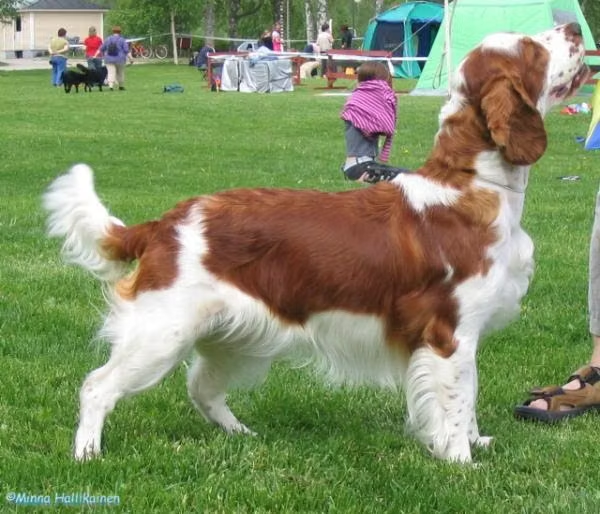
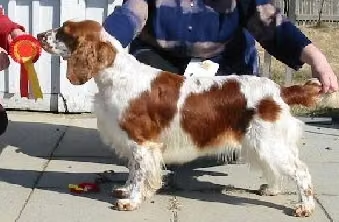
The Welsh Springer Spaniel is a compact, balanced gundog with a flat, silky red-and-white coat, a slightly domed head, and a kind, oval eye.
The Welsh Springer Spaniel is built for endurance rather than speed. The body is slightly longer than tall, with a deep chest, well-sprung ribs, and strong, muscular hindquarters. The head is in proportion, with a slightly domed skull, a straight muzzle, and long, low-set ears shaped roughly like a vine leaf. The overall impression is of an active, hard-working dog of medium substance.
| Trait | Standard |
|---|---|
| Height | Males 46-48 cm, females 43-46 cm at the withers |
| Weight | 16-25 kg |
| Coat | Straight or flat, soft and silky, with feathering on ears, chest, legs, and underside |
| Colours | Red (dark to rich red) and white only |
| Eyes | Medium, oval, hazel to dark brown, with a kind expression |
Coat and colours
The Welsh Springer carries only one colour pattern: red and white. The red ranges from a deep mahogany to a lighter rich shade, marked in patches or roan over a white base. The coat is straight and silky, never wiry or curly, with moderate feathering on the ears, chest, backs of the legs, and tail. The single colour combination is a defining feature and helps tell the breed apart at a glance from the more variably marked English Springer.
Temperament and personality
The Welsh Springer Spaniel is friendly, affectionate, and loyal with its family, reserved with strangers, and generally good with other dogs and children when socialised.
The Welsh Springer Spaniel forms strong attachments to its people and likes to stay near them, sometimes following from room to room. With family it is affectionate, gentle, and playful, and it usually gets on well with children who treat it kindly. The breed is active and keen to work, so it does best when it has a job, whether that is fieldwork, training games, or scent activities.
With strangers the Welsh Springer tends to be reserved rather than outgoing. This caution is a normal breed trait, not shyness or aggression, and it can make a decent watchdog that alerts to visitors. Early socialisation helps a reserved dog become confident rather than wary.
Most Welsh Springers coexist well with other dogs and can live with cats if raised together, though their flushing instinct means small fleeing animals may trigger a chase. The breed is sensitive and responds poorly to harsh handling. It can develop separation-related behaviours if left alone for long periods, so it suits homes where someone is around much of the day.
| Trait | Rating |
|---|---|
| Affection | 5 |
| Energy | 4 |
| Trainability | 4 |
| Vocalness | 3 |
| Shedding | 3 |
Care and grooming
The Welsh Springer Spaniel needs weekly brushing, ear care to prevent infections, and at least an hour of daily exercise with mental work.
Grooming
- Brush the coat once or twice a week to remove loose hair and prevent mats, paying attention to the feathering on the ears, legs, and chest.
- Check and clean the long, low-set ears weekly, since the drop ear traps moisture and is prone to infection.
- Trim excess hair between the foot pads and around the ears to keep the dog tidy and reduce debris pickup.
- Bathe only when needed, roughly every couple of months or after muddy outings.
- Trim nails every few weeks and brush teeth several times a week.
Exercise
- Provide at least 60 minutes of vigorous activity each day, split across walks and free running where safe.
- Add retrieving games, swimming, or scent work to satisfy the breed's working drive.
- Include short training sessions, since mental work tires a Welsh Springer as much as physical exercise.
- Avoid leaving the dog under-exercised, as boredom often leads to chewing, digging, or excess barking.
Environment
The Welsh Springer adapts to most homes that offer regular outdoor activity. A house with a secure section is ideal, but the breed can live in smaller spaces if exercise needs are met. It prefers to be with its family and is not suited to being kennelled alone or left for long working days without company.
Nutrition and feeding
An active Welsh Springer Spaniel needs a complete, balanced diet matched to its life stage, fed in measured meals to keep it lean.
The Welsh Springer Spaniel does well on a complete, balanced diet formulated for medium-sized active dogs. Choose food appropriate to the dog's life stage, with adequate protein and fat to support a working metabolism. Because the breed enjoys food and can gain weight when under-exercised, measure portions and adjust to activity level and body condition rather than feeding free-choice.
| Life stage | Amount per day | Meals |
|---|---|---|
| Puppy (2-6 months) | Per product guide for growth, divided | 3-4 |
| Junior (6-12 months) | Per product guide, tapering | 2-3 |
| Adult (1-7 years) | Roughly 200-300 g of quality dry food | 2 |
| Senior (7+ years) | Slightly reduced, watch weight | 2 |
Treats and supplements
Keep treats to about 10 percent of daily calories and account for them in the overall ration, especially during training when food rewards are frequent. Most Welsh Springers on a complete diet need no extra supplements. Discuss any joint, skin, or coat supplements with a vet before adding them, and provide fresh water at all times.
Health and lifespan
The Welsh Springer Spaniel is a generally healthy breed living 12 to 15 years, with hip dysplasia, eye conditions, and ear infections among the issues to watch.
The Welsh Springer Spaniel is a hardy, generally healthy breed with a typical lifespan of 12 to 15 years. Like most pedigree dogs it has a few conditions that responsible breeders screen for, and routine veterinary care helps catch problems early. Keeping the dog lean and well-exercised supports joint health and overall longevity.
| Condition | Signs | Note |
|---|---|---|
| Hip dysplasia | Stiffness, limping, reluctance to jump | Buy from hip-scored parents; keep the dog lean |
| Glaucoma | Red or cloudy eye, pain, vision loss | An urgent condition; the breed is screened for it |
| Hypothyroidism | Weight gain, lethargy, coat changes | Diagnosed by blood test, managed with daily medication |
| Ear infections | Head shaking, odour, scratching at ears | More likely due to the drop ear; prevent with ear care |
Preventive care
- Keep core and lifestyle vaccinations and parasite prevention up to date.
- Schedule annual veterinary checks, moving to twice yearly for seniors.
- Maintain a healthy body weight to reduce strain on joints.
- Clean and dry the ears regularly to prevent infections.
- Choose breeders who screen breeding dogs for hip and eye conditions.
Training and socialisation
The Welsh Springer Spaniel is intelligent and eager to please, responding best to early socialisation and consistent, reward-based training.
The Welsh Springer Spaniel is intelligent, willing, and quick to learn, which makes it a rewarding dog to train. It is also sensitive, so firm but gentle methods work far better than harsh correction. The breed's reserved streak with strangers means early, varied socialisation is important: introduce puppies to new people, dogs, places, and sounds during the first months to build confidence.
Channel the natural flushing and retrieving instincts into structured activities such as gundog work, fetch, or scent games. A Welsh Springer that has an outlet for its drive is calmer and easier to live with.
Basics
- Start socialisation and gentle handling as soon as the puppy comes home.
- Teach name recognition and a reliable recall early, rewarding generously.
- Build the core cues: sit, down, stay, and leave it, in short daily sessions.
- Practise loose-lead walking before the puppy is strong enough to pull.
- Proof each cue gradually around distractions, including other dogs and birds.
- Keep sessions short and upbeat, ending on a success.
Breeding and raising puppies
Welsh Springer Spaniels reach maturity around two years, carry litters of about 6 to 10 puppies after a roughly 63-day pregnancy, and benefit from early socialisation.
Welsh Springer Spaniels reach physical and mental maturity at around 18 months to 2 years. Responsible breeders wait until a bitch is fully mature and health-screened before her first litter, and they health-test both parents for hip and eye conditions. Mating is timed to the bitch's season, and pregnancy lasts roughly 63 days from conception.
Litters typically range from about 6 to 10 puppies. The dam usually whelps and rears her litter with little intervention, but a clean, quiet whelping area and close monitoring in the first days help protect the puppies. Weaning begins at around three to four weeks.
From three weeks onward, gentle handling and exposure to everyday sights, surfaces, and sounds lay the groundwork for a confident adult. Given the breed's reserved nature with strangers, breeders who socialise litters carefully give the puppies a strong start. Puppies normally go to new homes at about eight weeks.
| Metric | Value |
|---|---|
| Sexual maturity | About 18-24 months for breeding |
| Gestation | Approximately 63 days |
| Average litter size | 6-10 puppies |
| Weaning age | 3-4 weeks |
| Homing age | About 8 weeks |
Registering a Welsh Springer Spaniel in New Zealand, microchip and all
Alongside council registration, a free United Pet Club record keeps a live phone number behind your Welsh Springer Spaniel and its chip.
Welsh Springer Spaniel registration and microchip registration in New Zealand
The National Dog Database has required chipping of newly registered dogs since 2006, and council registration sits alongside that rather than replacing a proper contact record. Holding one with United Pet Club is free for your Welsh Springer Spaniel's whole life. Registering your dog takes a few minutes, with nothing to renew afterwards.
Getting the chip implanted was the vet's job; giving the number somewhere to point is yours. Registering the microchip with United Pet Club costs nothing on the lifetime plan, suits any brand a Kiwi vet reaches for, and keeps the record searchable at any hour from anywhere. Creating a free account ties the profile and the chip together.
How do I register my Welsh Springer Spaniel in New Zealand?
Setting up a free United Pet Club account, adding your Welsh Springer Spaniel's details and a photo, and saving is all it takes. The record stays free for the dog's whole life, chip or no chip.
How do I register my Welsh Springer Spaniel's microchip?
Just add the fifteen digit number to your free account along with your current address and phone. Under the lifetime plan there is nothing to pay for the registration or any later update.
Does my Welsh Springer Spaniel need a microchip in New Zealand?
Dogs registered for the first time since 2006 need one under the National Dog Database rules, working farm dogs aside. The council record and your United Pet Club profile do different jobs, and the second one is free.
What does registering a Welsh Springer Spaniel cost?
Nothing. The free lifetime plan carries the profile, the chip record, and every update, and no renewal notice ever arrives.
Frequently asked questions
Common questions about the Welsh Springer Spaniel's size, temperament, care needs, lifespan, suitability, and availability.
How big does a Welsh Springer Spaniel get?
It is a medium-sized dog. Males stand about 46 to 48 cm at the shoulder and females about 43 to 46 cm, with most adults weighing between 16 and 25 kilograms.
Are Welsh Springer Spaniels good family dogs?
Yes. They are affectionate and loyal with their families and generally good with children who treat them gently. They can be reserved with strangers, so early socialisation helps.
How hard are they to care for?
Care is moderate. They need at least an hour of daily exercise plus mental work, weekly brushing, and regular ear cleaning to prevent infections in the drop ears.
How long do Welsh Springer Spaniels live?
The typical lifespan is 12 to 15 years. Good nutrition, a healthy weight, exercise, and routine veterinary care support a long life.
Do they get along with other pets?
Most do well with other dogs and can live with cats if raised together. Their flushing instinct means small fleeing animals may trigger a chase, so supervise introductions.
Can a Welsh Springer Spaniel be left alone all day?
No. The breed bonds closely with its people and can develop separation-related behaviours if left alone for long periods. It suits homes where someone is around much of the day.
Are Welsh Springer Spaniels rare?
They are less common than the English Springer Spaniel but are bred steadily by dedicated breeders. Expect to join a waiting list rather than find a litter immediately.
From the community
Ask about the Welsh Springer SpanielNo questions about the Welsh Springer Spaniel yet. Be the first to ask.
Browse Dog breeds