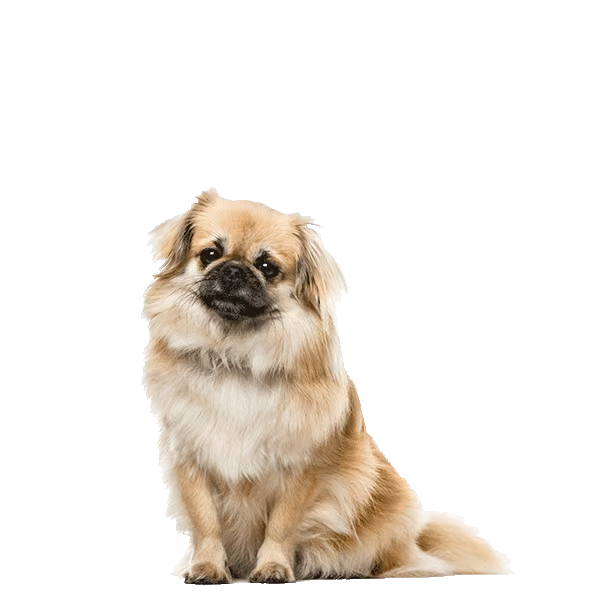
The Tibetan Spaniel is an affectionate, alert little companion bred to watch over Tibetan monasteries and devoted entirely to its people.
How the Tibetan Spaniel coat is built, and what that means when you groom it.
Critical: A Tibetan Spaniel should not be shaved.
The undercoat keeps heat out as well as in, and the outer coat shields the skin from sun and insect bites. Clipping the whole coat off removes both. It often grows back patchy, soft or a different colour, and in some animals the guard hairs never return properly. Brush the undercoat out instead of cutting it off.
Caution: A Tibetan Spaniel coat mats easily.
Fine or long hair tangles at the base of the coat, out of sight, where the mats tighten and pull on the skin. Brushing has to reach right down to the roots in sections, not just skim the surface.
Information: A Tibetan Spaniel drops its undercoat in heavy bursts.
The undercoat comes out in heavy bursts over a few weeks. An undercoat rake, or a bath followed by a proper blow-dry, clears it far faster than daily brushing. Clipping the coat down is not a shortcut for this.
A few of the Tibetan Spaniel profiles members have added to United Pet Club.
The Tibetan Spaniel is a small, affectionate companion dog from Tibet's mountain monasteries, devoted to its own family and quick to sound the alarm.
The Tibetan Spaniel is a small companion breed that developed in the mountain monasteries of Tibet. Despite its name it isn't a true spaniel, and it was never bred to hunt or retrieve game. Its traditional job was to keep the monks company and to perch on monastery walls, watching the approach to the grounds and barking to alert the much larger Tibetan Mastiffs guarding the gates.
Adults weigh around 4 to 7 kilograms and stand about 25 centimetres at the shoulder, with a body a touch longer than it is tall. The head is domed, the muzzle short, and the plumed tail curls up over the back. The double coat is silky and moderate in length, with feathering on the ears, legs, and tail.
The breed is affectionate and devoted with its own people, alert, and naturally reserved around strangers. Tibetan Spaniels bond tightly to their family and would rather stay close by than be left to their own devices for hours on end.
| Attribute | Detail |
|---|---|
| Origin | Tibet |
| Size | Small (around 4 to 7 kg, about 25 cm tall) |
| Lifespan | 12 to 15 years |
| Group/role | Companion and watchdog |
| Good with | Families, older children, other dogs and cats it's raised with |
The Tibetan Spaniel suits people after a small, devoted companion that stays close and stays alert without needing hours of exercise. It settles happily into a flat, a townhouse, or a lifestyle block, and its watchful nature means it will let you know when someone's at the gate, so owners need to be ready to manage the barking. Because it bonds tightly and dislikes being left alone for long stretches, it fits best with a household where someone is around for much of the day.
The Tibetan Spaniel developed over centuries in Tibet's monasteries as a companion and watchdog, reaching Britain in the late 1800s and New Zealand well after that.
The Tibetan Spaniel comes from Tibet, where small companion dogs were kept in Buddhist monasteries for many centuries. Monks valued them as bed warmers, lap companions, and watchful sentries that sat on the monastery walls and barked at approaching strangers or animals, alerting the bigger guard dogs stationed at the gates.
The breed carries strong ties to the lion imagery of Tibetan Buddhism, and small lion-like dogs were sometimes exchanged as gifts between monasteries and given to visiting dignitaries. This custom helped the type spread across the wider region.
Dogs of this kind reached Britain in the late nineteenth and early twentieth centuries, brought home by travellers and people who had worked in Asia. British breeding stock built up over the following decades, with further imports before and after the Second World War widening the gene pool. From Britain the breed made its way to New Zealand, registered with Dogs New Zealand (formerly the New Zealand Kennel Club) as interest in Tibetan breeds grew through the twentieth century.
Anyone bringing a dog into New Zealand today, whether an established breed or a rare import, must clear the Ministry for Primary Industries' import health standards, including quarantine at an approved facility. New Zealand's biosecurity rules are strict and the country remains free of rabies, so timeframes for importing breeding stock from overseas can run to several months. The Tibetan Spaniel remains a companion dog here rather than a working or sporting one.
The Tibetan Spaniel is a small, slightly long-bodied dog with a domed head, short muzzle, silky double coat, and a plumed tail carried over the back.
The Tibetan Spaniel is small and well balanced, with a body a touch longer than it is tall. The head is small in proportion to the body and slightly domed, with a short, blunt muzzle and a black nose. The dark brown eyes are oval and set well apart, giving an alert, intelligent look. The ears are medium sized, pendant, and feathered. The tail sits high, is plumed, and curls over the back when the dog is on the move.
| Trait | Standard |
|---|---|
| Height | About 25 cm at the shoulder |
| Weight | Roughly 4 to 7 kg |
| Coat | Silky double coat, moderate length, smoother on the face and front of the legs |
| Colors | All colours and combinations accepted, including gold, cream, red, fawn, white, black, and black and tan |
| Eyes | Dark brown, oval, expressive |
The coat is a double coat: a flat, silky topcoat over a softer undercoat. Hair sits shorter and smoother on the face and the front of the legs, with longer feathering on the ears, the backs of the legs, the tail, and around the neck, where males in particular can carry a mane. Every colour and combination is accepted under the breed standard. Common colours include gold, cream, red, fawn, sable, white, black, and black and tan, often with white markings.
Tibetan Spaniels are affectionate and devoted with their families, alert and watchful, and naturally aloof toward strangers until they warm up.
The Tibetan Spaniel is affectionate and firmly devoted to its own people. It attaches closely to its whanau and likes to be near them, trailing from room to room and settling on a lap or beside its owner on the couch. With people it knows well it's playful, gentle, and good company.
With strangers the breed is aloof and reserved rather than aggressive, a caution that traces straight back to its watchdog history. A Tibetan Spaniel will usually bark to announce visitors before deciding whether to warm to them. It takes its time to trust new people but is rarely shy or fearful when it's been properly socialised.
The breed generally gets on with children who are calm and gentle, and with other dogs and cats it's raised alongside. Given its small size, play with very young children should be supervised. Tibetan Spaniels are sharp and a bit independent minded, so they can be stubborn on occasion while staying responsive to the people they trust.
| Trait | Rating |
|---|---|
| Affection | 5 |
| Energy | 3 |
| Trainability | 3 |
| Vocalness | 4 |
| Shedding | 3 |
The Tibetan Spaniel needs regular brushing of its double coat, modest daily exercise, and close company, and it settles well into flats or houses.
The Tibetan Spaniel settles well into flats, townhouses, and houses alike. It's an indoor dog that wants to be with its family and shouldn't be left outside or alone for long stretches, whatever the season. It likes a perch with a view, a habit left over from its wall-watching days in the monasteries, so a windowsill or the back of the couch is often a favourite spot.
Tibetan Spaniels do well on a complete small-breed diet fed in measured meals, with careful portion control to stop this small dog from piling on weight.
The Tibetan Spaniel does well on a complete, balanced dog food formulated for small breeds and matched to its life stage. Because the breed is small and can be fairly inactive between play sessions, portions should be measured out and treats counted toward the daily total. Extra weight puts strain on the joints and back of a small, slightly long-bodied dog, so keeping it lean matters.
| Life stage | Amount per day | Meals |
|---|---|---|
| Puppy (2 to 6 months) | About 60 to 100 g, by growth and food | 3 to 4 |
| Puppy (6 to 12 months) | About 60 to 80 g | 2 to 3 |
| Adult | About 60 to 80 g | 2 |
| Senior | Adjusted down for lower activity | 2 |
Keep treats to no more than about ten percent of daily calories, and use small, low-calorie pieces for training. Fresh water should be available at all times. A healthy dog on a complete commercial diet usually needs no extra supplements; add vitamins, joint products, or anything else only on veterinary advice.
The Tibetan Spaniel is generally healthy with a lifespan of 12 to 15 years, though eye conditions and patellar luxation are worth watching for.
The Tibetan Spaniel is generally a healthy, long-lived breed, with a typical lifespan of 12 to 15 years. As a small dog with a short muzzle, it has a handful of conditions worth keeping an eye on, and responsible breeders screen breeding stock for known hereditary problems, particularly of the eyes and knees.
| Condition | Signs | Note |
|---|---|---|
| Progressive retinal atrophy | Night blindness, vision declining over time | Inherited; DNA and eye testing of breeding dogs helps reduce it |
| Patellar luxation | Skipping steps, intermittent lameness in a back leg | Kneecap slips out of place; ranges from mild to needing surgery |
| Cherry eye | Red swelling at the inner corner of the eye | Prolapsed tear gland; usually corrected surgically |
| Portosystemic (liver) shunt | Poor growth, lethargy, disorientation after meals | Less common; needs veterinary diagnosis and treatment |
| Brachycephalic-related issues | Noisy breathing, low heat tolerance | Milder than in flatter-faced breeds but still present |
Tibetan Spaniels are bright but independent minded, and respond best to patient, reward-based training plus early socialisation to soften their wariness of strangers.
The Tibetan Spaniel is intelligent and picks things up quickly, but it carries an independent, somewhat self-directed streak from its history as a free-thinking monastery dog. It isn't eager to please in the way some working breeds are, so training works best kept short, positive, and worth the dog's while with rewards. Harsh corrections tend to make the breed shut down or dig its heels in further. Early, ongoing socialisation matters for softening its natural reserve toward strangers and building its confidence.
Tibetan Spaniels reach maturity around one to two years, carry small litters after a roughly nine-week pregnancy, and need health-tested parents for responsible breeding.
Tibetan Spaniels reach physical and social maturity at roughly one to two years of age, and responsible breeders wait until a dog is fully grown and health tested before breeding from it. Before mating, both parents should be screened for the breed's known issues, particularly hereditary eye conditions and patellar luxation, so these aren't passed down.
Pregnancy lasts about 63 days from conception, much the same as for dogs generally. Litters are small, commonly two to four puppies. Because the breed has a domed head and a small frame, whelping should be watched closely, and a vet consulted at the first sign of trouble.
Puppies are born blind and deaf and rely entirely on their mother in the early weeks. Eyes open at around two weeks, and weaning starts near three to four weeks. The window from about three to twelve weeks matters most for socialisation, and well-bred puppies are handled often and gently exposed to household life before heading to new homes, usually no earlier than eight weeks old. Anyone importing breeding stock from overseas needs to factor in New Zealand's MPI quarantine requirements well ahead of a planned litter.
| Metric | Value |
|---|---|
| Sexual maturity | Around 6 to 12 months (breed later) |
| Recommended breeding age | About 2 years, after health testing |
| Gestation | Approximately 63 days |
| Typical litter size | 2 to 4 puppies |
| Weaning | About 3 to 4 weeks, complete by 7 to 8 weeks |
| Earliest rehoming age | 8 weeks |
Alongside council registration, a free United Pet Club record keeps a live phone number behind your Tibetan Spaniel and its chip.
The National Dog Database has required chipping of newly registered dogs since 2006, and council registration sits alongside that rather than replacing a proper contact record. Holding one with United Pet Club is free for your Tibetan Spaniel's whole life. Registering your dog takes a few minutes, with nothing to renew afterwards.
Getting the chip implanted was the vet's job; giving the number somewhere to point is yours. Registering the microchip with United Pet Club costs nothing on the lifetime plan, suits any brand a Kiwi vet reaches for, and keeps the record searchable at any hour from anywhere. Creating a free account ties the profile and the chip together.
Setting up a free United Pet Club account, adding your Tibetan Spaniel's details and a photo, and saving is all it takes. The record stays free for the dog's whole life, chip or no chip.
Just add the fifteen digit number to your free account along with your current address and phone. Under the lifetime plan there is nothing to pay for the registration or any later update.
Dogs registered for the first time since 2006 need one under the National Dog Database rules, working farm dogs aside. The council record and your United Pet Club profile do different jobs, and the second one is free.
Nothing. The free lifetime plan carries the profile, the chip record, and every update, and no renewal notice ever arrives.
Common questions about the Tibetan Spaniel cover its size, temperament, care needs, lifespan, suitability, and availability in New Zealand.
It's a small breed, standing about 25 cm at the shoulder and weighing roughly 4 to 7 kg once fully grown.
It's affectionate and devoted to its family, alert and watchful, and aloof with strangers. It bonds closely and tends to stay near its people.
Care is moderate. The double coat needs brushing once or twice a week, exercise needs are modest, and the main demands are companionship and managing its tendency to bark.
They're generally healthy and typically live 12 to 15 years with good care, a sound diet, and regular vet checkups.
Yes, for families with calm, gentle children and for people who are home much of the day. It dislikes long stretches alone and may be too small for rough play with very young children.
They're an uncommon breed here compared with popular small dogs, and importing stock involves MPI biosecurity clearance, so finding a puppy from a reputable, health-testing breeder can mean a wait and a spot on a list.
They're naturally vocal and will announce visitors and unusual sounds, a trait left over from their watchdog past. Early training of a quiet cue helps keep the barking manageable.



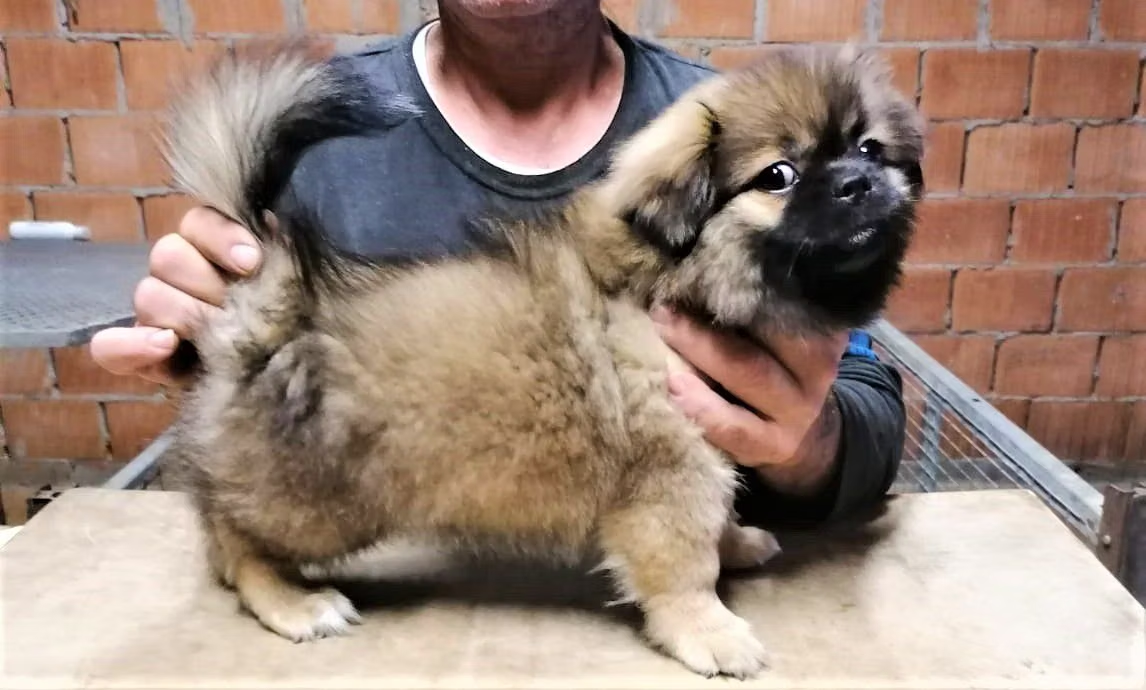


![Everest [Mrs. McLaren Morrison's], a Male Tibetan Spaniel registered with United Pet Club](https://media.unitedpetclub.com/m/mhkpobYpDy/everest-mrs-mclaren-morrison-s-tibetan-spaniel_orig.avif "Everest [Mrs. McLaren Morrison's] — Tibetan Spaniel")

