
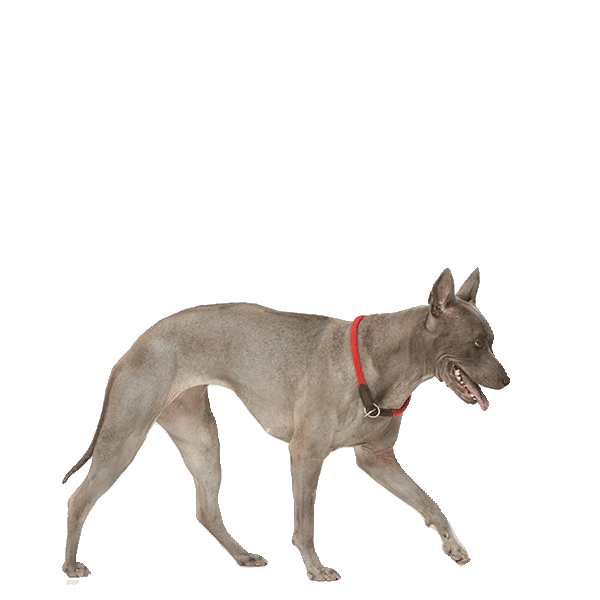
Thai Ridgeback
The Thai Ridgeback is a loyal, athletic breed distinguished by the ridge of hair along its back and its protective devotion.
- Size
- Medium
- Lifespan
- 12–13 years
- Origin
- Thailand
- Temperament
- Loyal
- Standard colors
- Black, Blue, Red and Isabella
Characteristics
Coat and grooming
How the Thai Ridgeback coat is built, and what that means when you groom it.
- Coat layers
- Single coat
- Coat texture
- Smooth
- Coat length
- Short
- Shedding
- Moderate shedding
Thai Ridgeback colors and patterns
What each club's breed standard says about every Thai Ridgeback color and pattern. Point at a ruling to see the club's own wording.
Breed standards describe the Thai Ridgeback in Black, Blue, Red and Isabella. Standard patterns: Solid.
| Color or pattern | FCI | AKC | UKC | KUSA |
|---|---|---|---|---|
| Black | Standard (“black”) | Standard (“Black”) | Standard (“black”) | Standard (“black”) |
| Blue | Standard (“blue”) | Standard (“Blue”) | Standard (“blue”) | Standard (“blue”) |
| Red | Standard (“red”) | Standard (“Red”) | Standard (“Red”) | Standard (“red”) |
| Isabella | Standard (“very light fawn (isabella)”) | Standard (“Fawn (Isabella)”) | Standard (“very light fawn (isabella)”) | Standard (“very light fawn (isabella)”) |
| Albino | Not recognised | Not recognised | Disqualifying (“Albinism”) | Not recognised |
| Patterns | ||||
| Solid | Standard (“Solid colour”) | Standard (“Solid colour”) | Standard (“The following solid colors are permitted”) | Standard (“Solid colour”) |

| Color or pattern | FCI | AKC | UKC | KUSA |
|---|---|---|---|---|
| Dark brown | Standard (“The eye colour is dark brown”) | Standard (“The eye colour is dark brown”) | Standard (“Eye color is dark brown”) | Standard (“The eye colour is dark brown”) |
| Amber | Standard (“In blues, amber-coloured eyes are permitted”) | Standard (“In blues, amber-coloured eyes are permitted”) | Standard (“in blue dogs, where amber eyes are permitted”) | Standard (“In blues, amber-coloured eyes are permitted”) |
| Color or pattern | FCI | AKC | UKC | KUSA |
|---|---|---|---|---|
| Black | Standard (“Black”) | Standard (“Black”) | Standard (“Black”) | Standard (“Black”) |
| Blue | Standard (“In blue dogs, the nose is bluish”) | Standard (“In blue dogs, the nose is bluish”) | Standard (“In bluish dogs, the nose is bluish”) | Standard (“In blue dogs, the nose is bluish”) |
| Color or pattern | FCI | AKC | UKC | KUSA |
|---|---|---|---|---|
| Spotted | Standard (“Black marking on the tongue is preferable”) | Standard (“Black marking on the tongue is preferable”) | Standard (“Black marking on the tongue is preferable”) | Standard (“Black marking on the tongue is preferable”) |

What the rulings mean
- Standard
- Described by the club's breed standard.
- Disqualifying
- The club's breed standard disqualifies an animal of this colour or pattern.
- Not recognised
- The club does not accept this colour or pattern for the breed.
Color changes
How a Thai Ridgeback's colors can change over its life.
Blackchanges toRust
Coat · With body condition · can change back
Blackchanges toGrey
Coat · Progressive
Blackchanges toBrown
Coat · In the sun · can change back
Blackchanges toSnow nose
Nose · With the season · can change back
Blackchanges toPink
Nose · With the season · can change back
Pinkchanges toBlue-black
Tongue · With age · from 8 to 26 weeks

Sources
Each ruling comes from the club's published breed standard or color list.
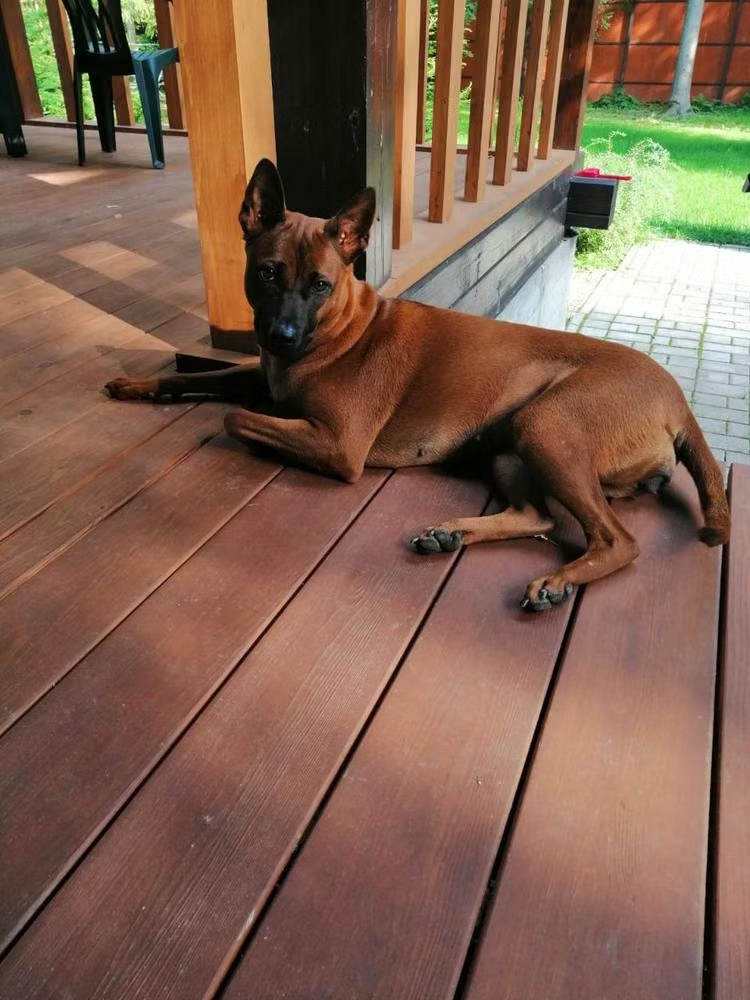
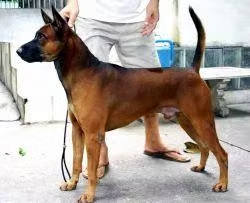
Meet some of our Thai Ridgeback
A few of the Thai Ridgeback profiles members have added to United Pet Club.





About the Thai Ridgeback
The Thai Ridgeback is a medium-sized dog from Thailand with a ridge of backward-growing hair along its spine, loyal to its family and naturally watchful of strangers.
The Thai Ridgeback is a medium-sized dog that started out in rural Thailand, best known for the ridge of hair running backwards along its spine. It's a muscular, athletic animal with a short coat, a wedge-shaped head, and a build suited to hard outdoor work rather than a life on the couch.
The breed is devoted to its own family but keeps a fair bit of independence, a trait that goes back to its days as a guard and hunting dog around Thai villages. Ridgebacks bond tightly with people they know while staying wary of strangers.
A grown Thai Ridgeback usually weighs 16 to 34 kilograms and stands about 51 to 61 centimetres at the shoulder, with dogs typically bigger than bitches. The short coat needs little upkeep, but the breed's strong will and high drive mean it suits owners who already have some dog experience under their belt.
| Attribute | Detail |
|---|---|
| Origin | Thailand |
| Size | Medium |
| Lifespan | 12 to 13 years |
| Group/role | Guard and hunting dog |
| Good with | Families with older children and experienced owners |
Who it suits
The Thai Ridgeback fits an owner who's active, consistent with training, and willing to put in the early groundwork on socialisation. It suits a household after a watchful, loyal dog and with the time to manage an independent, high-energy animal. It's not the right fit for first-time owners or a place that's empty for long stretches during the day.
History of the Thai Ridgeback
The Thai Ridgeback developed over centuries in rural eastern Thailand as a guard and hunting dog, staying largely isolated from other breeds until recent decades.
The Thai Ridgeback comes from Thailand, where dogs of this type have existed for centuries. It took shape mostly in the eastern part of the country, in areas near the island of Phu Quoc and the provinces along the border with what's now Cambodia. Because the breed stayed isolated in these rural districts for so long, its bloodlines stayed purer than those of breeds that travelled along busier trade routes.
For most of its history the Thai Ridgeback was a working dog with several jobs at once: guarding homes and carts, hunting small game, and keeping vermin down. Villagers valued its athleticism, alertness, and ability to make its own calls in a setting where dogs were expected to get on with the job without constant direction.
It's one of only a handful of breeds with a true dorsal ridge, a feature it shares with the Rhodesian Ridgeback and the Phu Quoc dog. Thai breeders held onto this ridge deliberately over many generations.
The breed stayed largely unknown outside Thailand until the late twentieth century, when overseas breeders took an interest and began exporting dogs. New Zealand is one of the countries where it remains a genuinely rare sight, with only a small number kept here.
Appearance of the Thai Ridgeback
The Thai Ridgeback is a muscular, medium-sized dog with a short coat and a distinctive ridge of reversed hair running down its back.
The Thai Ridgeback is a well-muscled, athletic dog of moderate size, with a body slightly longer than it is tall, a deep chest, a level topline, and clean, powerful legs. The head is wedge-shaped, the ears stand upright and triangular, and the tail tapers to a point and carries in a slight upward curve. Overall it looks built for speed and stamina rather than bulk.
| Feature | Standard |
|---|---|
| Height | 51 to 61 cm at the shoulder |
| Weight | 16 to 34 kg |
| Coat | Short, smooth, close-lying |
| Colours | Black, blue, red, fawn (isabella) |
| Eyes | Dark, almond-shaped |
Coat and colours
The coat is short, smooth, and lies close to the body, so grooming takes very little time. Four solid colours are recognised: black, blue, red, and fawn. The defining feature is the ridge running along the back, where the hair grows in the opposite direction to the rest of the coat. Ridge width and shape vary between individual dogs, and breeders recognise several distinct ridge patterns.
Temperament of the Thai Ridgeback
The Thai Ridgeback is loyal and affectionate with its own family, independent by nature, and naturally protective and reserved around strangers.
The Thai Ridgeback forms strong bonds with its family and is calm and affectionate at home with people it trusts. It's also independent and tends to think for itself, a trait that comes straight from its history as a self-directed working dog. That independence means it won't always defer to an owner without clear, consistent leadership.
Around strangers the breed is typically reserved and watchful. Its natural protectiveness makes it a reliable alert dog, though it doesn't tend to bark without good reason. Early and ongoing socialisation matters if the dog is to stay confident and well-mannered around unfamiliar people and situations.
Thai Ridgebacks can live alongside other pets when raised with them, but their prey drive and territorial streak mean introductions need to be careful and supervised. They generally get on best with older kids who understand how to interact respectfully with a strong-willed dog.
| Trait | Rating |
|---|---|
| Affection | 4 |
| Energy | 4 |
| Trainability | 3 |
| Vocalness | 2 |
| Shedding | 2 |
Caring for a Thai Ridgeback
The Thai Ridgeback needs daily exercise, consistent handling, and very little grooming thanks to its short coat.
Grooming
- Brush the short coat weekly to shift loose hair and keep it tidy.
- Bathe only when needed, since the coat sheds dirt well on its own.
- Trim nails every few weeks and check ears regularly.
- Brush teeth several times a week to keep on top of dental health.
Exercise
- Give the dog at least 60 minutes of activity every day.
- Mix brisk walks with running and off-lead time in a secure area.
- Add problem-solving games and training sessions for mental stimulation.
- Use secure fencing, since the breed is a capable jumper and climber.
Environment
The Thai Ridgeback handles New Zealand's temperate climate well and copes with heat far better than cold. It does best in a home with a securely fenced section rather than a small apartment, though it can manage in a smaller space if its exercise needs are met. The coat gives little protection against the cold, so a dog coat or shorter time outdoors is worth considering during winter.
Feeding a Thai Ridgeback
A Thai Ridgeback does well on a balanced diet sized to its weight and activity level, split into two meals a day once it's an adult.
The Thai Ridgeback needs a complete, balanced diet suited to its age, weight, and activity level. As an athletic breed it does well on quality protein to support lean muscle. Portions should be matched to the individual dog and adjusted to keep it at a healthy weight, since this breed should stay fit and well-defined rather than carrying extra condition.
| Life stage | Amount per day | Meals |
|---|---|---|
| Puppy (2 to 6 months) | Per product guide for weight | 3 to 4 |
| Junior (6 to 12 months) | Per product guide for weight | 2 to 3 |
| Adult | Approx. 200 to 350 g dry food | 2 |
| Senior | Adjusted lower for activity | 2 |
Treats and supplements
Treats should make up no more than around ten percent of daily calories. Most healthy Thai Ridgebacks on a complete diet don't need supplements, though joint support can help older or very active dogs. Check with a vet before adding any supplement. Keep fresh water available at all times, especially given how active this breed is in warm weather.
Thai Ridgeback health
The Thai Ridgeback is generally healthy with a lifespan of 12 to 13 years, though it can develop a skin condition linked to its ridge and a few other issues.
The Thai Ridgeback is generally a hardy, healthy breed with a typical lifespan of 12 to 13 years. Limited crossbreeding over its history has helped keep the gene pool relatively sound. Even so, a handful of conditions turn up in the breed, and responsible breeding along with routine veterinary care helps keep their impact down.
| Condition | Signs | Note |
|---|---|---|
| Dermoid sinus | Tube-like skin opening along the spine, discharge | Linked to the ridge; treated surgically |
| Hip dysplasia | Stiffness, reduced activity, lameness | Screening breeding stock helps |
| Skin allergies | Itching, redness, hair loss | Manage triggers with veterinary advice |
Preventive care
- Keep vaccinations and parasite control current.
- Book annual vet check-ups, more often for older dogs.
- Keep a healthy weight with measured feeding and regular exercise.
- Check the ridge and skin for any openings, lumps, or irritation.
- Stay on top of routine dental care.
Training a Thai Ridgeback
The Thai Ridgeback is smart but independent, so training depends on consistency, early socialisation, and reward-based methods.
The Thai Ridgeback is intelligent and capable but independent, which can make training more demanding than with breeds that live to please. It picks things up quickly when it's motivated, but may still choose to follow its own judgement over a command. Consistency, patience, and clear boundaries matter, and training works best when it starts early. Harsh handling tends to backfire and can damage trust with this sensitive, strong-willed dog.
Basics
- Start socialisation and basic handling as early as possible.
- Teach core commands such as sit, stay, recall, and leave it.
- Keep sessions short, varied, and engaging to hold attention.
- Reinforce recall and impulse control given the breed's prey drive.
- Practise calm, controlled greetings with new people and animals.
Breeding the Thai Ridgeback
The Thai Ridgeback reaches breeding age at around 18 months to 2 years and typically produces litters of five to seven puppies after a standard canine pregnancy.
Thai Ridgebacks reach physical and behavioural maturity later than many breeds, and responsible breeders generally wait until a dog is at least 18 months to 2 years old before breeding from it. Health screening of both parents, including a hip dysplasia assessment and a check for dermoid sinus, helps cut the risk of passing on heritable problems. Breeders registering litters with Dogs New Zealand should also follow its code of breeding practice on minimum ages and health testing.
Gestation runs about 63 days, standard for dogs. Litters typically hold around five to seven puppies, though numbers vary. Because the ridge and certain skin conditions are inherited, knowledgeable breeders pay close attention to ridge formation and skin health when planning a pairing.
Puppies should stay with their mother until at least eight weeks old. Early handling and exposure to people, sounds, and other animals during this period matter for raising confident, well-adjusted adults, given how reserved this breed can naturally be.
| Metric | Value |
|---|---|
| Breeding maturity | 18 months to 2 years |
| Gestation | Approx. 63 days |
| Average litter size | 5 to 7 puppies |
| Weaning age | About 7 to 8 weeks |
| Recommended rehoming age | From 8 weeks |
Registering a Thai Ridgeback in New Zealand, microchip and all
Alongside council registration, a free United Pet Club record keeps a live phone number behind your Thai Ridgeback and its chip.
Thai Ridgeback registration and microchip registration in New Zealand
Adding your Thai Ridgeback to the registry is a ten-minute job at most: name, date of birth, photo, contact details, save. The profile is free for life and works whether the chip is already in or booked for the next vet visit. Dog registration is the place to start.
Getting the chip implanted was the vet's job; giving the number somewhere to point is yours. Registering the microchip with United Pet Club costs nothing on the lifetime plan, suits any brand a Kiwi vet reaches for, and keeps the record searchable at any hour from anywhere. Creating a free account ties the profile and the chip together.
How do I register my Thai Ridgeback in New Zealand?
Setting up a free United Pet Club account, adding your Thai Ridgeback's details and a photo, and saving is all it takes. The record stays free for the dog's whole life, chip or no chip.
How do I register my Thai Ridgeback's microchip?
Just add the fifteen digit number to your free account along with your current address and phone. Under the lifetime plan there is nothing to pay for the registration or any later update.
Does my Thai Ridgeback need a microchip in New Zealand?
Dogs registered for the first time since 2006 need one under the National Dog Database rules, working farm dogs aside. The council record and your United Pet Club profile do different jobs, and the second one is free.
What does registering a Thai Ridgeback cost?
Nothing. The free lifetime plan carries the profile, the chip record, and every update, and no renewal notice ever arrives.
Thai Ridgeback frequently asked questions
Common questions about the Thai Ridgeback cover its size, temperament, care needs, lifespan, suitability, and availability in New Zealand.
How big do Thai Ridgebacks get?
It's a medium-sized breed, standing roughly 51 to 61 centimetres at the shoulder and weighing 16 to 34 kilograms, with dogs usually bigger than bitches.
Are Thai Ridgebacks good family dogs?
They can make loyal, devoted family companions, particularly in homes with older kids. Their independent, protective nature means they do best with experienced handling and early socialisation.
Are Thai Ridgebacks hard work to look after?
Grooming is easy thanks to the short coat, but the breed is demanding when it comes to exercise, training, and socialisation. Its independent streak suits owners with some dog experience already.
How long do Thai Ridgebacks live?
They typically live 12 to 13 years. Good nutrition, regular exercise, and routine vet care all support a long, healthy life.
Are Thai Ridgebacks suitable for first-time owners?
They're generally not recommended for first-time owners. Their strong will, prey drive, and protective instincts call for confident, consistent leadership.
Are Thai Ridgebacks rare in New Zealand?
Yes. The breed stayed isolated in Thailand for most of its history and is still uncommon in most countries. Bringing one into New Zealand also means meeting MPI import health standards and quarantine requirements, so finding a puppy here can take time and research.
Do Thai Ridgebacks shed much?
No. The short, close coat sheds lightly and only needs a weekly brush to stay in good shape.
From the community
Ask about the Thai RidgebackNo questions about the Thai Ridgeback yet. Be the first to ask.
Browse Dog breeds