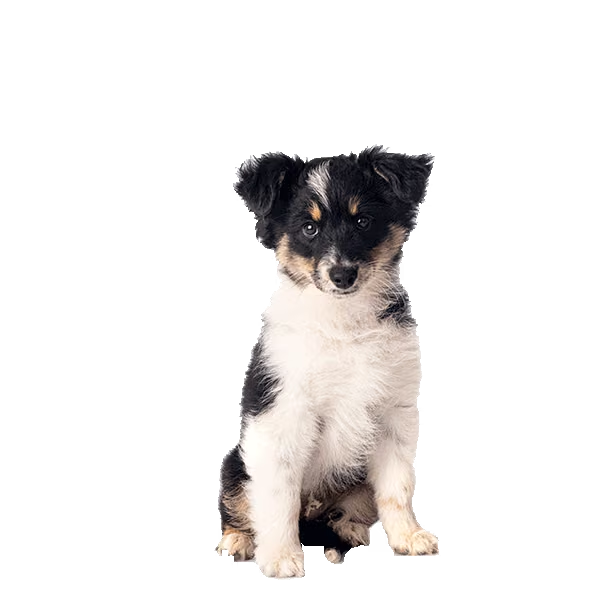
The Teddy Roosevelt Terrier is an affectionate, low-set American hunting terrier that is loyal, alert, and devoted to its family.
How the Teddy Roosevelt Terrier coat is built, and what that means when you groom it.
A few of the Teddy Roosevelt Terrier profiles members have added to United Pet Club.
The Teddy Roosevelt Terrier is a small, low-set American terrier valued in New Zealand homes for its loyalty, alertness, and close bond with its family.
The Teddy Roosevelt Terrier is a compact working terrier that started out on American farms. It carries a short, smooth coat over a low, muscular frame that sits closer to the ground than its taller relative, the Rat Terrier. Most adults weigh between 3.6 and 11 kilograms. Farmers bred the dog to clear rats and other vermin from barns and paddocks, and that instinct still comes through in how it moves and plays.
Even with a working past, this terrier is really a companion dog first. It fixes on one household and likes to trail its owner from room to room. Sharp senses make it a reliable early warning system when someone comes up the path, though it lacks the size for guard work. Owners here often describe it as settled indoors and full of energy the moment it gets outside.
The breed is clever and active, with an even temperament once its needs are met. It suits a household where someone is around for most of the day, since long stretches alone do not sit well with a dog this attached to its people.
| Attribute | Detail |
|---|---|
| Origin | United States |
| Size | Small (3.6 to 11 kg) |
| Lifespan | 14 to 16 years |
| Group/role | Terrier, vermin hunter and companion |
| Good with | Families, older children, terrier-savvy households |
This terrier suits active people and families after a small dog with a lot of character. It fits owners who can offer daily exercise and some mental work, and who like a dog that stays close by. It is a poor match for a flat or house left empty for long hours, since the breed bonds hard and can turn restless when isolated too often.
The Teddy Roosevelt Terrier developed from working farm terriers in the United States and was bred down as a shorter, low-set ratter separate from the taller Rat Terrier.
The Teddy Roosevelt Terrier goes back to the small working terriers kept on American farms in the late 1800s and early 1900s. These dogs descended from a mix of terrier types that settlers and immigrants brought across the Atlantic, and they paid their way by keeping barns and fields clear of rats and other vermin. Working ability counted for far more than looks in that early selection.
Within this general population of farm terriers, breeders started to favour two distinct builds. One stood taller with longer legs. The other sat low and compact. Over time the low-set type was set apart as its own breed and named for President Theodore Roosevelt, who was known for his association with hunting terriers.
The taller line went on to become the Rat Terrier, while the shorter line became the Teddy Roosevelt Terrier. Shared ancestry explains why the two still look alike apart from leg length and overall proportion. American breed clubs later wrote up formal standards and kept records to hold the two types apart.
The breed remains rare, including here in New Zealand, where numbers are small and importing one means clearing strict Ministry for Primary Industries biosecurity and quarantine requirements before the dog ever sets paw on New Zealand soil. It is still valued for the traits that defined the original farm dogs: strong prey drive, hardiness, and a close working bond with its people.
The Teddy Roosevelt Terrier is a small, low-set, muscular dog with a short smooth coat, a broad head, and a body longer than it is tall.
The Teddy Roosevelt Terrier is a solid, compact dog with clear muscle definition for its size. The body runs longer than it stands tall, and the legs are short against the depth of the chest, giving the breed its low, ground-hugging outline. The head is broad with a moderate stop, and the ears sit erect or semi-erect. The tail may be naturally short, naturally long, or docked, depending on the individual dog and on regional practice, though cosmetic docking is restricted under New Zealand animal welfare law and is not routinely available here.
| Trait | Standard |
|---|---|
| Height | 20 to 38 cm (8 to 15 in) at the shoulder |
| Weight | 3.6 to 11 kg (8 to 25 lb) |
| Coat | Short, dense, smooth and close-lying |
| Colours | White with patches of black, tan, red, lemon, or sable |
| Eyes | Round, set well apart, dark to hazel |
The coat lies short and smooth against the body and asks for very little upkeep. Most dogs are mainly white with coloured markings over the top. Black and tan, red, lemon, and sable patches on a white base are the common patterns, and tricolour dogs turn up as well. That short coat shows off the dog's shape clearly but gives little protection against a cold, wet Wellington winter or a frosty inland morning, so a coat is worth having on hand for the cooler months.
The Teddy Roosevelt Terrier is devoted to its family, watchful around strangers, and lively with other pets, carrying the strong prey drive typical of terriers.
The Teddy Roosevelt Terrier is loyal and affectionate with the people it lives with. It settles on one household and likes to stay within sight of its owner for most of the day. Around family it is playful and responsive, and for a terrier it tries harder than most to please.
Around strangers the breed stays alert and watchful. It usually sounds off when someone arrives and can be standoffish at first, warming up once it decides the visitor is no threat. Early and ongoing socialisation helps it take new people and new places in its stride.
With other pets the result depends on upbringing. It gets along fine with dogs it grows up alongside, but its hunting background means a strong prey drive toward small animals such as rodents, and sometimes cats. Homes with small pets need to manage first introductions with care. The breed does well with older children who handle it gently; supervise younger children closely, since the dog is small and quick on its feet.
| Trait | Rating |
|---|---|
| Affection | 5 |
| Energy | 4 |
| Trainability | 4 |
| Vocalness | 3 |
| Shedding | 2 |
The Teddy Roosevelt Terrier needs minimal grooming, daily exercise and mental work, and an owner who is not away from home for long stretches.
The breed copes well in a flat or a house as long as it gets its daily exercise. It prefers company and does best where someone is home for most of the day. A securely fenced section is a bonus, but keep an eye on the dog outdoors, since it may dig after burrowing animals and can squeeze through surprisingly small gaps in a fence line.
The Teddy Roosevelt Terrier does well on a complete diet sized for a small, active dog, fed in measured meals to keep its weight in check.
The Teddy Roosevelt Terrier needs a complete and balanced diet formulated for small, active breeds. Look for a food that lists a named animal protein first and carries enough fat to fuel its energy. Because the breed is small and keen on its food, measure meals out rather than leaving a bowl down all day, since carrying extra weight puts strain on the joints and back of a low-set dog. Fresh water should be available at all times.
| Life stage | Amount per day | Meals |
|---|---|---|
| Puppy (2 to 6 months) | 1/2 to 1 cup | 3 to 4 |
| Puppy (6 to 12 months) | 1/2 to 1 cup | 2 to 3 |
| Adult | 1/2 to 1 cup | 2 |
| Senior | 1/3 to 3/4 cup | 2 |
Keep treats to around 10 percent of daily calories and use them as training rewards. Most dogs on a complete diet need no extra supplements; a vet may suggest joint support for older dogs or those carrying back strain. Adjust portions to the dog's body condition and activity level, and check with your vet before changing the diet of a puppy or a senior dog.
The Teddy Roosevelt Terrier is a generally hardy breed with a lifespan of 14 to 16 years, though a few hereditary and orthopaedic conditions are worth watching for.
The Teddy Roosevelt Terrier is a robust breed with a long lifespan of 14 to 16 years. Its working background and wide gene pool have kept it fairly free of severe inherited disease, but a handful of conditions crop up often enough to watch for. Reputable breeders screen their dogs and pass on health results to buyers.
| Condition | Signs | Note |
|---|---|---|
| Patellar luxation | Skipping gait, occasional hind-leg lameness | Kneecap slips out of place; ranges from mild to needing surgery |
| Hip dysplasia | Stiffness, reluctance to jump or run | Less common but possible; keeping weight down helps |
| Allergies | Itching, ear infections, red skin | May be food related or environmental |
| Dental disease | Bad breath, tartar, inflamed gums | Common in small breeds; routine cleaning helps |
| Eye conditions | Cloudiness, changes in vision | Includes lens luxation in some lines |
The Teddy Roosevelt Terrier is intelligent and keen to learn, and responds best to consistent, reward-based training started young.
The Teddy Roosevelt Terrier is sharp and quick to learn, which makes training satisfying once you find the right approach. Like most terriers it has an independent streak and can switch off during repetitive drills, so short, varied sessions beat long ones. The breed responds well to rewards and tends to shut down or dig its heels in under harsh handling. Early socialisation with people, dogs, and everyday situations counts for a lot, and steady recall work matters given the strong prey drive.
The Teddy Roosevelt Terrier reaches breeding age in its first year or two, carries a small litter for about two months, and should only be bred from health-screened parents.
Breeding the Teddy Roosevelt Terrier should always be done with care, using parents that are health screened and sound in temperament. Females usually reach physical maturity before breeding is a good idea, and many breeders hold off until the second year so the dam is fully grown. Gestation runs about 63 days, after which the dam delivers a small litter. Newborn puppies are tiny and rely completely on the mother for warmth and feeding through the first weeks.
The dam usually manages the litter with little help needed, but the breeder should track weight gain, keep the whelping area warm and clean, and start gentle handling early to build the puppies' confidence. Weaning begins around four weeks, and puppies are usually ready to move to new homes at eight to ten weeks, once socialisation and first vaccinations are under way. Under New Zealand law, puppies must be microchipped before they change ownership, and new owners then need to register the dog with their local council within the required timeframe. Because the breed is uncommon here, prospective owners often go on a waiting list and may need to look overseas, which brings MPI import health standards and quarantine into the picture.
| Metric | Value |
|---|---|
| Sexual maturity | 6 to 12 months (breed later, in the second year) |
| Gestation | About 63 days |
| Average litter size | 3 to 6 puppies |
| Weaning age | About 4 to 7 weeks |
| Ready for new home | 8 to 10 weeks |
Alongside council registration, a free United Pet Club record keeps a live phone number behind your Teddy Roosevelt Terrier and its chip.
The National Dog Database has required chipping of newly registered dogs since 2006, and council registration sits alongside that rather than replacing a proper contact record. Holding one with United Pet Club is free for your Teddy Roosevelt Terrier's whole life. Registering your dog takes a few minutes, with nothing to renew afterwards.
Getting the chip implanted was the vet's job; giving the number somewhere to point is yours. Registering the microchip with United Pet Club costs nothing on the lifetime plan, suits any brand a Kiwi vet reaches for, and keeps the record searchable at any hour from anywhere. Creating a free account ties the profile and the chip together.
Setting up a free United Pet Club account, adding your Teddy Roosevelt Terrier's details and a photo, and saving is all it takes. The record stays free for the dog's whole life, chip or no chip.
Just add the fifteen digit number to your free account along with your current address and phone. Under the lifetime plan there is nothing to pay for the registration or any later update.
Dogs registered for the first time since 2006 need one under the National Dog Database rules, working farm dogs aside. The council record and your United Pet Club profile do different jobs, and the second one is free.
Nothing. The free lifetime plan carries the profile, the chip record, and every update, and no renewal notice ever arrives.
Common questions about the Teddy Roosevelt Terrier cover its size, temperament, care needs, lifespan, suitability, and how to find one in New Zealand.
It is a small breed, standing roughly 20 to 38 cm at the shoulder and weighing 3.6 to 11 kg. Its low-set, longer-than-tall body makes it look more compact than the taller Rat Terrier.
It is affectionate and loyal with its family, watchful around strangers, and full of energy outdoors. It bonds tightly with its owner and carries a strong prey drive toward small animals.
Care sits at a moderate level. The short coat needs only a weekly brush, but the dog needs daily exercise, mental stimulation, and company, since it does not cope well with being left alone for long.
The breed is long-lived for a dog, with a typical lifespan of 14 to 16 years when kept at a healthy weight and given routine veterinary care.
It does well with older, gentle children and with dogs it grows up alongside. Small pets such as rodents, and sometimes cats, can trigger its hunting instinct, so introductions need care.
Yes, the breed adapts well to a flat as long as it gets daily walks and play. Its small size suits compact living, though it may bark to let you know about activity outside.
The breed is uncommon here, so finding one usually means contacting breed clubs or reputable breeders directly and going on a waiting list. Importing a puppy means meeting MPI biosecurity and quarantine requirements, so factor in that extra time and cost. Breed-specific rescue groups are worth checking too.



