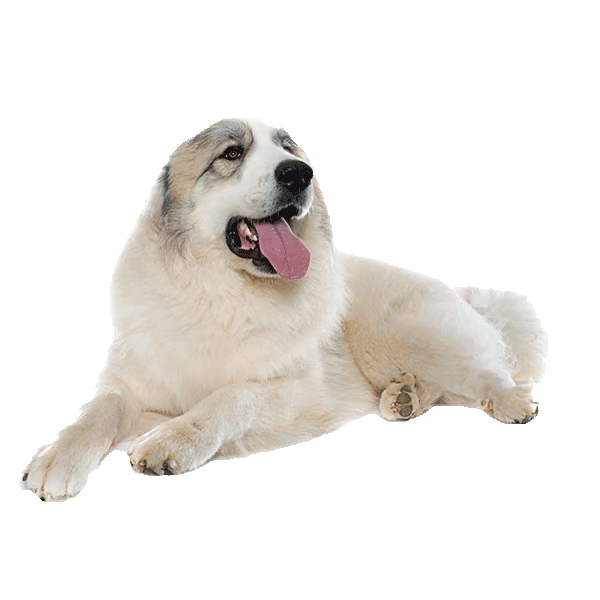
The Slovensky Cuvac is a fearless white livestock guardian known for its devotion to family and flock.
How the Slovensky Cuvac coat is built, and what that means when you groom it.
Critical: A Slovensky Cuvac should not be shaved.
The undercoat keeps heat out as well as in, and the outer coat shields the skin from sun and insect bites. Clipping the whole coat off removes both. It often grows back patchy, soft or a different colour, and in some animals the guard hairs never return properly. Brush the undercoat out instead of cutting it off.
Caution: A Slovensky Cuvac coat mats easily.
Fine or long hair tangles at the base of the coat, out of sight, where the mats tighten and pull on the skin. Brushing has to reach right down to the roots in sections, not just skim the surface.
Information: A Slovensky Cuvac drops its undercoat in heavy bursts.
The undercoat comes out in heavy bursts over a few weeks. An undercoat rake, or a bath followed by a proper blow-dry, clears it far faster than daily brushing. Clipping the coat down is not a shortcut for this.
A big white livestock guardian from the Slovak mountains, the Slovensky Cuvac is fiercely loyal to its family and wary of anyone it doesn't know.
The Slovensky Cuvac is a large white guardian dog bred in the mountains of Slovakia to look after sheep, cattle, and the people who worked with them. It sits in the same family as the Hungarian Kuvasz and the Polish Tatra Sheepdog, all bred to work tough terrain rather than to chase or race.
Its stark white coat is the dog's calling card. Shepherds bred for that colour on purpose, so a dog moving through a flock at dusk wasn't mistaken for a wolf. Adults carry plenty of bone and muscle, and the breed's default mood is calm until something sets off its guarding instinct, at which point it switches to full alert fast.
A Cuvac forms a tight bond with its own household and tends to fold livestock and kids into that same circle of things worth protecting. Generations of working solo with flocks, often out of sight of any shepherd, bred a dog that thinks for itself. Expect a guardian with its own opinions, not a dog that waits to be told what to do.
| Attribute | Detail |
|---|---|
| Origin | Slovakia |
| Size | Large |
| Lifespan | 11 to 13 years |
| Group / role | Livestock guardian dog |
| Good with | Family and children it knows, livestock; wary of strangers |
This is a dog for someone with room to spare, some experience with strong-minded breeds, and an actual job for it to do, whether that's guarding stock or watching over a property. It needs plenty of early socialising and an owner who handles it with quiet confidence. A flat in the city, a first dog, or a household after an eager-to-please companion are all poor matches. Owners who want a steady, protective guardian and don't mind managing an independent, territorial animal will get on well with the breed.
Slovak shepherds kept white guardian dogs for centuries before the Slovensky Cuvac was formally recognised as its own breed in the 20th century.
The breed comes out of Slovakia's mountain regions, where shepherds relied on white guardian dogs to keep wolves and bears away from sheep and cattle. These dogs share ancestry with the wider group of white mountain guardians found right across the Carpathians and neighbouring ranges. The job was dangerous, and only the toughest, most fearless dogs were kept on for breeding.
For most of its history the Cuvac wasn't a defined breed at all, just a working type shaped by the job. Shepherds bred for ability first, and the white coat was a practical choice on top of that, since it let a shepherd pick the dog out from a predator in poor light.
The breed was formally standardised in the 20th century, as breeders worked to preserve the type while traditional pastoral farming declined across the region. A dedicated breeding programme in Slovakia fixed the breed's key traits, and it went on to gain recognition as a distinct national breed, its name a direct nod to its Slovak home.
The Slovensky Cuvac remains rare outside its homeland. It is kept both as a working stock guardian and as a property guardian, with dedicated breeders in Slovakia and further afield keeping the population going, though numbers stay modest next to the more mainstream guardian breeds. Anyone bringing one into New Zealand needs to go through the Ministry for Primary Industries import health standard for dogs, including the quarantine and biosecurity steps that apply to any dog arriving from overseas.
The Slovensky Cuvac is a big, solidly built white dog with a dense double coat that copes well with a cold, damp high country winter.
The Slovensky Cuvac is a large, powerfully built dog with a rectangular outline and solid bone. The head is broad with a moderate stop, and the muzzle is strong rather than fine. The ears sit fairly high and hang close to the head. The overall expression is alert and self assured. The body is muscular without being bulky, and the tail hangs low at rest but lifts when the dog is active or on alert.
| Trait | Standard |
|---|---|
| Height | Males about 62 to 70 cm, females about 59 to 65 cm at the withers |
| Weight | Males about 36 to 44 kg, females about 31 to 37 kg |
| Coat | Dense double coat with a thick undercoat; longer on the neck and the back of the legs |
| Colour | Solid white |
| Eyes | Dark brown, oval, set moderately apart |
The coat is always solid white, and that's non-negotiable in the breed standard. Underneath a slightly wavy, longer outer coat sits a soft, dense undercoat that keeps the dog warm and dry through the kind of wet, cold weather New Zealand's high country throws at stock over winter. Hair is shorter over the head and the front of the legs, and longer around the neck, where males often grow a proper ruff. The white coat sheds heavily, with bigger moults at the change of seasons, so regular brushing matters just as much as the colour.
Deeply loyal and watchful, the Slovensky Cuvac guards its family fiercely while staying reserved and territorial with anyone it doesn't know.
The Slovensky Cuvac is a guardian first and a companion a distant second. With its own family it is affectionate, loyal, and gentle, and it usually gets on well with kids it has grown up around. That same dog can turn aloof or suspicious around strangers and will let the whole street know with a deep bark when someone arrives. That's the breed doing its job properly, not bad behaviour.
Territorial instinct runs deep. A Cuvac will patrol and keep watch over its own patch and whatever animals or people fall under its care. Socialise it early around other pets and it will usually treat household animals and livestock as part of the family to protect, though it can turn assertive with dogs it doesn't know, particularly of the same sex.
Independence sits at the core of the breed. These dogs were bred to make their own calls while guarding flocks miles from any shepherd, so they think for themselves rather than waiting on instructions. That makes them steady, dependable guardians, but also stubborn and in no hurry to comply when they can't see the point. They are not aggressive without reason, but they take the job seriously.
| Trait | Rating |
|---|---|
| Affection (with family) | 4 |
| Energy | 3 |
| Trainability | 2 |
| Vocalness | 4 |
| Shedding | 4 |
The dense white double coat needs regular brushing, and the Slovensky Cuvac needs daily exercise plus a secure outdoor space with a real job to do.
Looking after a Slovensky Cuvac comes down to three things: keeping on top of the coat, giving it steady exercise, and setting up an environment with room and purpose.
The Slovensky Cuvac was built for cool, open country and handles cold far better than heat. It is happiest on a lifestyle block or rural property with secure fencing, since it will roam and defend a wide patch if given the chance. Flats and small urban sections are a poor fit. On hot days, make sure it has shade, fresh water, and a chance to rest through the warmest part of the afternoon.
A balanced large-breed diet fed in set meals, with portions adjusted for the Slovensky Cuvac's age, weight, and activity level, keeps this breed in good shape.
As a large working breed, the Slovensky Cuvac does well on a complete diet made for large dogs, with growth kept under control during puppyhood to protect developing joints. Feed measured meals twice a day rather than leaving a bowl out all day, and adjust the amount to the individual dog's weight, age, and workload. Fresh water should always be on tap, especially for a dog that is active outdoors.
| Life stage | Amount per day | Meals |
|---|---|---|
| Puppy (2 to 6 months) | Per large-breed puppy food guidelines, divided | 3 to 4 |
| Adolescent (6 to 12 months) | Per food guidelines for projected adult weight | 2 to 3 |
| Adult | About 400 to 600 g of quality dry food, by weight and activity | 2 |
| Senior / less active | Reduced portion to prevent weight gain | 2 |
Keep treats to around ten percent of daily calories so they don't throw the diet out of balance or pack on weight. Large breeds can benefit from joint support, but only add a supplement on veterinary advice. A dog on a complete commercial diet usually doesn't need extra vitamins on top. Keep an eye on body condition and adjust the food rather than leaving a bowl down all day.
Generally hardy with a lifespan of 11 to 13 years, the Slovensky Cuvac can still face large-breed joint problems and the risk of bloat.
The Slovensky Cuvac is a generally tough breed, the result of generations bred for working soundness in harsh conditions. Typical lifespan runs 11 to 13 years. Like other large dogs it can be prone to certain joint and gastric problems, and responsible breeding with health screening cuts that risk down. Picking a pup from health-tested parents is the single most useful thing a buyer can do.
| Condition | Signs | Note |
|---|---|---|
| Hip dysplasia | Stiffness, limping, reluctance to rise or jump | Common in large breeds; screen breeding stock |
| Elbow dysplasia | Foreleg lameness, especially after exercise | Linked to growth; manage puppy diet and exercise |
| Gastric dilatation-volvulus (bloat) | Swollen abdomen, retching without vomiting, distress | A medical emergency; get to a vet immediately |
| Obesity | Weight gain, low energy | Preventable through measured feeding and exercise |
Smart but strongly independent, the Slovensky Cuvac needs early, consistent, reward-based training from a confident, patient handler.
The Slovensky Cuvac is intelligent, but it was bred to work things out and decide for itself, which makes it independent and often stubborn during training. It doesn't do tasks just to keep a handler happy, so motivation and consistency count for a lot. Harsh methods tend to backfire on this sensitive, proud breed and can wreck the trust it has built with a handler. Early socialising matters just as much as obedience work: a guardian this size has to learn to read ordinary situations calmly, so its protective instincts stay reliable instead of trigger-happy. Keep expectations realistic, since this is a guardian dog, not a competition obedience dog.
A large, slow-maturing breed, the Slovensky Cuvac usually produces moderate to large litters and should only be bred from health-screened parents.
Being a large breed, the Slovensky Cuvac matures slowly and shouldn't be bred until it is physically and mentally grown up, generally around two years old, by which point health screening on the parents can be finished. Females come into season roughly twice a year. Once mated, gestation runs about 63 days, standard for the species. Litters tend to be moderate to large, in keeping with the breed's size.
Raising a litter takes real commitment. Pups stay with the dam and littermates through the early weeks for nursing and social learning, and breeders should start gentle handling and socialising well before pups head to new homes at around eight weeks old. Because the breed is uncommon, responsible breeders in New Zealand and elsewhere prioritise temperament, working ability, and screened health over litter numbers. Anyone considering breeding should do it with proper knowledge of the breed and veterinary support behind them, and registration through Dogs New Zealand is worth looking into for anyone breeding purebred stock.
| Metric | Value |
|---|---|
| Sexual maturity | Females from about 1 year; breed from about 2 years |
| Seasons per year | About 2 |
| Gestation | About 63 days |
| Typical litter size | Around 5 to 8 puppies |
| Weaning age | About 6 to 8 weeks |
| Recommended pre-breeding checks | Hip and elbow screening, general health and temperament assessment |
Alongside council registration, a free United Pet Club record keeps a live phone number behind your Slovensky Cuvac and its chip.
Keeping a Slovensky Cuvac findable is mostly paperwork: a profile carrying your phone number, a photo, and the dog's details, sitting where a scan can reach it. Registering your dog with United Pet Club sets that up free, and the record never lapses or bills you.
Getting the chip implanted was the vet's job; giving the number somewhere to point is yours. Registering the microchip with United Pet Club costs nothing on the lifetime plan, suits any brand a Kiwi vet reaches for, and keeps the record searchable at any hour from anywhere. Creating a free account ties the profile and the chip together.
Setting up a free United Pet Club account, adding your Slovensky Cuvac's details and a photo, and saving is all it takes. The record stays free for the dog's whole life, chip or no chip.
Just add the fifteen digit number to your free account along with your current address and phone. Under the lifetime plan there is nothing to pay for the registration or any later update.
Dogs registered for the first time since 2006 need one under the National Dog Database rules, working farm dogs aside. The council record and your United Pet Club profile do different jobs, and the second one is free.
Nothing. The free lifetime plan carries the profile, the chip record, and every update, and no renewal notice ever arrives.
Common questions about the Slovensky Cuvac, covering its size, temperament, care needs, lifespan, suitability, and where to find one in New Zealand.
It's a large breed. Males stand roughly 62 to 70 cm at the withers and weigh about 36 to 44 kg, while females run slightly smaller at about 59 to 65 cm and 31 to 37 kg.
The Slovensky Cuvac is devoted and loyal to its own family, and reserved, watchful, and protective around strangers. It's courageous and independent, bred to guard livestock and property rather than to please a crowd.
It's a lot for an inexperienced owner to take on. The dense white coat needs regular brushing, the dog needs daily exercise and space to move, and its independent, territorial streak calls for early socialising and a confident handler.
Typical lifespan is 11 to 13 years. Good nutrition, a healthy weight, regular exercise, and routine vet care all help a dog reach the upper end of that range.
It can be gentle and devoted with a family and kids it knows, but it's not suited to flat living. It needs a rural property or lifestyle block with secure fencing, and suits experienced owners after a guardian rather than a cuddly companion.
Raised alongside them, the breed is usually protective and gentle with family kids and tolerant of household animals and livestock. It can be wary of strangers and assertive with unfamiliar dogs, so supervision and early socialising matter.
No. The breed is rare outside Slovakia and its neighbouring countries, and importing a dog means going through MPI's biosecurity and quarantine requirements. Finding a puppy from a responsible breeder can take time, and you may end up on a waiting list.
