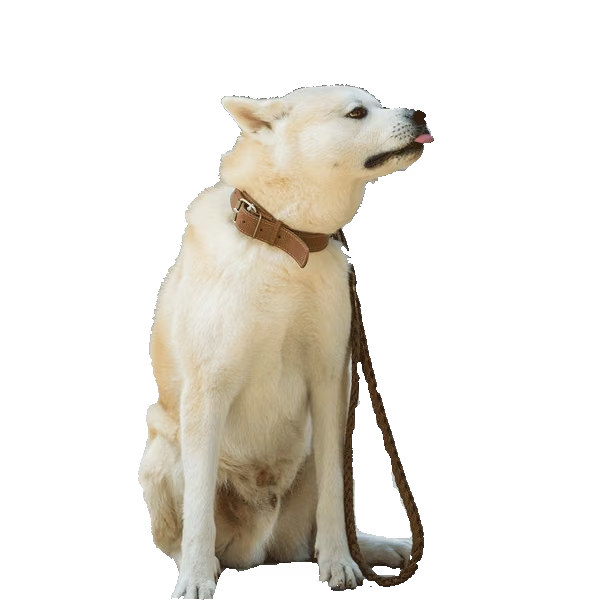
The Shikoku is a spirited Japanese mountain breed known for its independent, agile nature and devotion to its family.
How the Shikoku coat is built, and what that means when you groom it.
Critical: A Shikoku should not be shaved.
The undercoat keeps heat out as well as in, and the outer coat shields the skin from sun and insect bites. Clipping the whole coat off removes both. It often grows back patchy, soft or a different colour, and in some animals the guard hairs never return properly. Brush the undercoat out instead of cutting it off.
Information: A Shikoku drops its undercoat in heavy bursts.
The undercoat comes out in heavy bursts over a few weeks. An undercoat rake, or a bath followed by a proper blow-dry, clears it far faster than daily brushing. Clipping the coat down is not a shortcut for this.
The Shikoku is a medium Japanese mountain breed prized for loyalty, independence and athletic agility, with a cool, watchful manner around people it doesn't know.
The Shikoku is a medium-sized spitz breed from the rugged mountains of Shikoku island in Japan, bred over generations to hunt wild boar across steep, bush-covered terrain. It carries the wedge head, pricked ears and curled tail typical of Japan's native dogs, and moves with the sure-footed agility you would expect from a dog built for rough hill country.
At home the Shikoku is devoted and closely attached to its own family, yet it stands back and sizes up anyone it does not know. It is sharp-witted and independent, qualities that once let it track and hold quarry well out of sight of its handler. The breed carries plenty of drive and needs both physical work and mental stimulation to stay settled.
Few Shikoku have made it as far as New Zealand, and the breed remains far rarer here than the Shiba Inu or Akita. Owners who do keep one tend to prize its straightforward nature, its work ethic and the strong bond it forms with one household.
| Attribute | Detail |
|---|---|
| Origin | Japan (Shikoku island) |
| Size | Medium |
| Lifespan | 10 to 12 years |
| Group/role | Spitz-type hunting dog |
| Good with | Family it knows; wary of strangers |
The Shikoku suits an active owner able to commit to daily exercise and firm, consistent handling. Its independent streak and strong prey drive make it a better fit for someone with prior dog experience than for a first-time owner. It attaches hard to its household and can thrive as an only dog or within a family that respects its cool manner around visitors.
The Shikoku took shape in Japan's Shikoku island hills as a boar-hunting dog, and the government named it a Living Natural Monument back in 1937.
The Shikoku hails from the mountainous interior of Shikoku, the smallest of Japan's four main islands. For generations local hunters relied on the breed to track wild boar and deer and hold them at bay across dense bush and steep slopes. Because the mountain valleys sat apart from one another, the dogs stayed isolated from other Japanese breeds and developed their own distinct type.
Separate valley populations once counted as distinct regional lines, each carrying the name of its home district. Breeders later brought these lines together under the single Shikoku name and worked out a shared standard.
Japan's government named the Shikoku a Living Natural Monument in 1937, a status handed to several native breeds to shield them from dying out or being crossed with other dogs. The Nihon Ken Hozonkai, the organisation responsible for conserving Japan's native breeds, has kept the standard ever since.
The Shikoku is still a rare sight outside Japan. Numbers in New Zealand and elsewhere abroad stay low, well behind the Shiba Inu or Akita, though a handful of committed overseas breeders have managed to establish small numbers.
The Shikoku is a medium spitz-type dog with a wedge-shaped head, pricked ears, a curled or sickle tail, and a weatherproof double coat, most often sesame, red or black-and-tan.
The Shikoku has the compact, well-balanced frame typical of a working spitz breed. The body runs slightly longer than the dog stands tall, the chest is deep, and the legs are lean and muscular. The head forms a broad wedge with a clear stop, small triangular ears sit forward and upright, and dark, slightly angled eyes give the breed its watchful look. The tail is thick and sits curled over the back or held in a sickle curve.
| Trait | Standard |
|---|---|
| Height | Males about 52 cm, females about 46 cm at the withers |
| Weight | Approximately 16 to 25 kg |
| Coat | Harsh, straight outer coat over a soft, dense undercoat |
| Colours | Sesame, red sesame, black sesame, red, and black-and-tan |
| Eyes | Dark brown, small and slightly triangular |
The Shikoku wears a double coat: a coarse, weatherproof top layer over a soft, dense undercoat built for cold mountain conditions. Sesame, a blend of red, black and white hairs through the coat, is the colouring most people associate with the breed, and it splits into red sesame, black sesame and standard sesame depending on how the tones balance out. Solid red and black-and-tan crop up too. Most dogs carry the pale cream markings called urajiro on the cheeks, chest, underside and inner legs, a feature common across Japan's native breeds.
The Shikoku is deeply loyal to its family, alert and reserved with strangers, and independent with a strong prey drive toward small animals.
The Shikoku forms a tight bond with its family and is warm and attentive at home, but it takes a step back with strangers, watching and weighing up a new person before it accepts them. That mix of devotion and caution makes it a naturally watchful dog, quick to pick up on anything out of the ordinary around the property.
Around children it already knows, a well-socialised Shikoku is usually patient and gentle, though its strength and energy mean time with very young kids needs supervision. It can be choosy with other dogs, and putting two of the same sex together sometimes causes friction. Its hunting background leaves it with a strong prey drive, so cats, rabbits and other small pets are at risk unless the dog has grown up alongside them and is managed with care.
The breed thinks for itself, a trait carried over from hunting well away from its handler. It is clever and capable of learning fast, but it is not naturally obedient for obedience's sake, and it works best for an owner it has come to respect.
| Trait | Rating |
|---|---|
| Affection (with family) | 4 |
| Energy | 5 |
| Trainability | 3 |
| Vocalness | 2 |
| Shedding | 4 |
The Shikoku needs solid daily exercise, secure fencing to contain its prey drive, and regular brushing that steps up sharply during the seasonal moults.
A house with a securely fenced section suits the Shikoku better than a flat, though it can manage in an apartment if its exercise needs are fully met. Fencing has to be solid and tall, as the breed is agile enough to climb or clear a low barrier. New Zealand's temperate climate suits the breed's coat well through winter, but shade and fresh water are essential on hot days.
The Shikoku thrives on a complete, protein-rich diet portioned to its activity level and split across two meals a day to suit its athletic build.
The Shikoku is an active, athletic dog that does best on a complete and balanced diet built around good-quality animal protein. Match the portion to the dog's age, weight and workload, and adjust it as activity shifts through the year. The breed tends to run lean by nature, so feed to keep a visible waist and easily felt ribs rather than sticking to a fixed cup measure.
| Life stage | Amount per day | Meals |
|---|---|---|
| Puppy (2 to 6 months) | Per product guide for growth | 3 to 4 |
| Adolescent (6 to 12 months) | Adjust as growth slows | 2 to 3 |
| Adult | About 200 to 350 g of quality dry food | 2 |
| Senior | Slightly reduced calories | 2 |
Keep treats to around ten percent of daily calories and put them to work in training, where this food-driven breed responds well. Most Shikoku on a complete diet need no extra supplements; check with a vet before adding joint, skin or coat products, especially for growing puppies or older dogs.
The Shikoku is a generally hardy breed with a 10 to 12 year lifespan, though hip dysplasia, luxating patella and some eye conditions do turn up.
The Shikoku is a robust, naturally developed breed and rates as generally healthy, helped along by a fairly small and closely managed gene pool of working stock. Typical lifespan runs 10 to 12 years. As with most breeds, a handful of inherited conditions turn up, and responsible breeders screen their stock to keep numbers down.
| Condition | Signs | Note |
|---|---|---|
| Hip dysplasia | Stiffness, limping, reluctance to jump | Screen breeding stock; keep lean |
| Luxating patella | Skipping gait, occasional hind-leg hop | Ranges from mild to surgical |
| Eye conditions | Cloudiness, vision changes | Regular vet eye checks |
| Allergies/skin issues | Itching, redness, coat problems | Identify triggers with a vet |
The Shikoku is sharp and capable but independent, so it trains best with early socialisation, consistency and reward-based methods from a confident handler.
The Shikoku picks things up quickly and reads its handler closely, but its independent streak means it weighs up whether to comply rather than obeying without question. Harsh correction damages trust and gets poor results; clear, consistent rules paired with rewards work far better. Early and ongoing socialisation matters, to soften its natural wariness of strangers and its choosiness around other dogs. Recall is the trickiest skill to lock in, since prey drive can pull the dog off task mid-command, so off-lead freedom should be earned gradually and kept to safe, enclosed areas.
Shikoku breeding follows the usual pattern for a medium dog, with maturity around one to two years, gestation near 63 days, and litters of roughly three to six puppies.
Breeding the Shikoku is a job best left to experienced, conservation-minded breeders, given how small the global population is and how much weight is put on preserving the native type. Females generally reach full physical maturity between one and two years old, and reputable breeders hold off on a first litter until a bitch is mature and has been health-screened. Mating, pregnancy and whelping all follow the usual pattern for a medium-sized dog. Gestation runs close to 63 days, and most whelpings go smoothly, though the breeder should be ready to help and have a vet on call.
Litters tend to be small, usually three to six puppies. The dam typically looks after the litter attentively. Puppies should stay with their mother and littermates until at least eight weeks old, a period when early socialisation and gentle handling build the foundations of the breed's sound temperament. Breeders working with native Japanese breeds commonly register and conserve their stock through bodies such as the Nihon Ken Hozonkai.
| Metric | Value |
|---|---|
| Sexual maturity | About 1 to 2 years |
| Gestation | Approximately 63 days |
| Average litter size | 3 to 6 puppies |
| Weaning age | About 6 to 8 weeks |
| Recommended homing age | 8 weeks or older |
Alongside council registration, a free United Pet Club record keeps a live phone number behind your Shikoku and its chip.
Adding your Shikoku to the registry is a ten-minute job at most: name, date of birth, photo, contact details, save. The profile is free for life and works whether the chip is already in or booked for the next vet visit. Dog registration is the place to start.
A scanned chip is only ever as useful as its record. Pop your Shikoku's fifteen digit number into a free United Pet Club account and the record does the rest: free updates after every move, every brand accepted, searchable day and night. Microchip registration first, account alongside.
Setting up a free United Pet Club account, adding your Shikoku's details and a photo, and saving is all it takes. The record stays free for the dog's whole life, chip or no chip.
Just add the fifteen digit number to your free account along with your current address and phone. Under the lifetime plan there is nothing to pay for the registration or any later update.
Dogs registered for the first time since 2006 need one under the National Dog Database rules, working farm dogs aside. The council record and your United Pet Club profile do different jobs, and the second one is free.
Nothing. The free lifetime plan carries the profile, the chip record, and every update, and no renewal notice ever arrives.
Common questions about the Shikoku cover its size, temperament, care needs, lifespan, suitability as a family dog, and how easy it is to track one down.
The Shikoku is a medium-sized dog. Males stand around 52 cm and females around 46 cm at the withers, with most weighing somewhere between 16 and 25 kg.
It is loyal and devoted to its family, alert, and independent. It tends to hold back with strangers rather than turn aggressive, and it carries a strong prey drive toward small animals.
It takes a fair commitment. The main needs are one to two hours of exercise daily, secure fencing, consistent training, and regular brushing that ramps up during the seasonal moults.
Typical lifespan sits at 10 to 12 years. The breed is generally hardy, and good food, exercise and routine vet care help it live a full life.
It can be, for an active household that understands the breed. It bonds closely with its family and gets on well with children it knows, but its energy, drive and reserve around strangers suit an owner with some dog experience already under their belt.
No. The breed is rare outside Japan and stays well behind the Shiba Inu or Akita in numbers. Expect waiting lists and small litters from the handful of dedicated breeders working outside Japan, and factor in New Zealand's strict biosecurity and import quarantine rules if bringing a dog in from overseas.
It is a risk. Its hunting background gives it a strong prey drive, so small animals can be in danger unless the dog was raised alongside them and is carefully managed.
