The Sealyham Terrier is a calm, dignified Welsh terrier with a charming white coat, balancing alert courage with an easygoing nature.
How the Sealyham Terrier coat is built, and what that means when you groom it.
Caution: A Sealyham Terrier coat should be hand-stripped rather than clipped.
A wire coat is meant to be pulled out at the root once the hair is ready to release. Clippers cut it off part way instead, leaving the soft undercoat behind. The result is a coat that grows back limp and faded, and the weatherproof texture only returns after the hair is stripped out again.
A few of the Sealyham Terrier profiles members have added to United Pet Club.
A small, sturdy white terrier bred in Wales for going to ground after badgers and otters, calm and dignified indoors but still ready to hold its ground.
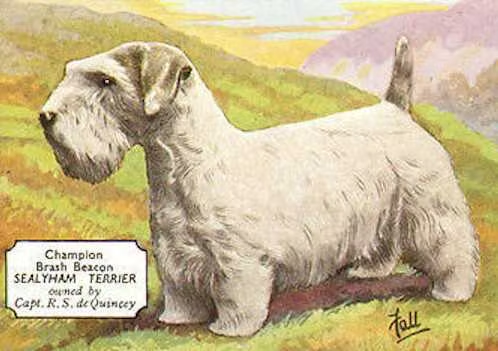
The Sealyham Terrier is a short-legged, solidly built terrier that was developed in Wales to hunt badgers, otters and other quarry that bolted underground. It sits low and wide through the chest, wears a coat that is mostly white, and carries a long head set off by folded ears and a full beard. Adults typically weigh around 10 to 11 kg (23 to 24 lb), so the breed carries more bulk than its modest height would suggest.
Temperament sets the Sealyham apart from more excitable terriers. Indoors it is settled, loyal and good natured, happy to doze near its people for large parts of the day. The confident, watchful terrier streak has not been bred out, and a Sealyham will bark at anything unfamiliar and stand firm if challenged, but the everyday mood is steady rather than wound up.
The breed is now quite scarce and features on more than one register of rare or vulnerable native breeds. Owners in New Zealand who keep one often say the dog has a personality far bigger than its size, without being difficult to live alongside.
| Attribute | Detail |
|---|---|
| Origin | Wales |
| Size | Small (around 10 to 11 kg) |
| Lifespan | 12 to 14 years |
| Group/role | Terrier, originally a working earth dog |
| Good with | Families and considerate older children; can share a section with other pets when socialised early |
The Sealyham Terrier suits an owner after a small dog with genuine terrier spirit but a calmer day-to-day temperament. It settles well in both flats and houses on a section, since its exercise needs are moderate rather than demanding. A first-time owner can manage a Sealyham provided they stay consistent, because the breed is independent and can dig its heels in. The white coat needs regular attention, so the dog suits someone prepared to brush it several times a week and book in for a trim now and then.
The Sealyham Terrier was bred in the 1800s at the Sealyham estate in Pembrokeshire, Wales, as a low, tough dog able to face badgers and otters underground.
The breed's name comes from Sealyham, a country estate near Haverfordwest in Pembrokeshire, Wales. Its development is generally put down to Captain John Edwardes, who bred working terriers there through the middle and later decades of the 1800s. He wanted a compact, hard dog able to go to ground after badger and otter and hold its own alongside bigger hounds.
Edwardes bred for a white or near-white coat so the dog stood out clearly in the field and would not be mistaken for the quarry. The exact crosses behind the breed were never written down in detail, but several West Country and Welsh terrier types of the period are usually named as likely contributors, along with other white and working terrier strains. What emerged was a low, powerfully built dog with a jaw stronger than its size implies.
The Sealyham moved from a private working line to a recognised show breed in the early 1900s. A breed club formed in Britain in 1908, and the major kennel clubs followed with recognition soon after, including in the United States in 1911. Through the 1920s and 1930s the breed became fashionable, turning up in show rings and in photographs of well-known owners of the day.
Numbers have since dropped sharply. By the early 21st century the Sealyham Terrier ranked among Britain's least numerous native breeds and now sits on the vulnerable or rare lists kept by several kennel bodies. In New Zealand the breed remains rare, and anyone bringing a dog into the country, or importing breeding stock, has to work through MPI's biosecurity requirements and import health standards, on top of tracking down a dedicated breeder overseas. Dedicated enthusiasts on both sides of the world keep the line going.
The Sealyham Terrier is a low, broad, sturdy white terrier with a long head, folded ears, a weatherproof double coat and a full beard that need regular care.
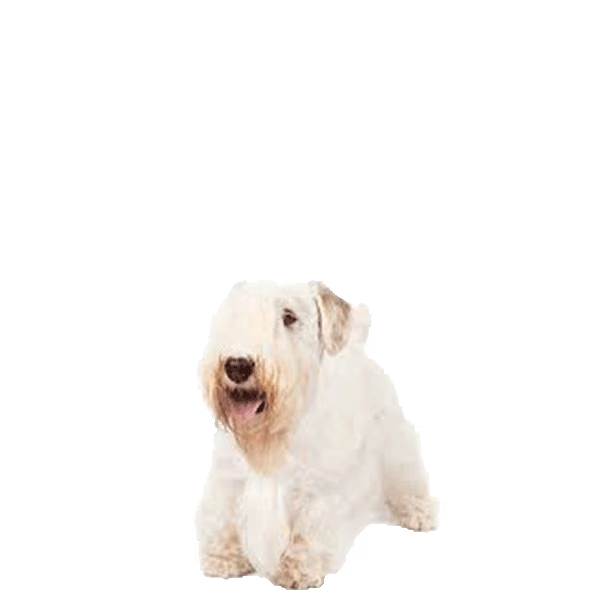
The Sealyham Terrier reads as a dog with real substance carried on short legs. The body is longer than it is tall, the chest deep and wide, and the bone heavier than the dog's height would lead you to expect. The skull is long and broad, the muzzle strong and square, and the folded ears sit close against the cheek. Dark, deep-set eyes, a full beard and generous leg furnishings finish the picture. The whole outline reads as workmanlike rather than dainty.
| Trait | Standard |
|---|---|
| Height | About 25 to 28 cm (10 to 11 in) at the shoulder |
| Weight | About 10 to 11 kg (23 to 24 lb) |
| Coat | Double coat: soft, dense undercoat under a hard, wiry topcoat |
| Colours | Mainly white; may carry lemon, tan, badger or brindle markings on the head and ears |
| Eyes | Dark, medium sized, set fairly wide and deep |
The weatherproof double coat kept the dog protected during underground work and in wet country, which suits New Zealand's damp winters well. The body coat is mostly white. Many Sealyhams carry coloured markings confined to the head and ears, running from pale lemon and tan through badger grey to brindle. Heavy patches across the body are not typical of the breed. Show dogs traditionally have the hard topcoat hand-stripped, while companion dogs are often clipped instead, which softens the texture over time.
The Sealyham Terrier stays calm, loyal and good natured at home, yet remains alert and confident enough to work as a watchful small guard dog.
The Sealyham Terrier carries a steadier temperament than many terriers. At home it is calm and affectionate with its family and will often settle quietly for hours at a stretch. The breed forms close bonds and tends to attach itself to the whole household rather than fixate on one person.
Around strangers the Sealyham starts out alert and a little reserved. It announces visitors with a deep bark that sounds larger than the dog actually is, which makes it a useful early warning system. Once introductions are done, most Sealyhams settle down. The underlying terrier confidence means the breed is not nervous and will stand its ground if pushed.
How it gets on with other animals depends heavily on early socialisation. A Sealyham raised alongside other dogs and cats can live peacefully with them, but its hunting background means small pets such as rats or guinea pigs can trigger a chase response. The breed does well with considerate children and is patient by terrier standards, though rough handling should be avoided. Independence and a stubborn streak are par for the course, so the dog responds better to motivation than to repetition.
| Trait | Rating |
|---|---|
| Affection | 4 |
| Energy | 2 |
| Trainability | 3 |
| Vocalness | 3 |
| Shedding | 2 |
The Sealyham Terrier needs regular coat care, brushing several times a week plus periodic trimming or stripping, along with moderate daily exercise.
The Sealyham Terrier sits in the moderate range for overall care, with grooming taking up most of the time. The double coat does not shed heavily, but it mats and picks up debris if left unattended, and the white furnishings stain quickly without regular attention.
The Sealyham Terrier settles well in both flats and houses. Its calm indoor manner and moderate exercise needs suit a smaller home. A secure section is a bonus, but fencing needs to be solid and dug-proof, because the breed will dig given the chance. The weatherproof coat helps it cope with New Zealand's range of climates, from humid Northland summers to cooler southern winters, though the dog should not be left outside in extreme heat or cold.
The Sealyham Terrier does well on a complete diet for small breeds, fed in measured amounts across two meals a day to guard against weight gain.
The Sealyham Terrier needs a complete, balanced diet suited to a small to medium breed with moderate activity levels. Because the breed is solidly built and not especially active, it can pile on weight if fed too freely. Measure out portions and adjust them to the individual dog's age, weight and activity level rather than leaving food down all day. Fresh water should always be on hand.
| Life stage | Amount per day | Meals |
|---|---|---|
| Puppy (2 to 6 months) | Per puppy food label, split into small feeds | 3 to 4 |
| Junior (6 to 12 months) | Per label, moving toward adult food | 2 to 3 |
| Adult | About 3/4 to 1.25 cups of quality dry food | 2 |
| Senior | Slightly reduced, watch the weight | 2 |
Keep treats to roughly 10 percent of daily calories, since the breed is prone to putting on weight. Choose small, low-fat treats for training. Most Sealyhams on a complete commercial diet need no extra supplements; check with a vet before adding anything for joints, skin or coat.
The Sealyham Terrier is generally healthy with a lifespan of 12 to 14 years, though eye conditions, lens luxation and skin issues do turn up in the breed.
The Sealyham Terrier is a generally hardy breed with a typical lifespan of 12 to 14 years. As with most purebred dogs, a number of inherited conditions show up in the line, and responsible breeders test for the most significant of these. Buying from a breeder who health-tests the parents lowers the risk of the conditions listed below.
| Condition | Signs | Note |
|---|---|---|
| Primary lens luxation | Cloudy or painful eye, sudden change in vision | Inherited; DNA testing of breeding stock is available |
| Retinal and other eye disorders | Loss of night vision, bumping into objects | Eye screening of parents is recommended |
| Skin and allergy issues | Itching, redness, recurrent ear problems | Manage with diet, grooming and veterinary care |
| Joint problems | Stiffness, reluctance to jump | Keep the dog at a healthy weight |
The Sealyham Terrier is intelligent but independent, so training works best with short, motivating, reward-based sessions started early.
The Sealyham Terrier is bright and capable, but its independent, slightly stubborn streak means it will not drill endlessly the way some breeds do. The dog picks things up fast once it sees a reason to cooperate, then loses interest in dull repetition. Calm consistency beats force by a wide margin. Early socialisation with people, places and other animals helps the breed grow into the relaxed adult temperament it is known for. Prey drive runs strong, so reliable recall takes patience, and many owners keep the dog on lead near small animals or roads.
Sealyham Terriers reach maturity at one to two years, carry litters of about three to five puppies after a roughly 63-day pregnancy, and should only be bred from health-tested parents.
Breeding the Sealyham Terrier takes real care, because the breed is rare and the gene pool is small. Responsible breeders put health screening, sound temperament and genetic diversity ahead of volume. Dogs reach physical and behavioural maturity between one and two years old, and breeding is best held off until the dog is mature and has passed the relevant health tests, including DNA testing for primary lens luxation and eye examinations.
Mating follows the standard canine pattern, and pregnancy runs about 63 days from conception. Litters tend to be small, commonly around three to five puppies. Given the breed's broad head and chest, breeders keep a close eye on whelping and bring in a vet. Puppies are weaned over several weeks and stay with the dam and littermates through an important socialisation window before moving to new homes, typically from around eight weeks. Given the breed's vulnerable status, anyone weighing up breeding should work with breed clubs, such as those affiliated with Dogs New Zealand, and experienced mentors.
| Metric | Value |
|---|---|
| Sexual maturity | About 1 to 2 years (breed once mature and health-tested) |
| Gestation | About 63 days |
| Typical litter size | About 3 to 5 puppies |
| Weaning | About 6 to 8 weeks |
| Recommended screening | Eye examination and lens luxation DNA test |
Alongside council registration, a free United Pet Club record keeps a live phone number behind your Sealyham Terrier and its chip.
Keeping a Sealyham Terrier findable is mostly paperwork: a profile carrying your phone number, a photo, and the dog's details, sitting where a scan can reach it. Registering your dog with United Pet Club sets that up free, and the record never lapses or bills you.
A scanned chip is only ever as useful as its record. Pop your Sealyham Terrier's fifteen digit number into a free United Pet Club account and the record does the rest: free updates after every move, every brand accepted, searchable day and night. Microchip registration first, account alongside.
Setting up a free United Pet Club account, adding your Sealyham Terrier's details and a photo, and saving is all it takes. The record stays free for the dog's whole life, chip or no chip.
Just add the fifteen digit number to your free account along with your current address and phone. Under the lifetime plan there is nothing to pay for the registration or any later update.
Dogs registered for the first time since 2006 need one under the National Dog Database rules, working farm dogs aside. The council record and your United Pet Club profile do different jobs, and the second one is free.
Nothing. The free lifetime plan carries the profile, the chip record, and every update, and no renewal notice ever arrives.
Common questions about the Sealyham Terrier cover its size, temperament, grooming demands, lifespan, suitability and how hard the breed is to track down.
The Sealyham is a small breed, standing about 25 to 28 cm at the shoulder and weighing roughly 10 to 11 kg. It is short-legged but solidly built, so it carries more weight than its height suggests.
It is calm, loyal and good natured at home while staying alert and confident. The breed is steadier than most terriers, bonds closely with its family and makes a watchful little guard dog.
Overall care is moderate, with grooming the main demand. Plan to brush several times a week and have the coat stripped or clipped every few months. Exercise needs are modest, so the breed suits flats and houses alike.
The typical lifespan is 12 to 14 years. Keeping the dog at a healthy weight, staying on top of vet and eye checks, and buying from health-tested parents all help support a long life.
Yes, for many households. They get on well with considerate older children and can live with other pets when socialised early. A first-time owner can manage one with consistent, reward-based training, since the breed is independent and can be stubborn.
Yes. The breed is uncommon worldwide and is listed as vulnerable or rare by several kennel organisations. Expect a wait for a puppy, strict MPI biosecurity requirements if importing, and to work with a recognised breeder or a breed club linked to Dogs New Zealand.