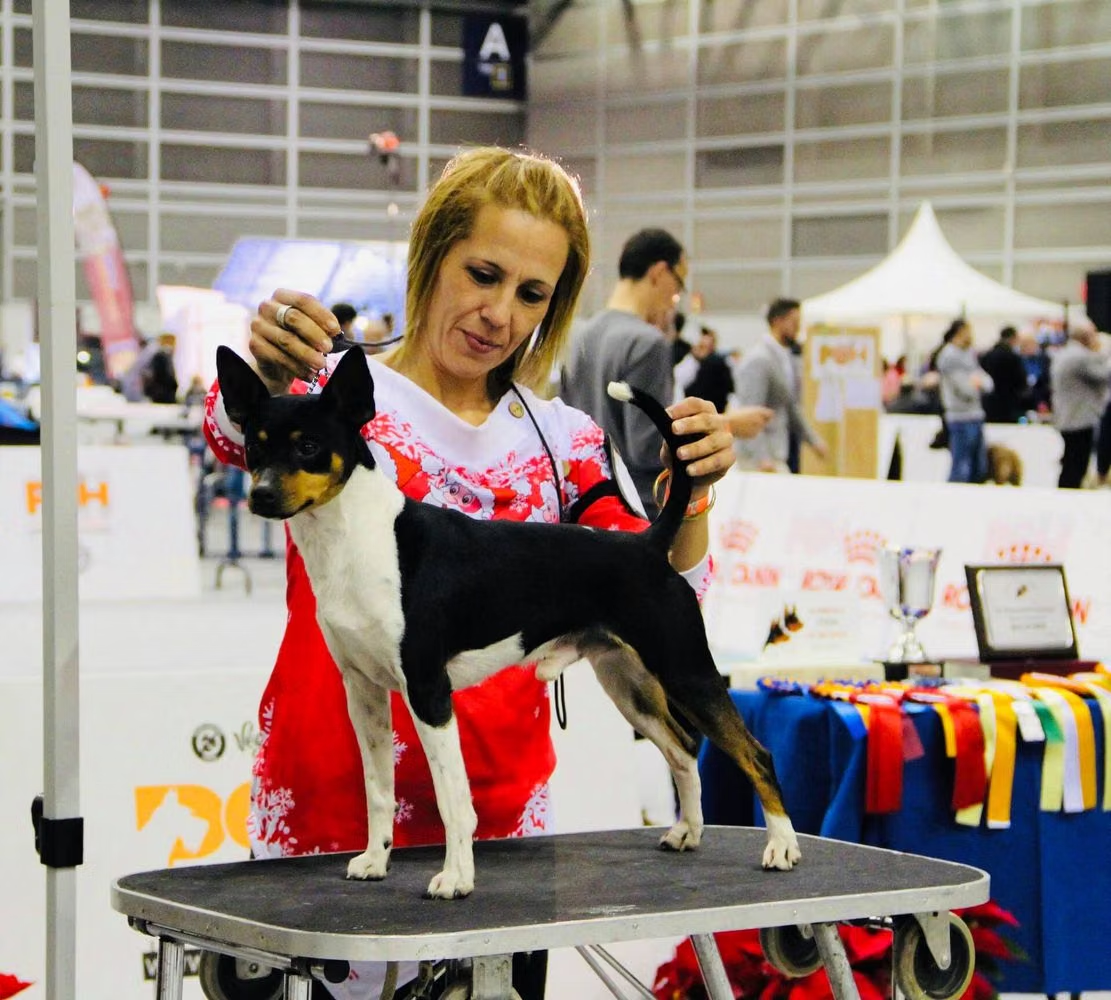
The Rater Valenciá is a lively Spanish ratting terrier known for its alertness, courage, and boundless energy.
How the Rater Valenciá coat is built, and what that means when you groom it.
A few of the Rater Valenciá profiles members have added to United Pet Club.
The Rater Valenciá is a compact Spanish ratting terrier from Valencia, prized for its sharp instincts, gutsy nature, and non-stop energy.
The Rater Valenciá is a small terrier that got its start in the Valencia region of eastern Spain, bred to keep rats and other vermin off farms, out of homes, and away from stables. It is a compact, quick-footed dog built to follow prey into tight corners. Most adults sit well under 9 kg, so it counts firmly among the small breeds.
This is a sharp, watchful dog. It picks up on movement and sound around it and reacts in an instant, a trait that made it a useful working terrier and now makes it an attentive housemate. Courage is part of its make-up: a dog this size will square up to prey many times its own weight without a second thought.
Energy runs high. The Rater Valenciá was built to work long hours, and pet dogs still carry that drive. Owners who give the breed a proper daily workout and something to think about tend to find a calm, affectionate dog waiting at home.
| Attribute | Detail |
|---|---|
| Origin | Spain (Valencia region) |
| Size | Small |
| Lifespan | 12 to 15 years |
| Group / role | Terrier, ratting and vermin control |
| Good with | Active families and confident owners |
This breed suits an active household prepared to meet its exercise and mental needs. It rewards owners who enjoy training and time outdoors, and its watchfulness appeals to anyone who wants an early warning when visitors arrive. Because its prey drive runs strong, households with small pets such as rats, mice, or birds need to manage introductions with care, and early socialisation helps it settle calmly around other animals.
The Rater Valenciá took shape in Spain's Valencia region as a working terrier bred to keep rats and other vermin down on farms and in towns.
The Rater Valenciá takes its name straight from its job and its home ground. "Rater" points to a ratter, and "Valenciá" ties the breed to Valencia, on Spain's Mediterranean coast. For most of its history the dog was a working animal, not a show dog.
Rats were a constant problem across rural and urban Spain. Grain stores, stables, markets, and farmhouses all drew rodents, and small terriers were the go-to solution. The Rater Valenciá was shaped by speed, a sharp nose, and the nerve to finish prey in cramped spaces. What the breed could do mattered far more than how it looked.
For generations the dog changed hands between farmers, traders, and townsfolk with no formal register, which is typical of regional working breeds. Local lines were kept going by word of mouth and results in the field rather than by paperwork.
More recently, interest in preserving Spain's regional dog types has picked up, and enthusiasts have worked to document and stabilise the Rater Valenciá. For dog lovers in New Zealand it remains a rare find: an import would need to clear the Ministry for Primary Industries' biosecurity requirements, given New Zealand's strict rules on bringing animals into the country. Today it is best understood as a regional working terrier with a long practical history and a newer, smaller role as a companion.
The Rater Valenciá is a small, compact terrier with an alert look, a lean athletic build, and a short, low-maintenance coat.
The Rater Valenciá is a small, well-balanced terrier built for agility. Its body is compact and slightly longer than it is tall, with clean lines and light bone. The head is wedge-shaped with a watchful expression, and the ears sit high on the skull. Altogether it gives the impression of a quick, balanced dog always ready to move.
| Feature | Typical range or description |
|---|---|
| Height | Roughly 30 to 40 cm at the shoulder |
| Weight | About 4 to 8 kg |
| Coat | Short, smooth, close-lying |
| Colours | Commonly white with black or tan markings, often tricolour |
| Eyes | Dark, oval, alert |
The coat is short and smooth, well suited to a working dog pushing through scrub and tight spaces. Grooming needs are minimal. White is the common base colour, usually combined with black and tan patches, and tricolour patterns are typical. The short coat shows off the dog's lean shape and dries quickly after work or wet weather, no small thing given how changeable New Zealand weather can be.
The Rater Valenciá is clever, energetic, and alert. It is affectionate with its family, watchful around strangers, and driven by a strong instinct to chase small prey.
The Rater Valenciá is bright and always on the go. It bonds tightly with its household and is typically affectionate and playful with people it knows well. Around strangers it stays watchful and will let the household know when someone arrives, a habit that comes from its background as an alert farm dog rather than any aggression.
This is a breed with more courage than its size suggests, and it will stand its ground if it senses its territory or family is under threat. With other dogs it can be sociable given proper introductions, though some individuals are bold and need supervision. Its strong prey drive means small pets such as hamsters, rabbits, or birds can be at risk, so contact needs careful management.
This is a high-energy terrier that also thinks for itself. Without enough activity and mental work it can turn noisy or pick up habits such as digging. Given a proper outlet for its drive, it settles well indoors and makes a responsive, engaged companion.
| Trait | Rating |
|---|---|
| Affection | 4 |
| Energy | 5 |
| Trainability | 4 |
| Vocalness | 4 |
| Shedding | 2 |
The Rater Valenciá needs daily exercise and mental work, though grooming stays simple thanks to its short coat.
The short, smooth coat keeps grooming simple.
This is an active breed that needs a genuine outlet for its energy.
The Rater Valenciá adapts to flats or houses as long as its exercise needs are met, and it can do well on a lifestyle block where there is room to run. A secure section suits its love of activity, but fencing needs to be solid, since the breed can dig and will chase. It copes with a range of conditions, though the short coat gives little protection against a cold, wet Kiwi winter, so a coat can help on chilly walks.
The Rater Valenciá does well on a complete diet suited to a small, active dog, fed in measured meals to keep it lean.
The Rater Valenciá needs a complete and balanced diet formulated for small, active dogs. Its energy means it burns through calories well, but its small frame means portions must be measured to stop weight creeping on. Choose a food built around quality animal protein and adjust amounts to the dog's age, weight, and activity level. Fresh water should be available at all times.
| Life stage | Amount per day | Meals |
|---|---|---|
| Puppy (2 to 6 months) | Per product guide, split into small feeds | 3 to 4 |
| Junior (6 to 12 months) | Roughly 100 to 150 g dry food | 2 to 3 |
| Adult | Roughly 80 to 130 g dry food | 2 |
| Senior | Adjusted down for lower activity | 2 |
Keep treats to around 10 percent of daily calories so they do not throw the diet out of balance. Small, low-fat treats work well for training a food-driven terrier. Most dogs on a complete diet need no extra supplements; talk to a vet about joint or skin supplements before adding them, and tailor any changes to the individual dog.
The Rater Valenciá is generally a hardy small terrier with a typical lifespan of 12 to 15 years, though a few conditions common to small breeds are worth watching for.
The Rater Valenciá is generally a sturdy working breed with few exaggerated features, which supports good overall health. Typical lifespan runs 12 to 15 years. As with many small terriers, a handful of conditions show up more often than in the wider dog population, and regular vet visits help catch problems early.
| Condition | Signs | Note |
|---|---|---|
| Patellar luxation | Skipping gait, intermittent hind-leg lameness | Common in small breeds; severity varies |
| Dental disease | Bad breath, tartar, reluctance to chew | Small jaws crowd teeth; regular care helps |
| Luxating or eye conditions | Cloudiness, redness, rubbing at eyes | Have any lasting eye change checked by a vet |
| Allergies and skin irritation | Itching, redness, hair loss | Work with a vet to identify triggers |
The Rater Valenciá is clever and trainable, and responds well to consistent, reward-based methods that give its busy mind a job to do.
The Rater Valenciá picks things up fast and likes having a job to do. Its intelligence and love of food make it responsive in training, though its independent streak and prey drive can pull its focus elsewhere. Short, varied sessions hold its attention better than long, repetitive drills. Consistency counts, because a clever terrier will test any rule left loose. Recall deserves particular attention, since the urge to chase can override a call, so start early and build up around distractions gradually.
The Rater Valenciá follows the breeding pattern typical of a small dog, with modest litters and pups that mature relatively quickly.
As a small breed, the Rater Valenciá reaches sexual maturity earlier than larger dogs, though responsible breeders wait until a dam is fully mature, physically and behaviourally, before her first litter. Mating follows the female's heat cycle, and gestation in dogs runs about 63 days on average. Litter sizes stay modest, in keeping with the breed's size.
Newborn pups are born blind and deaf and rely fully on the dam for the first weeks. Eyes and ears open in the second to third week, and weaning starts around three to four weeks. The socialisation period that follows matters a great deal for this alert, active breed, so careful early handling and exposure shape a calm adult temperament. Health screening of breeding stock for conditions common to small terriers, such as patellar problems, supports sound litters. Anyone bringing breeding stock into New Zealand should also factor in MPI import health requirements well ahead of time.
| Metric | Value |
|---|---|
| Sexual maturity | Around 6 to 12 months |
| Gestation | About 63 days |
| Typical litter size | Roughly 3 to 5 pups |
| Eyes and ears open | About 2 to 3 weeks |
| Weaning | About 4 to 7 weeks |
Alongside council registration, a free United Pet Club record keeps a live phone number behind your Rater Valenciá and its chip.
Keeping a Rater Valenciá findable is mostly paperwork: a profile carrying your phone number, a photo, and the dog's details, sitting where a scan can reach it. Registering your dog with United Pet Club sets that up free, and the record never lapses or bills you.
A scanned chip is only ever as useful as its record. Pop your Rater Valenciá's fifteen digit number into a free United Pet Club account and the record does the rest: free updates after every move, every brand accepted, searchable day and night. Microchip registration first, account alongside.
Setting up a free United Pet Club account, adding your Rater Valenciá's details and a photo, and saving is all it takes. The record stays free for the dog's whole life, chip or no chip.
Just add the fifteen digit number to your free account along with your current address and phone. Under the lifetime plan there is nothing to pay for the registration or any later update.
Dogs registered for the first time since 2006 need one under the National Dog Database rules, working farm dogs aside. The council record and your United Pet Club profile do different jobs, and the second one is free.
Nothing. The free lifetime plan carries the profile, the chip record, and every update, and no renewal notice ever arrives.
Common questions about the Rater Valenciá cover its size, temperament, care needs, lifespan, suitability, and how easy it is to find in New Zealand.
It's a small dog, usually standing around 30 to 40 cm at the shoulder and weighing about 4 to 8 kg.
It's clever, energetic, alert, and gutsy. It's affectionate with family and watchful around strangers, with a strong prey drive typical of ratting terriers.
Grooming is easy thanks to the short coat, but the breed needs daily exercise and mental work. The main demand is meeting its high activity level rather than coat care.
Typical lifespan is 12 to 15 years, in line with many healthy small breeds.
It suits active families and can get on well with other dogs when socialised early. Its prey drive means small pets such as rodents and birds need careful management.
It's alert and will let you know about visitors or anything out of the ordinary. Training and enough exercise help keep barking in check.
It's a regional Spanish breed, rare outside its native Valencia, and New Zealand's strict biosecurity rules mean importing one takes real planning through MPI. Expect a long search and a fair bit of patience.