
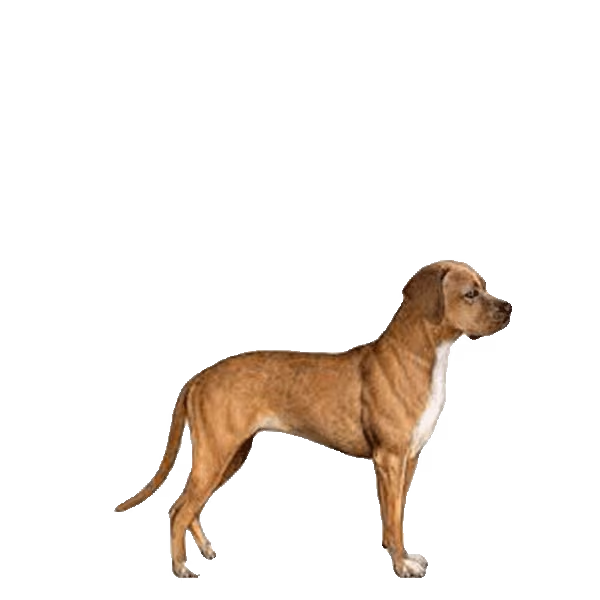
Portuguese Pointer
The Portuguese Pointer is a friendly, affectionate gundog whose loving nature and keen birding instincts make it a treasured companion.
- Size
- Medium
- Lifespan
- 12–14 years
- Origin
- Portugal
- Temperament
- Friendly
- Standard colors
- White, Brown and Yellow
Characteristics
Coat and grooming
How the Portuguese Pointer coat is built, and what that means when you groom it.
- Coat layers
- Single coat
- Coat texture
- Smooth
- Coat length
- Short
- Shedding
- Moderate shedding
Portuguese Pointer colors and patterns
What each club's breed standard says about every Portuguese Pointer color and pattern. Point at a ruling to see the club's own wording.
Breed standards describe the Portuguese Pointer in White, Brown and Yellow. Standard patterns: Solid and Bicolour.
| Color or pattern | FCI | AKC | UKC | KC |
|---|---|---|---|---|
| White | Standard (“with white patches on the head, neck, chest”) | Standard (“White Markings”) | Standard (“with white markings”) | Standard (“with white patches on the head, neck, chest”) |
| Brown | Disqualifying | Disqualifying | Standard (“any shade of yellow or brown”) | Not recognised |
| Yellow | Standard (“Yellow of light, medium and dark shades”) | Standard (“Yellow”) | Standard (“any shade of yellow”) | Standard (“Yellow of light, medium and dark shades”) |
| Albino | Disqualifying (“Albinism”) | Disqualifying (“Albinism”) | Disqualifying (“Albinism”) | Not recognised |
| Patterns | ||||
| Solid | Standard (“solid”) | Standard (“solid”) | Standard (“either solid or with white markings”) | Standard (“Solid”) |
| Bicolour | Standard (“or with white patches”) | Standard (“White Markings”) | Standard (“with white markings”) | Standard (“Yellow & White”) |


| Color or pattern | FCI | AKC | UKC | KC |
|---|---|---|---|---|
| Brown | Standard (“brown, of a darker colour than the coat”) | Standard (“brown, of a darker colour than the coat”) | Standard (“brown in color”) | Standard (“Eyes brown, of a darker colour than the coat”) |
| Dark brown | No ruling | No ruling | Standard (“Darker shades are preferred”) | No ruling |
| Light brown | Fault (“Eyes: Small, light, inexpressive”) | Fault (“Eyes: Small, light, inexpressive”) | No ruling | No ruling |
| Blue | Disqualifying (“Wall eye”) | Disqualifying (“Wall eye”) | Disqualifying (“Wall eyes”) | No ruling |
| Patterns | ||||
| Odd-eyed | Disqualifying (“of different colours”) | Disqualifying (“of different colours”) | No ruling | No ruling |

| Color or pattern | FCI | AKC | UKC | KC |
|---|---|---|---|---|
| Black | Standard (“Black”) | Standard (“Black”) | Standard (“black on dogs with chamois or similar color coats”) | Standard (“Nose black”) |
| Liver | Fault | Fault | Standard (“brown on dogs with brown coats”) | No ruling |
| Pink | Disqualifying (“Nose: Total lack of pigmentation”) | Disqualifying (“Nose: Total lack of pigmentation”) | Disqualifying (“Unpigmented or irregularly pigmented nose”) | No ruling |
| Patterns | ||||
| Butterfly nose | No ruling | No ruling | Disqualifying (“Unpigmented or irregularly pigmented nose”) | No ruling |

What the rulings mean
- Standard
- Described by the club's breed standard.
- Fault
- Named by the club's breed standard as a fault: the animal can be shown but is penalised.
- Disqualifying
- The club's breed standard disqualifies an animal of this colour or pattern.
- Not recognised
- The club does not accept this colour or pattern for the breed.
Color changes
How a Portuguese Pointer's colors can change over its life.
Whitechanges toRoan
Coat · With age · from 2 weeks
Blackchanges toSnow nose
Nose · With the season · can change back
Blackchanges toPink
Nose · With the season · can change back


Sources
Each ruling comes from the club's published breed standard or color list.
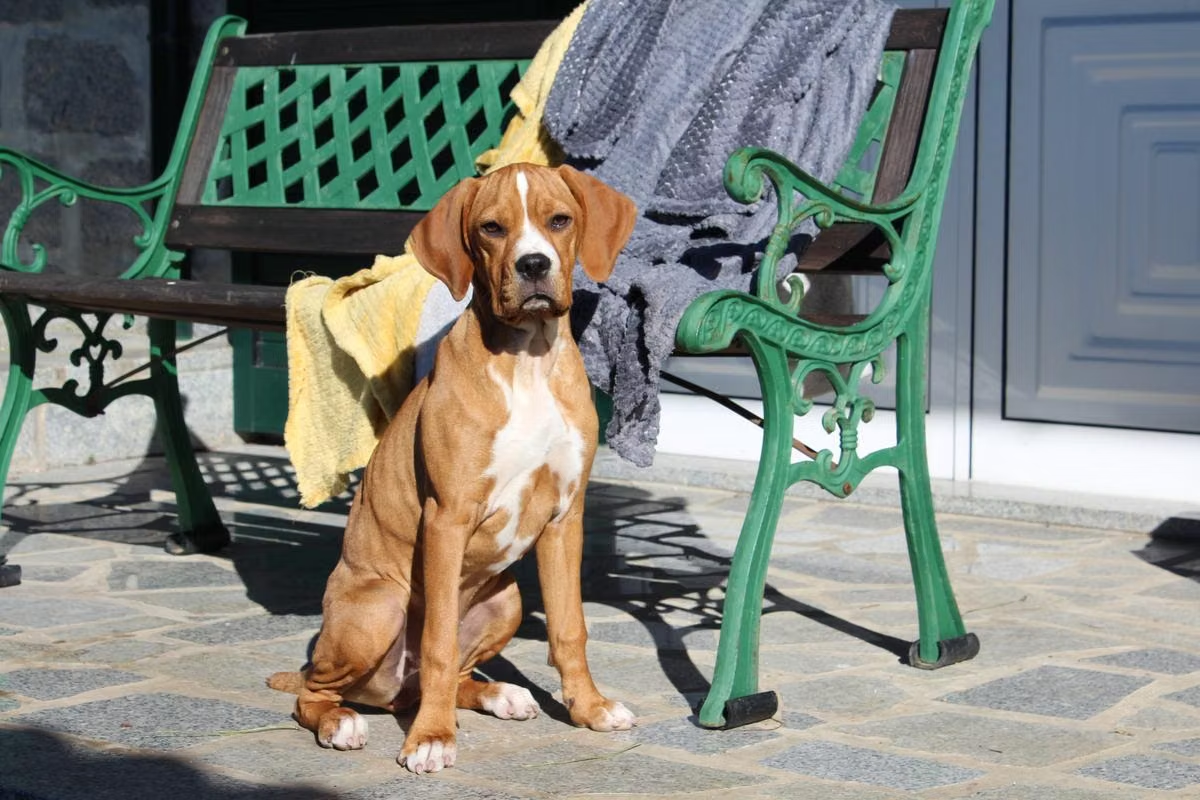
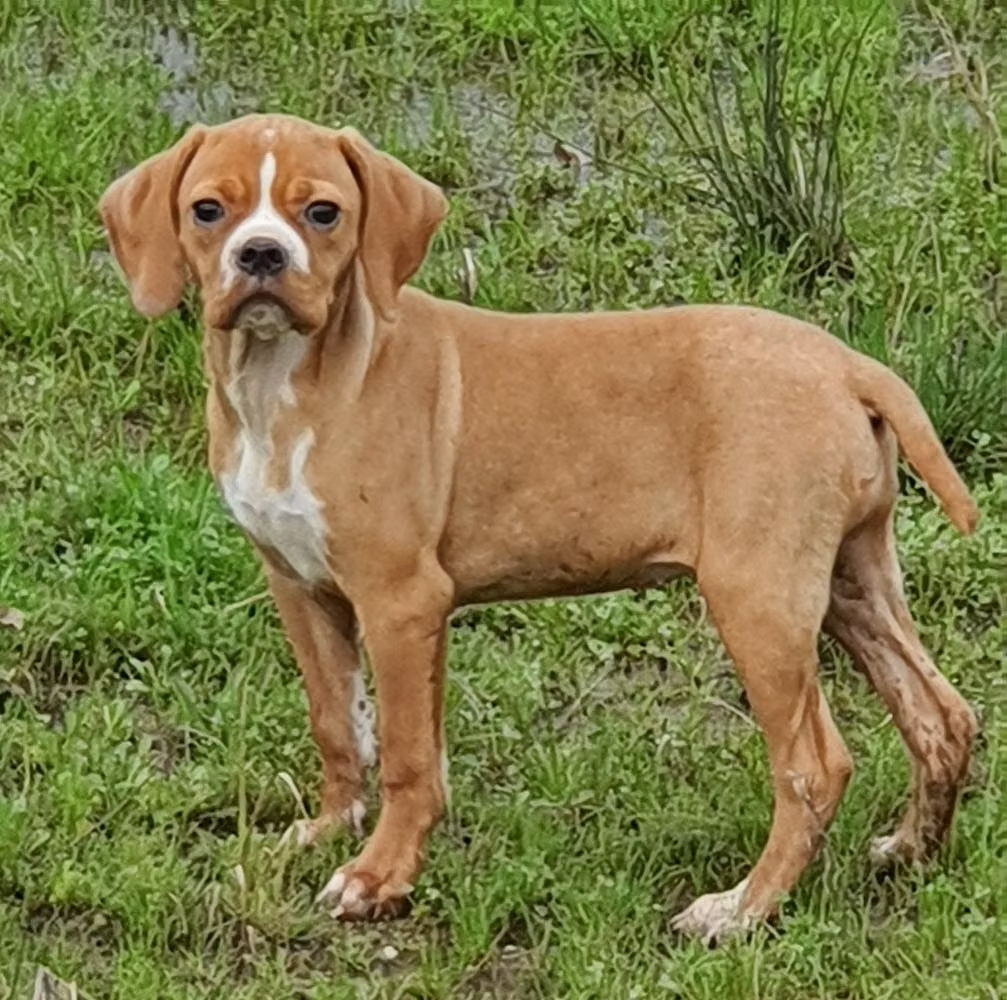
Meet some of our Portuguese Pointer
A few of the Portuguese Pointer profiles members have added to United Pet Club.
About the Portuguese Pointer
The Portuguese Pointer is a medium-sized gundog from Portugal, affectionate at home and a steady, natural bird dog out in the field.
Known back home as the Perdigueiro Português, the Portuguese Pointer is a medium-sized hunting dog built to point and retrieve game birds. It has a moderate height, a square, athletic frame, and a short coat that asks little of its owner beyond a weekly brush. Owners here often remark on how tactile the breed is for a pointer, leaning in for contact rather than holding the slightly aloof manner some pointing breeds show.
Out working, the dog covers ground at a sensible pace, holds a firm point, and checks back with its handler instead of disappearing over the next ridge. That biddable, willing nature is really the whole point of the breed. The same dog that quarters a paddock for game birds on a Saturday morning is just as happy curled against the family on the couch that evening.
This is an active dog that needs a proper job or outlet, not a stroll around the block. Given daily exercise and plenty of company it settles well into family life, but it is a poor fit for a household that is out at work all day or short on space to let it stretch its legs.
| Attribute | Detail |
|---|---|
| Origin | Portugal |
| Size | Medium |
| Lifespan | 12 to 14 years |
| Group / role | Gundog (pointing and retrieving) |
| Good with | Families, children, active households |
Who it suits
The Portuguese Pointer suits active owners and families who can commit to an hour or more of exercise daily and want a dog that stays close and attaches strongly. Local hunters rate the breed for its pointing instinct and cooperative range in the field. It is not the right dog for a sedentary household, long days home alone, or an owner who wants something more independent and less clingy.
History and origin
The Portuguese Pointer is one of the oldest pointing breeds, developed in Portugal from medieval bird dogs and shaped for hunting partridge and similar game.
The Portuguese Pointer's roots go back to bird dogs kept on the Iberian Peninsula in medieval times. Pointing dogs of this general build turn up in Portuguese hunting records and art going back centuries, first used to find and hold birds for falconers, and later for hunters carrying nets and guns. The breed shares ancestry with the broader group of Iberian pointing dogs that gave rise to several of today's pointer breeds.
For generations the dogs stayed with hunters and rural households who bred for a good nose, a dependable point, and a close, cooperative working style. Locals often trace the breed's warm temperament straight back to this history of dogs living alongside the people they hunted with rather than being kept at a distance in kennels.
Numbers dropped away during periods of social and economic upheaval, and the breed nearly disappeared in the early twentieth century as interest in native hunting dogs waned. Portuguese enthusiasts later tracked down remaining stock from rural and northern parts of the country and set about rebuilding a stable population.
The Portuguese Pointer is recognised internationally as a pointing breed and still works in the field in Portugal, while more households elsewhere keep it purely as an active companion. Under New Zealand's strict biosecurity and import quarantine rules, bringing a dog of this breed in from overseas takes real planning, and it remains a genuine rarity here.
Appearance
The Portuguese Pointer is a medium, squarely built gundog with a short coat, usually yellow or brown, and a distinctive broad, slightly domed head.
The Portuguese Pointer is a balanced, medium dog of square proportions, meaning body length and shoulder height come out close to even. The build is muscular without any bulk, suited to a long day's work over rough ground. The head stands out: broad with a squarish outline, a clear stop, and a muzzle that tapers gently toward the nose. The ears are triangular, set high, and hang flat against the cheeks. The overall expression is soft and alert.
| Trait | Detail |
|---|---|
| Height | Males about 56 cm; females about 52 cm at the shoulder |
| Weight | Roughly 16 to 27 kg depending on sex and build |
| Coat | Short, dense, and close lying |
| Colours | Yellow (fawn) in light to dark shades, and brown; white markings may occur |
| Eyes | Large, oval, brown, with an attentive expression |
Coat and colours
The coat lies short and flat against the body, with slightly finer hair over the head and ears. Being a single, low-maintenance coat, it offers next to no protection against cold or damp, so this breed feels our southerly snaps and midwinter frosts more than a heavily coated dog would. The most common shades are yellow, from pale fawn through to a deeper tan, and plain brown. Some dogs carry white markings on the chest or feet. The look is clean and purposeful rather than showy.
Temperament
The Portuguese Pointer is friendly, affectionate, and keen to please, bonding tightly with its family while staying lively and people-focused.
What sets the Portuguese Pointer apart is its warmth toward people. It attaches firmly to its household and usually wants to be physically close, trailing family members from room to room and settling wherever they are. It tends to be gentle and patient with children, though its energy means playtime with toddlers needs an adult keeping an eye on things.
With strangers the breed leans sociable rather than wary, so it makes a friendly greeter but a hopeless watchdog. Regular exposure to visitors from puppyhood keeps that friendliness balanced and confident rather than over the top. It is generally easygoing with other dogs, and many settle in well alongside other household pets when raised together, though its strong bird drive means a hen or a fantail flitting past can set off a chase.
This is an active, switched-on dog that needs to be involved in daily life. Left without enough exercise, company, or something to occupy its mind, it can turn restless and pick up nuisance habits out of sheer boredom. Being so keen to please, it also reads its owner's mood quickly and picks up household routines fast.
| Trait | Rating |
|---|---|
| Affection | 5 |
| Energy | 4 |
| Trainability | 4 |
| Vocalness | 2 |
| Shedding | 2 |
Care and grooming
The Portuguese Pointer is easy to groom but needs a proper daily workout and plenty of company to settle contentedly at home.
Grooming
- Give the short coat a weekly once-over with a rubber curry comb or bristle brush to lift loose hair and spread natural oils.
- Bathe only when the dog is genuinely dirty; washing too often strips the coat.
- Check the hanging ears weekly and clean as needed to guard against infection, especially after time out in wet ground or long grass.
- Trim nails every few weeks and brush teeth several times a week.
Exercise
- Aim for at least 60 to 90 minutes of activity a day, split between walks and time to run freely.
- Give it off-lead running somewhere secure, since this is a working dog bred to cover real distance.
- Add scent games, retrieving, or training drills to keep its nose and brain busy as well as its legs.
- Start recall training early, because the bird instinct can easily pull it off task and after game.
Environment
The Portuguese Pointer does best with secure outdoor space and people around for most of the day. Its short coat gives almost no insulation, so it needs a warm, dry shelter through winter and a shaded, cool spot when the summer sun gets fierce. It can manage in a smaller home if its exercise needs are genuinely met, but long hours alone do not suit it.
Nutrition and feeding
The Portuguese Pointer needs a complete, balanced diet suited to an active medium dog, with the amount adjusted for age, workload, and body condition.
Feed a complete dog food formulated for the dog's life stage and activity level. As an active medium breed, the Portuguese Pointer needs solid protein and fat to fuel working muscle and stamina, with the total amount matched to how hard it is actually working. A dog out hunting most weekends through the season needs noticeably more than the same dog resting through the off-season. Split the daily ration into two meals to keep energy steady and lower the risk of bloat, and hold off on hard exercise close to mealtimes.
| Life stage | Amount per day | Meals |
|---|---|---|
| Puppy (2 to 6 months) | Per food label, divided | 3 to 4 |
| Junior (6 to 12 months) | Per food label for growth | 2 to 3 |
| Adult (active) | Around 250 to 350 g of quality dry food | 2 |
| Senior | Slightly reduced; watch weight | 2 |
Treats and supplements
Keep treats to around ten percent of daily calories and trim the main meal to match, since this breed puts on weight quickly if it is overfed and under-exercised. A properly balanced complete diet generally needs no extra supplements. Check with a vet before adding anything for joints, skin, or working performance, and make sure fresh water is on hand at all times, particularly after exercise.
Health
The Portuguese Pointer is a generally healthy breed with a typical lifespan of 12 to 14 years, with hip dysplasia and ear trouble among the main things to watch for.
The Portuguese Pointer is a hardy working breed, and most dogs stay sound their whole lives, with a usual lifespan of 12 to 14 years. As with most medium and larger dogs, joint health is the main thing to keep an eye on, and the hanging ears combined with an active outdoor life bring a handful of predictable issues. Buying from breeders who health-test their dogs cuts the risk of passing on inherited problems.
| Condition | Signs | Note |
|---|---|---|
| Hip dysplasia | Stiffness, limping, reluctance to jump | Ask breeders for hip scores of parents |
| Ear infections | Head shaking, odour, scratching at ears | More likely after time in wet ground; clean regularly |
| Eye conditions | Cloudiness, redness, reduced vision | Routine eye checks help catch issues early |
| Exercise-related injury | Sudden lameness, cuts, foot soreness | Check feet and legs after field work |
| Bloat (gastric torsion) | Swollen belly, retching, distress | Emergency; feed in two meals and avoid hard exercise around feeding |
Preventive care
- Keep vaccinations and parasite control (fleas, ticks, worms) current.
- Book an annual veterinary check, moving to twice yearly once the dog is a senior.
- Keep the dog lean to protect the joints over the long run.
- Clean and dry the ears after wet or muddy outings.
- Brush teeth regularly to keep dental disease at bay.
Training
The Portuguese Pointer is sharp and keen to please, which makes it highly trainable when handled with consistent, reward-based methods.
The Portuguese Pointer's eagerness to please, paired with a strong bond to its handler, makes it one of the more trainable gundogs around. It picks things up fast and works well for praise and food, but it is a sensitive dog and reacts poorly to harsh handling, which can leave it anxious or withdrawn. Short, upbeat sessions hold its attention far better than long, repetitive drilling. Because the breed attaches so closely, early socialisation with people, other dogs, and everyday situations matters, so its friendliness stays confident rather than tipping into over-excitement or, in a dog that missed out on this early exposure, distress at being left alone.
Basics
- Start name recognition and gentle handling in the first weeks at home.
- Teach a reliable recall early and reward it generously, since the bird instinct will compete for the dog's attention.
- Bring in sit, down, and stay through short daily sessions.
- Socialise widely with calm dogs, a range of people, and new environments.
- Get lead manners sorted before strength and energy peak in adolescence.
- Add gundog or scent work once the basics are solid, to give the mind something to chew on.
Breeding
The Portuguese Pointer reaches breeding maturity at around two years, with a roughly nine-week pregnancy and litters that typically run to a handful of puppies.
Responsible breeding of the Portuguese Pointer starts with health-tested parents of sound temperament and solid working ability. Dogs reach physical maturity somewhat earlier, but most breeders wait until around two years of age so health screening, hip evaluation in particular, can be finished and the dog is fully grown. Females are typically mated during a suitable heat cycle once mature.
Pregnancy runs about 63 days. The expectant female needs a quiet whelping area, a gradual step-up in food through the later weeks, and veterinary monitoring along the way. Litters commonly run to four to eight puppies, though this varies dog to dog.
Newborn puppies rely entirely on the mother for the first few weeks. From around three weeks they start weaning and benefit from early, gentle handling and exposure to everyday household sights and sounds, which suits a breed this socially wired. Puppies typically go to new homes from around eight weeks of age. Given how uncommon the breed is here, prospective owners in New Zealand should expect to research breeders thoroughly, factor in the country's import biosecurity requirements if sourcing from overseas, and likely wait some time for a litter.
| Metric | Value |
|---|---|
| Breeding maturity | Around 2 years |
| Gestation | About 63 days |
| Average litter size | 4 to 8 puppies |
| Weaning | From about 3 to 8 weeks |
| Homing age | From about 8 weeks |
Registering a Portuguese Pointer in New Zealand, microchip and all
Alongside council registration, a free United Pet Club record keeps a live phone number behind your Portuguese Pointer and its chip.
Portuguese Pointer registration and microchip registration in New Zealand
Keeping a Portuguese Pointer findable is mostly paperwork: a profile carrying your phone number, a photo, and the dog's details, sitting where a scan can reach it. Registering your dog with United Pet Club sets that up free, and the record never lapses or bills you.
Getting the chip implanted was the vet's job; giving the number somewhere to point is yours. Registering the microchip with United Pet Club costs nothing on the lifetime plan, suits any brand a Kiwi vet reaches for, and keeps the record searchable at any hour from anywhere. Creating a free account ties the profile and the chip together.
How do I register my Portuguese Pointer in New Zealand?
Setting up a free United Pet Club account, adding your Portuguese Pointer's details and a photo, and saving is all it takes. The record stays free for the dog's whole life, chip or no chip.
How do I register my Portuguese Pointer's microchip?
Just add the fifteen digit number to your free account along with your current address and phone. Under the lifetime plan there is nothing to pay for the registration or any later update.
Does my Portuguese Pointer need a microchip in New Zealand?
Dogs registered for the first time since 2006 need one under the National Dog Database rules, working farm dogs aside. The council record and your United Pet Club profile do different jobs, and the second one is free.
What does registering a Portuguese Pointer cost?
Nothing. The free lifetime plan carries the profile, the chip record, and every update, and no renewal notice ever arrives.
Frequently asked questions
Common questions about the Portuguese Pointer cover its size, temperament, care needs, lifespan, family suitability, and availability in New Zealand.
How big does a Portuguese Pointer get?
It is a medium-sized dog. Males stand around 56 cm at the shoulder and females around 52 cm, with weight roughly between 16 and 27 kg depending on sex and build.
Is the Portuguese Pointer a good family dog?
Yes. The breed is friendly and affectionate, bonds tightly with its household, and is usually gentle with children. Its energy means it suits active families who can exercise it every day, and play with young children should be supervised.
Is the Portuguese Pointer hard to look after?
Grooming is easy given the short coat, but exercise needs are high. The main ask is giving it 60 to 90 minutes of activity a day plus company, since it does not cope well with being left alone for long stretches.
How long do Portuguese Pointers live?
The typical lifespan is 12 to 14 years. Good nutrition, a lean weight, regular exercise, and routine vet care all help a dog reach the upper end of that range.
Are Portuguese Pointers easy to train?
Yes. They are sharp and keen to please, which makes them very responsive to reward-based training. They are sensitive dogs, so consistent, gentle methods work far better than harsh corrections.
Do they get along with other pets?
They are generally easygoing with other dogs and can live alongside other pets when raised together. Given a strong bird and prey instinct, small fast-moving animals may set off a chase, so introductions are worth doing carefully.
Are Portuguese Pointers easy to find in New Zealand?
No, the breed is rare here and uncommon even outside Portugal. Prospective owners should look into Dogs New Zealand for registered breeders, budget time for New Zealand's strict biosecurity and import quarantine requirements if sourcing a dog from overseas, and expect to join a waiting list for a puppy.
From the community
Ask about the Portuguese PointerNo questions about the Portuguese Pointer yet. Be the first to ask.
Browse Dog breeds