
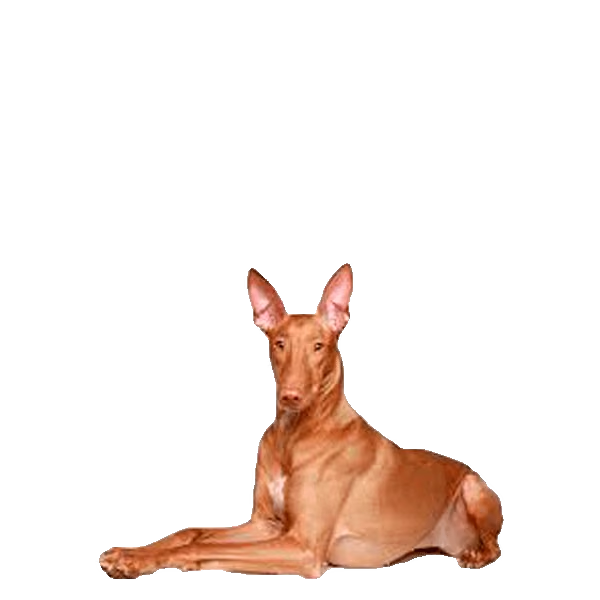
Pharaoh Hound
The Pharaoh Hound is a sleek, affectionate sighthound known for its ancient lineage and its endearing habit of blushing when happy.
- Size
- Medium
- Lifespan
- 12–14 years
- Origin
- Malta
- Temperament
- Friendly
- Standard colors
- White, Tan, Chestnut and Gold
Characteristics
Coat and grooming
How the Pharaoh Hound coat is built, and what that means when you groom it.
- Coat layers
- Single coat
- Coat texture
- Smooth
- Coat length
- Short
- Shedding
- Low shedding
Pharaoh Hound colors and patterns
What each club's breed standard says about every Pharaoh Hound color and pattern. Point at a ruling to see the club's own wording.
Breed standards describe the Pharaoh Hound in White, Tan, Chestnut and Gold.
| Color or pattern | FCI | AKC | UKC | KC | KUSA |
|---|---|---|---|---|---|
| White | Standard (“white markings allowed as follows”) | Standard (“White Markings”) | Standard (“white markings allowed as follows”) | Standard (“Tan & White Markings”) | Standard (“white markings allowed as follows”) |
| Tan | Standard (“Tan or rich tan”) | Standard (“Tan”) | Standard (“Tan or rich tan”) | Standard (“Tan or rich tan”) | Standard (“Tan or rich tan”) |
| Chestnut | Not recognised | Standard (“Chestnut”) | Not recognised | Not recognised | Not recognised |
| Gold | Not recognised | Standard (“Red Golden”) | Not recognised | Not recognised | Not recognised |
| Albino | Not recognised | Not recognised | Disqualifying (“Albinism”) | Not recognised | Not recognised |
| Patterns | |||||
| Roan | Fault (“Flecking or white other than above undesirable”) | Fault (“Flecking or other white undesirable”) | Fault (“Flecking or any other white is undesirable”) | Fault (“Flecking or white other than above undesirable”) | Fault (“Flecking or white other than above undesirable”) |

| Color or pattern | FCI | AKC | UKC | KC | KUSA |
|---|---|---|---|---|---|
| Amber | Standard (“Amber coloured, blending with coat”) | Standard (“amber colored, blending with coat”) | Standard (“amber colored, blending with the coat”) | Standard (“Amber coloured, blending with coat”) | Standard (“Amber-coloured, blending with coat”) |
| Color or pattern | FCI | AKC | UKC | KC | KUSA |
|---|---|---|---|---|---|
| Pink | Standard (“Flesh coloured only, blending with coat”) | Standard (“flesh colored, blending with the coat. No other color”) | Standard (“Flesh colored, which blends with the coat, is the only acceptable nose color”) | Standard (“Flesh-coloured only, blending with coat”) | Standard (“Flesh-coloured only, blending with coat”) |
What the rulings mean
- Standard
- Described by the club's breed standard.
- Fault
- Named by the club's breed standard as a fault: the animal can be shown but is penalised.
- Disqualifying
- The club's breed standard disqualifies an animal of this colour or pattern.
- Not recognised
- The club does not accept this colour or pattern for the breed.
Color changes
How a Pharaoh Hound's colors can change over its life.
Whitechanges toRoan
Coat · With age · from 2 weeks
Sources
Each ruling comes from the club's published breed standard or color list.
Meet some of our Pharaoh Hound
A few of the Pharaoh Hound profiles members have added to United Pet Club.

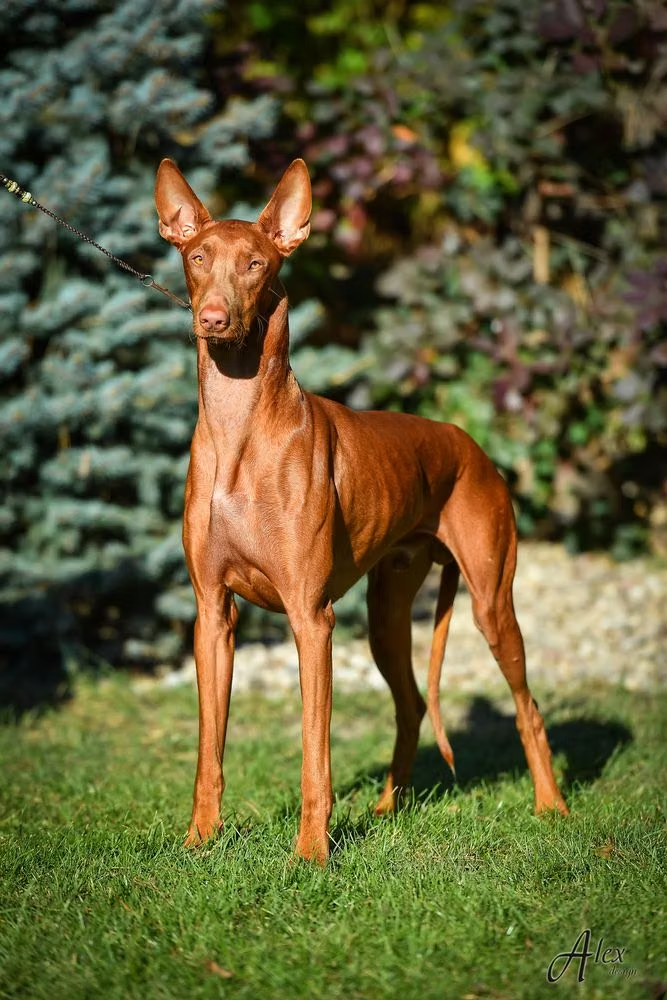

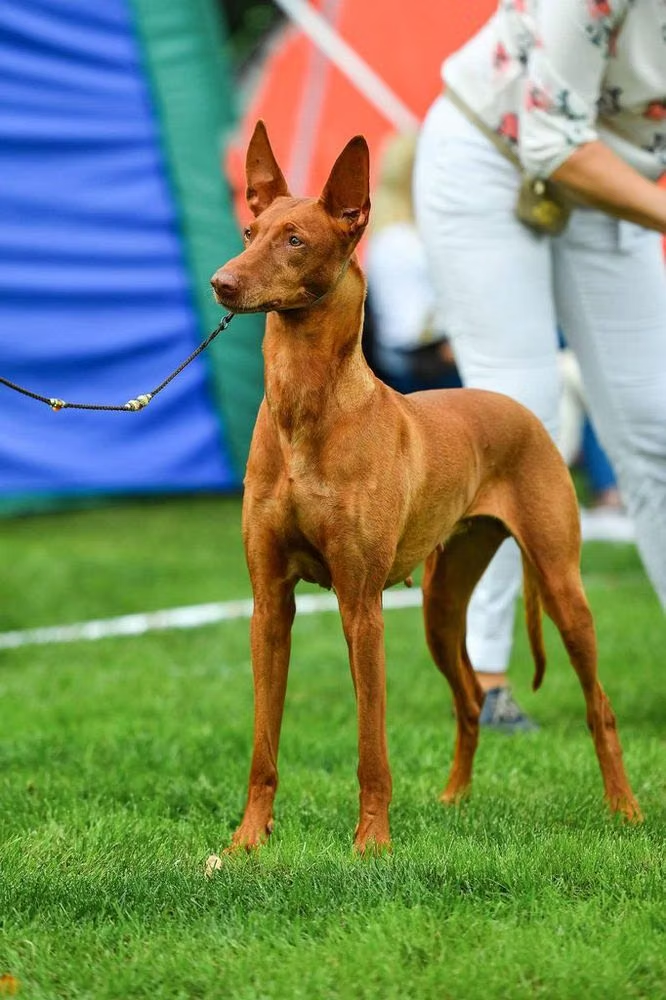
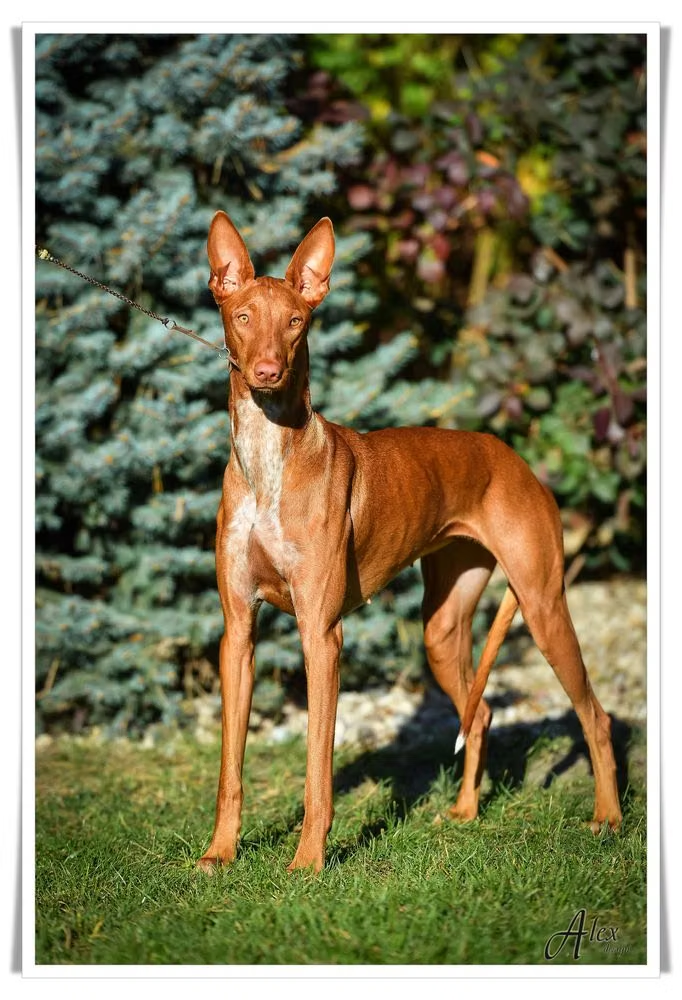

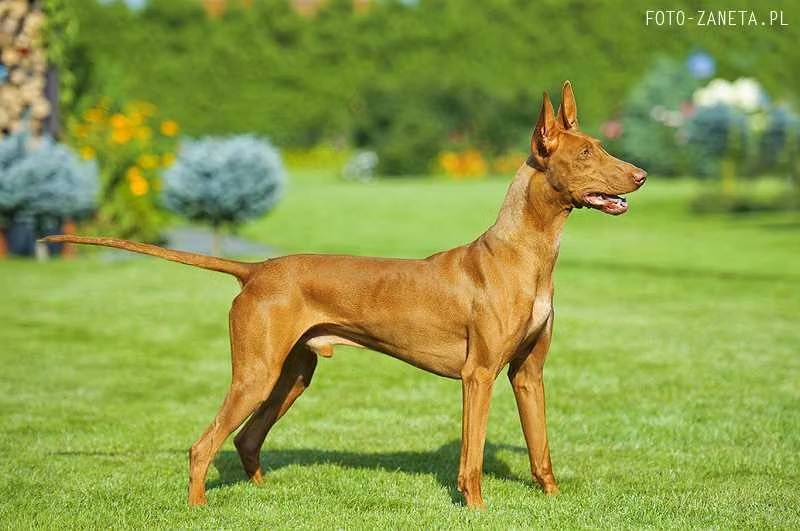
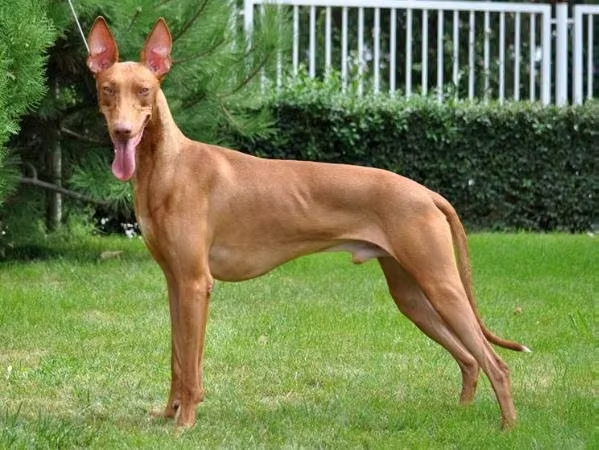
About the Pharaoh Hound
Malta's national hound is a lean, affectionate sighthound that hunts by sight, scent, and sound, and is known for blushing rosy pink when it's excited.
The Pharaoh Hound is a medium sighthound from Malta, where locals call it Kelb tal-Fenek, meaning dog of the rabbit. Maltese hunters have used the breed for generations to flush rabbits from stony ground, and it tracks by sight, scent, and sound together, a combination that sets it apart from most sighthounds, which lean on eyesight alone.
The coat runs from tan to chestnut, the ears stand tall and alert, and the build is made for a flat-out sprint over rough country. Adults typically stand 53 to 64 centimetres at the shoulder and weigh around 20 to 25 kilograms. Owners often mention the blush: when the dog is happy or worked up, its nose and the skin around its ears turn a deeper rose colour.
Inside the house the Pharaoh Hound is generally settled and affectionate, forming a tight bond with its household and staying friendly with people it already knows. Like most hunting hounds it has a mind of its own and will not always come running the first time it is called, though patient, reward-based handling gets good results.
| Attribute | Detail |
|---|---|
| Origin | Malta |
| Size | Medium (around 20 to 25 kg) |
| Lifespan | 12 to 14 years |
| Group/role | Sighthound, originally a rabbit hunter |
| Good with | Family members and children when raised together; supervise around small pets |
Who it suits
This breed suits an active household with room to run and a securely fenced section or paddock. It fits owners who like a low-maintenance coat and who are relaxed about a strong chase instinct around small animals. Anyone after instant obedience may find the independent streak testing. Homes with cats or other small pets need careful, gradual introductions, since the hunting drive runs deep.
History and origins
Bred on Malta for centuries as a rabbit-hunting dog, the Kelb tal-Fenek reached Britain in the 1920s and gained formal recognition decades later.
The Pharaoh Hound is the national hound of Malta, where islanders have kept it for centuries under its local name, Kelb tal-Fenek. Hunters on Malta and neighbouring Gozo used the dog to find and flush rabbits from among stone walls and rough ground, often working at night alongside ferrets.
The English name and an old popular theory tied the breed to ancient Egypt, based on its likeness to dogs shown in tomb art. Later genetic research found no direct unbroken line back to those ancient Egyptian dogs, so the breed is better understood as a long-standing Maltese type rather than a literal survivor of the pharaohs.
The breed reached Britain around the 1920s and 1930s, and organised breeding programmes there took hold more firmly from the 1960s onward. British and American kennel clubs recognised the Pharaoh Hound in the late twentieth century, which helped fix its standard and carry it to new countries, New Zealand included.
Even with international recognition, the Pharaoh Hound stays uncommon outside Malta, and New Zealand sees only a handful of litters in any given year. Strict biosecurity rules from the Ministry for Primary Industries mean importing a dog is a lengthy process, so most Kiwi owners rely on the small local breeding base rather than a fresh import.
Appearance and breed standard
Lean and athletic, the Pharaoh Hound stands 53 to 64 centimetres tall with a short tan to chestnut coat, upright ears, and amber eyes that match its coat colour.
The Pharaoh Hound carries the lean, elegant outline typical of sighthounds. The body is a touch longer than it is tall, the chest runs deep, the belly tucks up, and the long clean legs are built for speed. The head is long and finely chiselled, the muzzle tapers to a point, and the large ears stand erect and swivel forward the moment the dog is alert.
| Trait | Standard |
|---|---|
| Height | Males about 58 to 64 cm; females about 53 to 61 cm at the shoulder |
| Weight | About 20 to 25 kg |
| Coat | Short, fine, and glossy; close-lying |
| Colours | Tan to chestnut, often with white markings on chest, toes, tail tip, and a thin blaze |
| Eyes | Amber, blending with the coat colour; oval and set moderately deep |
Coat and colours
The coat is short, fine, and lies flat with no undercoat underneath. Accepted colours range from a light tan through richer chestnut and red-gold shades. White is allowed in set places: a white tip on the tail, sometimes called the flag, white on the chest, white toes, and a slim white blaze down the centre of the face. Heavy white spotting or flecking across the back of the neck, shoulders, or body counts as a fault under most standards. The thin coat gives little insulation, so the dog feels the cold and needs extra protection through a Kiwi winter.
Temperament and personality
Affectionate and playful at home, the Pharaoh Hound can be reserved with strangers and keeps a strong urge to chase anything that runs.
At home the Pharaoh Hound is affectionate, playful, and often glued to its people. Plenty like to lean against a family member or curl up alongside them on the couch. The breed usually gets on well with children it has grown up with, though its speed and energy mean playtime with younger kids needs supervision.
Reactions to strangers range from openly friendly to politely reserved, and early socialisation helps the dog stay settled around new faces and new situations. It is alert and will often bark to announce visitors, but it is not built for guard work and rarely turns aggressive.
A strong prey drive shapes a good deal of its outdoor behaviour. A Pharaoh Hound may take off after a rabbit, hedgehog, or cat without a backward glance, so a secure fence and firm leash habits matter here as much as anywhere. It is usually sociable with other dogs. Success with cats and small pets depends on careful, supervised introductions, and some individuals never become safe housemates for smaller animals.
| Trait | Rating |
|---|---|
| Affection | 5 |
| Energy | 4 |
| Trainability | 3 |
| Vocalness | 3 |
| Shedding | 2 |
Care and grooming
Grooming is minimal thanks to the short coat, but this hound needs daily exercise, a secure fence, and a warm bed to cope with a damp Kiwi winter.
Grooming
- Brush the short coat about once a week with a soft brush or grooming mitt to lift loose hair.
- Bathe only when needed; the coat stays clean on its own and carries little doggy odour.
- Trim nails every few weeks and check they are not clicking on hard floors.
- Check the large upright ears regularly for wax buildup or redness.
- Brush the teeth several times a week to keep on top of dental health.
Exercise
- Aim for at least 45 to 60 minutes of activity a day, with a chance to run flat out.
- Use a securely fenced section or paddock for off-lead sprinting; the chase instinct makes recall unreliable near small animals.
- Keep this breed on lead in open or unfenced areas, including most beaches and reserves.
- Add mental work such as scent games or short training sessions, since the breed is sharp and bores quickly.
Environment
The Pharaoh Hound suits a home with a safe, fenced yard, though it can manage in a smaller place if it gets enough exercise. The thin coat and lack of undercoat mean it dislikes cold, damp conditions, which rules out life in an outdoor kennel through a New Zealand winter. A warm, padded bed indoors matters, and a fitted coat helps on chilly walks. This is an indoor dog through and through.
Nutrition and feeding
Feed a complete diet matched to life stage and activity, split into two meals a day, and keep the Pharaoh Hound lean to protect its joints.
The Pharaoh Hound does well on a complete, balanced dog food suited to its life stage and activity level. As a lean, athletic breed it should be fed so the ribs are easy to feel but not visible, with a clear waist when viewed from above. Exact amounts depend on the food, the dog's weight, age, and exercise level, so treat the packet guidelines as a starting point and adjust from there based on body condition. Fresh water should always be on hand.
| Life stage | Amount per day | Meals |
|---|---|---|
| Puppy (2 to 6 months) | Per puppy-food label, split across the day | 3 to 4 |
| Junior (6 to 12 months) | Per label, slightly reduced as growth slows | 2 to 3 |
| Adult (1 to 7 years) | About 150 to 300 grams of quality dry food | 2 |
| Senior (7 years and older) | Reduced calories to match lower activity | 2 |
Treats and supplements
Keep treats to roughly 10 percent of daily calories so the dog stays lean. Small pieces of plain cooked meat or a low-calorie commercial treat work well for training. Most Pharaoh Hounds on a complete diet need no extra supplements; check with a vet before adding anything for joints or skin, since supplements the dog does not need can do more harm than good.
Health and common conditions
Generally hardy with a 12 to 14 year lifespan, the Pharaoh Hound needs a vet who knows its sensitivity to anaesthesia and certain drugs.
The Pharaoh Hound is a relatively healthy, hardy breed, with a typical lifespan of 12 to 14 years. It carries fewer inherited disorders than many breeds, partly thanks to its long history as a working hunting dog. As with all sighthounds, its low body fat changes how it handles certain medications and anaesthesia, so the vet team should know the breed before any procedure.
| Condition | Signs | Note |
|---|---|---|
| Anaesthesia and drug sensitivity | Slow recovery, an exaggerated response to sedatives | Lean sighthound build changes drug handling; tell the vet the breed |
| Hip or elbow issues | Stiffness, limping, reluctance to jump | Less common than in many breeds but possible; keep the dog lean |
| Patellar luxation | Skipping gait, occasional hind-leg lameness | Kneecap slips out of place; ranges from mild to needing surgery |
| Skin trauma and cold sensitivity | Cuts, grazes, shivering in cold | Thin coat gives little protection; rug up in cold weather |
| Dental disease | Bad breath, tartar, sore gums | Regular brushing and check-ups cut the risk |
Preventive care
- Keep vaccinations and parasite control current.
- Book yearly vet check-ups, moving to twice yearly once the dog is a senior.
- Keep body weight lean to protect the joints.
- Brush teeth regularly and arrange professional dental care as advised.
- Tell any vet about the breed's drug and anaesthesia sensitivity before a procedure.
Training and socialisation
Smart but independent, the Pharaoh Hound learns fastest with short, upbeat sessions, though a strong prey drive makes off-lead recall tricky.
The Pharaoh Hound is bright and can learn a wide range of commands, but its hound independence means it weighs up whether a request is worth following. It is also sensitive and does not respond well to harsh corrections, which tend to make it shut down or dodge the handler. Short, upbeat sessions with food and play rewards work best. Recall is the hardest skill to lock in, since a moving rabbit, hedgehog, or cat can override any amount of training, so most owners keep the dog on lead or inside a fenced area whenever off-lead work is risky.
Basics
- Start socialisation early, introducing the puppy to people, places, sounds, and other dogs.
- Teach name recognition and a marker word or clicker to mark the behaviour you want.
- Build core cues one at a time, sit, down, and stay, in short sessions.
- Train recall hard from puppyhood, rewarding every return, and practise in safe, enclosed areas first.
- Add lead manners and bring in distractions gradually as the dog improves.
Breeding and raising puppies
Pharaoh Hounds reach breeding maturity around 18 to 24 months, with litters of six to eight puppies after roughly 63 days of pregnancy.
Responsible breeding of Pharaoh Hounds puts health, sound temperament, and the breed standard ahead of numbers. Dogs can physically reproduce earlier, but breeders generally wait for full maturity, around 18 to 24 months, before a first litter, so the dog is properly developed and health screening is complete. Mating is timed to the female's heat cycle, and pregnancy runs roughly 63 days from conception.
Litters typically run to six or eight puppies, though smaller and larger litters happen. Newborns are helpless and rely on the mother for warmth and milk, so a clean, warm whelping space matters. Puppies open their eyes at around two weeks and start weaning between four and six weeks. Gentle handling and early exposure to household sounds and sights in those first weeks help raise confident, well-adjusted adults.
Puppies usually go to new homes from about eight weeks, once first vaccinations and vet checks are done. Because the breed stays uncommon here, prospective owners often join a waiting list with a registered Dogs New Zealand breeder, and anyone considering an import should factor in MPI's biosecurity requirements well ahead of time.
| Metric | Value |
|---|---|
| Breeding maturity | About 18 to 24 months |
| Heat cycle | Roughly twice a year |
| Gestation | About 63 days |
| Average litter size | 6 to 8 puppies |
| Eyes open | Around 14 days |
| Weaning | About 4 to 6 weeks |
| Typical homing age | From about 8 weeks |
Registering a Pharaoh Hound in New Zealand, microchip and all
Alongside council registration, a free United Pet Club record keeps a live phone number behind your Pharaoh Hound and its chip.
Pharaoh Hound registration and microchip registration in New Zealand
Keeping a Pharaoh Hound findable is mostly paperwork: a profile carrying your phone number, a photo, and the dog's details, sitting where a scan can reach it. Registering your dog with United Pet Club sets that up free, and the record never lapses or bills you.
Getting the chip implanted was the vet's job; giving the number somewhere to point is yours. Registering the microchip with United Pet Club costs nothing on the lifetime plan, suits any brand a Kiwi vet reaches for, and keeps the record searchable at any hour from anywhere. Creating a free account ties the profile and the chip together.
How do I register my Pharaoh Hound in New Zealand?
Setting up a free United Pet Club account, adding your Pharaoh Hound's details and a photo, and saving is all it takes. The record stays free for the dog's whole life, chip or no chip.
How do I register my Pharaoh Hound's microchip?
Just add the fifteen digit number to your free account along with your current address and phone. Under the lifetime plan there is nothing to pay for the registration or any later update.
Does my Pharaoh Hound need a microchip in New Zealand?
Dogs registered for the first time since 2006 need one under the National Dog Database rules, working farm dogs aside. The council record and your United Pet Club profile do different jobs, and the second one is free.
What does registering a Pharaoh Hound cost?
Nothing. The free lifetime plan carries the profile, the chip record, and every update, and no renewal notice ever arrives.
Frequently asked questions
Common questions about the Pharaoh Hound cover size, temperament, care, lifespan, whether it suits family life, and how easy it is to find in New Zealand.
How big does a Pharaoh Hound get?
It's a medium sighthound. Males stand about 58 to 64 centimetres at the shoulder and females about 53 to 61 centimetres, with both sexes weighing roughly 20 to 25 kilograms.
What's the Pharaoh Hound's temperament like?
It's affectionate and playful with its family, alert, and sharp, with an independent streak from its hunting background. It's usually friendly with people it knows and sometimes reserved around strangers.
Is the Pharaoh Hound hard work to look after?
Grooming is easy thanks to the short coat, but the breed needs daily exercise, a secure fence, and protection from the cold. Recall can be unreliable because of a strong prey drive, so training and containment take real effort.
How long do Pharaoh Hounds live?
The typical lifespan is 12 to 14 years. The breed is generally healthy, though it has a sighthound's sensitivity to certain drugs and anaesthesia.
Is the Pharaoh Hound a good family dog?
Yes, in an active household. It bonds closely with its people and gets on well with children it's raised alongside. Homes with cats or small pets need careful, gradual introductions because of the chase instinct.
Do Pharaoh Hounds actually blush?
Yes. When happy or excited, the nose and the skin around the ears flush a deeper rose colour, an effect owners often call the blush.
Are Pharaoh Hounds easy to find in New Zealand?
Not really. Numbers here are small, strict MPI biosecurity rules make importing a dog a lengthy process, and most prospective owners end up on a waiting list with a local Dogs New Zealand breeder.
From the community
Ask about the Pharaoh HoundNo questions about the Pharaoh Hound yet. Be the first to ask.
Browse Dog breeds