
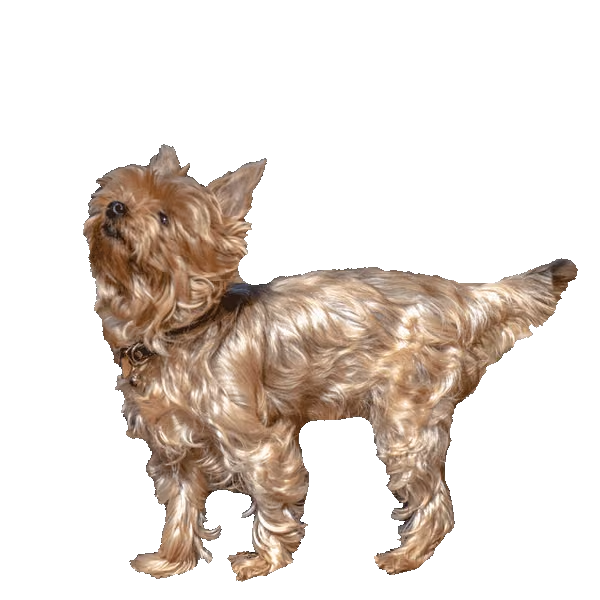
Newfoundland
The Newfoundland is a sweet-natured gentle giant known for its devotion, patience with children, and remarkable water-rescue instincts.
- Size
- Giant
- Lifespan
- 9–10 years
- Origin
- Canada
- Temperament
- Gentle
- Standard colors
- Black, White, Grey and Brown
Characteristics
Coat and grooming
How the Newfoundland coat is built, and what that means when you groom it.
- Coat layers
- Double coat
- Coat texture
- Wavy
- Coat length
- Long
- Shedding
- Seasonal shedding
Grooming guidance
Critical: A Newfoundland should not be shaved.
The undercoat keeps heat out as well as in, and the outer coat shields the skin from sun and insect bites. Clipping the whole coat off removes both. It often grows back patchy, soft or a different colour, and in some animals the guard hairs never return properly. Brush the undercoat out instead of cutting it off.
Caution: A Newfoundland coat mats easily.
Fine or long hair tangles at the base of the coat, out of sight, where the mats tighten and pull on the skin. Brushing has to reach right down to the roots in sections, not just skim the surface.
Information: A Newfoundland drops its undercoat in heavy bursts.
The undercoat comes out in heavy bursts over a few weeks. An undercoat rake, or a bath followed by a proper blow-dry, clears it far faster than daily brushing. Clipping the coat down is not a shortcut for this.
Newfoundland colors and patterns
What each club's breed standard says about every Newfoundland color and pattern. Point at a ruling to see the club's own wording.
Breed standards describe the Newfoundland in Black, White, Grey and Brown. Standard patterns: Solid, Piebald and Roan.
| Color or pattern | FCI | AKC | UKC | KC | KUSA |
|---|---|---|---|---|---|
| Black | Standard (“Black”) | Standard (“Black”) | Standard (“Black”) | Standard (“Black: dull jet black may be tinged with bronze”) | Standard (“Black”) |
| White | Standard (“White and black”) | Standard (“White & Black”) | Standard (“White and black (Landseer)”) | Standard (“Landseer (white and black)”) | Standard (“White and Black”) |
| Grey | Disqualifying | Standard (“Gray”) | Standard (“gray”) | Not recognised | Disqualifying |
| Brown | Standard (“Brown: The brown colour goes from chocolate to bronze”) | Standard (“Brown”) | Standard (“brown”) | Standard (“Brown: Chocolate or bronze”) | Standard (“Brown: The brown colour goes from chocolate to bronze”) |
| Tan | Disqualifying (“Markings of any other colour than white on a black or brown dog”) | Disqualifying (“Black & Tan”) | Disqualifying | Not recognised | Disqualifying (“Markings of any other colour than white on a black or brown dog”) |
| Beige | Disqualifying | Disqualifying (“Beige”) | Disqualifying | Not recognised | Disqualifying |
| Patterns | |||||
| Solid | Standard (“Black: The traditional colour is black”) | Standard (“Solid Colors”) | Standard (“may be solid colors”) | Standard (“Black”) | Standard (“Black: The traditional colour is black”) |
| Piebald | Standard (“White and black”) | Standard (“Landseer-White base coat with black markings”) | Standard (“White and black (Landseer)”) | Standard (“Landseer”) | Standard (“White and Black”) |
| Roan | Standard (“can show a minimum of ticking”) | Standard (“Clear white or white with minimal ticking is preferred”) | Standard (“may have minimal ticking”) | Standard (“Coat white with minimal ticking”) | Standard (“can show a minimum of ticking”) |
| Tan point | Disqualifying (“Markings of any other colour than white on a black or brown dog”) | Disqualifying (“Black & Tan”) | Disqualifying | Not recognised | Disqualifying (“Markings of any other colour than white on a black or brown dog”) |


| Color or pattern | FCI | AKC | UKC | KC | KUSA |
|---|---|---|---|---|---|
| Dark brown | Standard (“Dark brown in black and white and black dogs”) | Standard (“Eyes are dark brown”) | Standard (“dark brown in color in the black and black and white dogs”) | Standard (“dark brown in black, or in white and black dogs”) | Standard (“Dark brown in black and white and black dogs”) |
| Light brown | Standard (“lighter shades permitted in brown dogs”) | Standard (“Browns and Grays may have lighter eyes”) | Standard (“lighter shades are permitted in the brown and gray dogs”) | Standard (“lighter shades of brown ... permitted in brown dogs”) | Standard (“lighter shades permitted in brown dogs”) |
| Yellow | Fault (“yellow eyes”) | No ruling | Fault (“Yellow eyes”) | Fault | Fault (“yellow eyes”) |
| Color or pattern | FCI | KC | KUSA |
|---|---|---|---|
| Black | Standard (“Black on black and white and black dogs”) | Standard (“Black in black, and in white and black dogs”) | Standard (“Black on black and white and black dogs”) |
| Liver | Standard (“brown on brown dogs”) | Standard (“brown in brown dogs”) | Standard (“brown on brown dogs”) |
What the rulings mean
- Standard
- Described by the club's breed standard.
- Fault
- Named by the club's breed standard as a fault: the animal can be shown but is penalised.
- Disqualifying
- The club's breed standard disqualifies an animal of this colour or pattern.
- Not recognised
- The club does not accept this colour or pattern for the breed.
Color changes
How a Newfoundland's colors can change over its life.
Blackchanges toRust
Coat · With body condition · can change back
Blackchanges toGrey
Coat · Progressive
Blackchanges toBrown
Coat · In the sun · can change back
Whitechanges toRoan
Coat · With age · from 2 weeks
Blackchanges toSnow nose
Nose · With the season · can change back
Blackchanges toPink
Nose · With the season · can change back

Sources
Each ruling comes from the club's published breed standard or color list.
Health
Conditions recorded as more common in the Newfoundland than in its species as a whole. A higher risk is not a diagnosis: many never develop any of them, and your vet can say which screening tests are worth doing.
High risk
- Musculoskeletal system
Cranial cruciate ligament disease
Moderate evidence
This content is for educational purposes and is not a substitute for professional veterinary advice. If you are worried about your pet, contact your veterinarian.
All health conditionsAbout the Newfoundland
The Newfoundland is a giant working dog from Canada, calm and devoted, well known for its patience with children and its instinct for water rescue.
The Newfoundland is a giant breed that originated on the Canadian island it is named after. Males typically weigh 130 to 150 pounds and females 100 to 120 pounds, making the breed one of the heaviest kept as a household companion. For all that bulk, the temperament stays gentle and unhurried. Owners often describe it as a working dog with the manners of a lapdog.
The breed was developed to work alongside fishermen in cold Atlantic waters. A thick double coat, webbed feet and powerful shoulders all suit that job. The dog can swim long distances and has a well documented history of pulling people and gear out of the water. The same strength was put to use on land too, hauling carts and fishing nets.
At home the Newfoundland is affectionate and settled, and it bonds closely with its family. It shows real patience with children, which is a large part of its reputation as a trustworthy companion for young households. The trade-off is the upkeep a dog this size demands: space, a hearty food bill, regular grooming, and a fair bit of drool to mop up.
| Attribute | Detail |
|---|---|
| Origin | Canada |
| Size | Giant (100 to 150 pounds) |
| Lifespan | 9 to 10 years |
| Group/role | Working dog (water rescue, draft work) |
| Good with | Children, families, other pets when socialised |
Who the breed suits
The Newfoundland suits a household with room for a big dog and the patience for heavy grooming and a sizeable food bill. It suits people after a calm, devoted companion rather than a dog that needs constant activity. Families with children often get on well with the breed given its patient nature. It is a poor match for a small flat, a hot climate, or anyone who cannot live with drool and shedding fur.
History of the Newfoundland
The Newfoundland developed on Canada's Atlantic coast as a working dog for fishermen, prized for water work and hauling before becoming a family companion.
The breed carries the name of the island of Newfoundland, off Canada's eastern coast, where it developed during the 1700s among fishing communities working the cold North Atlantic. Its exact ancestry was never closely recorded, but the working dogs kept on the island are generally taken as the foundation of the breed we know today.
Fishermen relied on these dogs for water work: hauling nets and lines, retrieving gear that went overboard, and pulling people from the sea. Webbed feet, a water resistant coat and strong swimming ability made the dog well suited to that work in freezing conditions.
The breed's profile rose in Britain during the 1800s, where it was kept by notable owners and turned up in paintings and literature of the period. That exposure helped the Newfoundland move beyond its working roots and take shape as a companion and show dog.
It was among the breeds recognised by the earliest organised kennel clubs in the late 1800s. In New Zealand the breed is registered through Dogs New Zealand (formerly the New Zealand Kennel Club), the country's main pedigree dog registry. Today the Newfoundland is kept mostly as a family companion, although water rescue and draft work are still practised by some breed clubs.
Newfoundland appearance
The Newfoundland is a massive, heavily boned dog with a broad head, a thick water-resistant double coat, and webbed feet built for swimming.
The Newfoundland is a large, heavily built dog with substantial bone and a broad, deep body. The head is large with a broad skull, and the expression is soft rather than sharp. The overall build favours strength and stamina over speed. Webbed feet and a strong tail help with swimming, with the tail working as a rudder in the water.
| Trait | Detail |
|---|---|
| Height | Males about 28 inches, females about 26 inches at the shoulder |
| Weight | Males 130 to 150 pounds, females 100 to 120 pounds |
| Coat | Thick water-resistant double coat, flat and moderately long |
| Colours | Black, brown, grey, and black and white (Landseer) |
| Eyes | Dark brown, relatively small, set deep |
Coat and colours
The outer coat is coarse and water resistant, over a soft, dense undercoat. Solid black is the most common colour, with solid brown and grey also accepted. The black and white pattern, called Landseer, has a white base with black patches and takes its name from the painter who depicted the breed. The double coat sheds steadily year round and more heavily during seasonal changes.
Newfoundland temperament
The Newfoundland is calm, friendly and devoted, with real patience toward children and an even-tempered response to strangers and other pets.
The Newfoundland is known for a gentle, steady temperament. It tends to be calm indoors and forms a close bond with its family, seeking out human company and sometimes struggling if left alone for long stretches.
With children the breed is usually patient and tolerant, which accounts for much of its reputation. Given the dog's size, supervision around very young children still makes sense, simply because of the weight involved rather than any aggression. Around strangers the Newfoundland tends to be friendly or politely reserved, so it is not much of a guard dog, though its bulk alone puts most people off.
It generally gets on well with other pets when raised together or socialised early. Energy levels are modest and prey drive is not usually strong. The main things to plan around are its need for company and its tendency to drool.
| Trait | Rating |
|---|---|
| Affection | 5 |
| Energy | 2 |
| Trainability | 4 |
| Vocalness | 2 |
| Shedding | 5 |
Newfoundland care
Newfoundland care centres on heavy coat grooming, moderate daily exercise, a cool living space, and managing the needs of a giant breed.
Grooming
- Brush the double coat at least two to three times a week, and daily during seasonal shedding
- Use a slicker brush and an undercoat rake to get through the dense undercoat
- Bathe every one to two months or as needed; the thick coat takes a while to dry out fully
- Check and clean the ears regularly, since drop ears can trap moisture
- Trim nails and keep the hair between the paw pads tidy
- Wipe the mouth and jowls often to keep on top of drool
Exercise
- Aim for about 30 to 60 minutes of activity a day
- Daily walks at a steady pace suit the breed well
- Swimming suits the Newfoundland naturally and is easy on the joints
- Avoid strenuous exercise in the heat and during a puppy's rapid growth phase
Environment
The Newfoundland does best in a cool climate and a home with room to move about. New Zealand's temperate conditions generally suit the breed better than the hot, humid summers found overseas, though shade, fresh water and airflow still matter on warmer days. The breed settles well indoors given its calm nature, but it needs enough floor space to lie down and turn around comfortably.
Newfoundland nutrition
Newfoundlands need a balanced large-breed diet measured to avoid excess weight, with controlled growth in puppies to protect developing joints.
The Newfoundland needs a complete and balanced diet formulated for large or giant breeds. Because the dog carries so much weight, keeping it in lean condition takes pressure off the joints and heart. Measure food rather than leaving it down all day, and adjust the amount to the individual dog's activity level and body condition. Puppies should go on a large-breed growth formula that supports slow, steady development rather than rapid weight gain.
| Life stage | Amount per day | Meals |
|---|---|---|
| Puppy (2 to 6 months) | 4 to 6 cups, large-breed formula | 3 to 4 |
| Puppy (6 to 12 months) | 5 to 7 cups | 2 to 3 |
| Adult | 4 to 6 cups | 2 |
| Senior | 3 to 5 cups, adjusted for activity | 2 |
Treats and supplements
Keep treats to roughly ten percent of daily calories to avoid piling on weight. Some owners add joint supplements such as glucosamine and chondroitin given the breed's size, along with fish oil for the coat and skin. Check with a vet before adding any supplement, since needs differ from dog to dog.
Newfoundland health
The Newfoundland typically lives 9 to 10 years and is prone to giant-breed concerns including hip and elbow dysplasia, heart disease and bloat.
The Newfoundland typically lives about 9 to 10 years, in line with other giant breeds. The breed is generally hardy, but its size brings particular risks around the joints, heart and digestion. Buying from a breeder who screens their breeding stock, and keeping the dog at a healthy weight, both help lower the risk.
| Condition | Signs | Note |
|---|---|---|
| Hip and elbow dysplasia | Limping, stiffness, trouble getting up | Screened by breeders; weight control helps |
| Subaortic stenosis | Tiredness, fainting, heart murmur | A heart condition seen in the breed; screened by cardiac exam |
| Gastric dilatation-volvulus (bloat) | Swollen abdomen, retching, distress | A medical emergency; act immediately |
| Cystinuria | Urinary stones, straining to urinate | An inherited condition; DNA testing available |
Preventive care
- Annual vet checks, more often for older dogs
- Hip, elbow, heart and DNA screening in breeding stock
- Keep the dog at a healthy weight to protect the joints and heart
- Feed measured meals and avoid strenuous exercise straight after eating to lower the risk of bloat
- Keep vaccinations and parasite prevention up to date
- Regular dental and ear care
Training a Newfoundland
The Newfoundland is intelligent and keen to please, so it trains well with patient, reward-based methods, and early work matters given its size.
The Newfoundland is intelligent and keen to work with its handler, which makes it a fairly easy breed to train. It responds best to calm, consistent guidance and reward-based methods, and harsh corrections tend to backfire with a dog this sensitive. Because the adult reaches such a size, teaching manners while it is still a puppy matters: a 130 pound dog that pulls on the lead or jumps up is hard work, while the same dog trained early is a pleasure to live with.
Basics
- Start socialisation early, exposing the puppy to people, places and other animals
- Teach a reliable lead walk before the dog reaches full size and strength
- Build the core cues: sit, stay, come and down
- Practise calm greetings so the dog does not jump up on people
- Introduce water work and swimming if the dog shows interest, which many do
- Keep sessions short, positive and consistent
Newfoundland breeding
Newfoundlands reach breeding maturity around two years, carry litters for about nine weeks, and produce large litters that need careful raising.
Responsible breeders wait until a Newfoundland is physically and mentally mature, generally around two years old, so health screening can be completed beforehand. Recommended screening covers hips, elbows, heart and inherited conditions such as cystinuria. Gestation runs to roughly 63 days, much the same as other breeds. Litters tend to be large, and whelping a giant breed carries added risk, so having a vet involved is worthwhile.
Raising the litter takes planning. Puppies grow fast and need a large-breed diet that supports controlled growth rather than rapid weight gain, protecting the developing joints. The dam needs solid nutrition and enough space to manage a sizeable litter. Early socialisation from the breeder lays the groundwork for the calm adult temperament the breed is known for. New Zealand's strict biosecurity and quarantine rules mean bringing in breeding stock or fresh bloodlines from overseas takes time and planning, so prospective owners should expect a wait for a place on a reputable breeder's list, since well-bred giant litters do not come along often.
| Metric | Value |
|---|---|
| Breeding maturity | About 2 years |
| Gestation | About 63 days |
| Typical litter size | Large, often 8 to 10 puppies |
| Weaning | About 6 to 8 weeks |
| Recommended health screening | Hips, elbows, heart, cystinuria |
Registering a Newfoundland in New Zealand, microchip and all
Alongside council registration, a free United Pet Club record keeps a live phone number behind your Newfoundland and its chip.
Newfoundland registration and microchip registration in New Zealand
Adding your Newfoundland to the registry is a ten-minute job at most: name, date of birth, photo, contact details, save. The profile is free for life and works whether the chip is already in or booked for the next vet visit. Dog registration is the place to start.
Getting the chip implanted was the vet's job; giving the number somewhere to point is yours. Registering the microchip with United Pet Club costs nothing on the lifetime plan, suits any brand a Kiwi vet reaches for, and keeps the record searchable at any hour from anywhere. Creating a free account ties the profile and the chip together.
How do I register my Newfoundland in New Zealand?
Setting up a free United Pet Club account, adding your Newfoundland's details and a photo, and saving is all it takes. The record stays free for the dog's whole life, chip or no chip.
How do I register my Newfoundland's microchip?
Just add the fifteen digit number to your free account along with your current address and phone. Under the lifetime plan there is nothing to pay for the registration or any later update.
Does my Newfoundland need a microchip in New Zealand?
Dogs registered for the first time since 2006 need one under the National Dog Database rules, working farm dogs aside. The council record and your United Pet Club profile do different jobs, and the second one is free.
What does registering a Newfoundland cost?
Nothing. The free lifetime plan carries the profile, the chip record, and every update, and no renewal notice ever arrives.
Newfoundland frequently asked questions
Common questions about the Newfoundland cover its size, temperament, care needs, lifespan, suitability for families, and availability in New Zealand.
How big does a Newfoundland get?
It is a giant breed. Males typically weigh 130 to 150 pounds and stand about 28 inches at the shoulder, while females weigh 100 to 120 pounds and stand about 26 inches.
Are Newfoundlands good with kids?
Yes. The breed is known for its patient, gentle temperament around children. Because of its size, keeping an eye on things around very young children is still sensible.
Is a Newfoundland hard work to look after?
Care is moderate to demanding. The thick double coat needs brushing several times a week, the dog drools, food costs add up, and it needs a cool environment. Exercise needs are modest, at 30 to 60 minutes a day.
How long do Newfoundlands live?
The typical lifespan is about 9 to 10 years, which is normal for a giant breed.
Do Newfoundlands like water?
Yes. The breed was developed to work in water and has webbed feet and a water-resistant coat. Many Newfoundlands swim well and enjoy it, and swimming makes good low-impact exercise.
Is a Newfoundland suited to flat living?
Not really. The dog is calm indoors but very large, sheds heavily, and needs a cool space, so a home with more room and easy access outside suits it better.
Are Newfoundlands easy to find in New Zealand?
Well-bred giant litters come along less often than for smaller breeds, so reputable New Zealand breeders often run a wait list. Breed-specific rescue is another option worth looking into.
From the community
Ask about the NewfoundlandNo questions about the Newfoundland yet. Be the first to ask.
Browse Dog breeds