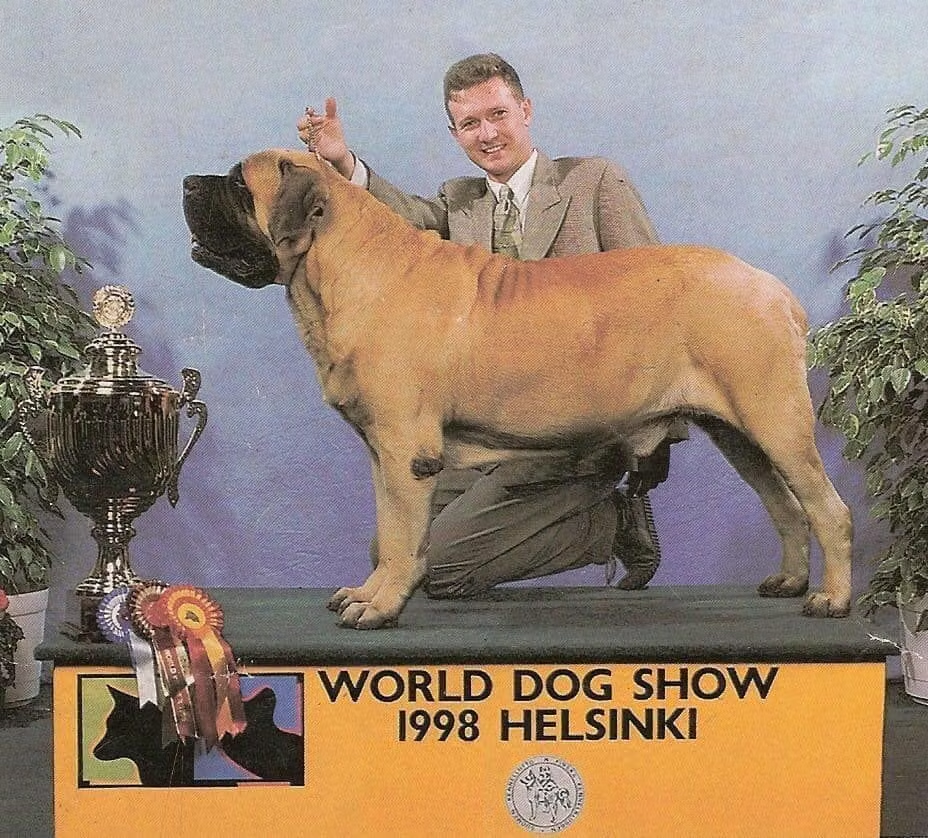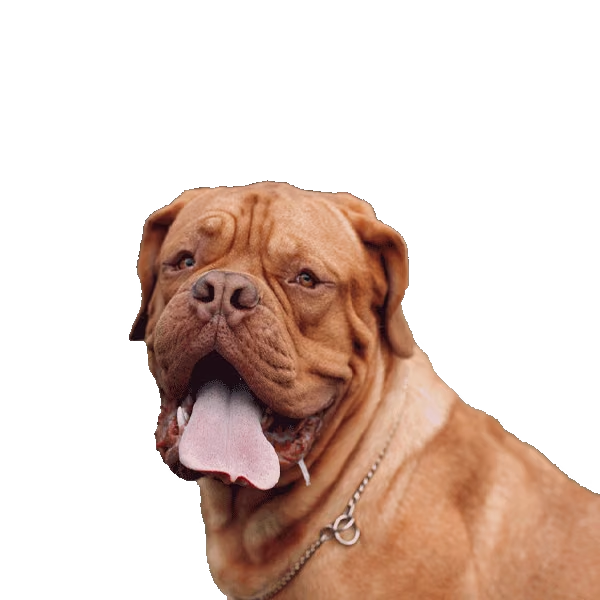
The Mastiff is a dignified, massive guardian known for its calm temperament, courage, and deep devotion to its family.
How the Mastiff coat is built, and what that means when you groom it.
Critical: A Mastiff should not be shaved.
The undercoat keeps heat out as well as in, and the outer coat shields the skin from sun and insect bites. Clipping the whole coat off removes both. It often grows back patchy, soft or a different colour, and in some animals the guard hairs never return properly. Brush the undercoat out instead of cutting it off.
A few of the Mastiff profiles members have added to United Pet Club.
The Mastiff is a giant English guardian breed known for a calm temperament, deep loyalty to family, and a quiet, dignified presence.
The Mastiff, also known as the English Mastiff or Old English Mastiff, is one of the heaviest dog breeds in the world. An adult male typically weighs between 70 and 100 kg (150 to 220 lb), and the breed pairs enormous size with a settled, even temperament. It was developed in England as a guardian of home and livestock, and it still carries the watchful, protective instincts of that working past.
Despite its bulk, the Mastiff is gentle and patient around the house. It tends to be quiet, slow to rile, and strongly attached to the people it lives with. The breed is naturally wary of strangers and will place itself between its family and anything it reads as a threat, usually relying on size and presence rather than aggression.
Taking on a Mastiff is a serious commitment. Its size means higher feed costs, bigger gear, and a shorter average lifespan than smaller dogs. Owners who go in with their eyes open gain a calm, loyal companion that asks for moderate exercise and plenty of company.
| Attribute | Detail |
|---|---|
| Origin | England |
| Size | Giant |
| Lifespan | 6 to 10 years |
| Group / role | Working group, guardian |
| Good with | Family members and children when supervised; needs early socialisation with strangers and other dogs |
The Mastiff suits owners with space, a settled routine, and time at home. It does best in a house with room to move about and an owner who can manage a very large, strong dog calmly. It's less suited to first-time owners after a high-energy exercise partner, to small flats, or to households that are away for long stretches. Budget for large-breed food, veterinary care, and gear sized for a 70 kg dog.
The Mastiff traces back to large guardian dogs kept in Britain for centuries, standardised in England and rebuilt from near extinction after the World Wars.
Large mastiff-type dogs have been part of life in Britain for a very long time. Roman writers described formidable war and guard dogs among the tribes of the British Isles, and broad-headed guardian dogs of similar type appear repeatedly in English records through the medieval period. Kept to guard property and stock, and sometimes to control or bait large game, these dogs were shaped by work that rewarded size, strength, and steadiness.
For generations the type was kept on English estates as a guard and gamekeeper's dog. It was not until the nineteenth century that breeders in England set about standardising the Mastiff into something close to its present form, selecting for the heavy head, broad muzzle, and large frame. The breed clubs and dog shows of Victorian England did much to fix the type and keep proper pedigree records.
The two World Wars brought the breed to the edge of extinction in Britain. Food shortages made keeping such large dogs impractical, and breeding stock fell to very low numbers. After the Second World War, English breeders rebuilt the Mastiff, drawing partly on dogs that had been exported to North America and elsewhere in earlier decades.
Today the Mastiff is kept mainly as a family guardian and companion rather than a working estate dog. It is recognised by major kennel clubs worldwide, including Dogs New Zealand (formerly the New Zealand Kennel Club), which holds the pedigree register for the breed in this country.
The Mastiff is a giant, powerfully built dog with a broad head, deep muzzle, and a short coat in fawn, apricot, or brindle with a dark mask.
The Mastiff is built for mass and substance. The body is long, deep through the chest, and powerfully muscled, carried on heavy, straight legs. The head is one of the breed's defining features: large and broad, with a short, blunt muzzle, a marked stop, and loose skin that forms folds and a degree of dewlap. The expression is calm and watchful rather than sharp.
| Trait | Standard |
|---|---|
| Height | Males from about 76 cm (30 in), females from about 70 cm (27.5 in) at the shoulder |
| Weight | Males 70 to 100 kg (150 to 220 lb), females 54 to 77 kg (120 to 170 lb) |
| Coat | Short, dense double coat with a coarse outer layer |
| Colours | Fawn, apricot, and brindle |
| Eyes | Medium size, dark hazel, set wide apart |
The coat is short and close, with a coarse outer layer over a finer undercoat. Accepted colours are fawn, apricot, and brindle, where brindle shows fawn or apricot as the base colour with dark stripes. A black mask over the muzzle and around the eyes is standard across all colours, and the ears and nose are dark. The short coat is easy to look after, but the breed sheds steadily year round, with heavier shedding at the change of seasons.
The Mastiff is calm, devoted, and dignified: gentle with family and naturally watchful and reserved around strangers.
The Mastiff is known for a steady, good-natured temperament. At home it is calm and affectionate, content to stay close to its people, and often described as a quiet companion that wants to be in whatever room the family is in. With children in its own household it is usually patient, though its size means young children should always be supervised around it.
Toward strangers the breed is reserved and watchful. A well-socialised Mastiff is not needlessly aggressive; it tends to weigh up a situation and use its presence to put off trouble. Early and ongoing socialisation matters, so that natural wariness does not tip into fearfulness or unwanted guarding.
With other pets, a Mastiff raised alongside them is generally tolerant. Same-sex aggression can crop up between entire dogs, and introductions to unfamiliar animals should be handled carefully. The breed picks up on the mood of its household and responds better to calm, consistent handling than to harsh correction.
| Trait | Rating |
|---|---|
| Affection | 5 |
| Energy | 2 |
| Trainability | 3 |
| Vocalness | 2 |
| Shedding | 3 |
The Mastiff needs simple coat care, moderate daily exercise, and a cool, roomy home suited to a giant, short-faced breed.
The Mastiff suits a home with enough indoor space for a very large dog to move about and rest comfortably, ideally with a secure garden to hand. New Zealand's temperate climate suits the breed well, though it copes with cold far more easily than heat, and should always have shade, fresh water, and a cool spot to lie down in warm weather. It is an indoor companion and should live as part of the family rather than being kept outside.
Mastiffs need a controlled large-breed diet fed in measured meals, with careful portioning to avoid excess weight that strains the joints.
The Mastiff does best on a complete diet formulated for large or giant breeds, which controls calorie density and supports steady growth. Puppies in particular benefit from large-breed puppy food, because rapid growth combined with excess weight raises the risk of joint and bone problems. As the breed is prone to bloat, meals are usually split across the day and feeding around heavy exercise is avoided.
Keep the dog at a lean body condition. Excess weight adds load to the joints and shortens working lifespan. Adjust amounts to the individual dog based on age, activity, and body condition rather than relying only on the figures below.
| Life stage | Amount per day | Meals |
|---|---|---|
| Puppy (2 to 6 months) | Large-breed puppy food per label, divided | 3 to 4 |
| Junior (6 to 18 months) | Roughly 6 to 10 cups, by growth and condition | 2 to 3 |
| Adult | Roughly 6 to 10 cups, by weight and activity | 2 |
| Senior | Reduced calories for lower activity | 2 |
Keep treats to a small share of daily calories so they don't unbalance the diet or pile on weight. Joint supplements such as glucosamine are sometimes used in large breeds, but only introduce a supplement on veterinary advice. Always provide constant access to fresh water.
The Mastiff is a giant breed with an average lifespan of 6 to 10 years, prone to joint, heart, eye, and bloat-related conditions.
The Mastiff is generally a hardy breed, but its great size brings the health concerns common to giant dogs, and its average lifespan of 6 to 10 years is shorter than that of smaller breeds. Keeping the dog lean, supporting the joints during growth, and watching for early signs of disease all help protect its quality of life. Buying from breeders who screen breeding stock for joint, heart, and eye problems cuts the risk of inherited conditions.
| Condition | Signs | Note |
|---|---|---|
| Hip and elbow dysplasia | Stiffness, limping, reluctance to get up | Common in giant breeds; screening of parents helps |
| Gastric dilatation-volvulus (bloat) | Swollen abdomen, retching without vomiting, restlessness | Life-threatening emergency; deep-chested breeds are at higher risk |
| Heart disease (such as cardiomyopathy) | Tiring easily, cough, weakness | Screening can pick up some forms early |
| Eye conditions (such as entropion or ectropion) | Eye irritation, discharge, rubbing | Linked to loose facial skin; may need correction |
| Osteosarcoma (bone cancer) | Lameness, swelling on a limb | More frequent in large and giant breeds |
The Mastiff is intelligent but independent, and responds best to early, consistent, reward-based training that builds calm manners while still small.
The Mastiff is intelligent and capable but has an independent, occasionally stubborn streak. It's sensitive to its handler and doesn't respond well to harsh methods, which can leave it withdrawn or resistant. Training works best when it's calm, consistent, and rewarding, and when it starts in puppyhood while the dog is still a manageable size. Setting good lead manners and reliable basic commands early matters, because an adult Mastiff is far too strong to correct by force.
Mastiff breeding calls for health-screened parents and careful management, with large litters and heavy care demands for dam and puppies.
Breeding Mastiffs is a serious undertaking best left to experienced, responsible breeders. Both parents should be health-tested for hip and elbow dysplasia, heart disease, and eye conditions, and should have sound, stable temperaments. Bitches are usually bred only once fully mature, so that growth is complete and the body can support a pregnancy.
Gestation in dogs runs roughly 63 days. Mastiff litters are often large, and given the size of the puppies and the dam, whelping can be difficult and sometimes calls for veterinary assistance or a caesarean. The dam and puppies need close monitoring, a warm, clean whelping area, and careful weight tracking through the early weeks.
Anyone bringing in breeding stock from overseas needs to work within New Zealand's strict biosecurity and import quarantine rules, which apply to dogs entering the country. Puppies grow quickly and need a controlled large-breed diet, gentle early socialisation, and protection from hard exercise while their joints develop. Responsible breeders place puppies in suitable homes and check that buyers have the space, time, and budget a giant guardian breed demands.
| Metric | Value |
|---|---|
| Sexual maturity | Around 12 to 24 months; breed only at full maturity |
| Gestation | About 63 days |
| Average litter size | Roughly 5 to 10 puppies |
| Weaning age | About 6 to 8 weeks |
| Whelping note | Large puppies; assisted delivery or caesarean may be needed |
Alongside council registration, a free United Pet Club record keeps a live phone number behind your Mastiff and its chip.
The National Dog Database has required chipping of newly registered dogs since 2006, and council registration sits alongside that rather than replacing a proper contact record. Holding one with United Pet Club is free for your Mastiff's whole life. Registering your dog takes a few minutes, with nothing to renew afterwards.
Getting the chip implanted was the vet's job; giving the number somewhere to point is yours. Registering the microchip with United Pet Club costs nothing on the lifetime plan, suits any brand a Kiwi vet reaches for, and keeps the record searchable at any hour from anywhere. Creating a free account ties the profile and the chip together.
Setting up a free United Pet Club account, adding your Mastiff's details and a photo, and saving is all it takes. The record stays free for the dog's whole life, chip or no chip.
Just add the fifteen digit number to your free account along with your current address and phone. Under the lifetime plan there is nothing to pay for the registration or any later update.
Dogs registered for the first time since 2006 need one under the National Dog Database rules, working farm dogs aside. The council record and your United Pet Club profile do different jobs, and the second one is free.
Nothing. The free lifetime plan carries the profile, the chip record, and every update, and no renewal notice ever arrives.
Common questions New Zealand owners ask about the Mastiff's size, temperament, care needs, lifespan, and fit as a family dog.
The Mastiff is a giant breed. A male commonly weighs 70 to 100 kg (150 to 220 lb) and stands from about 76 cm (30 in) at the shoulder, while females are somewhat smaller. It's one of the heaviest dog breeds around.
Yes, well-socialised Mastiffs are calm and devoted with their families and patient with children in the home. Because of their size, young children should always be supervised around them.
Grooming is straightforward, but the breed is demanding in other ways. It needs large amounts of food, gear sized for a giant dog, careful weight management, and an owner who can handle a very strong animal. Exercise needs are moderate rather than high.
The average lifespan is about 6 to 10 years, shorter than that of smaller breeds. Keeping the dog lean and staying on top of preventive veterinary care can help it live well within that range.
The breed is naturally protective and reserved with strangers, and its size alone is a strong deterrent. A well-socialised Mastiff guards through presence and watchfulness rather than aggression.
Mastiffs drool, especially after eating and drinking, and they shed steadily throughout the year with heavier shedding at the change of seasons. Regular brushing and keeping towels on hand help manage both.
It can be a challenge for first-time owners because of its size, strength, and independent streak. Anyone considering one should be ready for the cost, space, and consistent training a giant guardian breed requires.