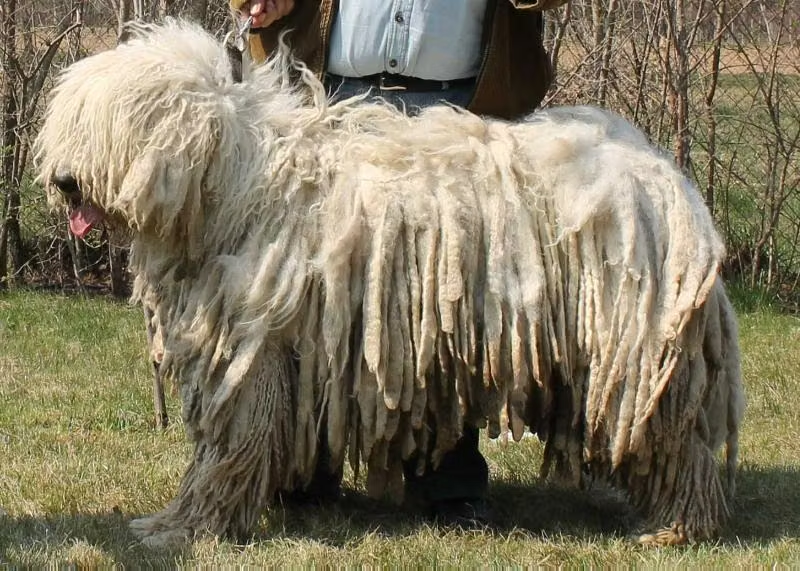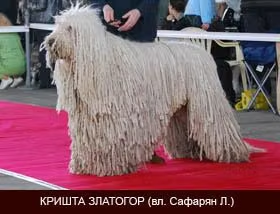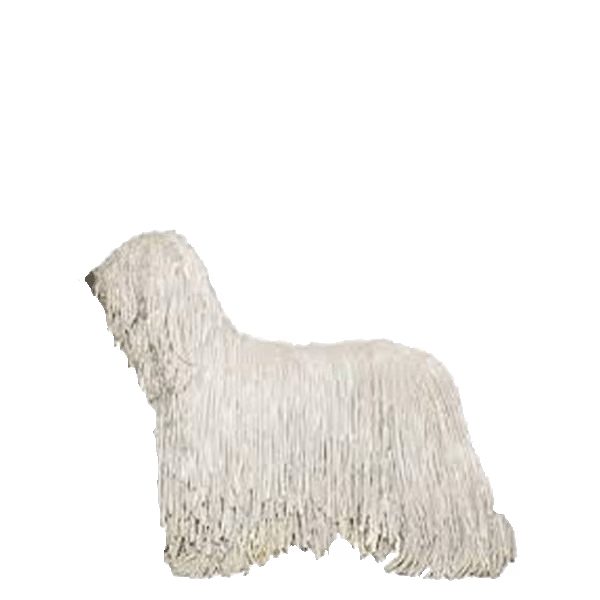
The Komondor is an independent, courageous Hungarian flock guardian, instantly recognizable by its corded white coat and fierce devotion to its charges.
How the Komondor coat is built, and what that means when you groom it.
Caution: A Komondor coat mats easily.
Fine or long hair tangles at the base of the coat, out of sight, where the mats tighten and pull on the skin. Brushing has to reach right down to the roots in sections, not just skim the surface.
A few of the Komondor profiles members have added to United Pet Club.
A large Hungarian livestock guardian known for its corded white coat and a strong protective instinct toward the animals and people in its care.
The Komondor is a large working dog developed in Hungary to guard sheep and other livestock. Its most distinctive feature is a thick white coat that forms long cords as the dog matures, giving the breed an unusual mop-like look. The cords are functional as well as ornamental: they help insulate the dog against weather and offer some protection against a predator's teeth.
This is an independent breed. For centuries the Komondor worked alone on the open plains, making decisions with no handler nearby. That history shows in its behaviour today. A Komondor watches its territory closely, sizes up situations for itself, and acts when it judges the moment calls for it. The breed is devoted to its family and reserved or wary with strangers.
Males typically stand at least 70 cm at the shoulder and can weigh 45 kg or more, which places the Komondor among the larger breeds. Despite the size, it is agile and capable of quick movement when guarding. It is a serious guardian rather than a casual pet, and the corded coat is a real time commitment.
| Attribute | Detail |
|---|---|
| Origin | Hungary |
| Size | Large |
| Lifespan | 10 to 12 years |
| Group/role | Working dog, livestock guardian |
| Good with | Family and known animals it was raised to protect; cautious with strangers |
The Komondor suits an experienced owner who can give firm, consistent guidance and space. It does best with a job to do or a property to watch, ideally a securely fenced section or a lifestyle block, and it needs early, ongoing socialisation to keep the protective instinct measured. The corded coat is a genuine time commitment. It is not a breed for first-time owners or for apartment living.
An old Hungarian guardian breed tied to nomadic herding peoples and shaped over centuries to protect flocks on the open plains.
The Komondor is a Hungarian breed bound up with the country's long tradition of sheep and cattle herding. It is generally linked to nomadic peoples who settled the Carpathian Basin and brought their flock-guarding dogs with them. On the open grasslands of Hungary, large white dogs guarded sheep against wolves and other predators while shepherds and herding dogs handled the movement of the flock.
Its role set it apart from the herding dogs that worked the same farms. The Komondor was the guardian. Its white coat let it blend with the sheep it protected, and its size and willingness to face predators made it effective. It lived among the animals it watched, often without close human supervision, which reinforced its independent character.
Written Hungarian references to the Komondor run back over several centuries, and shepherds long valued the breed for its working ability rather than its looks. The corded coat was a practical adaptation to weather and to the physical demands of confronting predators.
The Komondor was later recognised by major kennel organisations, including the New Zealand Kennel Club, and kept by enthusiasts, though it stays uncommon. Numbers in its homeland fell sharply during the twentieth century wars, and dedicated breeders rebuilt the population afterward.
A large, powerfully built white dog defined by a dense double coat that forms long cords over the whole body.
The Komondor is a large, muscular dog with a broad head and a sturdy frame built for guarding work. The defining feature is the coat. Puppies are born with soft, fluffy hair that begins to cord as the dog grows, and the cords keep developing and lengthening over the first few years. A mature coat hangs in long, felted cords across the body, legs, and tail, and over the head and ears.
Under the cords the dog is solidly built, with a deep chest and strong legs. The tail reaches to about the level of the hock and curves slightly upward at the tip. The overall impression is one of strength and dignity rather than refinement.
| Trait | Detail |
|---|---|
| Height | Males about 70 cm (27.5 in) and up; females about 65 cm (25.5 in) and up at the shoulder |
| Weight | Males roughly 45 kg (100 lb) and up; females roughly 36 kg (80 lb) and up |
| Coat | Dense double coat that forms long felted cords |
| Colours | White |
| Eyes | Dark, almond shaped |
The Komondor's coat is always white. The cords form from a coarse outer coat and a softer undercoat that mat together into distinct rope-like sections rather than tangling into one mass. Cords on an adult can grow long enough to reach the ground. The coat is never brushed in the usual sense; instead the cords are separated by hand to keep them clean and stop them fusing. A clean white coat is part of the standard, though the cords pick up dirt and need regular attention to stay in good condition. On a New Zealand lifestyle block the cords can pick up mud, grass seed, and burrs on bush walks, so check the coat after time outdoors and allow it to dry fully in the temperate climate.
Devoted, courageous, and territorial, gentle with its own family but naturally suspicious of strangers and quick to guard.
The Komondor is a guardian first. With its own family it is calm, affectionate, and steady, and it forms strong bonds with the people and animals it counts as its charges. With strangers it is reserved and watchful. Bred to make its own judgments about threats, it tends to assess unfamiliar people and dogs carefully before accepting them.
This independence is central to the breed. A Komondor does not wait for instructions when it perceives a threat, and it acts on its own read of the situation. That trait makes it an effective guardian and also means it needs an owner who can set clear boundaries early. Without proper socialisation, the protective instinct can tip into excess. With regular visitors to a rural property, a well-socialised Komondor learns to tell everyday callers from a genuine threat.
With children in its own family the breed is generally gentle and tolerant, though its size means supervision is sensible around small children. With other pets it has been raised alongside, particularly livestock it is meant to protect, it is typically reliable. It is territorial about home and property and may be slow to welcome unfamiliar dogs.
| Trait | Rating |
|---|---|
| Affection (with family) | 4 |
| Energy | 3 |
| Trainability | 2 |
| Vocalness | 3 |
| Shedding | 2 |
Care centres on the labour-intensive corded coat, moderate daily exercise, and a home with enough space and a secure boundary.
The corded coat sets the Komondor apart in grooming. The cords are never brushed. Instead they are separated and maintained by hand to keep them clean and distinct.
The Komondor needs space and is best suited to a house with a secure section or a lifestyle block. Its heavy coat handles cold and damp well, which suits the New Zealand climate, but the coat traps moisture, so keeping it clean and dry matters. A reliable fence is important, both to hold a large territorial dog and, near stock, to manage its interactions with other animals.
A complete diet suited to a large breed, fed in measured meals to support steady growth and avoid excess weight.
The Komondor does well on a complete, balanced diet formulated for large dogs. Because it is a large, slow-maturing breed, controlled growth during puppyhood matters: a large-breed puppy formula and no overfeeding help support healthy joints. Adults should be kept lean, since extra weight strains the joints of a heavy dog.
Exact amounts vary with age, size, and activity. The figures below are general starting points; adjust to the dog's body condition and your vet's advice. Fresh water should always be available, which matters all the more for a heavily coated breed.
| Life stage | Amount per day | Meals |
|---|---|---|
| Puppy (large-breed formula) | Per product guidance for projected adult weight | 3 to 4 |
| Adult | Roughly 4 to 6 cups of quality dry food, adjusted to body condition | 2 |
| Senior | Adjusted down for lower activity, often a senior formula | 2 |
Keep treats to a small share of daily calories to prevent weight gain in a breed already prone to joint strain. Most Komondors on a complete commercial diet need no supplements, though a vet may suggest joint support for a large working dog. Introduce any diet change gradually over about a week to avoid an upset stomach.
Generally hardy with a lifespan of about 10 to 12 years; the main concerns are hip dysplasia and conditions common to large, deep-chested dogs.
The Komondor is generally a robust working breed and typically lives about 10 to 12 years. As with most large breeds, the main concerns involve the joints and, because of the deep chest, the risk of bloat. Responsible breeders screen breeding stock, particularly for hip problems, and moisture trapped in the cords can cause skin trouble if the coat is not kept dry.
| Condition | Signs | Note |
|---|---|---|
| Hip dysplasia | Stiffness, limping, difficulty rising | Common in large breeds; ask breeders about hip screening |
| Bloat (gastric dilatation-volvulus) | Swollen abdomen, retching without vomiting, restlessness | A medical emergency in deep-chested dogs; seek immediate care |
| Skin and ear issues | Odour, irritation, scratching | Linked to moisture trapped in the corded coat if not kept dry and clean |
Intelligent but independent, so training depends on early socialisation, consistency, and earning the dog's respect rather than drilling.
The Komondor is intelligent and capable, but it was bred to think and act on its own, which makes it less inclined to follow a command simply because it is asked. Training takes patience and consistency. The breed responds best to an owner it respects, and it can turn stubborn or dismissive of repetitive drilling. Early and continued socialisation is the single most important part of raising a Komondor, because it shapes how the dog reads strangers and new situations for the rest of its life.
Start training and socialisation in puppyhood, expose the dog to a wide range of people, places, and animals, and keep expectations realistic. A well-raised Komondor is a steady, discerning guardian, but it will never be an eager, obedience-trial performer.
A slow-maturing large breed; responsible breeding depends on health screening, mature breeding stock, and careful raising of the litter.
The Komondor is a large, slow-maturing breed, and responsible breeding reflects that. Breeding dogs should be physically and mentally mature, health screened (particularly for hip dysplasia), and of sound guardian temperament before they are bred. As with other large breeds, females are usually allowed to reach full maturity before a first litter.
Gestation runs about 63 days. Litter sizes for large breeds vary, and the dam typically raises the puppies with the breeder's support. Komondor puppies are born with soft, fluffy coats that have not yet corded, and the cords develop gradually over the first years of life. Early handling and socialisation of the litter matter for a breed whose adult temperament depends so heavily on early experience.
Because the Komondor is uncommon in New Zealand, prospective owners often join a waiting list with a dedicated breeder. Anyone considering breeding should work within a recognised breed program and put health, temperament, and the welfare of the dam and litter first.
| Metric | Value |
|---|---|
| Gestation | About 63 days |
| Sexual maturity | Reached during the first year, but breeding is delayed until full maturity |
| Coat at birth | Soft and fluffy; cords form later |
| Key health screening | Hip evaluation and overall soundness of breeding stock |
| Availability | Uncommon breed; expect waiting lists with reputable breeders |
Alongside council registration, a free United Pet Club record keeps a live phone number behind your Komondor and its chip.
The National Dog Database has required chipping of newly registered dogs since 2006, and council registration sits alongside that rather than replacing a proper contact record. Holding one with United Pet Club is free for your Komondor's whole life. Registering your dog takes a few minutes, with nothing to renew afterwards.
A scanned chip is only ever as useful as its record. Pop your Komondor's fifteen digit number into a free United Pet Club account and the record does the rest: free updates after every move, every brand accepted, searchable day and night. Microchip registration first, account alongside.
Setting up a free United Pet Club account, adding your Komondor's details and a photo, and saving is all it takes. The record stays free for the dog's whole life, chip or no chip.
Just add the fifteen digit number to your free account along with your current address and phone. Under the lifetime plan there is nothing to pay for the registration or any later update.
Dogs registered for the first time since 2006 need one under the National Dog Database rules, working farm dogs aside. The council record and your United Pet Club profile do different jobs, and the second one is free.
Nothing. The free lifetime plan carries the profile, the chip record, and every update, and no renewal notice ever arrives.
Common questions about Komondor size, temperament, grooming difficulty, lifespan, suitability, and availability.
The Komondor is a large breed. Males generally stand at least 70 cm at the shoulder and can weigh 45 kg or more, while females are somewhat smaller. Under the heavy coat it is a powerfully built dog.
It is devoted and affectionate with its own family, and independent, courageous, and territorial by nature. It is reserved and watchful with strangers and was bred to guard, so it assesses unfamiliar people and animals carefully.
The coat is the main challenge. The cords are maintained by hand rather than brushed and need ongoing attention, and the dog needs space, secure fencing, and committed socialisation. It suits experienced owners, ideally on a section or lifestyle block.
A Komondor typically lives about 10 to 12 years, which is a reasonable lifespan for a dog of its size.
It can be a steady, gentle companion within its own family, including with children it was raised with, though its size warrants supervision around small children. It needs an experienced owner who can manage its protective, independent nature.
The corded coat does not shed in the usual way, so loose hair is limited once the coat has corded. The trade-off is the considerable time needed to keep the cords clean, separated, and fully dry.
No. The Komondor is an uncommon breed, and prospective owners often wait for a litter from a dedicated breeder who screens for health and temperament.