

Keeshond
The Keeshond is a friendly, fluffy Dutch spitz known for its 'spectacled' eyes, alert watchfulness, and affectionate devotion to family.
- Size
- Medium
- Lifespan
- 12–15 years
- Origin
- Netherlands
- Temperament
- Friendly
- Standard colors
- Black, Grey, Silver and Cream
Characteristics
Coat and grooming
How the Keeshond coat is built, and what that means when you groom it.
- Coat layers
- Double coat
- Coat texture
- Plush
- Coat length
- Long
- Shedding
- Seasonal shedding
Grooming guidance
Critical: A Keeshond should not be shaved.
The undercoat keeps heat out as well as in, and the outer coat shields the skin from sun and insect bites. Clipping the whole coat off removes both. It often grows back patchy, soft or a different colour, and in some animals the guard hairs never return properly. Brush the undercoat out instead of cutting it off.
Caution: A Keeshond coat mats easily.
Fine or long hair tangles at the base of the coat, out of sight, where the mats tighten and pull on the skin. Brushing has to reach right down to the roots in sections, not just skim the surface.
Information: A Keeshond drops its undercoat in heavy bursts.
The undercoat comes out in heavy bursts over a few weeks. An undercoat rake, or a bath followed by a proper blow-dry, clears it far faster than daily brushing. Clipping the coat down is not a shortcut for this.
Keeshond colors and patterns
What each club's breed standard says about every Keeshond color and pattern. Point at a ruling to see the club's own wording.
Breed standards describe the Keeshond in Black, Grey, Silver and Cream. Standard patterns: Sable and Agouti.
| Color or pattern | FCI | AKC | UKC | KC | KUSA |
|---|---|---|---|---|---|
| Black | Standard (“a silver-grey with black hair-tips”) | Standard (“Black & Silver”) | Standard (“a mixture of gray, black and cream”) | Standard (“A mixture of grey and black”) | Standard (“a silver-grey with black hair-tips”) |
| Grey | Standard (“Grey-shaded”) | Standard (“Gray & Black”) | Standard (“a mixture of gray, black and cream”) | Standard (“All shades of grey acceptable”) | Standard (“Grey-shaded”) |
| Silver | Standard (“Grey-shaded is a silver-grey with black hair-tips”) | Standard (“Silver & Black”) | Standard (“a mixture of gray, black and cream, which may vary from light to dark”) | Standard (“Silver Grey”) | Standard (“Grey-shaded is a silver-grey with black hair-tips”) |
| Cream | Not recognised | Standard (“Gray Cream & Black”) | Standard (“a mixture of gray, black and cream”) | Standard (“Undercoat very pale grey or cream”) | Not recognised |
| White | Disqualifying (“Definite white markings or spots”) | Fault (“White”) | Fault (“Pronounced white markings on the legs and feet”) | Not recognised | Disqualifying (“Definite white markings or spots”) |
| Albino | Not recognised | Fault | Disqualifying (“Albinism”) | Not recognised | Not recognised |
| Brown | Not recognised | Fault (“never containing tan, brown, or orange tones”) | Fault | Not recognised | Not recognised |
| Orange | Not recognised | Fault (“never containing tan, brown, or orange tones”) | Fault | Not recognised | Not recognised |
| Fawn | Not recognised | Fault (“Tawny”) | Fault (“never tawny”) | Not recognised (“not tawny”) | Not recognised |
| Patterns | |||||
| Sable | Standard (“a silver-grey with black hair-tips”) | Standard (“The hair of the outer coat is black tipped”) | Standard (“The length of black tips on the outer hair coat produces the color shadings”) | Standard (“body hairs black tipped”) | Standard (“a silver-grey with black hair-tips”) |
| Agouti | No ruling | Standard (“Wolfgray & Black”) | No ruling | Not recognised | No ruling |
| Solid | No ruling | Fault (“Entirely black or white or any solid color”) | Fault (“A dog that is entirely black, white, or any solid color”) | Not recognised | No ruling |
%22%3E%3Crect%20x%3D%220%22%20y%3D%220%22%20width%3D%2264%22%20height%3D%2264%22%20fill%3D%22url(%23g)%22%2F%3E%3Cg%20fill%3D%22none%22%20stroke%3D%22%231C1C1C%22%20stroke-width%3D%221%22%20stroke-linecap%3D%22round%22%20stroke-linejoin%3D%22round%22%3E%3Cpath%20d%3D%22M15.7%2014.8l1.9%203.6M26.4%2024.1l1.2%204.1M42.7%2029.5l0.1%203.3M35.9%2025l1.6%203.2M31.3%2028.1l0.7%203.7M15.5%2011.1l1.6%203.6M41.1%2023.8l0.6%203.2M12.1%2020.7l1.2%203M15.4%2011.2l0.8%203.8M42.9%2027.3l0.7%202.9M48.2%2033.2l0.5%204.1M23.1%2024.7l1.4%203.4M51.9%2036.1l0.3%204.3M18.7%2023.9l1.2%203.7M50.4%2027.4l0.5%204.1M18.4%2020.4l0.1%203.1M55.6%2021.4l1.1%203.9M18.6%2024.9l1.7%203.8M8.3%2023.2l1.7%202.9M18.7%2024.2l0.2%203.1M46.4%2022.7l0.6%202.6M14.3%207l0.9%203.5M50.5%2024.9l0.5%203.7M23.2%2024.7l1.2%204.3M10.5%2022.3l1.6%203.4M56.9%2018.2l1.1%202.5M20.8%2021.7l1.1%203.5M10.9%2020.2l0.2%203.9M6.6%2023.3l1%202.4M54.5%2021.7l0.9%203.8M13.3%2021l0.4%203M11.7%2019.5l0.3%204M39%2023.2l0.7%202.5M20.8%2016.7l0%202.6M18.4%2016l0.2%202.6M46.4%2038.2l1.4%203.2M12.9%2022.6l0.6%203.3M13%2020.9l0.3%204.3M35.3%2024.9l1.3%202.3M29.5%2022.1l0.5%202.8M36.6%2023.4l0.2%204.3M20.5%2017.6l0.7%204.1M18.3%2020.6l0.6%203M20.5%2025.8l0.5%203.8M23.5%2040.2l1.1%202.9M22.8%2024.9l1.5%203M25.5%2023.1l0.5%203.3M47.7%2024.7l1.5%203.7M12.9%2018.4l1.9%203.8M29.5%2023.7l0.5%204.1M37.7%2026.5l0%202.9M16.8%2016.4l0.1%203.3M49.8%2028l1.7%203.8M29.4%2025.5l0.5%203.6M9.3%2023l1.3%203.1M47.4%2025.6l0.5%203.5M48.1%2023.8l1.6%203.2M9.9%2018.3l1.3%202.5M12.2%2016.6l0.4%203.2M22%2022.1l1.4%202.7M43.9%2024.7l1.4%203.9M14.3%2020l1.8%203.2M46.3%2040.1l0.3%203.6M14.9%207l0.3%204M17.5%2016.7l1.2%202.4M54.6%2040l1%203.5M13.3%2013.9l1.6%204.2M15.3%2016.5l1.2%202.9M23.8%2038.5l0.2%203.8M18.2%2019l0.6%203M11.2%2023.6l0.7%204.1M33.1%2023.2l0.9%204.3M13.6%2019.9l0.4%204.5M19.7%2023.1l1.9%203.7M50.5%2027.1l0.3%204.1M28.2%2028.5l0.2%203.8M29%2028.4l0.1%204M47.7%2024.5l0.6%202.5M10.7%2017.2l1.4%202.7M25.5%2040.3l0.6%204.1M37.6%2022.8l0.7%204.4M57%2018.6l0.2%203.4M16.9%2022.2l1.7%203.8M43.5%2024.7l1.8%203.4M49.2%2026l1.5%203.6M47.7%2032.3l0.4%203.7M35.4%2030.8l0.5%202.7M47%2026.1l1%203.9M24.3%2028.1l1.5%204.2M50.5%2023.8l1.3%203.4M58.1%2014.1l0.3%202.6M13.9%2018.2l0.7%202.5M8.2%2021l0.7%202.9M41.4%2026.4l0.4%202.7M16.3%2020.4l0.5%204.3M43.4%2025.9l1.2%203.2M32.3%2022.4l0.3%203.9M43.6%2025.9l2.1%203.8M33.5%2026.3l1.5%203M48.3%2030.6l1.4%203.4M44.2%2024.7l0.9%203.2M12.3%2017.7l0.9%203.7M46.2%2032l1.9%203.4M51%2028.3l0.1%203.7M30.4%2023.1l1.1%203.2M52.6%2022.6l0.9%204.3M16.6%2015.4l0.9%203.1M58.4%2012.8l0.3%202.8M42.8%2032.5l1.8%203.2%22%2F%3E%3Cpath%20d%3D%22M16.4%2026.1l0.1%204.3M14%2017.1l1.3%202.8M36.9%2027.2l1.3%202.6M38.6%2025.8l0.4%203.6M57.6%2014.3l0.3%203.9M14.7%208.2l1%204.3M53.4%2023l1.9%203.4M51.5%2030.3l0.8%202.7M56.2%2020l1.9%203.5M15.9%2010l0.2%202.8M15.8%2022.6l1.8%203.9%22%2F%3E%3C%2Fg%3E%3C%2Fg%3E%3Cuse%20href%3D%22%23s%22%20fill%3D%22none%22%20stroke%3D%22%233B2A20%22%20stroke-opacity%3D%220.6%22%20stroke-width%3D%221%22%20stroke-linejoin%3D%22round%22%2F%3E%3Cellipse%20cx%3D%223.2%22%20cy%3D%2221.7%22%20rx%3D%221.3%22%20ry%3D%221.2%22%20fill%3D%22%231C1C1C%22%2F%3E%3Ccircle%20cx%3D%2210.8%22%20cy%3D%2219.3%22%20r%3D%221.1%22%20fill%3D%22%231C1C1C%22%2F%3E%3C%2Fsvg%3E)
%22%3E%3Cg%20fill%3D%22none%22%20stroke%3D%22%231C1C1C%22%20stroke-width%3D%221.25%22%20stroke-linecap%3D%22round%22%20stroke-linejoin%3D%22round%22%3E%3Cpath%20d%3D%22M39.9%2035.9l0.9%201.3M51.6%2041l-0.1%202M47%2036.3l-0.6%201.8M11.1%2039.9l-0.4%202M16.4%2033.9l1.1%201.6M28.7%2039.7l0.6%201.1M39.7%2035.8l0.1%201.7M27.3%2023.3l0.7%201.4M30.4%2028.4l-0.5%202.1M21%2031.7l0.7%201.9M22.1%2024.7l0.3%201.7M46.9%2029.7l1.1%201.5M50%2032.3l0.3%201.4M14.5%2049.4l0.6%202.1M48.7%2043.6l0.8%201.3M16.6%2043.5l0.8%201M51.6%2033.2l0.4%201.1M52.6%2028.7l0.5%201.6M18.9%2030.8l0.8%201.1M14.5%2049.3l1.1%201.6M15.2%2031.3l0.2%201.4M52.6%2043.2l0.4%201.3M36.9%2030.3l1%201.6M34.9%2024.1l-0.6%201.9M34%2023.1l-0.1%202.1M14.8%2037l0%201.4M29.2%2040.8l0.5%201.3M57.3%2036.7l-0.2%201.5M41.7%2034.9l0.2%201.4M12.4%2021.6l-0.4%201.4M38.9%2044.8l0.6%201.8M9.9%2029.5l0.1%201.5M21.8%2041.6l1.1%201.8M50.7%2031.8l0.9%201.5M43.3%2046.4l0.4%201.3M50%2029.5l0.6%201.9M29.8%2046.8l-0.1%202.1M30.2%2026.1l0.4%202.1M26.6%2036.1l1%201.9M44.8%2043l-0.7%202M13.5%2043.1l0.3%201.6M50.5%2038.3l-0.3%201.9M18.7%2028.5l-0.4%201.4M44.4%2042.4l0.5%201.8M18.3%2046.2l-0.1%201.8M19.7%2029.2l0.1%201.9M51.5%2040.1l0.8%201.5M27.3%2041.9l-0.5%201.8M52.6%2028.1l0.2%202M24.8%2046.2l-0.3%202.1M26.8%2035.9l1.2%201.6M43%2040.6l0.1%202.1M16%2026.6l-0.5%201.3M56.4%2033.4l0.8%202M44%2037.9l0.2%201.5M27.9%2043.3l0.3%201.5M5.3%2033.9l-0.4%201.3M55.7%2042.1l0.6%201.3M12.5%2044.3l1%201.3M27.2%2033.3l0.4%201.8M19.1%2044l0.4%201.6M36.7%2030l0.3%202M30%2028.4l0.4%201.6M49.3%2043.3l0.8%201.2M28.2%2031.6l0.1%201.2M44.5%2032.1l0.5%202.1M49%2028.6l0.7%202M12.1%2037.8l-0.7%202.1M33%2029.6l0.3%201.5M26.5%2031.6l0.5%201.5M14.5%2028.7l0.1%202M10.2%2026.3l-0.5%201.4M37.8%2025.4l0.6%201.7M44%2026.6l-0.2%202.1M45.2%2047l0.6%201.3M30.1%2024.4l1.3%201.6M16.1%2028.7l-0.1%201.3M44%2027.6l0.3%201.7M47.8%2030.8l0.9%201.5M16.9%2034.5l-0.1%202.1M34.7%2031.2l0.1%201.2M35.3%2037.2l0.5%201.9M52.5%2028.3l-0.3%201.2M17.2%2033.8l0.7%201.9M7.9%2041.5l1.3%201.7M50.7%2037.2l1.2%201.6M56%2038.4l1%201.7M9%2025.7l0.6%201.5M32.2%2040.6l0.2%201.7M6.7%2038.8l0.2%201.9M19.4%2040.4l0.3%201.5M50.1%2026.3l1.1%201.6M29.5%2033.2l0.3%201.6M18.2%2033.8l-0.3%201.7M27.8%2030.6l-0.3%201.6M57.3%2035.9l1.1%201.5M44.2%2042.5l0.1%202M16.9%2037.9l0%201.5M48.3%2025.4l1.3%201.7M39.9%2047.5l-0.4%201.2M17.9%2039l0.4%202.1M12.8%2045.3l0%201.9M20.2%2046.9l-0.4%202M36.1%2038.8l0.5%201.7M36.9%2049.1l0.1%201.6M27.7%2022.3l-0.1%201.3M52.2%2045.7l-0.7%202M39%2041.4l1%201.3M28.2%2031.1l0.5%202%22%2F%3E%3Cpath%20d%3D%22M23%2047.4l-0.3%201.2M12.9%2027.9l-0.2%202M13.6%2035.2l0.5%201.3M22%2043.6l0.7%201.4M8.5%2041.2l0.9%201.7M21.1%2030.4l0.1%201.3M41.5%2042.9l1.1%201.6M5.8%2040.1l0.1%201.4M24.5%2030.9l0.3%201.2M15.8%2048.2l0.2%201.7M32.9%2038l-0.1%201.6M46.4%2035.3l-0.2%201.6M43.7%2026.6l0.4%201.3M39.9%2040.8l0.3%201.9M17%2040.5l-0.5%202.1M26.5%2034.7l0.2%201.4M16.5%2026l-0.6%201.9M18.5%2039.1l0%201.4M27.3%2047.2l-0.4%201.2M14.4%2043.7l0.9%201.2M31.8%2045.8l0.7%201.8M54.8%2035.9l0.9%201.1M9.9%2035.1l0.7%201.2M27.2%2032.8l-0.3%201.3M6.3%2035.3l-0.2%201.3M43.1%2038.9l0.6%201.1M48.7%2035.3l1.1%201.8M54.7%2031.1l0.7%201.2M33.5%2025l0%201.2M39.3%2040.9l1.1%201.7M15%2043.6l0.2%201.3M14.3%2022.9l0.9%201.5M9.3%2036.7l-0.2%202.1M15.6%2041.9l1.1%201.8M52%2032.8l0.2%201.8M21.1%2029.2l0.1%202.1M32.8%2029l0.9%201.8M36.3%2033l0.2%201.7M28.1%2022.4l0%201.9M47.9%2032.4l1.2%201.8M47.2%2034.1l1.1%201.4%22%2F%3E%3C%2Fg%3E%3Crect%20x%3D%220%22%20y%3D%220%22%20width%3D%2264%22%20height%3D%2264%22%20fill%3D%22url(%23g)%22%2F%3E%3C%2Fg%3E%3Cuse%20href%3D%22%23s%22%20fill%3D%22none%22%20stroke%3D%22%233B2A20%22%20stroke-opacity%3D%220.6%22%20stroke-width%3D%221%22%20stroke-linejoin%3D%22round%22%2F%3E%3Ccircle%20cx%3D%224.4%22%20cy%3D%2234.2%22%20r%3D%221%22%20fill%3D%22%23E8A0B4%22%2F%3E%3Ccircle%20cx%3D%2210.5%22%20cy%3D%2230%22%20r%3D%221.2%22%20fill%3D%22%231C1C1C%22%2F%3E%3C%2Fsvg%3E)

| Color or pattern | FCI | AKC | UKC | KC | KUSA |
|---|---|---|---|---|---|
| Dark brown | Standard (“dark”) | Standard (“dark brown in color”) | Standard (“dark brown”) | Standard (“Dark”) | Standard (“dark”) |
| Light brown | Fault (“Too big and too light eyes”) | Fault (“eyes light of color”) | Fault (“Light-colored eyes”) | No ruling | Fault (“Too big and too light eyes”) |
What the rulings mean
- Standard
- Described by the club's breed standard.
- Fault
- Named by the club's breed standard as a fault: the animal can be shown but is penalised.
- Disqualifying
- The club's breed standard disqualifies an animal of this colour or pattern.
- Not recognised
- The club does not accept this colour or pattern for the breed.
Color changes
How a Keeshond's colors can change over its life.
Blackchanges toRust
Coat · With body condition · can change back
Blackchanges toGrey
Coat · Progressive
Blackchanges toBrown
Coat · In the sun · can change back
Whitechanges toRoan
Coat · With age · from 2 weeks
Blackchanges toSnow nose
Nose · With the season · can change back
Blackchanges toPink
Nose · With the season · can change back
%22%3E%3Cg%20fill%3D%22none%22%20stroke%3D%22%23F5F5F0%22%20stroke-width%3D%221.15%22%20stroke-linecap%3D%22round%22%20stroke-linejoin%3D%22round%22%3E%3Cpath%20d%3D%22M28.6%2025h.1M51.3%2028.8h.1M34.7%2024.3h.1M34.2%2041.6h.1M51%2044.2h.1M55.9%2024.7h.1M27.5%2026.3h.1M18.5%2028.6h.1M25.2%2028.9h.1M24.2%2019.3h.1M20.6%2017.6h.1M34.1%2030.6h.1M57.3%2023.3h.1M23.5%2030.7h.1M26.5%2023.1h.1M40%2031.5h.1M51.7%2038.6h.1M20.2%2022.1h.1M40.4%2037.8h.1M35%2043.1h.1M20.6%2031.7h.1M27.8%2031.9h.1M17.2%2021.1h.1M38.1%2037.7h.1M25.3%2040.5h.1M32%2029.3h.1M41.6%2039.5h.1M23.6%2024h.1M26.4%2018.6h.1M30.3%2031.9h.1M31.2%2035.2h.1M36.5%2043.7h.1M35.2%2026.3h.1M55.6%2019.1h.1M22.4%2036.8h.1M39.2%2020h.1M49.5%2039.1h.1M33.6%2033.5h.1M36.4%2032.4h.1M56.3%2042.4h.1M54.8%2031.2h.1M36.9%2023.2h.1M52.7%2019.1h.1M21.5%2033.8h.1M48.6%2028h.1M36.6%2017.5h.1M45.6%2031.3h.1M37.9%2030.5h.1M17%2031.8h.1M21.1%2043.1h.1M55.7%2021.1h.1M30.8%2041.9h.1M57.4%2038.4h.1M54.8%2026.9h.1M29.1%2017.5h.1M24.3%2037.7h.1M26%2032h.1M39.3%2022.8h.1M53.5%2029h.1M53.3%2023.3h.1M20%2038.4h.1M28.3%2044.7h.1M28.6%2039.8h.1M51.9%2041.1h.1M52.3%2033.7h.1M19.6%2042.2h.1M19%2033h.1M47.8%2021.7h.1M45.7%2024.8h.1M24.6%2035.5h.1M29.8%2036.8h.1M50.7%2032h.1M29.5%2043.5h.1M28.2%2041.5h.1M47.4%2034.8h.1M25.4%2033.7h.1M50.2%2041.2h.1M27.7%2029.5h.1M21.5%2024.8h.1M55.5%2017.5h.1M41.2%2044.3h.1M39.2%2018.4h.1M41.1%2042.5h.1M54.7%2035.3h.1M42.8%2034.5h.1M30.1%2023h.1M42.6%2025.1h.1M32.9%2024.4h.1M42.4%2032.4h.1M49.7%2022.2h.1M49.1%2043.1h.1M38%2035.2h.1M47.7%2043.8h.1M43.1%2022.4h.1M22.4%2040.4h.1M44.4%2019.8h.1M53.3%2040.1h.1M20.7%2029.3h.1M55.6%2043.9h.1M17.6%2039.2h.1M41.7%2028.9h.1M44.1%2036.3h.1M24.3%2043.6h.1M26.4%2038.1h.1M30.3%2029.2h.1M31.5%2030.8h.1M32.1%2023h.1M18.3%2040.9h.1M48%2033.4h.1M36.4%2038.7h.1M31.9%2020.8h.1M32.6%2026.2h.1M22%2031.2h.1M53.4%2021.7h.1M41.9%2017.7h.1M53.3%2037.3h.1M47.7%2040.3h.1M54.4%2033.7h.1M33.6%2037.5h.1M25.3%2017.2h.1M37.6%2019.7h.1M31.6%2019h.1M29.2%2019.6h.1M50.7%2027.3h.1M22%2022.1h.1M31%2037.8h.1M56.5%2026.6h.1M34.7%2039.5h.1M56.5%2040.8h.1M47.6%2038h.1M48.6%2026.1h.1M49.7%2034.2h.1M45.4%2027.4h.1M22.6%2038.9h.1M56.5%2035.3h.1M35.1%2021h.1M41.9%2020.1h.1M37.6%2040h.1M32.6%2044.4h.1M37.9%2025.2h.1M26.6%2043h.1M18.9%2036.7h.1M47.2%2028.9h.1M30.5%2026.2h.1M17.4%2027.3h.1M47.1%2017.2h.1M22.3%2044.3h.1M32.5%2042.4h.1M23.6%2025.7h.1M31.4%2024.9h.1%22%2F%3E%3Cpath%20d%3D%22M26%2020.9h.1M41.2%2023.8h.1M39.9%2026.4h.1M28.5%2033.4h.1M42.8%2043.8h.1M17.6%2034.3h.1M34%2017.1h.1M31.2%2017.2h.1M46.5%2036.1h.1M25.1%2022.1h.1M50.3%2023.7h.1M20.2%2026.6h.1M20.8%2020.4h.1M50.9%2017.3h.1M49.5%2020.2h.1M52.9%2044.1h.1M23.9%2017.8h.1M43.2%2028.1h.1M57.6%2030h.1M52%2025.6h.1M19.2%2019.1h.1M19.5%2024.4h.1M32.8%2040.1h.1M36.1%2027.7h.1M39.6%2029.5h.1M38.4%2041.5h.1M47.9%2019.4h.1M49.1%2031.7h.1M55.9%2036.9h.1M29.2%2027.2h.1M46%2043.5h.1M44.6%2028.8h.1M47.5%2031.5h.1M22.8%2020h.1M27.6%2017.1h.1M43.1%2018.6h.1M54.3%2020h.1M57.2%2033.8h.1M44.5%2043.8h.1M27.1%2035.5h.1M45.3%2041.8h.1M56.7%2028.8h.1M36.7%2021.4h.1M43.3%2042.3h.1M17.3%2022.9h.1M32.7%2035.5h.1M30.5%2039.8h.1M29.1%2021.2h.1M34.5%2018.8h.1M25.8%2027h.1%22%2F%3E%3C%2Fg%3E%3Cpath%20d%3D%22M56.3%2038.4l0%201.2M40%2027.2l-0.3%201.3M32.6%2043.6l-0.4%201.5M29%2023.3l0.8%201.5M55.1%2044l0.4%201.1M47.5%2022.5l-0.2%201.6M42.9%2038.6l0.7%201.2M35.2%2041.8l-0.5%201.7M26.9%2040l-0.1%201.2M41%2042.8l-0.1%201.6M18.4%2021.2l0.7%201.3M49.4%2019.3l-0.5%201.4M50.1%2041.7l0%201.8M28.2%2041.8l-0.6%201.2M55.5%2027.1l0.2%201.2M44.7%2019.3l0.5%201.7M48.6%2020.5l-0.8%201.4M43.7%2039.6l0.3%201.1M22.1%2033.8l-0.6%201.6M50.1%2038.1l-0.5%201.3M51.8%2044.1l-0.1%201.8M39%2017.5l0%201.4M30.2%2026.7l0.2%201.4M25.8%2031.2l0.2%201.6M29.6%2043.5l0.1%201M43.7%2018.3l0.1%201.5M29.6%2018.2l0.3%201.6M24.4%2017.6l0.3%201.1M22%2028.2l-0.6%201.6M25.9%2043.3l-0.3%201.4M22.2%2024.3l0.3%201.3M47.3%2029.2l-0.2%201.4M21.8%2033.2l0.5%200.9M32.9%2037l0.4%201M40%2029.9l0.8%201.4M17.4%2038.3l0.2%201.3M31%2039.2l0%201.2M37.3%2033.7l0.3%201.5M48.1%2040.5l0%201.6M33.9%2031.2l0.1%201.2M29.8%2035.2l-0.4%201M25.1%2037.3l-0.2%201.5M30.2%2039.8l0.5%201M44.6%2034.8l0.4%200.9M55.3%2034.2l0%201.7M50.6%2017.9l0.4%201M30.2%2034.9l-0.4%201.4M19.5%2035.7l-0.5%201.7M40.7%2028.7l0.8%201.4M23.3%2029l-0.4%201.4M17%2040.5l-0.2%201M48.4%2023.2l-0.3%201M37.3%2025.1l-0.4%201.3M23%2021.4l-0.4%201.3M20.4%2017.2l-0.1%201.3M42.3%2020.4l0.6%201.4M41%2031.8l0.6%201.2M45.4%2034.3l-0.1%201.2M32.5%2018l0%201.3M46.2%2021.6l0.1%201.4M30.5%2022.3l0.5%201.1M58%2044.6l0.3%201.5M57.1%2033.9l0.8%201.4M18.3%2042.6l0.3%201M40.5%2035.1l-0.6%201.4M38.8%2044.3l-0.3%201.1%22%20fill%3D%22none%22%20stroke%3D%22%23F5F5F0%22%20stroke-width%3D%220.8%22%20stroke-linecap%3D%22round%22%20stroke-linejoin%3D%22round%22%2F%3E%3C%2Fg%3E%3Cuse%20href%3D%22%23s%22%20fill%3D%22none%22%20stroke%3D%22%233B2A20%22%20stroke-opacity%3D%220.6%22%20stroke-width%3D%221%22%20stroke-linejoin%3D%22round%22%2F%3E%3Crect%20x%3D%2220%22%20y%3D%2258%22%20width%3D%223.6%22%20height%3D%222%22%20fill%3D%22%234A4038%22%2F%3E%3Crect%20x%3D%2226%22%20y%3D%2258%22%20width%3D%223.6%22%20height%3D%222%22%20fill%3D%22%234A4038%22%2F%3E%3Crect%20x%3D%2244%22%20y%3D%2258%22%20width%3D%223.6%22%20height%3D%222%22%20fill%3D%22%234A4038%22%2F%3E%3Crect%20x%3D%2250%22%20y%3D%2258%22%20width%3D%223.6%22%20height%3D%222%22%20fill%3D%22%234A4038%22%2F%3E%3Ccircle%20cx%3D%229.5%22%20cy%3D%2211.5%22%20r%3D%221.1%22%20fill%3D%22%231C1C1C%22%2F%3E%3C%2Fsvg%3E)
%22%3E%3Crect%20x%3D%2217%22%20y%3D%2210%22%20width%3D%2230%22%20height%3D%2242%22%20fill%3D%22url(%23g)%22%2F%3E%3C%2Fg%3E%3Cuse%20href%3D%22%23s%22%20fill%3D%22none%22%20stroke%3D%22%233B2A20%22%20stroke-opacity%3D%220.6%22%20stroke-width%3D%221%22%20stroke-linejoin%3D%22round%22%2F%3E%3Cpath%20d%3D%22M12.5%2037Q13%2032%2018.5%2032Q23.5%2032.5%2023.5%2036.5Q20.5%2035.5%2018.8%2037Q17.4%2038.6%2018%2041.5Q13.6%2040.4%2012.5%2037Z%22%20fill%3D%22%231C1C1C%22%20fill-opacity%3D%220.8%22%20stroke%3D%22%23F5F5F0%22%20stroke-opacity%3D%220.4%22%20stroke-width%3D%220.9%22%2F%3E%3Cpath%20d%3D%22M51.5%2037Q51%2032%2045.5%2032Q40.5%2032.5%2040.5%2036.5Q43.5%2035.5%2045.2%2037Q46.6%2038.6%2046%2041.5Q50.4%2040.4%2051.5%2037Z%22%20fill%3D%22%231C1C1C%22%20fill-opacity%3D%220.8%22%20stroke%3D%22%23F5F5F0%22%20stroke-opacity%3D%220.4%22%20stroke-width%3D%220.9%22%2F%3E%3Cpath%20d%3D%22M32%2040V50%22%20fill%3D%22none%22%20stroke%3D%22%231C1C1C%22%20stroke-width%3D%221.3%22%20stroke-opacity%3D%220.5%22%20stroke-linecap%3D%22round%22%20stroke-linejoin%3D%22round%22%2F%3E%3Cellipse%20cx%3D%2232%22%20cy%3D%2221%22%20rx%3D%2212%22%20ry%3D%223.5%22%20fill%3D%22%23F5F5F0%22%20fill-opacity%3D%220.18%22%2F%3E%3C%2Fsvg%3E)
Sources
Each ruling comes from the club's published breed standard or color list.
Meet some of our Keeshond
A few of the Keeshond profiles members have added to United Pet Club.
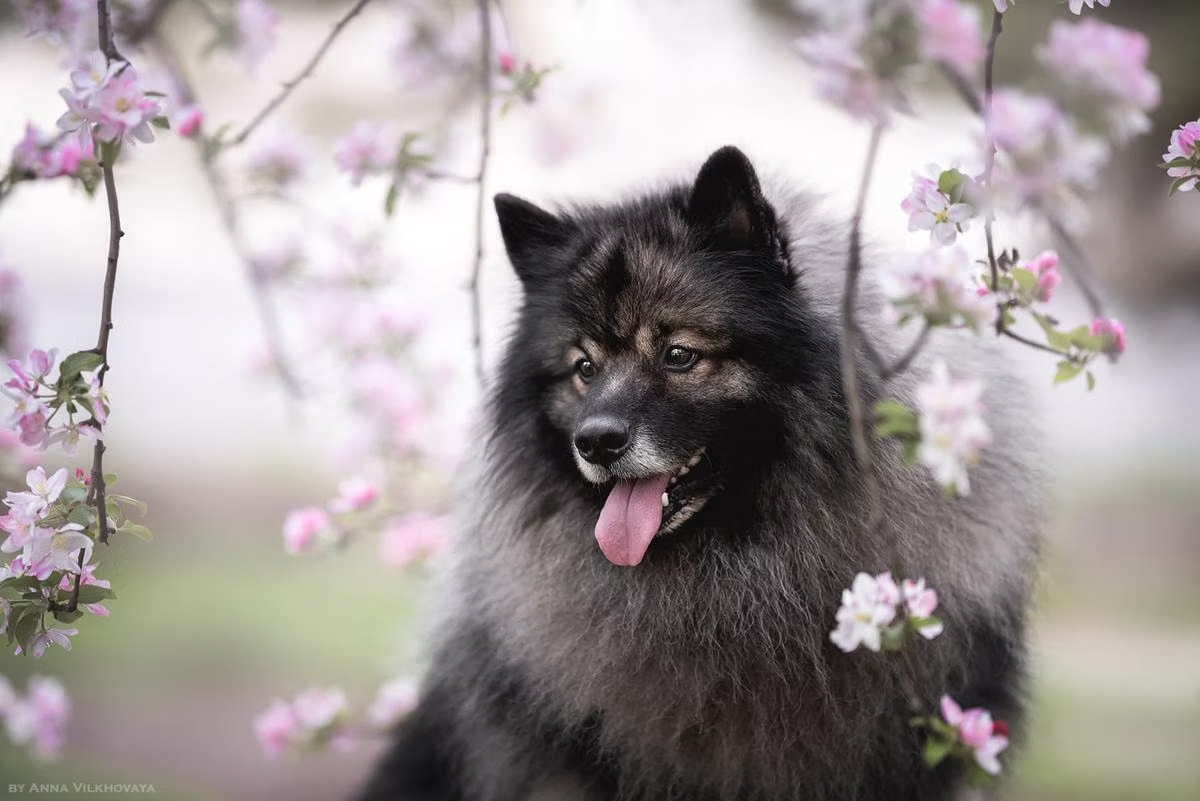
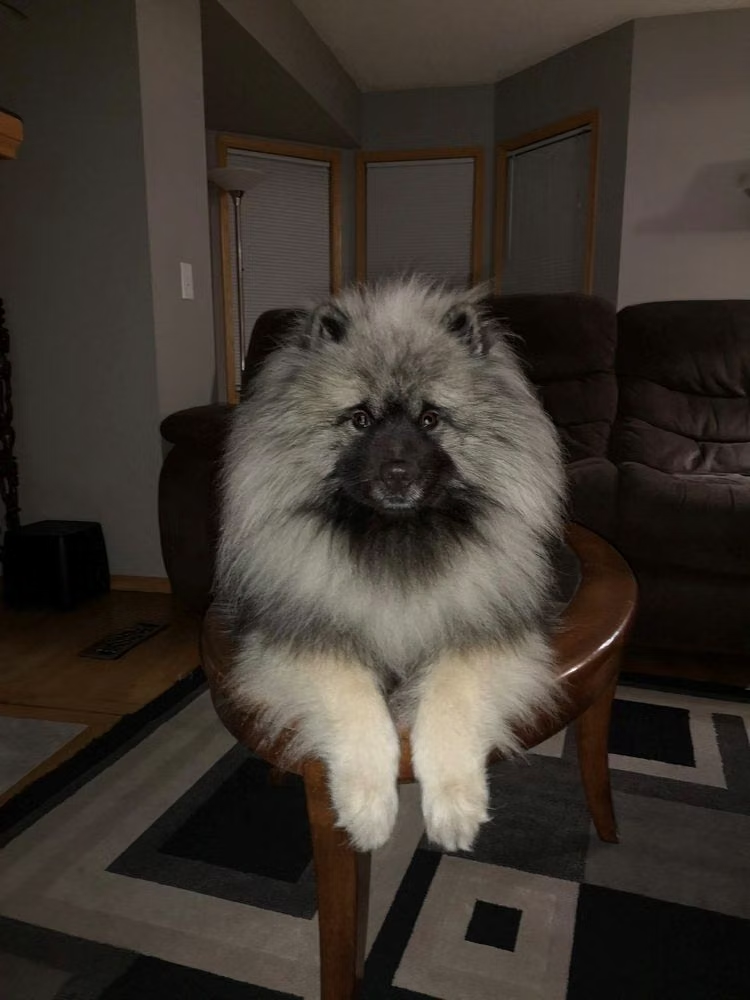
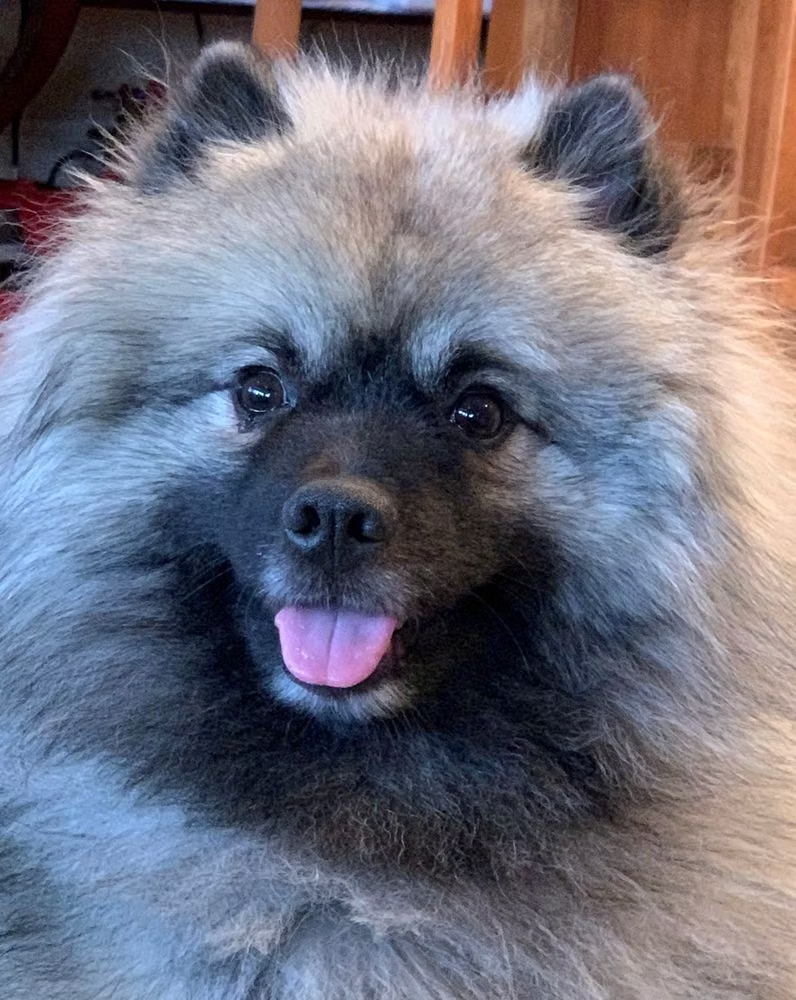

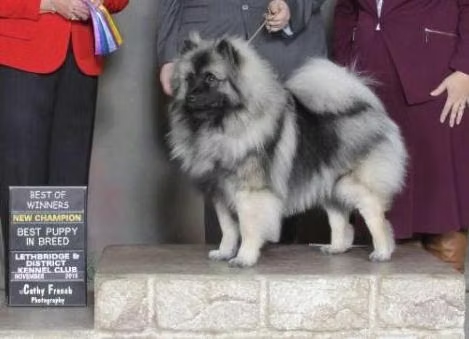

About the Keeshond
The Keeshond is a medium Dutch spitz with a plush grey, black and cream coat, spectacled eyes and a strongly people-focused temperament suited to close family life.
The Keeshond is a medium-sized spitz that traces back to the Netherlands. It carries the wedge head, pricked ears and tightly curled tail common to northern spitz breeds, set under a thick grey, black and cream double coat. Owners and judges alike recognise the breed by the markings around its eyes, known as spectacles: a mix of shading and fine pencilling that gives the face a bright, attentive look.
The breed was never bred to hunt or work stock. It was kept as a companion and an alarm dog, which is why it stays close to its people, reads the mood of a household well and lets everyone know when someone is at the gate. Adults typically weigh 16 to 20 kilograms and stand 43 to 46 centimetres at the shoulder, a size that suits most New Zealand sections and townhouses alike.
Temperament matches the friendly face. Keeshonden are affectionate, sharp and watchful, with a vocal streak that fits an alarm dog but needs shaping so it does not become a nuisance to the neighbours. Rather than fixing on one favourite person, the breed tends to attach to the whole household.
Who it suits
This is a dog for people who want a close companion indoors and can offer daily time and attention, not one left to entertain itself on the section while everyone is out. It gets on with children and other pets when introduced properly while young. The dense coat needs regular brushing, and the alert, chatty side means a Keeshond suits a section with some space between neighbours more than a tightly packed inner-city block. Anyone away long hours, or often travelling for work, will find this breed struggles on its own, since it is prone to real loneliness.
| Attribute | Detail |
|---|---|
| Origin | Netherlands |
| Size | Medium (16 to 20 kg) |
| Lifespan | 12 to 15 years |
| Group / role | Spitz, companion and watchdog |
| Good with | Families, children, other pets when socialised |
History and origin
The Keeshond took shape in the Netherlands as a barge dog and household guard, then became a badge of the Dutch Patriot movement before later finding a following overseas.
The Keeshond sits within the wider family of European spitz breeds that share ancestry with the German Spitz. In the Netherlands it developed as an all-purpose companion and watchdog, working the farms, riverboats and canal barges rather than any flock or quarry. Its task was to raise the alarm, not to hunt, and that history still shows in the breed's alert, talkative nature.
Dutch politics gave the breed its name in the late eighteenth century. During the standoff between the House of Orange and the Patriot faction, the dog became linked with the Patriots as an informal mascot, and the breed name is generally traced to that period. When the Patriot cause collapsed, the dog's popularity fell away with it, and numbers dropped sharply for well over a century.
The breed was rescued from obscurity in the early twentieth century by Dutch fanciers working to fix the type, with support from overseas enthusiasts. Stock went out to Britain and other countries, where it was recognised and shown under the Keeshond name, while parts of continental Europe kept classifying it within the broader spitz grouping.
The Keeshond remains a minority breed in New Zealand today. Because it depends on imported bloodlines to keep the gene pool workable, breeders here deal with the Ministry for Primary Industries' biosecurity rules and import health standards for dogs, plus the quarantine period that comes with them, whenever they bring in new stock. Through the twentieth century and since, the Keeshond has settled into its role as a household companion rather than a working dog, valued for temperament and looks rather than any specialised task.
Appearance and breed standard
Judged against the breed standard, the Keeshond is a compact, square spitz carrying a dense grey, black and cream coat, a spectacled fox face and a tail curled tight over the back.
The Keeshond reads as a compact, square dog standing on a heavy coat rather than a lot of leg. The body is balanced rather than long, the chest reaches down well, and the tail curls tightly over the back, often lying flat against it. The head is wedge-shaped with a clear stop, small triangular ears carried erect, and dark eyes set within the spectacle markings that give the breed its trademark expression. The coat is the standout feature: a harsh, standoff outer coat over a soft, dense undercoat, with a heavy ruff around the neck and feathering down the legs.
| Trait | Standard |
|---|---|
| Height | 43 to 46 cm at the shoulder |
| Weight | 16 to 20 kg |
| Coat | Double coat: harsh standoff outer coat, dense undercoat |
| Colours | Mixture of grey, black and cream |
| Eyes | Dark, medium, almond-shaped with spectacle markings |
Coat and colours
The accepted colouring blends grey, black and cream. Each hair of the outer coat is pale near the skin and tipped with black, producing the shaded, silvered look across the body. The shoulders carry a lighter patch often called the cape, and the legs, feet and tail tip run cream to pale grey. The face darkens toward the muzzle, with fine spectacle lines tracking from the outer corner of each eye back toward the ear. Puppies are usually born darker and lighten as the adult coat comes through, so the final colouring can take the best part of a year to settle.
Temperament and personality
Keeshonden are friendly, alert family dogs that bond with the whole household, get on with children and other pets, and bark readily as instinctive watchdogs.
The Keeshond is a companion breed through and through, and its temperament reflects that history. It is friendly and affectionate, seeking out its people and settling near them rather than off on its own. The breed tends to bond with the whole household instead of fixing on one person, which suits a busy family home. It is also sharp and quick to size up a situation, traits that help with training and back up its natural role as a watchdog.
With strangers the Keeshond is alert and vocal on arrival, but it is not an aggressive breed. Early socialisation helps it settle from alarm barking to calm acceptance once a visitor is welcomed in. It is patient and playful with children, and it generally accepts other dogs and household pets when raised alongside them. The main behavioural point for owners to plan around is noise: this is a talkative breed, and barking can get out of hand if the dog is bored, anxious or left alone too long. Keeshonden are prone to separation distress, so the breed does best with company and daily interaction rather than long stretches home alone.
| Trait | Rating |
|---|---|
| Affection | 5 |
| Energy | 3 |
| Trainability | 4 |
| Vocalness | 4 |
| Shedding | 4 |
Care and grooming
Keeshonden need a weekly brush that steps up during the seasonal coat blow, moderate daily exercise, and a home life close to the family rather than time isolated outside.
The thick double coat is the main job in routine care, though it is more manageable than its bulk suggests, since the harsh outer coat resists matting when it gets regular attention.
Grooming
- Brush thoroughly once or twice a week to lift the undercoat and stop tangles forming behind the ears and along the legs.
- Step brushing up to several times a week during the two heavy coat blows each year, when the undercoat comes away in large amounts.
- Bathe only when needed; the coat sheds dirt well on its own, and over-bathing strips the natural oils out of it.
- Never shave the coat, which guards against both heat and cold; limit trimming to tidying the feet and hocks.
- Check and trim nails, and keep to a regular schedule for ears and teeth.
Exercise
- Give 45 minutes to an hour of activity a day through walks and play.
- Add mental work such as training games or puzzle feeders, since the breed is bright and bores quickly.
- Ease off hard exercise on hot days and make sure shade and water are on hand; New Zealand summers can catch a heavy-coated dog out even without extreme heat.
Environment
The Keeshond is an indoor companion that wants to be with its family, not a dog for the kennel out the back. It suits an apartment or a house with a section equally well, provided it gets daily exercise and company, and it copes with a Kiwi winter far more easily than with a hot summer thanks to that coat. Long stretches alone are the one thing to avoid.
Nutrition and feeding
Feed a Keeshond a complete diet suited to its life stage across two measured daily meals, watching portions closely since the coat easily hides weight gain.
A Keeshond does well on a complete, balanced diet formulated for its life stage. Because the heavy coat can hide weight gain, portions should be measured out rather than left down all day, and body condition checked by feel along the ribs and waist. Puppies need a growth formula split across more frequent meals, while adults are usually fed twice daily. The amounts below are general starting points only; adjust for the individual dog's age, activity and condition, and follow the feeding guide on whichever food is chosen.
| Life stage | Amount per day | Meals |
|---|---|---|
| Puppy (2 to 6 months) | Per growth-formula label, by weight | 3 to 4 |
| Junior (6 to 12 months) | Per label, moving to adult food | 2 to 3 |
| Adult | Roughly 150 to 250 g dry food | 2 |
| Senior | Adjusted down for lower activity | 2 |
Treats and supplements
Keep treats to a small share of the day's calories so they do not unbalance the diet or pack on weight; put part of the daily ration aside for training rewards where possible. Most Keeshonden on a good complete diet need no extra supplements. Talk to a vet before adding anything for joints or coat, since a quality diet usually covers what a healthy dog needs. Keep fresh water down at all times.
Health and common conditions
The Keeshond is generally a hardy breed living 12 to 15 years, though hip dysplasia, patellar luxation, hypothyroidism and some heart and skin conditions turn up more than average.
The Keeshond is on the whole a hardy breed, with a typical lifespan of 12 to 15 years. As with most purebred dogs, a handful of conditions show up more often than average, and several of them can be screened for in breeding stock. Buying from breeders who health-test their dogs, and keeping up with routine veterinary care, cuts the risk and catches problems early.
| Condition | Signs | Note |
|---|---|---|
| Hip dysplasia | Stiffness, limping, reluctance to rise | Screened by hip evaluation in breeding dogs |
| Patellar luxation | Skipping gait, intermittent hind-leg lameness | Ranges from mild to needing surgery |
| Hypothyroidism | Weight gain, lethargy, coat changes | Managed with daily medication |
| Heart conditions | Coughing, tiring easily, reduced stamina | Picked up on veterinary exam and imaging |
| Skin problems | Itching, hair loss, irritation | Often linked to allergies or thyroid function |
Preventive care
- Keep vaccinations and parasite control up to date.
- Book annual checkups, moving to twice yearly once the dog is a senior.
- Hold a healthy weight to protect the joints and heart.
- Brush teeth regularly and arrange dental cleans as advised.
- Choose breeders who provide hip and patella screening results.
Training and socialisation
Keeshonden are quick learners that respond best to reward-based training, with early, consistent work on barking and time alone the two priorities for owners.
The Keeshond is sharp and tuned in to its handler, which makes it one of the more trainable spitz breeds. It responds well to positive, reward-based methods and enjoys the mental engagement that comes with learning something new. Harsh corrections work against this sensitive breed and can leave it anxious or withdrawn. The two areas that need the earliest attention are barking, which the breed does naturally as a watchdog, and coping with time alone, since it is prone to separation distress.
Basics
- Start socialisation in puppyhood, exposing the dog to people, other animals, and the everyday sights and sounds it will meet as an adult.
- Teach the core cues: sit, down, stay and recall, in short, frequent sessions.
- Bring in a quiet cue early to manage barking before it sets in as a habit.
- Build up time alone gradually so the dog learns to settle without its people close by.
- Keep training varied with games and light problem-solving to hold the dog's interest.
Breeding and raising puppies
Keeshond litters typically run three to eight puppies after roughly nine weeks' pregnancy, with health-tested parents and careful early socialisation key to raising sound pups.
Responsible Keeshond breeding starts with health-tested parents that are physically mature and sound in temperament. Breeders usually wait until a dog is past its first year, and screen for the hip and patella issues seen in the breed, before any mating goes ahead. Females come into season roughly twice a year. Once mating succeeds, pregnancy runs about nine weeks, and litters tend to be small to moderate in size.
Because the New Zealand Keeshond population is small, many breeders here rely on imported semen or the occasional imported dog to keep bloodlines healthy, which brings Ministry for Primary Industries biosecurity requirements and import health standards into the picture alongside the usual health testing. Newborn puppies are dark and take on their adult grey, black and cream colouring gradually over the following months. They are weaned from around three to four weeks while still on their mother's milk, and should stay with the litter until at least eight weeks old, which supports normal social development. Early handling and gentle exposure to household life help shape the friendly, confident adult the breed is known for. Anyone weighing up breeding should budget for the time, cost and responsibility of placing puppies in suitable homes, in line with the standards Dogs New Zealand sets for registered breeders.
| Metric | Value |
|---|---|
| Sexual maturity | Around 1 year, breed after physical maturity |
| Seasons per year | About 2 |
| Gestation | Approximately 63 days |
| Litter size | 3 to 8 puppies |
| Weaning | About 3 to 4 weeks |
| Leave for new home | From 8 weeks |
Registering a Keeshond in New Zealand, microchip and all
Alongside council registration, a free United Pet Club record keeps a live phone number behind your Keeshond and its chip.
Keeshond registration and microchip registration in New Zealand
Keeping a Keeshond findable is mostly paperwork: a profile carrying your phone number, a photo, and the dog's details, sitting where a scan can reach it. Registering your dog with United Pet Club sets that up free, and the record never lapses or bills you.
A scanned chip is only ever as useful as its record. Pop your Keeshond's fifteen digit number into a free United Pet Club account and the record does the rest: free updates after every move, every brand accepted, searchable day and night. Microchip registration first, account alongside.
How do I register my Keeshond in New Zealand?
Setting up a free United Pet Club account, adding your Keeshond's details and a photo, and saving is all it takes. The record stays free for the dog's whole life, chip or no chip.
How do I register my Keeshond's microchip?
Just add the fifteen digit number to your free account along with your current address and phone. Under the lifetime plan there is nothing to pay for the registration or any later update.
Does my Keeshond need a microchip in New Zealand?
Dogs registered for the first time since 2006 need one under the National Dog Database rules, working farm dogs aside. The council record and your United Pet Club profile do different jobs, and the second one is free.
What does registering a Keeshond cost?
Nothing. The free lifetime plan carries the profile, the chip record, and every update, and no renewal notice ever arrives.
Frequently asked questions
Common questions about the Keeshond cover its size, temperament, grooming demands, lifespan, suitability for families, and how easy the breed is to find here.
How big does a Keeshond get?
The Keeshond is a medium-sized dog. Adults stand about 43 to 46 centimetres at the shoulder and weigh 16 to 20 kilograms. The thick coat can make the dog look bigger than it actually is.
What is the Keeshond's temperament like?
Keeshonden are friendly, affectionate, sharp and alert. They bond closely with the whole family, get on well with children and other pets when socialised, and bark readily as natural watchdogs.
Is a Keeshond hard work to look after?
Care sits at a moderate level. The main commitments are a weekly brush that steps up during two heavy coat blows a year, about an hour of daily exercise, and plenty of company, since the breed does not cope well with being left alone for long.
How long do Keeshonden live?
The typical lifespan is 12 to 15 years. Routine veterinary care, a healthy weight and choosing health-tested breeding lines all support a long, sound life.
Are Keeshonden good with kids?
Yes. They are patient with children, accept other household pets when raised alongside them, and thrive on being part of daily family life, which suits an active household that is home most days.
Do Keeshonden bark a lot?
They can. The breed has a vocal watchdog history and will announce visitors and unfamiliar sounds. Early training of a quiet cue, along with enough exercise and company, keeps barking from getting out of hand.
Are Keeshonden easy to find in New Zealand?
Not really. Numbers here are modest, so puppies come through Dogs New Zealand registered breeders and breed-specific rescue rather than in large numbers, and Ministry for Primary Industries biosecurity rules mean bringing in fresh overseas bloodlines takes time. Expect a wait when buying from a breeder who health-tests.
From the community
Ask about the KeeshondNo questions about the Keeshond yet. Be the first to ask.
Browse Dog breeds