
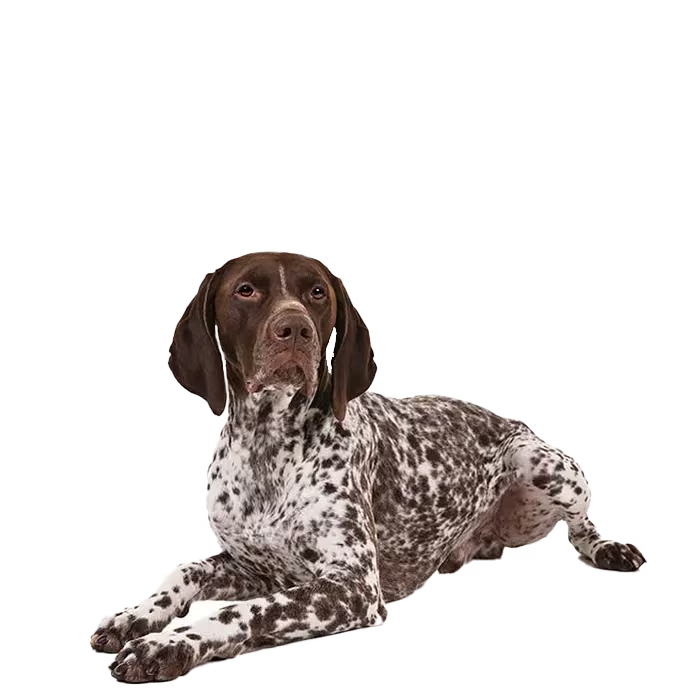
German Shorthaired Pointer
The German Shorthaired Pointer is a friendly, versatile gundog prized for its boundless energy and eager-to-please nature.
- Size
- Large
- Lifespan
- 10–14 years
- Origin
- Germany
- Temperament
- Friendly
- Standard colors
- Black, White, Liver and Tan
Characteristics
Coat and grooming
How the German Shorthaired Pointer coat is built, and what that means when you groom it.
- Coat layers
- Single coat
- Coat texture
- Smooth
- Coat length
- Short
- Shedding
- Moderate shedding
German Shorthaired Pointer colors and patterns
What each club's breed standard says about every German Shorthaired Pointer color and pattern. Point at a ruling to see the club's own wording.
Breed standards describe the German Shorthaired Pointer in Black, White, Liver and Tan. Standard patterns: Solid, Bicolour, Roan, Spotted and Tan point.
| Color or pattern | FCI | AKC | UKC | KC | KUSA |
|---|---|---|---|---|---|
| Black | Standard (“Black colour in the same nuances as the brown”) | Standard (“Black”) | Standard (“solid black”) | Standard (“solid black”) | Standard (“Solid black”) |
| White | Standard (“White with brown head markings, brown patches or specks”) | Standard (“Liver & White”) | Standard (“any combination of liver and white”) | Standard (“liver and white spotted”) | Standard (“liver and white spotted”) |
| Liver | Standard (“Solid brown, without markings”) | Standard (“Liver”) | Standard (“solid liver”) | Standard (“Solid liver”) | Standard (“Solid liver”) |
| Tan | Standard (“Yellow tan markings are permissible”) | Disqualifying (“A dog with any area of red, orange, lemon or tan”) | Standard (“Tan markings are permissible”) | Not recognised | Not recognised |
| Albino | Not recognised | Disqualifying | Disqualifying (“Albinism”) | Not recognised | Not recognised |
| Red | Not recognised | Disqualifying (“A dog with any area of red, orange, lemon or tan”) | Disqualifying (“Any red, orange, or lemon color”) | Not recognised | Not recognised |
| Orange | Not recognised | Disqualifying (“A dog with any area of red, orange, lemon or tan”) | Disqualifying (“Any red, orange, or lemon color”) | Not recognised | Not recognised |
| Lemon | Not recognised | Disqualifying (“A dog with any area of red, orange, lemon or tan”) | Disqualifying (“Any red, orange, or lemon color”) | Not recognised | Not recognised |
| Patterns | |||||
| Solid | Standard (“Solid brown, without markings”) | Standard (“solid liver”) | Standard (“solid liver”) | Standard (“Solid liver”) | Standard (“Solid liver”) |
| Bicolour | Standard (“White with brown head markings”) | Standard (“a combination of liver and white”) | Standard (“any combination of liver and white”) | Standard (“black and white same variations”) | Standard (“black and white, same variations”) |
| Roan | Standard (“Dark brown roan”) | Standard (“Liver Roan”) | Standard (“liver and white ticked”) | Standard (“liver and white ticked”) | Standard (“liver and white ticked”) |
| Spotted | Standard (“brown patches or specks”) | Standard (“Patched”) | Standard (“liver spotted and white ticked”) | Standard (“liver and white spotted”) | Standard (“liver and white spotted”) |
| Tan point | Standard (“Yellow tan markings are permissible”) | Disqualifying | Standard (“Tan markings are permissible”) | Not recognised | Not recognised |
| Tricolour | No ruling | Disqualifying | No ruling | Not recognised (“not tricolour”) | Not recognised (“Not tri-colour”) |

%22%3E%3Cpath%20d%3D%22M0%2023L9.5%2020.4L14%2025.4L19%2029.6Q21%2035%2023.5%2035.5Q36%2033%2050%2036L56%2040V64H0Z%22%20fill%3D%22%23F5F5F0%22%2F%3E%3C%2Fg%3E%3Cuse%20href%3D%22%23s%22%20fill%3D%22none%22%20stroke%3D%22%233B2A20%22%20stroke-opacity%3D%220.6%22%20stroke-width%3D%221%22%20stroke-linejoin%3D%22round%22%2F%3E%3Cellipse%20cx%3D%223.2%22%20cy%3D%2221.7%22%20rx%3D%221.3%22%20ry%3D%221.2%22%20fill%3D%22%231C1C1C%22%2F%3E%3Ccircle%20cx%3D%2210.8%22%20cy%3D%2219.3%22%20r%3D%221.1%22%20fill%3D%22%231C1C1C%22%2F%3E%3C%2Fsvg%3E)
%22%3E%3Cg%20fill%3D%22none%22%20stroke%3D%22%23F5F5F0%22%20stroke-width%3D%221.15%22%20stroke-linecap%3D%22round%22%20stroke-linejoin%3D%22round%22%3E%3Cpath%20d%3D%22M28.6%2025h.1M51.3%2028.8h.1M34.7%2024.3h.1M34.2%2041.6h.1M51%2044.2h.1M55.9%2024.7h.1M27.5%2026.3h.1M18.5%2028.6h.1M25.2%2028.9h.1M24.2%2019.3h.1M20.6%2017.6h.1M34.1%2030.6h.1M57.3%2023.3h.1M23.5%2030.7h.1M26.5%2023.1h.1M40%2031.5h.1M51.7%2038.6h.1M20.2%2022.1h.1M40.4%2037.8h.1M35%2043.1h.1M20.6%2031.7h.1M27.8%2031.9h.1M17.2%2021.1h.1M38.1%2037.7h.1M25.3%2040.5h.1M32%2029.3h.1M41.6%2039.5h.1M23.6%2024h.1M26.4%2018.6h.1M30.3%2031.9h.1M31.2%2035.2h.1M36.5%2043.7h.1M35.2%2026.3h.1M55.6%2019.1h.1M22.4%2036.8h.1M39.2%2020h.1M49.5%2039.1h.1M33.6%2033.5h.1M36.4%2032.4h.1M56.3%2042.4h.1M54.8%2031.2h.1M36.9%2023.2h.1M52.7%2019.1h.1M21.5%2033.8h.1M48.6%2028h.1M36.6%2017.5h.1M45.6%2031.3h.1M37.9%2030.5h.1M17%2031.8h.1M21.1%2043.1h.1M55.7%2021.1h.1M30.8%2041.9h.1M57.4%2038.4h.1M54.8%2026.9h.1M29.1%2017.5h.1M24.3%2037.7h.1M26%2032h.1M39.3%2022.8h.1M53.5%2029h.1M53.3%2023.3h.1M20%2038.4h.1M28.3%2044.7h.1M28.6%2039.8h.1M51.9%2041.1h.1M52.3%2033.7h.1M19.6%2042.2h.1M19%2033h.1M47.8%2021.7h.1M45.7%2024.8h.1M24.6%2035.5h.1M29.8%2036.8h.1M50.7%2032h.1M29.5%2043.5h.1M28.2%2041.5h.1M47.4%2034.8h.1M25.4%2033.7h.1M50.2%2041.2h.1M27.7%2029.5h.1M21.5%2024.8h.1M55.5%2017.5h.1M41.2%2044.3h.1M39.2%2018.4h.1M41.1%2042.5h.1M54.7%2035.3h.1M42.8%2034.5h.1M30.1%2023h.1M42.6%2025.1h.1M32.9%2024.4h.1M42.4%2032.4h.1M49.7%2022.2h.1M49.1%2043.1h.1M38%2035.2h.1M47.7%2043.8h.1M43.1%2022.4h.1M22.4%2040.4h.1M44.4%2019.8h.1M53.3%2040.1h.1M20.7%2029.3h.1M55.6%2043.9h.1M17.6%2039.2h.1M41.7%2028.9h.1M44.1%2036.3h.1M24.3%2043.6h.1M26.4%2038.1h.1M30.3%2029.2h.1M31.5%2030.8h.1M32.1%2023h.1M18.3%2040.9h.1M48%2033.4h.1M36.4%2038.7h.1M31.9%2020.8h.1M32.6%2026.2h.1M22%2031.2h.1M53.4%2021.7h.1M41.9%2017.7h.1M53.3%2037.3h.1M47.7%2040.3h.1M54.4%2033.7h.1M33.6%2037.5h.1M25.3%2017.2h.1M37.6%2019.7h.1M31.6%2019h.1M29.2%2019.6h.1M50.7%2027.3h.1M22%2022.1h.1M31%2037.8h.1M56.5%2026.6h.1M34.7%2039.5h.1M56.5%2040.8h.1M47.6%2038h.1M48.6%2026.1h.1M49.7%2034.2h.1M45.4%2027.4h.1M22.6%2038.9h.1M56.5%2035.3h.1M35.1%2021h.1M41.9%2020.1h.1M37.6%2040h.1M32.6%2044.4h.1M37.9%2025.2h.1M26.6%2043h.1M18.9%2036.7h.1M47.2%2028.9h.1M30.5%2026.2h.1M17.4%2027.3h.1M47.1%2017.2h.1M22.3%2044.3h.1M32.5%2042.4h.1M23.6%2025.7h.1M31.4%2024.9h.1%22%2F%3E%3Cpath%20d%3D%22M26%2020.9h.1M41.2%2023.8h.1M39.9%2026.4h.1M28.5%2033.4h.1M42.8%2043.8h.1M17.6%2034.3h.1M34%2017.1h.1M31.2%2017.2h.1M46.5%2036.1h.1M25.1%2022.1h.1M50.3%2023.7h.1M20.2%2026.6h.1M20.8%2020.4h.1M50.9%2017.3h.1M49.5%2020.2h.1M52.9%2044.1h.1M23.9%2017.8h.1M43.2%2028.1h.1M57.6%2030h.1M52%2025.6h.1M19.2%2019.1h.1M19.5%2024.4h.1M32.8%2040.1h.1M36.1%2027.7h.1M39.6%2029.5h.1M38.4%2041.5h.1M47.9%2019.4h.1M49.1%2031.7h.1M55.9%2036.9h.1M29.2%2027.2h.1M46%2043.5h.1M44.6%2028.8h.1M47.5%2031.5h.1M22.8%2020h.1M27.6%2017.1h.1M43.1%2018.6h.1M54.3%2020h.1M57.2%2033.8h.1M44.5%2043.8h.1M27.1%2035.5h.1M45.3%2041.8h.1M56.7%2028.8h.1M36.7%2021.4h.1M43.3%2042.3h.1M17.3%2022.9h.1M32.7%2035.5h.1M30.5%2039.8h.1M29.1%2021.2h.1M34.5%2018.8h.1M25.8%2027h.1%22%2F%3E%3C%2Fg%3E%3Cpath%20d%3D%22M56.3%2038.4l0%201.2M40%2027.2l-0.3%201.3M32.6%2043.6l-0.4%201.5M29%2023.3l0.8%201.5M55.1%2044l0.4%201.1M47.5%2022.5l-0.2%201.6M42.9%2038.6l0.7%201.2M35.2%2041.8l-0.5%201.7M26.9%2040l-0.1%201.2M41%2042.8l-0.1%201.6M18.4%2021.2l0.7%201.3M49.4%2019.3l-0.5%201.4M50.1%2041.7l0%201.8M28.2%2041.8l-0.6%201.2M55.5%2027.1l0.2%201.2M44.7%2019.3l0.5%201.7M48.6%2020.5l-0.8%201.4M43.7%2039.6l0.3%201.1M22.1%2033.8l-0.6%201.6M50.1%2038.1l-0.5%201.3M51.8%2044.1l-0.1%201.8M39%2017.5l0%201.4M30.2%2026.7l0.2%201.4M25.8%2031.2l0.2%201.6M29.6%2043.5l0.1%201M43.7%2018.3l0.1%201.5M29.6%2018.2l0.3%201.6M24.4%2017.6l0.3%201.1M22%2028.2l-0.6%201.6M25.9%2043.3l-0.3%201.4M22.2%2024.3l0.3%201.3M47.3%2029.2l-0.2%201.4M21.8%2033.2l0.5%200.9M32.9%2037l0.4%201M40%2029.9l0.8%201.4M17.4%2038.3l0.2%201.3M31%2039.2l0%201.2M37.3%2033.7l0.3%201.5M48.1%2040.5l0%201.6M33.9%2031.2l0.1%201.2M29.8%2035.2l-0.4%201M25.1%2037.3l-0.2%201.5M30.2%2039.8l0.5%201M44.6%2034.8l0.4%200.9M55.3%2034.2l0%201.7M50.6%2017.9l0.4%201M30.2%2034.9l-0.4%201.4M19.5%2035.7l-0.5%201.7M40.7%2028.7l0.8%201.4M23.3%2029l-0.4%201.4M17%2040.5l-0.2%201M48.4%2023.2l-0.3%201M37.3%2025.1l-0.4%201.3M23%2021.4l-0.4%201.3M20.4%2017.2l-0.1%201.3M42.3%2020.4l0.6%201.4M41%2031.8l0.6%201.2M45.4%2034.3l-0.1%201.2M32.5%2018l0%201.3M46.2%2021.6l0.1%201.4M30.5%2022.3l0.5%201.1M58%2044.6l0.3%201.5M57.1%2033.9l0.8%201.4M18.3%2042.6l0.3%201M40.5%2035.1l-0.6%201.4M38.8%2044.3l-0.3%201.1%22%20fill%3D%22none%22%20stroke%3D%22%23F5F5F0%22%20stroke-width%3D%220.8%22%20stroke-linecap%3D%22round%22%20stroke-linejoin%3D%22round%22%2F%3E%3C%2Fg%3E%3Cuse%20href%3D%22%23s%22%20fill%3D%22none%22%20stroke%3D%22%233B2A20%22%20stroke-opacity%3D%220.6%22%20stroke-width%3D%221%22%20stroke-linejoin%3D%22round%22%2F%3E%3Crect%20x%3D%2220%22%20y%3D%2258%22%20width%3D%223.6%22%20height%3D%222%22%20fill%3D%22%234A4038%22%2F%3E%3Crect%20x%3D%2226%22%20y%3D%2258%22%20width%3D%223.6%22%20height%3D%222%22%20fill%3D%22%234A4038%22%2F%3E%3Crect%20x%3D%2244%22%20y%3D%2258%22%20width%3D%223.6%22%20height%3D%222%22%20fill%3D%22%234A4038%22%2F%3E%3Crect%20x%3D%2250%22%20y%3D%2258%22%20width%3D%223.6%22%20height%3D%222%22%20fill%3D%22%234A4038%22%2F%3E%3Ccircle%20cx%3D%229.5%22%20cy%3D%2211.5%22%20r%3D%221.1%22%20fill%3D%22%231C1C1C%22%2F%3E%3C%2Fsvg%3E)
%22%3E%3Cpath%20d%3D%22M51.6%2041h.1M30.7%2035.3h.1M34.9%2031.1h.1M20.4%2027h.1M24.3%2023.8h.1M13.7%2024.5h.1M48.1%2027.8h.1M22.6%2055.1h.1M26.3%2044.6h.1M46.2%2044.7h.1M32.1%2051.9h.1M40.9%2027.7h.1M52.9%2034.5h.1M57.9%2012.4h.1M49.9%2048.7h.1M44.5%2024.7h.1M45.7%2033.8h.1M31.4%2025h.1M15.2%2015.8h.1M52.2%2055.6h.1M37%2023.9h.1M54.6%2045.7h.1M22.9%2041.7h.1M25.2%2028.6h.1%22%20fill%3D%22none%22%20stroke%3D%22%231C1C1C%22%20stroke-width%3D%223.6%22%20stroke-linecap%3D%22round%22%20stroke-linejoin%3D%22round%22%2F%3E%3Cpath%20d%3D%22M20.5%2032.5h.1M17.8%2021.7h.1M39.4%2032.8h.1M50.4%2023h.1M5.4%2023.9h.1M24.5%2034.2h.1M55.2%2023.5h.1M47.5%2039.1h.1M41.7%2037.8h.1M27.2%2038.4h.1M31.9%2040.9h.1M14.6%207.5h.1M20.7%2018.3h.1M29.1%2055.7h.1M45.2%2051.3h.1M57.6%2017.4h.1M24%2048.9h.1M31.5%2047.4h.1M30.3%2030.9h.1M54%2050.8h.1M11.2%2017.8h.1M52.6%2028.7h.1M36.7%2036.9h.1%22%20fill%3D%22none%22%20stroke%3D%22%231C1C1C%22%20stroke-width%3D%222.4%22%20stroke-linecap%3D%22round%22%20stroke-linejoin%3D%22round%22%2F%3E%3C%2Fg%3E%3Cuse%20href%3D%22%23s%22%20fill%3D%22none%22%20stroke%3D%22%233B2A20%22%20stroke-opacity%3D%220.6%22%20stroke-width%3D%221%22%20stroke-linejoin%3D%22round%22%2F%3E%3Cellipse%20cx%3D%223.2%22%20cy%3D%2221.7%22%20rx%3D%221.3%22%20ry%3D%221.2%22%20fill%3D%22%231C1C1C%22%2F%3E%3Ccircle%20cx%3D%2210.8%22%20cy%3D%2219.3%22%20r%3D%221.1%22%20fill%3D%22%231C1C1C%22%2F%3E%3C%2Fsvg%3E)
%22%3E%3Ccircle%20cx%3D%2212%22%20cy%3D%2217.2%22%20r%3D%221.25%22%20fill%3D%22%23C4996A%22%2F%3E%3Cpath%20d%3D%22M1.5%2021.2L9%2018.6L12.6%2021L12.2%2026.2L3.5%2024.4Z%22%20fill%3D%22%23C4996A%22%2F%3E%3Cpath%20d%3D%22M10%2026L14.5%2026.4L18.2%2029.2L13.5%2029.8Z%22%20fill%3D%22%23C4996A%22%2F%3E%3Cellipse%20cx%3D%2221.2%22%20cy%3D%2230.6%22%20rx%3D%221.6%22%20ry%3D%222.3%22%20fill%3D%22%23C4996A%22%2F%3E%3Crect%20x%3D%220%22%20y%3D%2247%22%20width%3D%2264%22%20height%3D%2217%22%20fill%3D%22%23C4996A%22%2F%3E%3Cpath%20d%3D%22M51.5%2024.5L55%2027L54.2%2032L50.5%2028.5Z%22%20fill%3D%22%23C4996A%22%2F%3E%3Cpath%20d%3D%22M45%2038.5L48%2039L48.5%2047L45.5%2047Z%22%20fill%3D%22%23C4996A%22%2F%3E%3C%2Fg%3E%3Cuse%20href%3D%22%23s%22%20fill%3D%22none%22%20stroke%3D%22%233B2A20%22%20stroke-opacity%3D%220.6%22%20stroke-width%3D%221%22%20stroke-linejoin%3D%22round%22%2F%3E%3Cellipse%20cx%3D%223.2%22%20cy%3D%2221.7%22%20rx%3D%221.3%22%20ry%3D%221.2%22%20fill%3D%22%231C1C1C%22%2F%3E%3Ccircle%20cx%3D%2210.8%22%20cy%3D%2219.3%22%20r%3D%221.1%22%20fill%3D%22%231C1C1C%22%2F%3E%3C%2Fsvg%3E)
%22%3E%3Cellipse%20cx%3D%2212.6%22%20cy%3D%2222.6%22%20rx%3D%223.2%22%20ry%3D%222.8%22%20fill%3D%22%23847865%22%2F%3E%3Ccircle%20cx%3D%2212%22%20cy%3D%2217.2%22%20r%3D%221.25%22%20fill%3D%22%23847865%22%2F%3E%3Crect%20x%3D%220%22%20y%3D%2247%22%20width%3D%2264%22%20height%3D%2217%22%20fill%3D%22%23847865%22%2F%3E%3Cpath%20d%3D%22M8.6%2018L12%2015.8L5.8%2021.8L3.2%2021.4Z%22%20fill%3D%22%23F5F5F0%22%2F%3E%3Cpath%20d%3D%22M1.5%2021.2L9%2018.6L12.6%2021L12.2%2026.2L3.5%2024.4Z%22%20fill%3D%22%23F5F5F0%22%2F%3E%3Cpath%20d%3D%22M14%2024.5L18.5%2026Q19.5%2033%2023%2039L18%2040Q17%2033%2014%2028Z%22%20fill%3D%22%23F5F5F0%22%2F%3E%3Cpath%20d%3D%22M21%2035.5Q35%2033.5%2048%2036.5V42H21Z%22%20fill%3D%22%23F5F5F0%22%2F%3E%3Crect%20x%3D%220%22%20y%3D%2252.5%22%20width%3D%2264%22%20height%3D%2212%22%20fill%3D%22%23F5F5F0%22%2F%3E%3Ccircle%20cx%3D%2258.4%22%20cy%3D%2212.8%22%20r%3D%222.6%22%20fill%3D%22%23F5F5F0%22%2F%3E%3C%2Fg%3E%3Cuse%20href%3D%22%23s%22%20fill%3D%22none%22%20stroke%3D%22%233B2A20%22%20stroke-opacity%3D%220.6%22%20stroke-width%3D%221%22%20stroke-linejoin%3D%22round%22%2F%3E%3Cellipse%20cx%3D%223.2%22%20cy%3D%2221.7%22%20rx%3D%221.3%22%20ry%3D%221.2%22%20fill%3D%22%231C1C1C%22%2F%3E%3Ccircle%20cx%3D%2210.8%22%20cy%3D%2219.3%22%20r%3D%221.1%22%20fill%3D%22%231C1C1C%22%2F%3E%3C%2Fsvg%3E)
| Color or pattern | FCI | AKC | UKC | KC | KUSA |
|---|---|---|---|---|---|
| Brown | No ruling | No ruling | Standard (“Eye color is brown”) | Standard (“Varying in shades of brown to tone with coat”) | Standard (“Varying in shades of brown to tone with coat”) |
| Dark brown | Standard (“The ideal colour is dark brown”) | Standard (“The preferred color is dark brown”) | Standard (“Darker brown is preferred”) | No ruling | No ruling |
| Light brown | Fault (“Eyes too light”) | No ruling | No ruling | No ruling | No ruling |
| Yellow | Fault (“Yellowish « bird of prey » eyes”) | Fault (“Light yellow eyes are not desirable and are a fault”) | No ruling | No ruling | No ruling |
| Blue | No ruling | Disqualifying (“China or wall eyes are to be disqualified”) | No ruling | No ruling | No ruling |
| Color or pattern | FCI | AKC | UKC | KC | KUSA |
|---|---|---|---|---|---|
| Black | Standard (“black in black or black roan dogs”) | Standard (“black on a black dog”) | Standard (“black in black-colored dogs”) | Standard (“Nose solid brown or black depending on coat colour”) | Standard (“Nose solid brown or black depending on coat colour”) |
| Liver | Standard (“Basically brown”) | Standard (“brown on a liver dog”) | Standard (“solid brown in liver-colored dogs”) | Standard (“Nose solid brown or black depending on coat colour”) | Standard (“Nose solid brown or black depending on coat colour”) |
| Pink | Standard (“A flesh-coloured or spotted nose is only permissible in dogs with white as basic colour”) | Disqualifying (“A flesh colored nose disqualifies”) | Disqualifying (“Flesh-colored nose”) | No ruling | No ruling |
| Patterns | |||||
| Butterfly nose | Standard (“A flesh-coloured or spotted nose is only permissible in dogs with white as basic colour”) | Fault (“A spotted nose is not desirable”) | Fault (“Spotted nose”) | No ruling | No ruling |
%22%3E%3Cpath%20d%3D%22M28.4%2019.1C29.9%2017.7%2032.2%2016.4%2034%2016C35.8%2015.6%2037.4%2016%2039.2%2016.6C41.1%2017.2%2044.4%2018.5%2045.1%2019.5C45.8%2020.6%2044.3%2021.9%2043.3%2023.1C42.2%2024.3%2040.9%2025.9%2039%2026.6C37.1%2027.2%2034.3%2027.3%2032%2026.9C29.6%2026.4%2025.6%2025.3%2025%2024C24.4%2022.7%2026.9%2020.4%2028.4%2019.1Z%22%20fill%3D%22%23E8A0B4%22%2F%3E%3Cpath%20d%3D%22M23.8%2037.7C24.6%2037.5%2026.2%2037.9%2027.4%2038.1C28.5%2038.2%2030.2%2037.9%2030.8%2038.4C31.4%2039%2031.2%2040.7%2030.9%2041.5C30.7%2042.3%2029.9%2042.9%2029.1%2043.3C28.4%2043.8%2027.4%2044.6%2026.4%2044.4C25.4%2044.2%2023.8%2042.9%2023.1%2042.1C22.4%2041.3%2022.2%2040.2%2022.3%2039.5C22.4%2038.8%2022.9%2038%2023.8%2037.7Z%22%20fill%3D%22%23E8A0B4%22%2F%3E%3Cpath%20d%3D%22M10.5%2027.2C10.4%2026.7%2010.4%2025.4%2011%2025C11.5%2024.6%2013%2024.6%2013.9%2024.6C14.8%2024.6%2015.6%2024.5%2016.1%2024.9C16.6%2025.3%2017%2026.2%2017%2026.9C17.1%2027.7%2016.8%2028.8%2016.4%2029.4C15.9%2029.9%2014.9%2030.4%2014.2%2030.3C13.4%2030.1%2012.3%2028.8%2011.7%2028.3C11.1%2027.8%2010.6%2027.8%2010.5%2027.2Z%22%20fill%3D%22%23E8A0B4%22%2F%3E%3C%2Fg%3E%3Cuse%20href%3D%22%23s%22%20fill%3D%22none%22%20stroke%3D%22%233B2A20%22%20stroke-opacity%3D%220.6%22%20stroke-width%3D%221%22%20stroke-linejoin%3D%22round%22%2F%3E%3Cpath%20d%3D%22M12.5%2037Q13%2032%2018.5%2032Q23.5%2032.5%2023.5%2036.5Q20.5%2035.5%2018.8%2037Q17.4%2038.6%2018%2041.5Q13.6%2040.4%2012.5%2037Z%22%20fill%3D%22%231C1C1C%22%20fill-opacity%3D%220.8%22%20stroke%3D%22%23F5F5F0%22%20stroke-opacity%3D%220.4%22%20stroke-width%3D%220.9%22%2F%3E%3Cpath%20d%3D%22M51.5%2037Q51%2032%2045.5%2032Q40.5%2032.5%2040.5%2036.5Q43.5%2035.5%2045.2%2037Q46.6%2038.6%2046%2041.5Q50.4%2040.4%2051.5%2037Z%22%20fill%3D%22%231C1C1C%22%20fill-opacity%3D%220.8%22%20stroke%3D%22%23F5F5F0%22%20stroke-opacity%3D%220.4%22%20stroke-width%3D%220.9%22%2F%3E%3Cpath%20d%3D%22M32%2040V50%22%20fill%3D%22none%22%20stroke%3D%22%231C1C1C%22%20stroke-width%3D%221.3%22%20stroke-opacity%3D%220.5%22%20stroke-linecap%3D%22round%22%20stroke-linejoin%3D%22round%22%2F%3E%3Cellipse%20cx%3D%2232%22%20cy%3D%2221%22%20rx%3D%2212%22%20ry%3D%223.5%22%20fill%3D%22%23F5F5F0%22%20fill-opacity%3D%220.18%22%2F%3E%3C%2Fsvg%3E)
What the rulings mean
- Standard
- Described by the club's breed standard.
- Fault
- Named by the club's breed standard as a fault: the animal can be shown but is penalised.
- Disqualifying
- The club's breed standard disqualifies an animal of this colour or pattern.
- Not recognised
- The club does not accept this colour or pattern for the breed.
Color changes
How a German Shorthaired Pointer's colors can change over its life.
Blackchanges toRust
Coat · With body condition · can change back
Blackchanges toGrey
Coat · Progressive
Blackchanges toBrown
Coat · In the sun · can change back
Whitechanges toRoan
Coat · With age · from 2 weeks
Tan pointchanges toSaddle
Coat · With age · from 6 to 156 weeks
Blackchanges toSnow nose
Nose · With the season · can change back
Blackchanges toPink
Nose · With the season · can change back
%22%3E%3Cpath%20d%3D%22M22.5%2018.5Q24%2021%2025%2021.5L47%2022.5Q50%2022.5%2051.5%2023.5L54%2026Q55%2032%2053%2034Q46%2031.5%2038%2033Q30%2034.5%2025.5%2032Q22.5%2026%2022.5%2018.5Z%22%20fill%3D%22%231C1C1C%22%2F%3E%3Cpath%20d%3D%22M51%2024L56%209L63%209L61%2019L54.5%2028Z%22%20fill%3D%22%231C1C1C%22%2F%3E%3Cpath%20d%3D%22M2%2021.2L7.5%2019.2L8.5%2023.6L3.5%2024.2Z%22%20fill%3D%22%231C1C1C%22%20fill-opacity%3D%220.85%22%2F%3E%3C%2Fg%3E%3Cuse%20href%3D%22%23s%22%20fill%3D%22none%22%20stroke%3D%22%233B2A20%22%20stroke-opacity%3D%220.6%22%20stroke-width%3D%221%22%20stroke-linejoin%3D%22round%22%2F%3E%3Cellipse%20cx%3D%223.2%22%20cy%3D%2221.7%22%20rx%3D%221.3%22%20ry%3D%221.2%22%20fill%3D%22%231C1C1C%22%2F%3E%3Ccircle%20cx%3D%2210.8%22%20cy%3D%2219.3%22%20r%3D%221.1%22%20fill%3D%22%231C1C1C%22%2F%3E%3C%2Fsvg%3E)
%22%3E%3Crect%20x%3D%2217%22%20y%3D%2210%22%20width%3D%2230%22%20height%3D%2242%22%20fill%3D%22url(%23g)%22%2F%3E%3C%2Fg%3E%3Cuse%20href%3D%22%23s%22%20fill%3D%22none%22%20stroke%3D%22%233B2A20%22%20stroke-opacity%3D%220.6%22%20stroke-width%3D%221%22%20stroke-linejoin%3D%22round%22%2F%3E%3Cpath%20d%3D%22M12.5%2037Q13%2032%2018.5%2032Q23.5%2032.5%2023.5%2036.5Q20.5%2035.5%2018.8%2037Q17.4%2038.6%2018%2041.5Q13.6%2040.4%2012.5%2037Z%22%20fill%3D%22%231C1C1C%22%20fill-opacity%3D%220.8%22%20stroke%3D%22%23F5F5F0%22%20stroke-opacity%3D%220.4%22%20stroke-width%3D%220.9%22%2F%3E%3Cpath%20d%3D%22M51.5%2037Q51%2032%2045.5%2032Q40.5%2032.5%2040.5%2036.5Q43.5%2035.5%2045.2%2037Q46.6%2038.6%2046%2041.5Q50.4%2040.4%2051.5%2037Z%22%20fill%3D%22%231C1C1C%22%20fill-opacity%3D%220.8%22%20stroke%3D%22%23F5F5F0%22%20stroke-opacity%3D%220.4%22%20stroke-width%3D%220.9%22%2F%3E%3Cpath%20d%3D%22M32%2040V50%22%20fill%3D%22none%22%20stroke%3D%22%231C1C1C%22%20stroke-width%3D%221.3%22%20stroke-opacity%3D%220.5%22%20stroke-linecap%3D%22round%22%20stroke-linejoin%3D%22round%22%2F%3E%3Cellipse%20cx%3D%2232%22%20cy%3D%2221%22%20rx%3D%2212%22%20ry%3D%223.5%22%20fill%3D%22%23F5F5F0%22%20fill-opacity%3D%220.18%22%2F%3E%3C%2Fsvg%3E)
Sources
Each ruling comes from the club's published breed standard or color list.
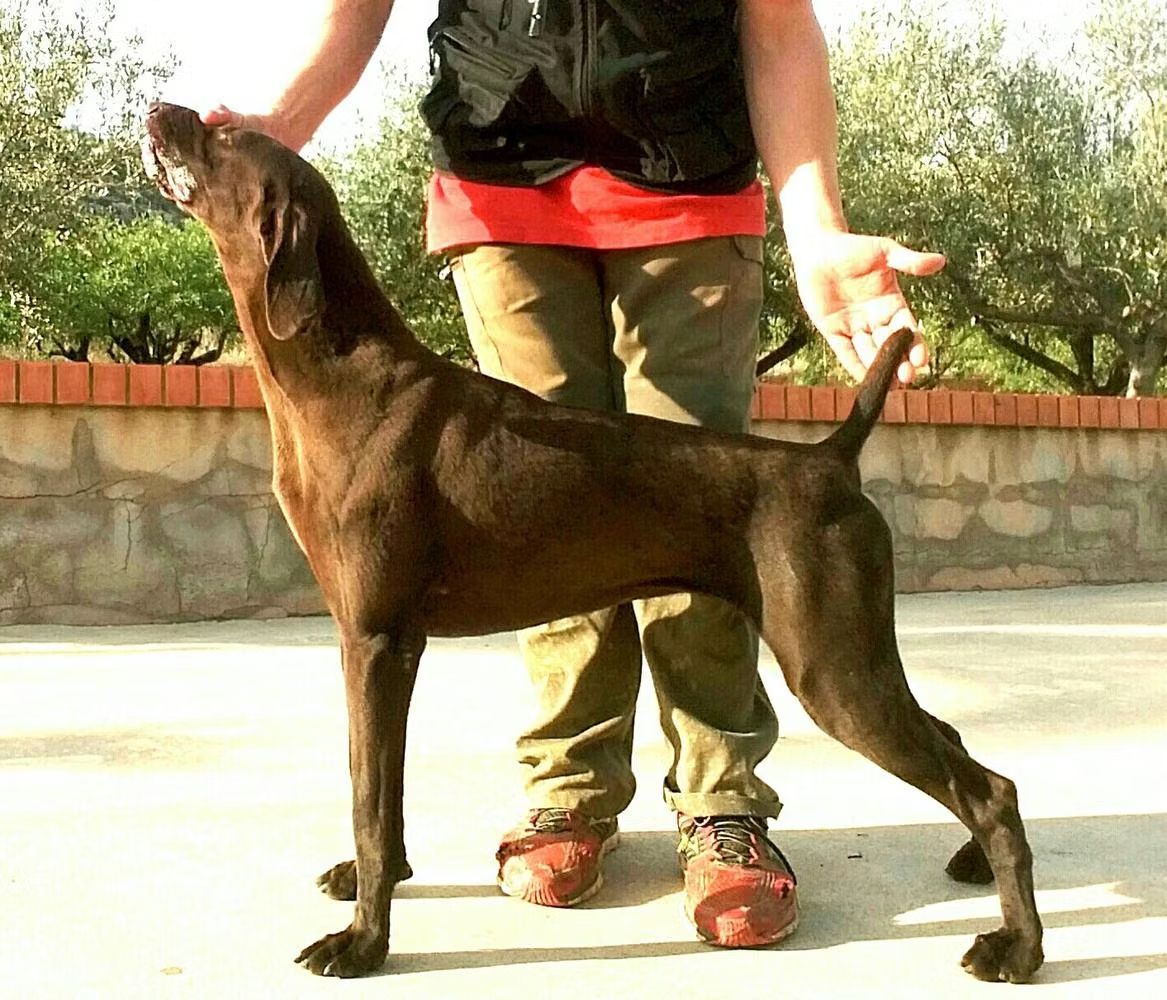
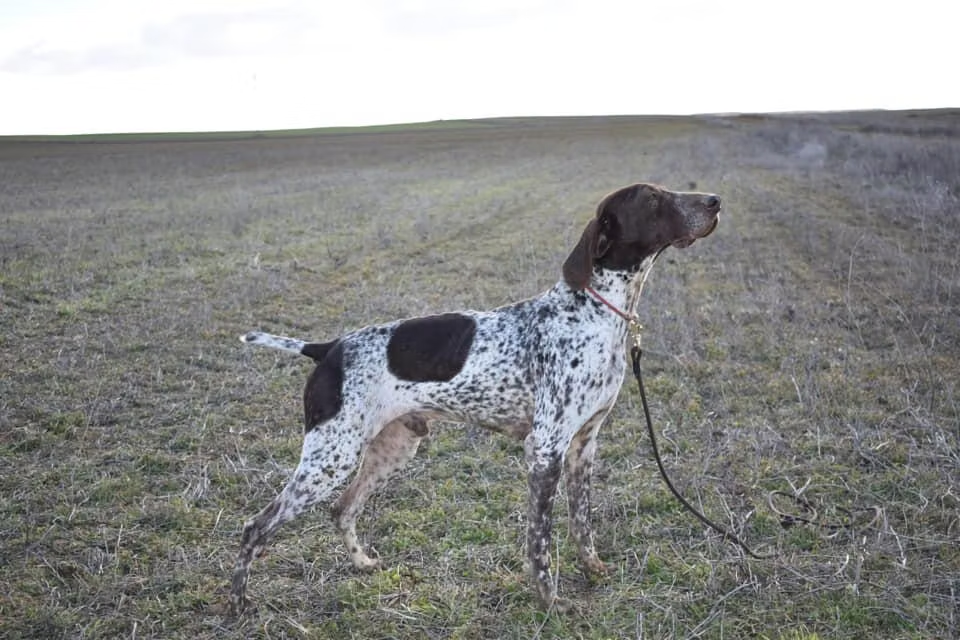
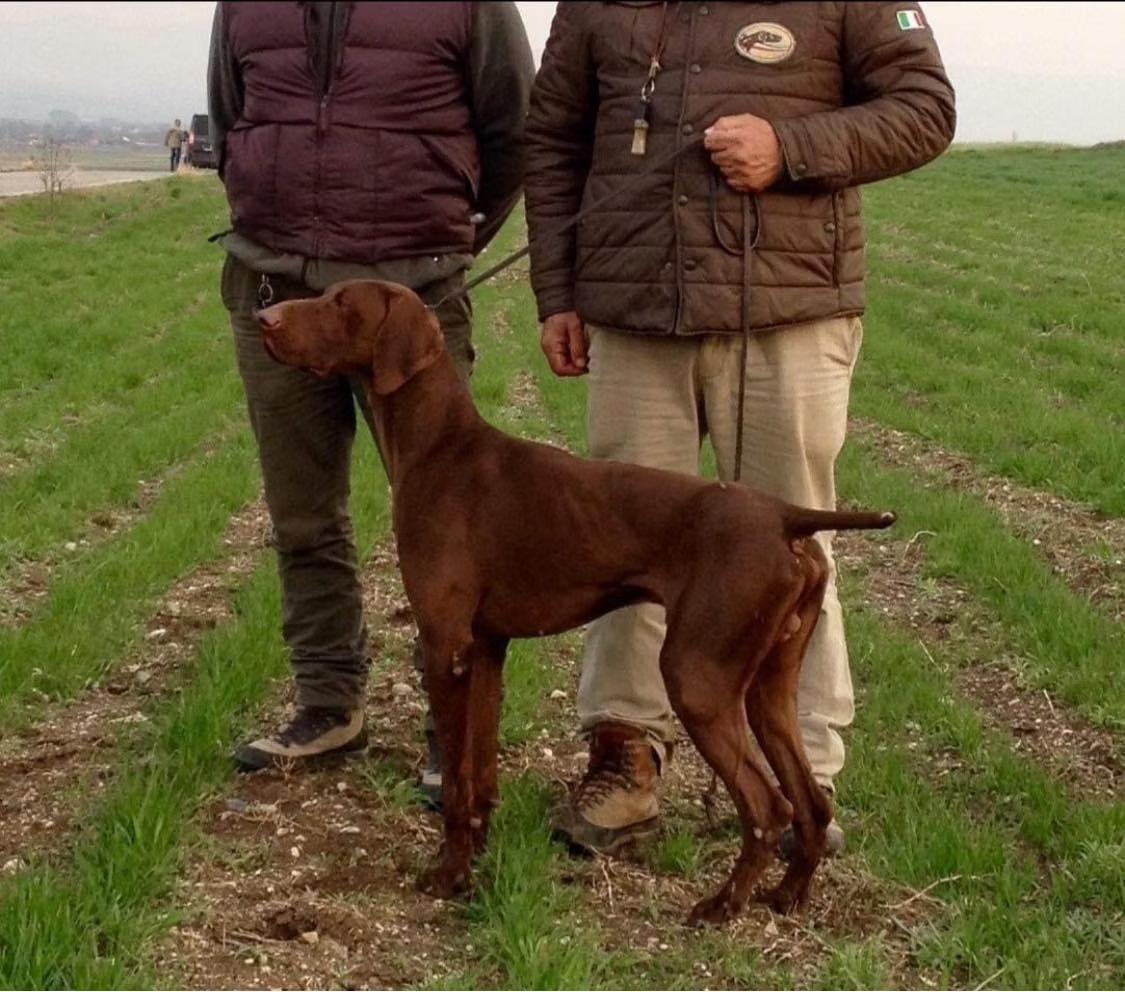
Meet some of our German Shorthaired Pointer
A few of the German Shorthaired Pointer profiles members have added to United Pet Club.



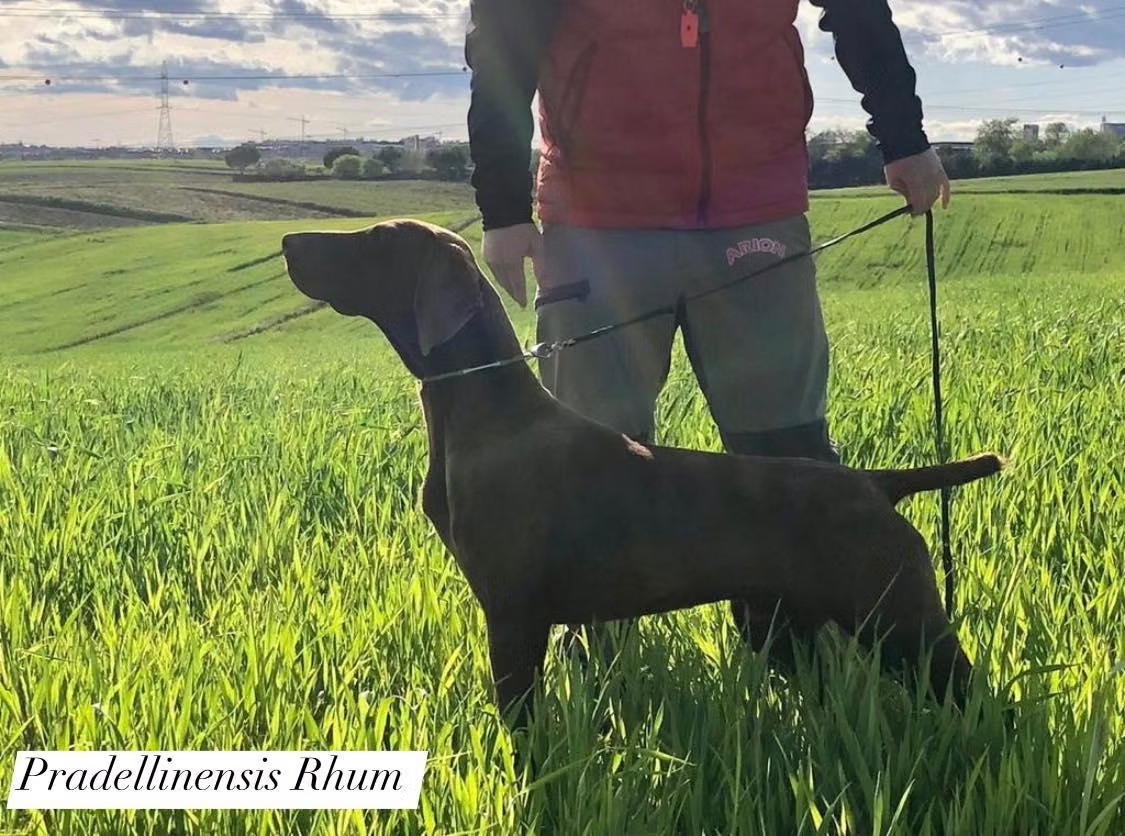
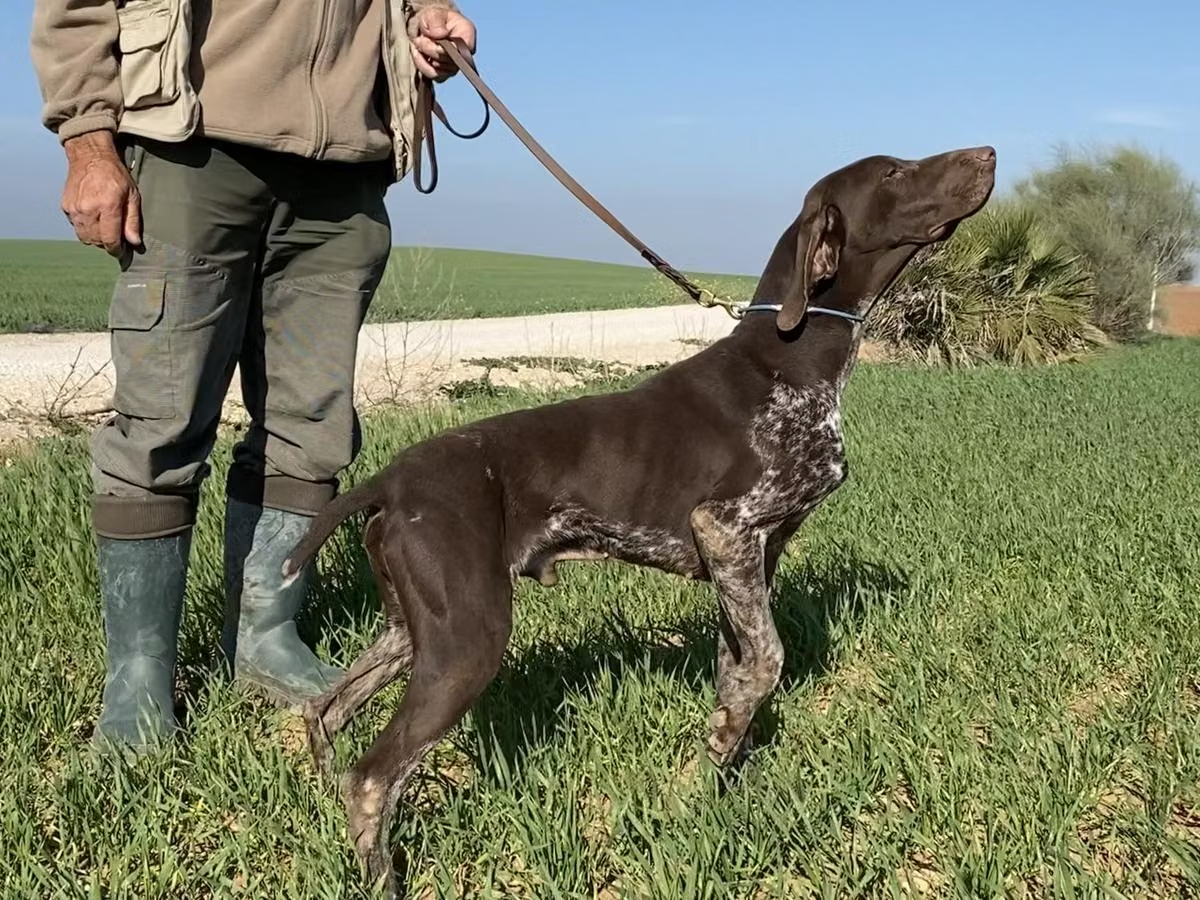
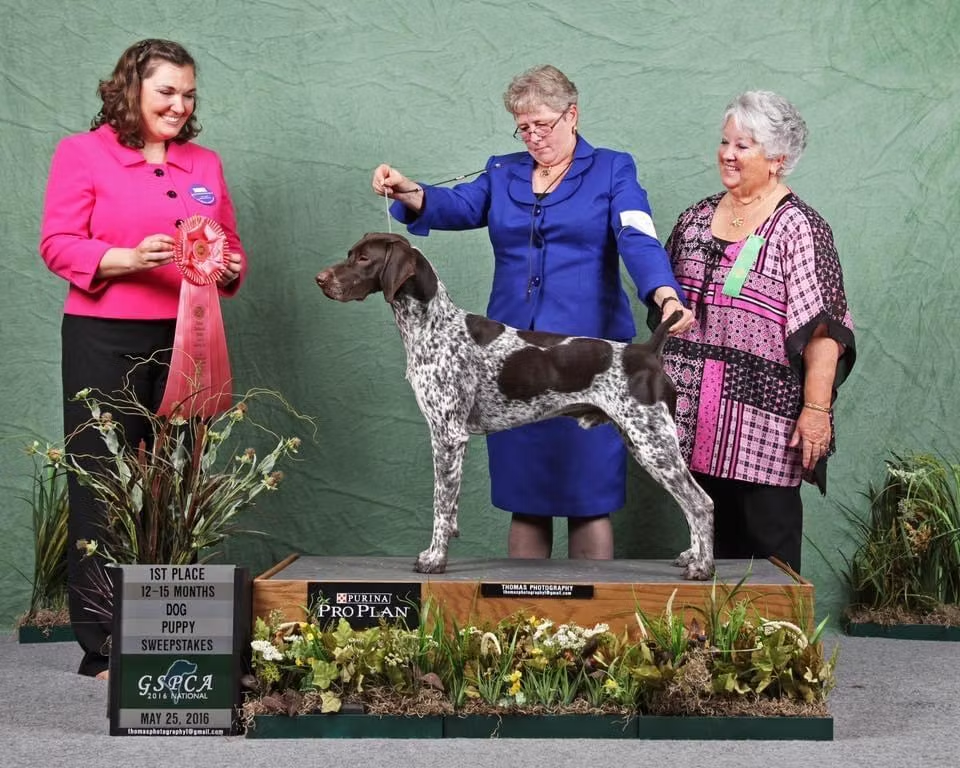
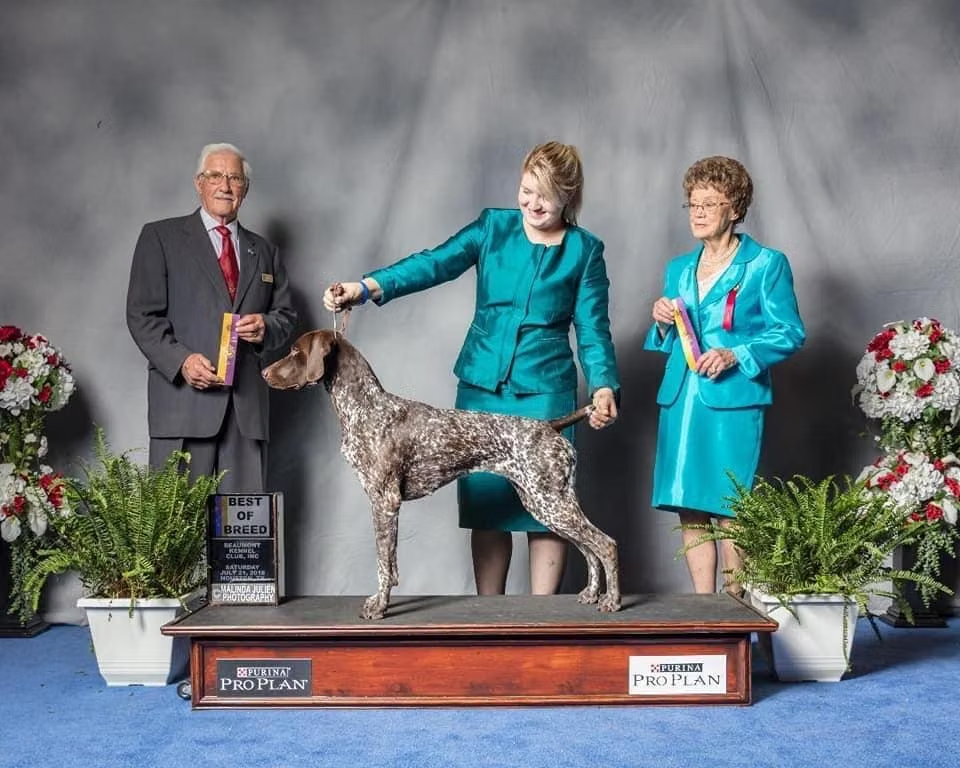

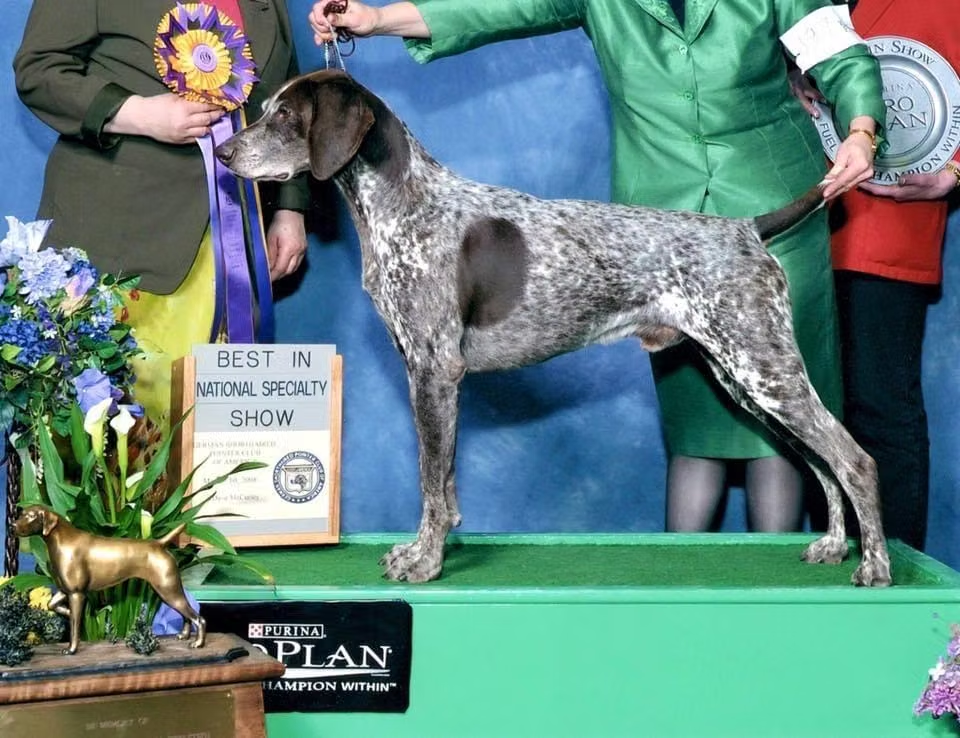
About the German Shorthaired Pointer
The German Shorthaired Pointer is a large, friendly gundog in the NZKC Gundog Group, valued in New Zealand for hunting quail and waterfowl and as an active family companion.
The German Shorthaired Pointer (commonly called the GSP) is a large hunting dog developed in Germany. It was bred to point and retrieve game on land and in water, and is classified as a versatile gundog. The breed combines a strong drive to work with an affectionate, willing nature toward its family.
A typical GSP is lean and athletic, with a short coat and a steady, powerful build. Adults generally live 10 to 14 years. The breed is friendly with family members and sociable by nature, though its high energy means it does best with owners who can provide plenty of regular activity.
The New Zealand Kennel Club (NZKC) places the German Shorthaired Pointer in the Gundog Group. In New Zealand the breed is used for hunting, HPR (Hunt Point Retrieve) trials, agility, obedience, and as an active family companion. The NZ German Shorthaired Pointer Club and NZKC-affiliated gundog clubs support owners across the country.
| Item | Detail |
|---|---|
| Origin | Germany |
| Size | Large |
| Lifespan | 10 to 14 years |
| Group/role | Gundog, NZKC Gundog Group (versatile HPR: pointing, hunting, and retrieving) |
| Good with | Active families, older children, and households able to provide daily exercise |
Who the breed suits
The German Shorthaired Pointer fits households that can give it sustained daily exercise and mental work. It suits hunters, trail runners, and active families who want a dog involved in their day-to-day routine. It is less suited to owners who are away for long hours or who want a low-energy companion. An under-exercised GSP can become restless and may chew or dig.
History and origin
Developed in 19th-century Germany by crossing pointing dogs with scenthounds and other breeds, the GSP became one all-purpose hunting dog that spread to New Zealand and worldwide.
The German Shorthaired Pointer was developed in Germany during the 1800s. German breeders wanted a single dog that could find and point game, track wounded animals, and retrieve from land and water. Before that, hunters kept several specialised breeds for these separate tasks.
The foundation stock included the German Bird Dog and older Spanish and continental pointing types. Breeders are widely believed to have added scenthound blood for tracking ability and a stronger nose. English Pointer crosses are credited with refining the build and improving the dog's style on point.
A formal breed standard took shape in the late 19th century. The German Kennel Club studbook for the breed, the Klub Kurzhaar, recorded early pedigrees, with the dog Hektor 1 often named among the first registered animals. Selective breeding favoured working ability alongside a clean, athletic appearance.
The breed reached the United States in the 1920s and gained AKC recognition in 1930. It spread through hunting and field-trial circles and later became a popular companion dog. German Shorthaired Pointers are now kept worldwide, including across New Zealand, where they are used for hunting quail and waterfowl and as active family dogs.
Appearance and breed standard
The GSP is a large, athletic dog with a short liver-and-white coat. In New Zealand, tail docking is banned under the Animal Welfare Act 1999, so all locally bred puppies have full natural tails.
The German Shorthaired Pointer has a balanced, powerful build that reads as athletic rather than heavy. The body is slightly longer than it is tall, with a deep chest, straight back, and well-muscled limbs. The head is clean with a long muzzle, broad drop ears set high, and dark almond-shaped eyes.
Tail docking is banned in New Zealand under the Animal Welfare Act 1999. All GSPs bred and sold in New Zealand have full natural tails. Buyers should be aware that dogs imported from certain overseas countries may have docked tails, as docking remains legal in some jurisdictions, but no New Zealand breeder may dock a puppy's tail.
Movement is smooth and far-reaching, suited to a dog bred to cover ground for hours. The overall outline gives an impression of speed, endurance, and control.
| Trait | Detail |
|---|---|
| Height | Males about 58 to 64 cm; females about 53 to 59 cm at the shoulder |
| Weight | Males about 25 to 32 kg; females about 20 to 27 kg |
| Coat | Short, dense, and flat with a slightly coarse texture; water-resistant |
| Colours | Liver (solid), liver and white, liver roan, ticked, and patched patterns |
| Eyes | Almond-shaped, medium size, usually dark brown |
Coat and colours
The coat is short and lies close to the body, which makes it quick to dry and easy to keep clean after a day in the field. The main pigment is liver, a deep reddish-brown. Common patterns include solid liver, liver and white, liver roan, and various ticked or patched combinations. Black and white versions exist and are accepted by some overseas registries but not by the original German standard. The short coat offers limited protection in cold conditions, so dogs in Southland and Central Otago may need a coat during sharp winter frosts.
Temperament and behaviour
The German Shorthaired Pointer is friendly, intelligent, and eager to please, bonding closely with its family and generally sociable with other dogs while retaining a strong prey drive.
The German Shorthaired Pointer is affectionate and people-oriented. It forms strong bonds with its family and often wants to be near its owners, which can lead to separation distress if left alone for long periods. The breed is intelligent and eager to please, traits that make it responsive in training but also quick to pick up bad habits from inconsistent handling.
With family, the GSP is gentle and playful and generally good with older children who can match its energy. Around strangers it tends to be alert and welcoming rather than aggressive, though early socialisation helps it stay relaxed in new situations.
With other dogs the breed is usually sociable. Because it was bred to hunt birds and small game, it can have a strong prey drive toward cats, rabbits, and birds. Careful introductions and supervision are needed in homes with small pets. The breed is energetic and needs an outlet, or it may become bored and destructive.
| Trait | Rating |
|---|---|
| Affection | 5 |
| Energy | 5 |
| Trainability | 4 |
| Vocalness | 3 |
| Shedding | 3 |
Care and daily needs
The German Shorthaired Pointer needs heavy daily exercise and minimal grooming, and does best in an active home with a secure yard and good access to open space.
Grooming
The short coat is low-maintenance but does shed, more heavily in spring and autumn.
- Brush weekly with a rubber curry brush or grooming mitt to remove loose hair
- Bathe only when dirty, since frequent bathing strips the natural oils from the coat
- Check and clean the drop ears regularly to prevent moisture build-up and infection
- Trim nails every few weeks and brush teeth several times a week
Exercise
This is a high-energy working breed that needs substantial activity every day.
- Provide at least 1 to 2 hours of vigorous exercise daily
- New Zealand's beaches, public conservation land (DOC reserves), and farm tracks are excellent places for off-leash runs where permitted
- Check local council bylaws before taking your dog to a beach, as many councils impose seasonal restrictions on dogs
- Include swimming, fetch, or field work to match the breed's natural retrieving instincts
- Add mental work such as scent games, training drills, or puzzle feeders to keep the dog engaged
Environment
The German Shorthaired Pointer does best in a home with a securely fenced yard and access to open space for running. It can adapt to smaller homes if its exercise needs are fully met. The breed is athletic and can jump or climb fences, so fencing should be tall and secure.
New Zealand's climate varies considerably by region. Northland and Auckland are warm and humid in summer. Southland and Central Otago can have sharp frosts in winter, and dogs in those areas benefit from a coat and a warm, dry sleeping space. In Canterbury, Nor'west winds can push temperatures well above 30 degrees in summer, so shade and plenty of fresh water are the priority on those days. The GSP's thin coat is generally well matched to New Zealand's mild conditions overall.
Nutrition and feeding
The German Shorthaired Pointer needs a complete diet matched to its high activity level, fed in measured meals to support its lean, athletic build.
As an active large breed, the German Shorthaired Pointer needs a complete and balanced diet with enough protein and fat to fuel its energy. Working or sporting dogs used for hunting quail or waterfowl in the field may need more calories than a pet kept at moderate activity. Choose a food formulated for the dog's life stage, and adjust the amount to keep the dog lean rather than overweight. You should be able to feel the ribs without pressing hard.
Feed adults two meals a day rather than one large meal, which helps lower the risk of bloat in a deep-chested breed. Always provide fresh water, especially after exercise.
| Life stage | Amount per day | Meals per day |
|---|---|---|
| Puppy (2 to 6 months) | About 2 to 3 cups, split across meals | 3 to 4 |
| Puppy (6 to 12 months) | About 2.5 to 3.5 cups | 2 to 3 |
| Adult | About 2.5 to 3.5 cups | 2 |
| Senior or less active | About 2 to 3 cups | 2 |
Treats and supplements
Keep treats to about 10 per cent of daily calories so they do not unbalance the diet. Small training treats work well for a food-motivated breed like the GSP. Most dogs on a complete commercial diet do not need supplements. Speak with a veterinarian before adding joint, omega-3, or other supplements, particularly for growing puppies or senior dogs.
Health and common conditions
The German Shorthaired Pointer is generally healthy with a lifespan of 10 to 14 years, though hip dysplasia, bloat, and a handful of other conditions call for screening and preventive care.
The German Shorthaired Pointer is usually a healthy, hardy breed with a typical lifespan of 10 to 14 years. Like many large, deep-chested dogs, it has some known health risks. Buying from NZKC-registered breeders who screen their stock and keeping up with veterinary care lowers the chance of serious problems. A lean body weight protects the joints over the dog's life.
| Condition | Signs | Note |
|---|---|---|
| Hip dysplasia | Limping, stiffness, trouble rising | Hereditary; screen breeding dogs and keep weight down |
| Gastric dilatation-volvulus (bloat) | Swollen belly, retching without vomiting, restlessness | Life-threatening emergency in deep-chested dogs; needs immediate vet care |
| Elbow dysplasia | Front-leg lameness, reduced range of motion | Inherited joint condition; screening helps |
| Ear infections | Head shaking, odour, scratching at ears | Drop ears trap moisture; clean and dry ears regularly |
| Hypothyroidism | Weight gain, low energy, coat changes | Managed with daily medication once diagnosed |
Preventive care
- Keep vaccinations and parasite prevention current
- Schedule annual checkups, with more frequent visits for senior dogs
- Maintain dental care through brushing and professional cleanings
- Keep the dog at a healthy weight to ease joint strain
- Ask breeders for hip, elbow, and eye screening results before buying a puppy
Training and socialisation
The German Shorthaired Pointer is intelligent and eager to please, responding well to reward-based training when given consistent work and a daily outlet for its considerable energy.
The German Shorthaired Pointer learns quickly and wants to work with its handler, so it responds well to training. The same intelligence means it gets bored with repetition and needs varied, engaging sessions. A tired, mentally stimulated GSP is much easier to train than one with pent-up energy. Early socialisation with people, other dogs, and everyday situations helps the dog grow into a steady adult.
The NZKC runs HPR (Hunt Point Retrieve) trials that give the breed an excellent outlet for its natural instincts. GSP owners interested in field work can contact the NZ German Shorthaired Pointer Club or NZKC-affiliated gundog clubs for local training groups and upcoming events.
Basics
- Start training and socialisation in puppyhood, exposing the dog to new people, places, and sounds
- Teach core cues such as sit, stay, come, and leave it using short daily sessions
- Reward correct behaviour with treats, praise, or play right away
- Keep sessions brief and varied to hold the dog's attention
- Work on a reliable recall early, since the breed's prey drive can pull it after California quail, pheasant, or rabbits in open country
- Add structured outlets such as fetch, scent work, or field training to channel the dog's energy
Breeding and raising young
German Shorthaired Pointers mature around 6 to 12 months, carry litters for about 63 days, and typically produce 8 to 12 puppies weaned by 8 weeks.
German Shorthaired Pointers usually reach sexual maturity between 6 and 12 months, though responsible breeders wait until a dog is physically and mentally mature, often after 2 years, and until health screening is complete before breeding. Females come into heat roughly twice a year.
Gestation lasts about 63 days from conception. Litters are commonly large, often 8 to 12 puppies. Newborn pups are helpless and depend fully on the mother for warmth and milk in the first weeks. Eyes open around 10 to 14 days, and puppies begin to move and explore from about 3 weeks.
Weaning usually starts around 3 to 4 weeks and finishes near 8 weeks, when solid food fully replaces nursing. Puppies should stay with the mother and littermates until at least 8 weeks to support healthy social development. Early handling and gentle exposure to new sights and sounds help produce confident adults.
Buyers considering an imported GSP should be aware that bringing a dog to New Zealand requires meeting Biosecurity New Zealand (MPI) requirements. The process varies by country of origin, with different countries falling under different import health standards. Requirements typically include blood titre tests, specified treatments, and a pre-clearance period before the dog can enter the country. Contact MPI or an accredited pet import agent well in advance of any planned import.
| Metric | Value |
|---|---|
| Sexual maturity | About 6 to 12 months (breeding recommended later) |
| Heat cycle (female) | Roughly twice per year |
| Gestation | About 63 days |
| Average litter size | 8 to 12 puppies |
| Eyes open | About 10 to 14 days |
| Weaning age | About 8 weeks |
| Recommended age to leave litter | 8 weeks or older |
Registering a German Shorthaired Pointer in New Zealand, microchip and all
Alongside council registration, a free United Pet Club record keeps a live phone number behind your German Shorthaired Pointer and its chip.
German Shorthaired Pointer registration and microchip registration in New Zealand
Adding your German Shorthaired Pointer to the registry is a ten-minute job at most: name, date of birth, photo, contact details, save. The profile is free for life and works whether the chip is already in or booked for the next vet visit. Dog registration is the place to start.
Getting the chip implanted was the vet's job; giving the number somewhere to point is yours. Registering the microchip with United Pet Club costs nothing on the lifetime plan, suits any brand a Kiwi vet reaches for, and keeps the record searchable at any hour from anywhere. Creating a free account ties the profile and the chip together.
How do I register my German Shorthaired Pointer in New Zealand?
Setting up a free United Pet Club account, adding your German Shorthaired Pointer's details and a photo, and saving is all it takes. The record stays free for the dog's whole life, chip or no chip.
How do I register my German Shorthaired Pointer's microchip?
Just add the fifteen digit number to your free account along with your current address and phone. Under the lifetime plan there is nothing to pay for the registration or any later update.
Does my German Shorthaired Pointer need a microchip in New Zealand?
Dogs registered for the first time since 2006 need one under the National Dog Database rules, working farm dogs aside. The council record and your United Pet Club profile do different jobs, and the second one is free.
What does registering a German Shorthaired Pointer cost?
Nothing. The free lifetime plan carries the profile, the chip record, and every update, and no renewal notice ever arrives.
Frequently asked questions
Common questions about the German Shorthaired Pointer in New Zealand cover breeders, hunting use, tail docking laws, climate suitability, and importing dogs.
Are there German Shorthaired Pointer breeders in New Zealand?
Yes. NZKC-registered breeders are the main source of GSP puppies in New Zealand. The NZ German Shorthaired Pointer Club and NZKC-affiliated gundog clubs can point you toward reputable breeders. Trade Me listings without NZKC registration should be approached with caution, as health screening and adherence to the breed standard may not be verified. Some adult dogs also come through breed-specific rescues.
Is the German Shorthaired Pointer a good family dog in New Zealand?
It is a friendly, affectionate breed that does well with active families and older children. Its high energy and strong prey drive mean it needs plenty of exercise and supervision around small pets. New Zealand's beaches, DOC reserves, and farm tracks suit this dog well, though local council bylaws on seasonal dog access at beaches should be checked before you go.
Is tail docking legal for German Shorthaired Pointers in New Zealand?
No. Tail docking is banned in New Zealand under the Animal Welfare Act 1999. All GSP puppies bred in this country have full natural tails. If a dog you encounter has a docked tail, it was either imported from a country where docking is still permitted or docked illegally.
Can a German Shorthaired Pointer be used for hunting in New Zealand?
Yes. The GSP is well suited to New Zealand hunting conditions. It is used for California quail, which are widespread in Canterbury, Otago, and Marlborough, as well as pheasant on private game estates in Canterbury and Hawke's Bay. For mallard and grey duck, Fish and Game NZ regulates the waterfowl season, which typically runs May to August, and a current hunting licence from Fish and Game NZ is required. Some owners also work GSPs as HPR dogs in hill country for pigs and goats.
Do German Shorthaired Pointers cope with New Zealand winters?
For most of New Zealand the breed's thin coat is adequate, given the generally mild winters. In Southland and Central Otago, where frosts can be sharp, a dog coat provides useful warmth and a dry, sheltered sleeping space is important. In Canterbury, summer Nor'west winds can bring intense heat, so shade and plenty of fresh water become the priority on those days.
How long do German Shorthaired Pointers live?
The typical lifespan is 10 to 14 years. Good nutrition, regular veterinary care, and a healthy body weight all help a dog reach the upper end of that range.
Can I import a German Shorthaired Pointer into New Zealand?
It is possible but involves a detailed process. Biosecurity New Zealand (MPI) sets the requirements, which vary by country of origin. They typically include blood titre tests for diseases such as rabies, specified treatments, and a mandatory pre-clearance period. Contact MPI or an accredited pet import agent well before any planned import, as timelines can be lengthy and the requirements change from time to time.
From the community
Ask about the German Shorthaired PointerNo questions about the German Shorthaired Pointer yet. Be the first to ask.
Browse Dog breeds