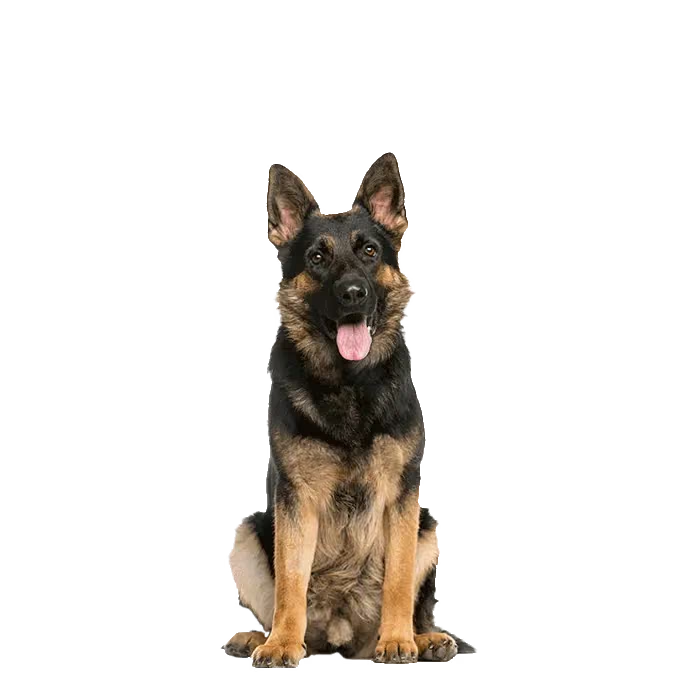
The German Shepherd is a loyal, intelligent working dog renowned for its courage, versatility, and unwavering devotion.
How the German Shepherd coat is built, and what that means when you groom it.
Critical: A German Shepherd should not be shaved.
The undercoat keeps heat out as well as in, and the outer coat shields the skin from sun and insect bites. Clipping the whole coat off removes both. It often grows back patchy, soft or a different colour, and in some animals the guard hairs never return properly. Brush the undercoat out instead of cutting it off.
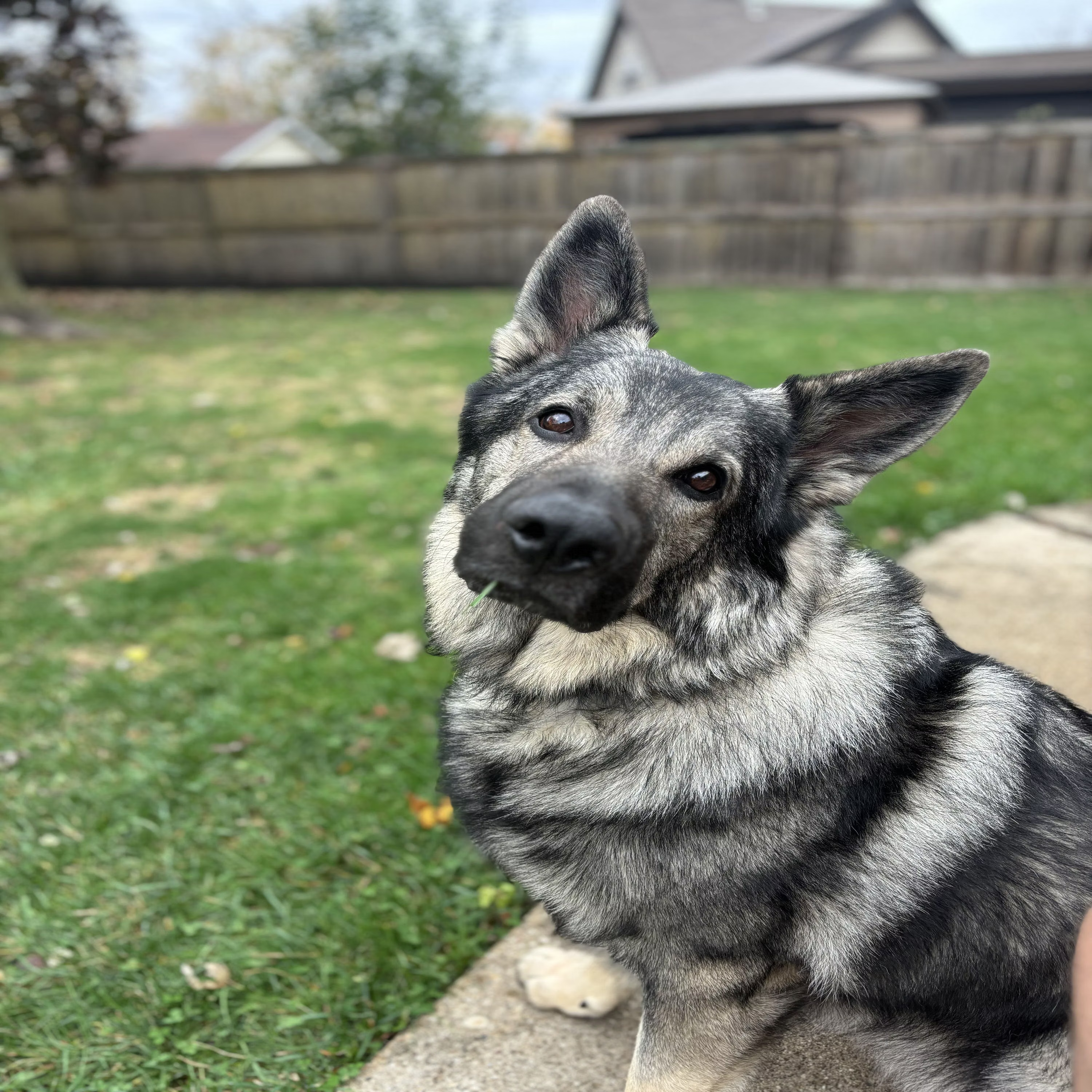
A few of the German Shepherd profiles members have added to United Pet Club.
The German Shepherd is a large, athletic working dog from Germany, valued in New Zealand for farm work, police service, and as a family companion. Adults stand 55 to 65 cm at the shoulder and live about 9 to 13 years.
The German Shepherd is a large herding and working breed originating in Germany in the late 1890s. In New Zealand the breed is registered with Dogs New Zealand under the Herding group and appears widely in police, search and rescue, and farm-dog roles alongside its life as a household companion.
The breed carries a deep chest, a confident and ground-covering gait, and erect, pointed ears. Standard colouring is black and tan, though sable, solid black, and bicolour dogs also occur. Working lines and show lines have diverged over the 20th century and can differ noticeably in build and drive.
German Shepherds bond closely with their family and need daily exercise, training, and company to stay settled. They do poorly when left alone for long stretches without activity or mental work.
| Item | Detail |
|---|---|
| Origin | Germany (1899) |
| Size | Large (55 to 65 cm at the shoulder) |
| Lifespan | 9 to 13 years |
| Group / role | Herding group; working, police, search and rescue, and guard roles |
| Good with | Families and children when socialised well; can live with other pets if introduced early |
The German Shepherd suits active households, working-dog handlers, and owners who can commit to daily exercise and consistent training. It is less suited to people who are away most of the day, those wanting a low-maintenance coat, or anyone unable to offer reliable socialisation and structure.
The German Shepherd was standardised in Germany in 1899 by Max von Stephanitz, who unified regional herding dogs into one working breed. It reached New Zealand after World War I and became one of the country's most recognised breeds in police and working roles.
In the late 1800s, herding dogs across the German-speaking regions varied widely by locality. A group of breeders, led by former cavalry officer Max von Stephanitz, set out to unify them into one breed selected for working ability rather than appearance.
In 1899 von Stephanitz purchased a dog named Hektor Linksrhein, renamed him Horand von Grafrath, and registered him as the first German Shepherd Dog. That same year he founded the Verein für Deutsche Schäferhunde, the SV, the German breed club that still governs the standard today. As sheep herding declined in Germany, von Stephanitz redirected the breed toward police and military work, a pivot that shaped its global role through the 20th century.
German Shepherds served in both world wars as messenger, guard, and rescue dogs. Soldiers returning after each conflict brought the breed to Britain and eventually to New Zealand, where it became established in the mid-20th century. Over the decades, working lines and show lines diverged, each emphasising different qualities of drive, structure, and temperament. Both lines are present in New Zealand today.
The German Shepherd stands 55 to 65 cm and weighs 22 to 40 kg, with a deep chest, erect ears, a bushy tail, and a dense double coat most commonly coloured black and tan.
The German Shepherd has a longer-than-tall body, a deep chest, and a wedge-shaped head with upright, pointed ears. At rest the tail hangs in a slight curve. Movement is smooth and long-reaching, bred originally for tireless herding across open country. Males are noticeably larger and heavier than females.
| Trait | Detail |
|---|---|
| Height | Males 60 to 65 cm; females 55 to 60 cm at the shoulder |
| Weight | Males 30 to 40 kg; females 22 to 32 kg |
| Coat | Double coat: dense outer coat over a softer undercoat. Short to medium length; a long-coated variety also occurs |
| Colours | Black and tan, black and red, sable, solid black, and bicolour. White is recognised by some registries but not all |
| Eyes | Medium-sized, almond-shaped, dark brown preferred |
The standard coat is medium length with a thick undercoat that sheds heavily twice a year. Black and tan is the most common colouring, usually with a black saddle across the back. Sable dogs carry banded hairs that give a grizzled look. The long-coated variety has fuller fur with feathering on the legs and tail; it is accepted under some breed standards and penalised in others.
German Shepherds are intelligent, loyal, and alert, bonding strongly with their family while remaining reserved with strangers. Early socialisation and consistent training are essential, as a bored or under-stimulated dog will develop problem behaviours.
At home the German Shepherd is affectionate and attentive with its family, including children. It keeps a watchful eye on the household and will bark to alert. With strangers it is typically reserved, and without early, broad socialisation that reserve can tip into over-guarding or nervousness.
With other dogs and household pets the breed generally coexists well when raised alongside them or introduced carefully. Its herding background can surface as chasing or nipping at running children or animals, which consistent training can manage.
Boredom is the most common cause of problem behaviour in this breed. Without daily exercise, mental work, and company, German Shepherds often develop persistent barking, destructive chewing, or anxiety.
| Trait | Rating |
|---|---|
| Affection | 4 |
| Energy | 5 |
| Trainability | 5 |
| Vocalness | 3 |
| Shedding | 5 |
German Shepherds need one to two hours of exercise daily, regular training, frequent brushing, and close companionship. The double coat sheds heavily twice a year and requires consistent maintenance.
All dogs in New Zealand must be microchipped and registered with the local council. Owners are legally required to keep their dog under control in public places. A German Shepherd that chases or harasses livestock may trigger the livestock-worrying provisions of the Dog Control Act, so dogs on or near farmland need a reliable recall and secure fencing at all times.
German Shepherds need a complete diet built around quality protein, fed in two daily meals to reduce bloat risk. Adults typically eat around 250 to 350 grams of dry food daily, adjusted for age, weight, and activity level.
Feed a complete and balanced food matched to the dog's life stage and workload. As a large, active breed, the German Shepherd does well on food with quality animal protein and moderate fat. Puppies should eat a large-breed puppy formula, which manages calcium intake and growth rate to protect developing joints. Divide the daily ration into two meals rather than one, since deep-chested breeds are prone to bloat, and keep the dog rested for at least an hour after eating. Keep fresh water available at all times and watch body condition closely, because excess weight places additional strain on the hips and elbows.
| Life stage | Amount per day | Meals per day |
|---|---|---|
| Puppy (2 to 6 months) | Per large-breed puppy formula label, by weight | 3 to 4 |
| Puppy (6 to 12 months) | Per label, by weight | 2 to 3 |
| Adult | Around 250 to 350 g of dry food | 2 |
| Senior or less active | Around 200 to 300 g, reduced for activity level | 2 |
Keep treats to around 10 percent of daily calories and factor them into the total. Many owners use a portion of the dog's dry food as training rewards. Joint supplements such as glucosamine and omega-3 fatty acids are sometimes used given this breed's susceptibility to hip and elbow problems, but discuss any supplement with a vet before starting.
German Shepherds live about 9 to 13 years and are prone to hip and elbow dysplasia, degenerative myelopathy, and bloat. Choosing a breeder who provides hip scores, elbow grades, and genetic test results reduces the risk of hereditary conditions.
The German Shepherd is a generally robust breed but carries known hereditary and structural health risks linked to its size and conformation. Lifespan is typically 9 to 13 years. Choosing a breeder affiliated with Dogs New Zealand who hip- and elbow-scores breeding stock and tests for genetic disease is the most practical step toward a healthy dog.
| Condition | Signs | Note |
|---|---|---|
| Hip dysplasia | Stiffness, limping, reluctance to jump, trouble rising | Hereditary; breeders should provide hip scores before breeding |
| Elbow dysplasia | Front-leg lameness, especially after exercise | Hereditary joint malformation; managed with weight control and veterinary treatment |
| Degenerative myelopathy | Progressive hind-limb weakness and loss of coordination | Incurable spinal cord disease; a DNA test for genetic risk is available |
| Bloat (GDV) | Swollen abdomen, retching without vomiting, restlessness, collapse | Life-threatening emergency requiring immediate veterinary care |
| Exocrine pancreatic insufficiency | Weight loss despite good appetite, pale or loose stools | Managed with lifelong enzyme supplements |
German Shepherds are among the most trainable breeds, learning quickly and working closely with their handler. Puppyhood socialisation and reward-based training from the start produce a confident, reliable adult dog.
Few breeds take to training as readily as the German Shepherd. It retains commands quickly, engages actively with tasks, and works closely with its handler. These qualities underpin its use in NZ Police, search and rescue, and assistance-dog roles across the country. That same drive means a dog without consistent training and daily mental stimulation will find its own outlets, which is a common reason German Shepherds end up in rescue. Begin training and socialisation in puppyhood and keep the dog working throughout its life.
Female German Shepherds have their first heat between 6 and 12 months, but responsible breeders wait until around two years when health testing is complete. Gestation lasts about 63 days and litters average 6 to 8 puppies.
Female German Shepherds typically experience their first heat between 6 and 12 months of age. Responsible breeders wait until approximately two years before mating, by which point hip scores, elbow grades, and genetic test results are available and physical maturity is established. Mating is timed to the fertile period of the heat cycle. Gestation lasts around 63 days and most litters contain 6 to 8 puppies, though smaller and larger litters occur.
Newborns are blind and deaf and depend entirely on the mother during the first weeks. Eyes open around two weeks of age and weaning begins at three to four weeks. The window from roughly 3 to 14 weeks is the critical socialisation period. Breeders who handle the litter regularly and expose puppies to everyday sights, sounds, and handling produce dogs that settle more easily into family life. Puppies go to new homes at 8 weeks or older. Dogs New Zealand-affiliated breeders are required to microchip puppies before sale and provide registration papers.
| Metric | Value |
|---|---|
| Female sexual maturity | First heat around 6 to 12 months |
| Recommended breeding age | Around 2 years, after health testing |
| Gestation | About 63 days |
| Average litter size | 6 to 8 puppies |
| Eyes open | Around 14 days |
| Weaning | About 3 to 4 weeks |
| Go to new homes | 8 weeks or later |
Alongside council registration, a free United Pet Club record keeps a live phone number behind your German Shepherd and its chip.
The National Dog Database has required chipping of newly registered dogs since 2006, and council registration sits alongside that rather than replacing a proper contact record. Holding one with United Pet Club is free for your German Shepherd's whole life. Registering your dog takes a few minutes, with nothing to renew afterwards.
Getting the chip implanted was the vet's job; giving the number somewhere to point is yours. Registering the microchip with United Pet Club costs nothing on the lifetime plan, suits any brand a Kiwi vet reaches for, and keeps the record searchable at any hour from anywhere. Creating a free account ties the profile and the chip together.
Setting up a free United Pet Club account, adding your German Shepherd's details and a photo, and saving is all it takes. The record stays free for the dog's whole life, chip or no chip.
Just add the fifteen digit number to your free account along with your current address and phone. Under the lifetime plan there is nothing to pay for the registration or any later update.
Dogs registered for the first time since 2006 need one under the National Dog Database rules, working farm dogs aside. The council record and your United Pet Club profile do different jobs, and the second one is free.
Nothing. The free lifetime plan carries the profile, the chip record, and every update, and no renewal notice ever arrives.
Common questions about German Shepherd size, shedding, behaviour with children, lifespan, cost in New Zealand, and how demanding the breed is to keep.
Males stand 60 to 65 cm at the shoulder and weigh 30 to 40 kg. Females are smaller, standing 55 to 60 cm and weighing 22 to 32 kg.
Yes, heavily. The double coat sheds year-round and loses most of its undercoat in two major seasonal blowouts. Brushing two to three times a week is the minimum, and daily brushing is needed during the shed periods.
With children in their own household, German Shepherds are usually affectionate and protective when raised and socialised well. Their size and herding instinct mean young children should always be supervised, and the dog needs to be trained not to chase or nip.
Typically 9 to 13 years. Genetics, body weight, exercise, and veterinary care all influence lifespan. Keeping the dog lean reduces strain on the joints, which are a common source of problems in this breed.
Prices vary depending on the breeder, bloodline, and whether the dog is registered with Dogs New Zealand. Puppies from health-tested parents cost more than unregistered dogs. Factor in ongoing costs for food, vet care, council registration, and grooming supplies. Rescue and rehoming organisations are a lower-cost option.
They are a high-maintenance breed. Expect at least one to two hours of exercise daily, regular training, frequent brushing, and close company. They are not well suited to being left alone all day or to owners wanting a low-effort dog.
They are alert dogs that will bark at strangers or unusual activity, but persistent barking usually signals boredom or insufficient exercise. Training and adequate daily activity resolve the majority of nuisance barking.