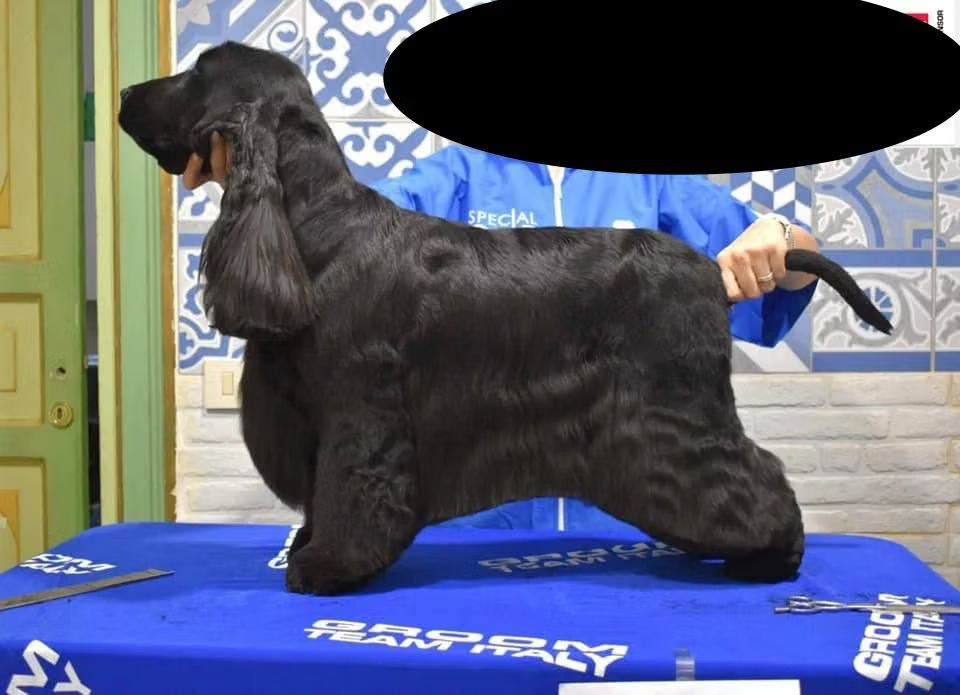
The English Cocker Spaniel is a cheerful, affectionate sporting dog, famous for its merry temperament and ever-wagging tail.
How the English Cocker Spaniel coat is built, and what that means when you groom it.
Critical: A English Cocker Spaniel should not be shaved.
The undercoat keeps heat out as well as in, and the outer coat shields the skin from sun and insect bites. Clipping the whole coat off removes both. It often grows back patchy, soft or a different colour, and in some animals the guard hairs never return properly. Brush the undercoat out instead of cutting it off.
Caution: A English Cocker Spaniel coat mats easily.
Fine or long hair tangles at the base of the coat, out of sight, where the mats tighten and pull on the skin. Brushing has to reach right down to the roots in sections, not just skim the surface.
A few of the English Cocker Spaniel profiles members have added to United Pet Club.
The English Cocker Spaniel is a medium-sized gundog from England, popular in New Zealand for field work and family life, with a merry, affectionate nature.
The English Cocker Spaniel is a medium-sized gundog developed in England as a flushing and retrieving dog for upland game birds. The name comes from its historical use hunting woodcock. It is compact and balanced, with long ears, a silky coat, and an expressive face.
In New Zealand the breed is registered with the New Zealand Kennel Club (NZKC) in the Gundog Group and has a dedicated following through the NZ Cocker Spaniel Club. Both show and working lines are active here, with working dogs used to flush pheasant in Canterbury and Otago and quail in South Island high country during the Fish and Game NZ upland bird season.
The breed is known for being friendly and people-oriented. It forms close bonds with its household and tends to stay near family members rather than working at a distance. Its tail is almost always in motion, which is part of why it is often described as merry.
As a working spaniel, it has a strong nose and a natural drive to investigate scents. It still works in the field today and also competes in obedience, agility, scent work, and conformation, while many live purely as companions.
| Attribute | Detail |
|---|---|
| Origin | England |
| Size | Medium |
| Lifespan | 12 to 14 years |
| Group/role | NZKC Gundog Group; flushing and retrieving spaniel |
| Good with | Families, children, and other dogs when socialised |
The English Cocker Spaniel fits households that are home often and can provide daily activity and attention. It does well with children and other pets when introduced properly. People who want a quiet, independent dog, or who are away for long hours, are usually a poor match, because the breed is social and can become distressed when left alone for extended periods.
The English Cocker Spaniel developed in England from land spaniels and was recognised as a distinct breed by the late nineteenth century, named for woodcock hunting.
Spaniels have a long record in Britain as bird dogs, with written references to spaniel-type dogs going back centuries. For much of that history, spaniels were sorted by size and job rather than by formal breed. Larger dogs from the same litters worked as springing spaniels, while smaller ones were used to hunt woodcock and were called cocking or cocker spaniels.
During the nineteenth century, breeders in England began to separate these types into distinct breeds. The Kennel Club in Britain was founded in 1873, and spaniel classification became more organised in the decades that followed. By the 1890s the Cocker Spaniel was recognised in its own right, with weight and conformation guidelines used to distinguish it from the Springer and other land spaniels.
The breed was exported to North America, where breeders developed it along a different line. Over time the American type diverged enough in size, head shape, and coat that it was separated into its own breed. To avoid confusion, the original English form became known as the English Cocker Spaniel, and the two are now registered as separate breeds.
The English Cocker Spaniel continues to be bred both as a working gundog and as a show and companion dog. Some kennels emphasise field ability while others focus on conformation, which has led to recognisable working and show lines within the same breed. In New Zealand both lines are well established.
The English Cocker Spaniel is a compact, balanced medium dog with long feathered ears and a silky coat. It comes in many solid, parti-colour, and roan patterns.
The English Cocker Spaniel is slightly longer than it is tall, with a sturdy body and a level topline. The head is refined with a defined stop, and the ears are set low, hanging close to the head and covered in long silky hair. The eyes are full and dark, giving the soft, alert expression typical of the breed. Under New Zealand's Animal Welfare Act 1999, tail docking is prohibited except as a licensed therapeutic procedure, so virtually all English Cocker Spaniels in New Zealand carry a full natural tail that wags freely when the dog is active.
| Trait | Detail |
|---|---|
| Height | Roughly 38 to 43 cm at the shoulder |
| Weight | About 13 to 16 kg |
| Coat | Medium-length, silky, flat or slightly wavy, with feathering on ears, chest, legs, and belly |
| Colours | Solid, parti-colour, and roan; black, liver, red, and golden, with tan points and roaning common |
| Eyes | Full, medium to dark brown, with a gentle expression |
The coat carries feathering on the ears, legs, chest, and underside that needs regular grooming. Colour is varied. Solid dogs may be black, liver, red, or golden, sometimes with tan markings. Parti-colours combine white with a second colour in patches, and roans mix white and coloured hairs throughout for blue roan, liver roan, and similar patterns. Blue roan is among the most recognised colourings of the breed in New Zealand show rings.
The English Cocker Spaniel is friendly, affectionate, and eager to please, getting along well with family and other animals. It dislikes being left alone for long.
The English Cocker Spaniel is a cheerful, affectionate dog that wants to be near its people. It is generally good with children and tends to greet strangers in a friendly way rather than acting guarded, which makes it a poor choice as a guard dog. With early socialisation it usually lives well alongside other dogs and household pets, though its hunting background means it may want to chase small animals or birds.
The breed is playful and active and enjoys having a job, whether that is fetch, scent games, or training sessions. It is sensitive and responds best to calm, consistent handling; harsh corrections can make it anxious. Because it bonds closely and dislikes isolation, it can develop separation-related behaviours and barking if left alone too often. Some lines, particularly field-bred dogs, have higher energy and drive than show-bred dogs.
| Trait | Rating |
|---|---|
| Affection | 5 |
| Energy | 4 |
| Trainability | 4 |
| Vocalness | 3 |
| Shedding | 3 |
The English Cocker Spaniel needs regular coat grooming, daily exercise, and steady company. Its ears require routine checks, particularly after swims or farm walks.
The breed adapts to houses or apartments as long as it gets daily exercise and company. It is not suited to living outdoors or alone for long stretches. A securely fenced yard is useful because the dog will follow scents. Access to family activity and a comfortable indoor resting place matter more than the size of the home.
The English Cocker Spaniel does well on complete, balanced food in measured amounts. The breed gains weight easily, so portions and treats should be monitored.
Feed a complete and balanced dog food appropriate to the dog's life stage, formulated for medium breeds. Amounts depend on the individual's weight, age, and activity level, so the figures below are starting points to adjust based on body condition. The English Cocker Spaniel enjoys food and can put on weight quickly, so measure portions rather than free-feeding and keep ribs easily felt but not seen. Fresh water should always be available.
| Life stage | Amount per day | Meals per day |
|---|---|---|
| Puppy (2 to 6 months) | Per product guide for growth, divided | 3 to 4 |
| Puppy (6 to 12 months) | Per product guide for growth | 2 to 3 |
| Adult | About 150 to 250 g of dry food, by weight and activity | 2 |
| Senior | Slightly reduced from adult; watch weight carefully | 2 |
Keep treats to a small share of daily calories and account for them in the dog's total intake. Use part of the regular ration for training rewards to avoid overfeeding. Most dogs on a complete diet do not need supplements; discuss any joint, skin, or coat supplement with your vet before starting.
The English Cocker Spaniel lives 12 to 14 years and is generally healthy, but prone to ear infections and inherited conditions that health screening can reduce.
The English Cocker Spaniel is a generally robust breed with a typical lifespan of 12 to 14 years. Its long drop ears make ear infections the most frequent everyday health issue. The breed also carries several inherited conditions, and responsible breeders test their stock for eye, hip, and kidney problems. Routine vet care, weight control, and ear maintenance support a long, healthy life.
| Condition | Signs | Note |
|---|---|---|
| Ear infections (otitis) | Head shaking, scratching, odour, discharge | Linked to the long drop ears; regular cleaning helps prevent it |
| Progressive retinal atrophy | Night blindness, declining vision | Inherited; DNA and eye testing available for breeding dogs |
| Cataracts | Cloudy eye, vision changes | Can be inherited; identified on eye examination |
| Hip dysplasia | Stiffness, limping, trouble rising | Hip screening of parents lowers risk |
| Familial nephropathy | Increased thirst, weight loss in young dogs | Inherited kidney disease; a DNA test is available; ask breeders for results |
| Obesity | Weight gain, low energy | Common due to appetite; managed by measured diet and exercise |
The English Cocker Spaniel is intelligent and eager to please, which makes it responsive to reward-based training. Its sensitivity means harsh methods backfire.
The English Cocker Spaniel learns quickly and wants to work with its handler, so it usually takes well to training. It is sensitive, so calm, consistent, reward-based methods produce the best results. Early socialisation with people, dogs, and everyday situations helps the friendly nature develop into confidence. Because the breed is scent-driven, a reliable recall and impulse control around birds and small animals are worth prioritising.
English Cocker Spaniels reach maturity in their first year with litters of four to seven puppies. Health screening of both parents is recommended before mating.
English Cocker Spaniels reach sexual maturity in the first year, though responsible breeders wait until a dog is physically mature and has passed health screening before breeding. Mating is timed to the female's heat cycle, which usually occurs about twice a year. Gestation lasts roughly 63 days, after which the female gives birth to a litter that commonly numbers four to seven puppies.
Newborn puppies are blind and deaf and depend fully on the mother for warmth and feeding in the first weeks. Eyes open at around two weeks, and weaning begins near three to four weeks. The period from about three to twelve weeks is important for socialisation, so puppies should meet people and experience normal household life before going to new homes, usually at eight weeks or later. Breeders should screen both parents for inherited eye, hip, and familial nephropathy conditions before pairing.
Anyone importing an English Cocker Spaniel from the United Kingdom should be aware that MPI/Biosecurity NZ classifies the UK as a Category 2 country because it is not considered rabies-free. Import requirements include a rabies titre test and a period of managed isolation or quarantine on arrival. Confirm current requirements with MPI before making any arrangements.
| Metric | Value |
|---|---|
| Sexual maturity | Around 6 to 12 months |
| Heat cycle | Roughly twice per year |
| Gestation | About 63 days (nine weeks) |
| Average litter size | 4 to 7 puppies |
| Eyes open | Around 2 weeks |
| Weaning | About 3 to 4 weeks |
| Earliest rehoming age | Usually 8 weeks or later |
Alongside council registration, a free United Pet Club record keeps a live phone number behind your English Cocker Spaniel and its chip.
The National Dog Database has required chipping of newly registered dogs since 2006, and council registration sits alongside that rather than replacing a proper contact record. Holding one with United Pet Club is free for your English Cocker Spaniel's whole life. Registering your dog takes a few minutes, with nothing to renew afterwards.
A scanned chip is only ever as useful as its record. Pop your English Cocker Spaniel's fifteen digit number into a free United Pet Club account and the record does the rest: free updates after every move, every brand accepted, searchable day and night. Microchip registration first, account alongside.
Setting up a free United Pet Club account, adding your English Cocker Spaniel's details and a photo, and saving is all it takes. The record stays free for the dog's whole life, chip or no chip.
Just add the fifteen digit number to your free account along with your current address and phone. Under the lifetime plan there is nothing to pay for the registration or any later update.
Dogs registered for the first time since 2006 need one under the National Dog Database rules, working farm dogs aside. The council record and your United Pet Club profile do different jobs, and the second one is free.
Nothing. The free lifetime plan carries the profile, the chip record, and every update, and no renewal notice ever arrives.
Common questions about the English Cocker Spaniel covering size, temperament, grooming, ear care, health screening, and keeping the breed in New Zealand.
It is a medium dog, standing about 38 to 43 cm at the shoulder and weighing roughly 13 to 16 kg, with males usually a little larger than females.
Yes. It is friendly, affectionate, and playful, and it generally does well with children and other pets when socialised. It bonds closely with its household and prefers to be around people.
The typical lifespan is 12 to 14 years. Good weight management, ear care, and routine vet checkups support a long life.
They are moderate in their needs. The main work is regular coat grooming, routine ear cleaning, and daily exercise of about an hour. They also need company and do not cope well with being left alone for long periods.
They can be vocal, especially when excited or left alone. Early training, enough exercise, and avoiding long periods of isolation help keep barking in check.
Yes, but the UK is a Category 2 country under MPI/Biosecurity NZ rules because it is not considered rabies-free. Dogs must have a rabies titre test and complete a period of managed isolation or quarantine on arrival. Check the current MPI requirements before making any arrangements.
Familial nephropathy is an inherited kidney disease seen in the breed. A DNA test is available, and responsible breeders should be able to provide test results for both parents. Asking for this information before choosing a puppy is sensible.